
La Muralla Roja: Ricardo Bofill’s Chromatic Fortress Reimagines Mediterranean Living
Perched along the jagged cliffs of Calpe, Spain, La Muralla Roja—or The Red Wall—rises like an abstract mirage from the Mediterranean landscape. Designed in 1973 by Ricardo Bofill Taller de Arquitectura (RBTA), the building’s bold geometric forms and vivid colours appear almost otherworldly, yet they are deeply rooted in the region’s history and architectural tradition.
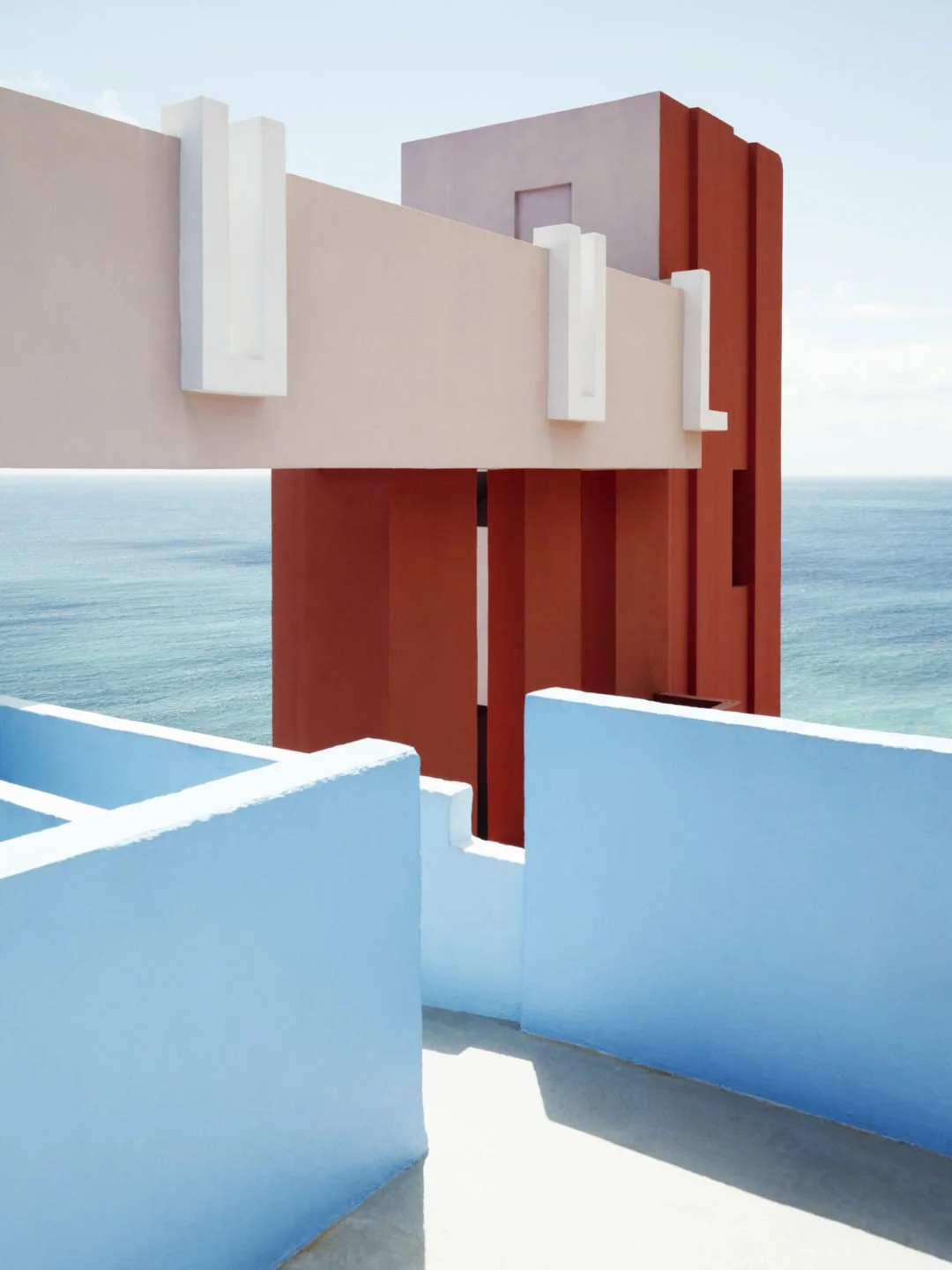


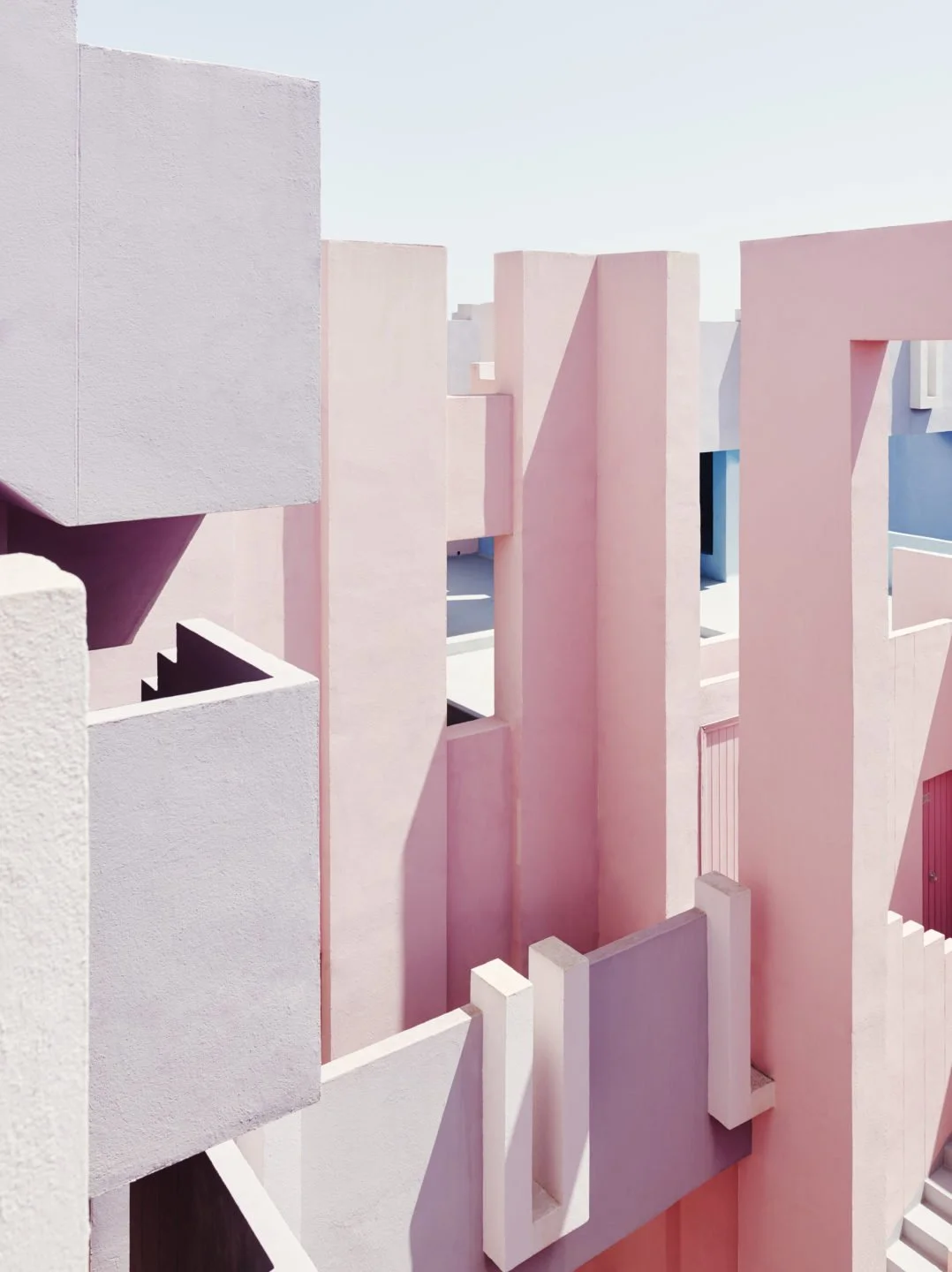
Set within the urban experiment of La Manzanera, La Muralla Roja defies categorisation. While part of a larger complex, it stands distinctly apart—a singular vision that draws from the adobe towers of North Africa and the labyrinthine spatial order of Arab Mediterranean kasbahs. Bofill sought to reinterpret this vernacular language, challenging the traditional boundaries between public and private space. The result is a poetic and radical exercise in spatial fluidity.


The building’s design is based on a strict geometric order—a modular plan inspired by the Greek cross, with five-meter arms configured around service towers containing kitchens and bathrooms. This rationality is juxtaposed with visual complexity: a shifting maze of corridors, stairways, and interconnected patios that echo the spatial language of constructivism. Here, every turn reveals a new perspective—walls open to the sky, passages lead nowhere or suddenly into expansive vistas, and voids become as important as solids.


Despite its fortress-like exterior, La Muralla Roja functions more like a vertical village. Fifty apartments—ranging from compact 60 sqm studios to spacious 120 sqm units—are accessed via a network of open-air stairs and patios. On the rooftop, communal amenities such as solariums, a swimming pool, and a sauna reinforce the social and sensual dimensions of Mediterranean life.
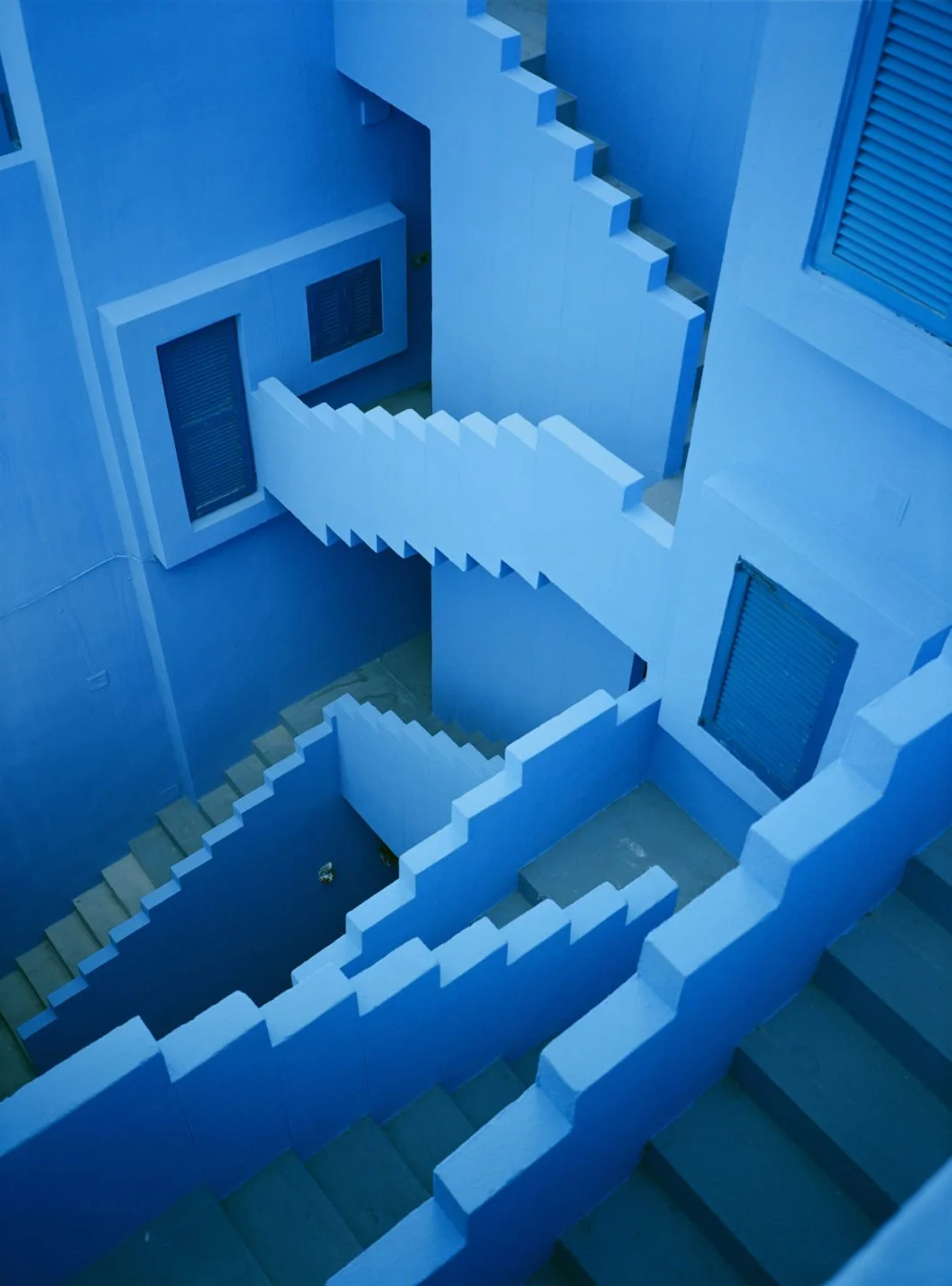


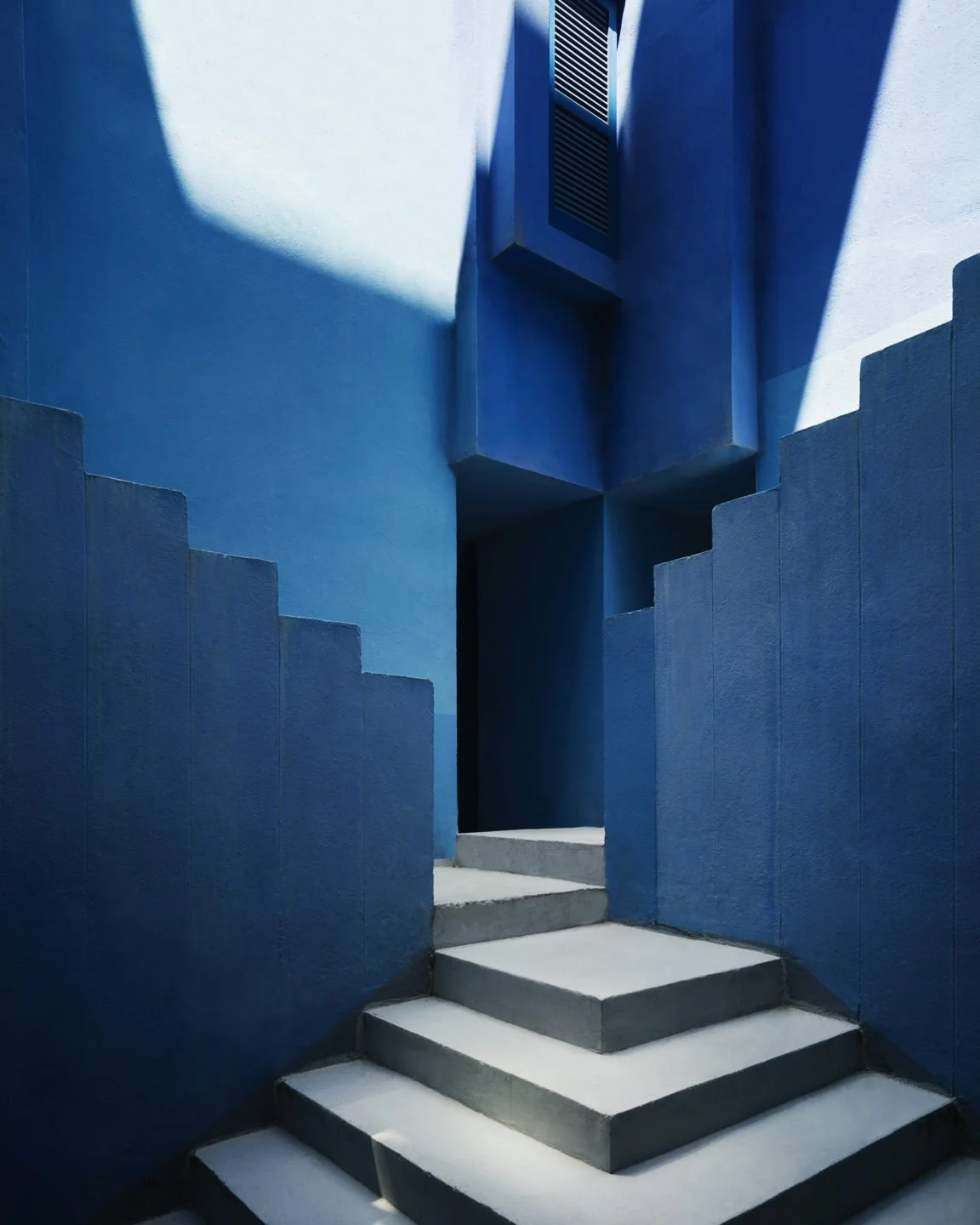
Colour plays a pivotal role in Bofill’s architectural narrative. The building’s exteriors are rendered in various tones of red and pink, dramatically contrasting with the coastal cliffs and deep blue sea. Interior courtyards and circulation areas are washed in shades of blue and violet—sky-blue, indigo, lavender—creating a chromatic interplay that shifts with the light, heightening depth and dimensionality. The palette is not simply aesthetic; it is experiential. By manipulating colour in relation to structure and sunlight, Bofill generates a sense of spatial illusion—walls dissolve, paths extend infinitely, and the architecture itself seems to breathe with the horizon.


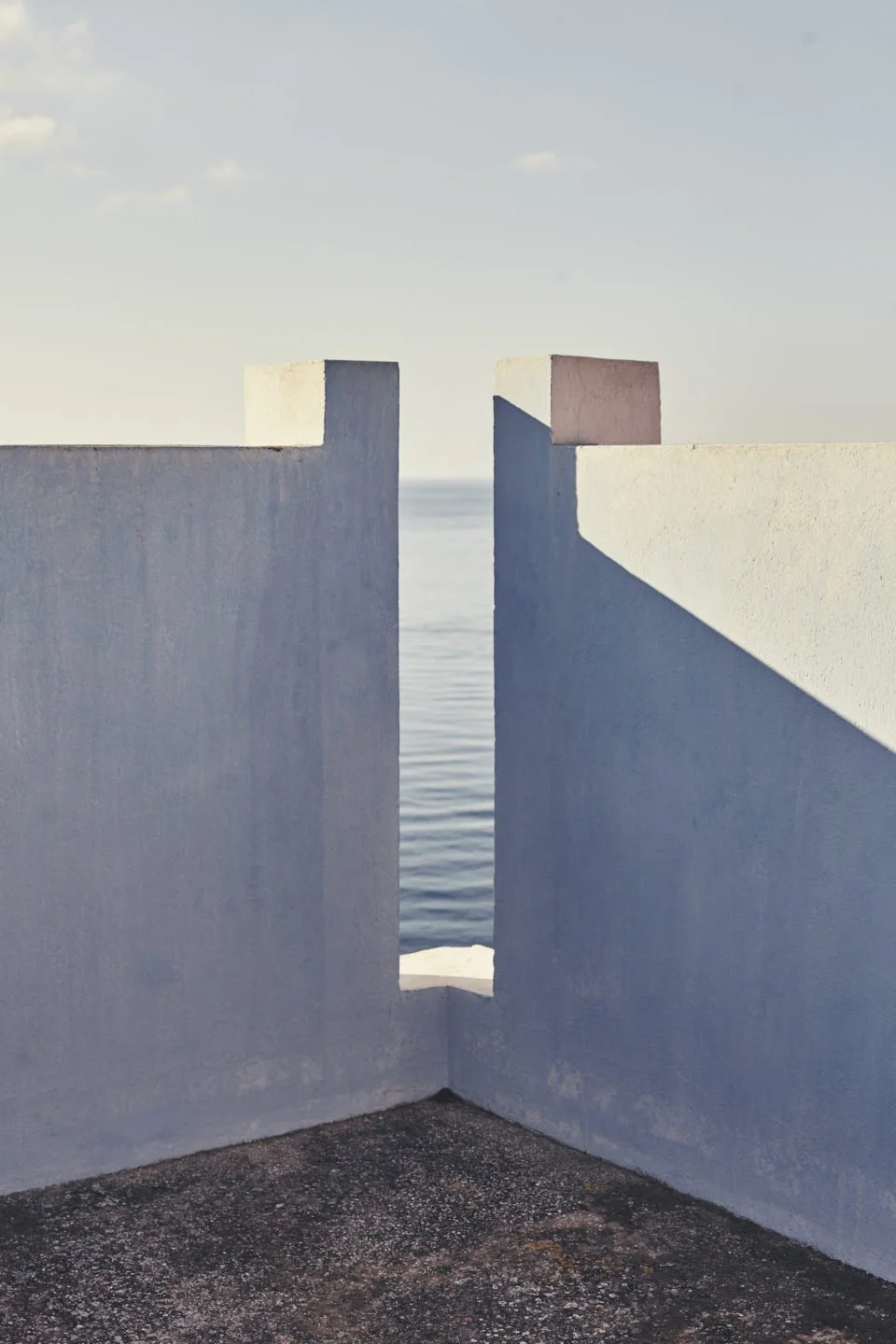
All photography: © Courtesy of Ricardo Bofill
La Muralla Roja is not only one of Bofill’s most iconic works; it is also one of his most poetic. It resists the sterility of modernism while embracing abstraction and bold form. It is a space designed not just to inhabit, but to explore, to experience, and to feel. Through colour, geometry, and cultural memory, Bofill invites us to reimagine the boundaries of architecture—not as static enclosures, but as vibrant, living compositions in dialogue with place, history, and light.
