
Belmond’s Celia Carriage Reimagines Luxury Rail Travel Through Theatre, Craftsmanship and Extraordinary Interior Design
There are few forms of travel that possess the romance of the railway. Long before airports, security queues and the race to arrive as quickly as possible, travel itself was considered part of the experience. The journey mattered as much as the destination. It was an occasion to dress well, dine beautifully and savour the changing landscape beyond the window.
Today, that sense of glamour is increasingly rare. For many, train travel has become a necessity rather than a luxury; a practical means of moving from one place to another. That is precisely why Belmond’s new Celia carriage feels so refreshing. Rather than focusing solely on where guests are going, it emphasises the journey itself, transforming travel into a theatrical, immersive experience worthy of celebration.
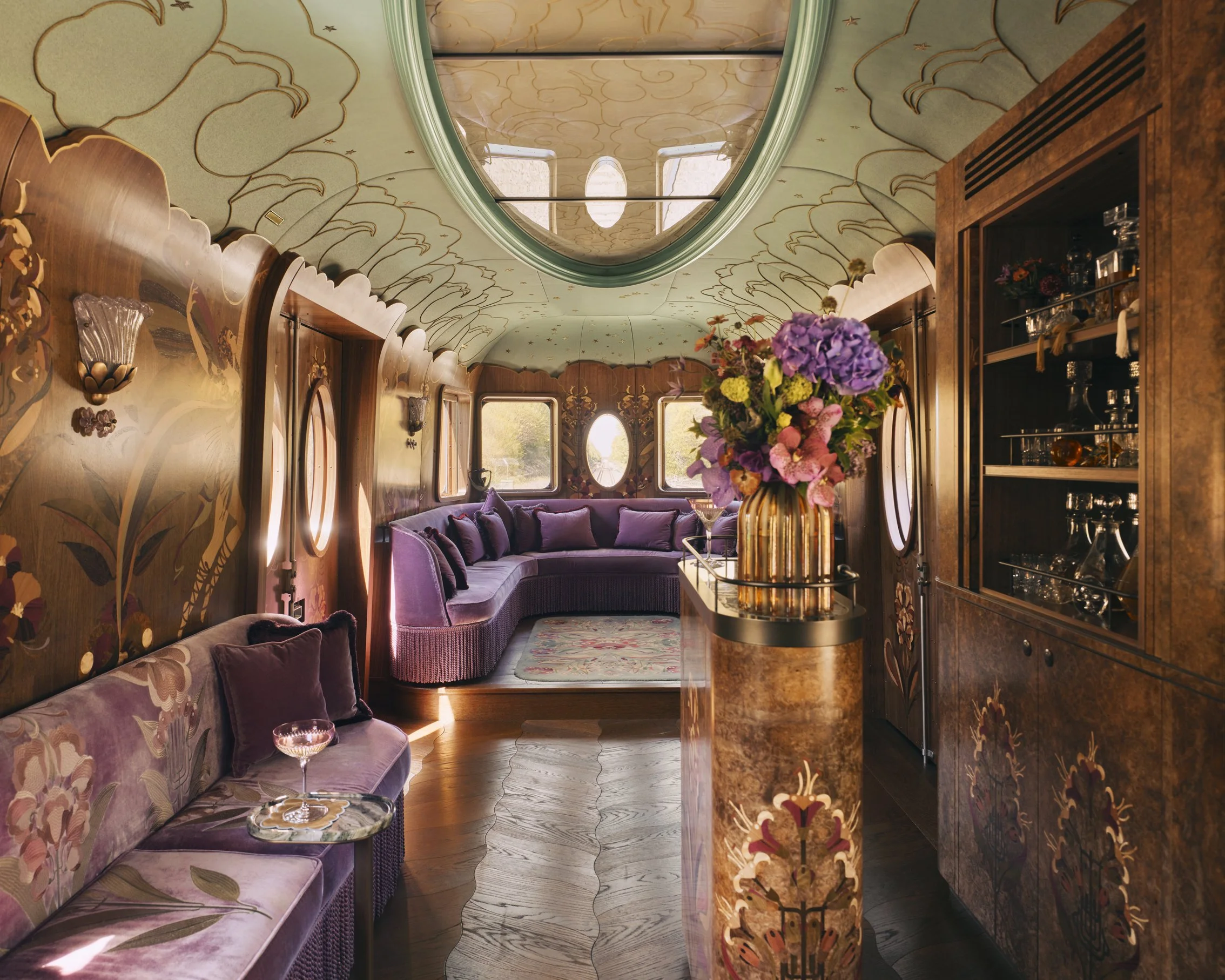
Created for the British Pullman, Belmond’s celebrated luxury train, Celia is a private dining and events carriage imagined by acclaimed filmmaker Baz Luhrmann and Oscar-winning costume and production designer Catherine Martin. Housed within an original 1932 Pullman carriage, the experience accommodates up to twelve guests and introduces a new chapter in luxury hospitality design aboard one of Britain’s most storied trains.
What makes Celia particularly fascinating from an interior design perspective is that it does not simply reference luxury; it fully embraces it.
The carriage is unapologetically opulent.
Every surface, material and decorative detail contributes to a carefully crafted narrative inspired by the British countryside, Shakespeare’s A Midsummer Night’s Dream and the cinematic storytelling for which Luhrmann has become internationally renowned. According to Belmond, the carriage follows the fictional story of a glamorous 1930s West End muse who once portrayed Titania, Queen of the Fairies, creating an environment that feels simultaneously theatrical, nostalgic and dreamlike.
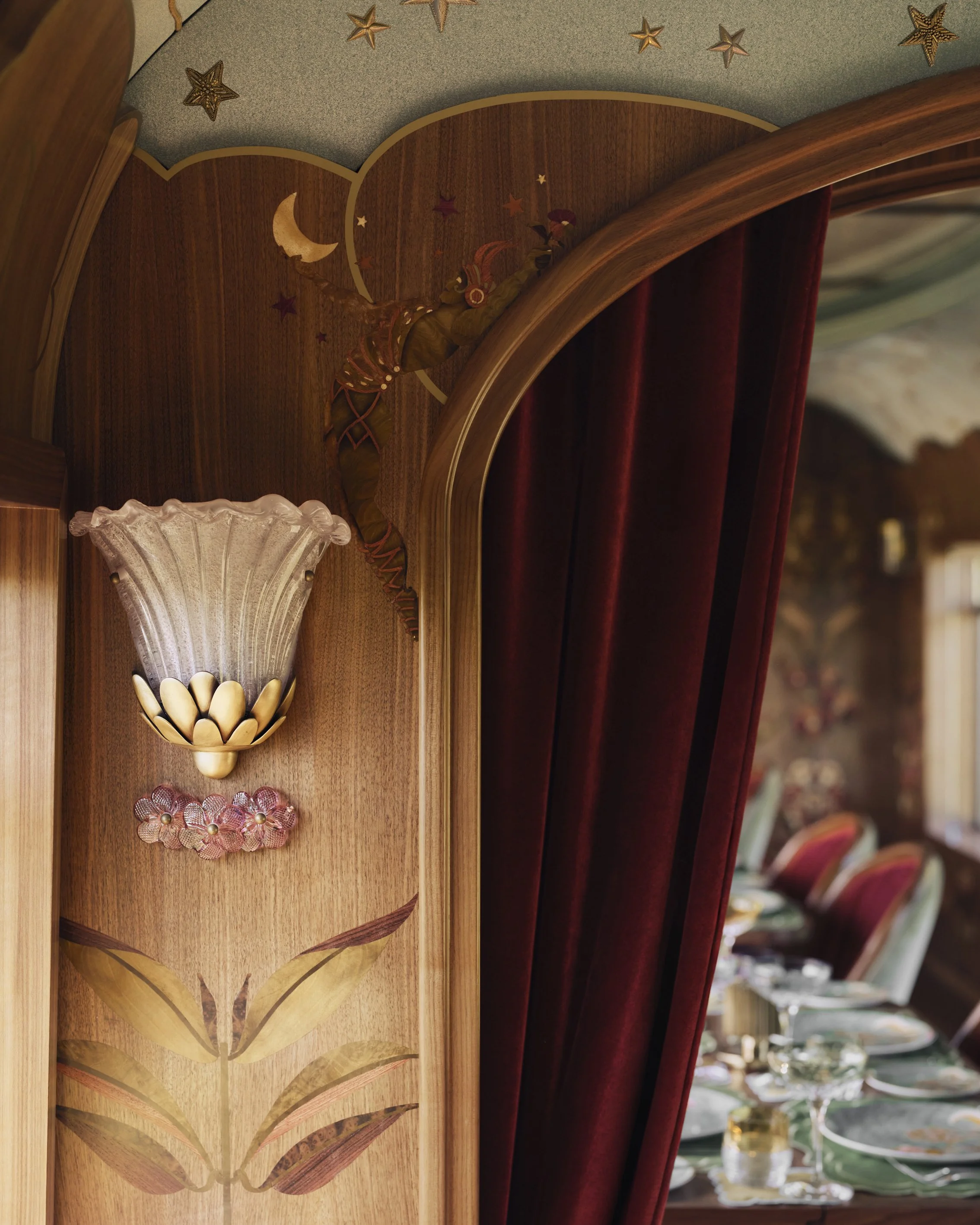
This narrative approach elevates Celia beyond the realm of transport design. Instead, it becomes an immersive hospitality interior where storytelling informs every design decision.
The experience begins with the carriage itself. Set within a restored Pullman carriage dating from 1932, Celia retains the romance and craftsmanship associated with the golden age of rail travel while introducing a fresh layer of contemporary imagination.
Unlike traditional dining carriages, the interior has been designed as a sequence of interconnected experiences. Guests move between a private cocktail bar, an intimate lounge, a dining space and an entertainment area, each contributing to a sense of occasion and discovery.
This spatial choreography is particularly important. Rather than functioning as a static dining room on wheels, Celia unfolds much like the scenes of a film, encouraging guests to engage with different moments throughout their journey.
The result is an environment that feels intimate yet grand.
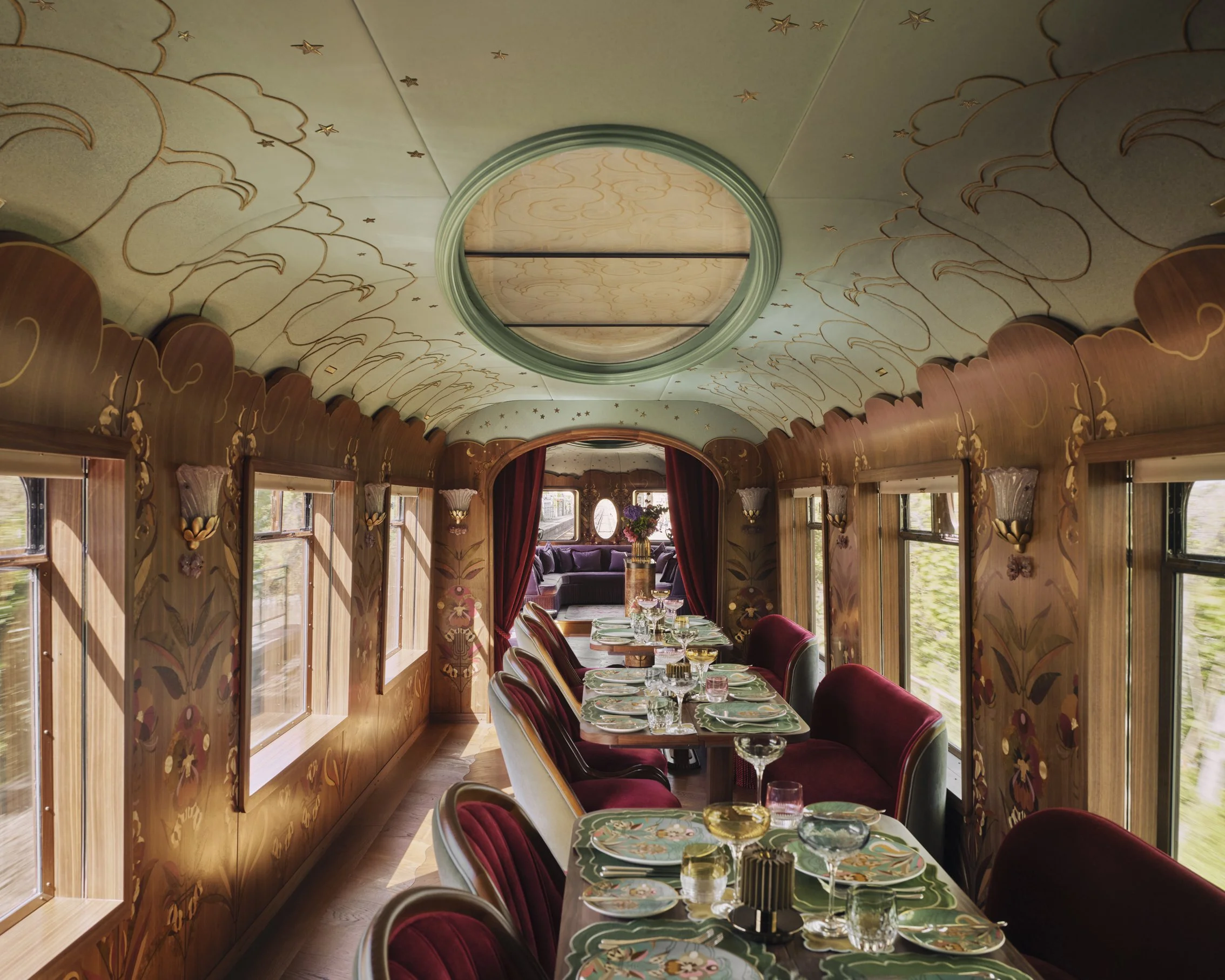
One of the most compelling aspects of the design is its commitment to decorative richness. In an era where many hospitality interiors lean towards minimalism, Celia confidently embraces ornamentation, layering textures, colours and visual references to create a space that feels deeply immersive.
There is an unmistakable theatricality to the carriage, yet it never feels overwhelming. Instead, the design achieves a careful balance between spectacle and refinement. Much like the finest hotels, restaurants and members’ clubs, the experience relies on atmosphere as much as aesthetics.
The carriage invites guests to slow down and absorb the details.
This attention to detail has always been one of the defining characteristics of great luxury interiors. Whether found within a historic London hotel or a grand European residence, exceptional spaces reward closer inspection. Celia appears to follow the same philosophy, encouraging guests to discover new layers of craftsmanship throughout their journey.
That craftsmanship sits at the heart of the broader British Pullman experience. Across the train, meticulously restored vintage carriages showcase polished marquetry, luxurious textiles, intricate decorative finishes and expansive windows that frame the passing countryside like moving works of art. Celia builds upon this legacy while introducing a distinct personality of its own.
The dining experience naturally forms a central part of the concept.
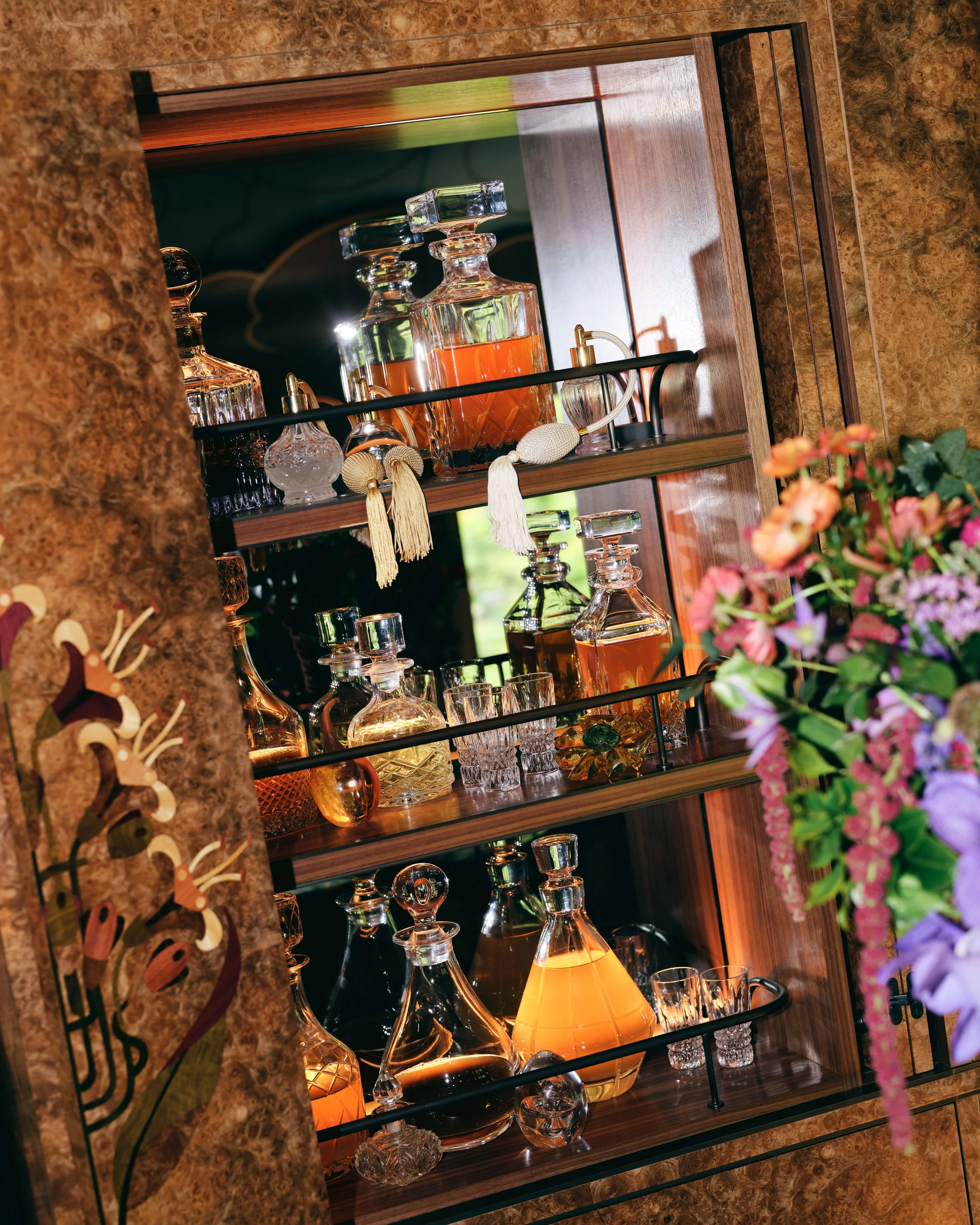
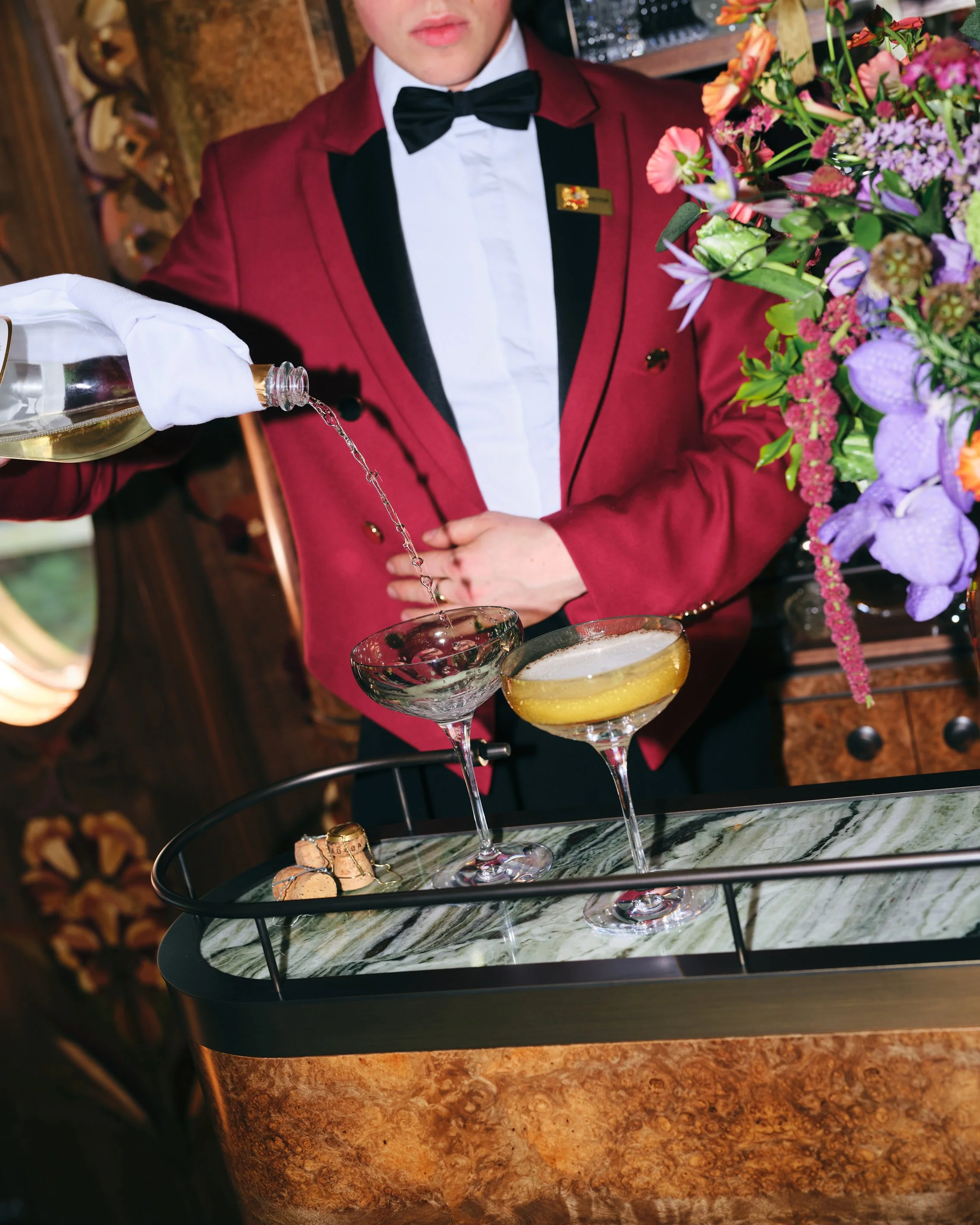
Hospitality design is never solely about the physical environment; it is about how a space supports and enhances human interaction. Celia has been conceived as a setting for celebrations, intimate gatherings and memorable occasions, from champagne receptions and private lunches to milestone events accompanied by bespoke entertainment.
The inclusion of a private chef, personalised menus and dedicated service further reinforces the carriage’s residential quality. Rather than feeling like a traditional hospitality venue, it evokes the atmosphere of an extraordinary private dining room; albeit one travelling through some of England’s most picturesque landscapes.
Perhaps this is where the design succeeds most powerfully.
The finest hospitality interiors create emotional connections. They transport guests beyond their everyday routines and offer something genuinely memorable. Celia achieves this not through technology or spectacle alone, but through atmosphere, craftsmanship and storytelling.
Personally, it is wonderful to see the drama and luxury of train travel being celebrated in this way. For so long, rail journeys have been viewed primarily as a means of transportation; a practical necessity designed to move people efficiently between destinations. Yet historically, train travel represented something far more romantic and aspirational.
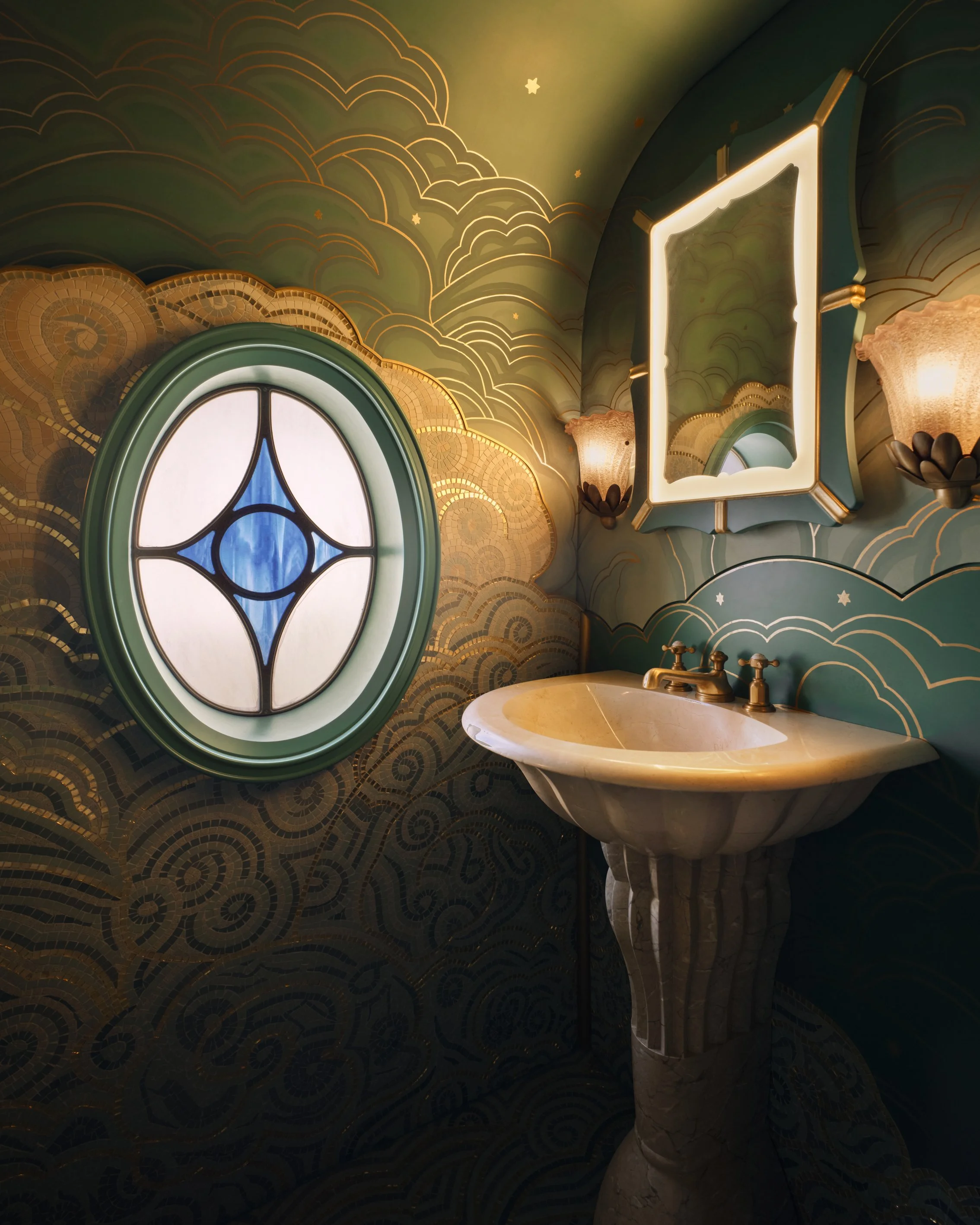
All photography courtesy of Belmond
Celia reminds us of that heritage.
It encourages travellers to savour the experience of travel itself rather than rushing through it. The changing scenery outside becomes part of the interior narrative, while the carefully designed surroundings create an experience that feels increasingly rare in today’s fast-paced world.
As someone with a passion for design, I find the interior particularly compelling. It is opulent through and through, displaying an impressive commitment to detail at every level. From the narrative-led concept developed by Baz Luhrmann and Catherine Martin to the layered decorative language and carefully orchestrated guest experience, the carriage demonstrates how storytelling can transform a hospitality space into an unforgettable experience.
More importantly, it highlights the enduring power of design to shape how we experience a place, or in this case, a journey.
In an age increasingly focused on efficiency, Celia celebrates something far more valuable: the pleasure of slowing down, gathering around a beautifully dressed table and enjoying the experience of being transported. It is hospitality design at its most immersive, proving that sometimes the most memorable destination is the journey itself.
More Stories

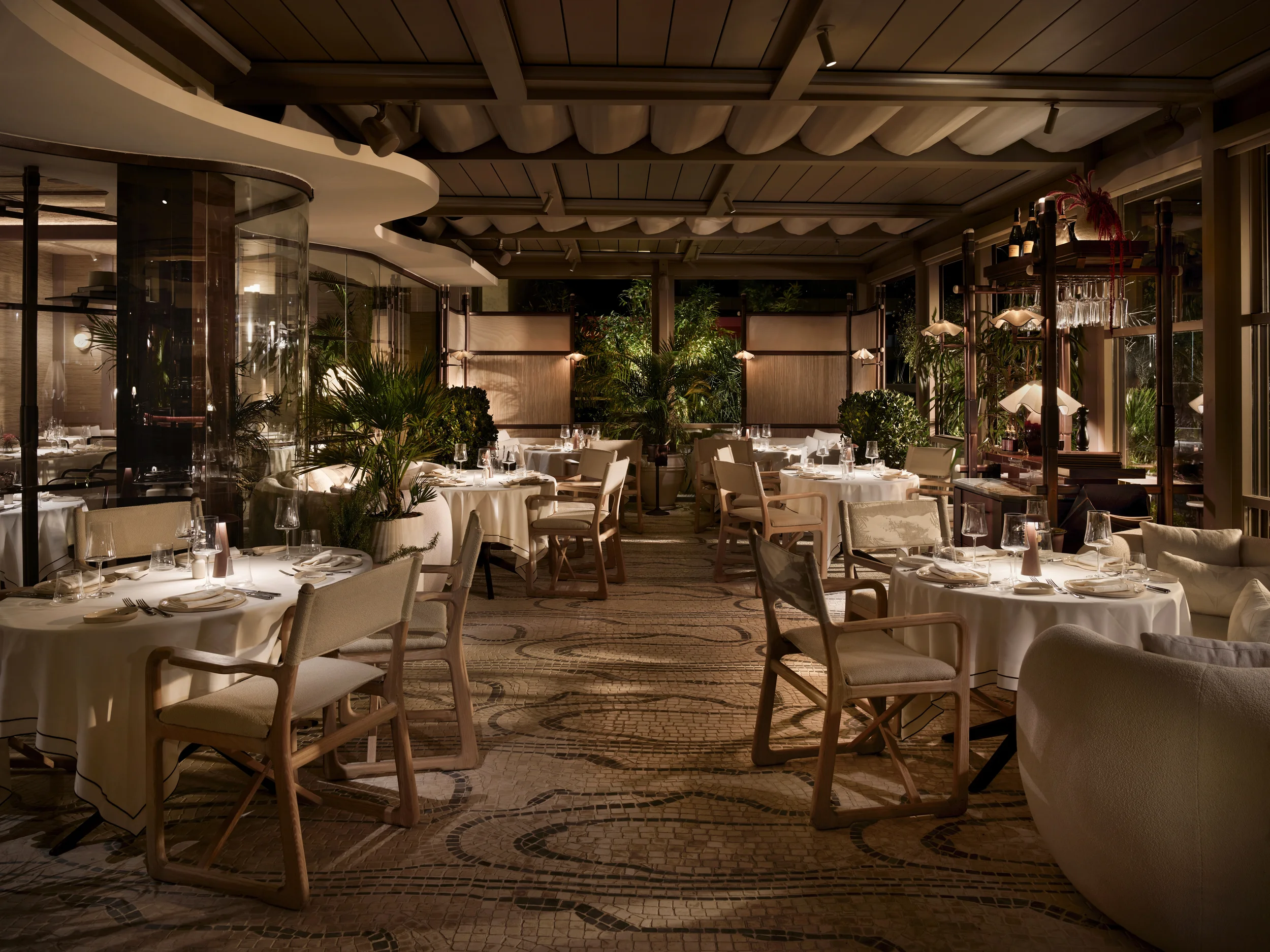


Belmond’s new Celia carriage transforms luxury rail travel into an immersive design experience. Created by Baz Luhrmann and Catherine Martin, the opulent private dining carriage celebrates craftsmanship, storytelling and the glamour of slow travel.