
RHS Chelsea Flower Show, London, UK
A Celebration of Horticultural Excellence: Highlights from the 2025 RHS Chelsea Flower Show
Each May, the grounds of the Royal Hospital Chelsea are transformed into a breathtaking tapestry of colour, creativity, and craftsmanship as the RHS Chelsea Flower Show returns to London. Widely regarded as the most prestigious flower show in the world, Chelsea is not just a celebration of horticulture but a barometer of evolving garden design, sustainability, and innovation.
The 2025 edition of the show did not disappoint—unveiling a rich variety of show gardens, boundary-pushing concepts, and emerging themes that speak to our changing relationship with nature. From immersive woodland retreats to drought-resistant planting schemes, this year’s highlights offered both escapism and environmental insight. With world-class designers, specialist growers, and visionary creatives in attendance, Chelsea once again cemented its role as the crown jewel of the horticultural calendar.
A Brief History of the RHS Chelsea Flower Show
Organised by the Royal Horticultural Society, the Chelsea Flower Show was first held in 1913 and has since become a landmark event in British culture. Originally hosted at Kensington, it moved to its current site in the grounds of the Royal Hospital Chelsea, where it has flourished for over a century. The show has grown to become a global phenomenon, attracting royalty, celebrities, designers, and green-fingered enthusiasts from around the world.
More than just a visual spectacle, the show plays a key role in shaping gardening trends and environmental thought leadership. Whether you’re a landscape designer, a city dweller with a window box, or simply a lover of beauty and innovation, the Chelsea Flower Show offers inspiration at every turn.
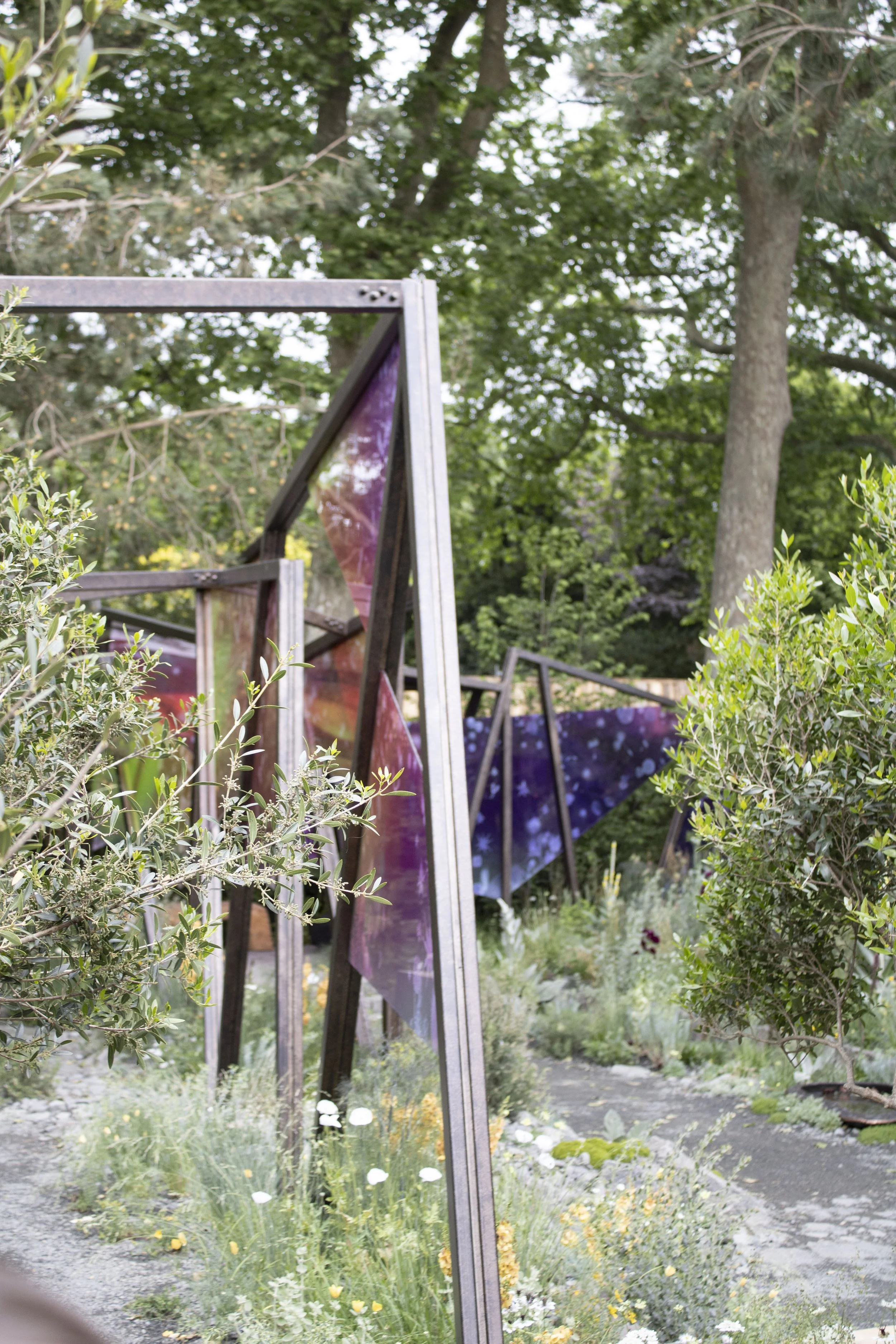

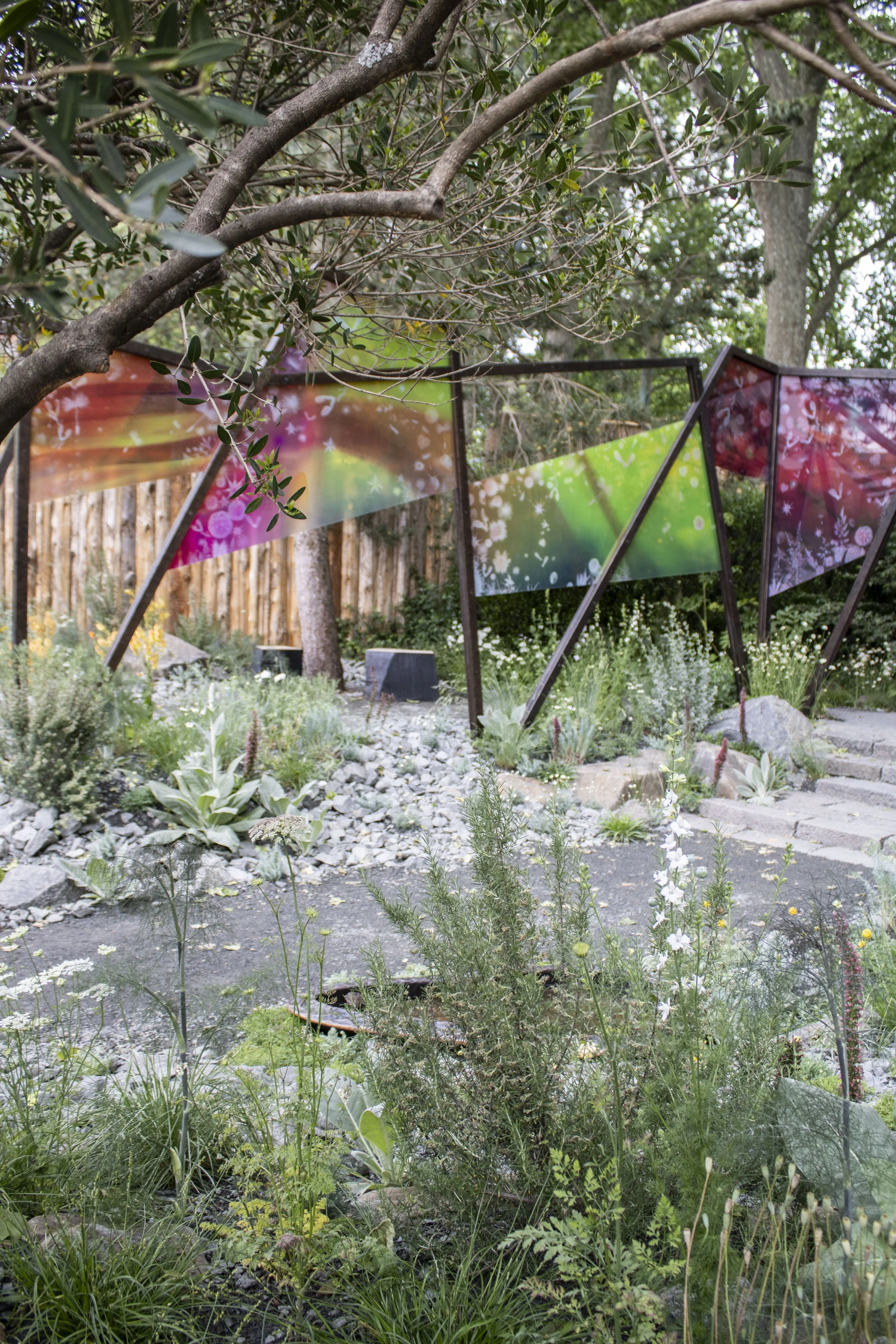
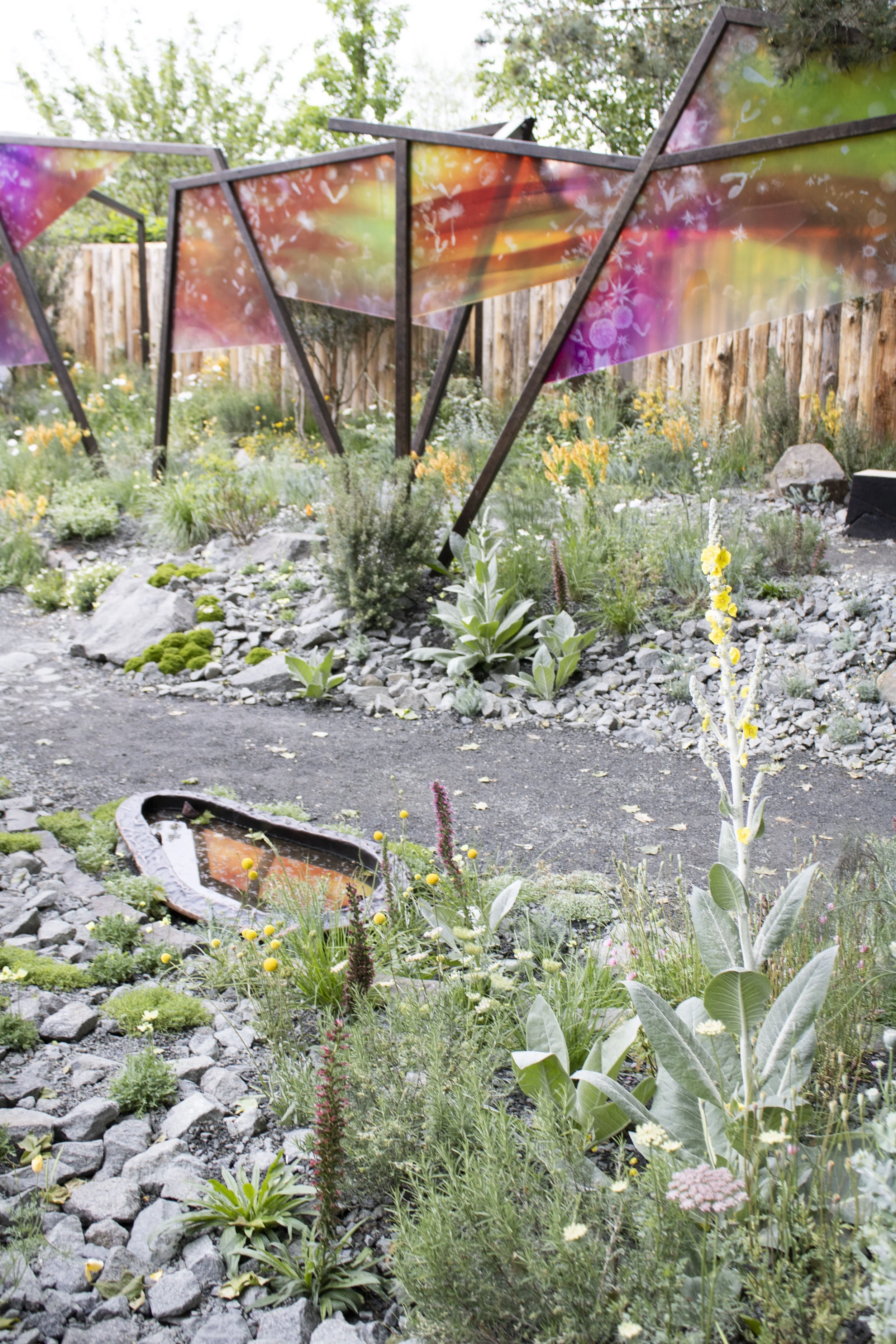
The King’s Trust Garden: Seeding Success
Designed by Joe Perkins | Built by The Landscaping Consultants | Sponsored by The King’s Trust & Project Giving Back
Resilience, renewal, and the quiet power of potential lie at the heart of The King’s Trust Garden: Seeding Success. Inspired by the tenacity of pioneer plants—those that first take root in the harshest of environments—this garden is a poignant metaphor for the journeys of young people supported by The King’s Trust, and the transformative potential that lies within them.
The landscape conjures a dialogue between adversity and hope. Basalt pathways cut through naturalistic drifts of grasses, silvery-grey sub-shrubs, and soft perennials, culminating in a secluded space for reflection and calm. The muted palette is enlivened with precise bursts of colour from plants like Papaver miyabeanum ‘Pacino’, Allium vineale ‘Hair’, and Hunnemannia fumariifolia, creating a sense of grounded optimism.
Screen-printed glass panels wind through the space like an invisible current, depicting seed dispersal in an abstract, artistic rhythm—seeds not only as symbols of regeneration, but of latent possibility.
Overhead, tall Pinus nigra offer a protective canopy, while an understorey of Ostrya carpinifolia and Phillyrea angustifolia adds softness and structure. The planting evokes the resilience of nature in the face of inhospitable conditions, drawing a compelling parallel with the strength and adaptability of youth navigating uncertain terrain.
Following its appearance at Chelsea, the garden will take root in West London at Uxbridge College, where students on The King’s Trust programme—alongside the local community—will maintain and evolve the space. It is there that the garden will continue its mission: to offer opportunity, foster growth, and celebrate the promise held in every seed, and every young person.

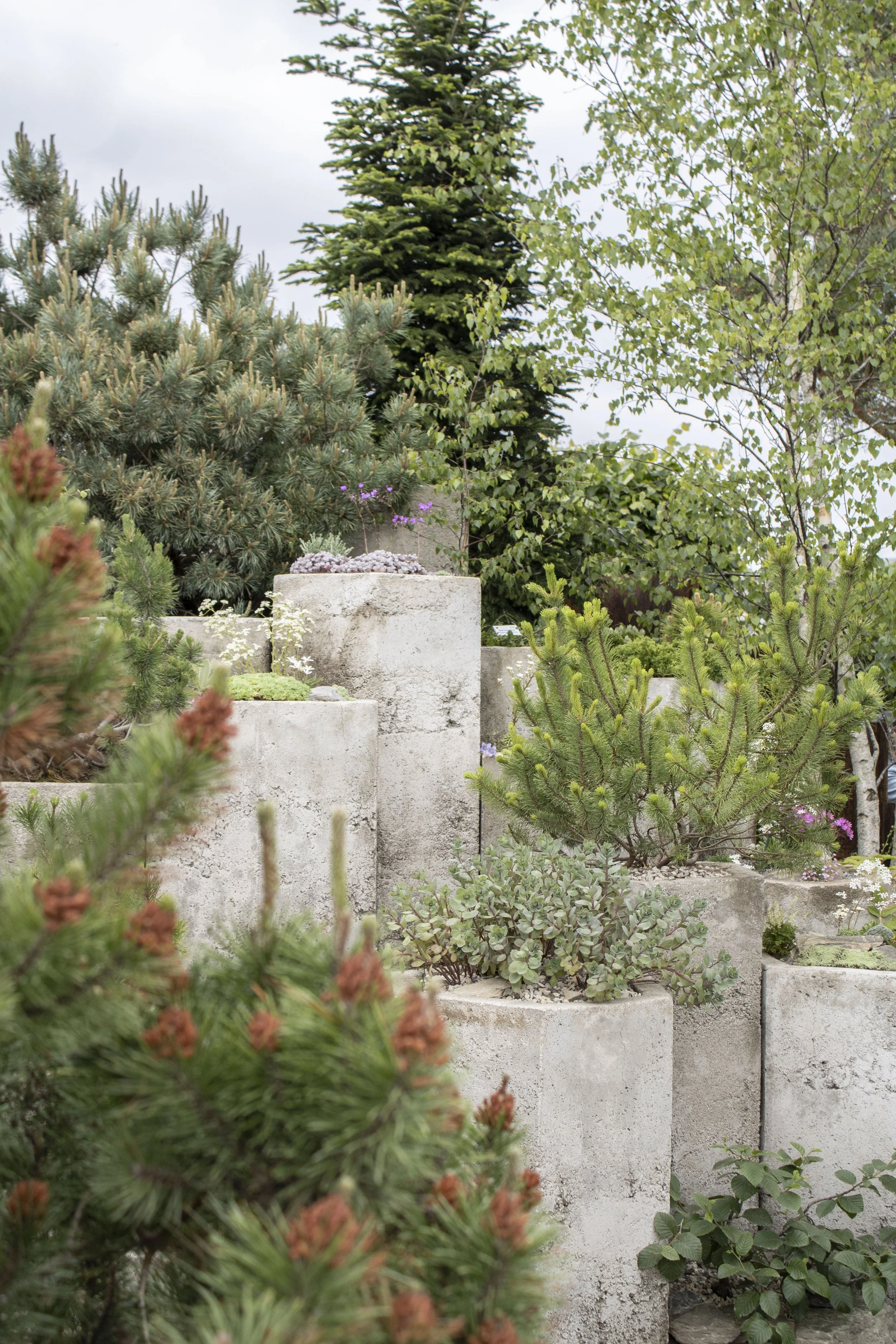
The British Red Cross ‘Here for Humanity’ Garden
Designed by John Warland & Tom Bannister | Built by Luxe Exteriors | Sponsored by The British Red Cross
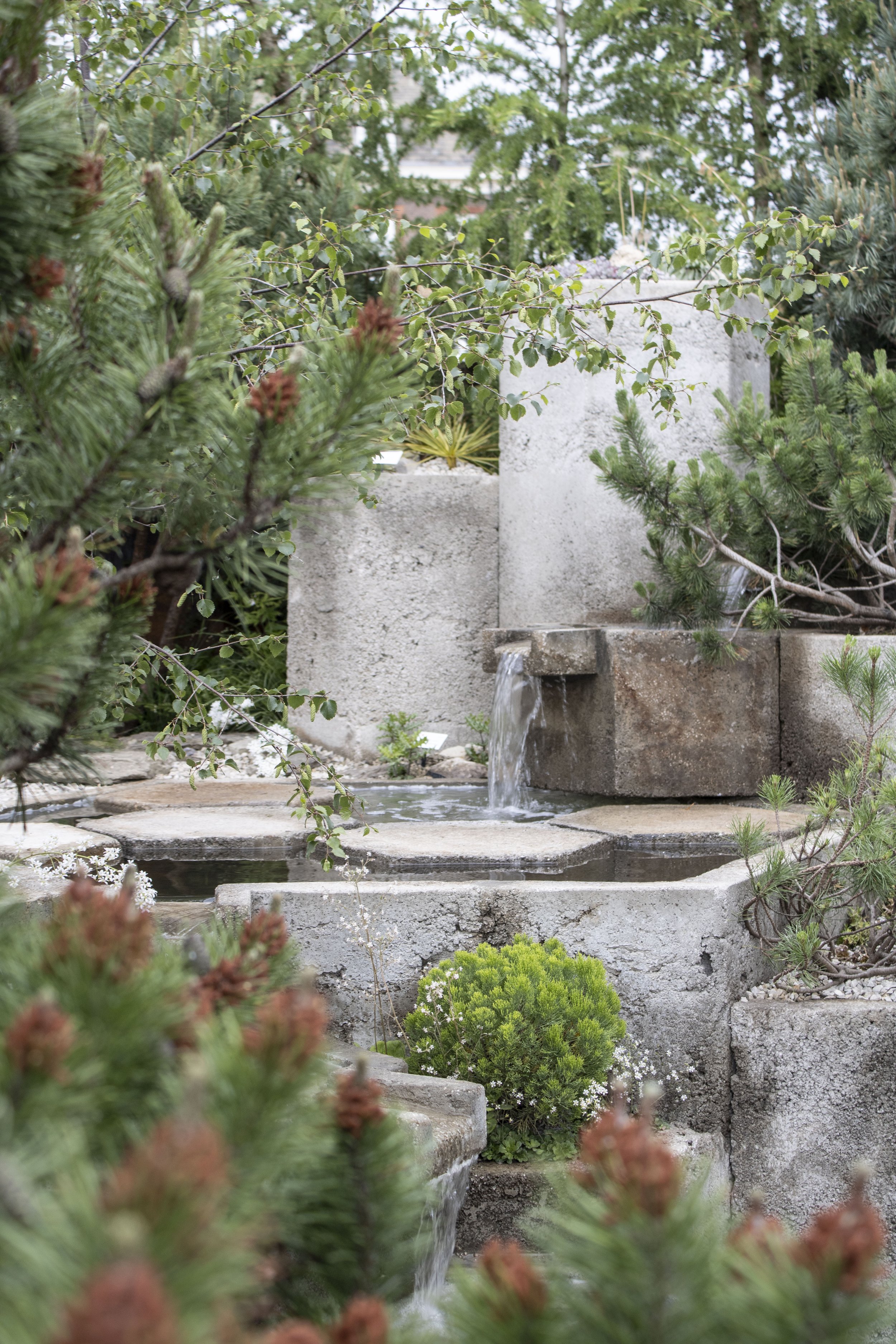
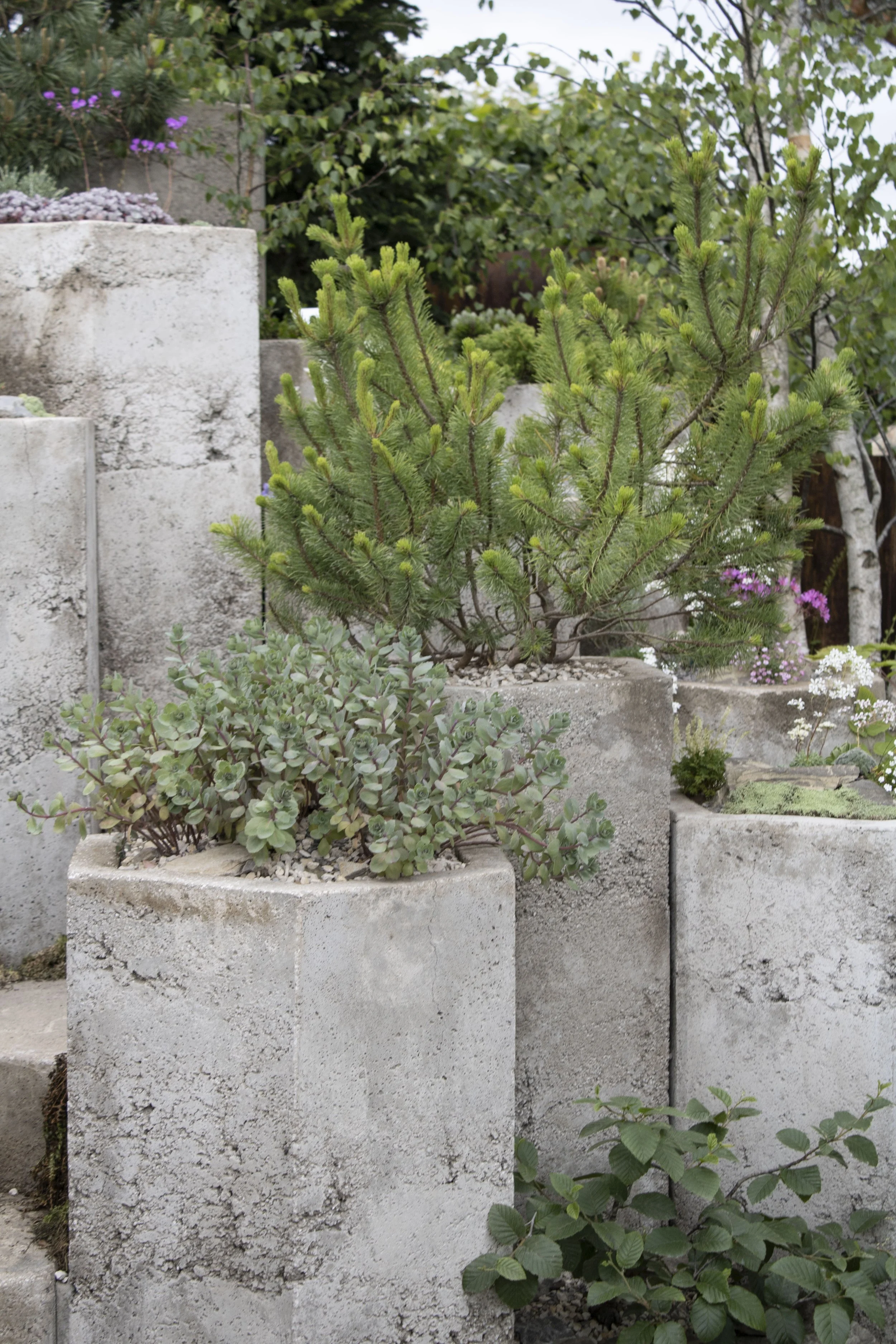
A contemporary take on an alpine landscape, The British Red Cross Garden honours the legacy of Henri Dunant—the Swiss humanitarian who founded the Red Cross Red Crescent Movement—and the enduring compassion of its global network of volunteers. This is a garden rooted in empathy, strength, and the quiet dignity of service in times of crisis.
Evoking the rugged beauty of alpine terrains, the design uses tall, sculptural stone planters reminiscent of traditional alpine troughs. Crevice and scree planting techniques allow a rare and diverse collection of plants to flourish—many of which originate from regions recently supported by Red Cross disaster relief, including Morocco, Turkey, and the UK. These botanical connections serve as living tributes to the charity’s work across continents.
Flowing through the garden are cooling, meditative mountain streams that bring movement and serenity. Anchoring the space are stately Pinus cembra (Swiss pine), a botanical nod to the charity’s origins and a symbol of endurance in the face of adversity.
Though contemporary in style, this space has a timeless soul—designed as a public sanctuary, a place for contemplation and connection. Following the show, the garden will be permanently relocated to the grounds of Maudsley Hospital in South London. There, within the UK’s leading NHS mental health trust, it will provide patients, staff, and carers with a place to pause, reflect, and reconnect with nature.
Killik & Co ‘Save for a Rainy Day Garden’
Designed by Baz Grainger | Built by Landform Consultants | Sponsored by Killik & Co
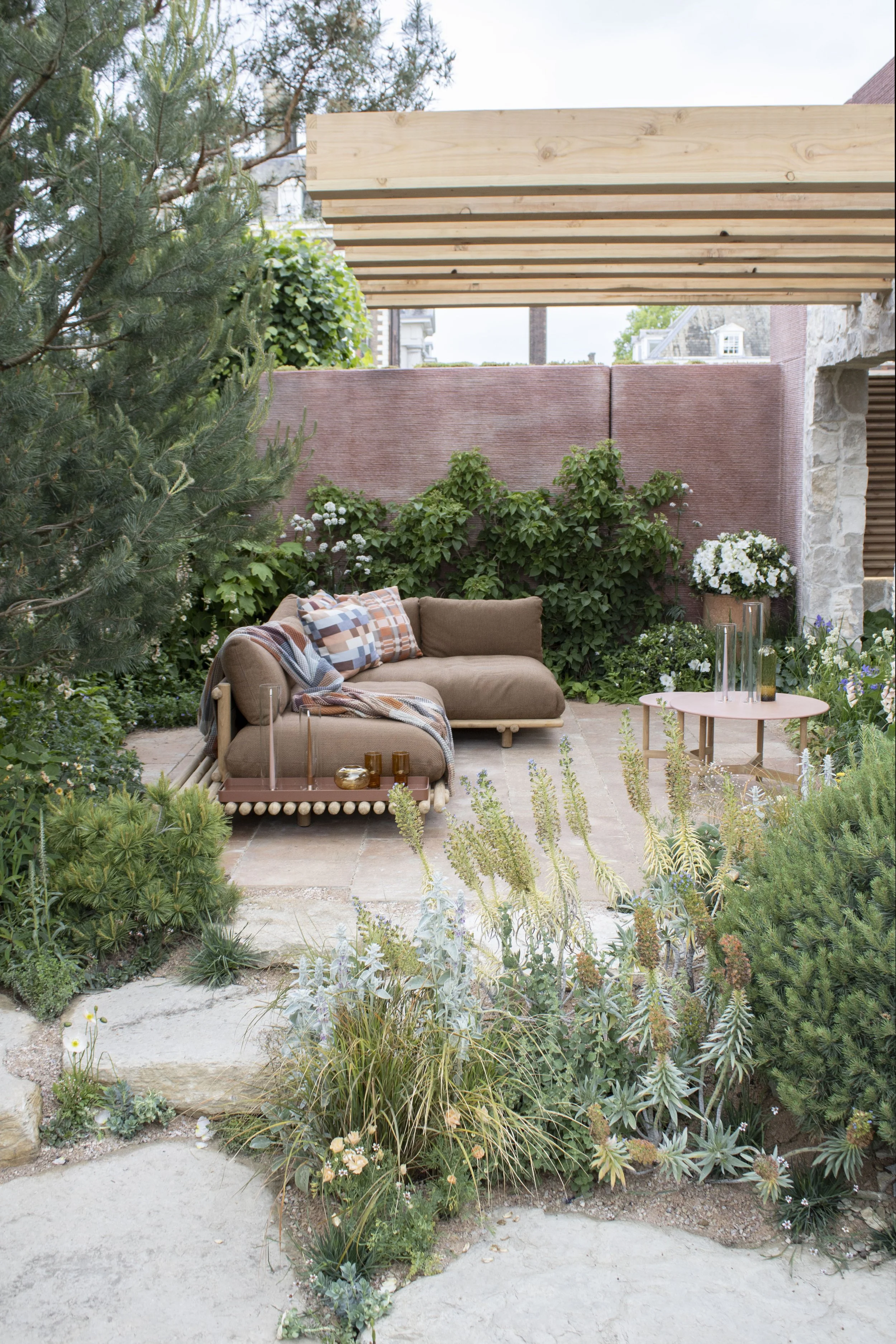
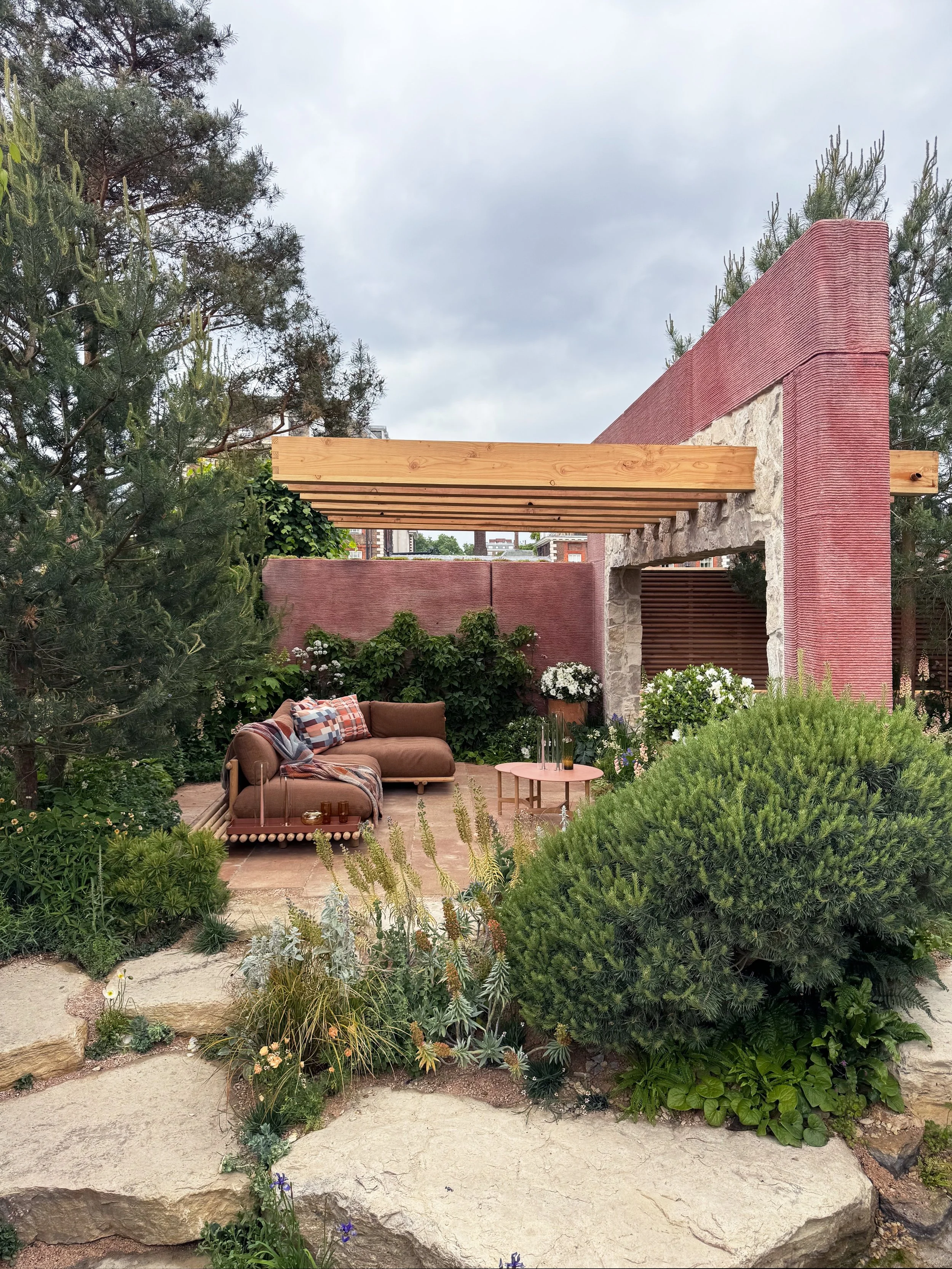
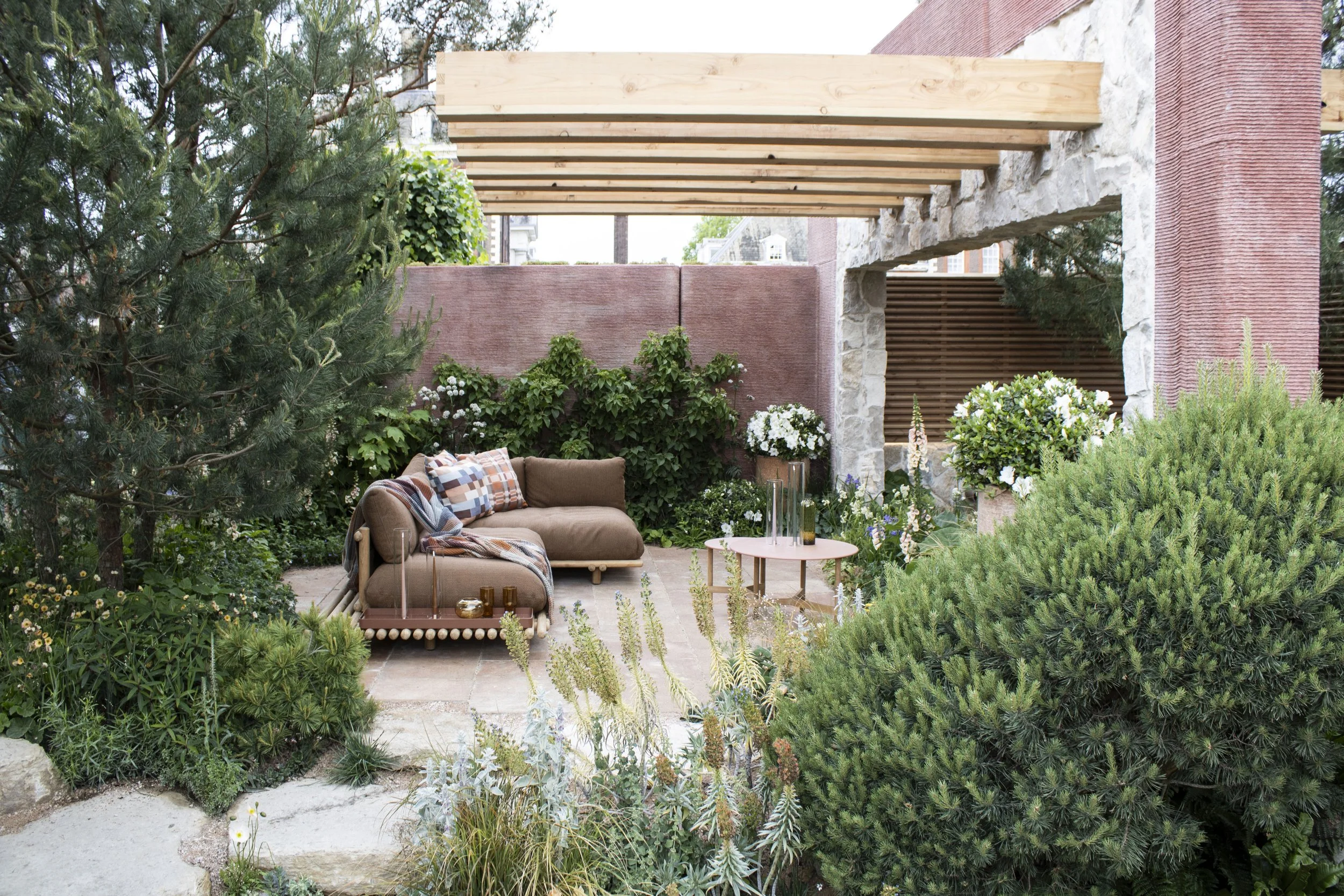
Forward-thinking and climate-resilient, The Save for a Rainy Day Garden presents a bold vision for the future of the modern British garden. Set in a semi-rural location in the south of the UK, this is a space that balances sustainability with style—designed for a grown-up family navigating the environmental challenges of the decades ahead.
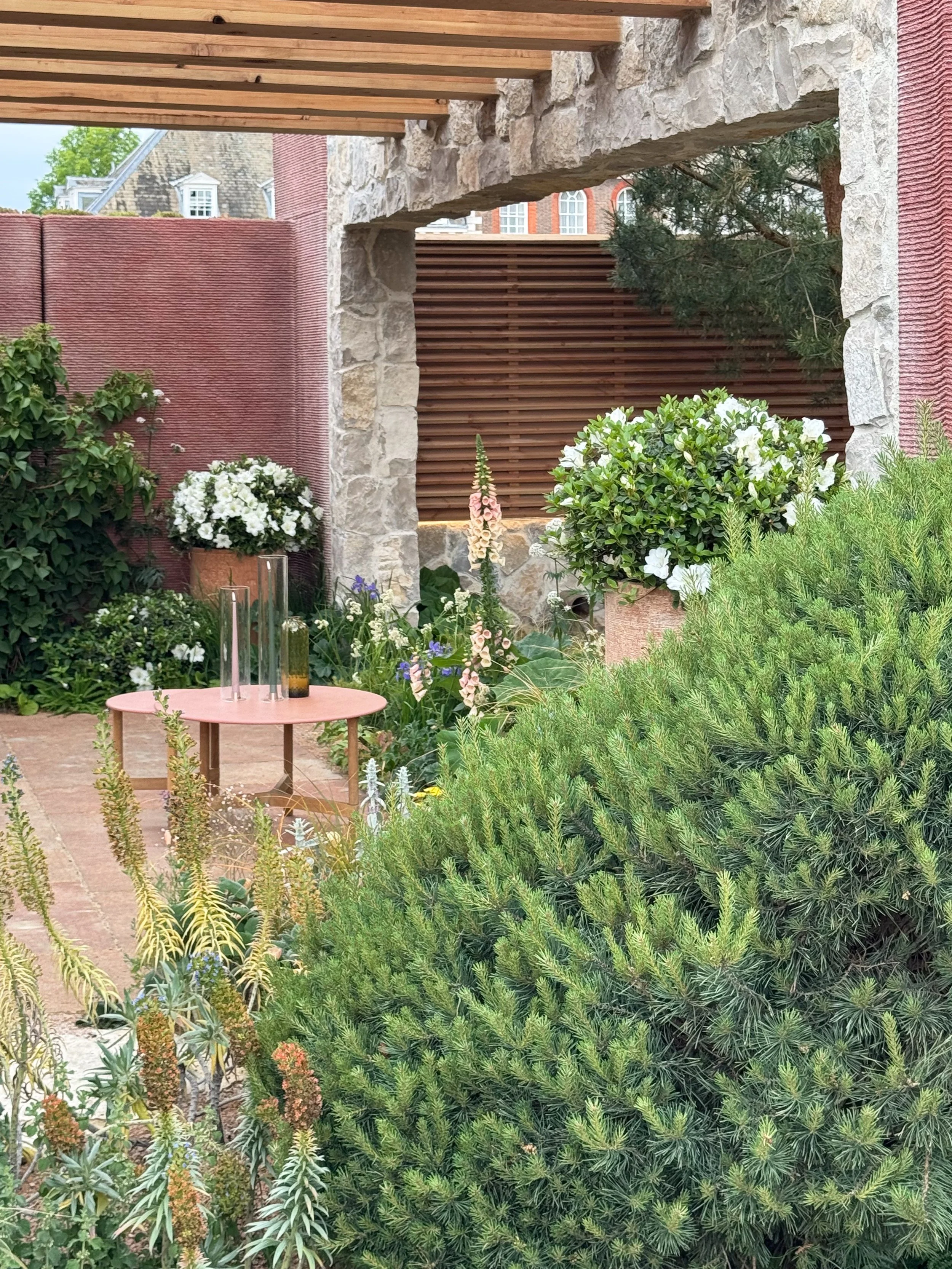
Inspired by rainscaping principles and Mediterranean planting, the garden imagines what southern English gardens could look like 25 years from now, as warming climates shift what can thrive. Drought-tolerant, flood-resistant ‘future trees’ such as Zelkova serrata and Pinus mugo ‘Mughus’ anchor the space, while a resilient and elegant planting palette of peach, blue, and rust nods to the South of France and northern Spain. Species like Persicaria virginiana ‘Filiformis’, Artemisia ludoviciana ‘Valerie Finnis’, and Salvia sclarea evoke a familiar cottage garden feel, reinterpreted for tomorrow’s climate.
Function meets form through innovative water management features. Rainwater is harvested via a sleek, architectural pergola with cantilevered stone troughs, feeding into an overflow feature designed to absorb heavy rainfall. A steel tank integrated into the boundary collects run-off, while 3D-printed walls—low-impact and foundation-free—offer a sustainable approach to garden infrastructure. Permeable paths and cleverly designed channels ensure that excess water is absorbed where needed.
Amidst all this innovation, the garden remains deeply human. A relaxed family seating area offers a space for connection, framed by the gentle beauty of adaptive planting and thoughtful design.
After Chelsea, the garden will find new purpose at a Centrepoint women’s shelter in Camden, providing a calming and nurturing outdoor space for young women aged 18–21—a fitting legacy for a garden grounded in care, resilience, and forward vision.

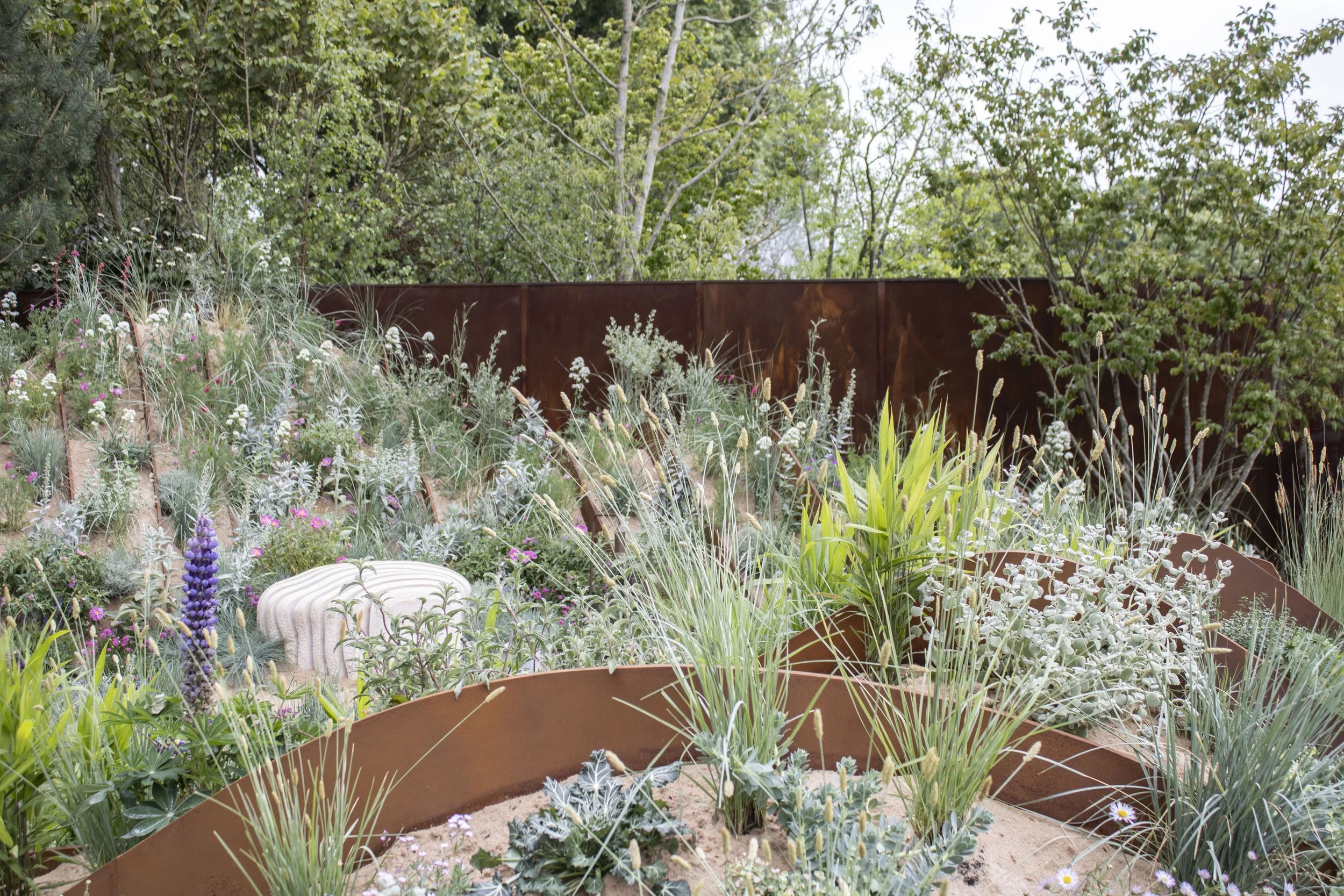
The Hospitalfield Arts Garden
Designed by Nigel Dunnett | Built by Landform Consultants | Sponsored by Hospitalfield Trust & Project Giving Back
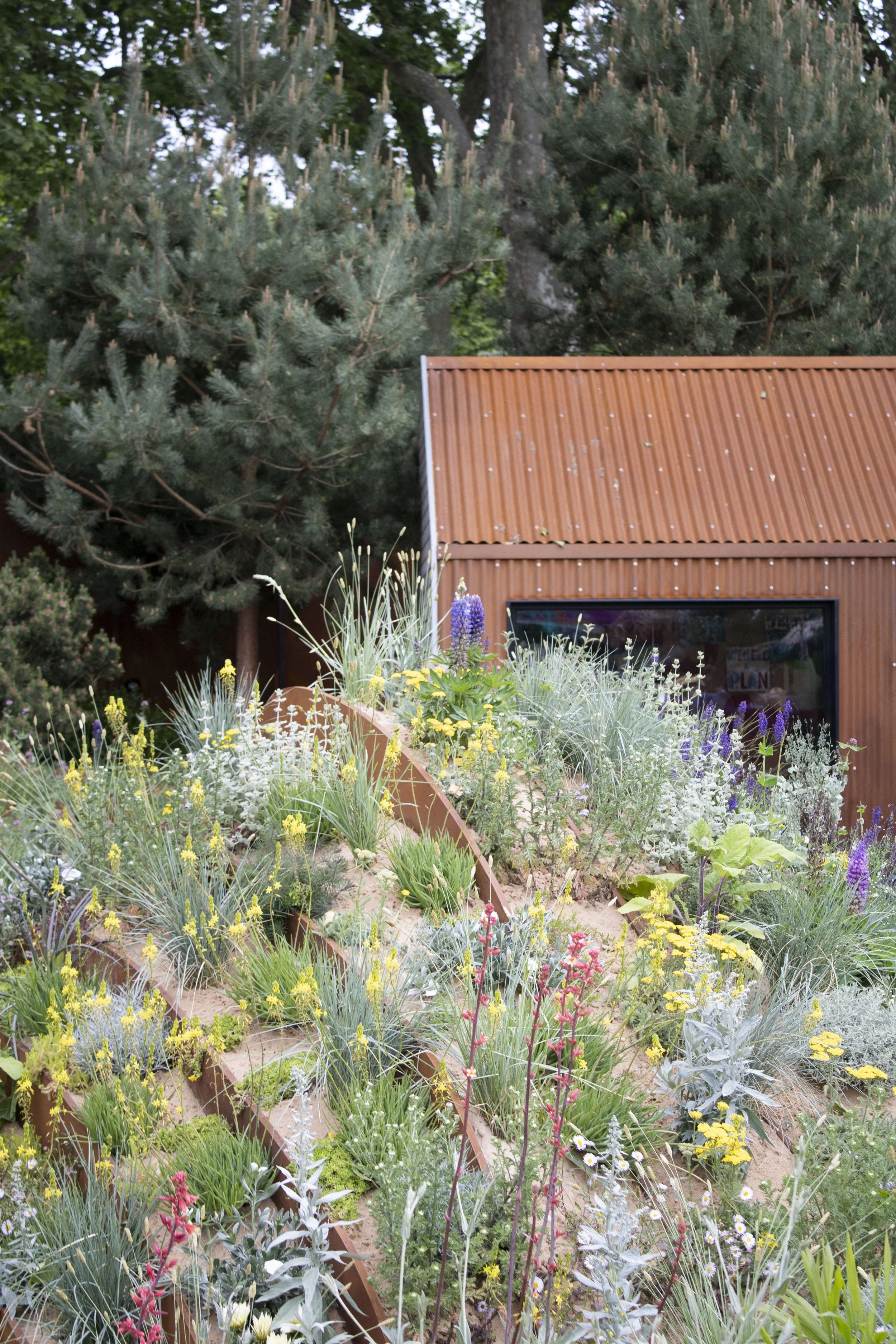
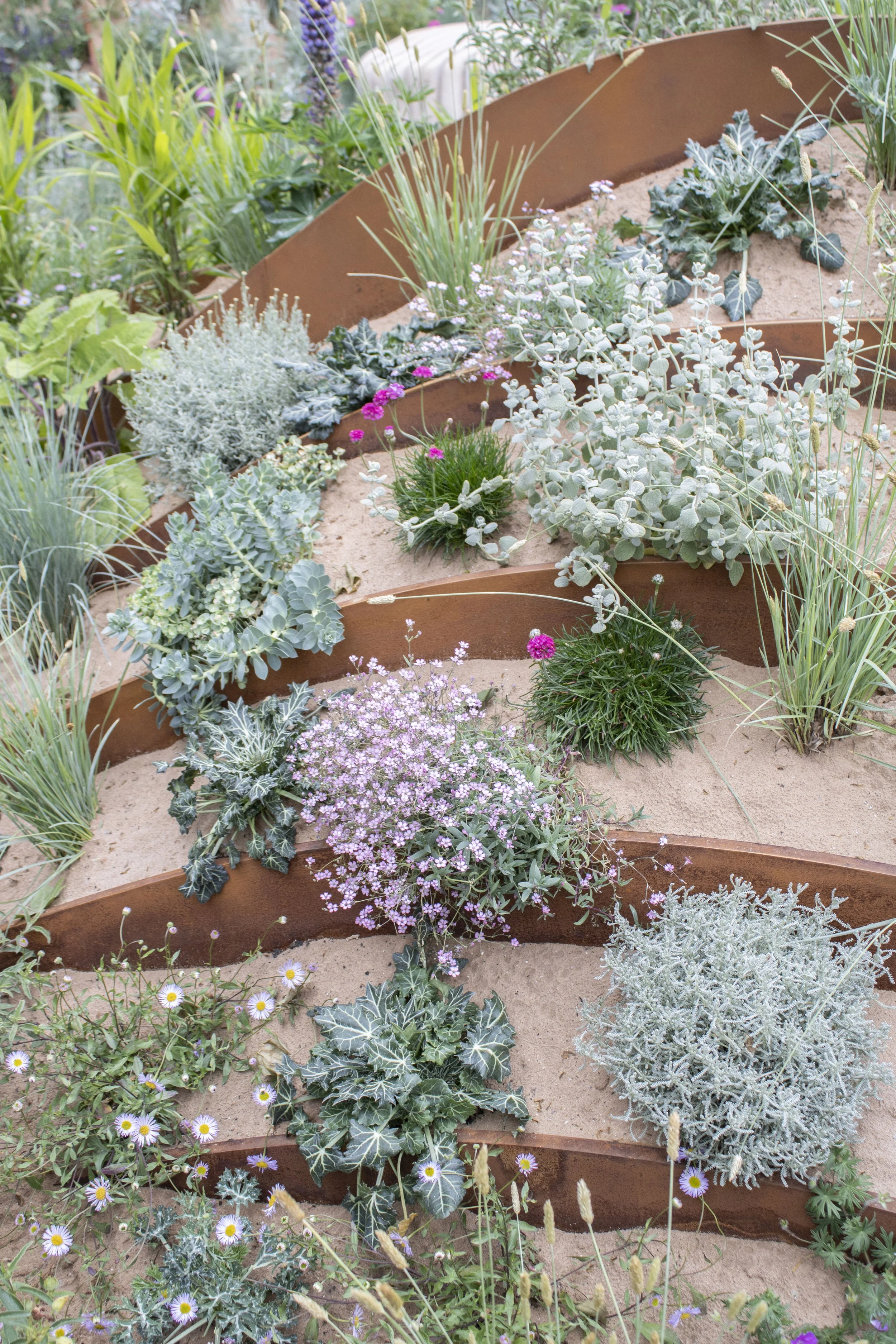
Rooted in the unique coastal environment of Scotland’s east coast, The Hospitalfield Arts Garden is a sculptural tribute to the soft, fragile beauty of sand dune landscapes. It captures the shifting topography and resilient spirit of this rare habitat, translating it into a dynamic space where nature and creativity converge.
At the heart of the garden sits the ‘artist bothy’—a studio and workspace seamlessly integrated into the surrounding sandbanks. This creative nucleus is complemented by a dune pool that harvests rainwater from the building and garden, underscoring the garden’s sustainable ethos.
The planting palette draws on coastal and Mediterranean influences, favouring tough, textured foliage in deep greens, blues, and greys. Specimens like Lagerstroemia indica ‘Natchez’, Tamarix ramosissima, and Geranium palmatum add both resilience and subtle drama, mirroring the natural palette of the dunes.
More than just a garden, this is a place for artists to work, reflect, teach, and gather—offering moments of quiet contemplation alongside spaces for performance and community engagement.
Following the show, the garden will be relocated to Ladyloan Primary School in Arbroath, Angus—where it will continue to inspire future generations.
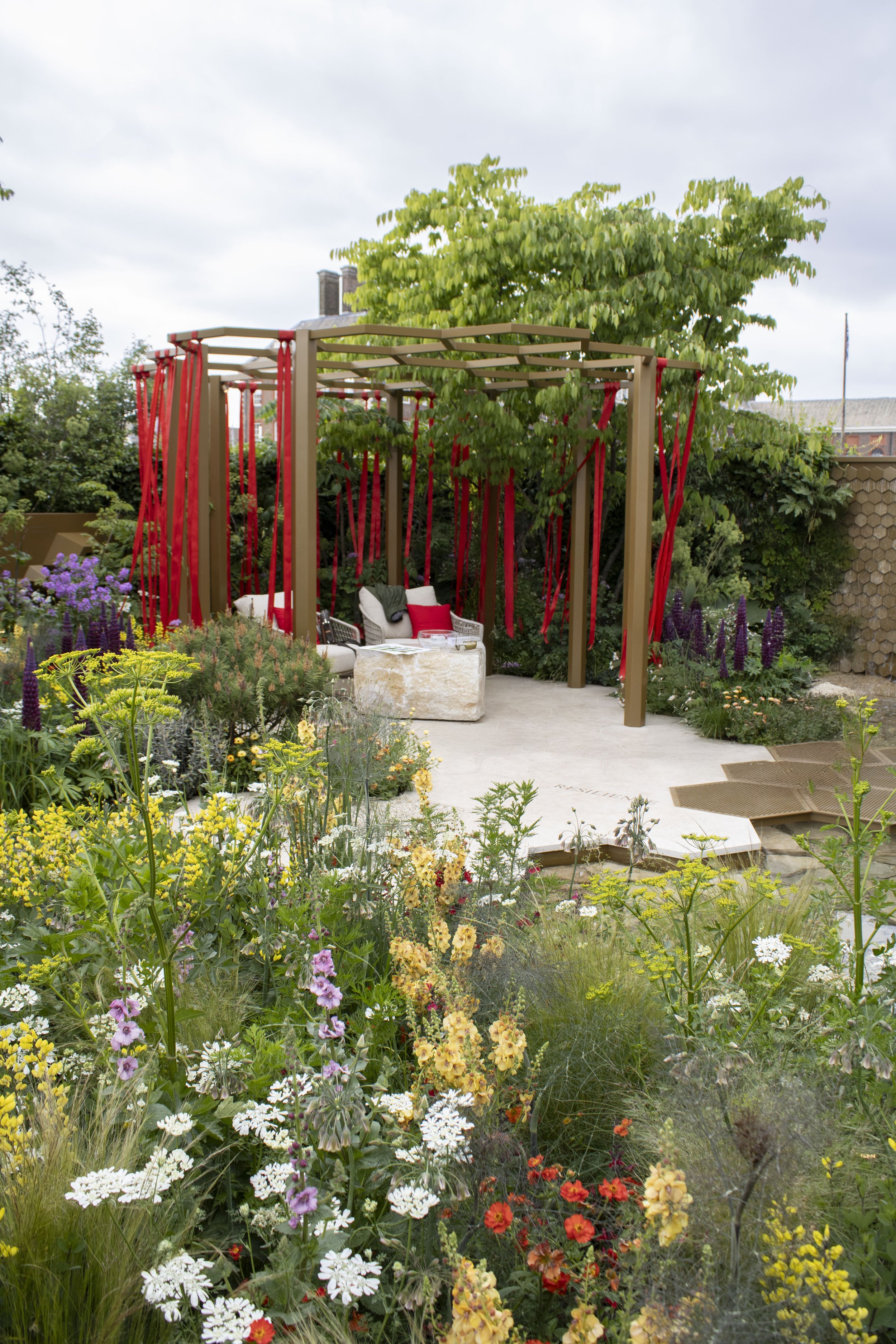
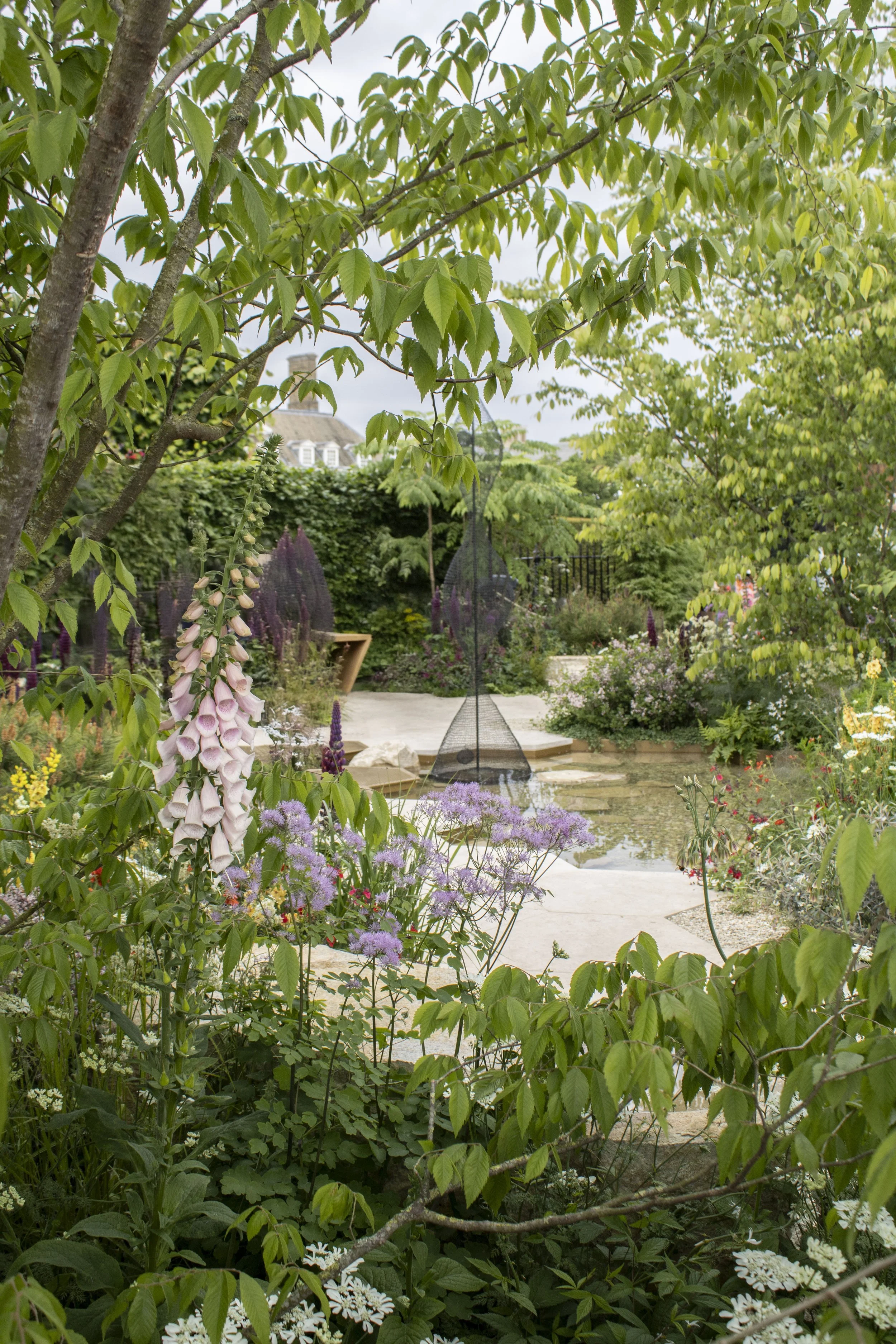
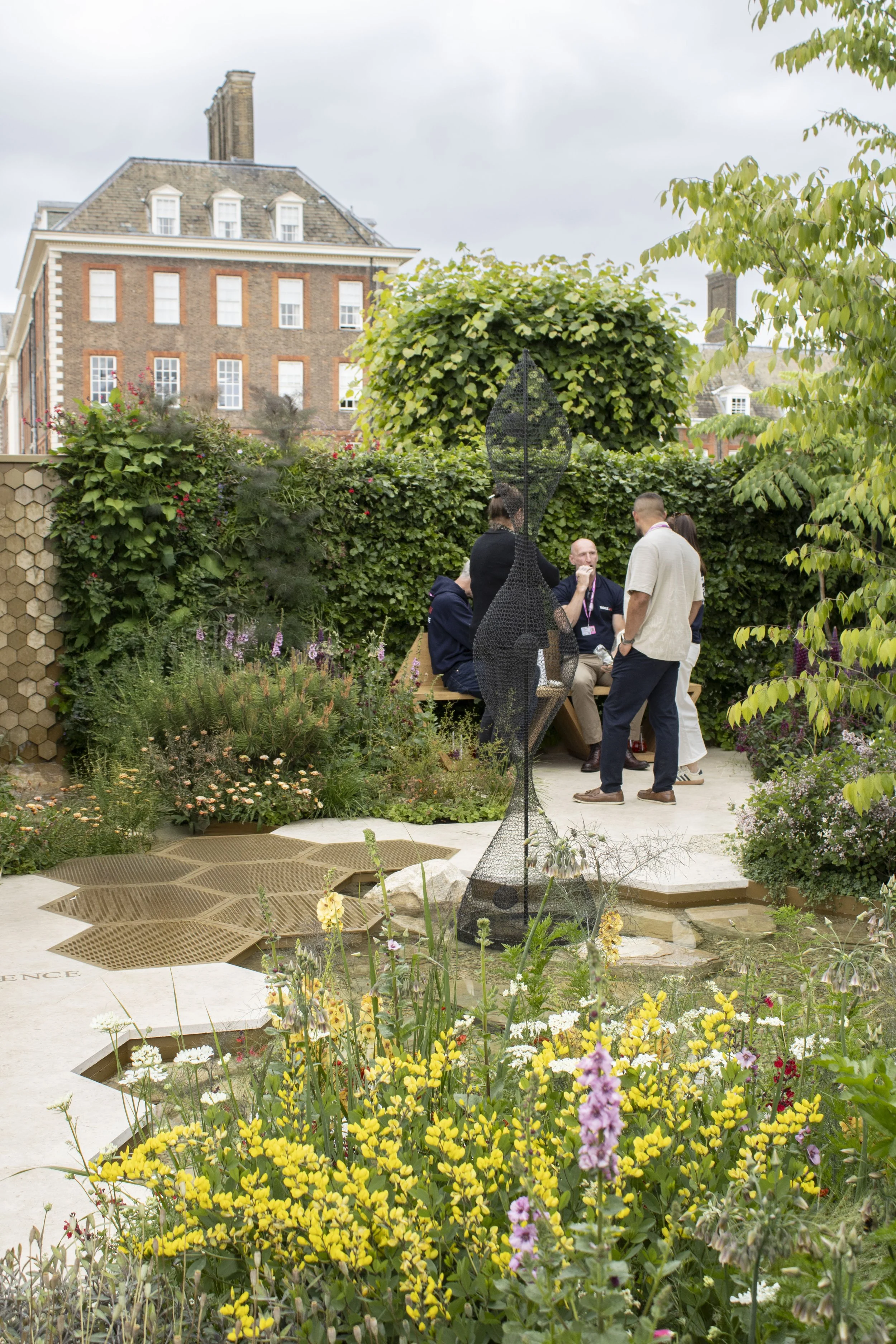
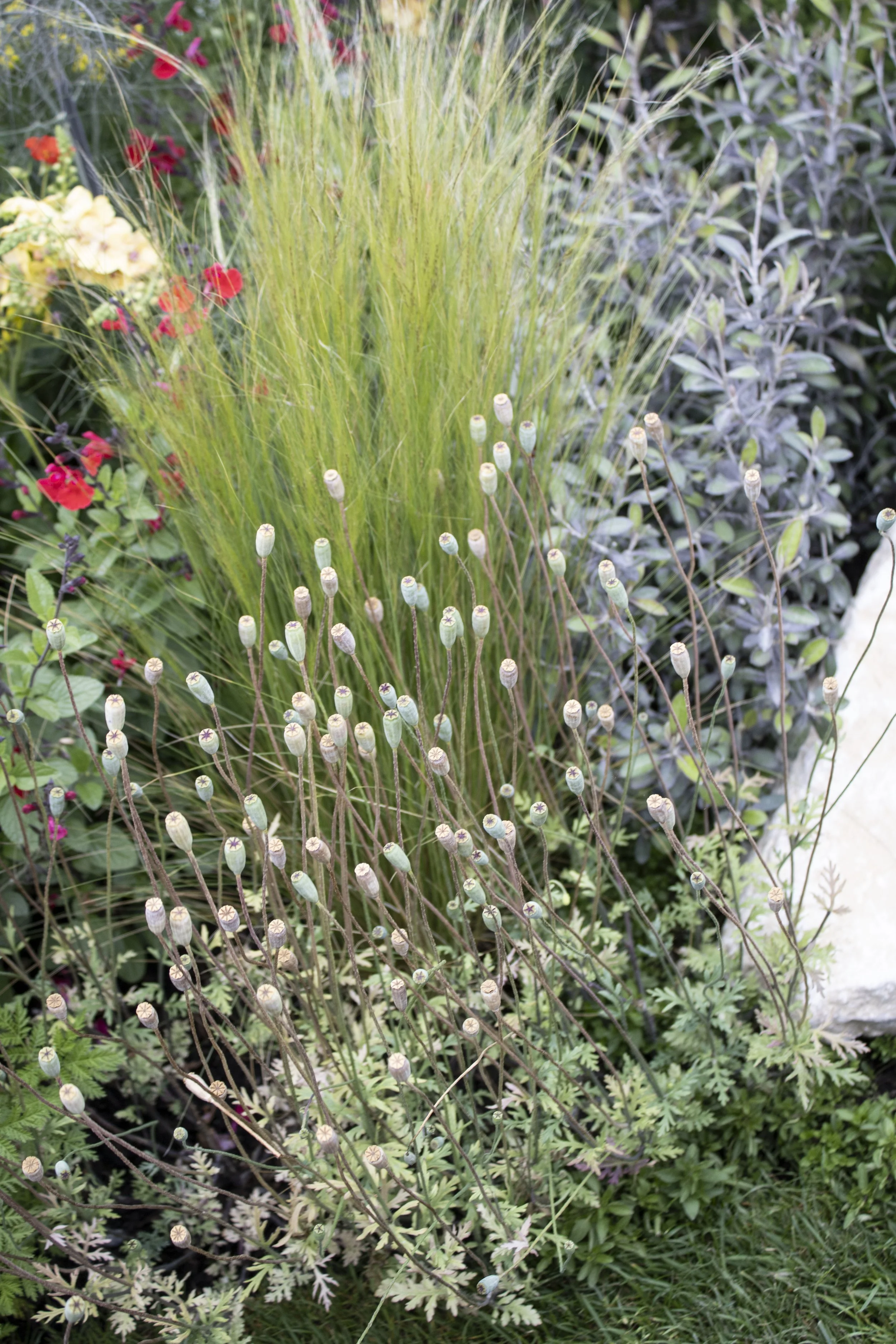
Tackle HIV Challenging Stigma Garden
Designed by Manoj Malde | Built by JJH Landscapes | Sponsored by ViiV Healthcare
This poignant and powerful garden commemorates over four decades of progress in HIV treatment—marking a journey from fear and stigma to empowerment, community, and hope. Designed with a deeply symbolic language, the space honours lives lost, celebrates medical breakthroughs, and uplifts those living with HIV today.
At the heart of the garden, statues by artist Ralph Bourdoukan stand as quiet memorials, offering space for reflection while acknowledging the weight of stigma that still lingers. Surrounding them, hexagonal paving patterns nod to the molecular structures found in HIV medication—subtle yet scientifically grounded motifs that bring depth to the design.
Water flows beneath a bridge—an emblem of transition, of crossing from diagnosis to life-affirming treatment. Around the garden, affirming messages are inscribed, with “Undetectable = Untransmittable” engraved into a bench, spreading an essential truth about the life-changing impact of effective HIV care.
A covered gazebo invites pause and quiet conversation, while the vibrant orange-red blooms of Eschscholzia californica ‘Red Chief’ echo the iconic red ribbon, weaving a narrative of visibility, resilience, and support. Towering Zelkova serrata trees offer shelter, presence, and a sense of protection—like silent guardians watching over the space.
Following the show, the garden will find a lasting home at Calthorpe Community Gardens in King’s Cross, London—offering staff, volunteers, and the wider community a space for connection, remembrance, and education.
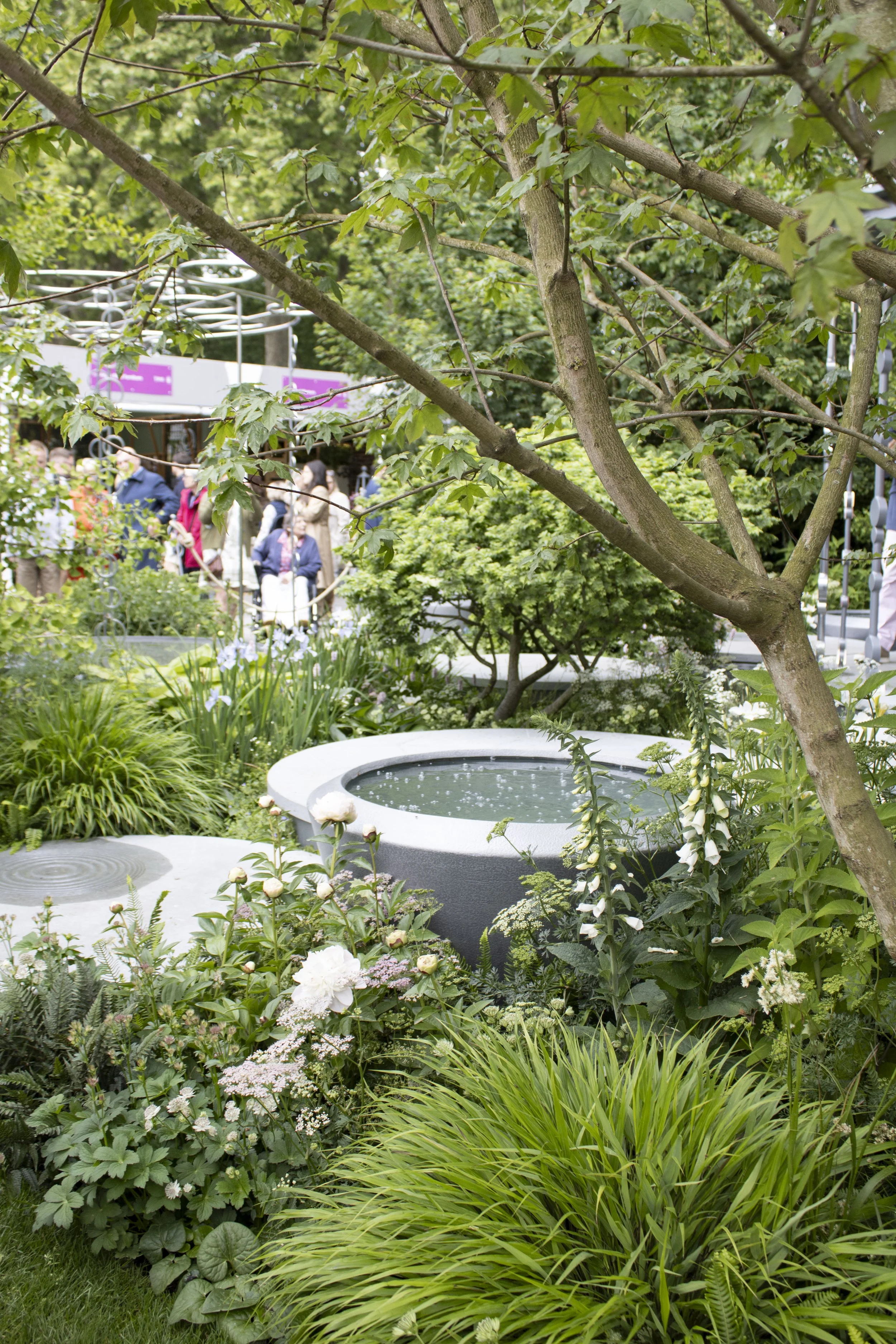
Boodles Raindance Garden
Designed by Dr Catherine MacDonald | Built by Gadd Brothers Trees & Landscapes | Sponsored by Boodles
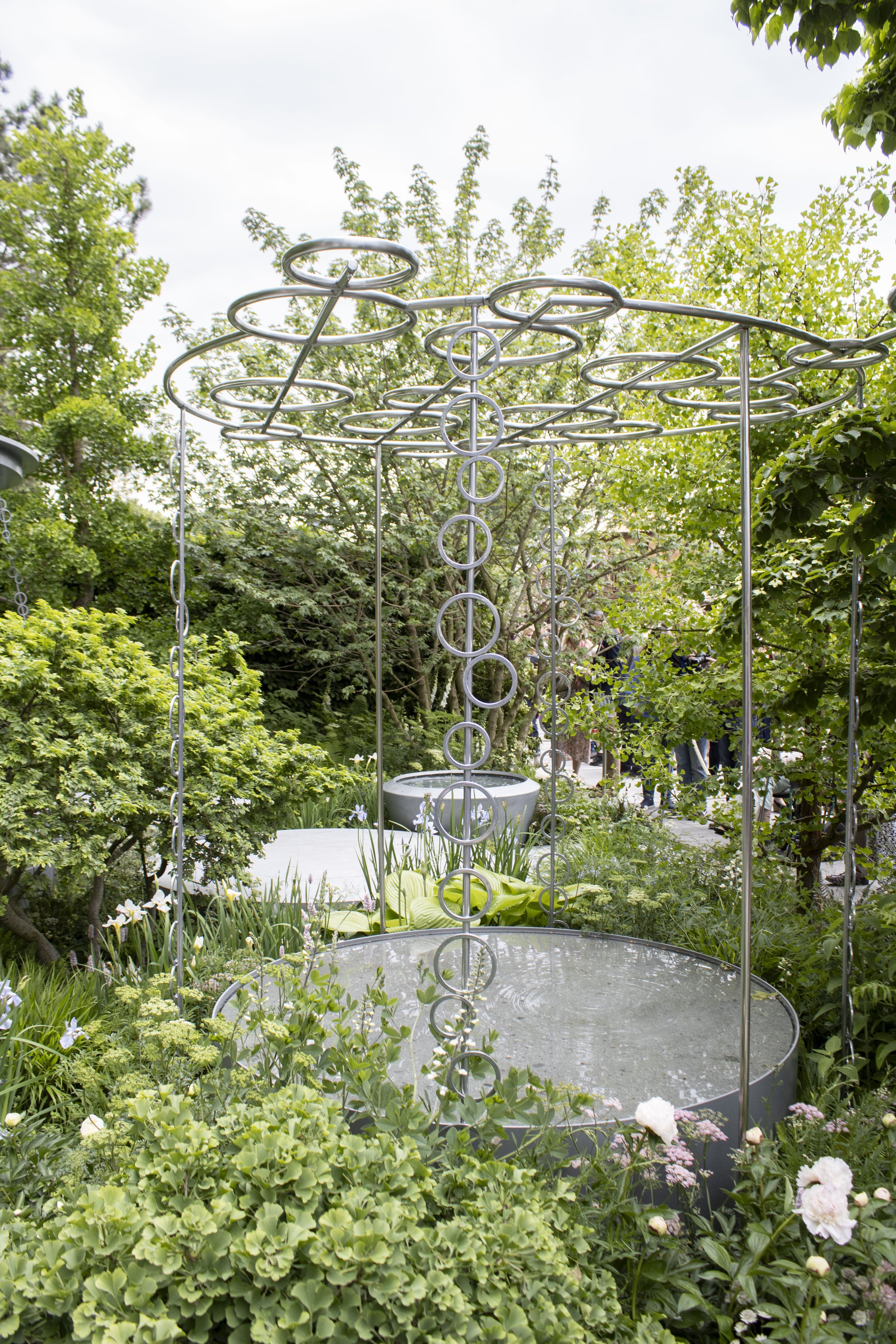
Created to mark the 25th anniversary of Boodles’ iconic ‘Raindance’ jewellery collection, this elegant and poetic garden space captures the fleeting beauty of water meeting stone. Drawing direct inspiration from a moment at RHS Chelsea a quarter-century ago—when designer Rebecca Hawkins observed raindrops forming patterns on stone—the garden translates this into a contemplative landscape of texture, form, and reflection.
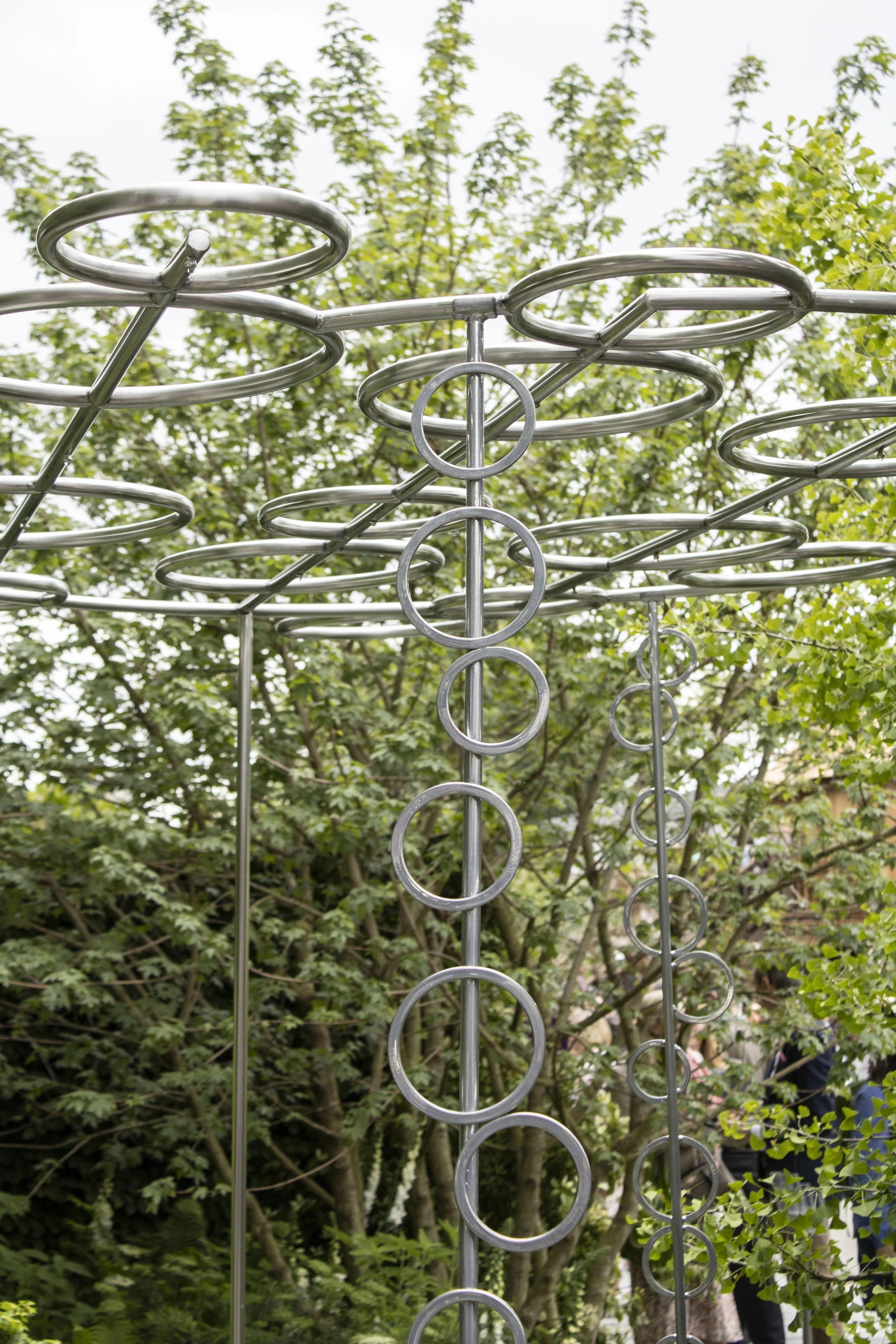
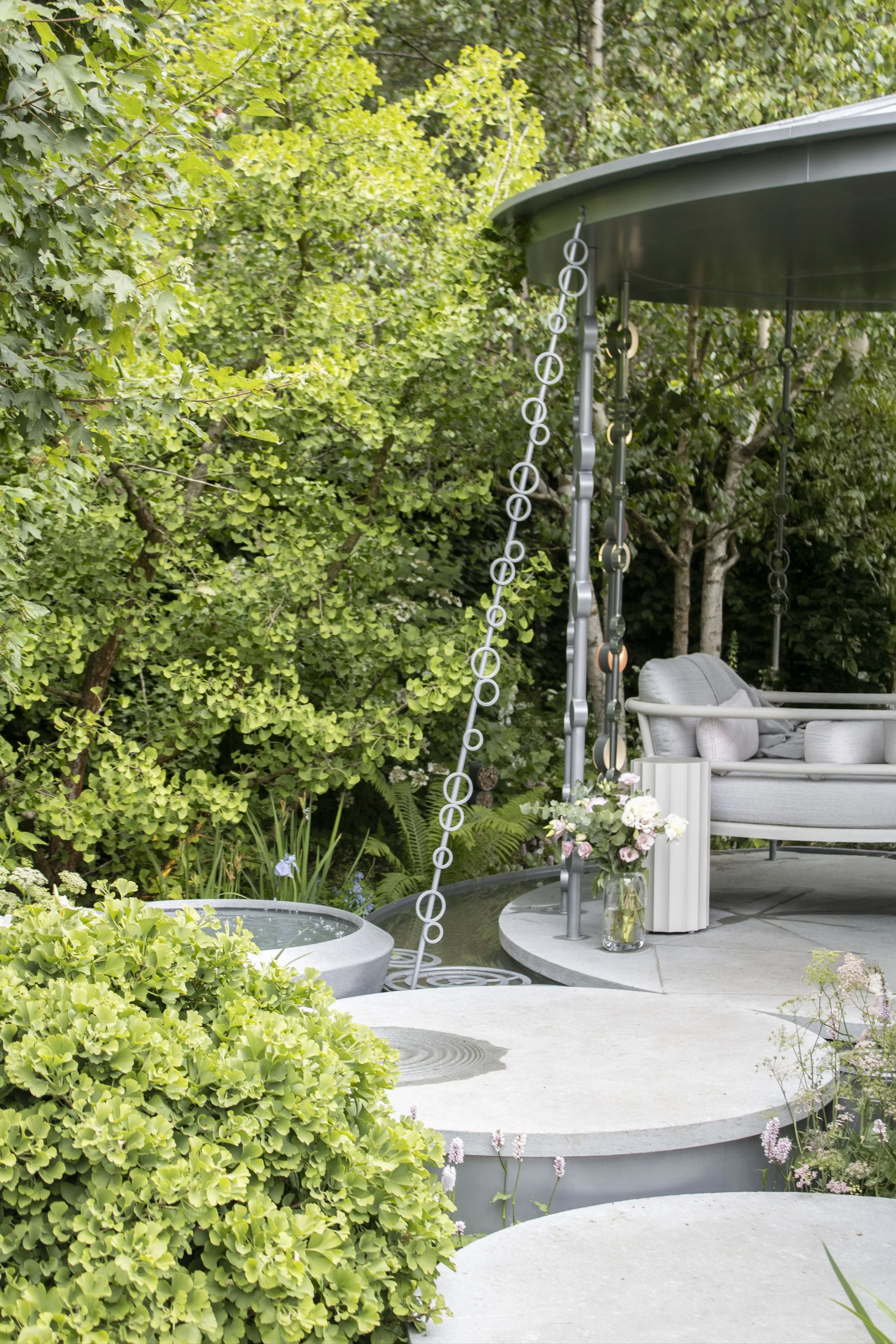
Soft drifts of Astrantia ‘Shaggy’ and Paeonia ‘Noémie Demay’ emerge like gemstones from a lush carpet of ferns, echoing the refined opulence of the collection that inspired them. A silvery palette flows throughout the space, with platinum-toned steel water features and a custom pavilion crowned by a zinc domed roof—channelling rainwater into a circular rill at its base in a quiet tribute to the dance of rainfall.
The atmosphere is serene and intimate: a garden imagined for a mature family, offering a quiet retreat nestled within a larger rural landscape—perhaps in the countryside of south-west England or Wales. Seating areas are discreetly placed for restful pauses, while the garden’s gentle choreography of light, water, and planting invites stillness and reflection.
With sculptural form and natural elegance, the Raindance Garden beautifully blurs the line between jewellery, memory, and the landscape itself.
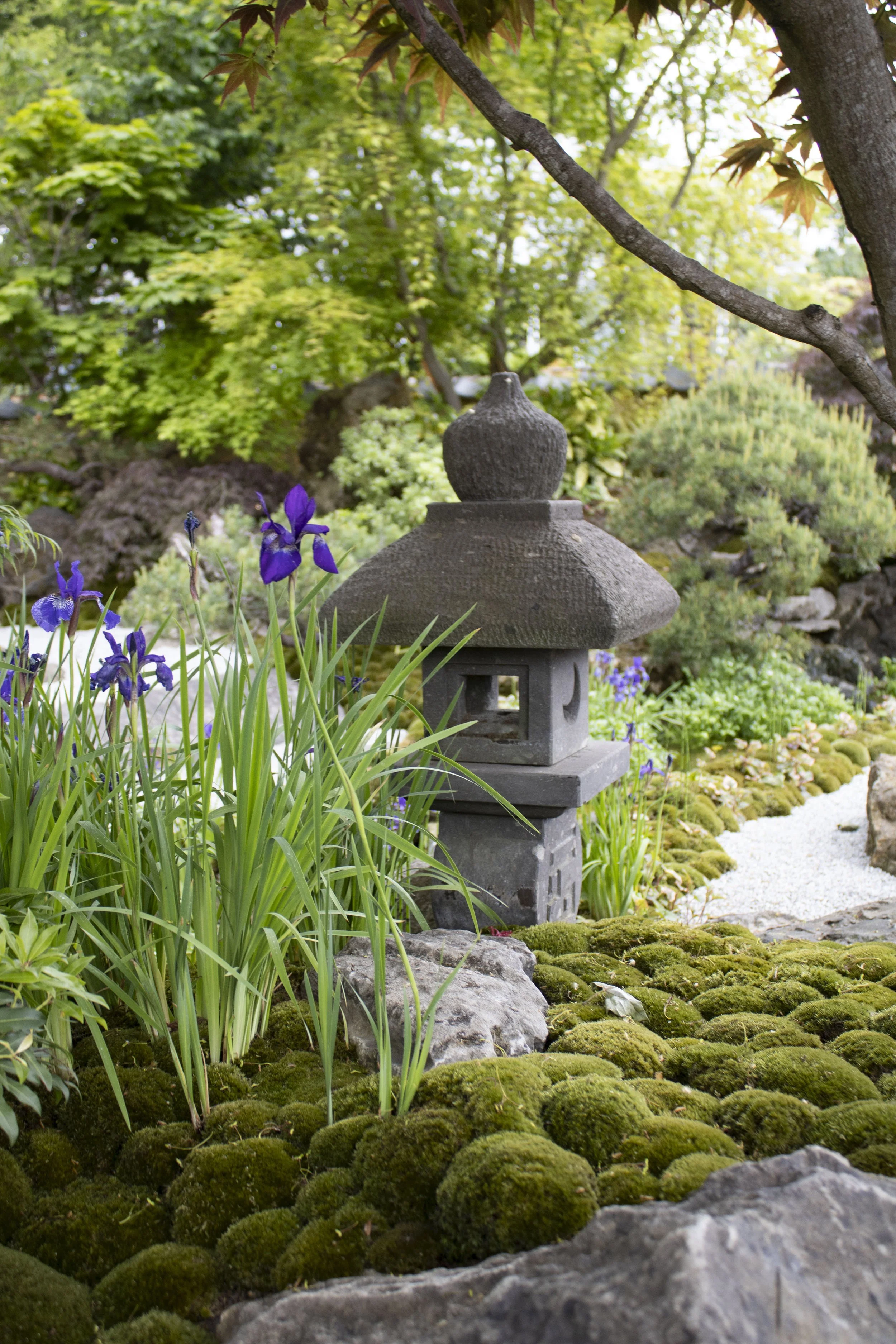
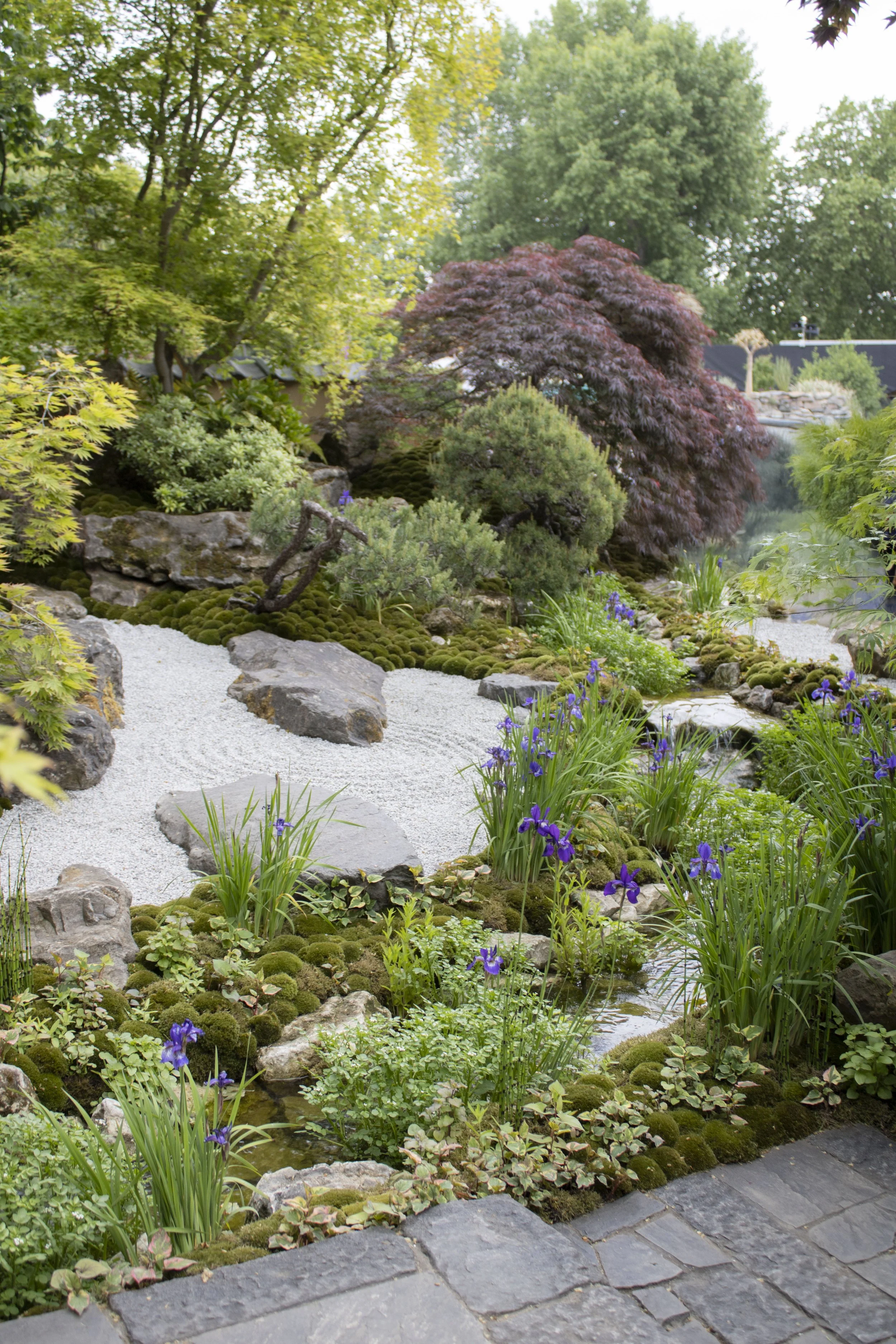
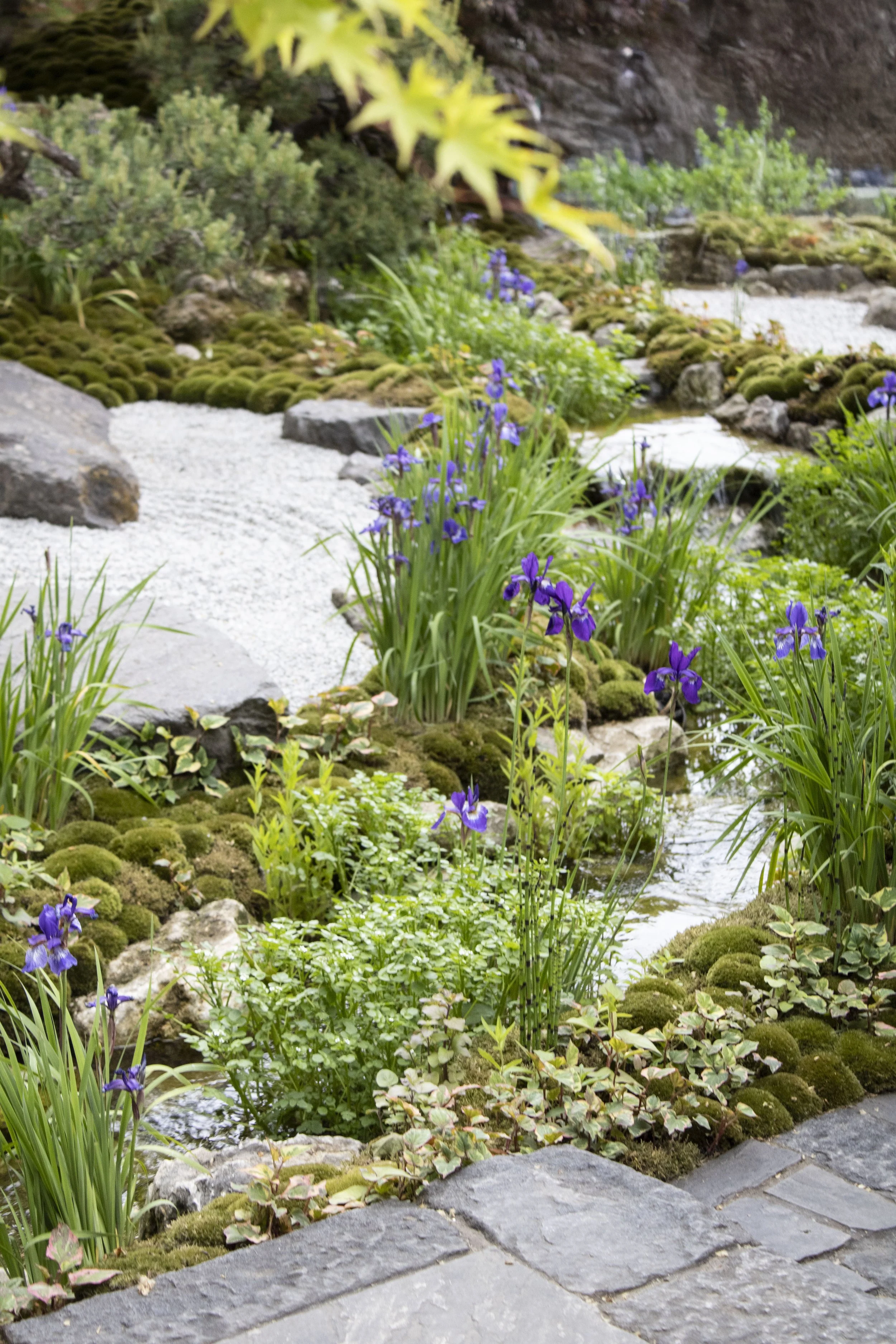
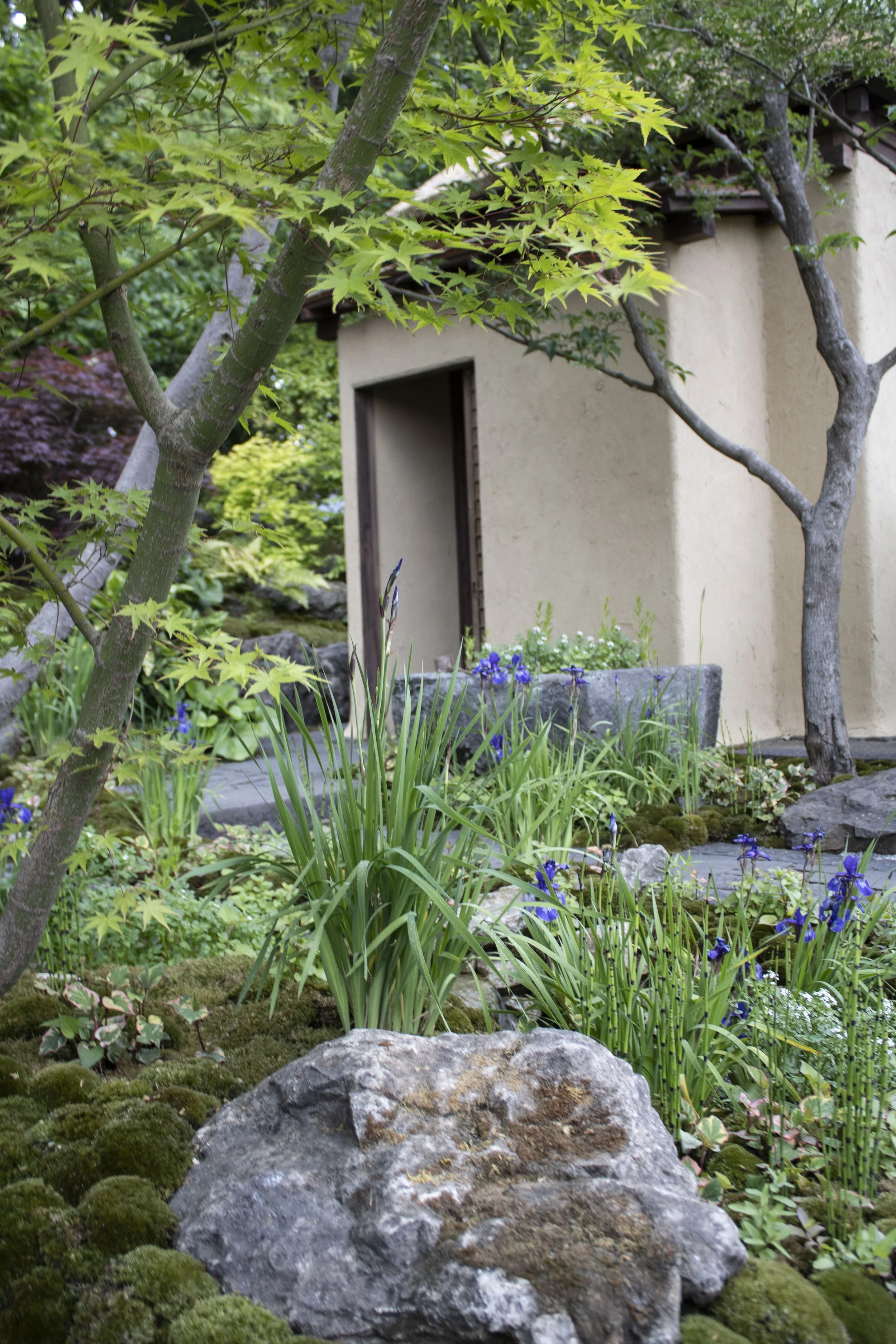
Cha No Niwa – Japanese Tea Garden
Designed by Kazuyuki Ishihara | Built by Ishihara Kazuyuki Design Laboratory | Sponsored by Ambius, Calmic Japan, HB-101, and others
A delicate and deeply personal meditation on communication and harmony, this garden by celebrated Japanese designer Kazuyuki Ishihara draws on the principles of ikebana and the poetic philosophy of Fushikaden—“The Flowering Spirit”—written by the 14th-century playwright Zeami. Designed as the artist’s own imagined retreat, the garden explores the quiet, expressive dialogue between stone and plant life.
Inspired by the Ikenobo school of ikebana, the oldest and most revered, the planting and placement unfold like a living composition. Stones are not just structural but symbolic—each form and position carefully considered to create balance, contrast, and connection with surrounding vegetation.
Set across varying elevations, the garden evokes the layered beauty of Japan’s satoyama landscapes, blending cultivated space with the rhythms of the natural world. A restrained yet rich planting palette includes Acer palmatum, Enkianthus perulatus, Iris, Sedum, Hornbeam and Pachysandra terminalis—species that conjure the peaceful woodlands and countryside of rural Japan.
This is a garden of stillness and introspection. A personal space rooted in tradition, where every element—whether leaf, stone, or shadow—plays its part in a quiet, harmonious whole.
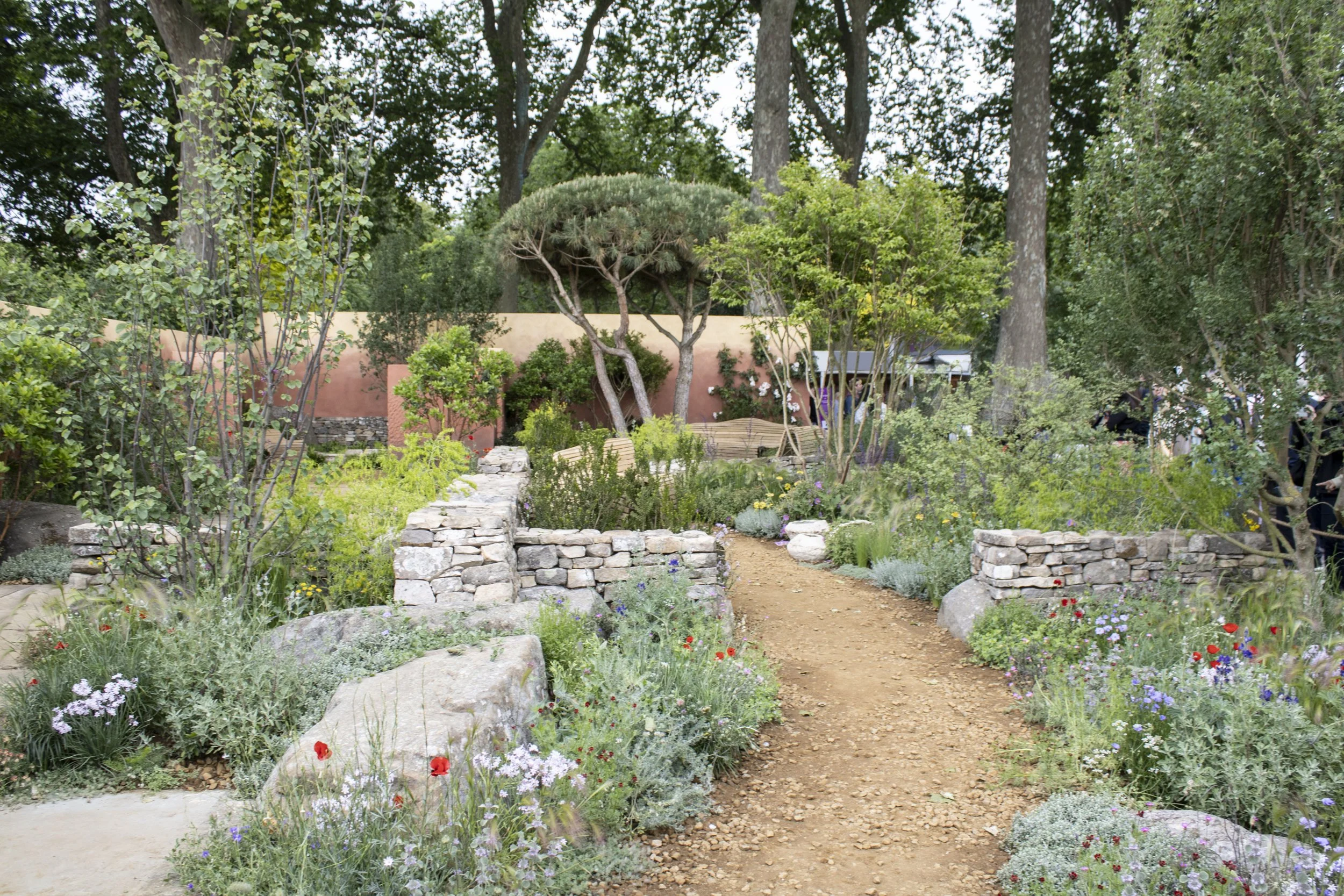
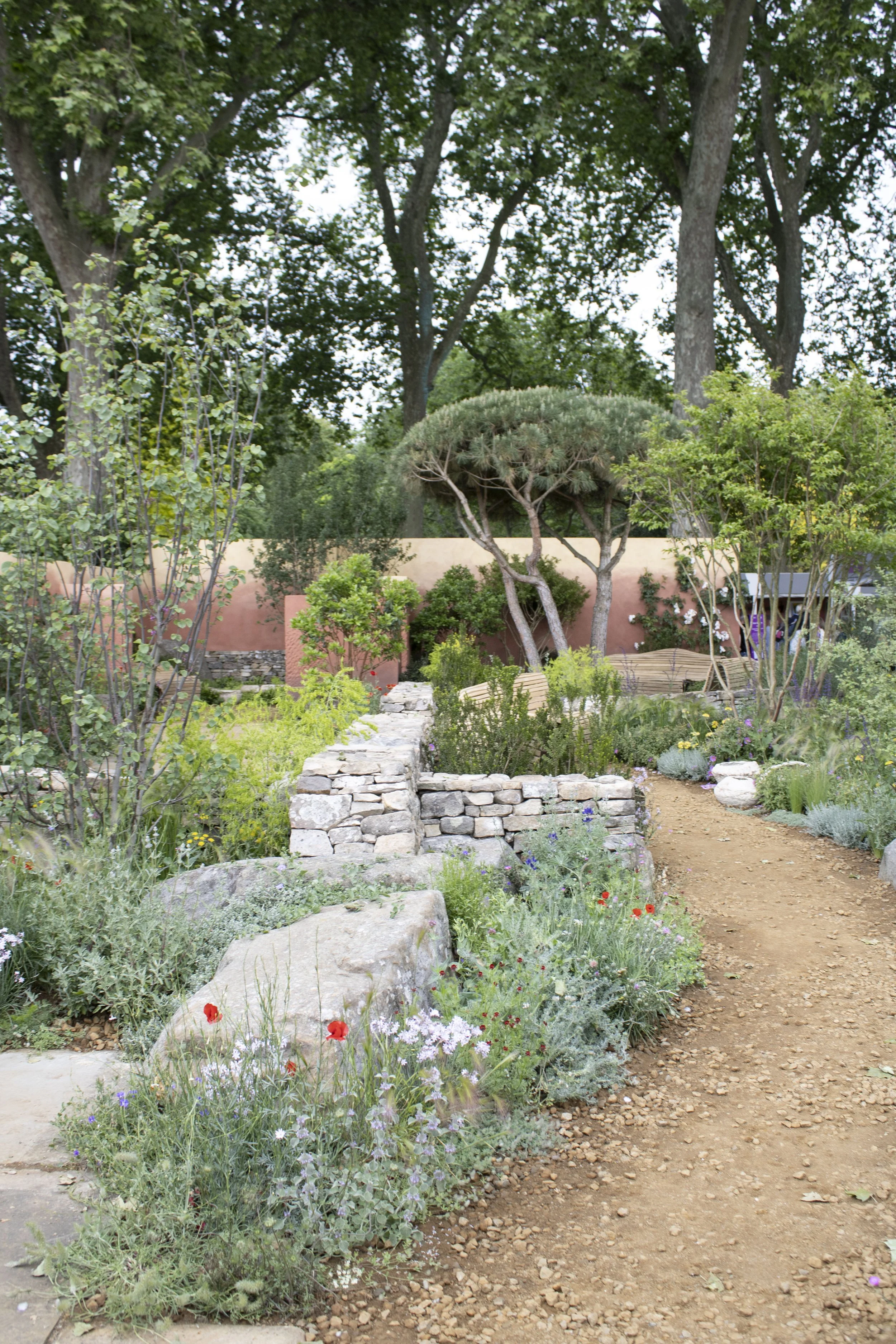
Hospice UK: Garden of Compassion
Designed by Tom Hoblyn | Built by Mark Whyman Landscapes | Sponsored by Hospice UK & Project Giving Back
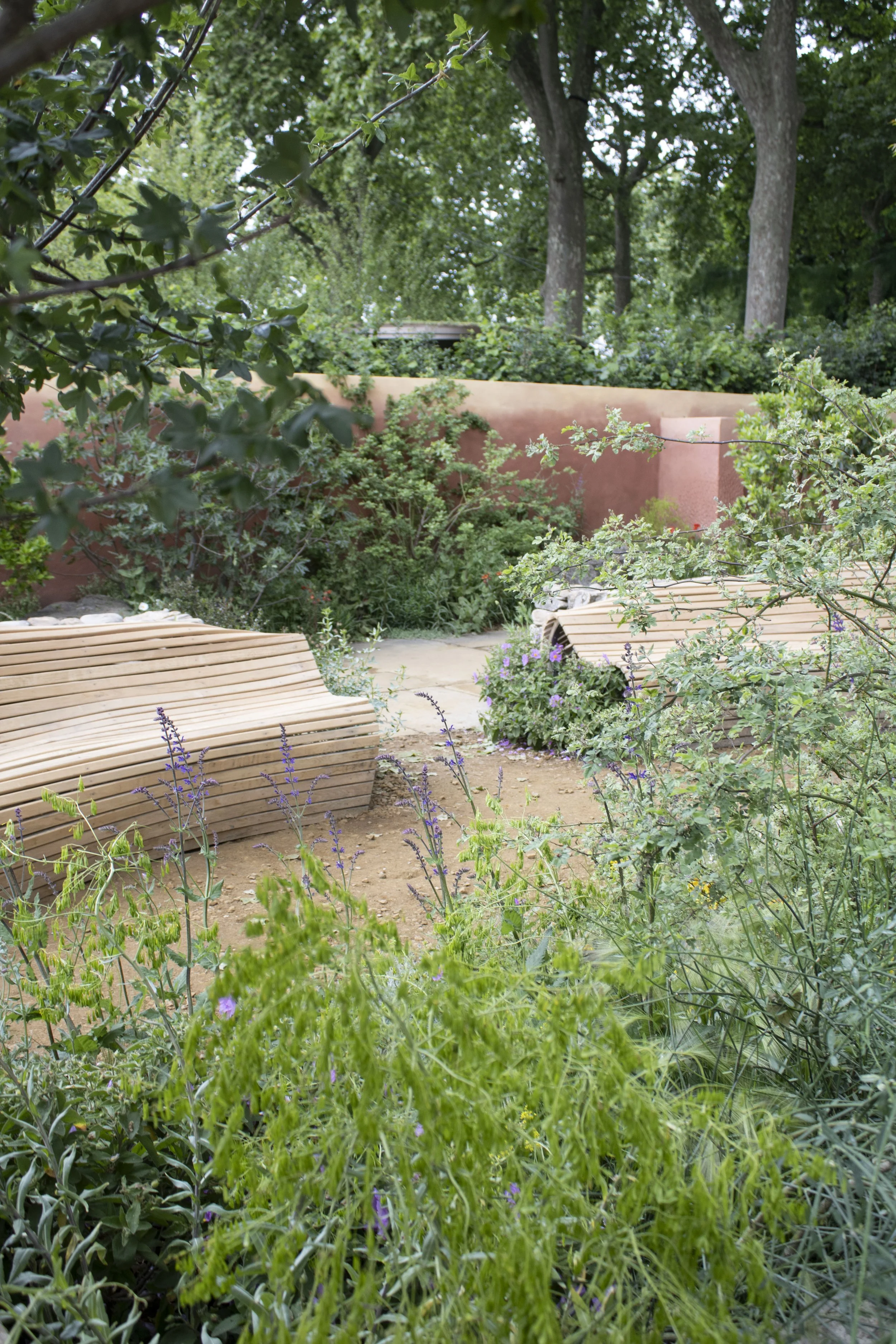
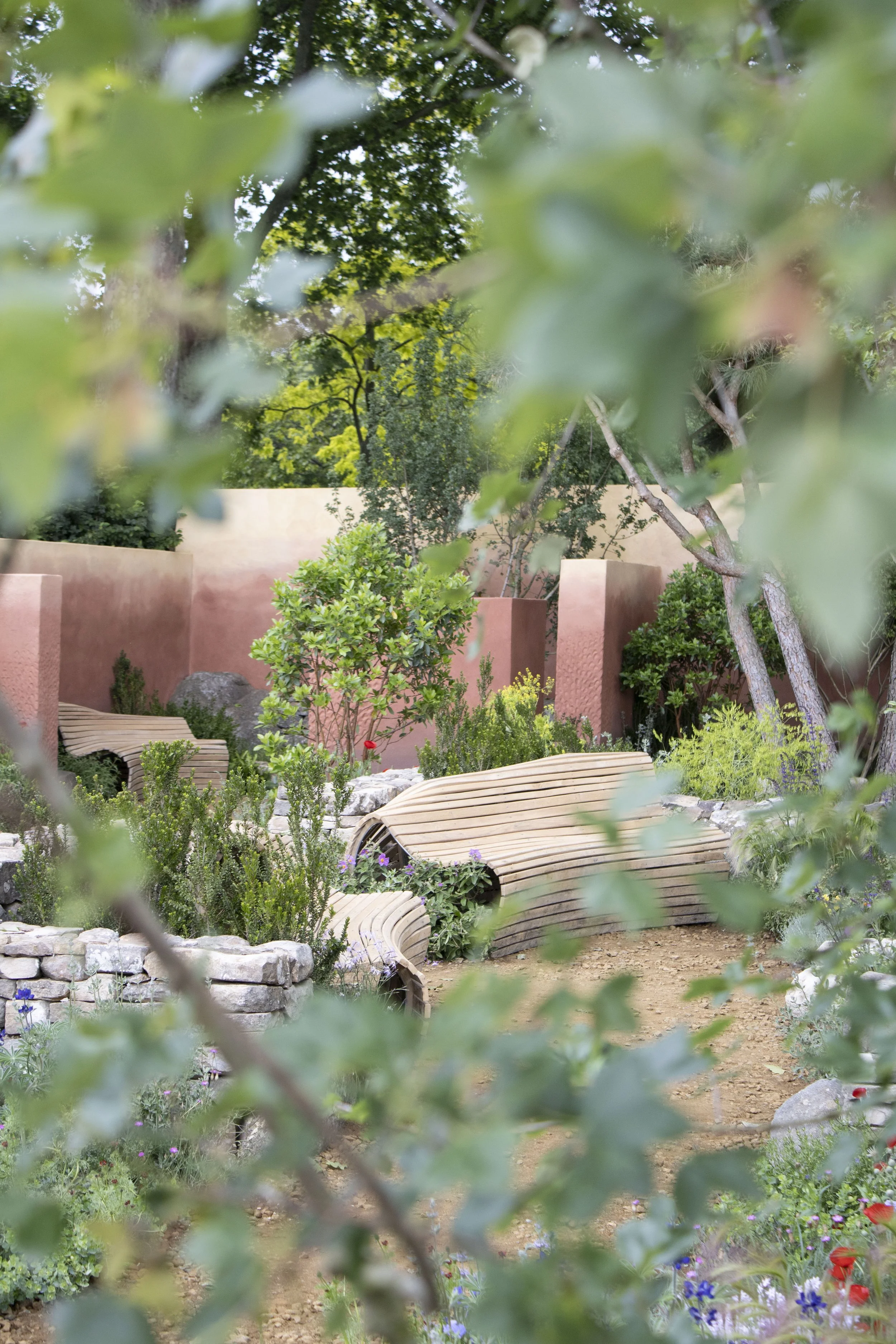
Rooted in the serene spirit of the Mediterranean, The Hospice Garden offers a moving exploration of how landscape can soothe, uplift, and support at life’s most delicate threshold. Drawing inspiration from Mallorca’s Olive Houses—a retreat nestled in the Tramuntana mountains—this space reimagines the interconnected nature of home and landscape to bring solace to those in end-of-life care.
Structured like a series of open-air rooms, the garden balances communal gathering places with private corners for quiet reflection. Sculptural seating and still water bowls invite pause and presence, while large, grounding rocks speak to the strength found in simplicity and the healing power of nature.
A soft, sensory-rich palette dominates the planting scheme—olive greens, dusty silvers, and textural grasses, punctuated by vibrant notes of burnt orange, deep blue, and warm yellow. These colours are not only evocative of Mediterranean light and landscapes, but chosen for their drought-tolerance and ability to engage the senses—important considerations for hospice users. Key species include Arbutus andrachne, Luma apiculata, Hunnemannia fumariifolia, Delphinium peregrinum and Ficus ‘Crystal Ice’.
While the mood is peaceful, the garden’s purpose is deeply practical. Designed for use by patients, families, and healthcare staff, it offers sanctuary, connection, and moments of calm. After Chelsea, it will be permanently relocated to St Cuthbert’s Hospice in Durham, providing a lasting legacy and daily comfort for those navigating some of life’s most poignant moments.

Children With Cancer UK ‘A Place To Be...’
Designed by Tom Clarke and Ros Coutts-Harwood | Built by Big Fish Landscapes | Sponsored by Children with Cancer UK
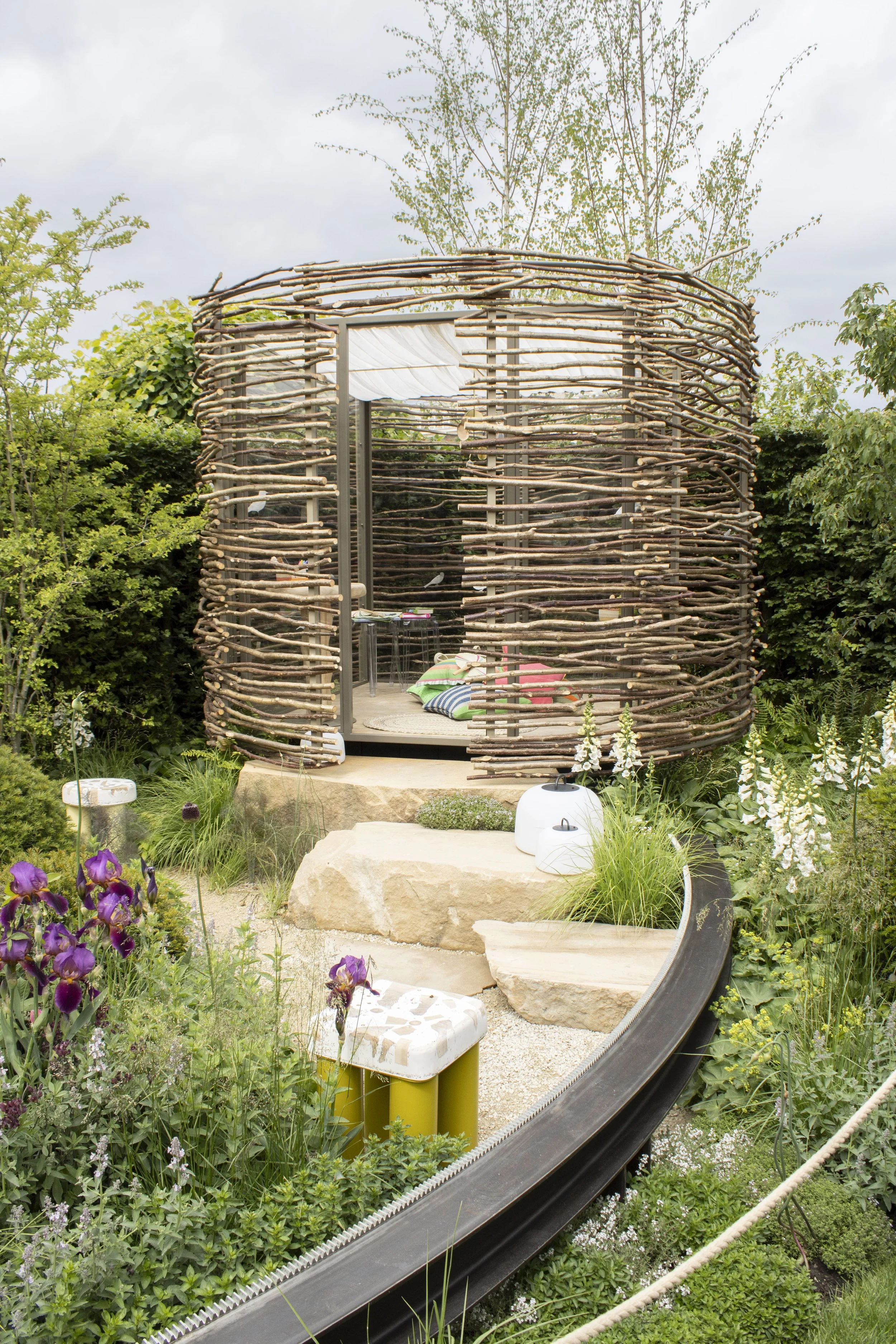
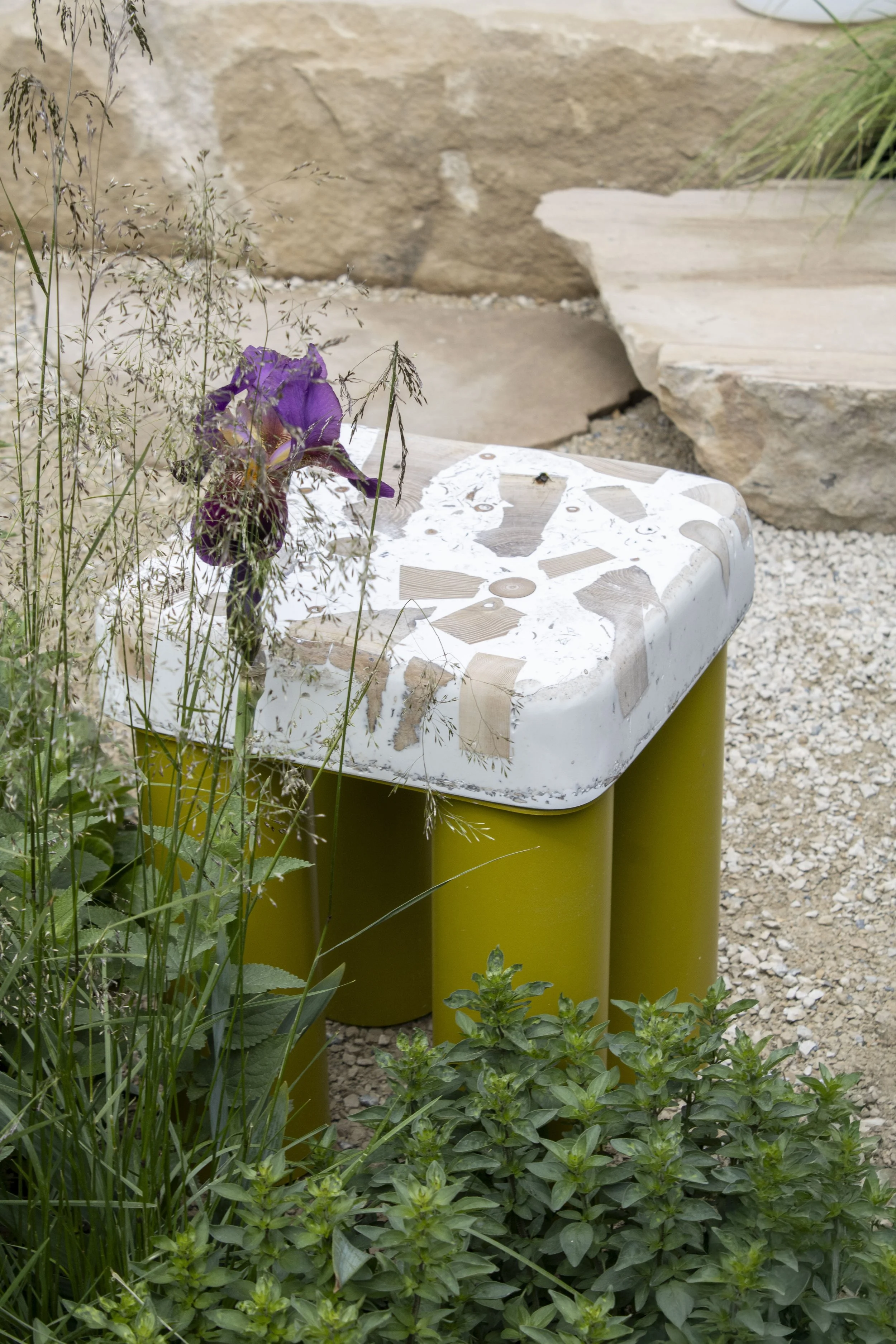
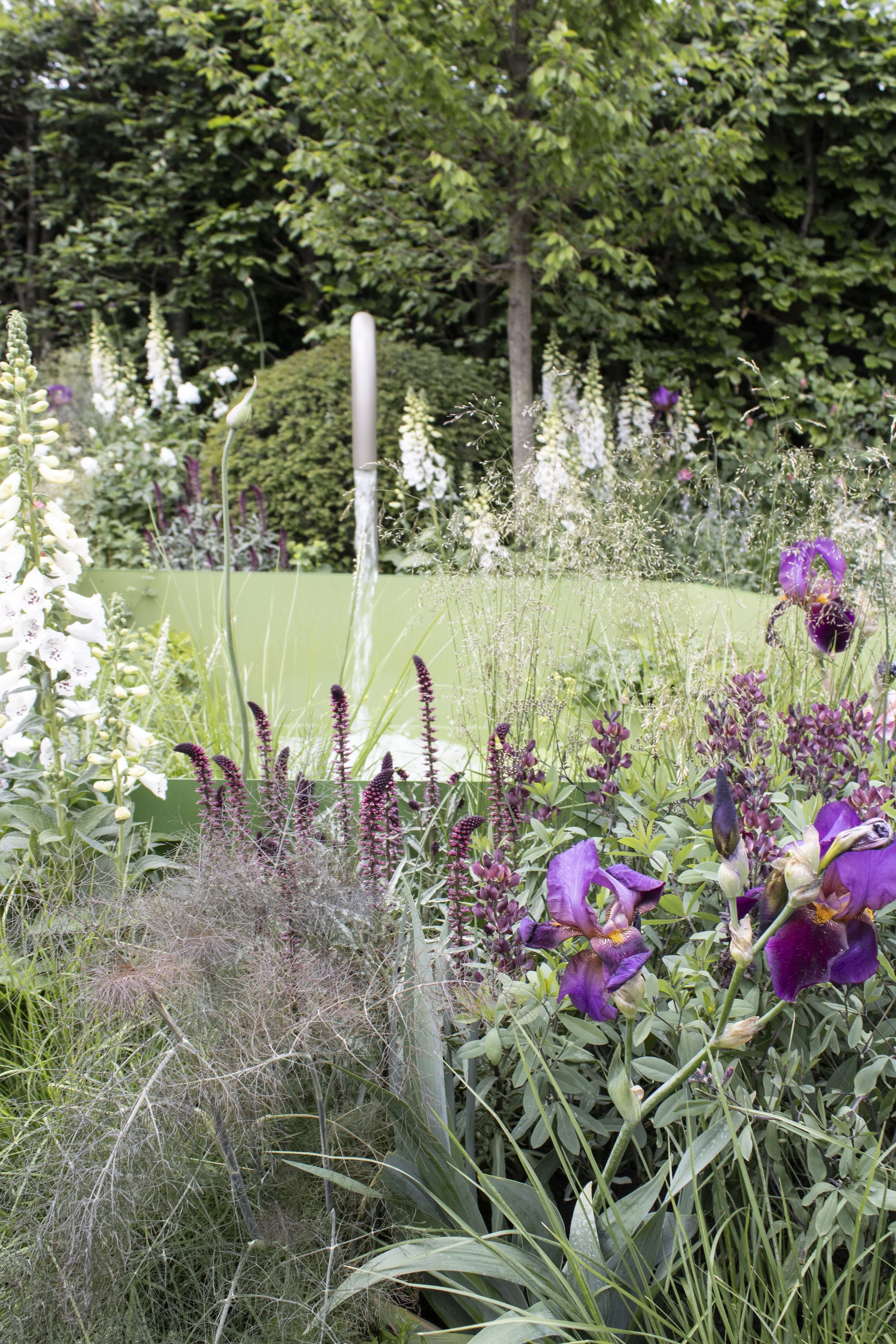
A sanctuary of healing, joy, and imagination, The ‘Place to Be’ Garden offers a heartfelt tribute to the resilience of children living with cancer. Designed as a space where young people can escape the clinical and often overwhelming realities of treatment, the garden invites them to simply be—to feel free, playful, grounded, and safe in the embrace of nature.
At its heart lies The Nest—a symbolic refuge reached by two very different paths. A winding, contemplative trail offers moments of quiet reflection, while a joyful monorail adds a sense of adventure and levity. Together, they represent something rare and precious for these children: the power of choice.
The planting tells a moving story through colour and texture. Rich burgundies and pinks—seen in Rosa ‘Emma Bridgewater’, Allium ‘Forelock’ and Lysimachia ‘Beaujolais’—bring vibrancy and warmth to the garden’s entrance. Playful touches of white from Digitalis purpurea ‘Pam’s Choice’ lighten the mood, gradually giving way to calming greens and soft whites in the more restful healing zone. Here, Dryopteris wallichiana and Sesleria autumnalis evoke stillness, while the feathered heads of Stipa tenuissima ‘Pony Tails’ echo the gentle motion of the monorail—soft and sensory beneath the children’s fingertips.
Set to become a permanent feature at Raines Retreat in North Yorkshire—Children with Cancer UK’s holiday sanctuary—the garden will continue its purpose beyond Chelsea. It will provide families with a lasting, living space of comfort, renewal, and memory-making far from hospital walls.
The Addleshaw Goddard: Freedom To Flourish Garden
Designed by Carey Garden Design Studio | Built by The Outdoor Room | Sponsored by Addleshaw Goddard
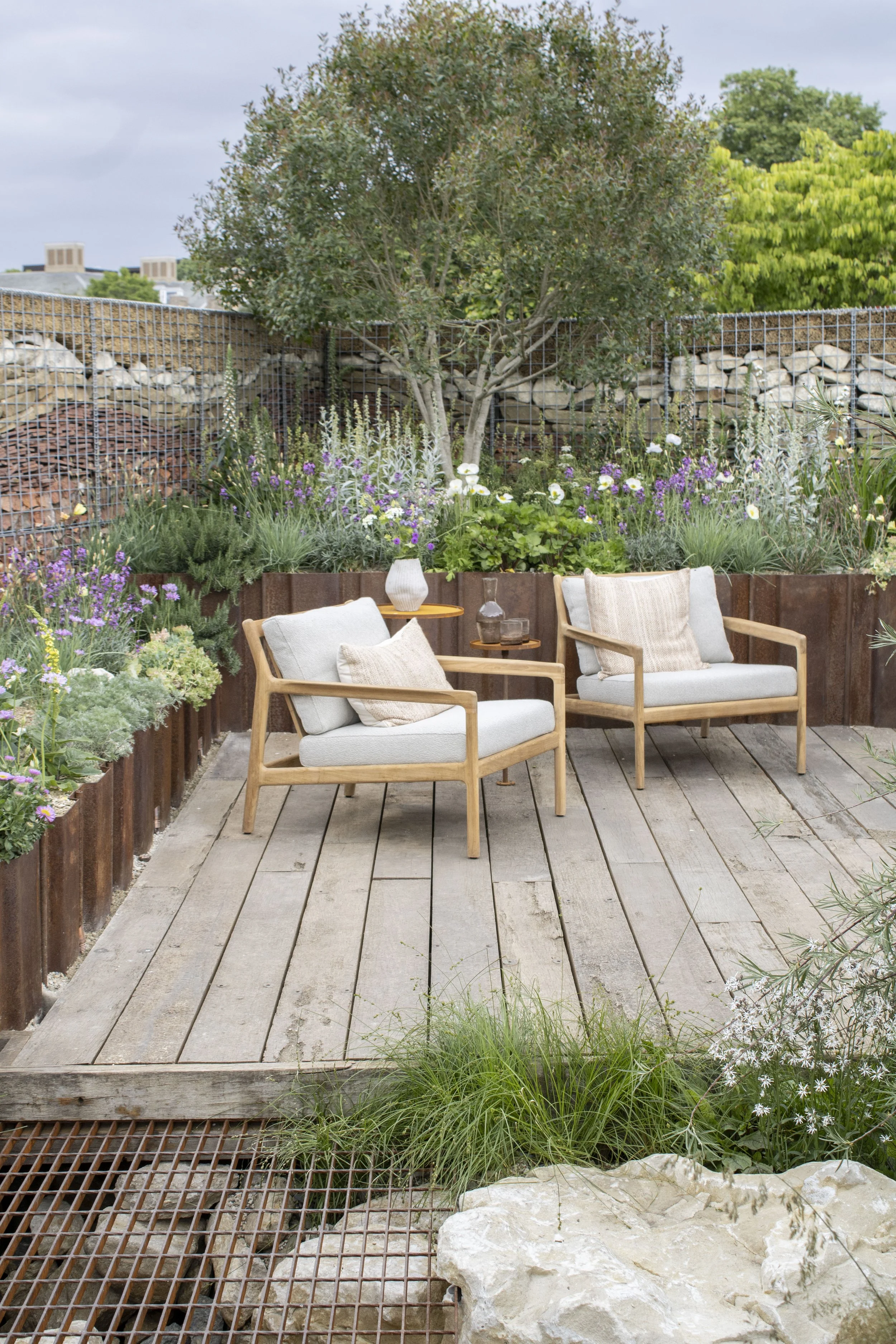
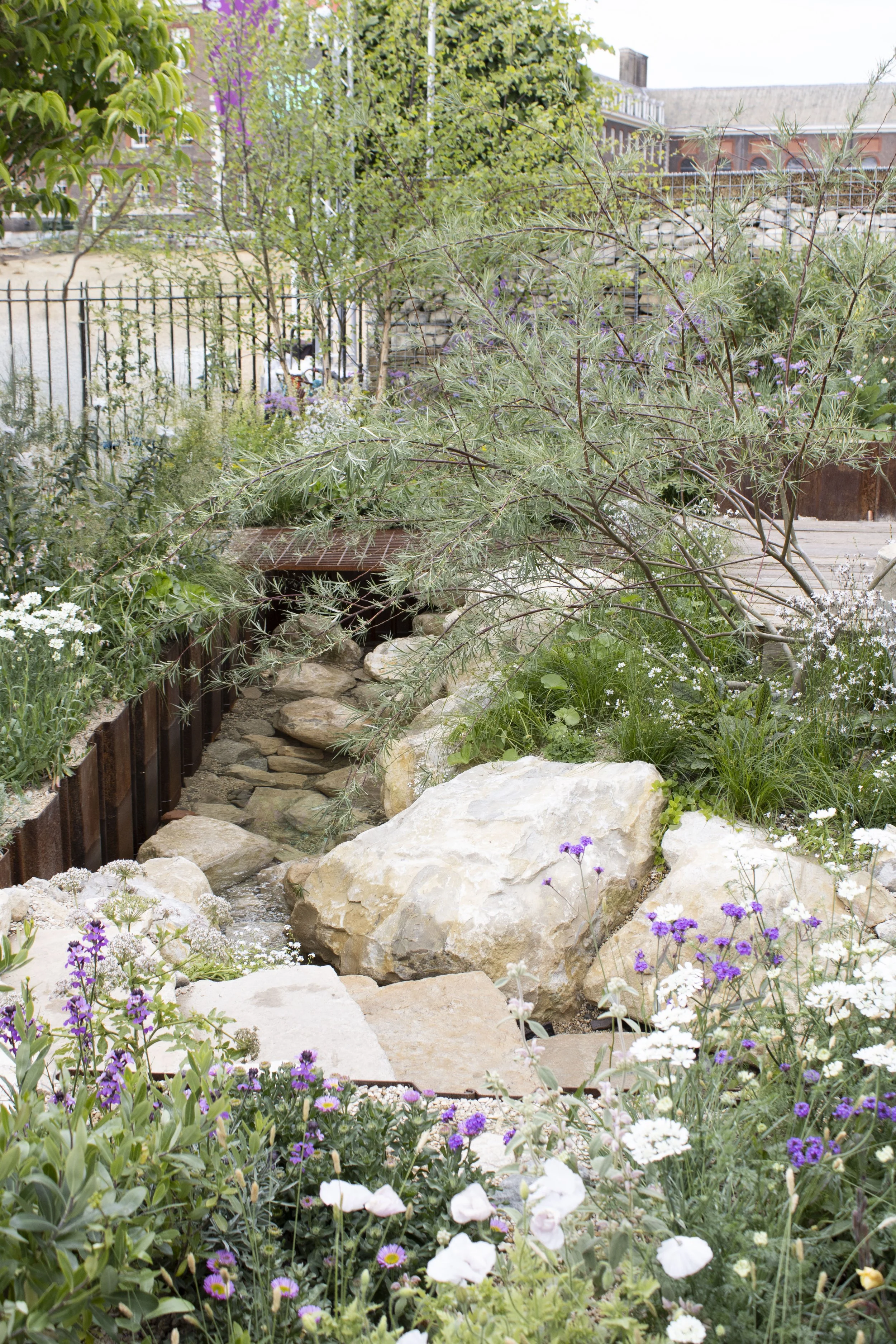
Drawing inspiration from the tranquil landscapes of North Norfolk, The Slow You Down Garden invites visitors to resist the pressures of modern life and embrace the restorative power of slowing down. Rooted in a local Norfolk saying, this garden explores the mental health benefits of living deliberately—finding calm through nature, gardening, and unhurried moments.
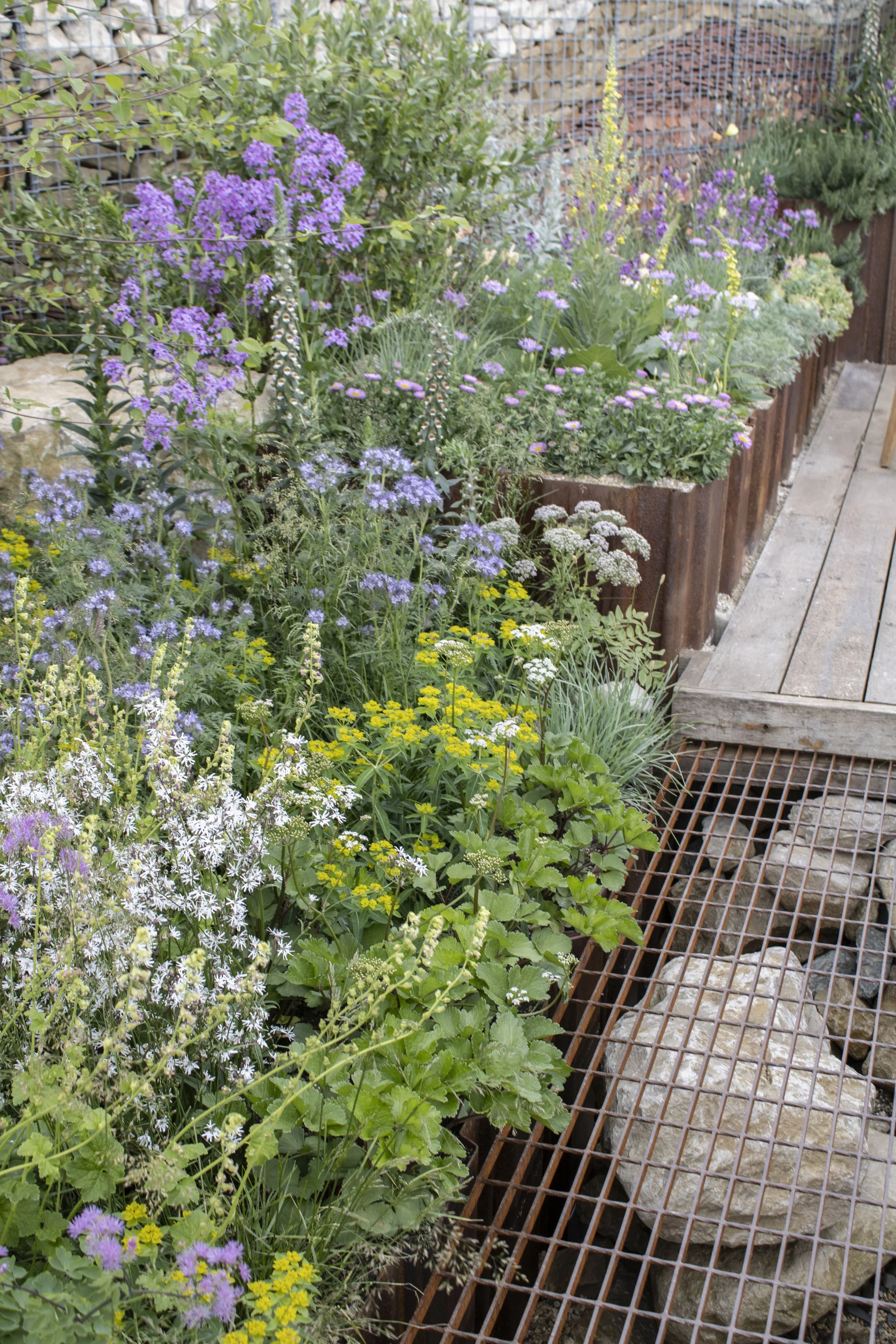
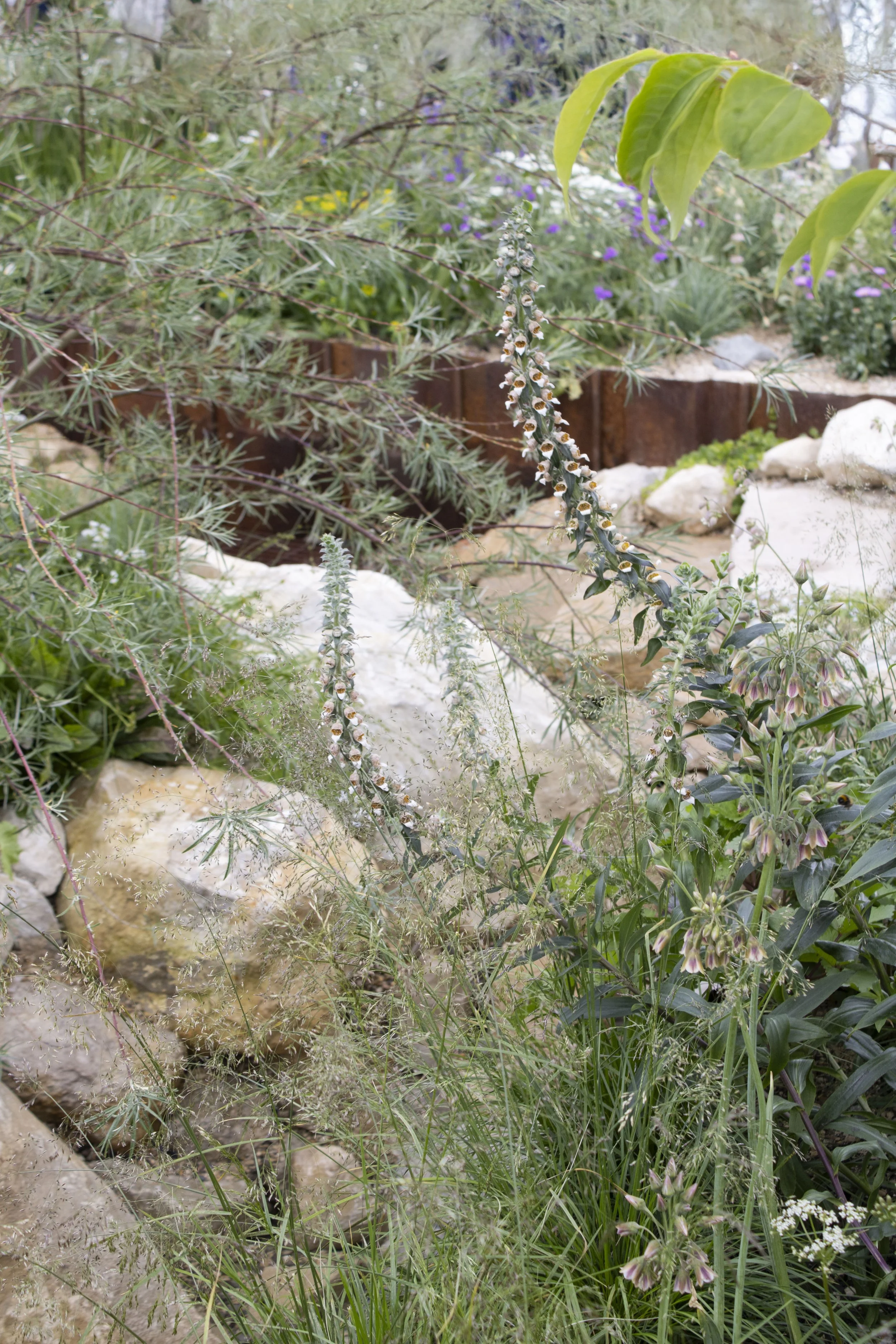
Gabion walls filled with natural materials evoke the rugged coastal cliffs while providing valuable wildlife habitats. The planting palette mirrors the surrounding landscape with sandy bark tones on feature trees like Heptacodium miconioides, layered with lilacs, indigos, and soft peach hues found in flowers such as Oenothera odorata ‘Apricot Delight’ and Baptisia australis.
Wildflowers common to Norfolk’s shores—Silene vulgaris, Erigeron glaucus, and Armeria maritima—further reinforce the garden’s connection to its coastal roots, echoing the textures and colours of sand, sea, and shingle.
This public garden offers a peaceful refuge where the beauty of the natural world encourages a gentler pace and mindful presence.
The Avanade Intelligent Garden
Designed by Tom Massey & Je Ahn | Built by The Outdoor Room | Sponsored by Avanade and Microsoft
The Avanade Intelligent Garden is an innovative urban forest garden created to support the survival and wellbeing of urban trees—crucial allies in the fight against climate change and in making cities more liveable.
Urban trees provide vital benefits by filtering pollution, cooling city air, supporting wildlife, and enhancing community health. Yet, they face harsh challenges: studies reveal that up to 50% of urban trees don’t survive beyond ten years, and many take over a decade to reach carbon neutrality. Current efforts often plant forests that struggle to thrive in urban conditions.
This garden integrates cutting-edge technology, with sensors tracking tree health indicators such as growth, sap flow, soil quality, air pollution, and weather. AI analyses the data to identify trends and forecast needs, offering practical care advice.
Visitors interact with trees through a web app, enabling one-on-one conversations that reveal each tree’s wellbeing and care requirements. Trees can even notify their caretakers about potential issues like overwatering or drought stress.
Inspired by the forest garden concept, the planting features diverse, productive species including Toona sinensis ‘Flamingo’, Zanthoxylum simulans, Cornus kousa, Rubus phoenicolasius, and Lycium barbarum.

Down’s Syndrome Scotland Garden
Designed by Nick Burton and Duncan Hall | Built by Kate Gould Gardens | Sponsored by Down’s Syndrome Scotland & Project Giving Back
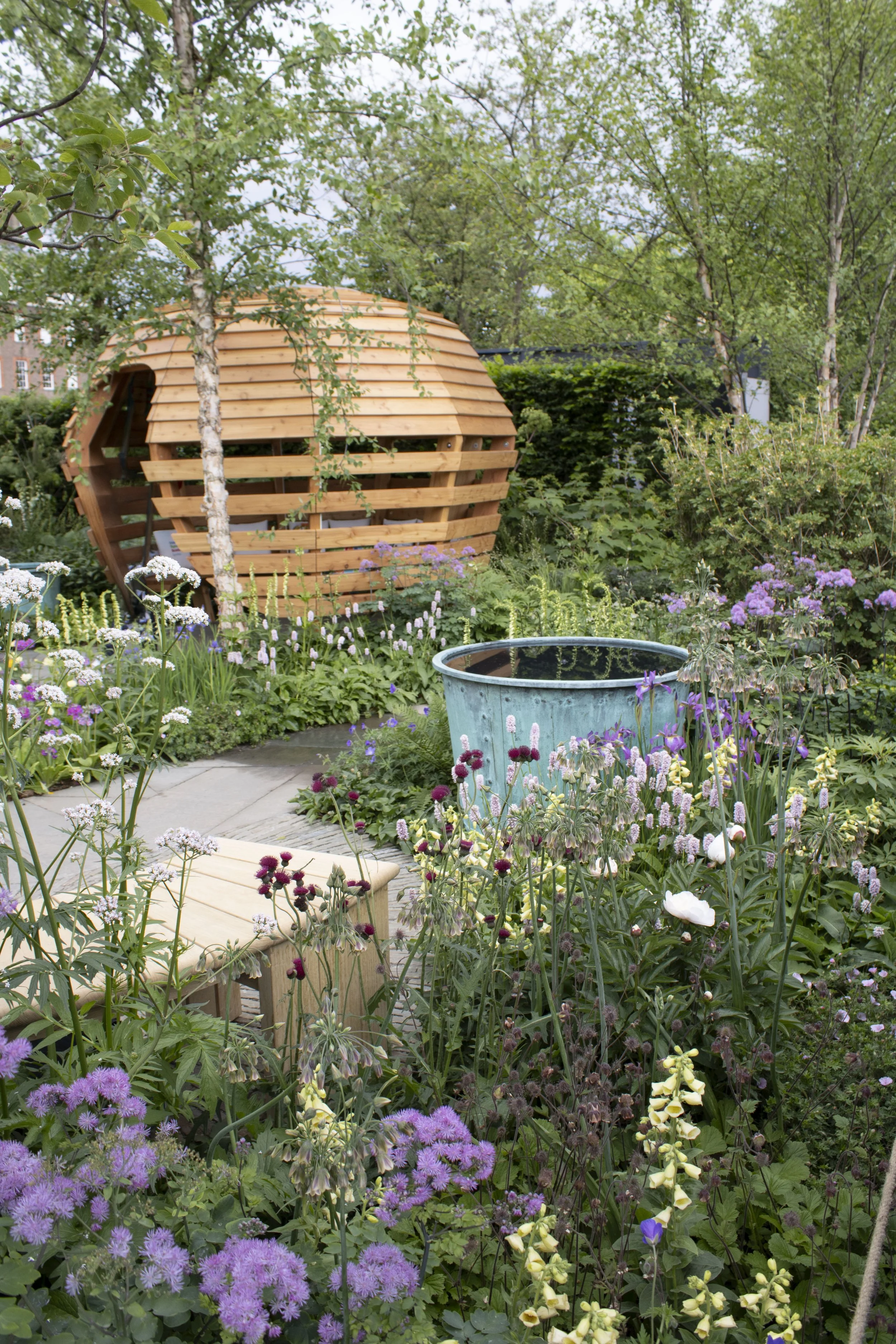
A celebration of compassion, individuality, and the quiet strength of human connection, The Garden of Potential draws its inspiration from Liam, the young nephew of co-designer Duncan Hall. Created to challenge societal misconceptions about Down’s syndrome, the garden invites visitors to reflect, to reframe, and to recognise the vibrant potential in every individual.
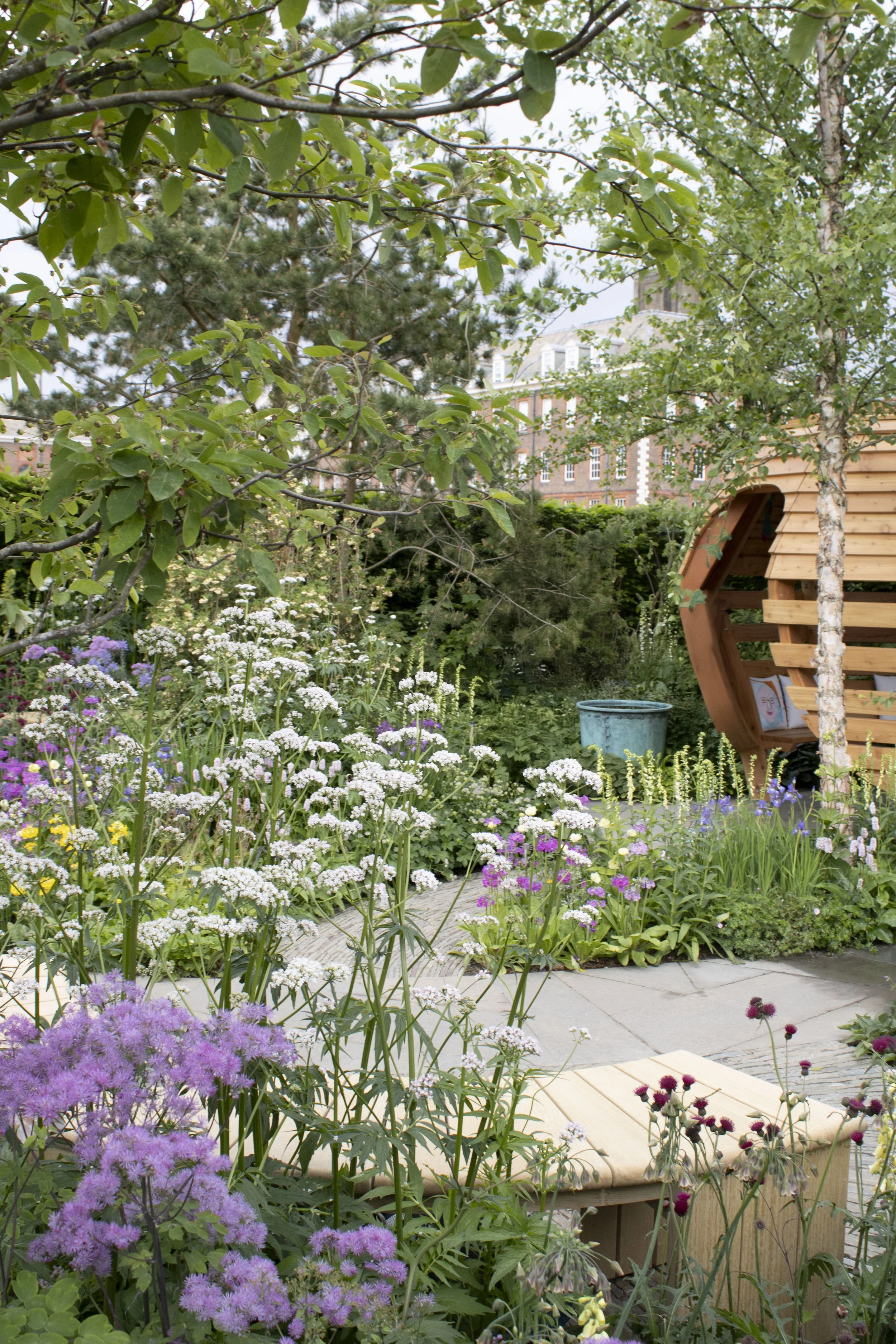
Winding through a semi-wooded landscape, a ‘crazy paving’ path leads guests on an immersive journey through two distinct planting zones—each crafted to evoke a shift in atmosphere. Along the way, playful bursts of colour—like scattered decorative tiles at the garden’s entrance—add whimsy and personality, while layers of texture and light create moments of sensory engagement and introspection.
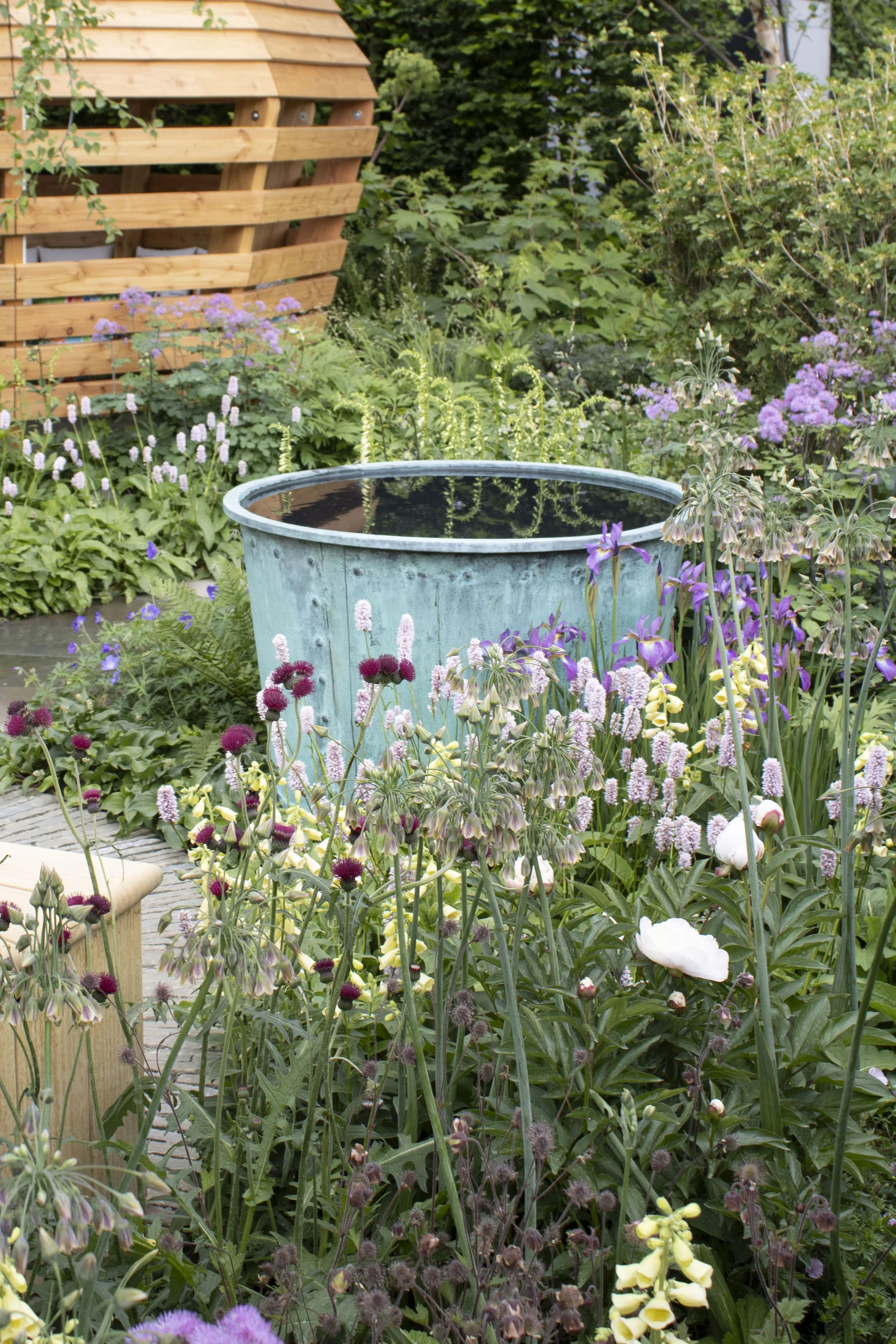
At the garden’s heart is a sculptural pavilion surrounded by tall river birch trees (Betula nigra), their soft, cascading branches lending a sense of intimacy and calm. Designed to resemble a gentle embrace, the structure symbolises the warmth and affection often shown by people with Down’s syndrome—a physical expression of the garden’s emotional core. A subtle yet powerful water feature—a shallow pool with a hidden path beneath the surface—acts as a metaphor for the unseen barriers and assumptions faced by this community.
Planting is rich yet naturalistic, with Pinus sylvestris, Iris sibirica ‘Tropic Night’, and Primula florindae woven into a gentle woodland tapestry that speaks to resilience and renewal.
More than a garden, this is a call to action: to embrace difference, to nurture potential, and to build a society where everyone is seen for who they truly are.
Following its time at Chelsea, The Garden of Potential will find a permanent home at Palacerigg Country Park in North Lanarkshire, where it will support young people and adults with additional needs through horticultural learning and empowerment—continuing to grow far beyond the show.
The Pathway Garden
Designed by Allon Hoskin & Robert Beaudin | Built by Modular Garden Limited | Sponsored by Project Giving Back, Pathway
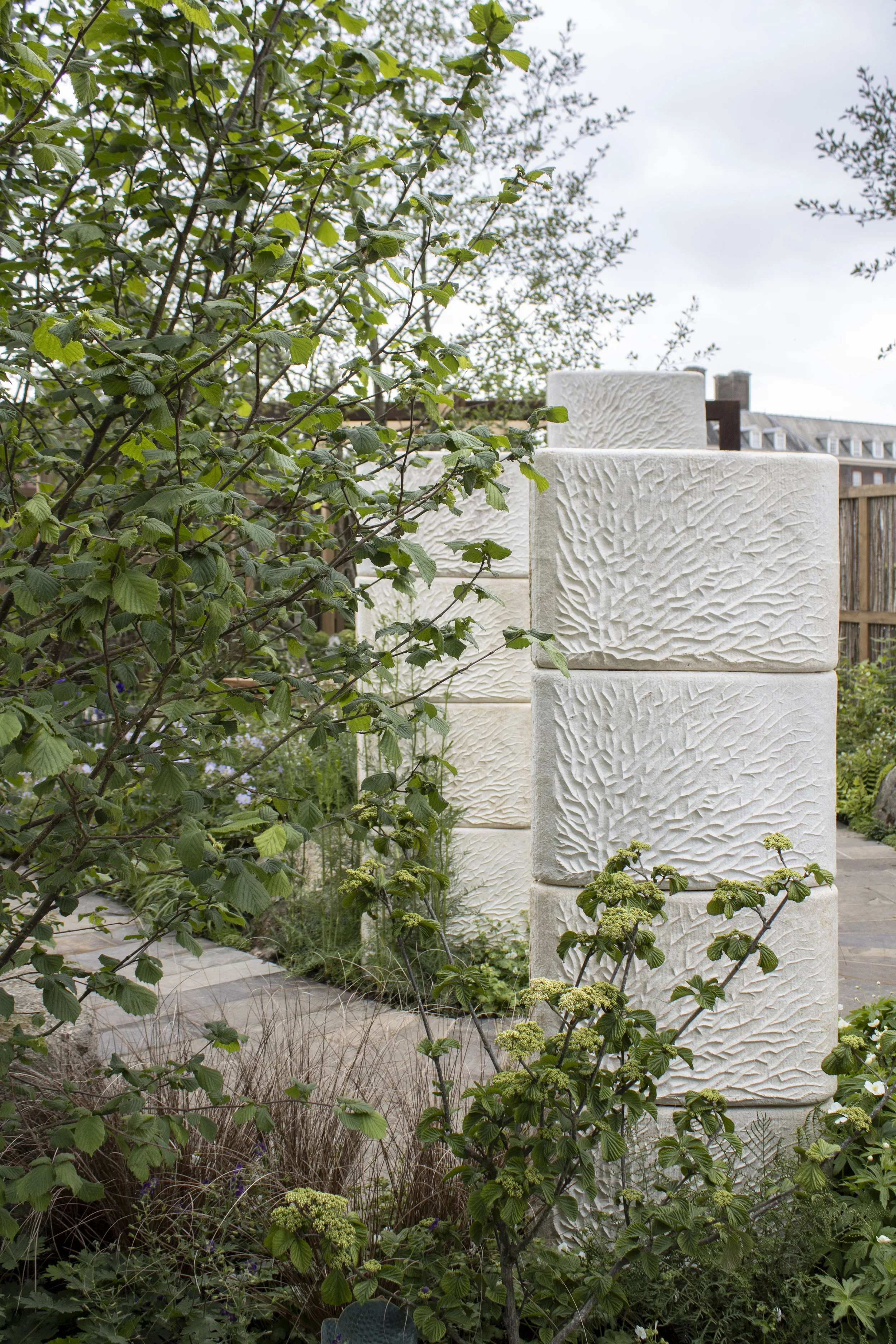
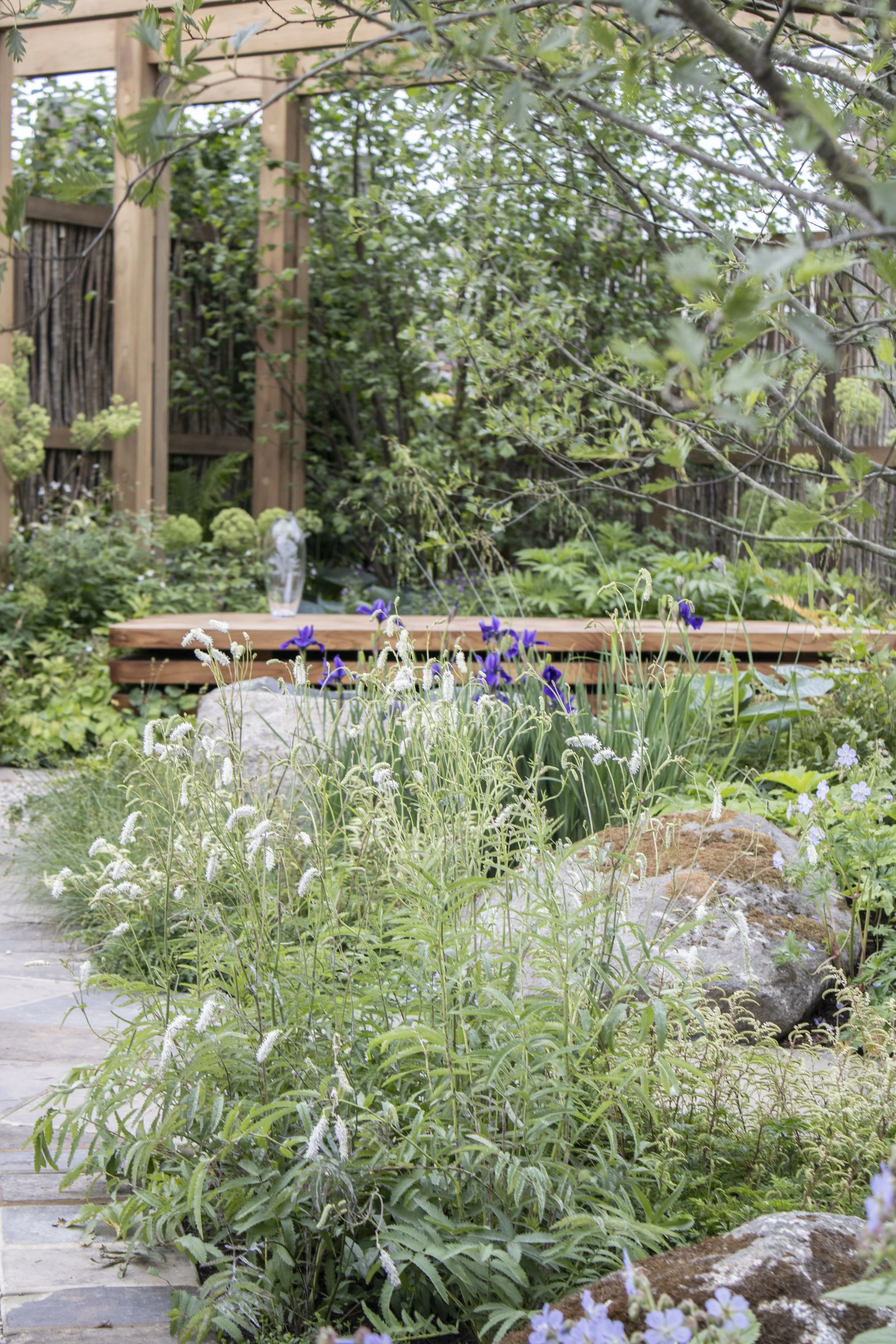
Inspired by the vital work of the Pathway charity in supporting people out of homelessness, the Pathway Garden features interconnecting spaces with an open layout, thoughtfully designed to avoid any dead ends.
The first section of path is intersected by boulders, symbolising the obstacles often faced by individuals on their journey from homelessness toward a healthier, more secure life. A bench and pergola provide a sheltered resting place, while a tranquil water feature invites quiet reflection.
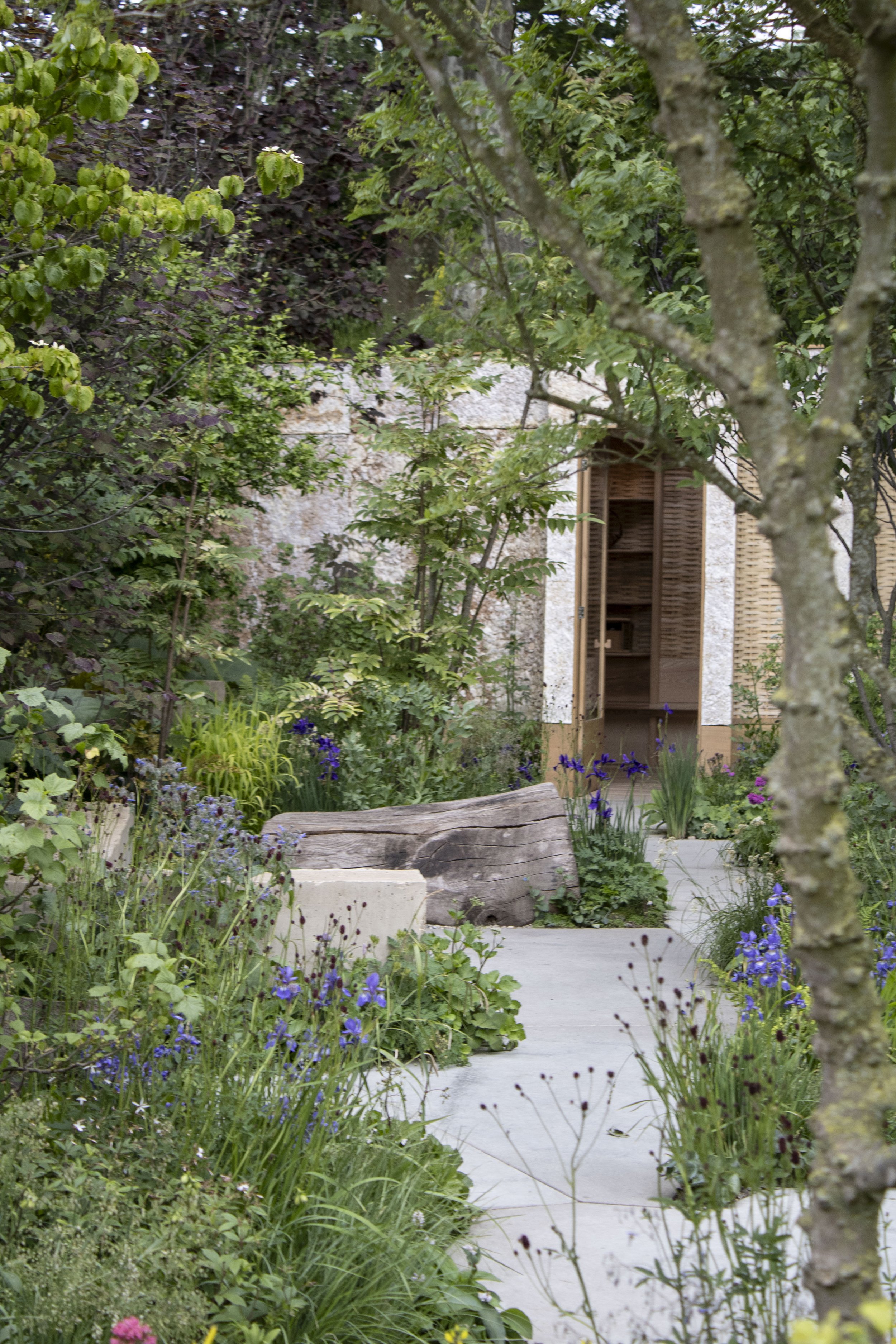
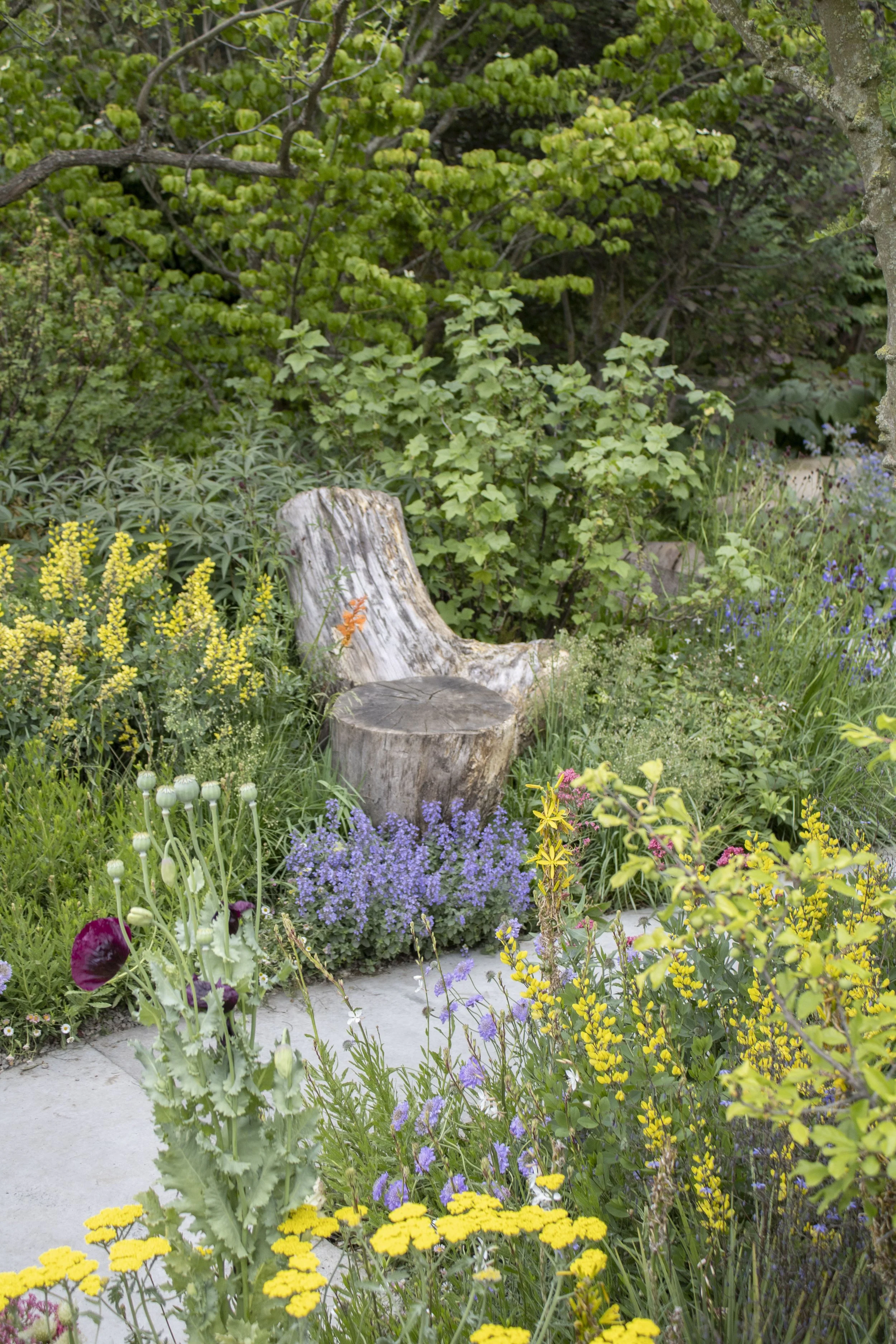
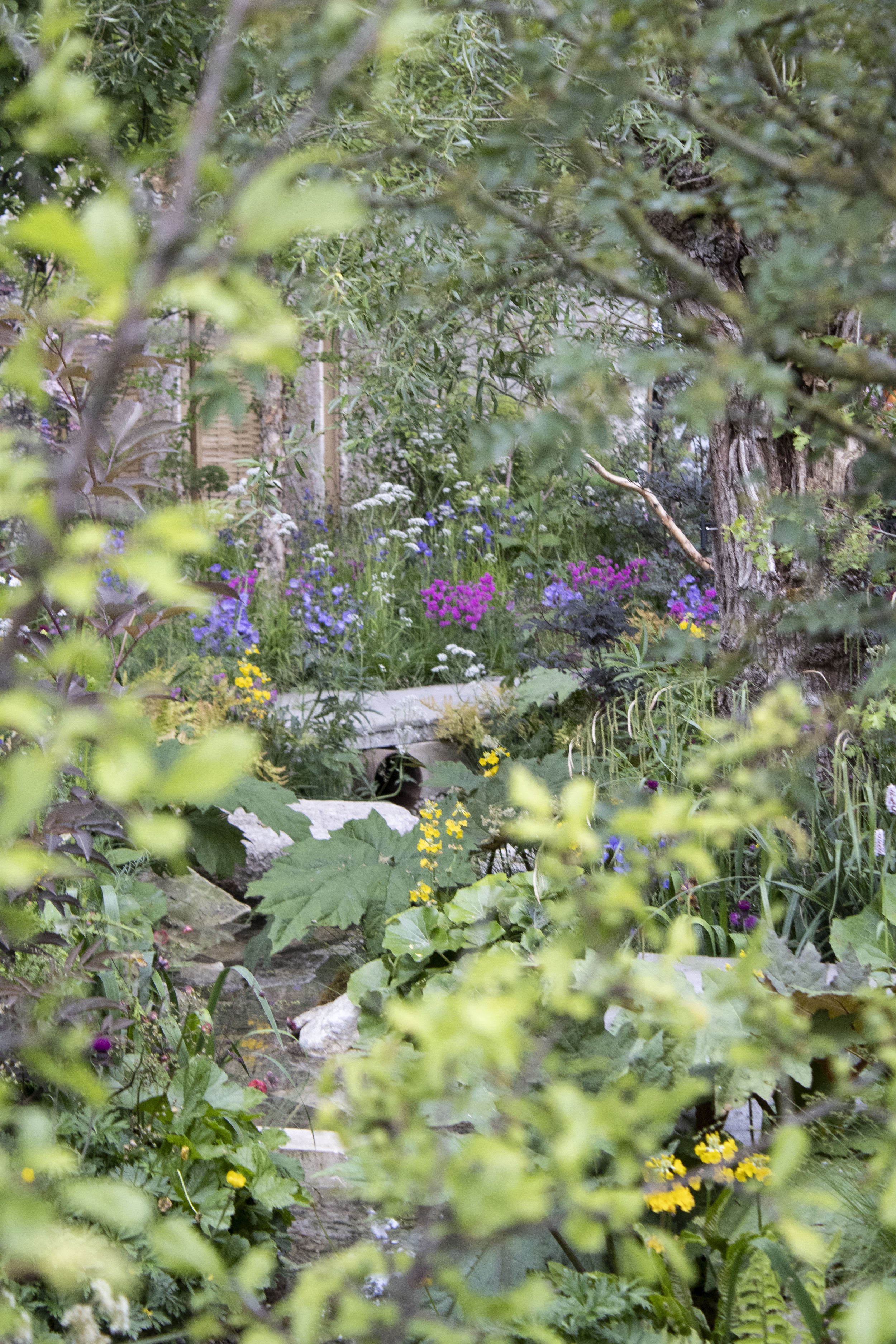
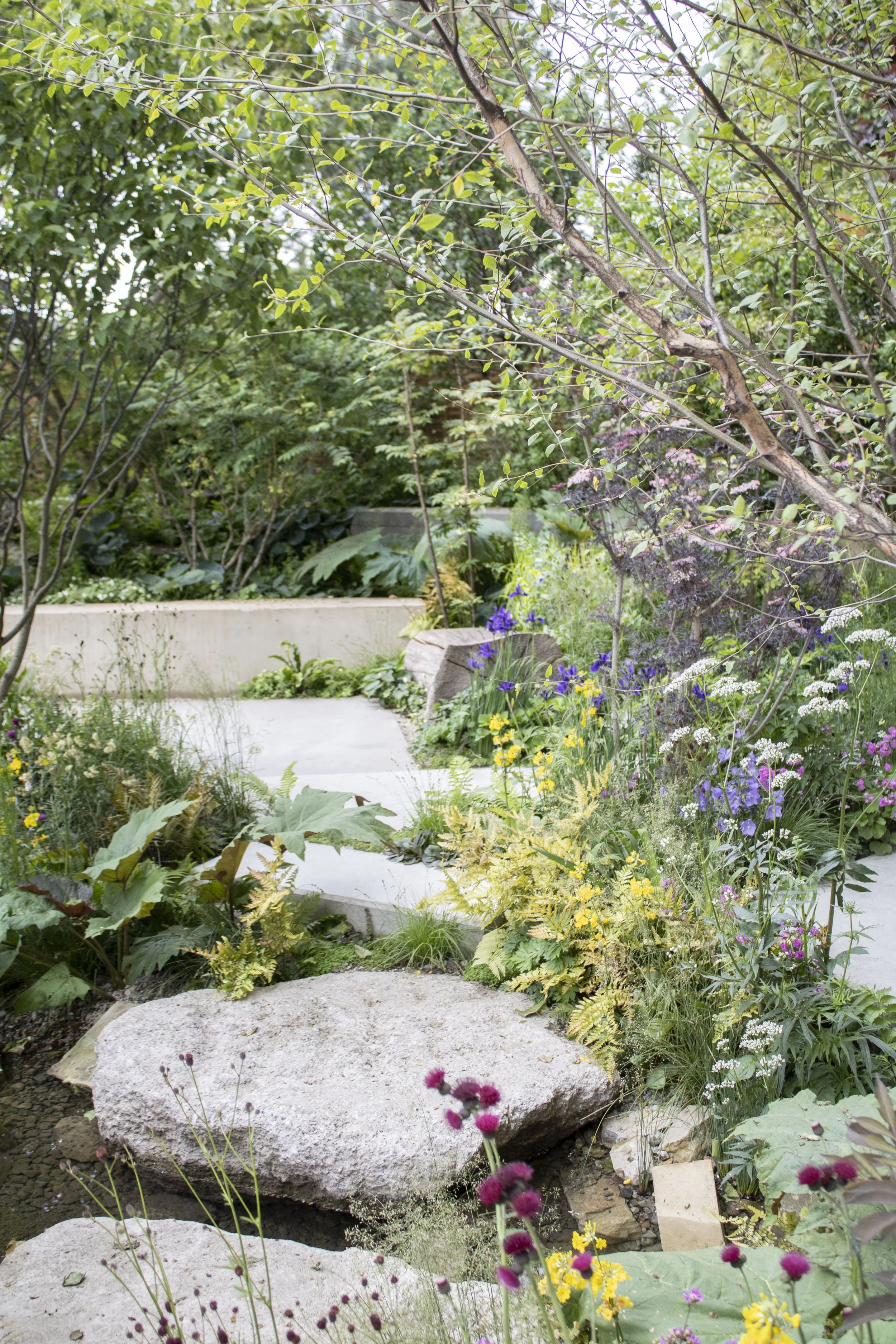
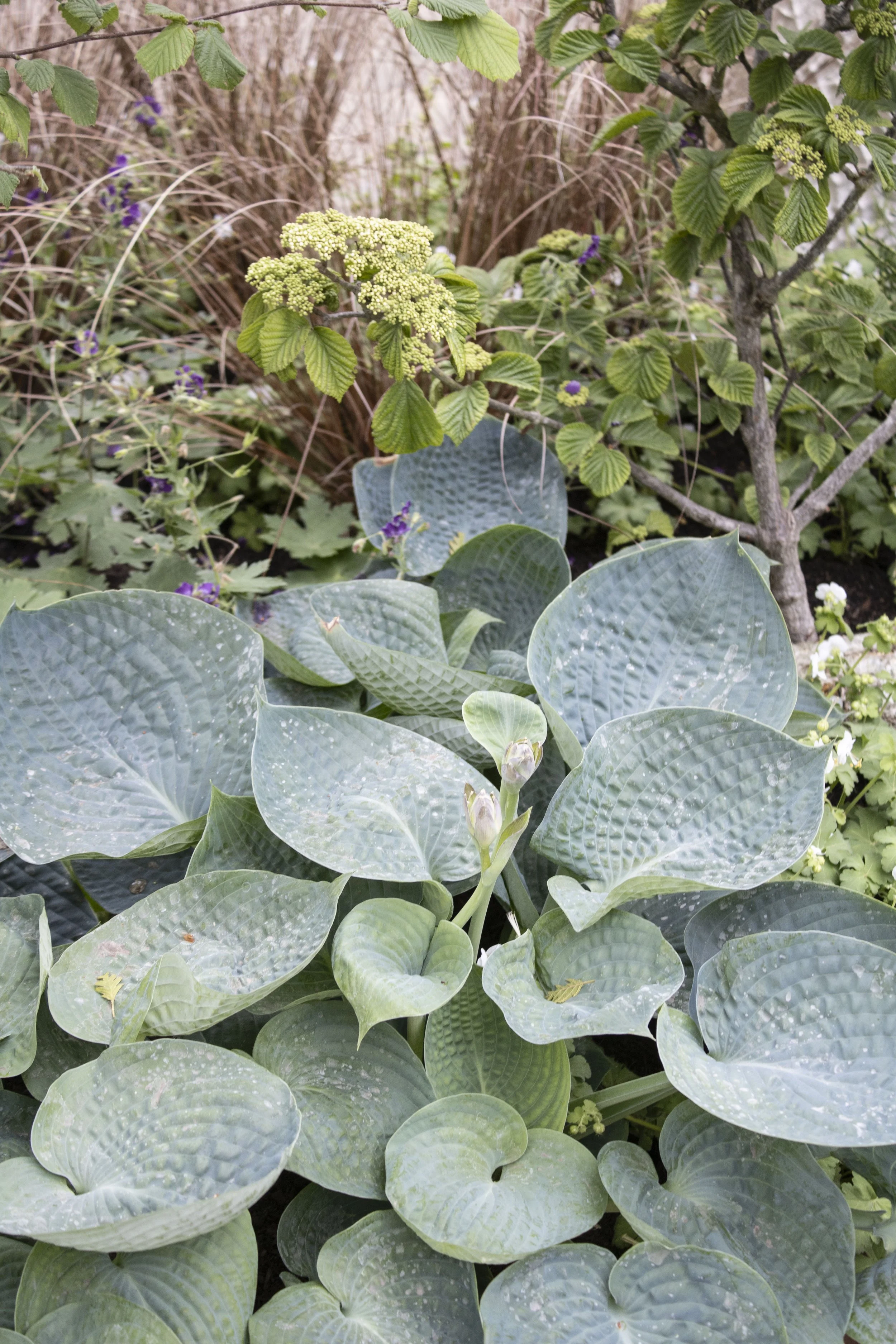
Planting evokes an abandoned or regenerating moist garden beneath the shade of cutleaf alder (Alnus glutinosa) and hazel trees (Corylus avellana). The predominantly green herbaceous planting emphasizes foliage texture with subtle hints of colour throughout.
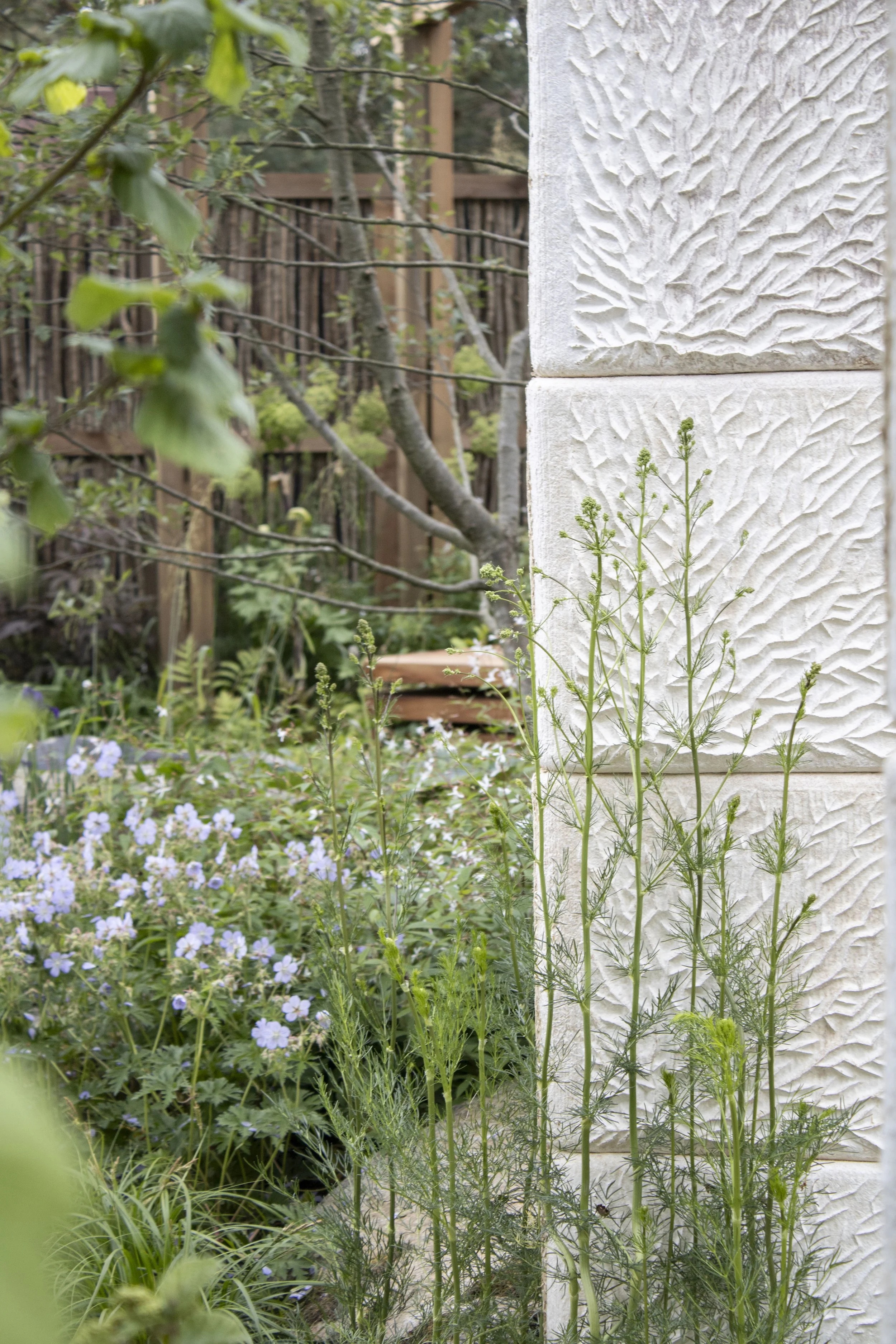
Sustainability is key: the garden is constructed entirely from upcycled materials. The bench is crafted from a fallen tree boule, while a mycelium wall—made from recycled waste from previous RHS Shows—symbolises nature’s underground networks. This reflects how individuals supported into secure homes often become pillars of their communities, fostering lasting positive change.
Designed as a restorative space for hospital patients affected by homelessness, along with staff and other patients, the garden is suited for a sheltered urban or semi-urban environment in the UK. After the show, it will be relocated to the Shekinah Centre in Plymouth, Devon—a community day centre supporting those experiencing homelessness.
The Pathway Garden
The Glasshouse Garden
Designed by Jo Thompson | Built by Ryan Alexander Associates | Sponsored by The Glasshouse, Project Giving Back
The Glasshouse Garden celebrates the transformative power of second chances through horticulture. Inspired by the hope and self-belief offered by The Glasshouse programme, it supports women approaching the end of their prison sentences through horticultural training, employment, and resettlement support.
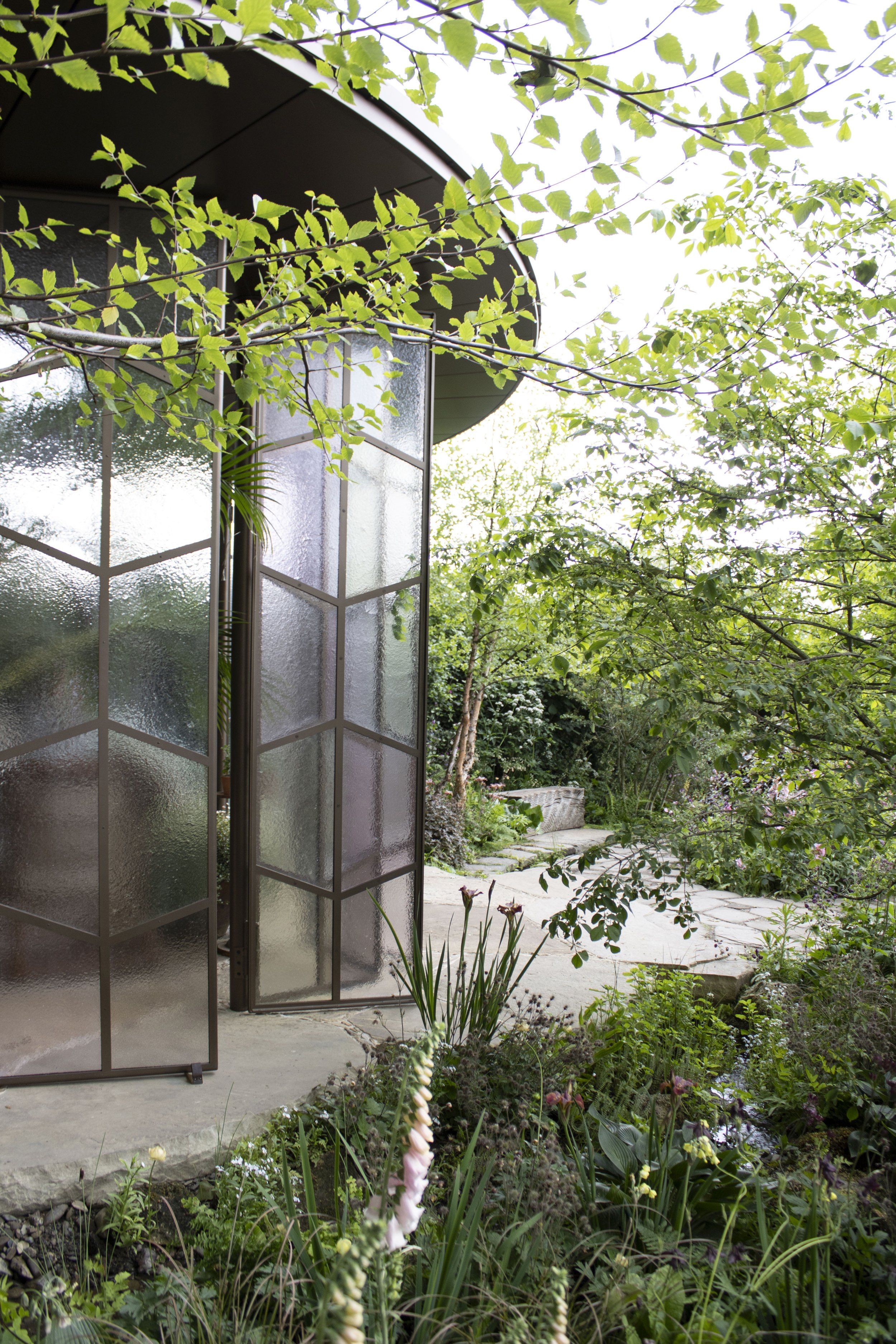
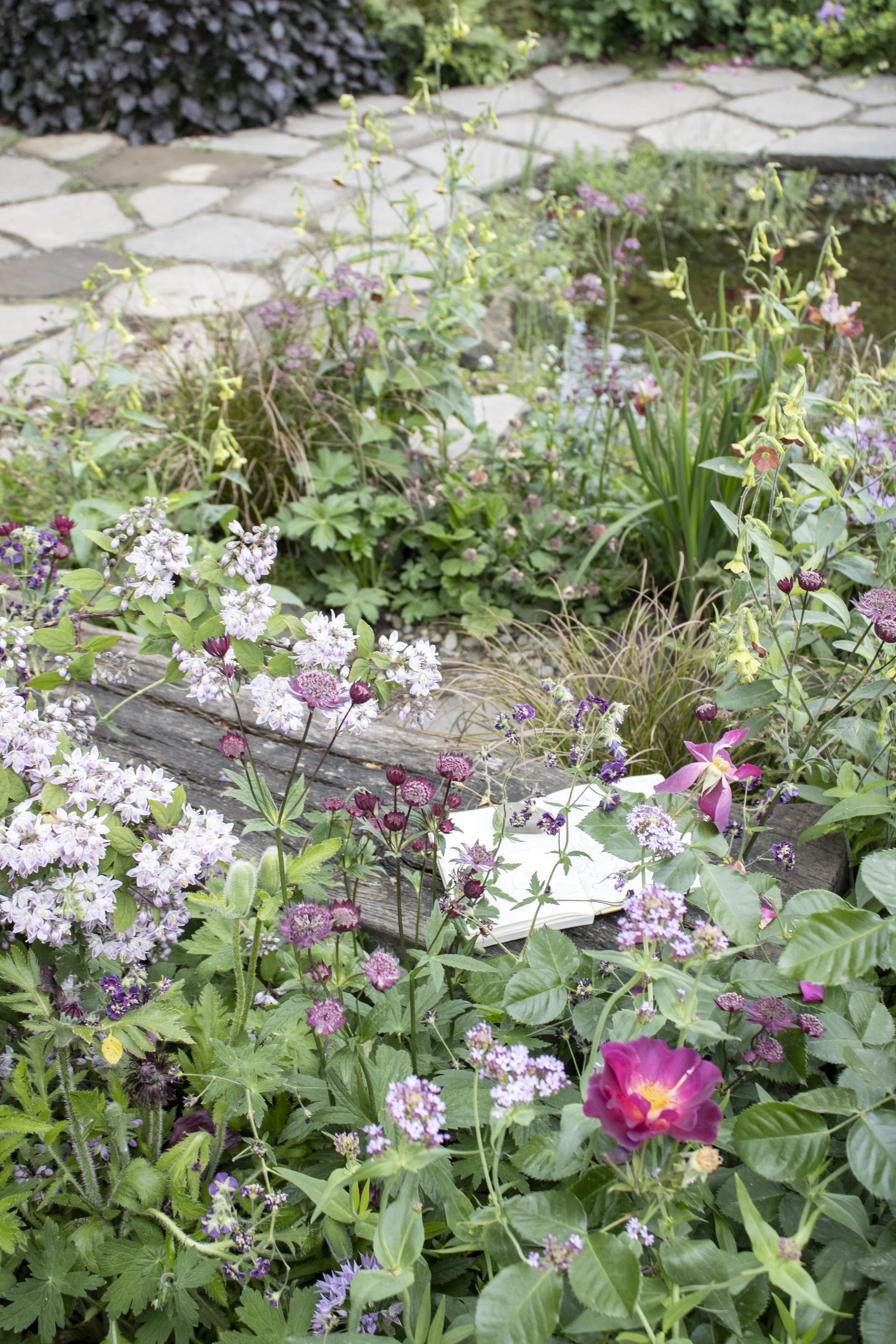
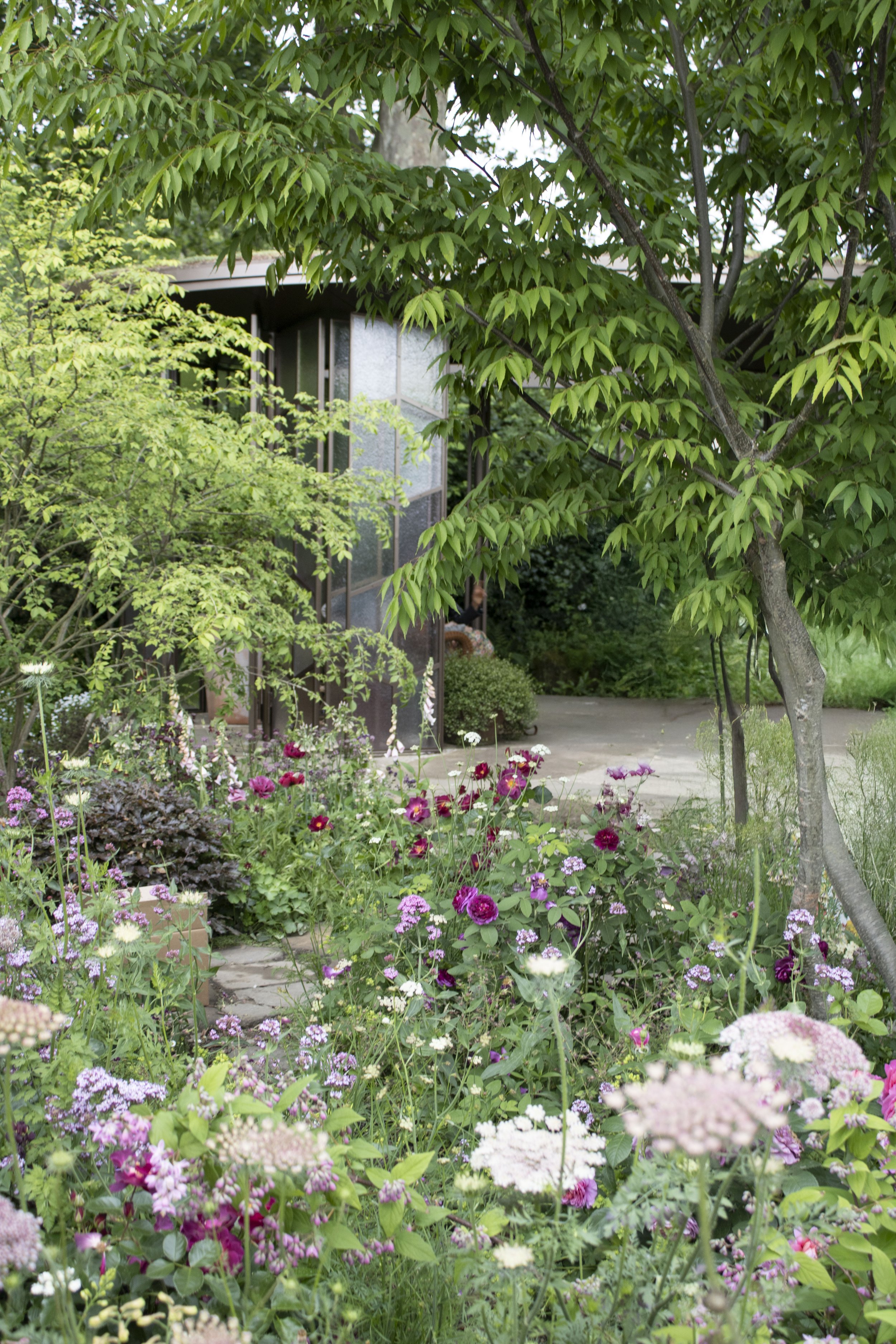
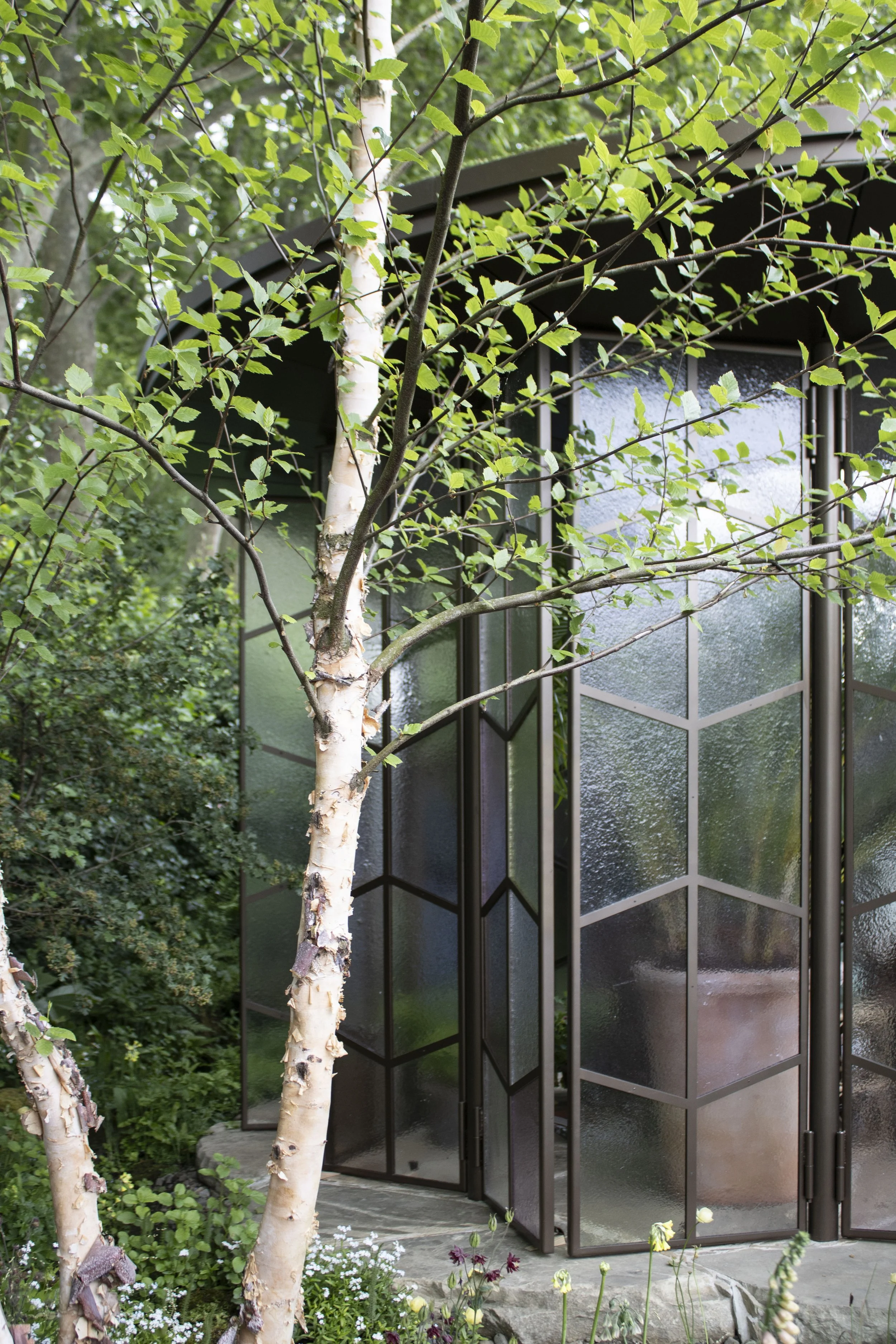
At its heart, a translucent elliptical pavilion emerges from lush foliage, creating an immersive, sensory environment. Jewel-like colours and fragrant flowers sway alongside the gentle sound of water flowing through a narrow rill, which connects various parts of the garden before settling into a tranquil pool.
The planting palette is rich and textured, featuring river birch trees, ferns, grasses, and a striking selection of roses including Rosa ‘Tuscany Superb’, Rosa ‘Charles de Mills’, and Rosa ‘Emma Bridgewater’. Deep reds and muted pinks embody the concept of ‘strong beauty,’ reflecting the spirit of the women who nurture this space.
Pivoting screens made from recycled acrylic open like petals around the pavilion, tinted to complement the garden’s colour scheme and enhance its serene atmosphere.
Designed as a sanctuary for women involved in The Glasshouse programme, the garden will be relocated to a women’s prison in the South of England after the show, continuing to provide a space of healing and growth.
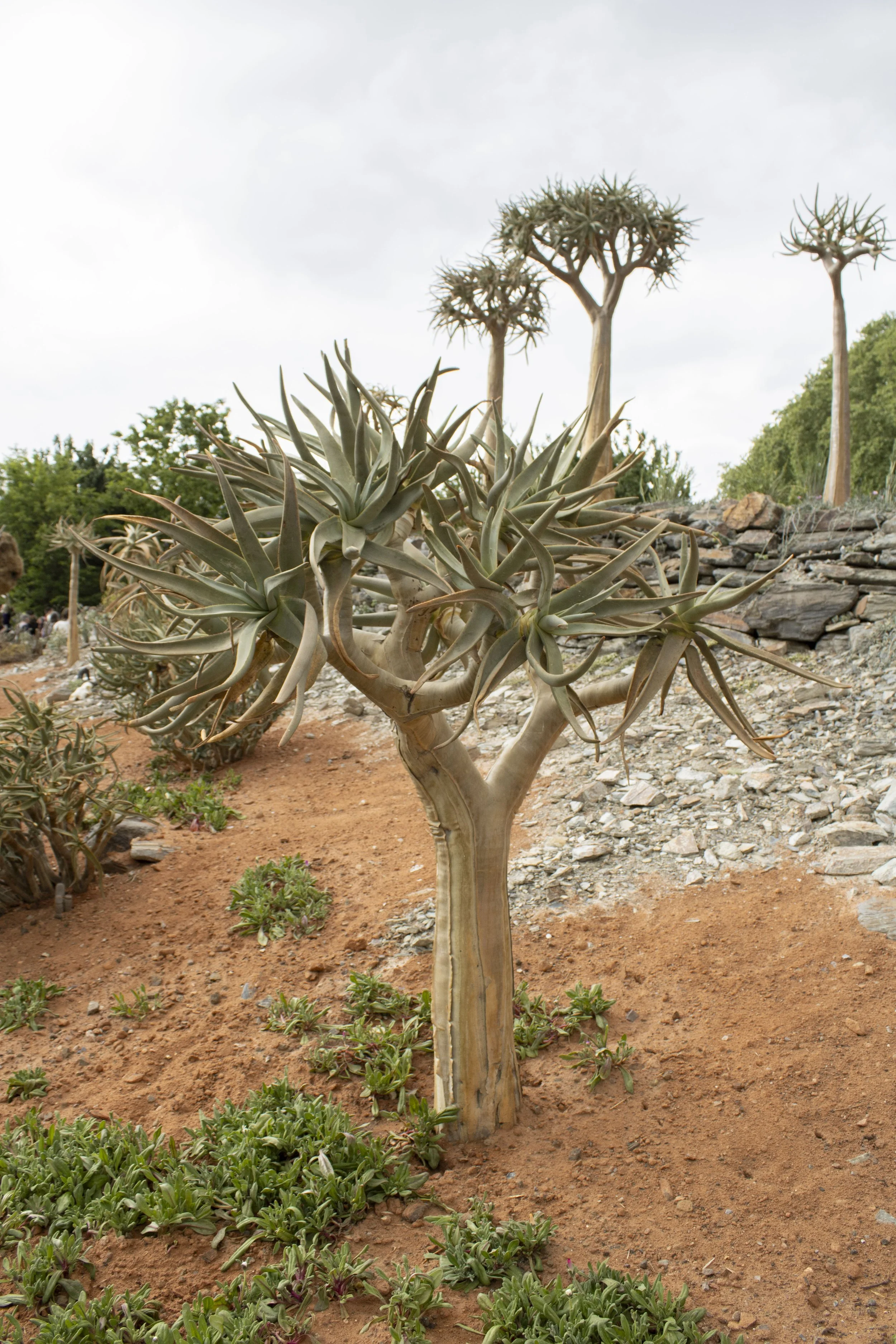
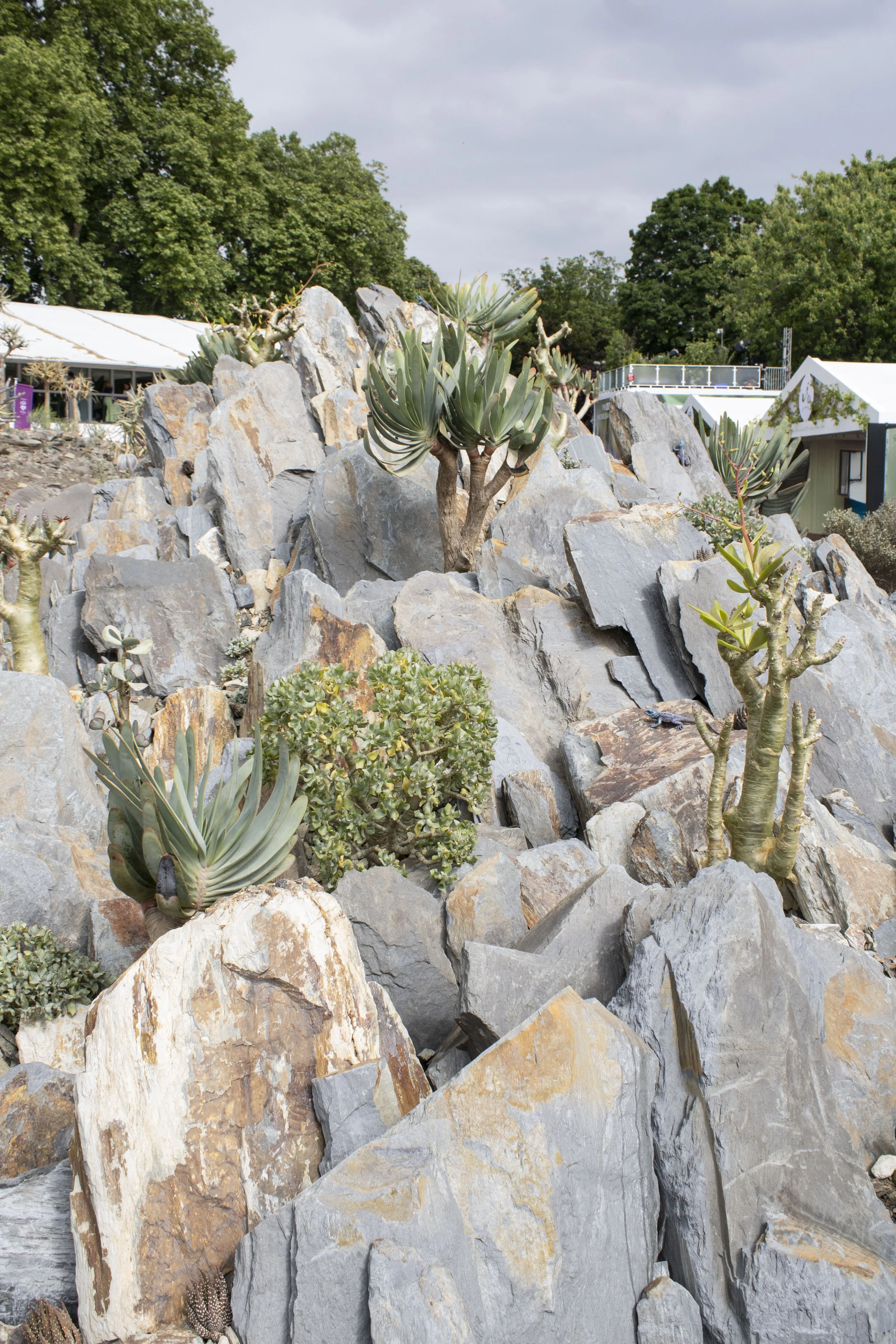
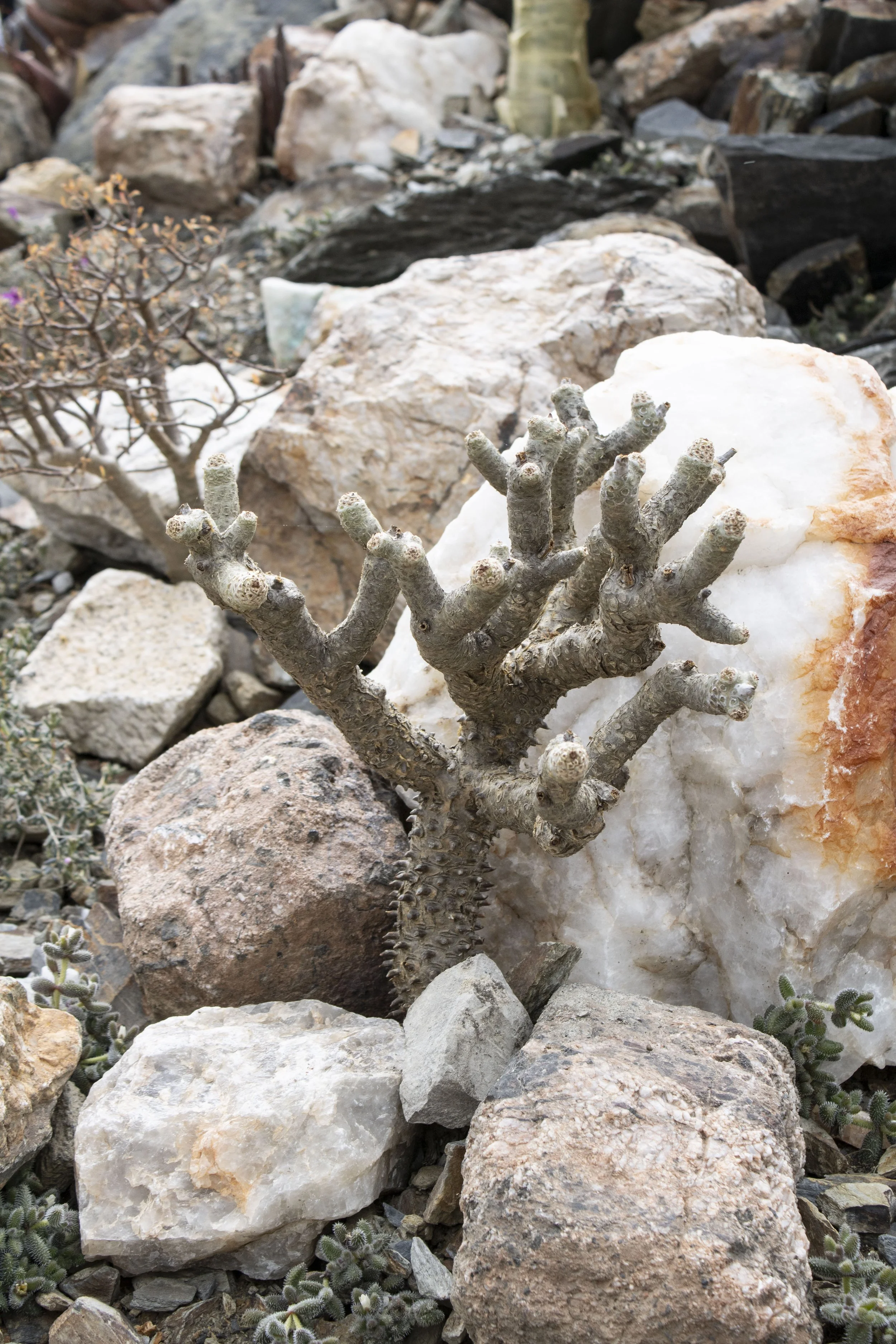
Karoo Succulent Garden
Designed by Kate Lewis (The Newt, Somerset) & Ernst van Jaarsveld (Babylonstoren)
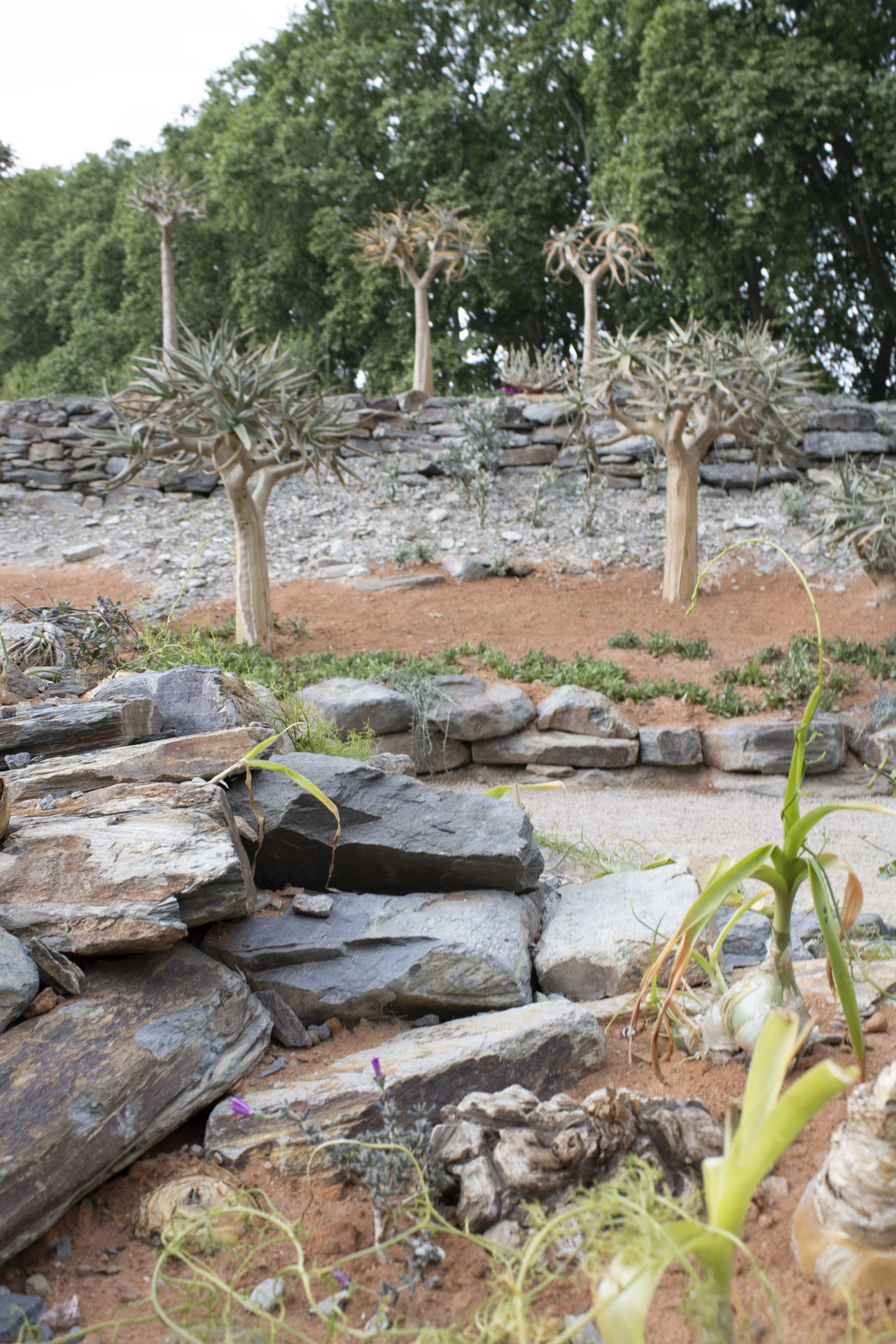
This garden marks a Chelsea first — a genuine Karoo succulent garden, bringing the unique flora of South Africa’s arid Karoo region into central London.
A collaboration between The Newt and its South African sister farm, Babylonstoren, the design draws on the expertise of botanists deeply familiar with Karoo’s native plants.
The garden celebrates the beauty and resilience of indigenous succulents, showcasing rare specimens from 15 plant families, many of which face threats from human activity and climate change.
Succulents are planted among naturalistic rock formations, reflecting their desert habitat, with an earthy colour palette of reds and browns that echoes the Karoo landscape.
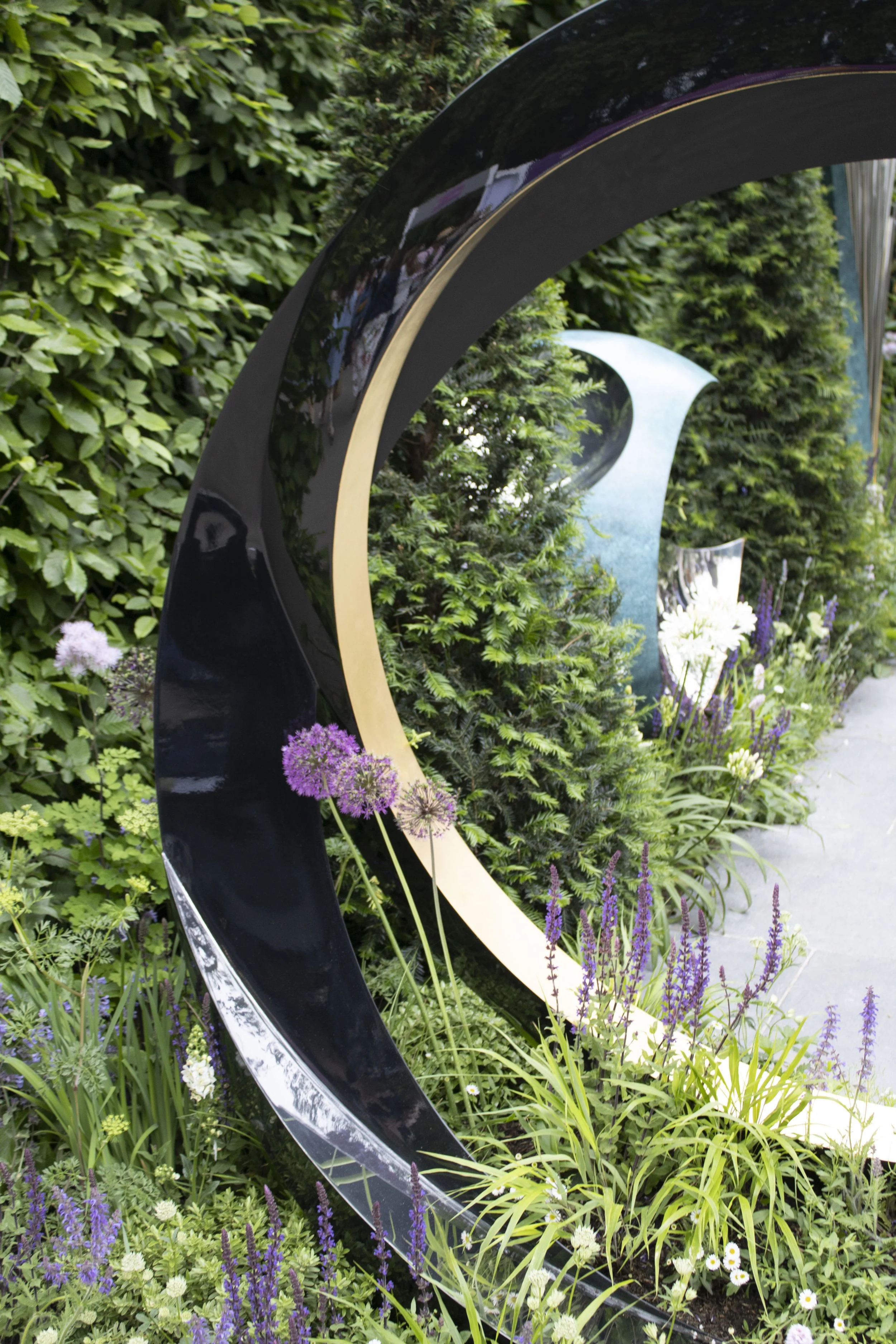
David Harber Exhibitor Space
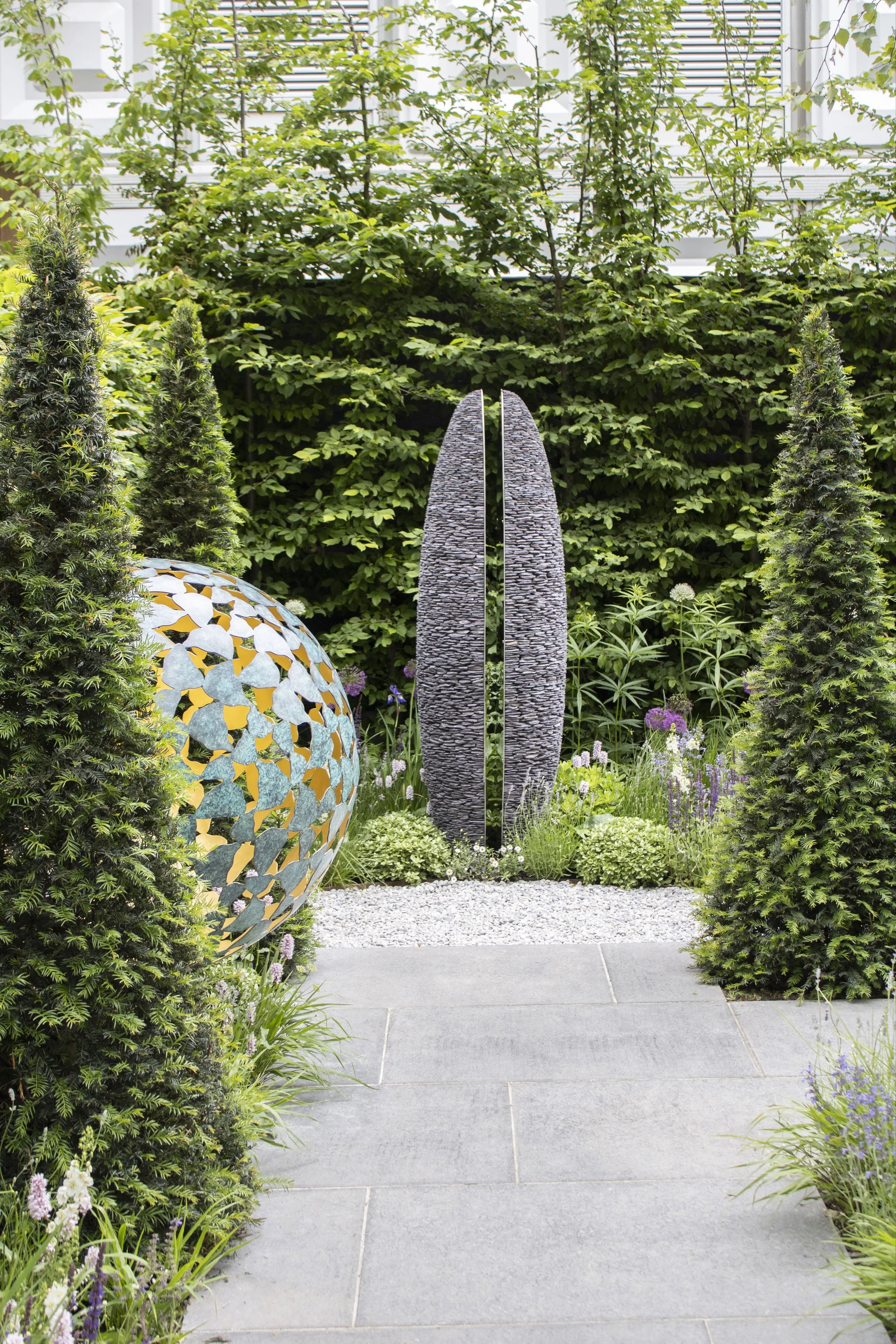
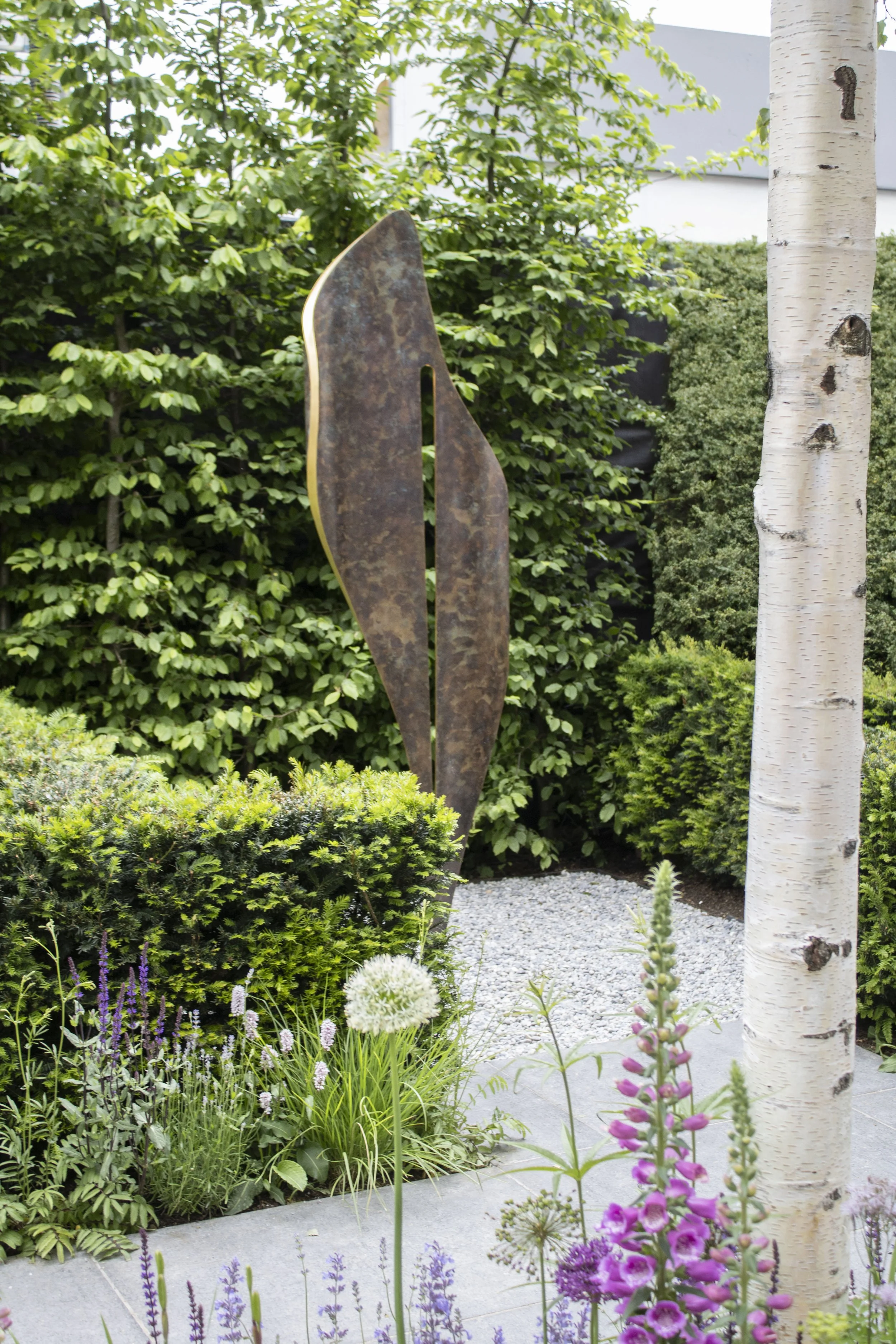
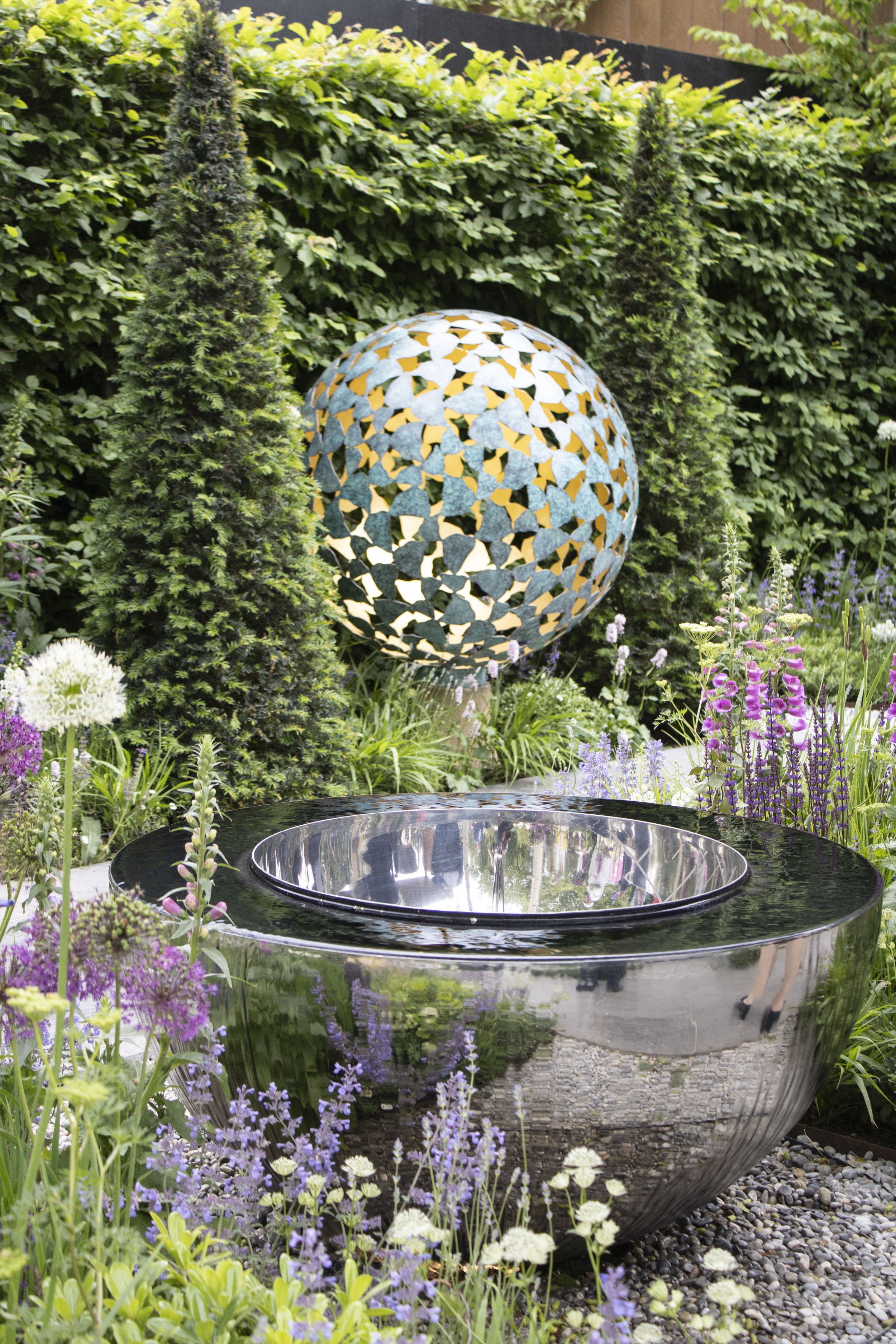
David Harber creates original sculptures, sundials, and water features that captivate and endure. Working from his Oxfordshire studio for over twenty years, his elegant and simple designs blend nature, light, reflection, and water to craft striking focal points for both indoor and outdoor spaces. His work graces private gardens and public places worldwide.
With a strong history of Chelsea Flower Show presentations, this garden showcased both new creations and beloved classics. The elegant design by Fernando Wong was expertly brought to life by the team at Hardwood Landscapes.
James Parker Sculpture Exhibitor Space
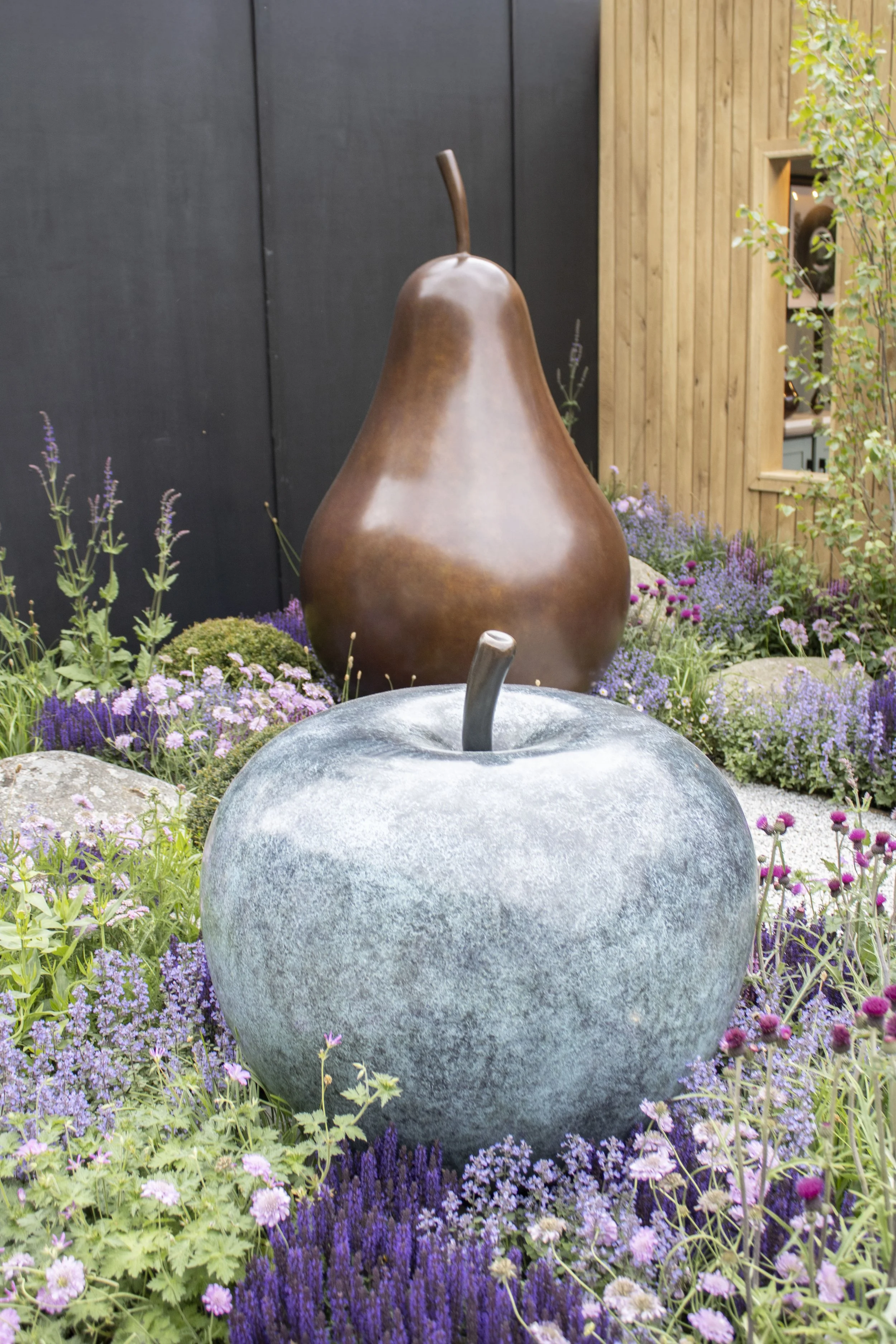
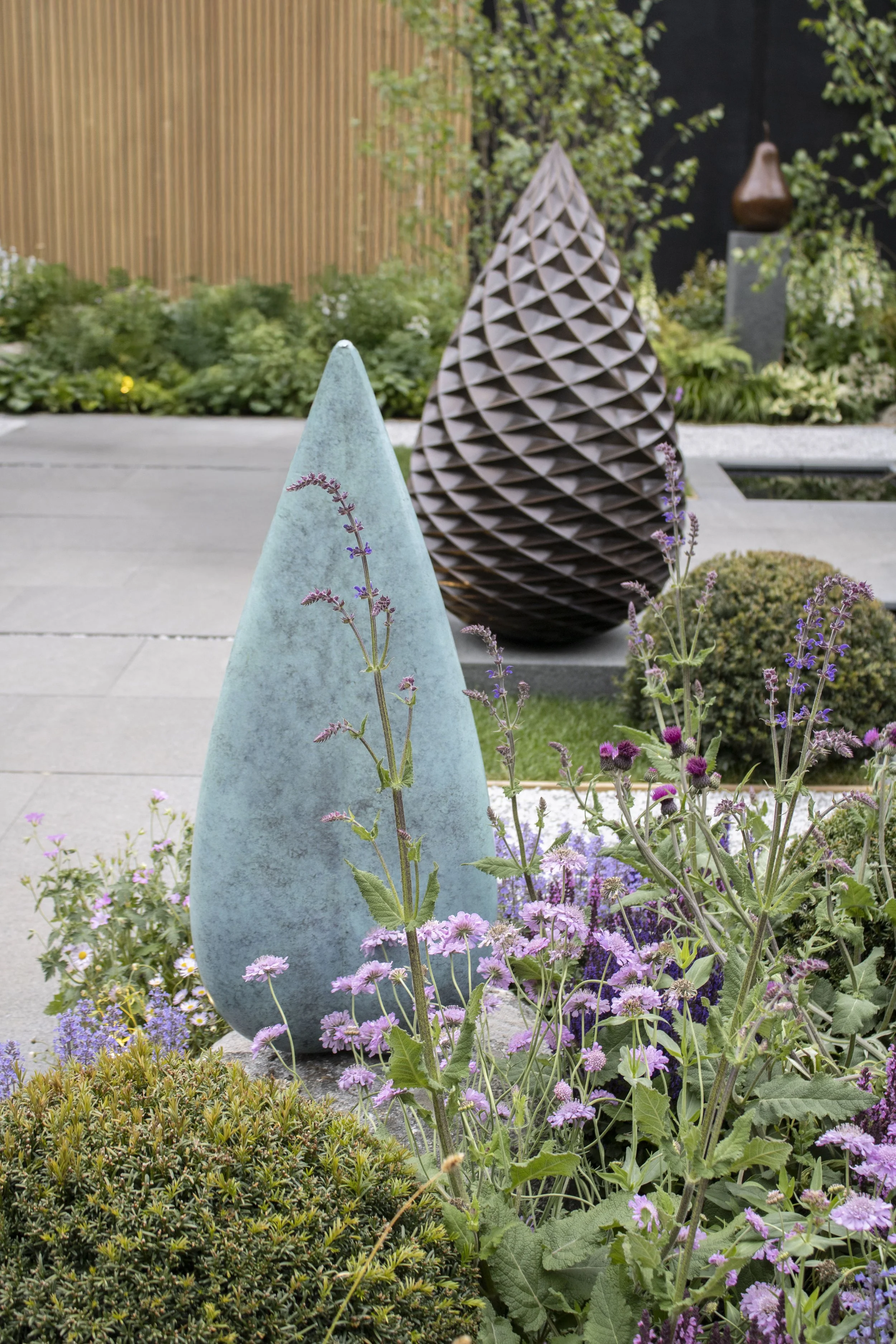
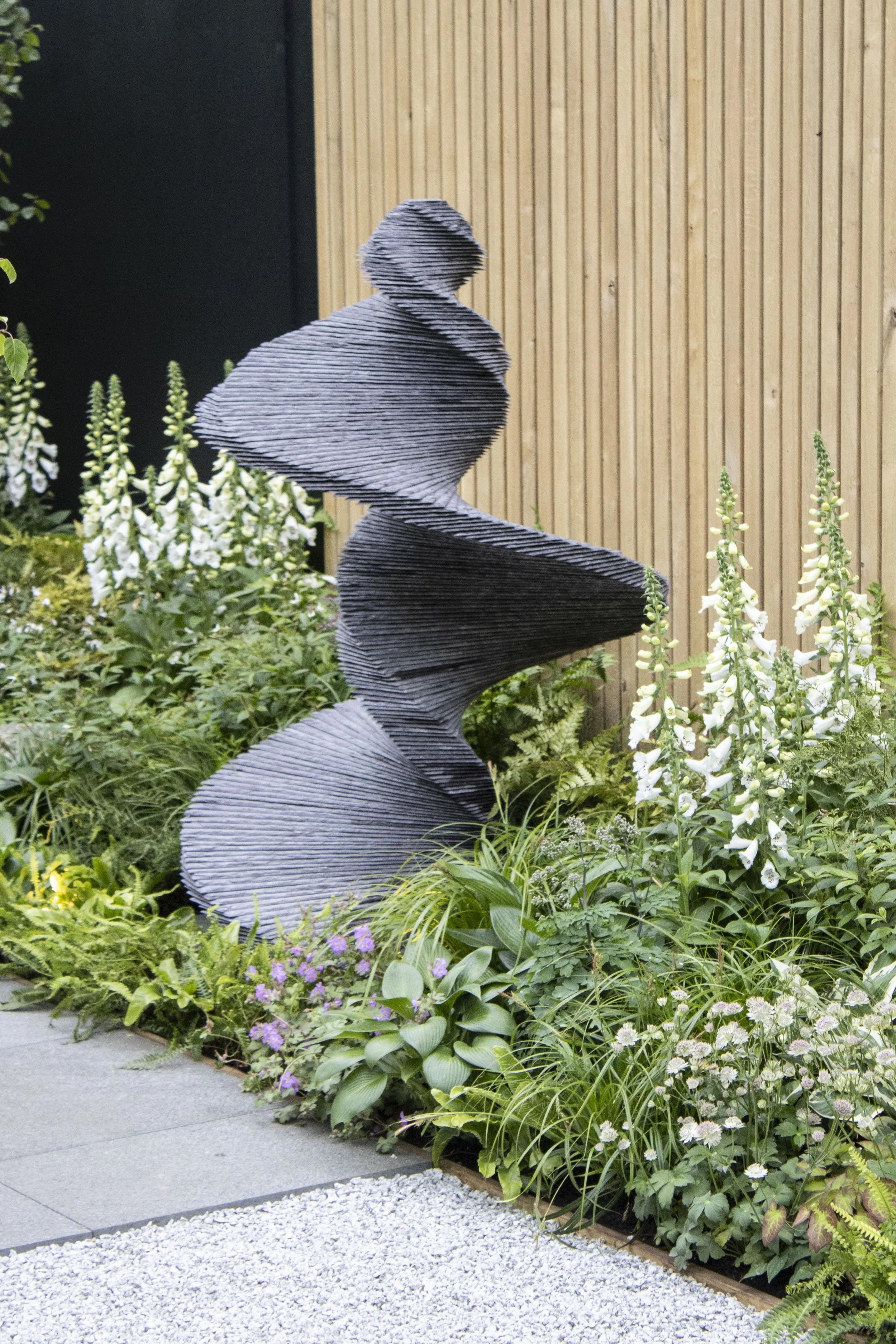
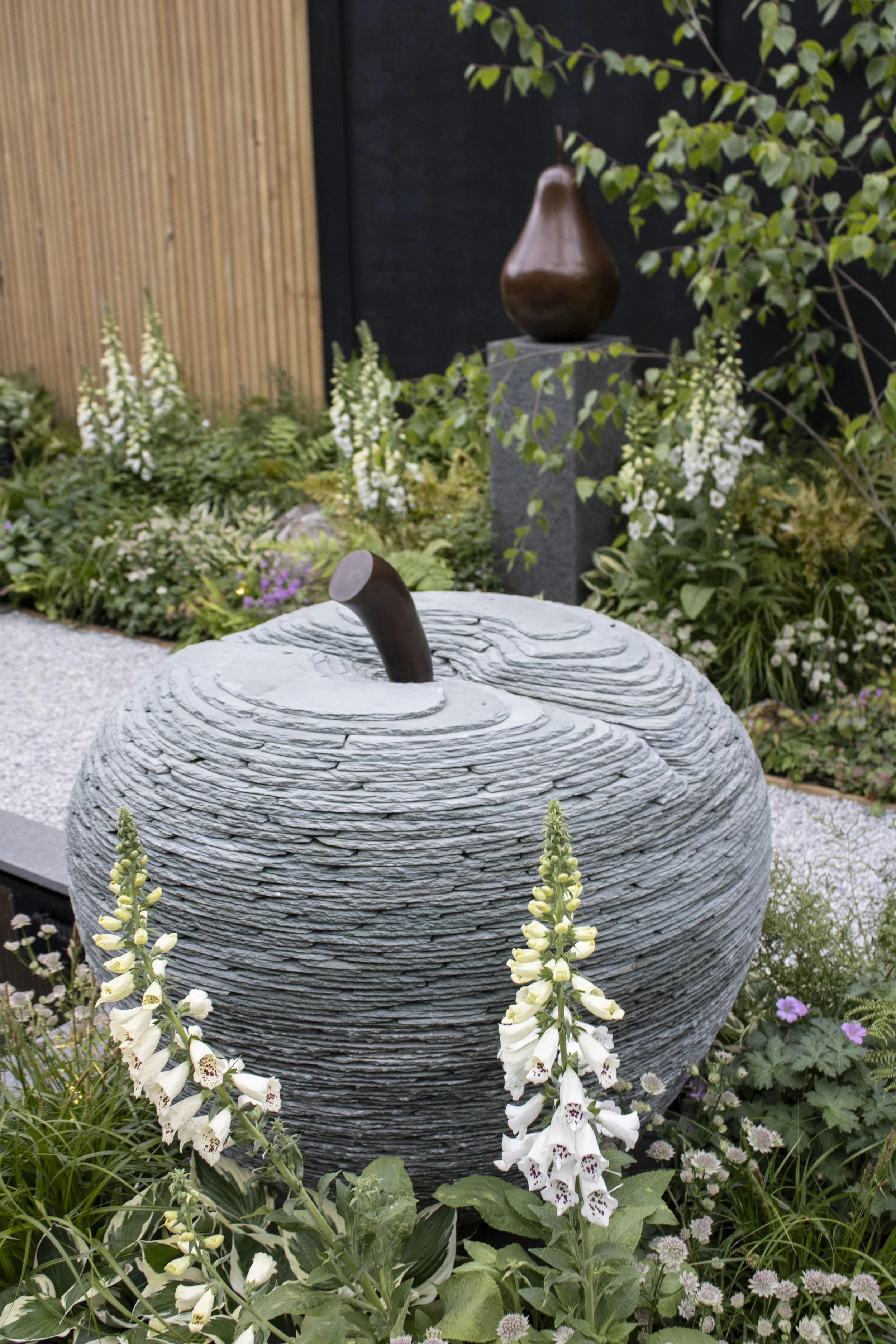
Sculptures by James Parker | Garden designed by David Boothman | Planting by London College of Garden Design graduates
Multi-award-winning Scottish sculptor James Parker creates contemporary slate, glass, and bronze artworks for homes, gardens, and public spaces. Drawing inspiration from nature, James believes that the natural world has already perfected shapes that are both practical and visually striking. Signature pieces such as Apple, Pear, and Creation showcase his elegant craftsmanship. All sculptures are meticulously designed and hand-built in Scotland.
The garden design, led by David Boothman of David Boothman Garden Design, reflects the natural landscape of Galloway, creating a harmonious setting for the sculptures. The planting scheme was expertly implemented by a talented team of seven graduates from the London College of Garden Design, bringing the space to life with thoughtful and context-sensitive planting.
