
Diamond in the City: The Twisting Legacy of Nanjing in AZL Architects’ Jinling Pavilion
Tucked within a dense residential enclave of high-rise buildings in Nanjing, the Jinling Diamond Art Pavilion rises as a sculptural beacon of cultural continuity and urban renewal. Designed by AZL Architects, the pavilion is far more than a striking architectural gesture—it is a compact but deeply layered symbol of the city’s 3,100-year history and evolving civic identity.
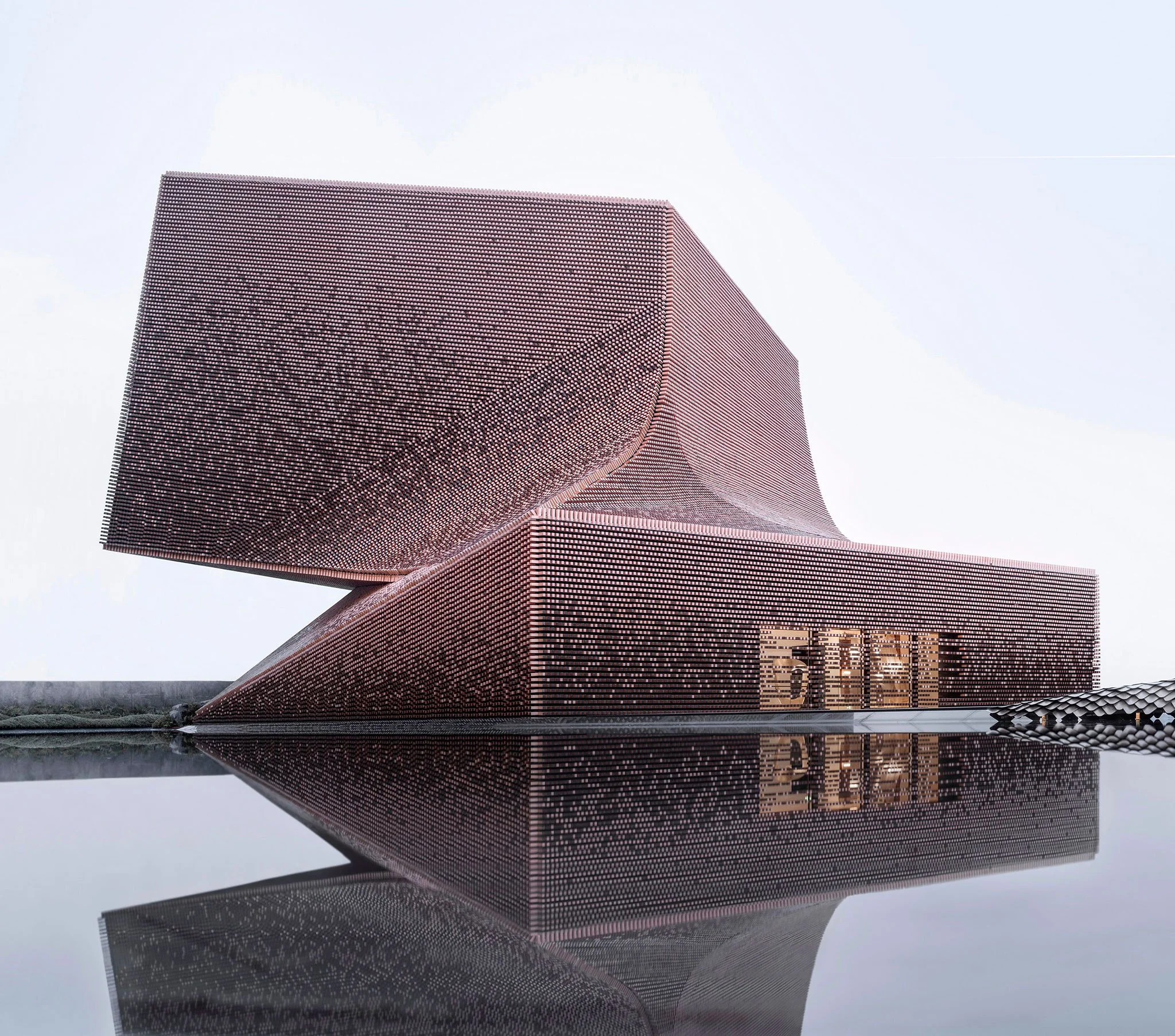
Formerly known as Jinling, Nanjing has long been a cradle of Chinese civilisation, with a legacy that spans imperial capitals, dynastic turns, and enduring cultural resilience. The design of the pavilion responds directly to this legacy. Drawing inspiration from the name Jinling and its ancient character “陵”—which evokes growth, vitality, and the intertwining forces of yin and yang—the building’s geometry is a contemporary expression of age-old symbolism. Rising from a strict rectangular base, the volume gently twists as it ascends, forming a faceted diamond that references the shape of the historic Outer Wall of Nanjing and the structure of traditional river houses along the Qinhuai River.


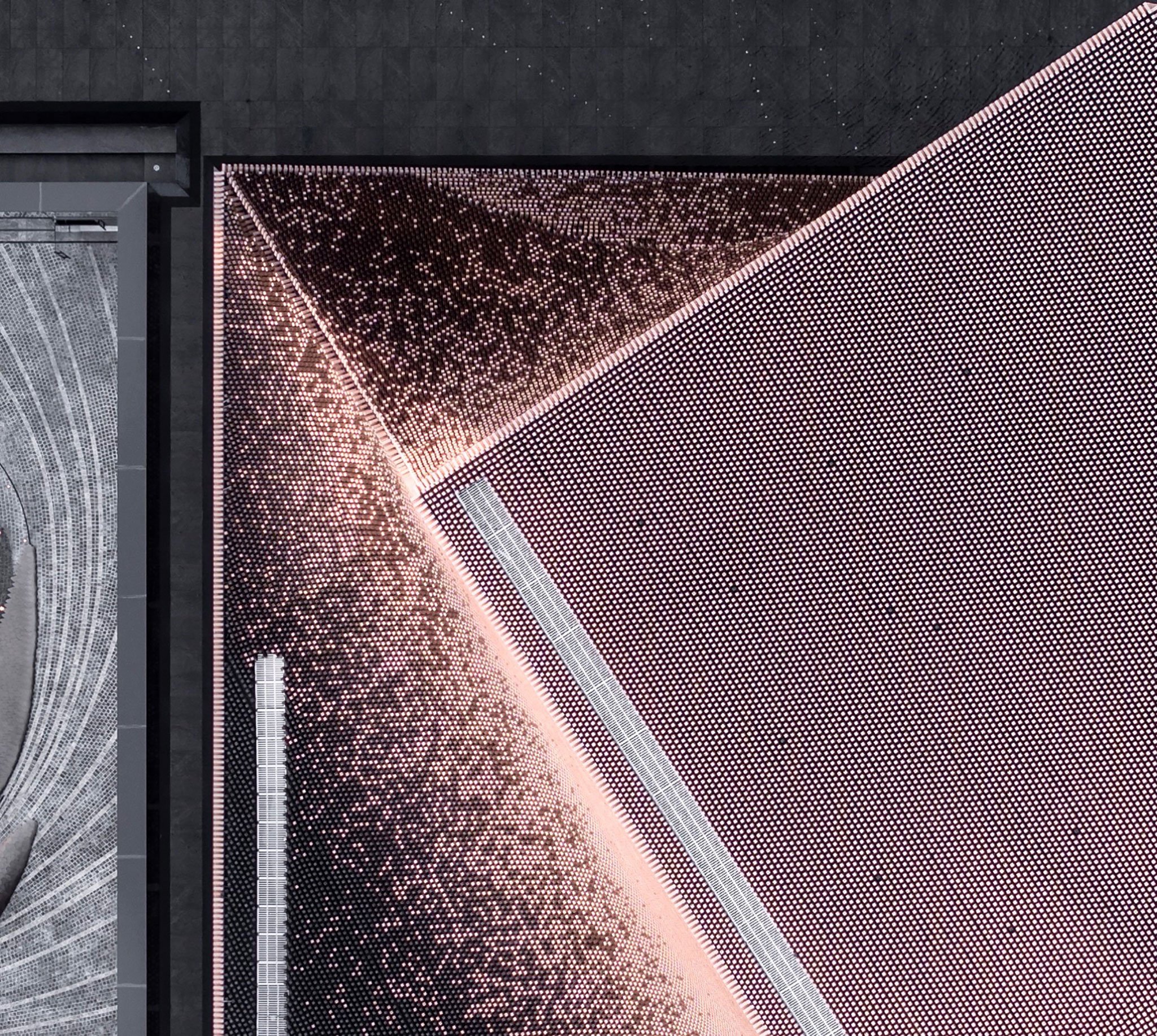
Despite its modest scale, the pavilion establishes a monumental presence. It aligns carefully with the urban context: the base runs parallel to the neighbouring towers, while the upper form twists to align with the access road, creating a subtle but dynamic shift in orientation. This upward spiralling movement is not merely aesthetic; it manifests the city’s spirit of adaptability, resilience, and growth.
The pavilion’s form is enveloped in a meticulously crafted ceramic brick façade, comprising 139,000 individually manufactured bricks in both glazed and unglazed finishes. The choice of material and its application pay direct homage to Nanjing’s ancient city walls, echoing their colour, scale, and weathered surfaces. The glazed elements—fewer than a third of the total—are dispersed in a gradient from top to bottom, simulating the patina of centuries of wear and time, and reflecting the city’s long-standing dialogue between permanence and transformation.
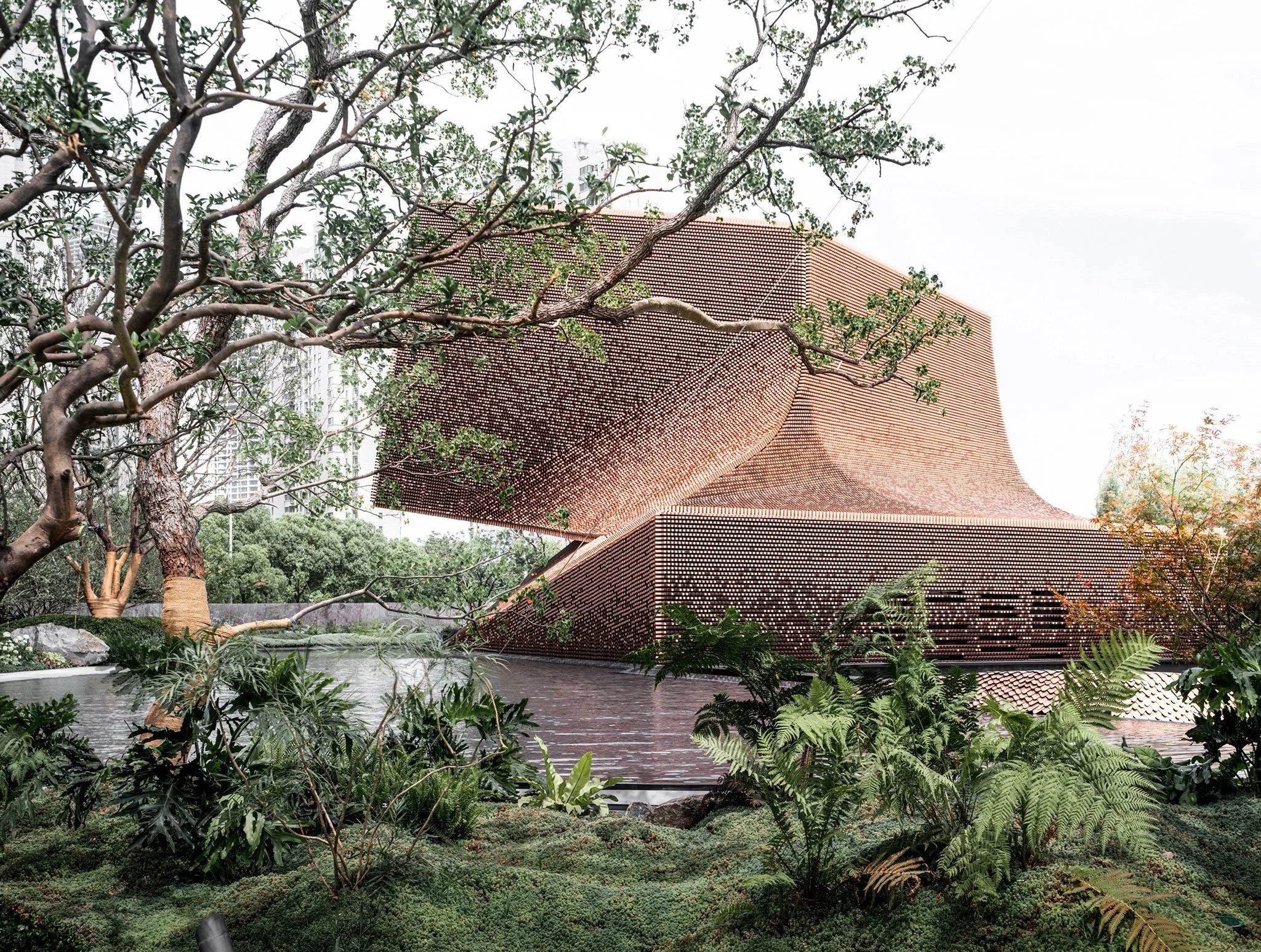
The construction of this double-curved, diamond-shaped surface presented formidable technical challenges. The design team employed an innovative combination of prefabricated U-shaped slot fixings and conventional chemical anchor methods to resolve the complexities of intersecting geometries and shifting surfaces. Each ceramic unit—measuring 60x60x180mm—was mounted with precise adjustability to accommodate the twisting contours, with curved surfaces decomposed into rational straight segments. This modular yet fluid approach allowed the façade to flow seamlessly across straight and curved planes while maintaining rigorous craftsmanship.
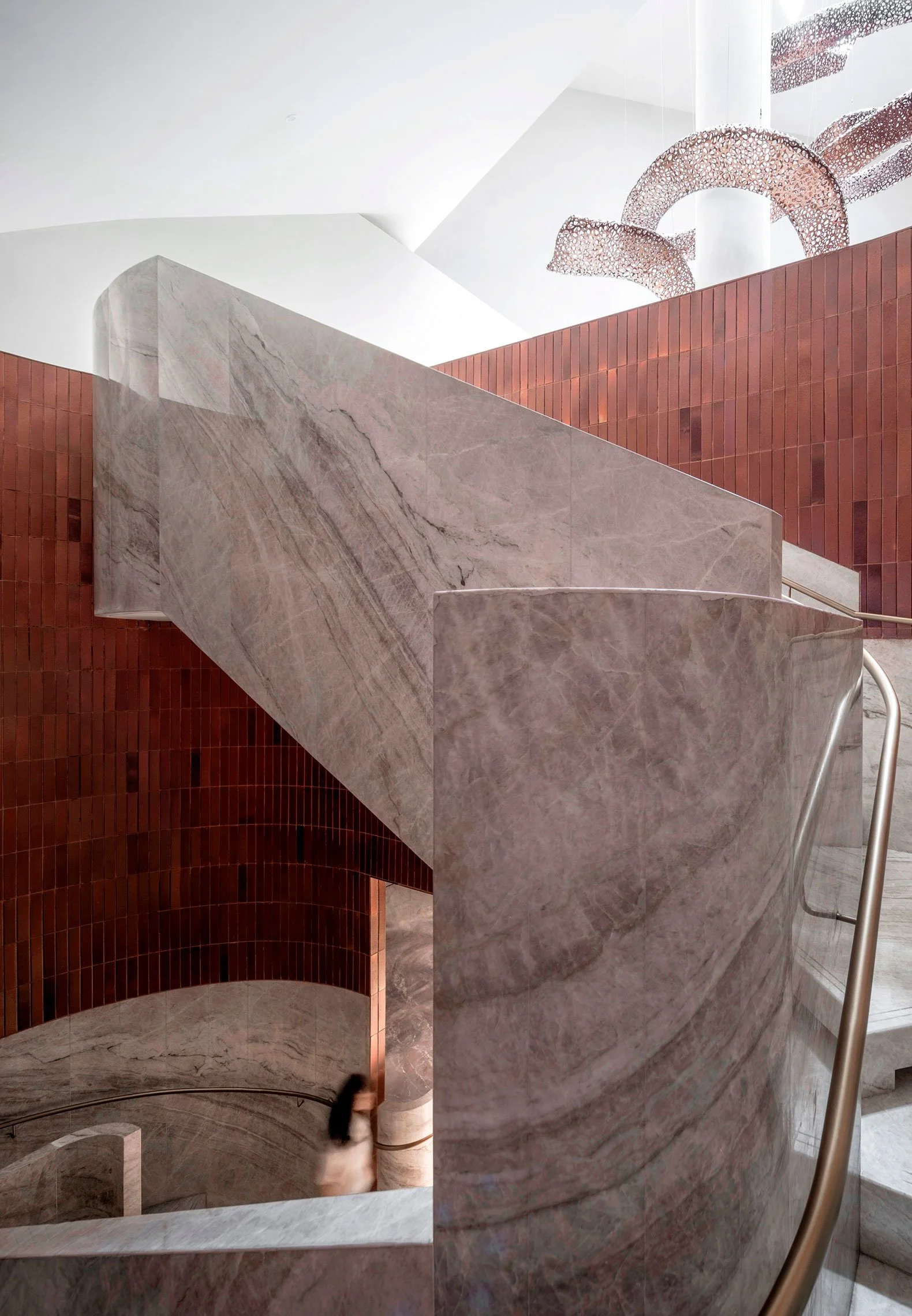
Beneath its sculptural exterior, the Jinling Diamond Pavilion is structured around a clear social purpose. A public exhibition hall occupies the ground floor, while a library crowns the second floor. A central staircase connects both to a subterranean community hall—an expansive space for neighbourhood gatherings, cultural programming, and civic engagement. This layering of functions transforms the pavilion into a true community anchor: a place where art, learning, and collective memory converge.

The conceptual roots of the project are equally profound. The theme “The Renaissance of Jinling under the Sycamore Tree” posed a design challenge in 2023, calling for a built form that could channel Nanjing's identity and quiet strength. AZL Architects responded with a pavilion that is as much about place-making as it is about place-remembering. Its form references the ancient. Its materials echo the weathered texture of history. Yet its presence is firmly contemporary—a symbol of how the city continues to build upon its past without being bound by it.
Jinling Diamond Art Pavilion by AZL architects. All photography by Hou Bowen
The Jinling Diamond Art Pavilion stands as a crystalline metaphor for Nanjing itself: steadfast yet ever evolving, grounded yet aspirational, and defined by the enduring character of a city that has quietly shaped the course of Chinese civilisation.
