
The Structural Story Behind Hoshinoya Tokyo
In a city known for its bold architectural experiments and dense urban layering, Hoshinoya Tokyo presents a striking counterpoint. This architectural statement is both confidently modern and deeply respectful of tradition. Conceived as a “vertical ryokan,” the hotel reinterprets Japan’s most time-honoured hospitality form within the rigid framework of a high-rise, creating a landmark that challenges expectations of both skyscraper design and cultural preservation.
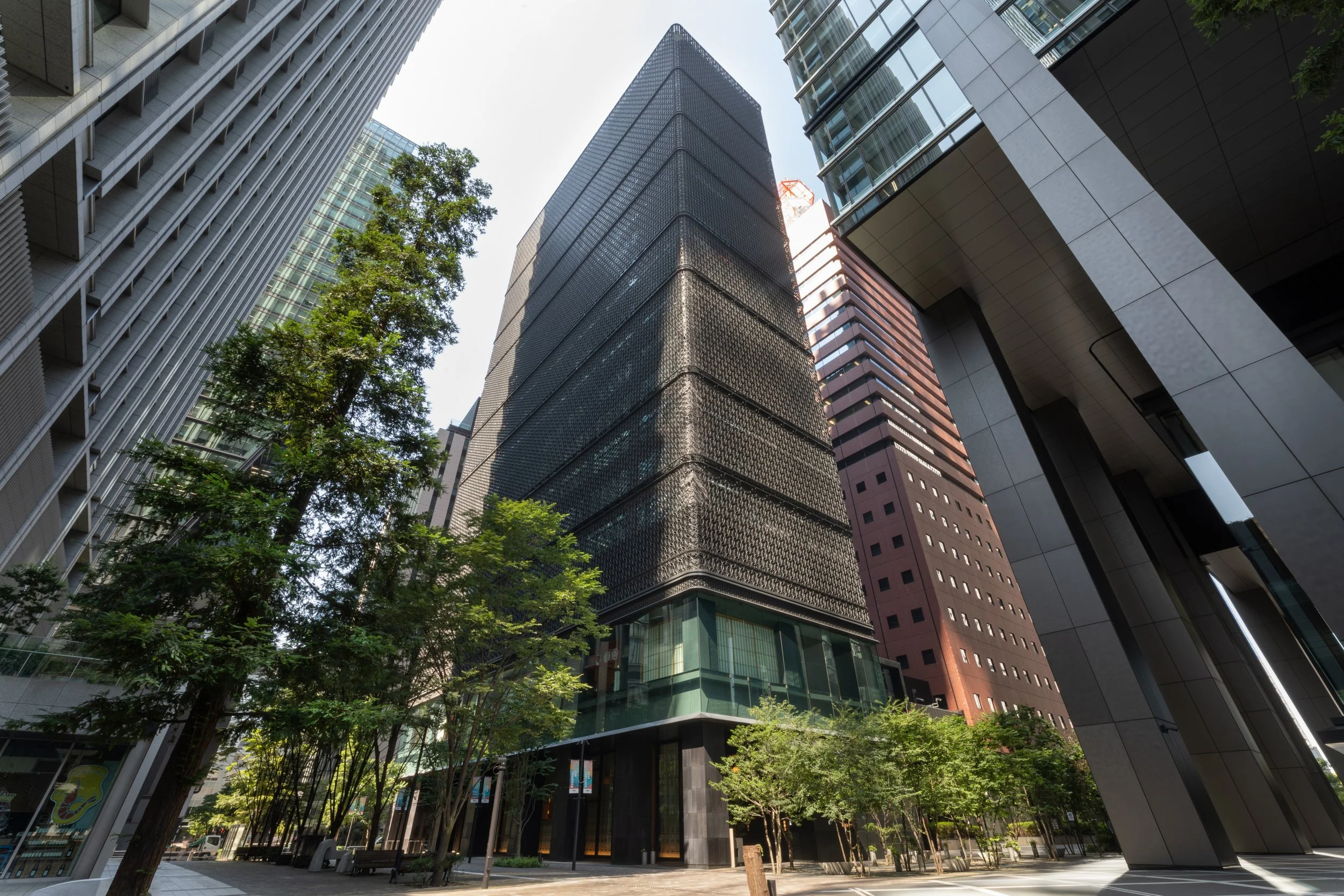
Located in Tokyo’s prestigious Otemachi business district, just steps from the Imperial Palace, this 17-storey tower blends seamlessly into the corporate skyline. But behind its minimalist façade lies a structure steeped in Japanese design philosophy, vernacular influences, and spatial innovation. For architecture enthusiasts and practitioners, Hoshinoya Tokyo offers a masterclass in contextual architecture, where the soul of a building lies not in grandiosity but in grace, restraint, and intelligent design.
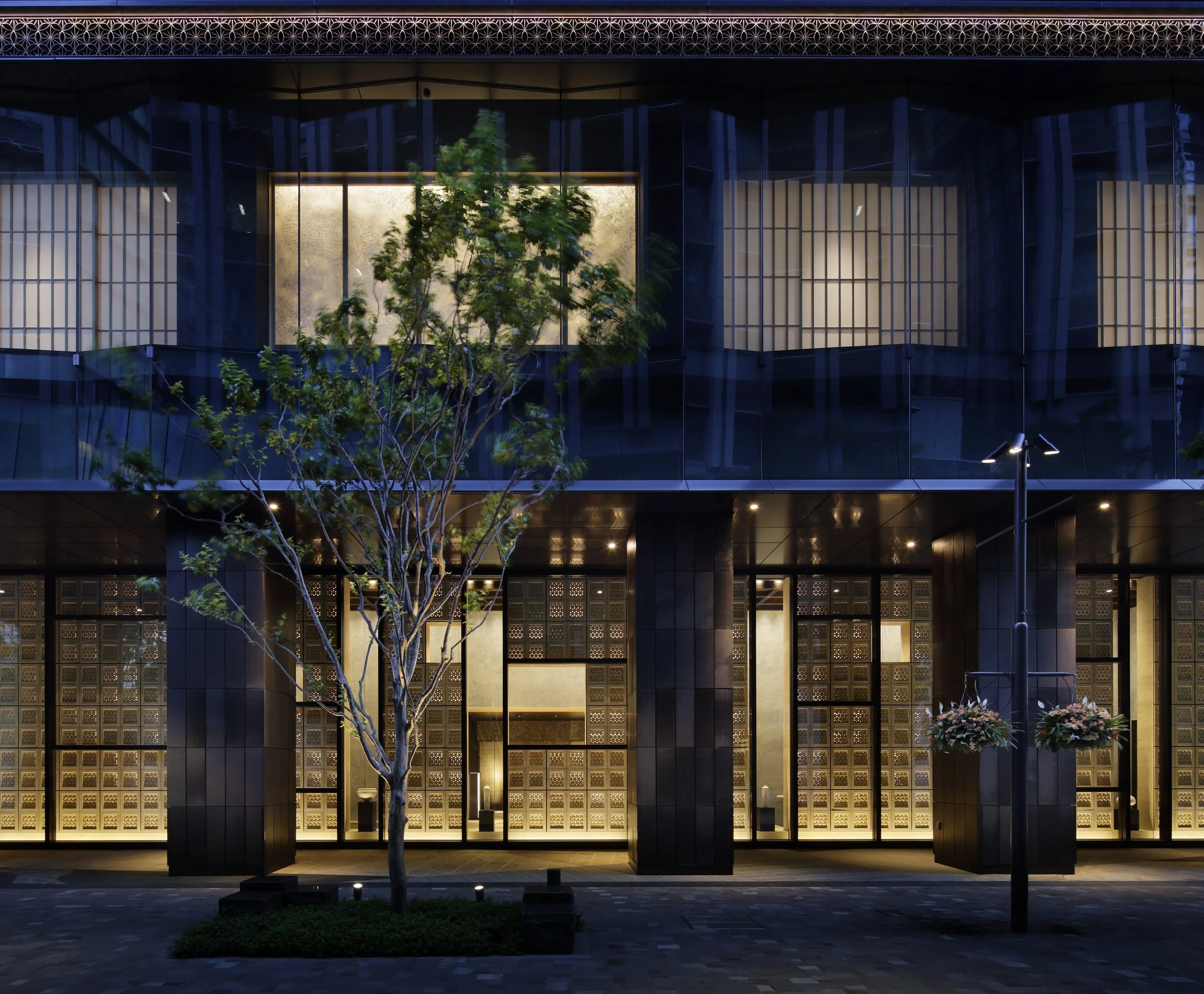
The Vision: A Vertical Ryokan in a Horizontal Tradition
Traditionally, ryokans (Japanese inns) are low-lying structures nestled in rural or mountainous landscapes. Bringing this experience into the heart of Tokyo required not just reinterpretation but radical architectural reengineering. Hoshino Resorts collaborated closely with Azuma Architect & Associates to create a building that would capture the spatial rituals and emotional qualities of a ryokan, while also satisfying urban planning regulations, seismic standards, and modern expectations.
The result is a steel-reinforced concrete tower that stretches 60 metres into the sky, but never feels cold or corporate. Instead, it is a meditative structure—intimate in atmosphere, monumental in concept.
Each floor is designed as a self-contained “ryokan,” complete with communal ochanoma lounges and limited guest rooms, reflecting the exclusivity and privacy found in traditional Japanese inns. The verticality of the design becomes a narrative device, guiding guests upward through layers of quietude and tradition—a spatial metaphor for escape and elevation.

Façade Design: A Komon Cloak for the City
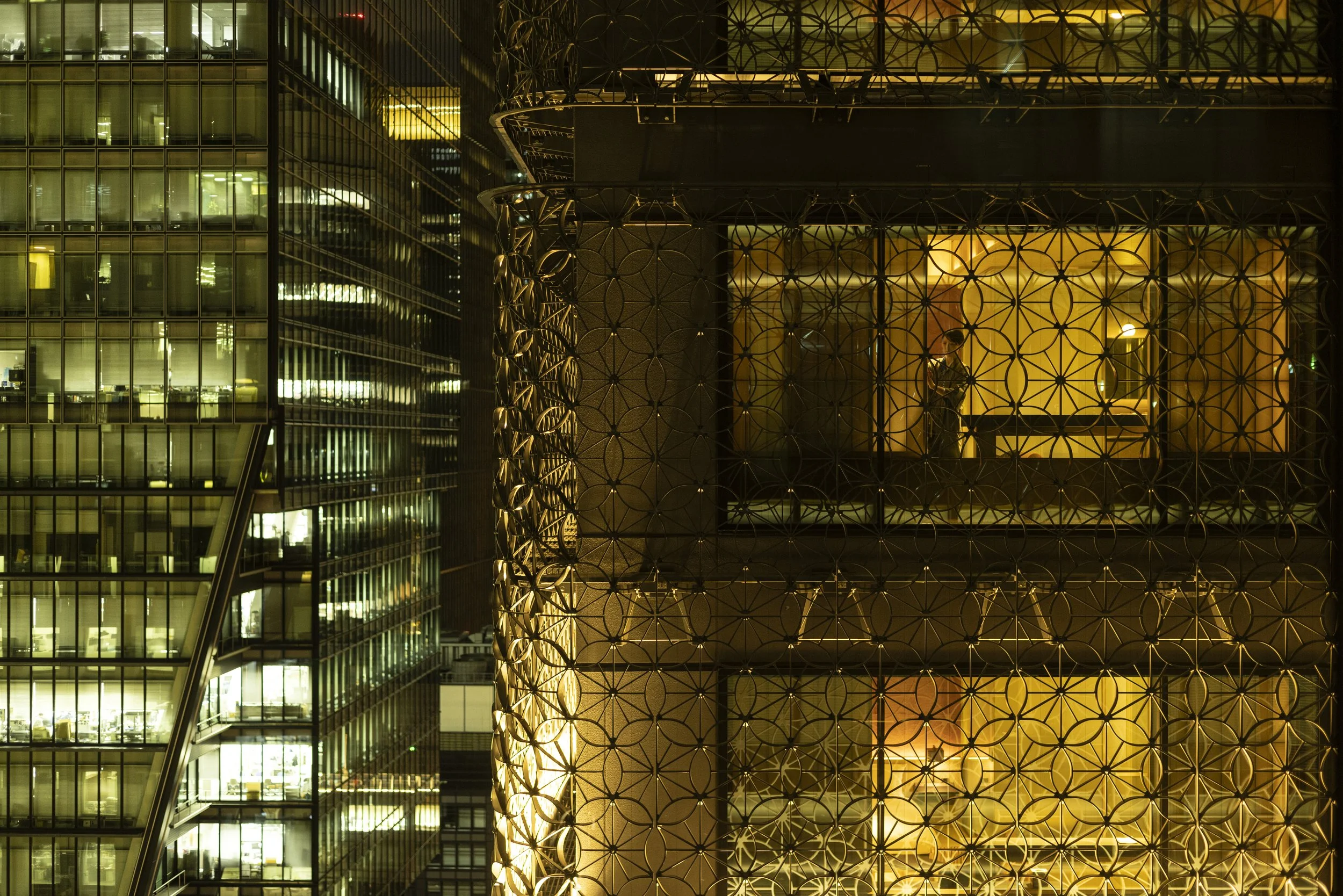
One of the most distinctive features of Hoshinoya Tokyo’s architecture is its intricate façade, designed to echo the kimono’s woven textures and the symbolic komon patterns of traditional Japanese family crests. Clad in aluminium latticework, the façade is more than decorative—it acts as a shading device, thermal barrier, and privacy screen.
The lattice features subtle curves and repeating diamond motifs, fabricated through precision machining, and finished in matte black to absorb light rather than reflect it. The materiality, colour, and patterning create an interplay of shadows and surface, allowing the building to shift character with the sun’s movement—a poetic echo of nature that’s rarely found in high-rise construction.
The use of ornamental geometry on a skyscraper is an architectural anomaly in Tokyo, where glass and steel are the dominant materials. Here, pattern and texture serve as cultural signifiers, announcing the building’s identity as something profoundly Japanese, even before one steps inside.
Spatial Planning: Tradition Reimagined
From an architectural planning perspective, the most remarkable aspect of Hoshinoya Tokyo is how it mirrors the functional DNA of a traditional ryokan within a vertical envelope. The entry sequence begins at street level, where guests remove their shoes; an act of symbolic transformation that signals the shift from the outside world to the sanctuary.
Once inside, guests ascend directly to their floor, where a central ochanoma lounge, serving both social and functional roles, anchors the spatial arrangement. Rooms extend from this core, mimicking the linearity of traditional ryokan corridors while enhancing acoustic privacy and personal space. The entire floor plan on each level prioritises quiet transitions and layered privacy, essential elements in Japanese domestic architecture.
Public areas are located on the uppermost levels, including a natural hot spring bath (onsen) sourced from over 1,500 metres below the city. Set beneath a louvred timber ceiling with views of the sky, the bath’s architecture balances elemental exposure and enclosure; an effect created through the careful modulation of light, ventilation, and material contrast.
Material Palette: Natural Yet Engineered
Materiality is a central theme in the hotel’s architectural language. While the building’s core structure is reinforced concrete and steel to meet strict Japanese seismic codes, the interior surfaces are almost entirely clad in natural materials, cedar, washi paper, hinoki wood, and tatami straw.
But these materials are not merely decorative—they are structurally and thermally responsive. For instance, the tatami mats used in guest rooms and lounges are laid over raised platforms that provide insulation and sound dampening. In contrast, hinoki wood used in the bathrooms offers both olfactory and antimicrobial benefits.
In an urban context dominated by synthetic finishes, the return to natural textures brings an unexpected warmth and tactility to the structure. It also reinforces the building’s ecological ethos: rather than competing with the urban fabric, Hoshinoya Tokyo is an architectural refuge designed to reconnect people with the essence of Japanese living.

Environmental Design and Sustainability
Sustainability at Hoshinoya Tokyo is approached through a traditional lens rather than high-tech gadgetry. The building’s natural ventilation systems mirror those found in historic Japanese homes, where airflow is managed through strategic apertures and material permeability. The komon façade contributes to passive cooling, reducing reliance on mechanical air-conditioning.
Rainwater collection systems and thermal insulation reduce the building’s environmental footprint. At the same time, the inclusion of an onsen sourced from natural geothermal energy underscores a symbiosis between the building and the earth. This sustainability is quiet and effective—evident not in performative green gestures, but in a design that prioritises efficiency, endurance, and ecological intelligence.
The Architecture of Silence
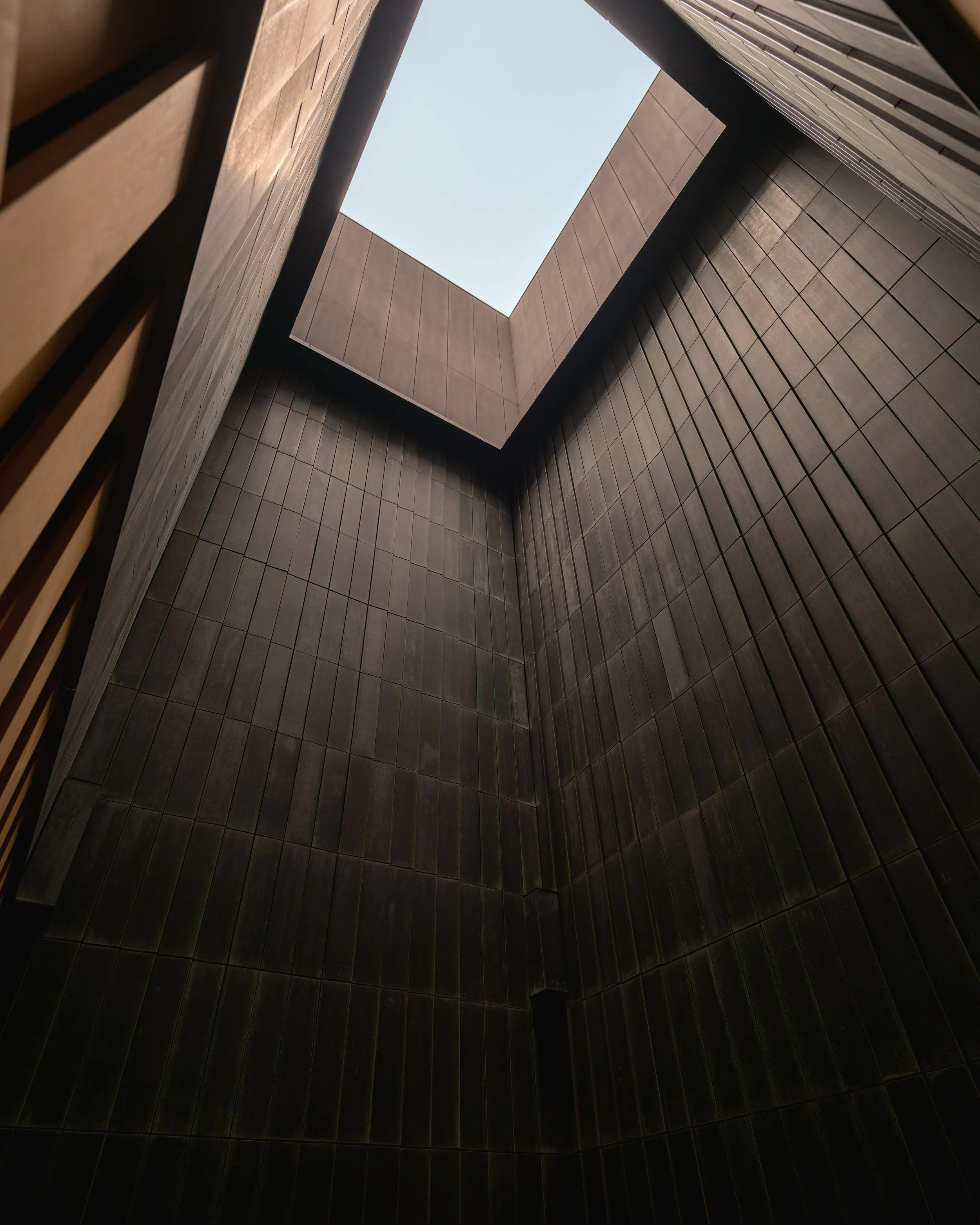
Perhaps the most profound achievement of Hoshinoya Tokyo’s architecture is its ability to evoke silence in a noisy world. It does not demand attention through size or flamboyance, but instead rewards deeper observation. The structure is an essay in quiet power; an expression of how architecture can influence mood, mindset, and memory.
It’s a place where light is allowed to soften surfaces, where boundaries blur between private and shared space, and where every design decision is made with emotional resonance in mind. In the context of Tokyo, a city of sensory saturation, this is nothing short of radical.
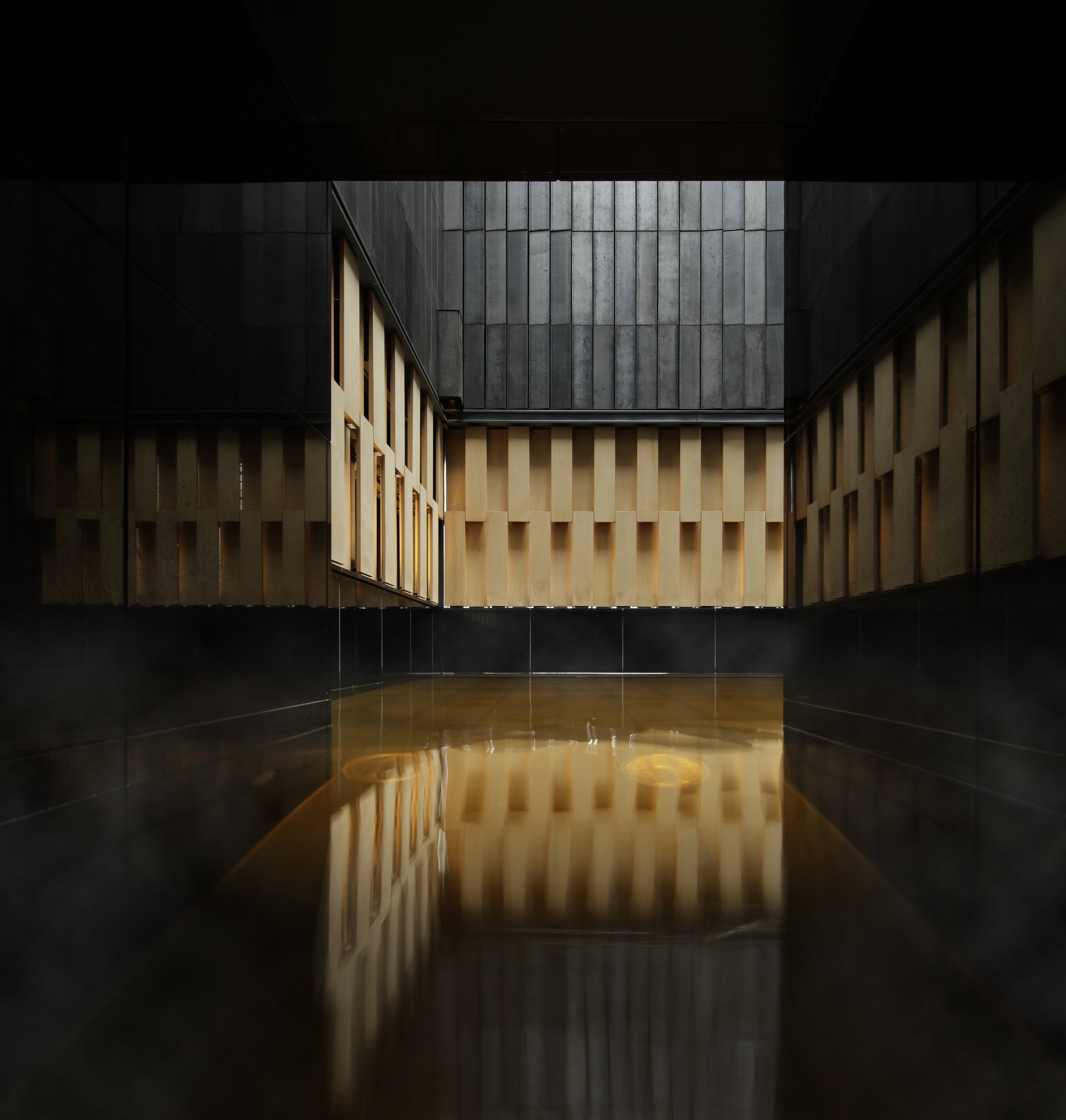
All photography courtesy of Hoshino Resorts
A New Chapter in Urban Hospitality Architecture
As global architects explore how to humanise cities and restore cultural meaning in contemporary construction, Hoshinoya Tokyo offers a vital case study. It is proof that verticality need not equal anonymity; that skyscrapers can reflect the spirit of a place; and that hospitality architecture can be deeply cultural, not just commercially driven.
Whether viewed through the lens of materials, form, circulation, or urban integration, the building stands as a quiet icon of 21st-century Japanese architectural thinking. For those passionate about architecture and the interplay between design and emotion, Hoshinoya Tokyo is not just a hotel; it is a work of built philosophy.
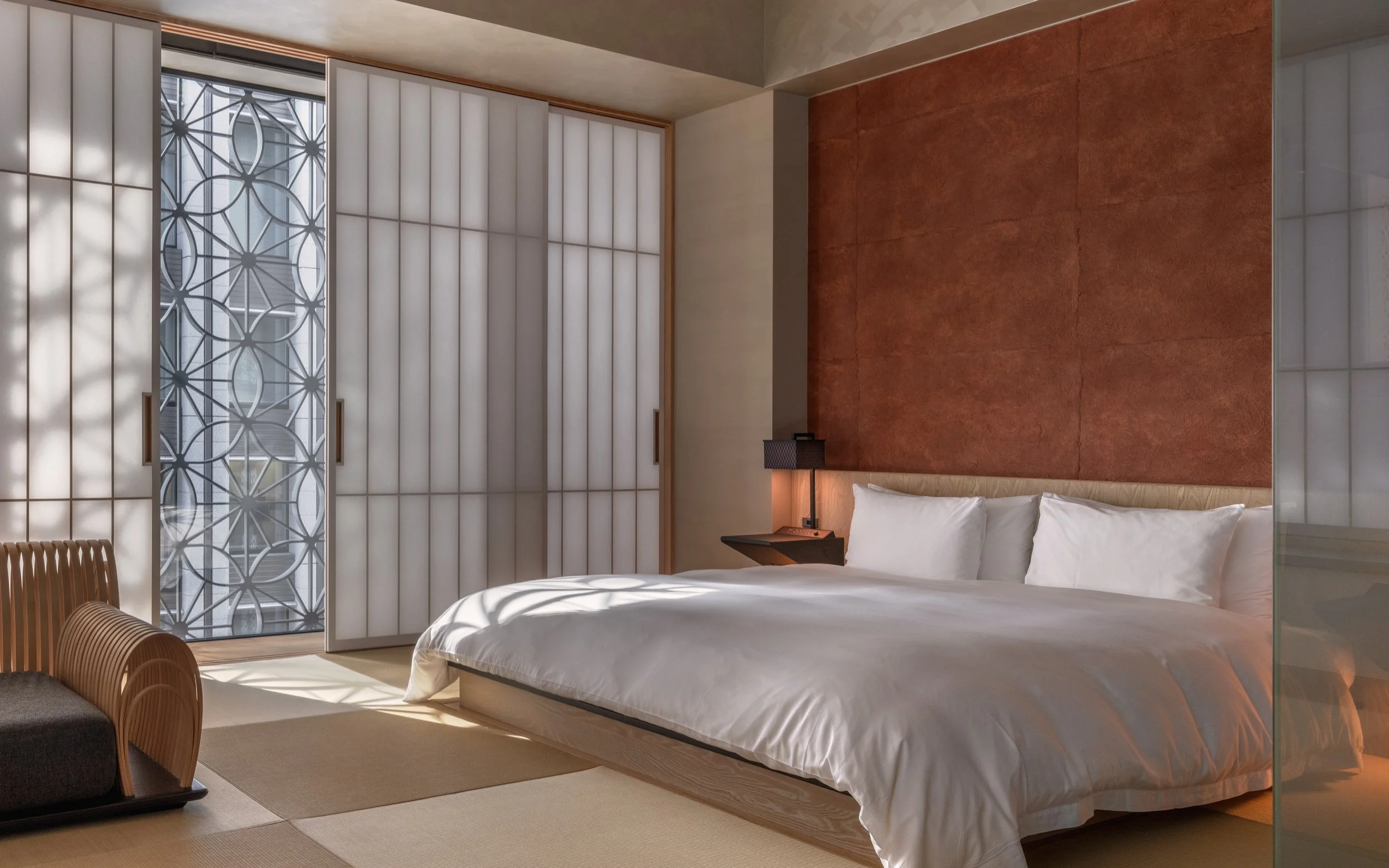
A serene fusion of traditional ryokan hospitality and contemporary Japanese design, Hoshinoya Tokyo offers a uniquely immersive stay that celebrates architecture, craftsmanship, and calm at the heart of the city.
