
N’arrow Project by Mykonos Architects
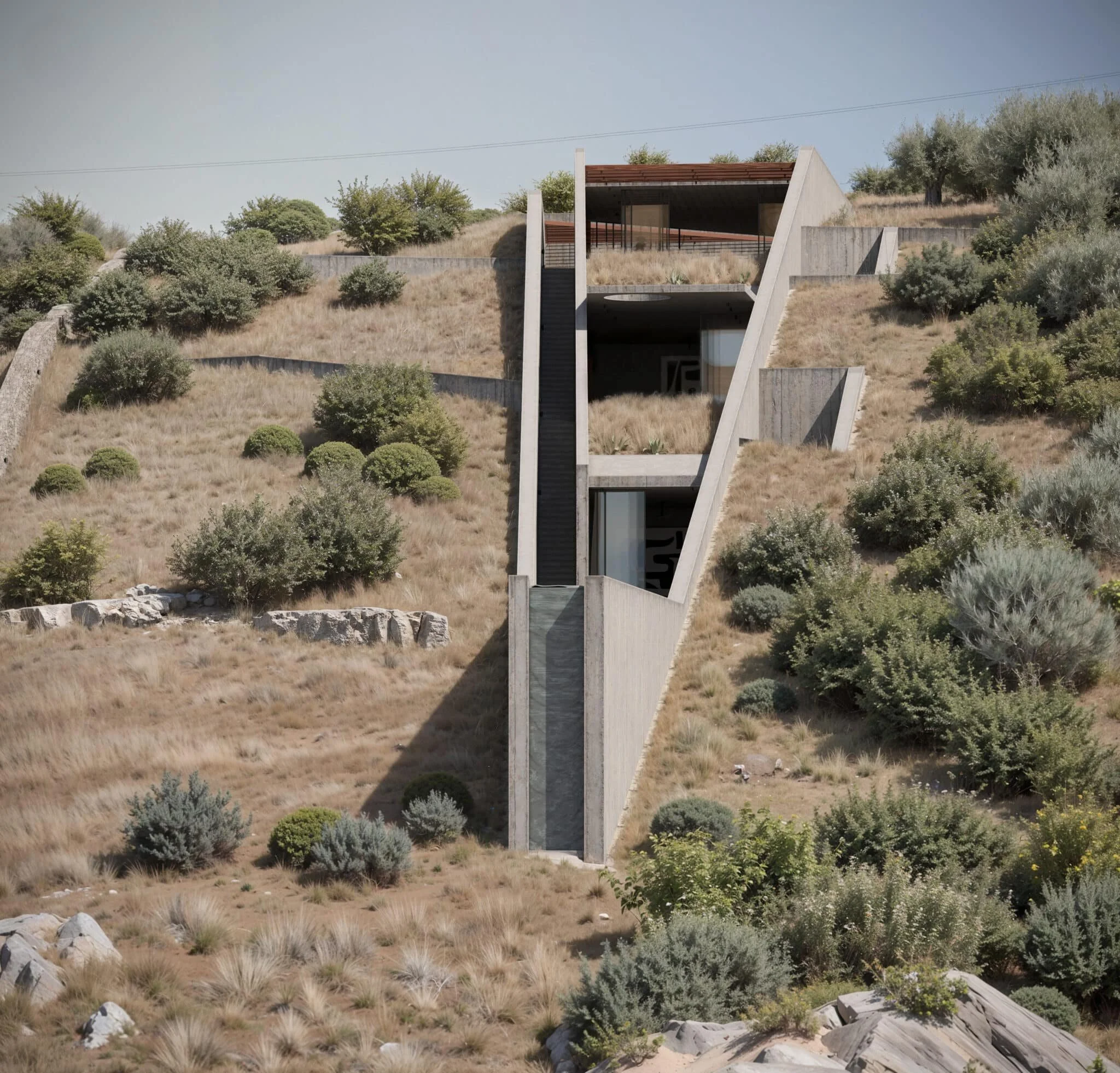
Located within the rugged terrain of Crete, the N’arrow Project by Mykonos Architects is redefining the concept of cave houses and subterranean architecture. Currently under construction, this daring residence takes inspiration from the island’s rich cultural heritage and dramatic natural landscapes, presenting a striking vision of how contemporary design can harmonise with tradition, topography, and climate.
With its elongated, arrow-like structure carved into the earth, the N’arrow Project is not simply a home—it is a profound architectural statement. At once bold and understated, industrial and organic, this design illustrates how architecture can be both visually commanding and environmentally sensitive.
A Cave House Reimagined
The architectural identity of Crete is deeply tied to its land. For centuries, the island’s builders have taken advantage of the rocky terrain to create cave dwellings, naturally insulated structures that provided shelter against both the summer heat and winter winds. The N’arrow Project revives this tradition but with a distinctly modern interpretation.
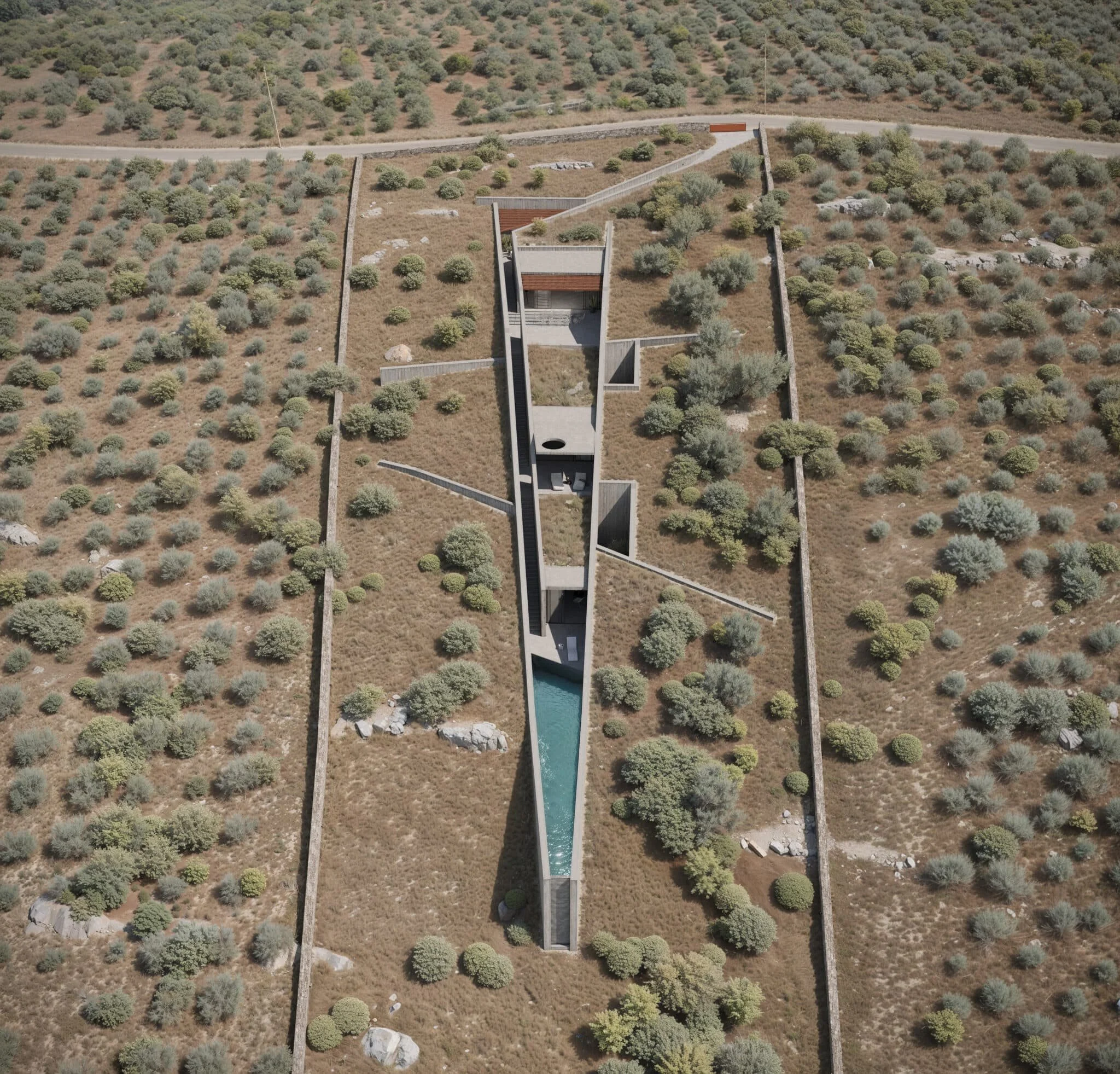
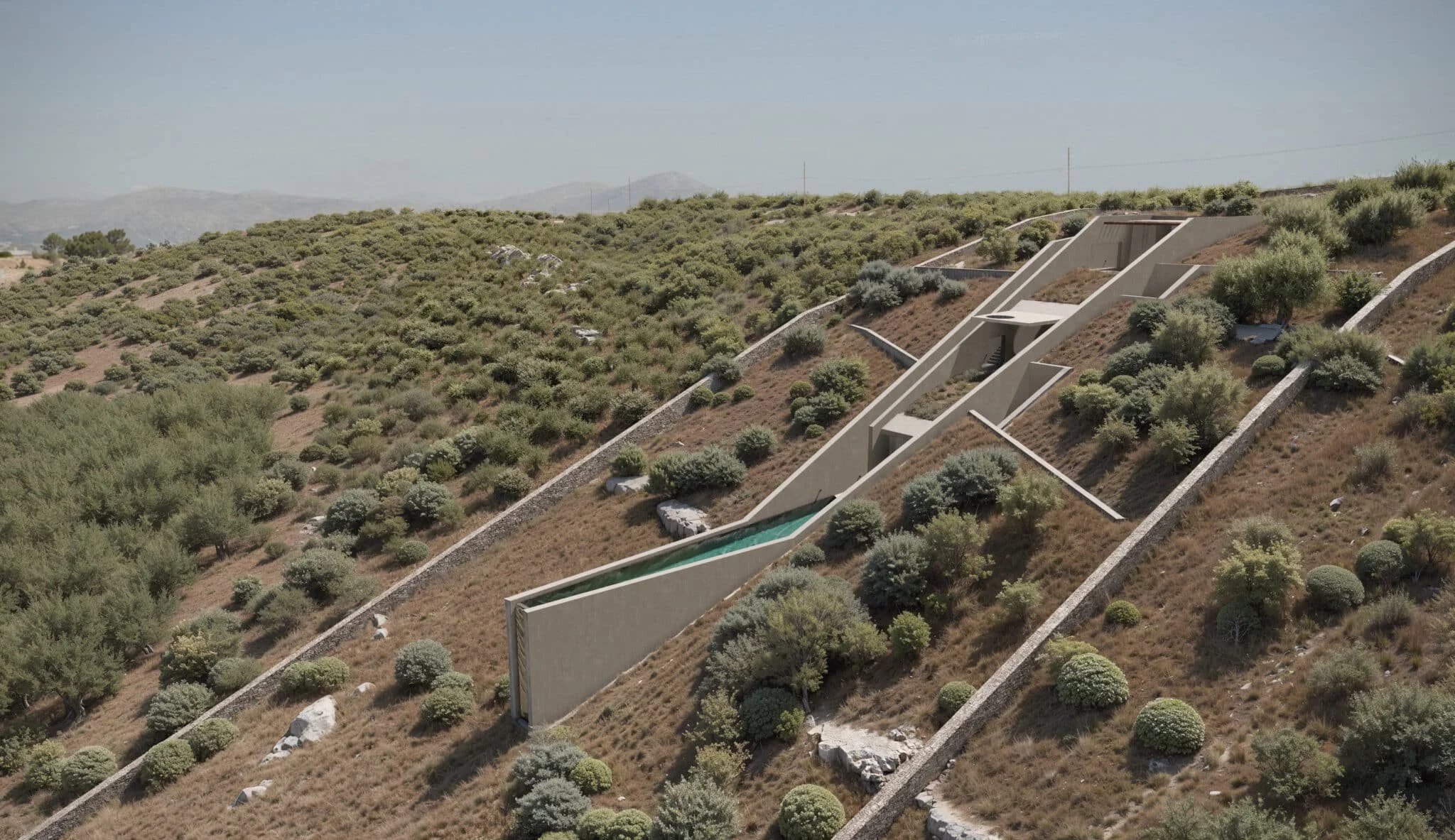
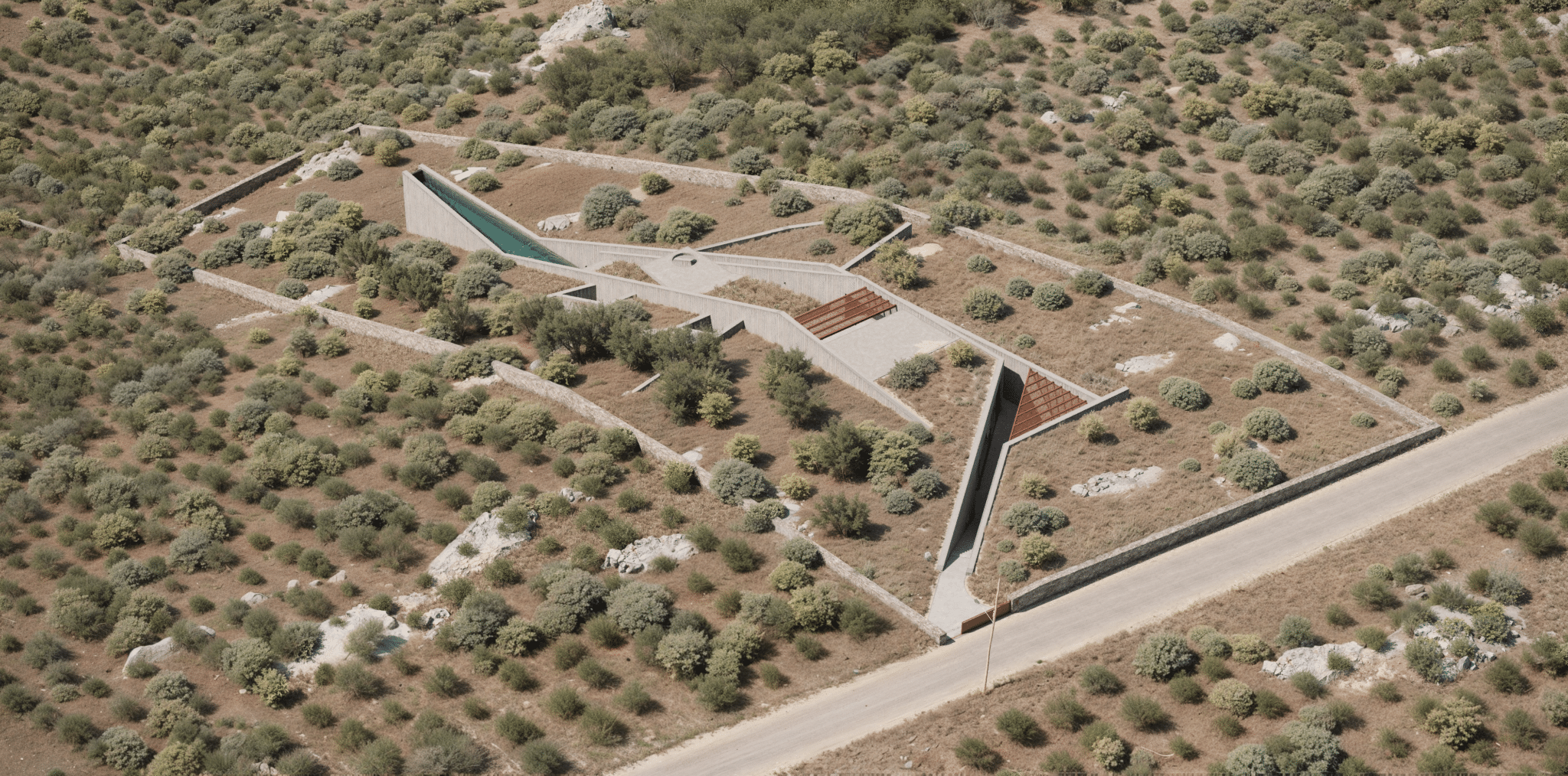
The house is literally embedded into the landscape, appearing as though it has been carved from the earth itself. Its form is slender and elongated, culminating in a precise, arrow-shaped tip that defines the building’s geometry. This bold linearity not only makes a visual impact but also creates a powerful sense of directionality, as though the house is guiding the viewer toward the horizon.
By embracing subterranean construction, the project achieves both aesthetic and functional goals. Dug into the ground, the dwelling benefits from natural insulation, keeping interiors cool during Crete’s hot summers without excessive reliance on mechanical cooling systems. This approach strengthens the project’s sustainability credentials, proving that luxury and environmental responsibility can go hand in hand.
Industrial Aesthetics and Natural Integration
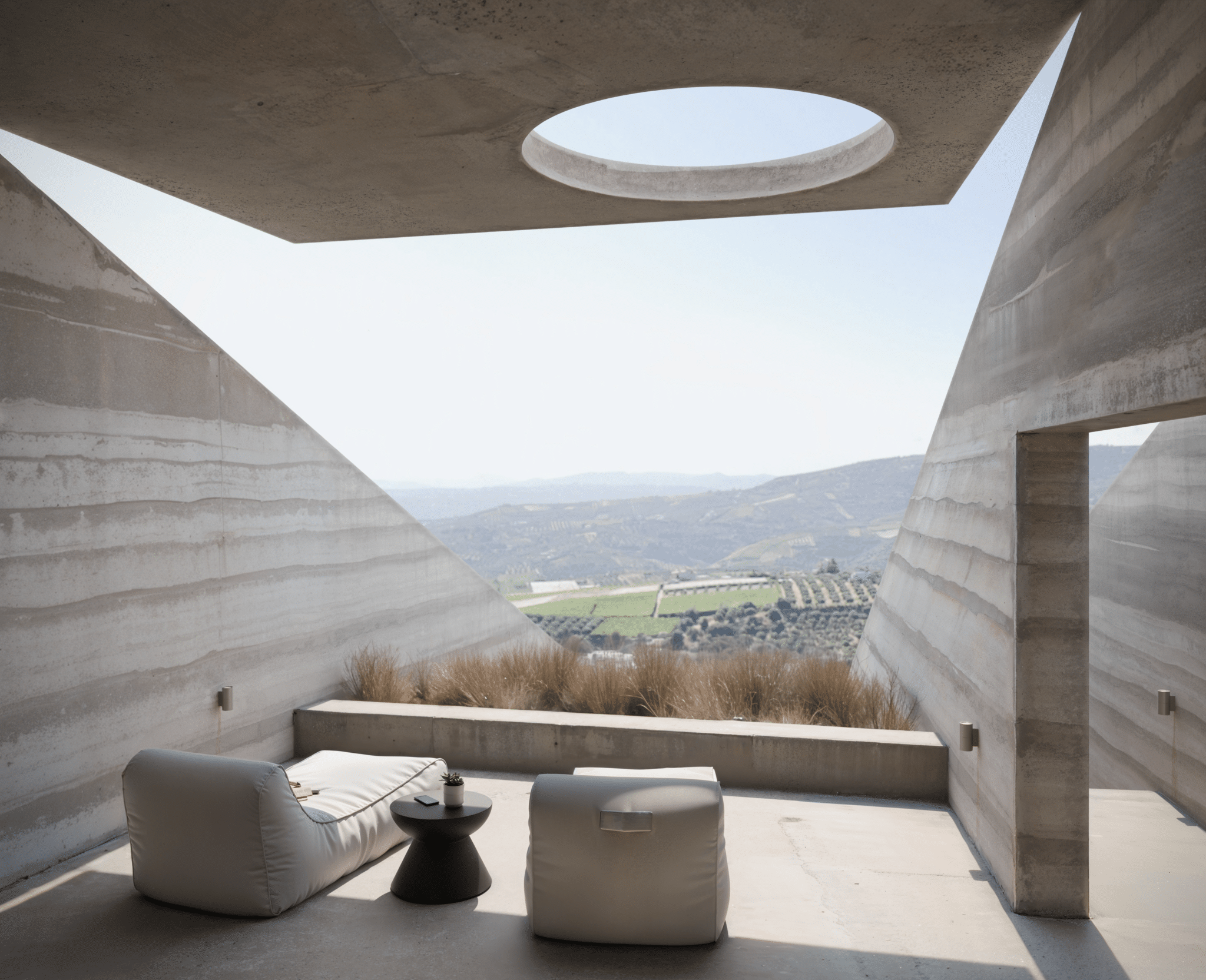
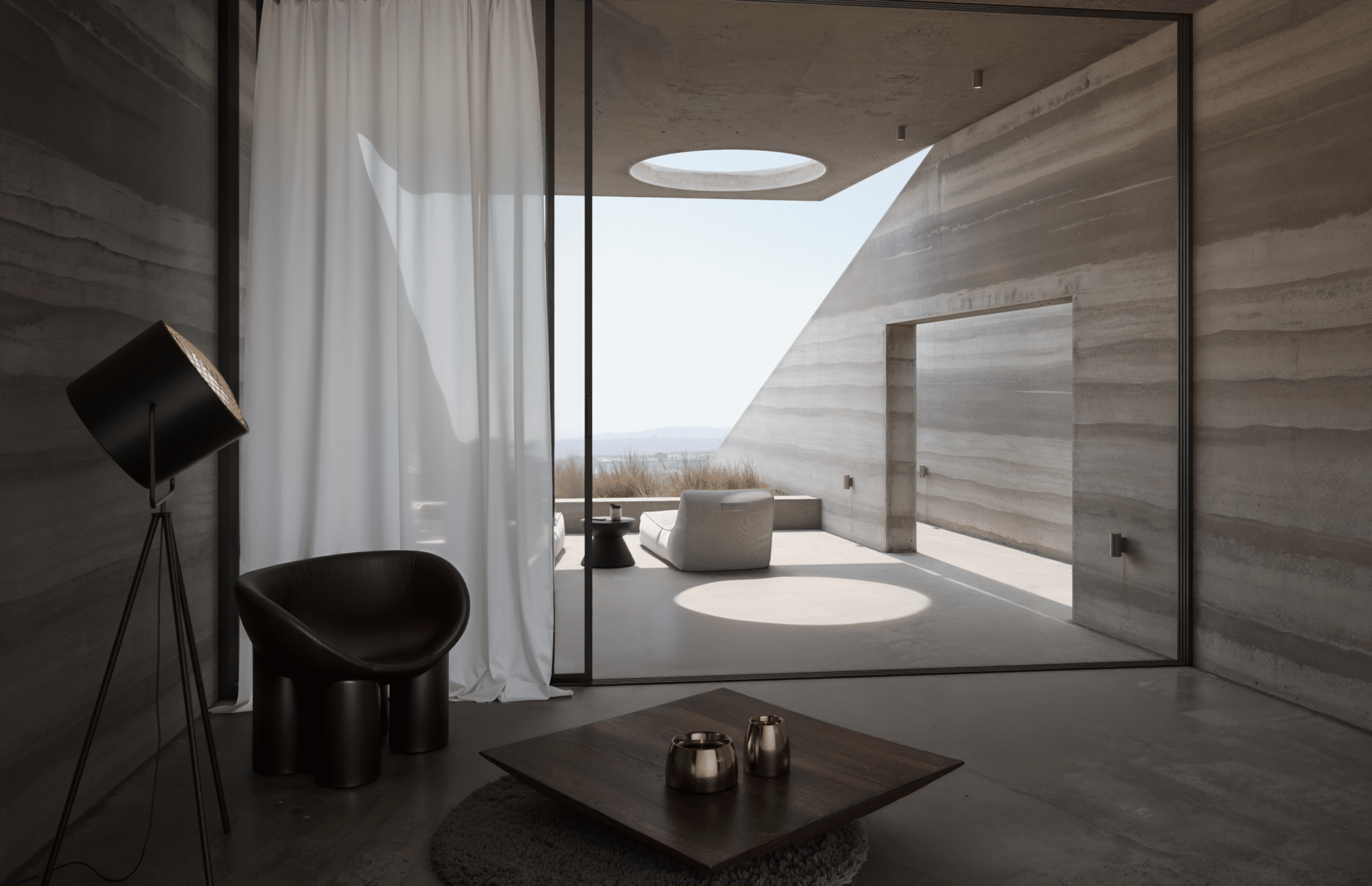
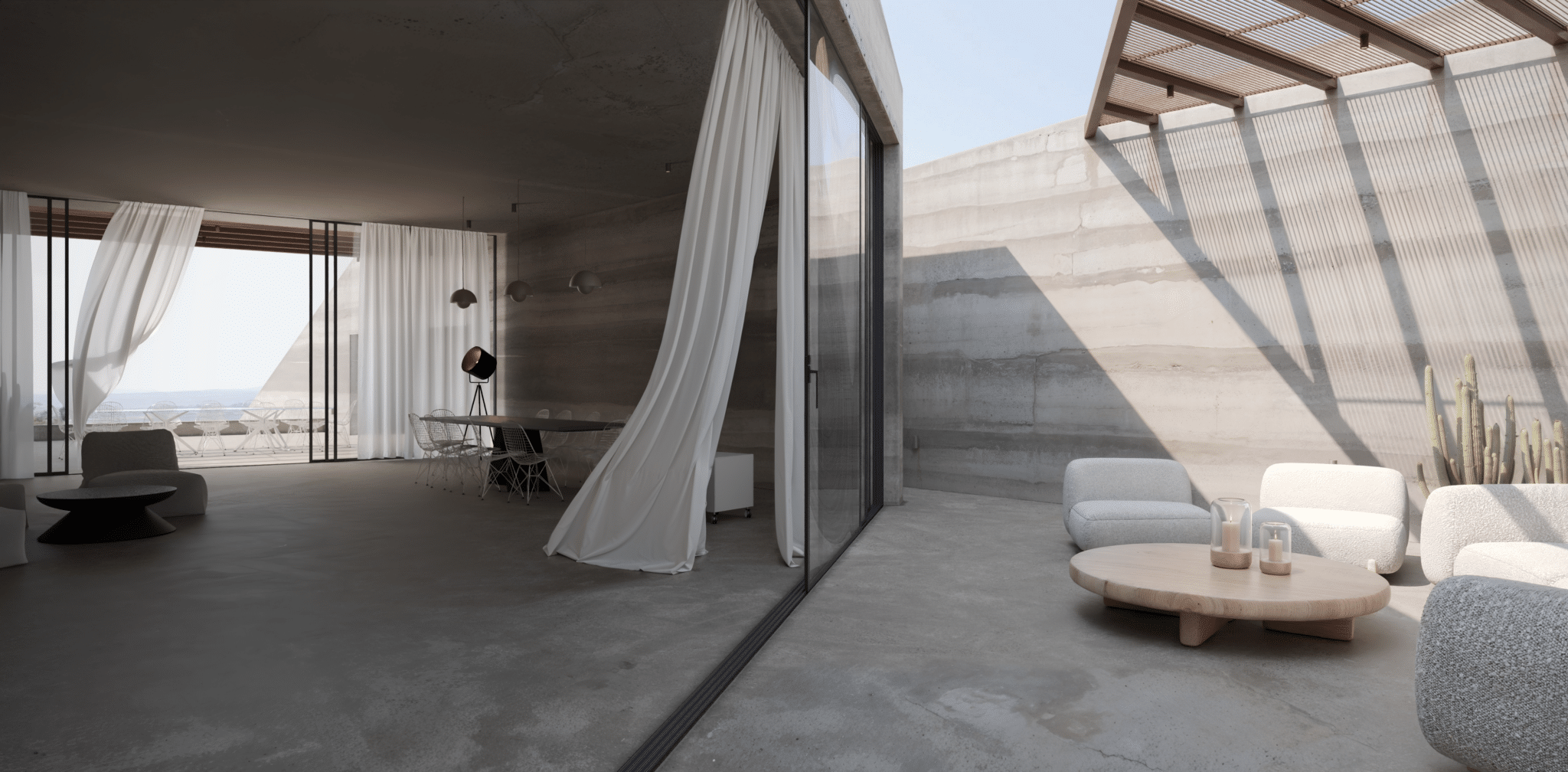
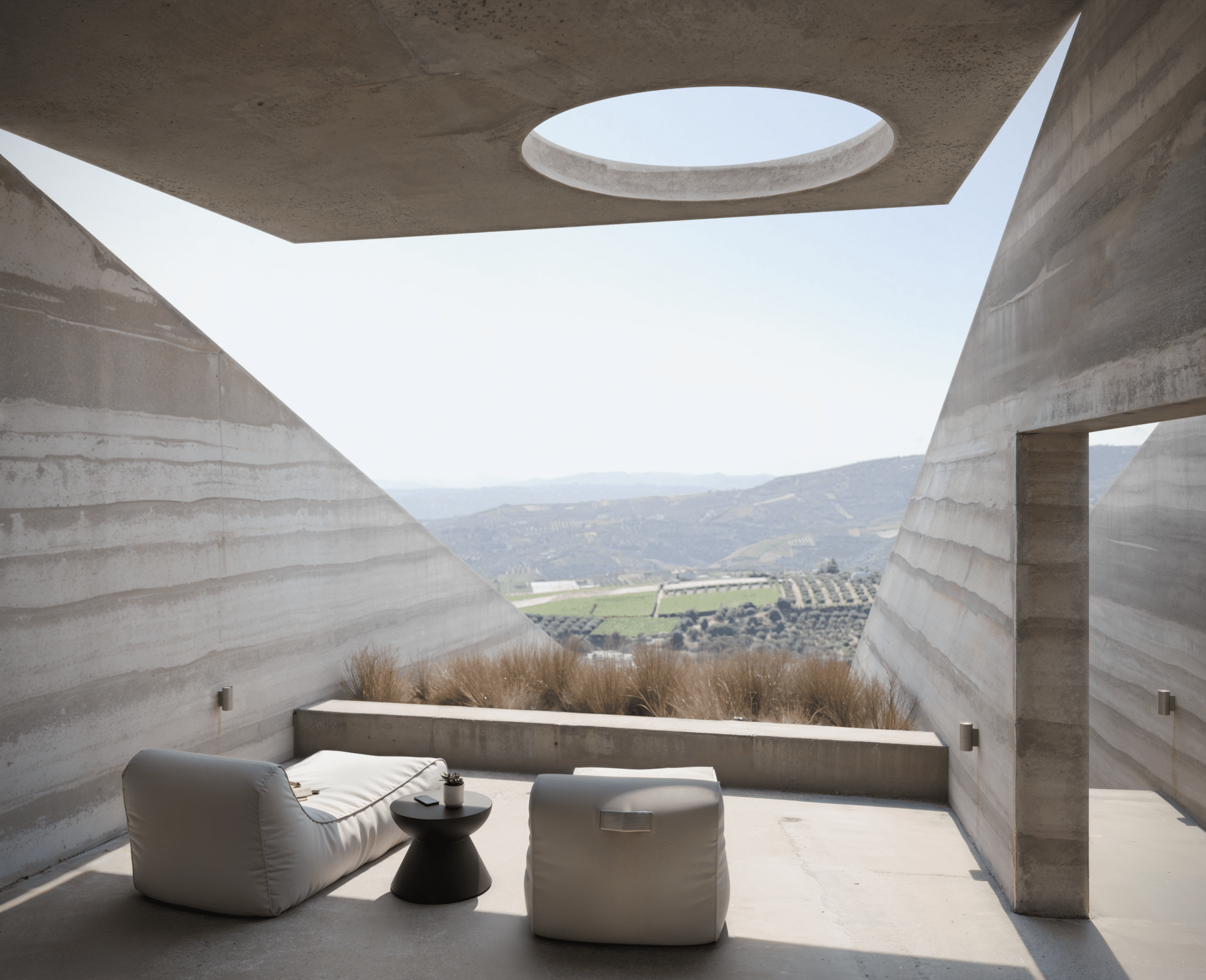
While the project is rooted in local heritage, its materiality speaks the language of modernism and industry. Exposed concrete dominates the architectural palette, its stark grey surfaces providing a strong visual counterpoint to the surrounding stone and soil. Steel details reinforce the sense of precision, while expansive glass panes break through the solidity of the structure, framing sweeping views of the Cretan landscape.
This dialogue between raw, industrial materials and the organic irregularities of the island’s terrain creates a fascinating architectural tension. The cave-like essence of the house is not hidden but celebrated, allowing the structure to belong to the land and stand apart from it simultaneously.
The minimalist ethos that runs through the project is evident in its sharp, clean lines. Every edge, corner, and plane serves a purpose, contributing to a geometric cohesion that guides the flow of movement. Visitors are naturally drawn through the elongated structure, experiencing the building as a journey rather than a static space.
The Infinity Pool and the Horizon Line
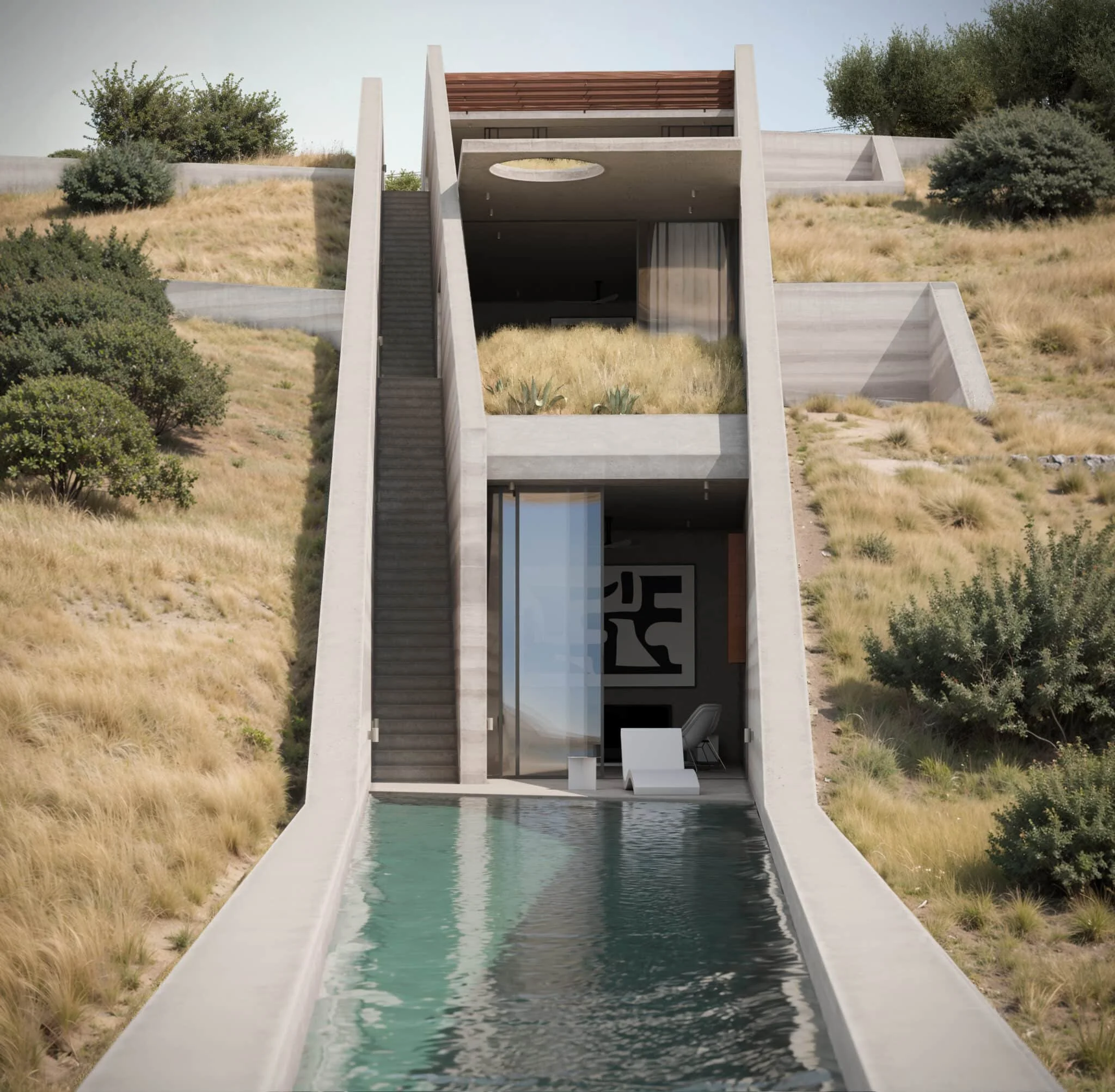
One of the most dramatic gestures of the N’arrow Project is found at its apex. Extending outward from the arrow’s tip is an infinity pool that visually merges with the horizon. From this vantage point, the pool’s waterline seems to dissolve into the Cretan landscape, offering a seamless transition between built form and nature.
This feature is more than just an amenity; it is the ultimate expression of the project’s directional theme. The architecture points toward the future, culminating in a space where residents can experience uninterrupted views of land, sea, and sky. The pool is a reminder that architecture is not merely about enclosure—it is about expanding perception and creating moments of connection with the environment.
Sustainability Through Design
In the context of contemporary architecture, sustainability is no longer optional—it is essential. The N’arrow Project demonstrates how innovative design solutions can respond to environmental challenges without compromising on aesthetics or comfort.
The cave-like structure provides passive temperature regulation, reducing the need for artificial heating and cooling. The use of locally sourced stone and integration with the natural terrain minimises disruption to the landscape. Large glazed openings bring in natural light, reducing daytime energy consumption, while also connecting interiors with the outdoors.
By rooting the project in both tradition and innovation, Mykonos Architects show that sustainability is not a constraint but a catalyst for creativity. The N’arrow Project is not simply sustainable by design; it is sustainable because of its design.
A Dialogue Between Past and Present
What makes the N’arrow Project particularly compelling is its ability to bridge the ancient and the contemporary. The idea of the cave house is deeply ingrained in Mediterranean culture, where building into the earth was a practical necessity for survival. By adopting this typology and infusing it with modern materials and geometry, Mykonos Architects have created a 21st-century cave dwelling; a structure that feels timeless yet undeniably modern.
The project’s setting further enriches this dialogue between past and present. Crete is an island known for its layered history, from Minoan palaces and Byzantine monasteries to Venetian fortresses and Ottoman influences. Against this backdrop, the N’arrow Project stands as part of the ongoing architectural narrative, a new chapter that respects the island’s legacy while pushing its design identity forward.
Redefining Luxury Living
In recent years, the definition of luxury has evolved. It is no longer solely about opulence or grandeur but about experience, connection, and meaning. The N’arrow Project embodies this shift. Its luxury lies not only in its cutting-edge design or premium materials but in its ability to foster a profound relationship between people and place.
Every aspect of the house has been designed with a purpose. The sharp geometry directs the gaze outward, encouraging moments of reflection and appreciation of the natural surroundings. The cave-like interiors offer sanctuary and comfort, while the infinity pool at the arrow’s tip creates a dramatic yet serene connection to the horizon.
This is a project that understands luxury as a lifestyle rooted in context, sustainability, and architecture that tells a story.
An Icon in the Making
Though still under construction, the N’arrow Project has already garnered attention for its visionary design. Its bold architectural language ensures that it will not merely be another residence on the island but a landmark in its own right. By blending cutting-edge modernism with the elemental beauty of Crete’s landscapes, the project positions itself as a defining work of contemporary architecture in Greece.
When complete, it will serve not only as a home but as a symbol of how architecture can simultaneously respect tradition, respond to the environment, and create new possibilities for living.
The N’arrow Project by Mykonos Architects is far more than a striking house; it is a lesson in how architecture can harmonise with heritage and environment while pushing the boundaries of form. From its arrow-like structure and industrial materiality to its sustainable cave-like construction and dramatic infinity pool, the project challenges expectations. It redefines what luxury architecture can be in the Mediterranean.
In doing so, it secures its place not just as a building, but as a bold architectural icon that will inspire, provoke, and captivate for years to come.
Design Team: Aude Mazelin | Nikolas Alysandratos | Xara Karatzali / Images courtesy of Mykonos Architects
More In Architecture


Explore the proposed 34-storey tower at 130 Fenchurch Street in London’s Square Mile. Designed by WilkinsonEyre for Aviva Investors, the sustainable skyscraper will feature 31 storeys of office space, public viewing galleries, exhibition spaces, and green terraces, shaping the future of City workplaces.