
Antony Gormley: WITNESS — Early Lead Works at White Cube
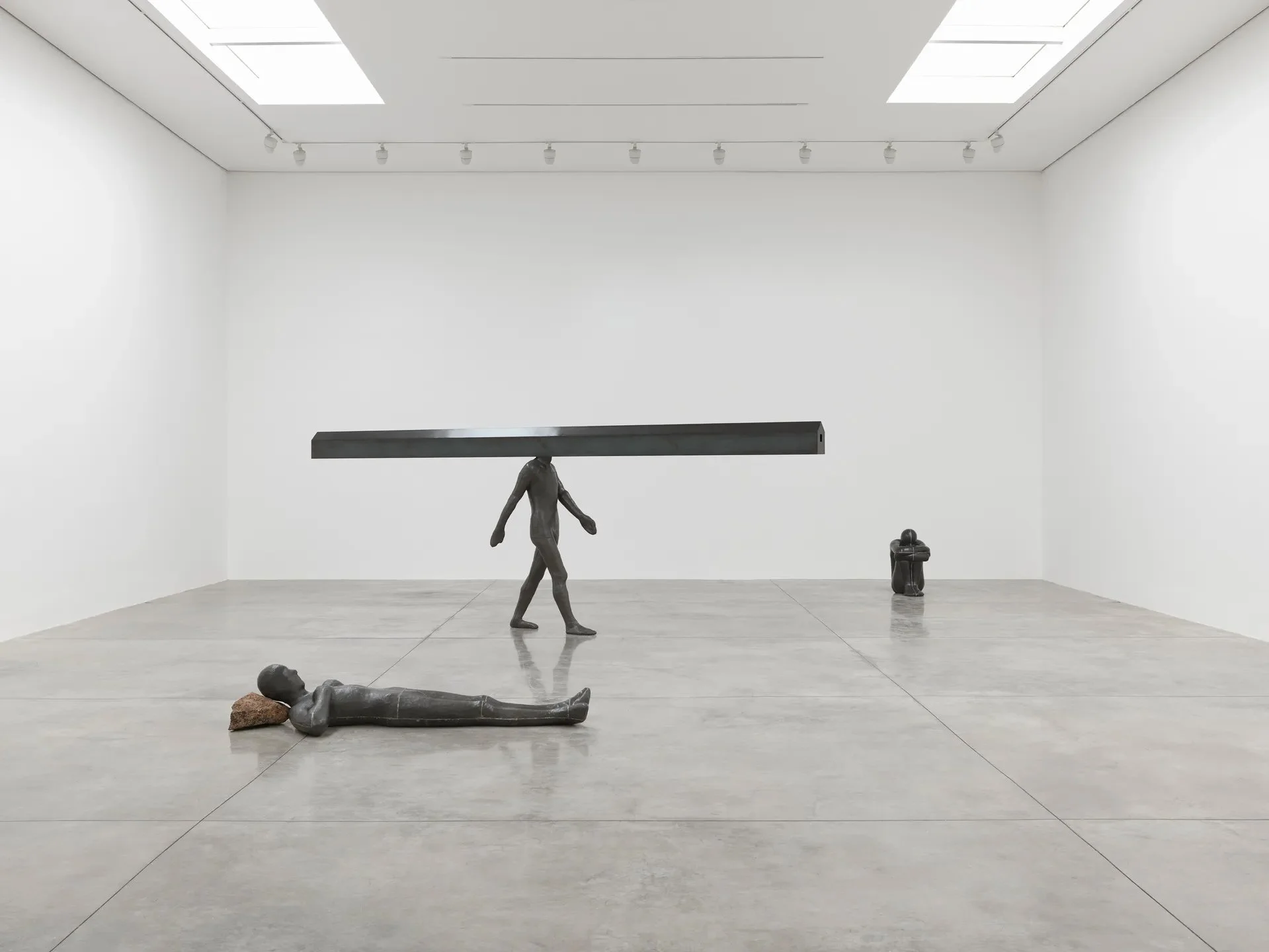
Antony Gormley, one of Britain’s most important contemporary sculptors, returns to White Cube with WITNESS: Early Lead Works, a revelatory exhibition that revisits some of the artist’s most formative and profound early sculptures. Featuring pieces developed between the mid-1970s and early 1990s, the show highlights a pivotal period that shaped Gormley’s enduring visual language—one centred on presence, absence, embodiment and space.
As an avid admirer of Gormley’s work, I’ve previously explored his influence in the articles Antony Gormley: Royal Academy of Arts and Antony Gormley: Time Horizon. His sculpture has long captivated me with its ability to connect the human body to vast, often unseen dimensions. This latest exhibition deepens that dialogue, offering a rare opportunity to witness the genesis of some of his most iconic themes.
Sculpting Silence and Stillness
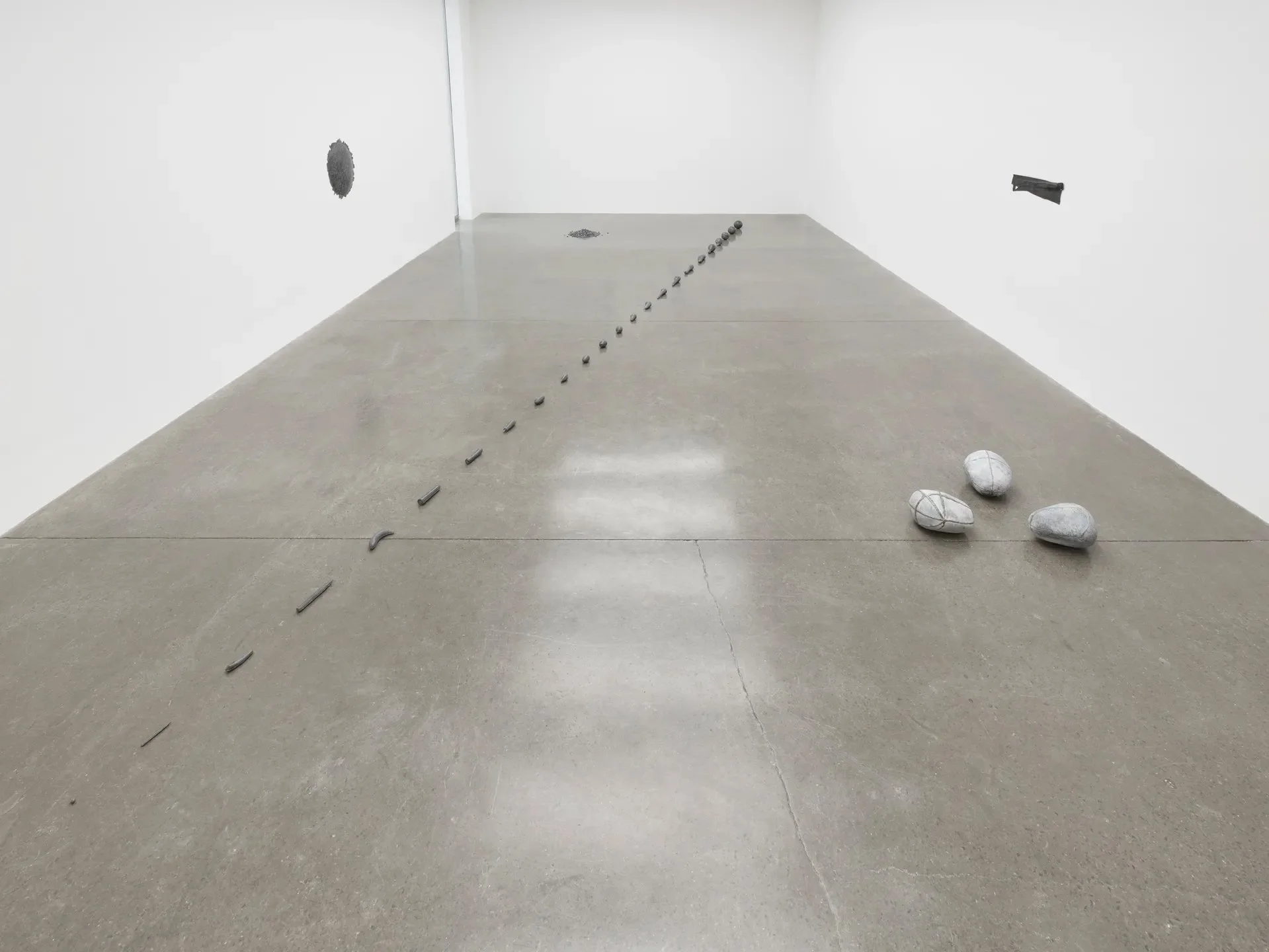
WITNESS presents Gormley’s earliest experiments with lead, a material he has described as both “containing and contaminating.” In these works, we see how he pushed lead’s pliability to create vessels for thought and being—some encasing air, water, or stone, others wrapping around tools or his own body. In Land Sea and Air I (1977–79), three lead-wrapped forms each contain a distinct element: one holds a granite rock, another water, and the third, air. By sealing these materials from view, Gormley transforms them into conceptual artefacts—silent, weighty symbols of the invisible.
Other key works like Natural Selection (1981) and Seeds II (1989/93) delve into the tensions between nature and human intervention. In Natural Selection, 24 lead-covered objects—half natural, half man-made—span the gallery floor. A goose egg and a grenade placed side by side highlight the unsettling harmony between evolution and destruction. Similarly, the bullets piled in Seeds II resemble a grain heap, inviting reflection on life and death, creation and conflict.
From Object to Body: Early Figurative Works
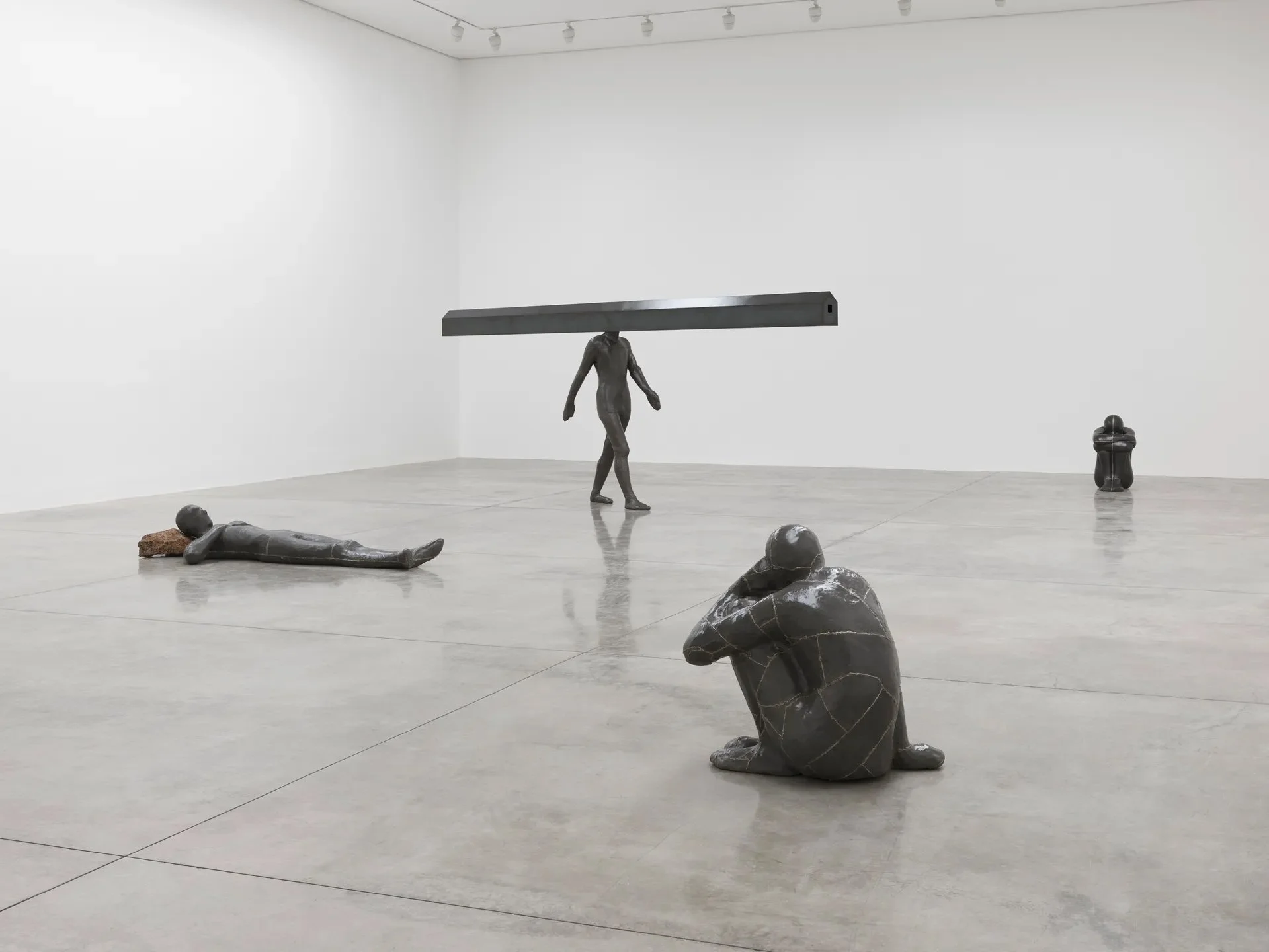
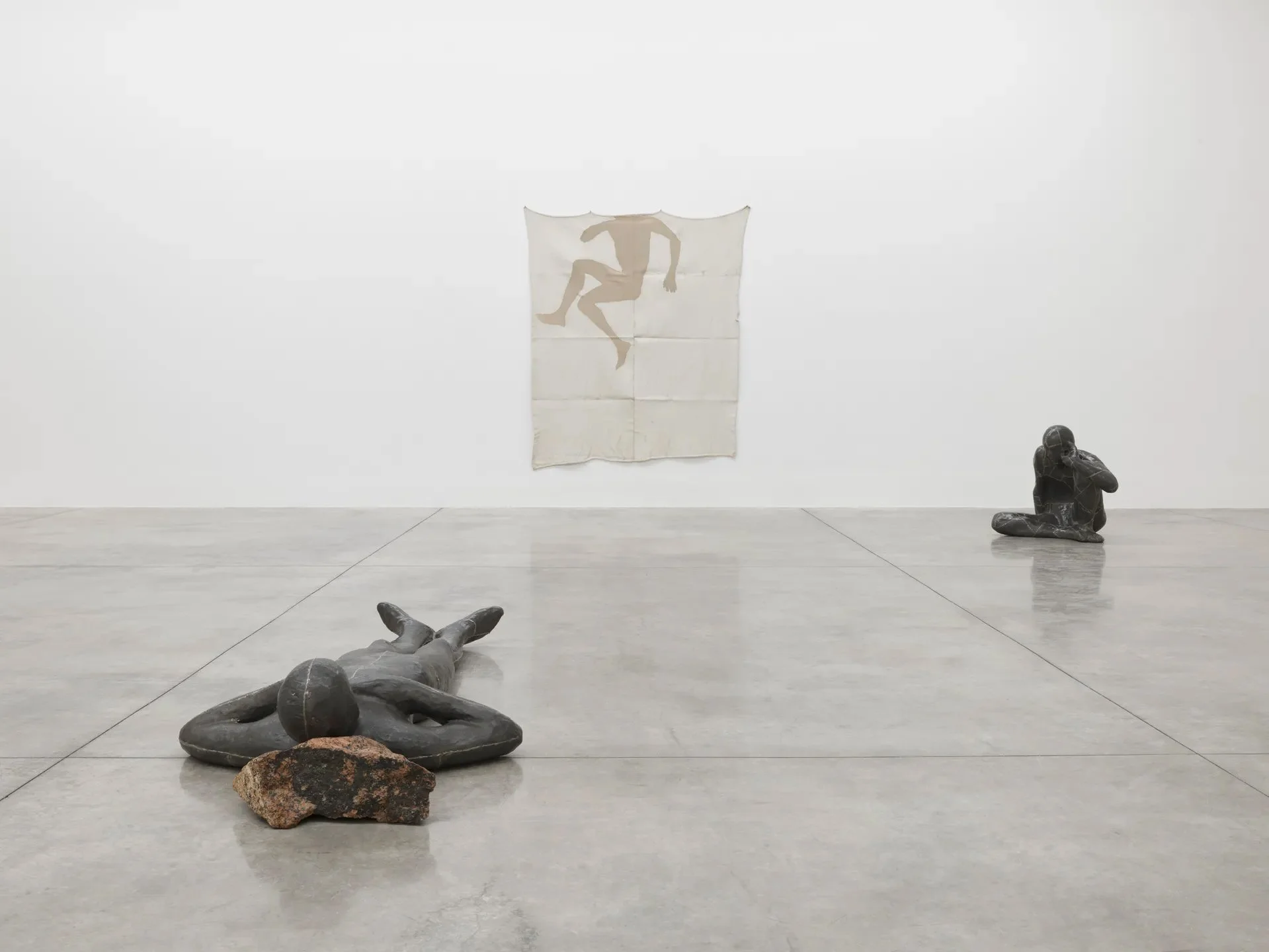
The exhibition’s lower ground floor shifts focus from object to figure, showcasing five seminal body-case sculptures. These include Close I (1992), which lies face-down in a vulnerable, almost fetal position, and Untitled (Listening Figure)(1983), its hand cupped to an ear, tuning into invisible forces. These forms don’t merely represent the human body—they act as receivers and transmitters, interpreting the surrounding space while embodying both fragility and presence.
One of the most striking pieces is Home and the World II (1986–96), a striding figure topped with a house-shaped head. The sculpture balances motion with stillness, home with exile, and echoes the exhibition’s underlying themes of physical and psychic containment.

Witnessing the Invisible
The exhibition’s namesake, Witness II (1993), is quietly tucked in a corner—an ancient, monk-like form with ear holes that appear to listen to the world around it. It exemplifies Gormley’s belief that stillness can be an active state of awareness. Here, sculpture becomes not just an object, but an instrument through which we examine our place in the world—an interface between memory and future potential.
As the artist once described, these works are “gifts from the past” and “seeds of the future,” calling us to reflect, absorb, and imagine.
All photography courtesy of White Cube
A Must-See for Art and Sculpture Enthusiasts
Curated by Susan May, WITNESS is not only a powerful retrospective of Gormley’s early innovations but also an invitation to see how space, material, and silence can speak volumes. Whether you are new to Gormley’s practice or, like myself, have followed it for years, this exhibition offers an intimate look at the foundations of his remarkable career.
Entry is free and on a first-come, first-served basis—no advance booking is required, though you may be asked to wait during busy times.
For more coverage of Antony Gormley’s past exhibitions and commentary on contemporary sculpture, explore our previous features on the Martyn White UK website.
