
Richard Serra’s The Matter of Time: A Monumental Experience of Form, Space, and Motion
Tucked within the vast industrial expanse of the Guggenheim Museum Bilbao, Richard Serra’s The Matter of Time (1994–2005) is more than a sculpture—it’s an immersive journey through weight, rhythm, and perception. Composed of towering weathering steel structures that twist, curve, and expand across the gallery space, the work transforms the entire room into a sculptural field that invites physical exploration and psychological reflection.
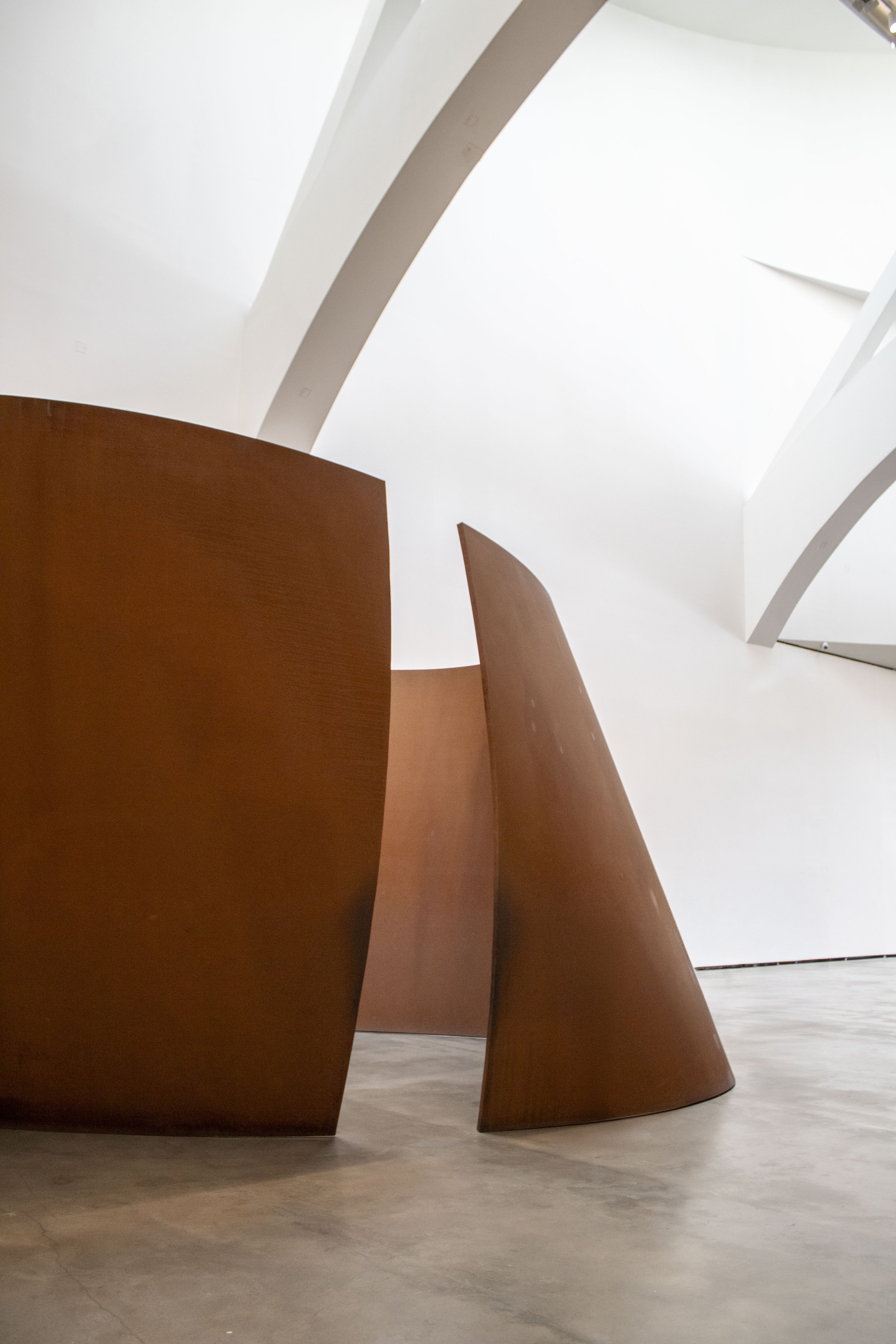


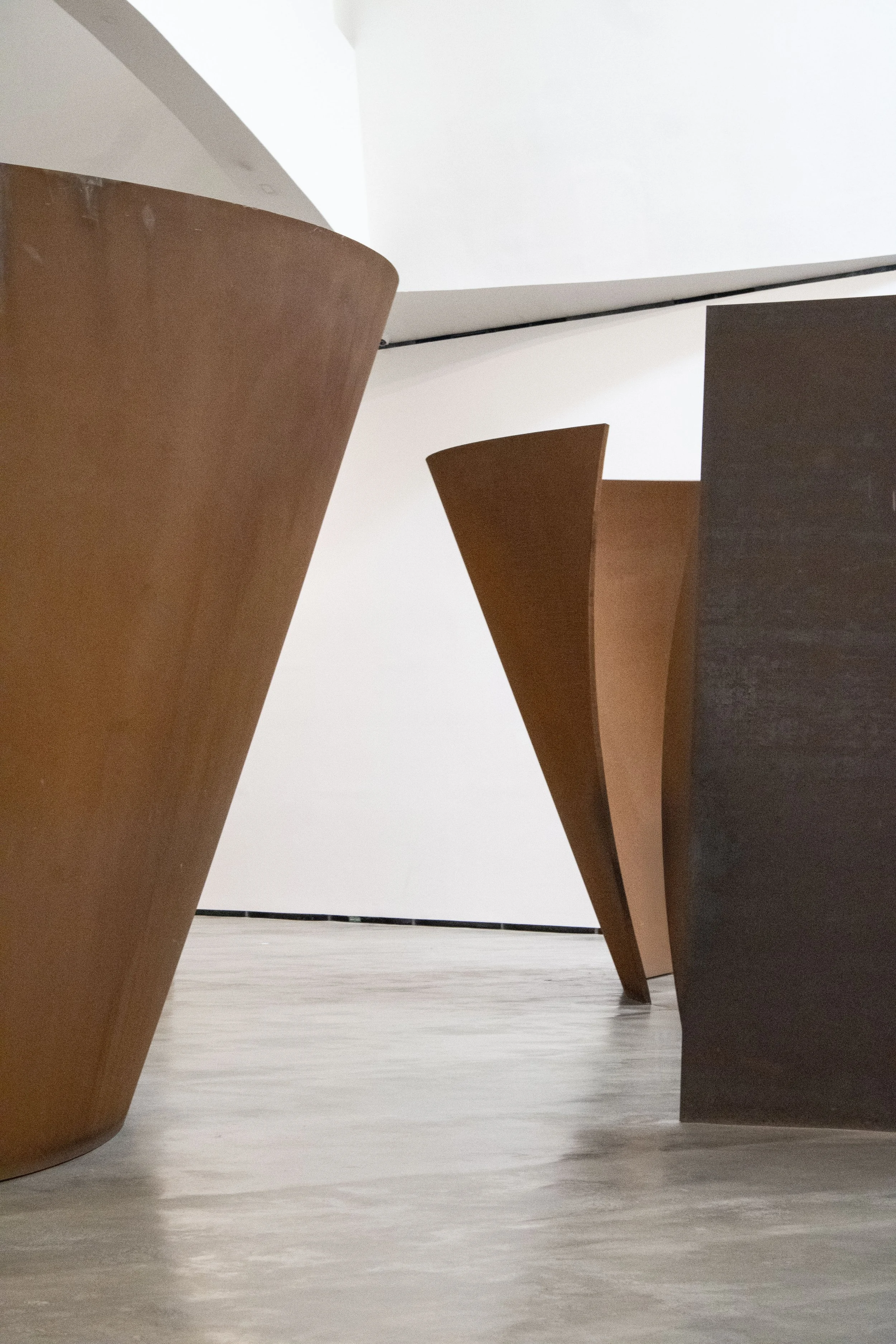
This iconic installation captures Serra’s ongoing fascination with form in motion. As visitors navigate its spiralling corridors—formed from massive sections of toruses and spheres—they experience a constant shift in scale and perspective. The interaction between the viewer and the steel surfaces is not just visual but visceral. Space seems to bend; time seems to stretch.
Beginning with the relative simplicity of a double ellipse and progressing toward the immersive complexity of spirals, the sequence of sculptures traces the evolution of Serra’s practice. The installation doesn’t merely occupy space—it redefines it. Narrow passages give way to vast openings, sudden compressions create moments of tension, and every turn delivers a new spatial surprise. The layout isn’t random; it’s choreographed, guiding visitors through Serra’s masterful manipulation of weight and void.


But The Matter of Time also unfolds through temporal experience. As one walks through it, the passage of time becomes tangible—not only the chronological time it takes to navigate the space, but also the layered time of memory. The sculpture demands re-engagement. Each shift in light, angle, or movement brings the installation alive anew, making it impossible to see—or feel—the same way twice.
The Matter of Time is a monumental meditation on how we move through the world, and how space can shape the stories we tell about time, material, and the self. For those visiting the Guggenheim Bilbao, it is a must-see—a transformative encounter that stays with you long after you’ve left its rust-coloured corridors behind.
