
OMA Completes Landmark Restoration of Venice’s 16th Century Fondaco dei Tedeschi
The renowned architecture firm OMA has completed the restoration of the historic Fondaco dei Tedeschi in Venice, a 16th-century landmark with a rich mercantile history. Commissioned by the Benetton family in 2009, the 9,000m² building has been transformed into a contemporary department store, now set to operate under a leasing agreement with Hong Kong-based DFS. Following OMA’s meticulous renovation, the building has been transferred to DFS for their retail fit-out.
A Building Steeped in Venetian History
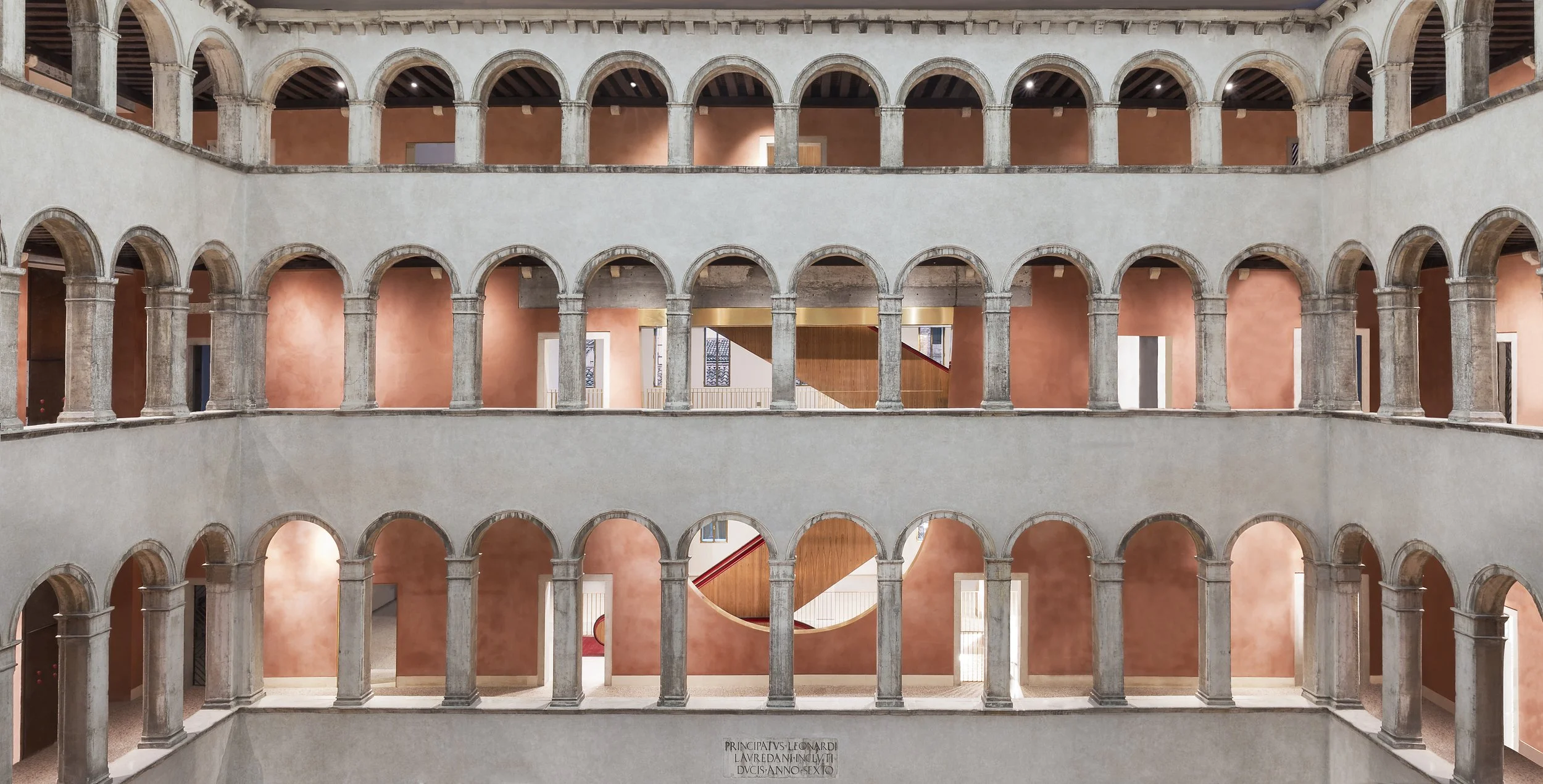
First constructed in 1228 at the foot of the iconic Rialto Bridge, opposite Venice’s famous fish market, the Fondaco dei Tedeschi is one of the city’s largest and most recognisable structures. Originally serving as a trading post for German merchants, it has since taken on multiple roles: a customs house under Napoleon and a post office during Mussolini’s regime. Its grand façades have been immortalised in artworks by Canaletto and other masters, capturing Venice’s mercantile splendour across centuries.
Despite its prominent location and cultural significance, the Fondaco has endured centuries of challenges, from fires and reconstructions to radical architectural interventions throughout the 20th century. In the 1930s, much of the building was reconstructed using modern concrete technology, reflecting a blend of historical and contemporary construction methods. Today, the Fondaco stands as a palimpsest of Venice’s architectural evolution, bridging five centuries of techniques and interventions.
OMA’s Thoughtful Approach to Renovation
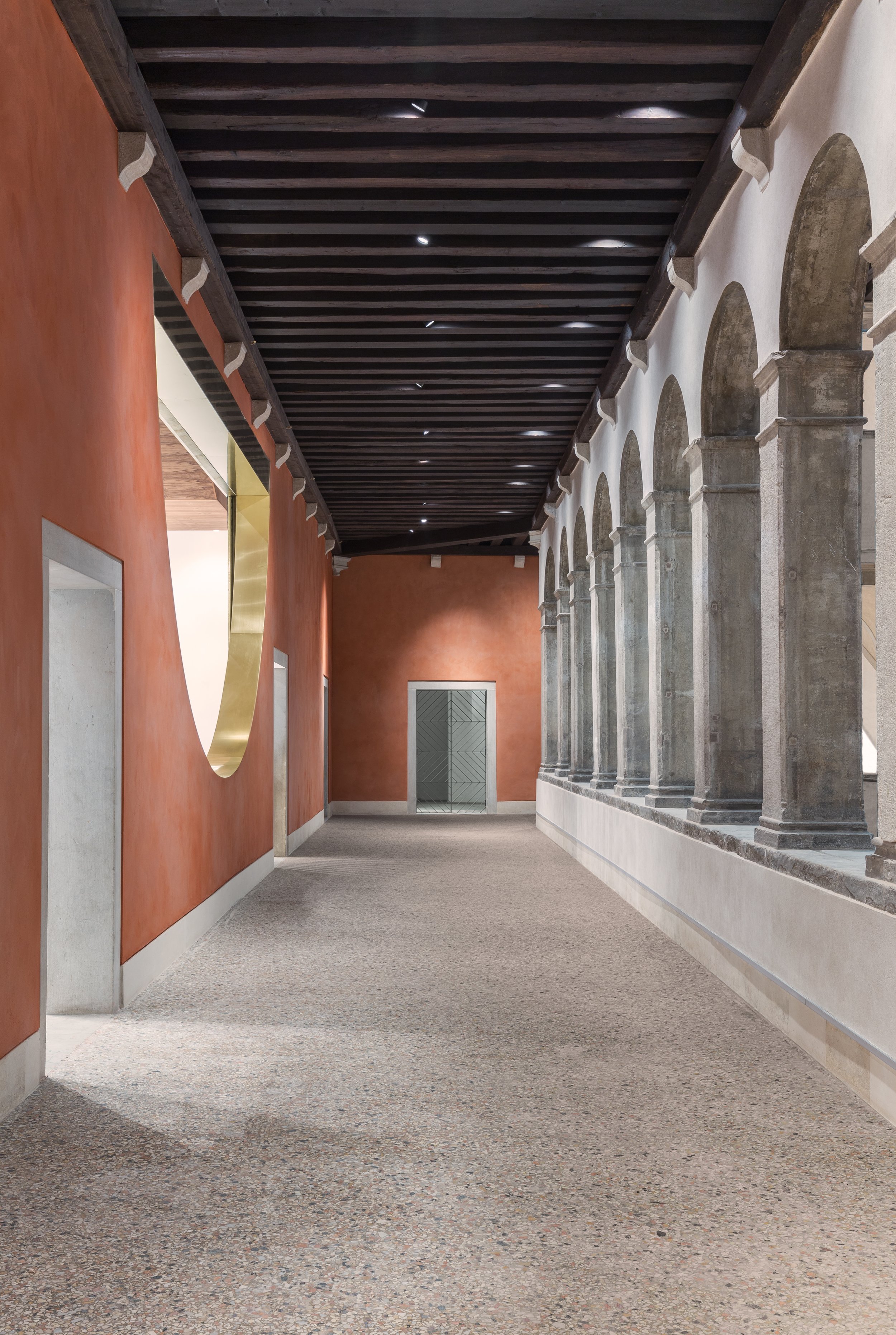
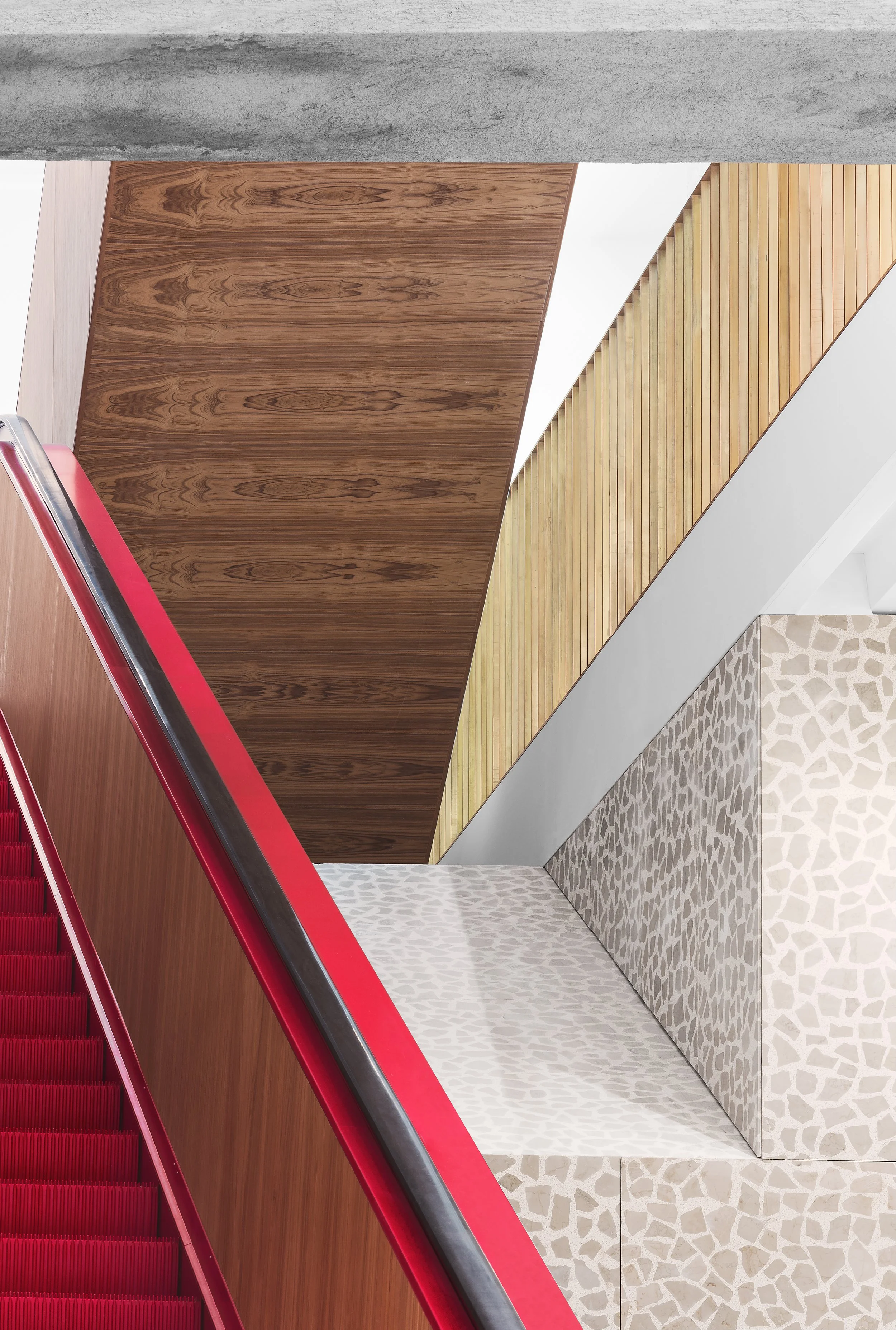
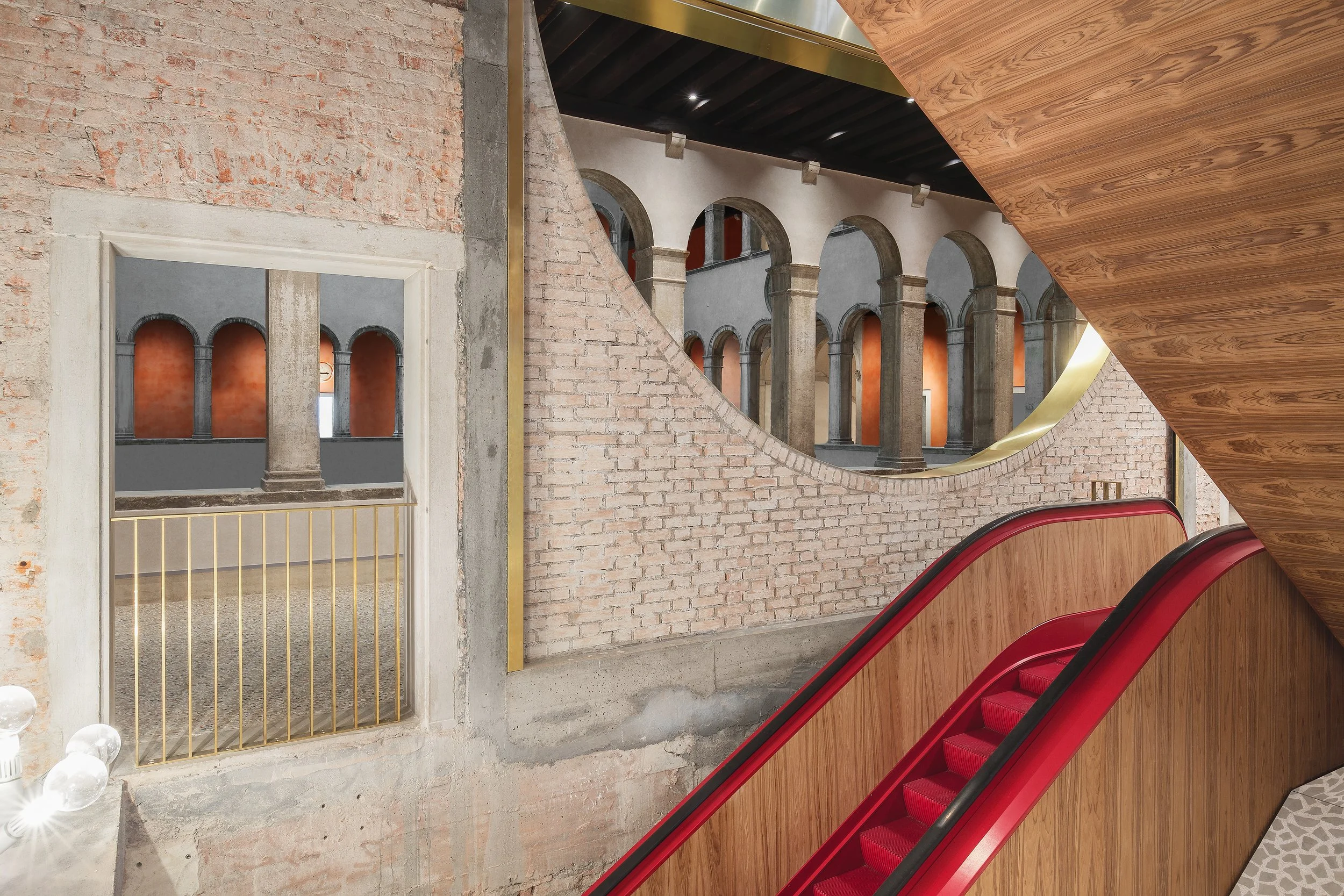
OMA’s renovation strategy is subtle yet ambitious, focusing on strategic interventions that respect the building’s historic substance while accommodating its new function. Each architectural intervention acts as an excavation, revealing hidden aspects of the building and creating new perspectives for visitors. The design prioritises vertical distribution and public circulation, transforming the Fondaco into a dynamic space for both shopping and cultural engagement.
The project opens the central courtyard piazza to pedestrians, preserving its traditional role as a covered urban ‘campo’. The new rooftop, incorporating a renovated 19th-century pavilion and a steel-and-glass floor hovering above the courtyard, introduces a wooden terrace offering panoramic views of Venice. Both the rooftop and courtyard will serve as public venues, accessible to locals and tourists alike, continuing the Fondaco’s centuries-long history as a social and civic hub.
Balancing History and Contemporary Design
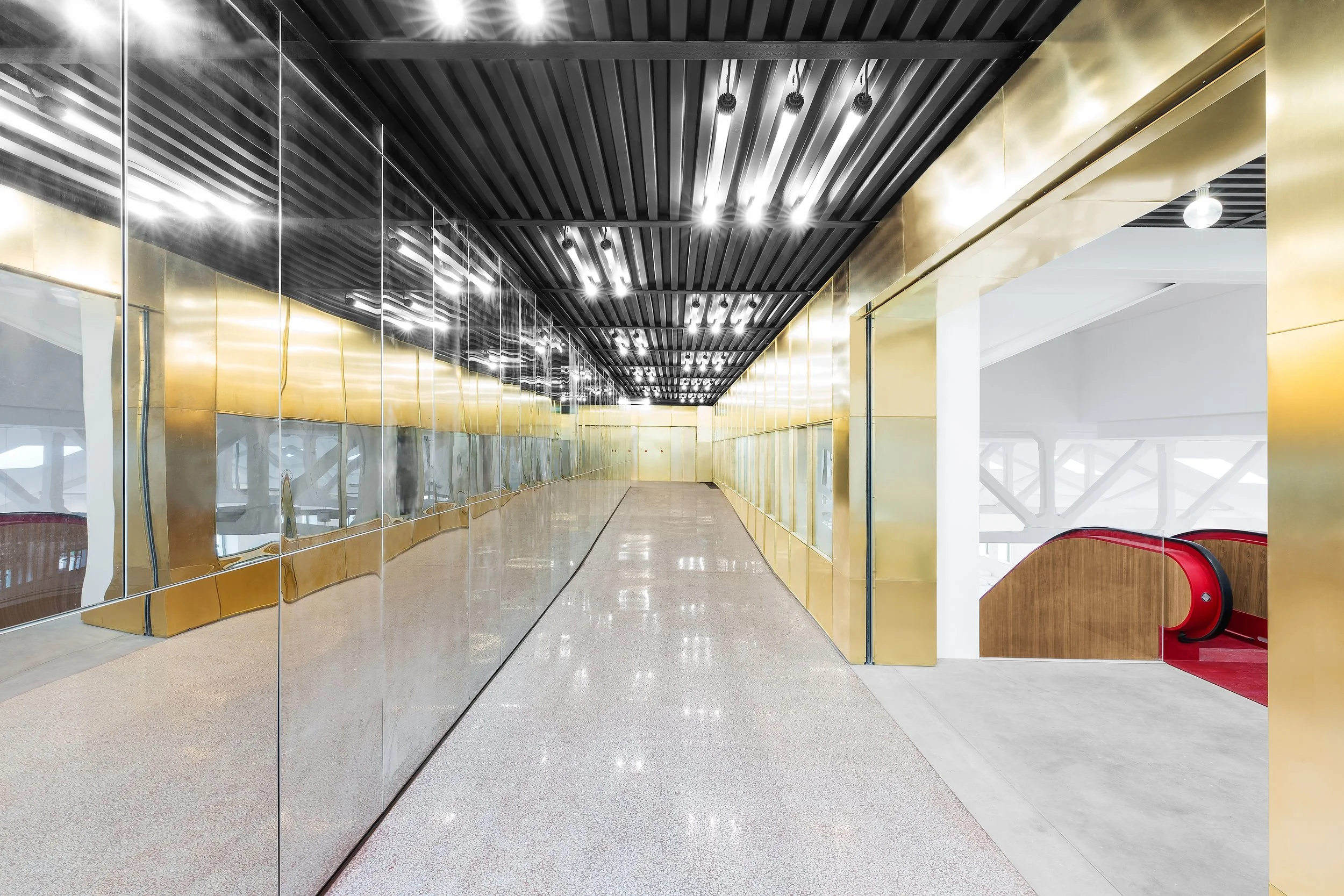
New entrances have been added on Campo San Bartolomeo and the Rialto, complementing existing pathways used by locals. Escalators create a fluid public route through the building, while rooms have been consolidated to respect the original spatial sequences. Crucially, significant historical features such as corner rooms remain untouched, and long-lost elements have been resurrected—for instance, the walls of the gallerias will once again serve as a canvas for frescoes, now rendered in a contemporary form.
OMA’s renovation embraces the building’s multi-layered history without succumbing to nostalgic reconstruction. It demystifies the idea of a ‘sacred’ historical monument, instead presenting the Fondaco dei Tedeschi as a living, adaptable structure ready to accommodate modern life. The building now functions as a contemporary urban department store, offering a range of activities from shopping and cultural events to social gatherings, reflecting the spirit of Venice as both a historical and living city.
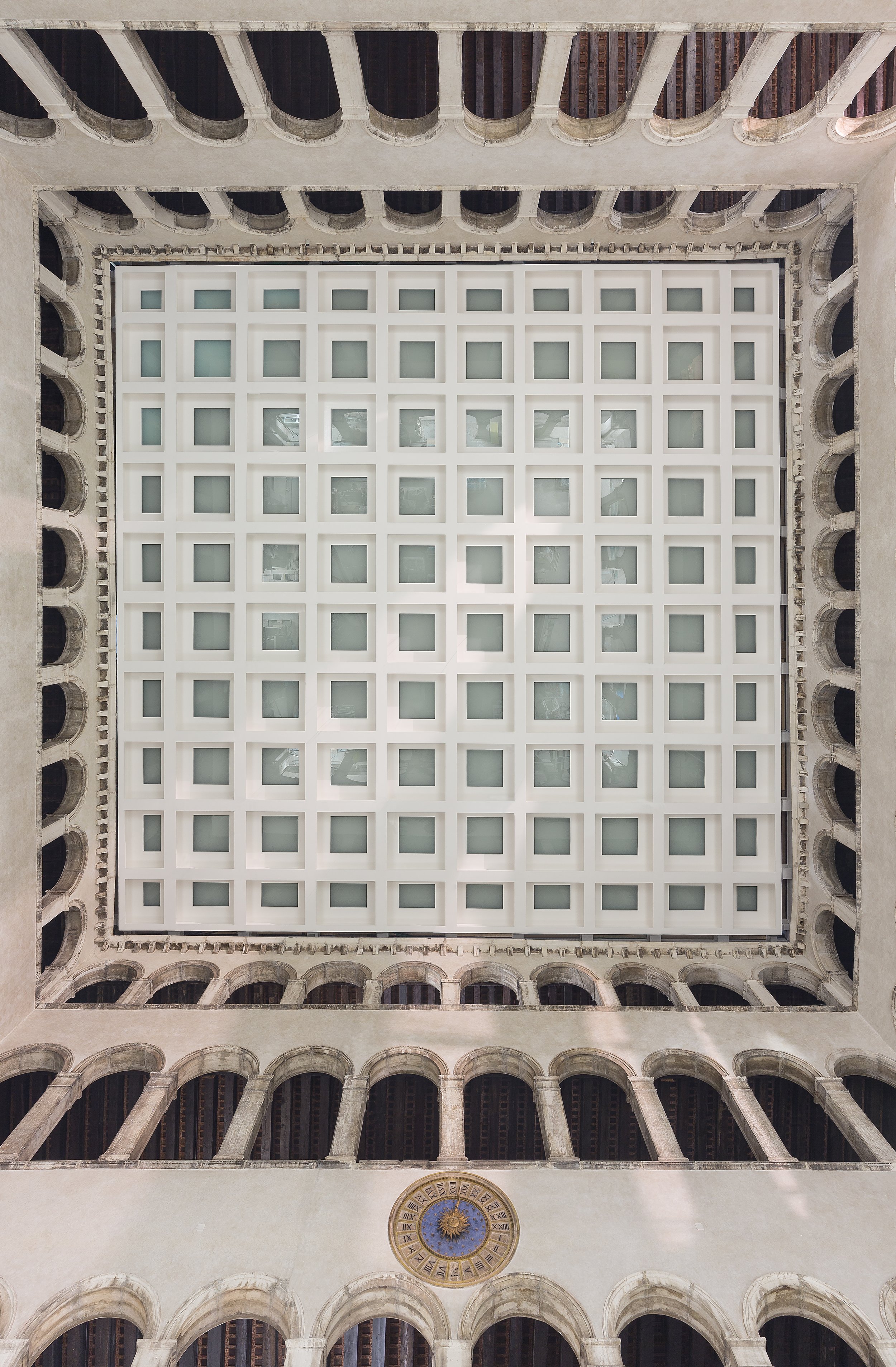
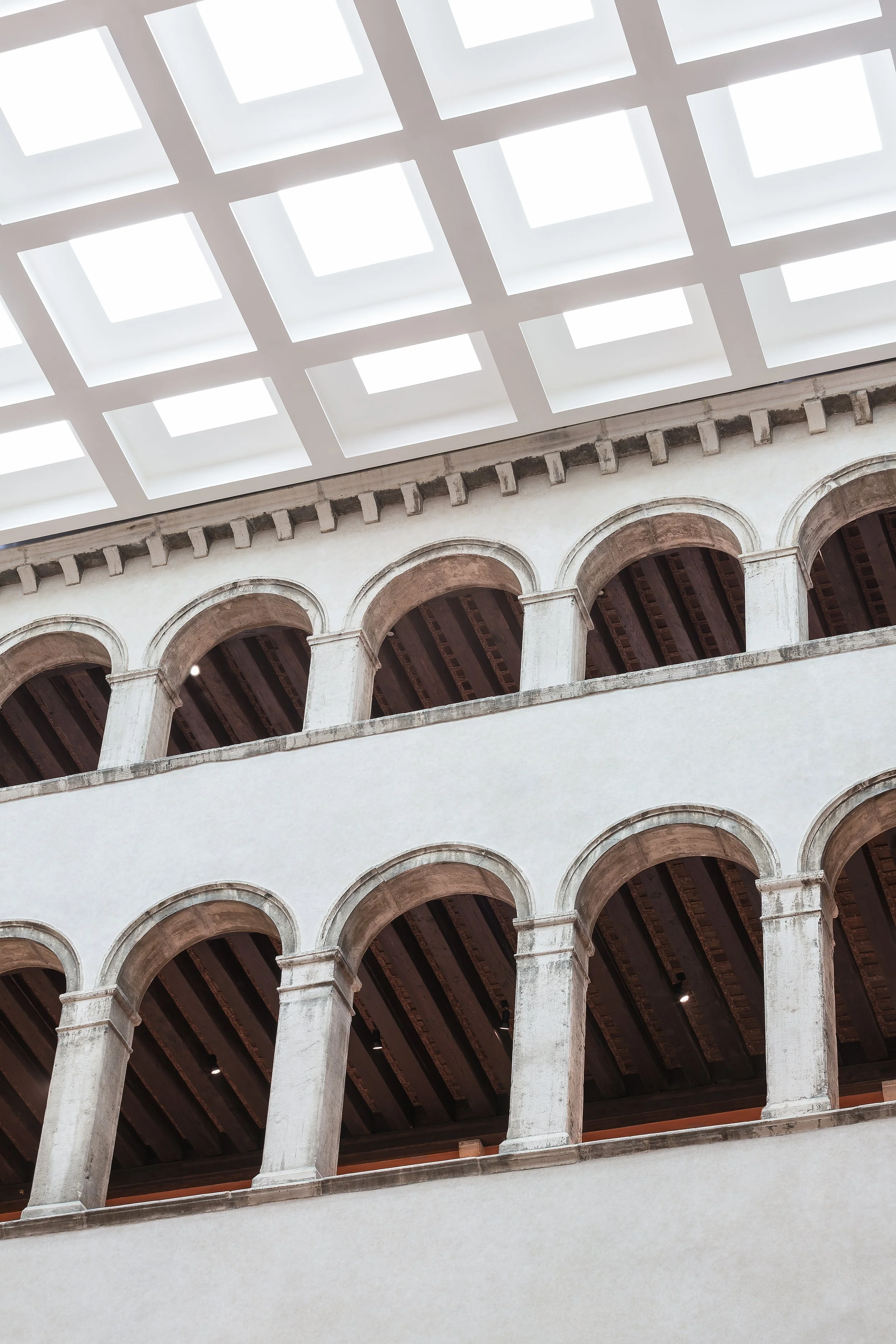
Photograph by Delfino Sisto Legnani and Marco Cappelletti, Courtesy of OMA
Leading the Project
The restoration was led by OMA partners Ippolito Pestellini Laparelli, Rem Koolhaas, and Silvia Sandor, whose vision balanced preservation with innovation. Their approach demonstrates how historical architecture can be adapted for contemporary use while maintaining authenticity, ensuring that the Fondaco dei Tedeschi continues to captivate visitors for centuries to come.
OMA’s work on the Fondaco dei Tedeschi is a compelling example of architecture as storytelling, revealing Venice’s rich history while creating a vibrant space for today’s urban life. It stands as a testament to the potential of sensitive restoration to transform heritage buildings into cultural landmarks and public destinations, marrying history with modernity in one of the world’s most iconic cities.
More Stories


A considered, design-led residence at Centre Point, where bold colour, layered materials and architectural clarity come together to create an interior that is expressive, refined and quietly powerful.