
Soho House Manchester
A former television studio reimagined through mid‑century design, Northern craft and a deeply rooted contemporary art collection
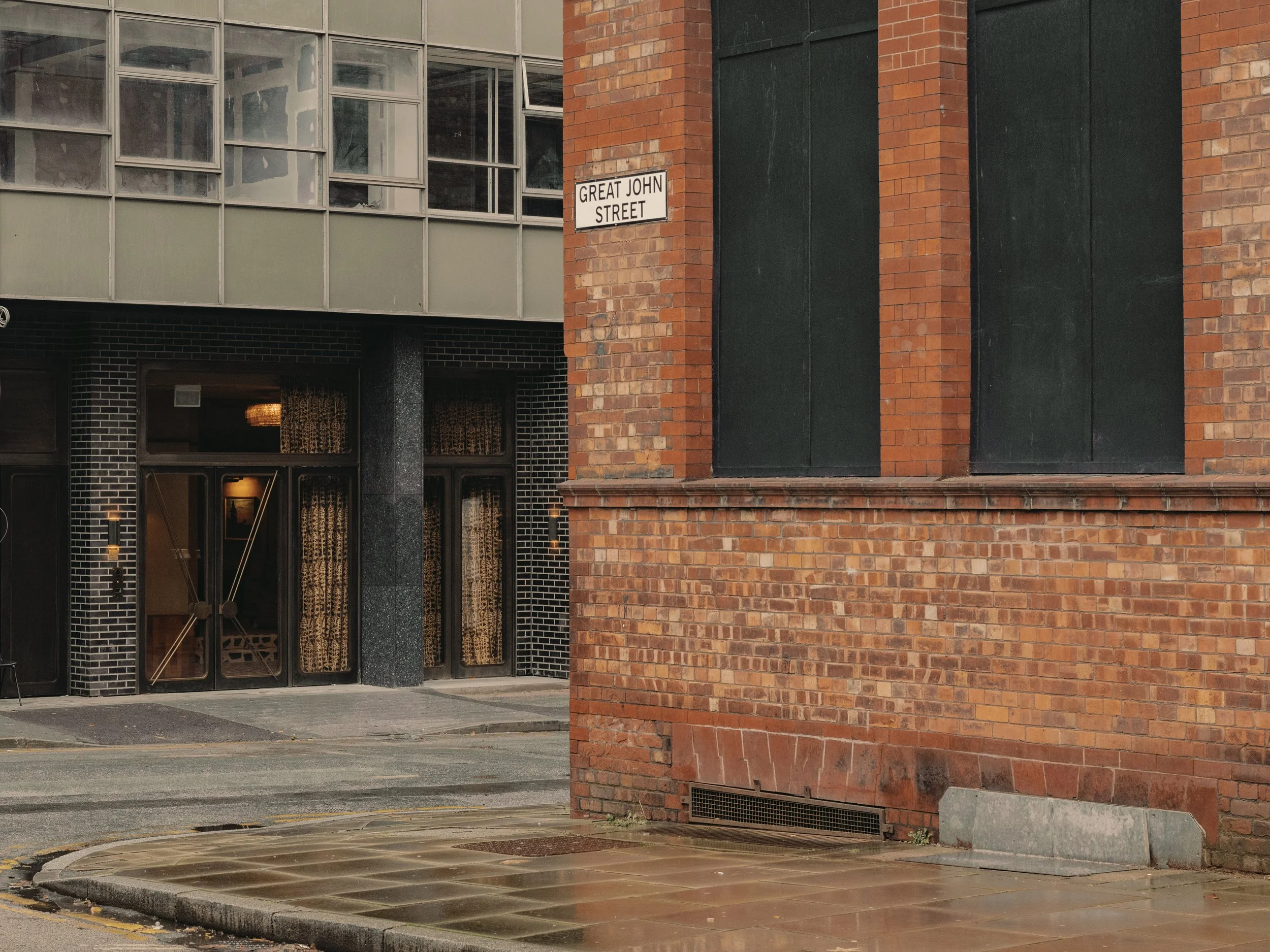
There is a particular weight to buildings that once held stories before they ever hosted a dinner reservation. In Manchester’s St John’s neighbourhood, the former Granada Studios carries decades of cultural memory. Sitcom laughter, late‑night interviews, broadcast tension. It is here, within this historically charged shell, that Soho House Manchester unfolds. Not as a reinvention that erases its past, but as one that listens, absorbs and responds.
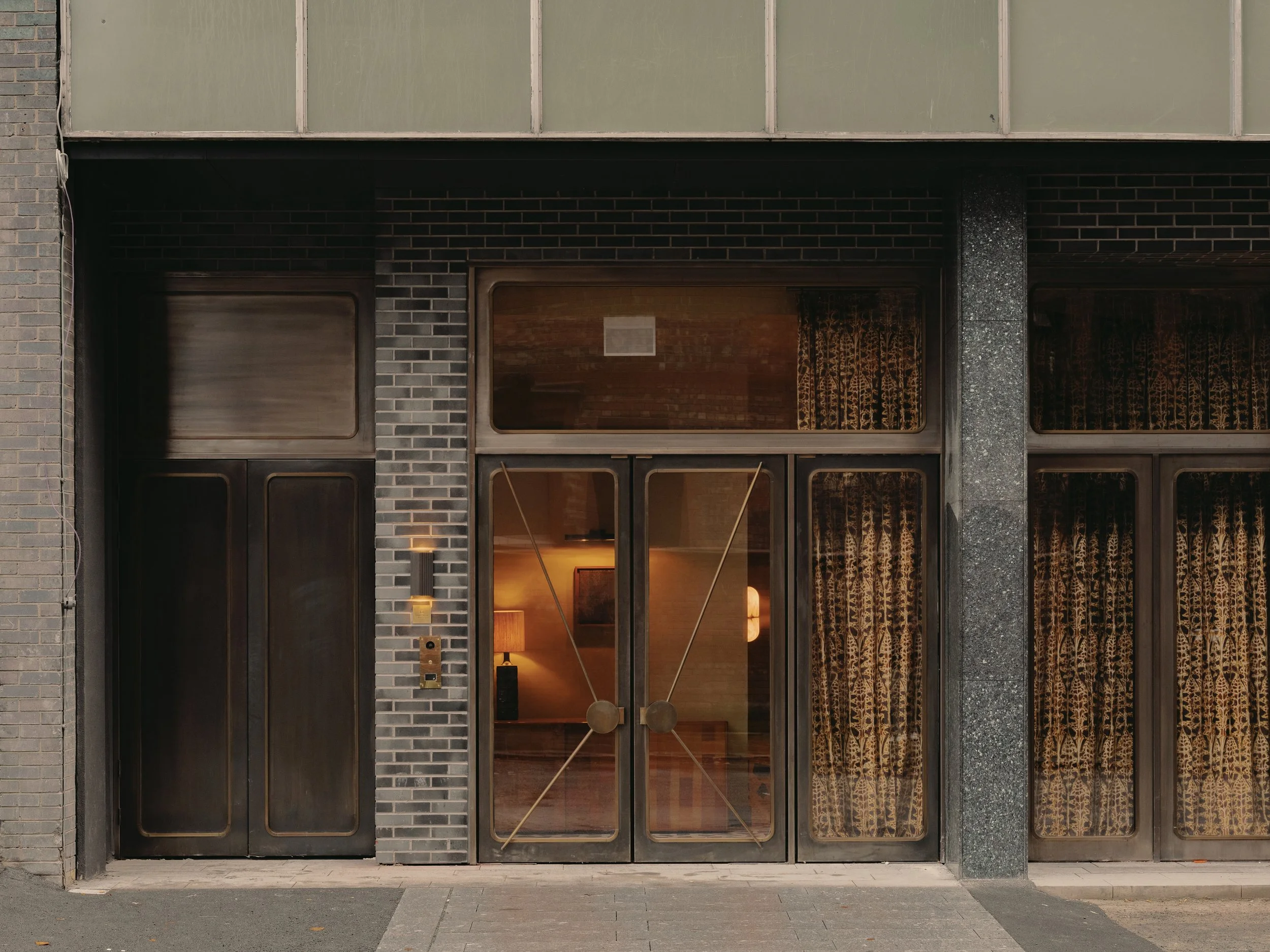
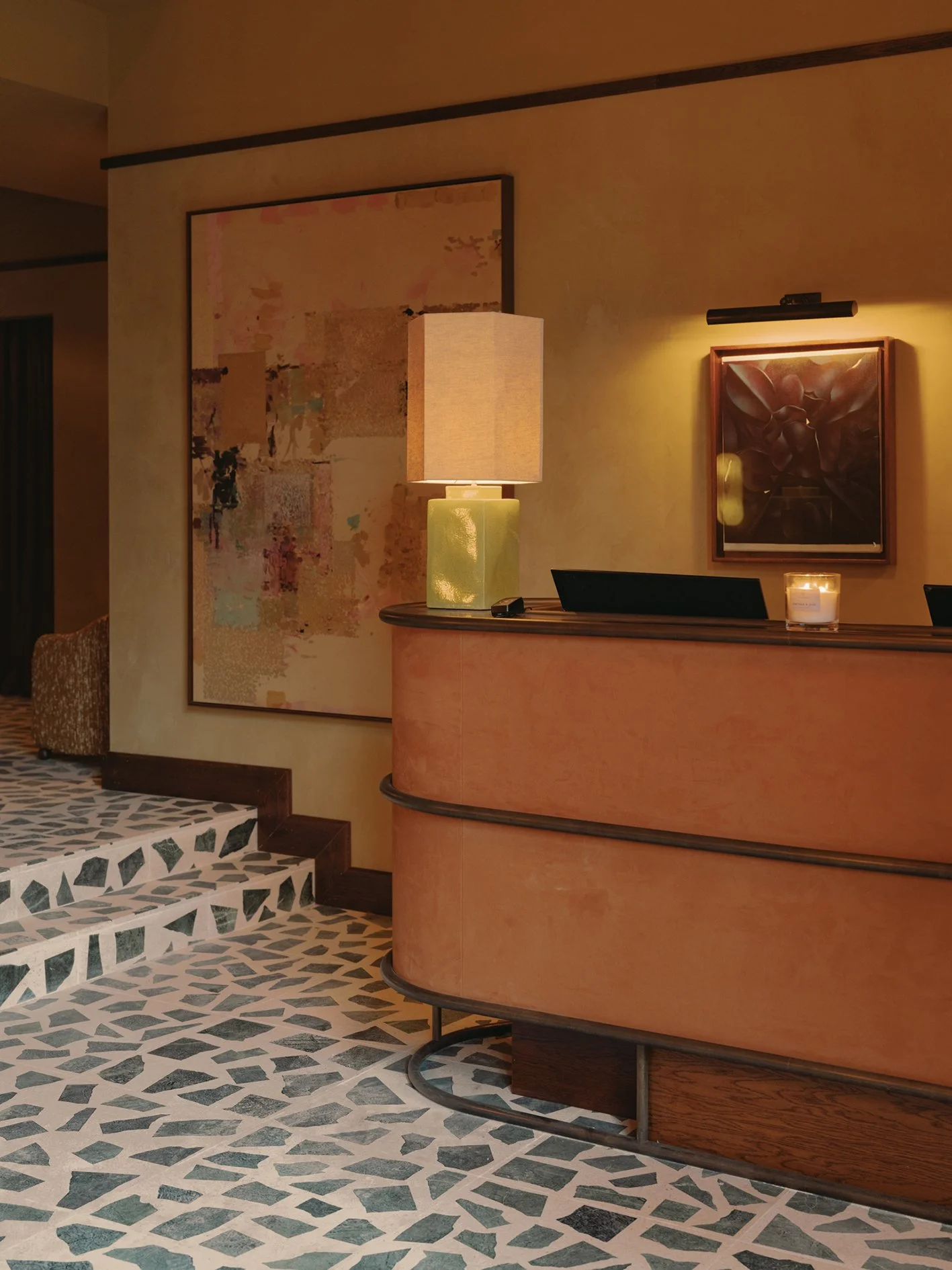
Arriving from Atherton Street, the sense of threshold is immediate. This is not an overt arrival, but a measured one. The reception sets the tone with citrus‑yellow walls, terrazzo floors in green and cream, and mid‑century furniture that quietly references 1950s optimism. Murano glass ceiling fixtures hover like punctuation marks, lighting the idea that this House understands atmosphere as much as design. Soho House Manchester, spanning over 44,000 square feet, is the brand’s first northern outpost, but it feels less like an expansion and more like a conversation with place.
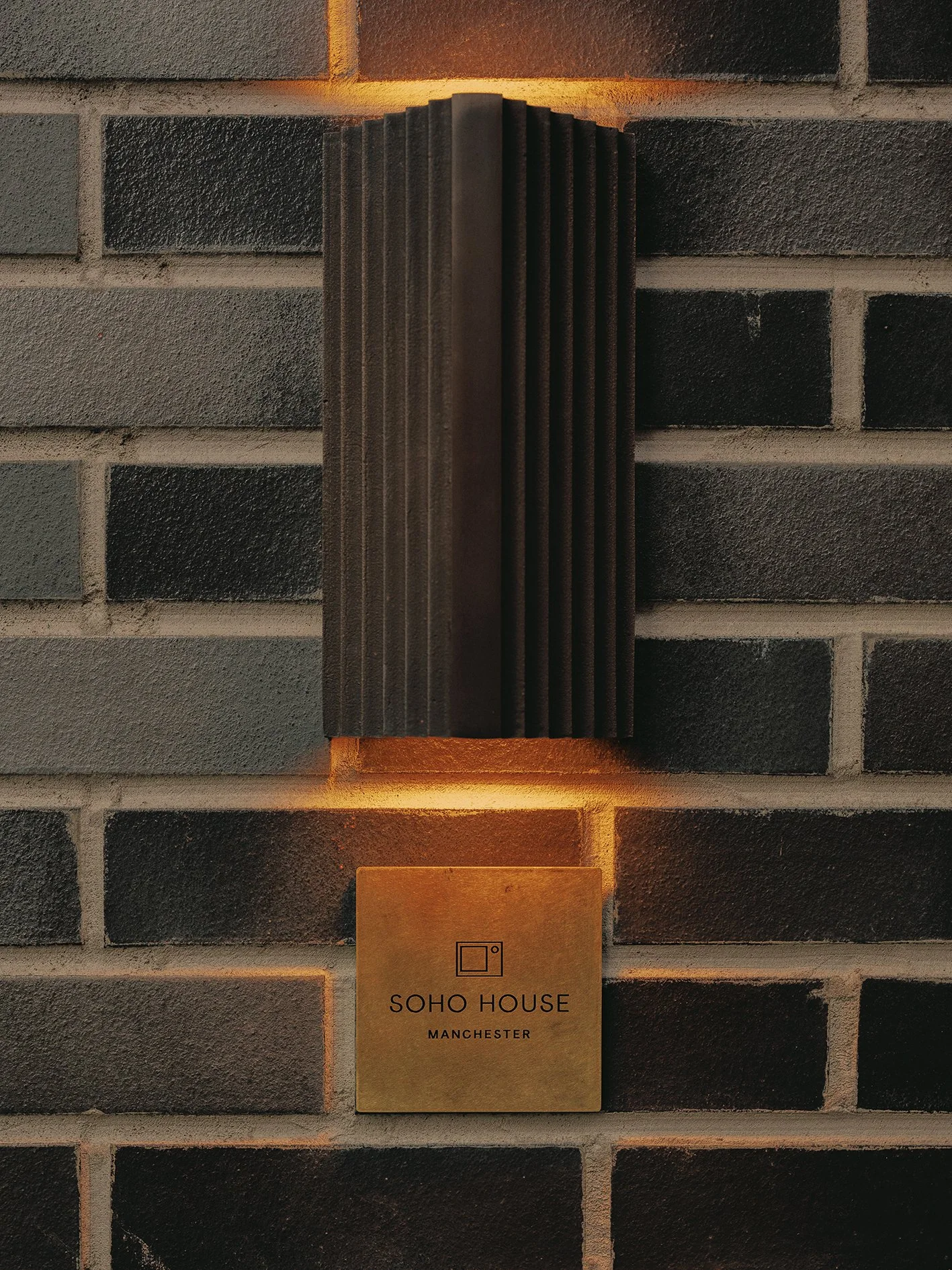
Photography: Edvinas Bruzas
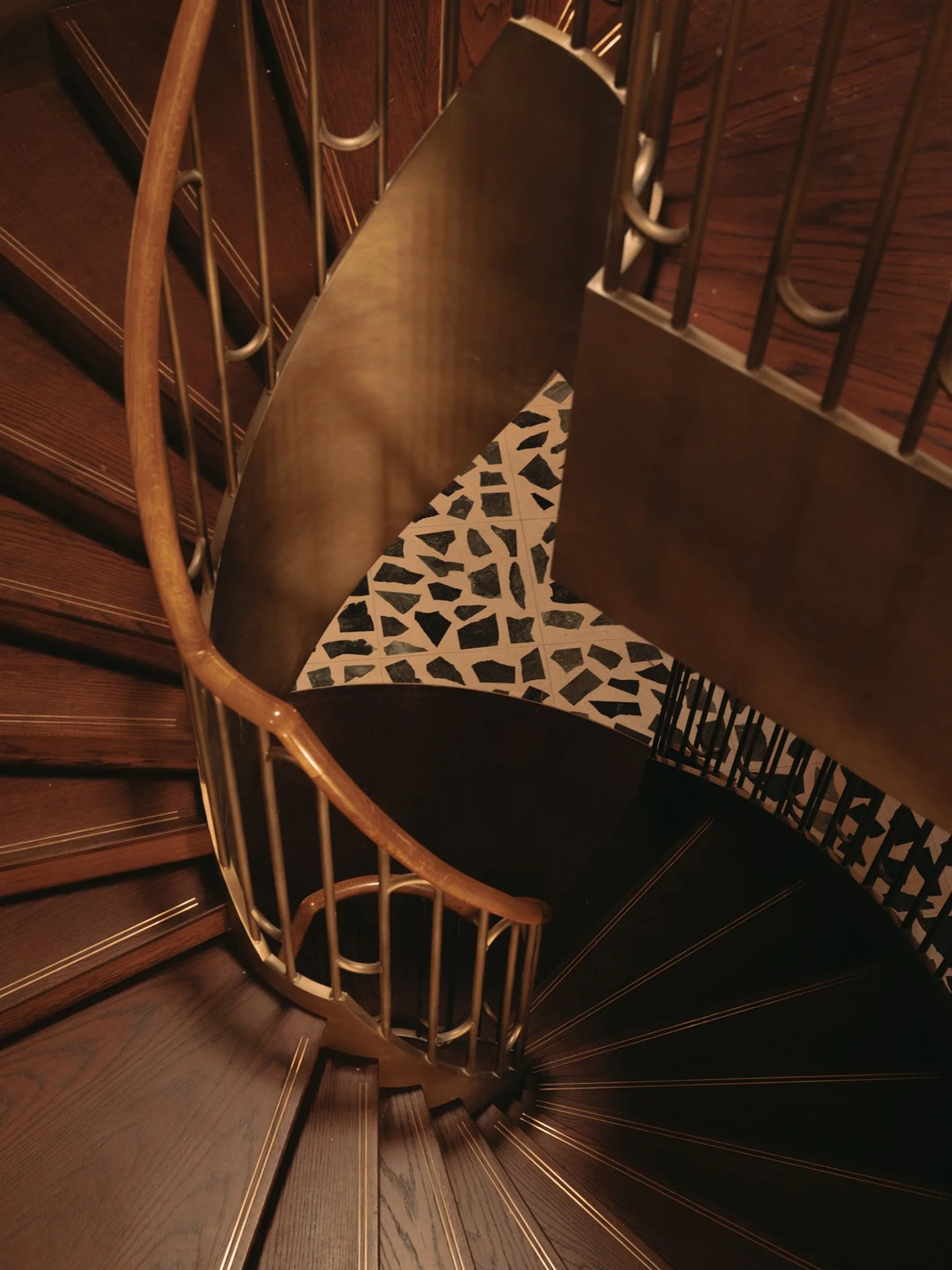
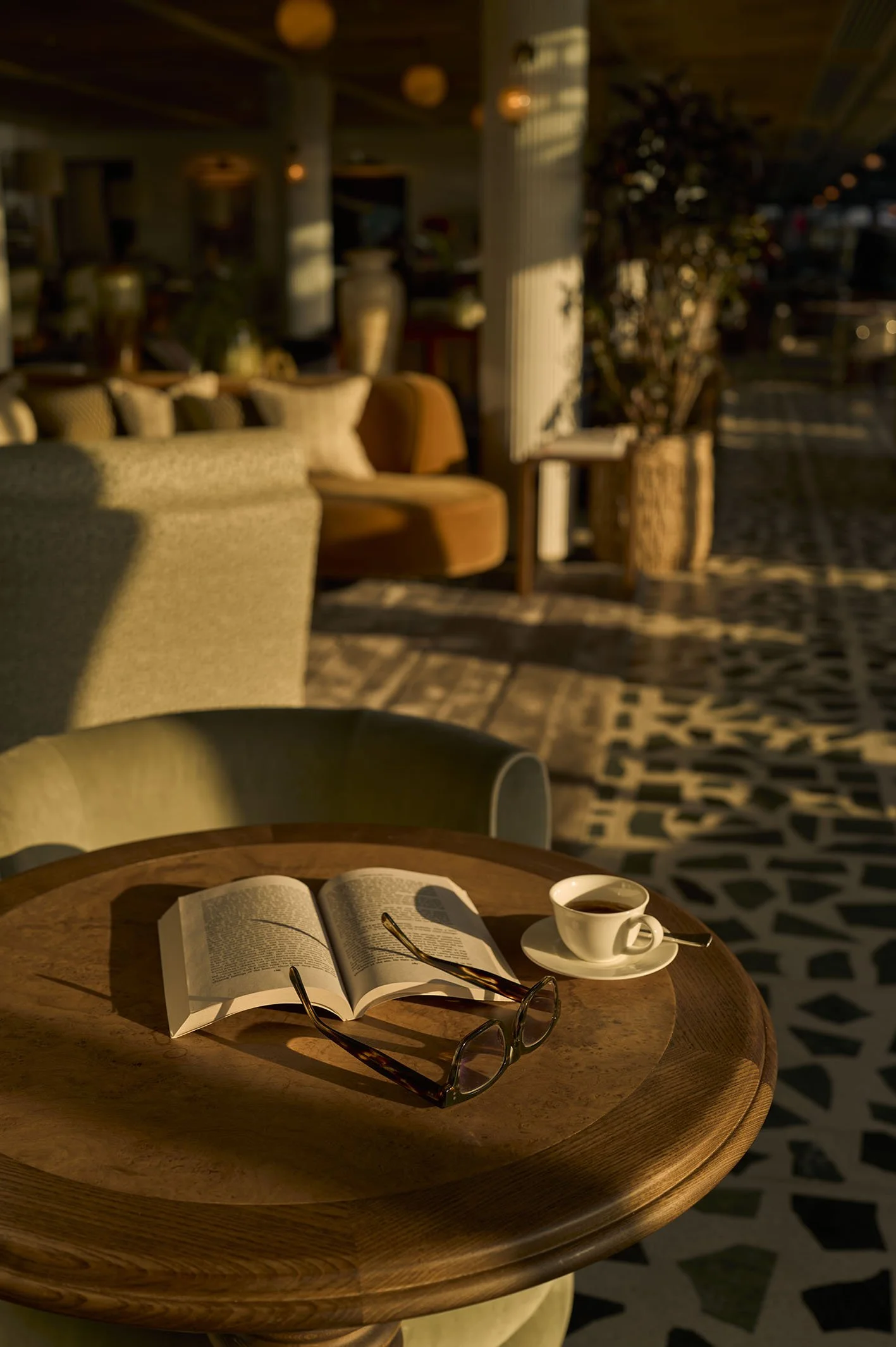
It is a conversation that continues vertically. A sweeping spiral staircase in antique brass and timber connects floors as much emotionally as physically, moving members between wellness, work, dining and late‑night expression. Each level reads differently, yet speaks the same language. Terrazzo flooring continues through the eighth-floor Club Lounge, blurring interior and exterior as it runs seamlessly out toward the rooftop pool terrace.
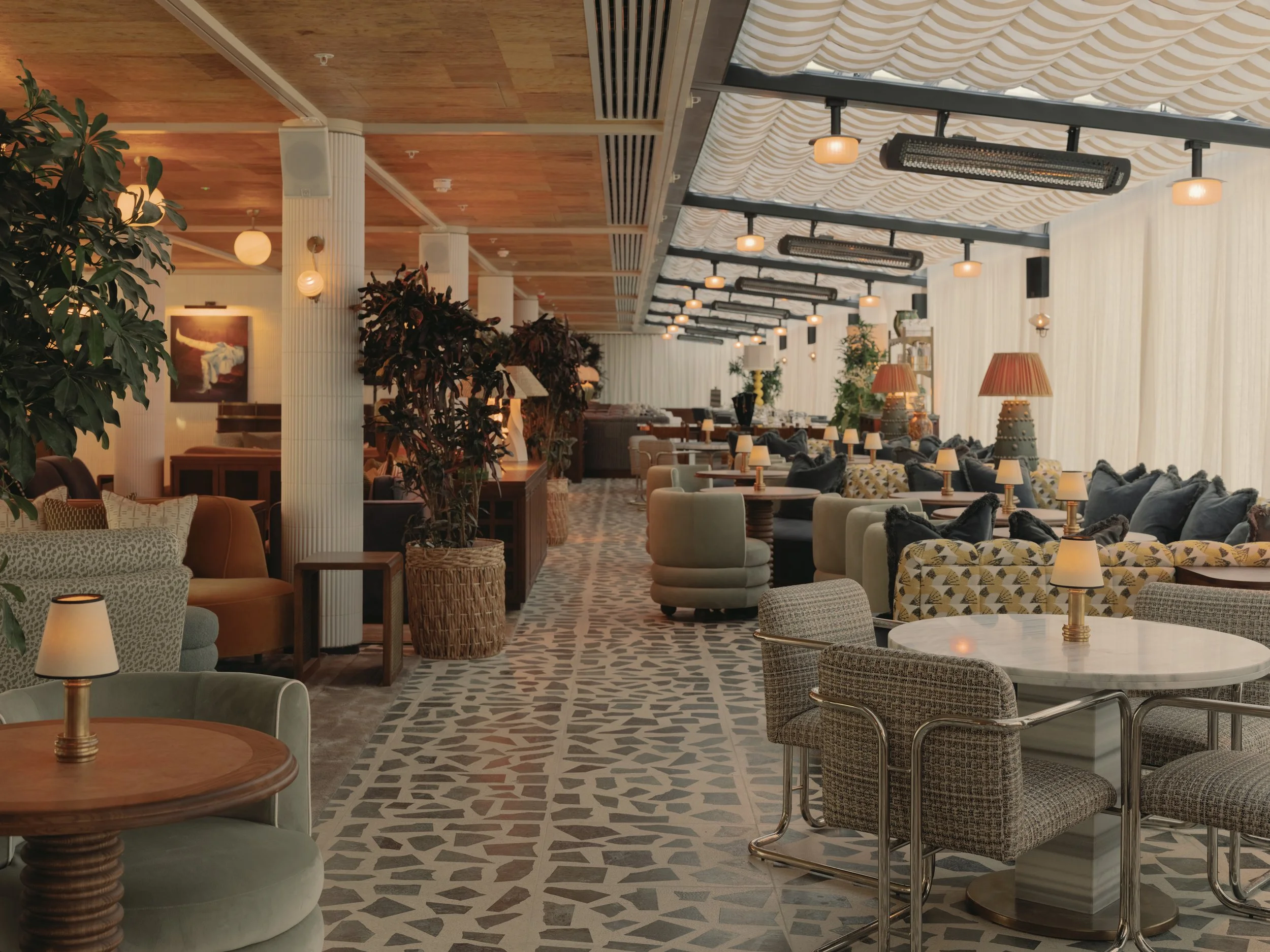
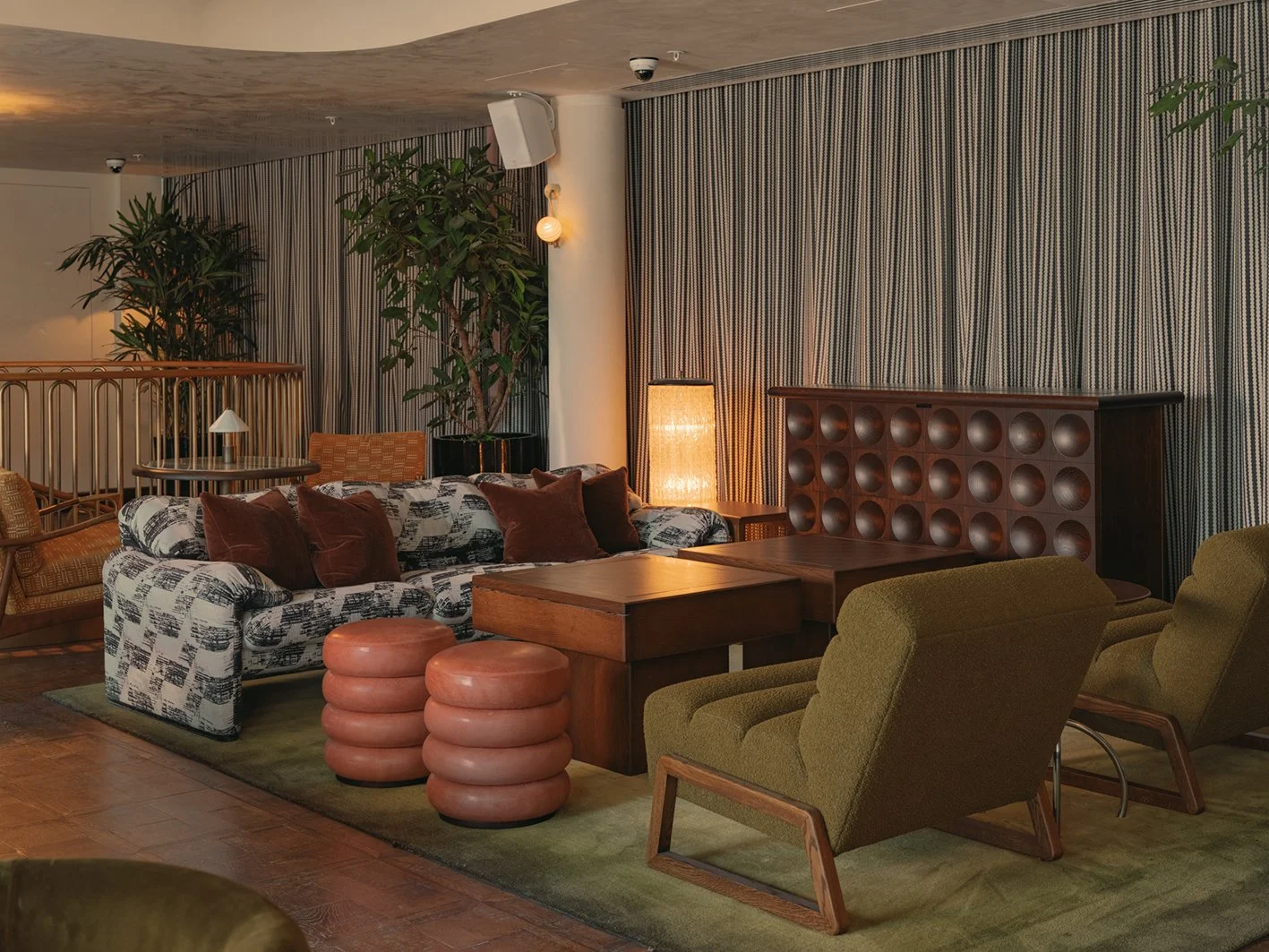
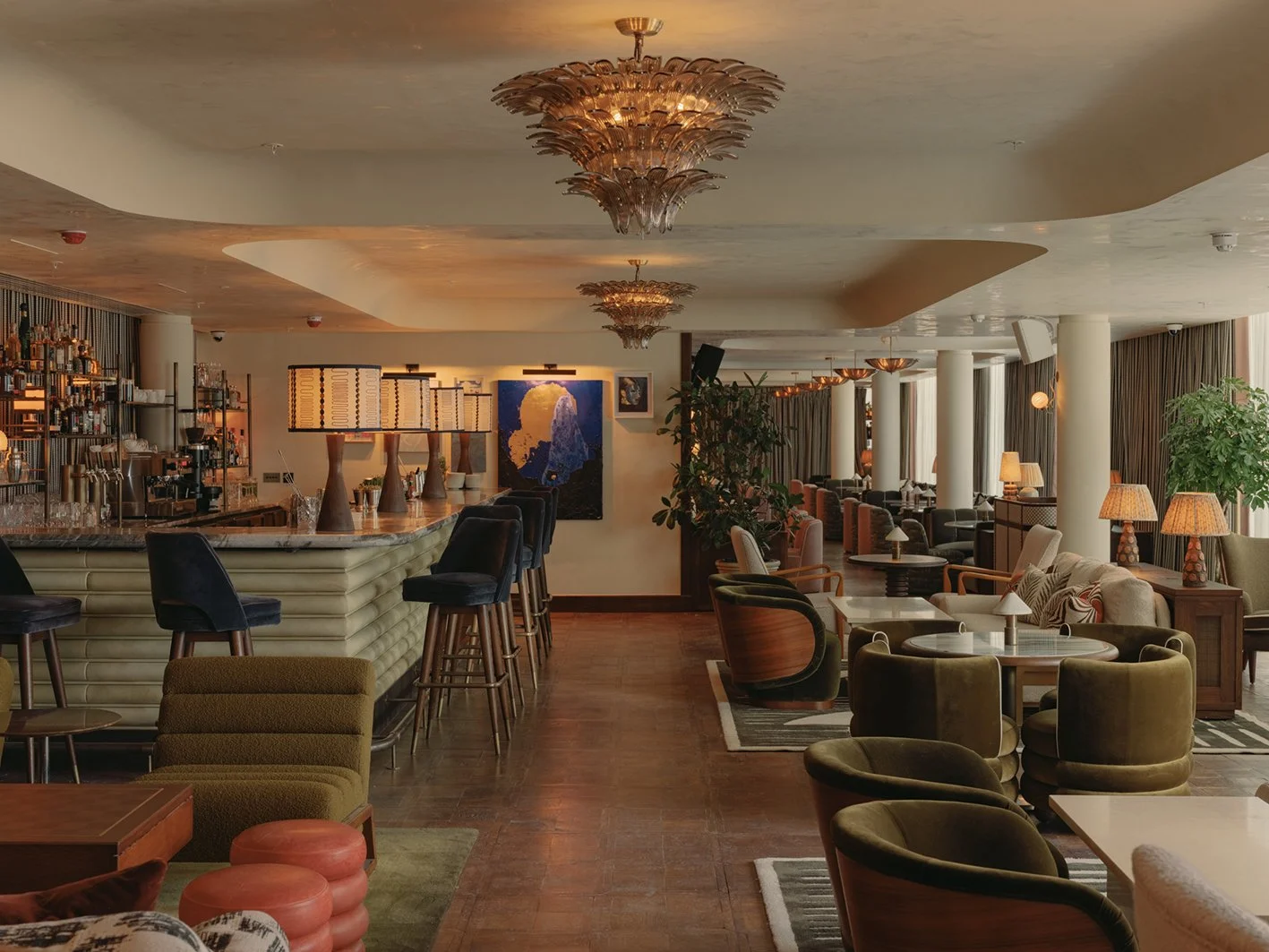
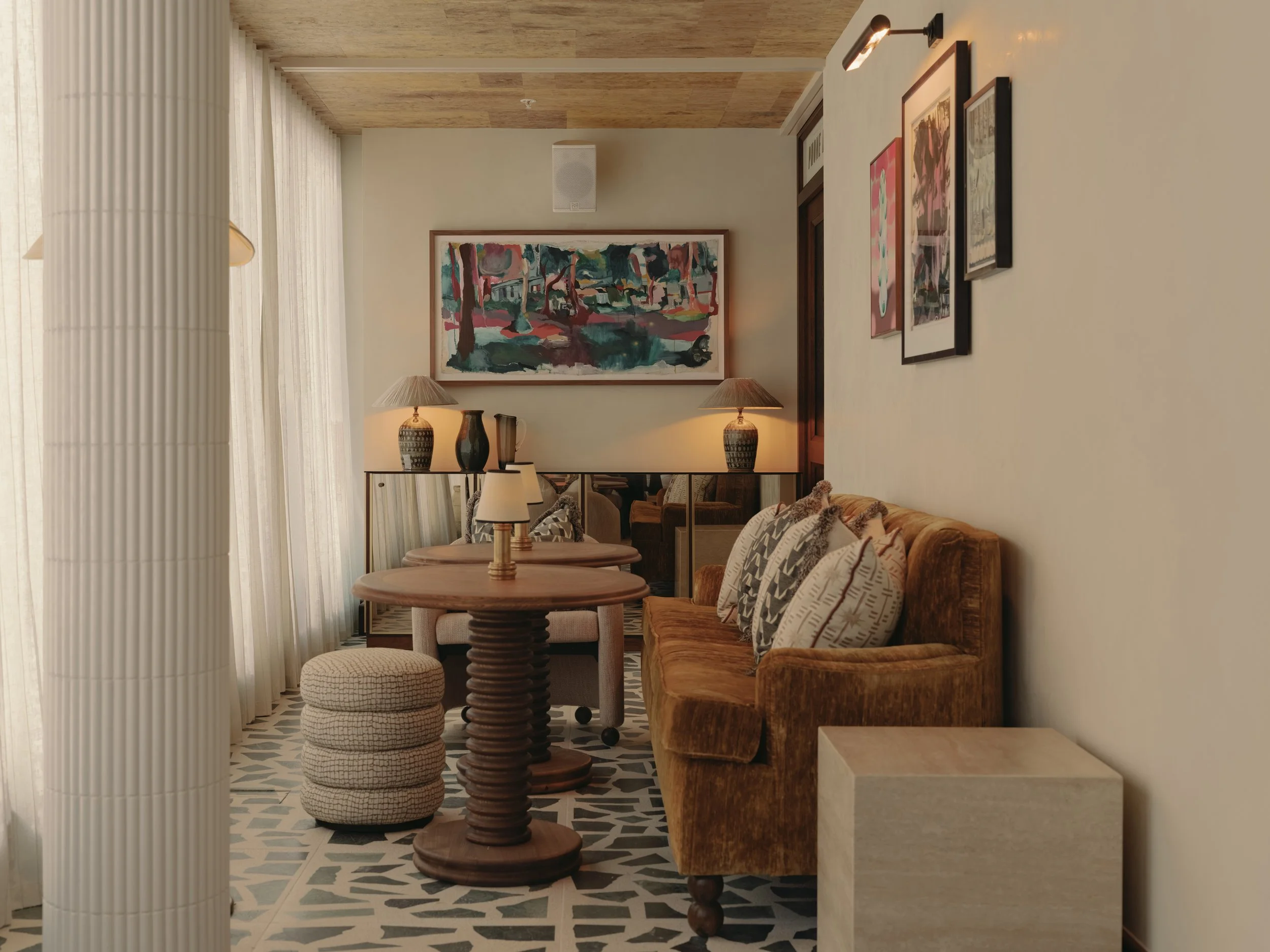
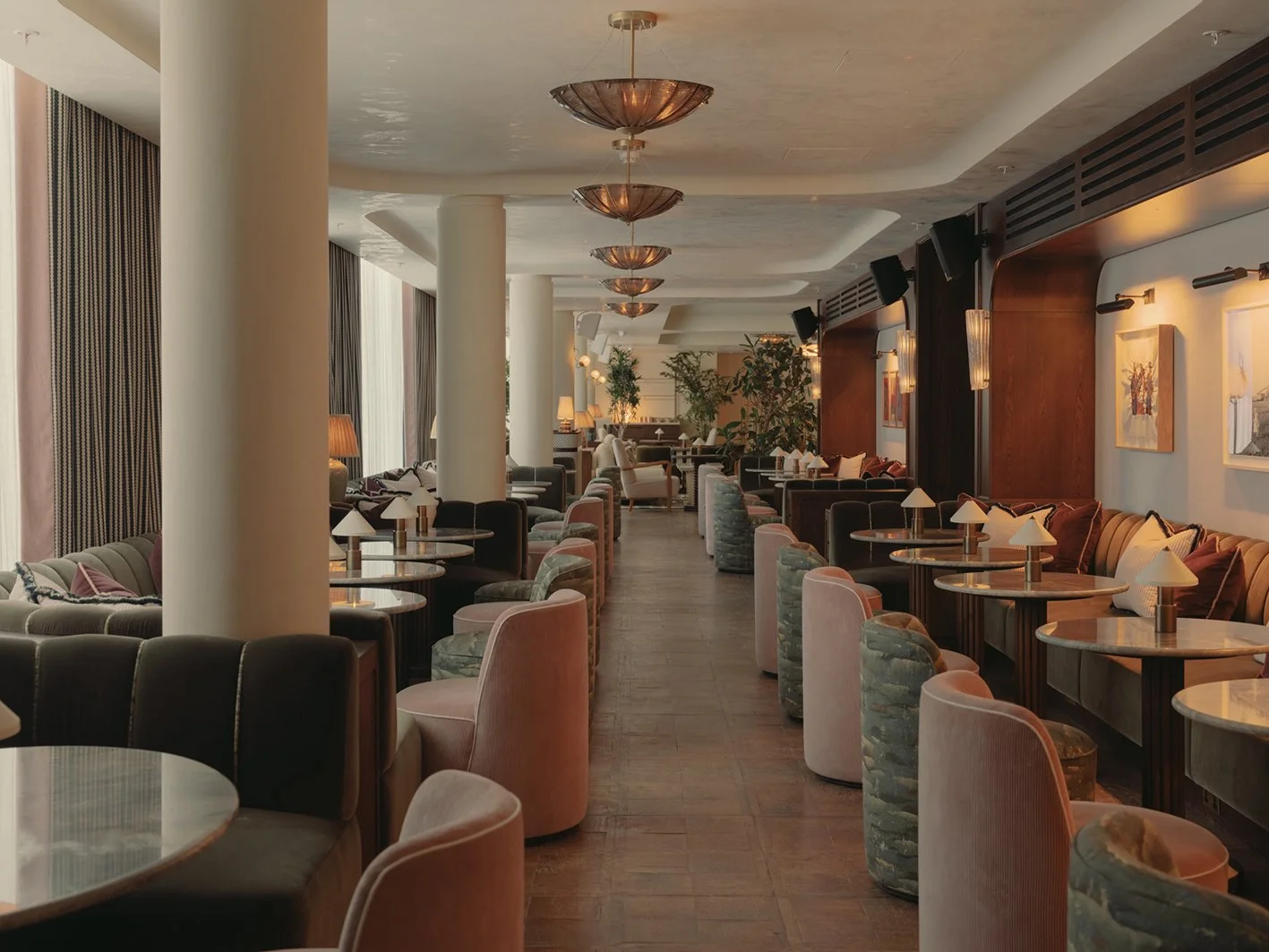
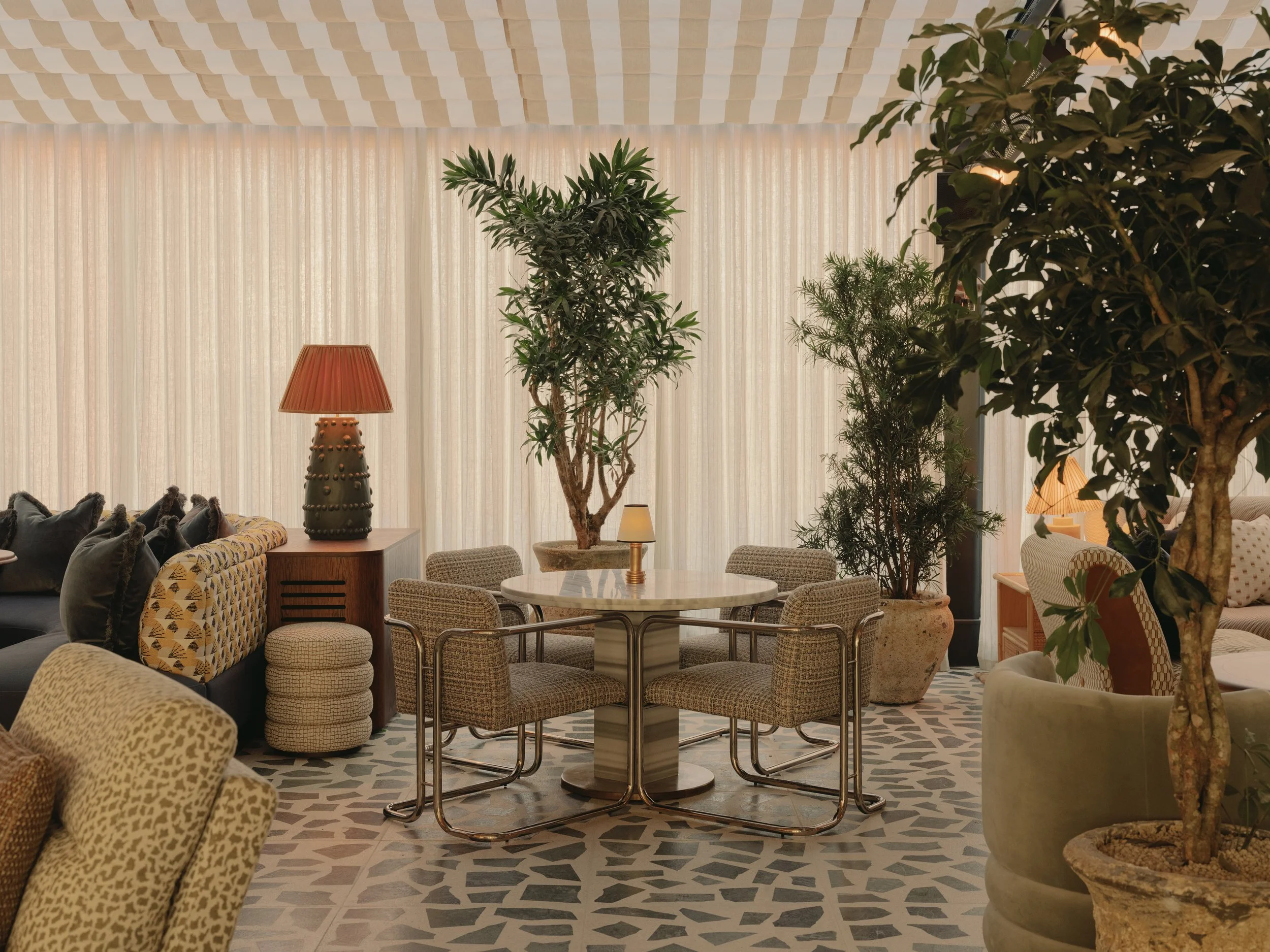
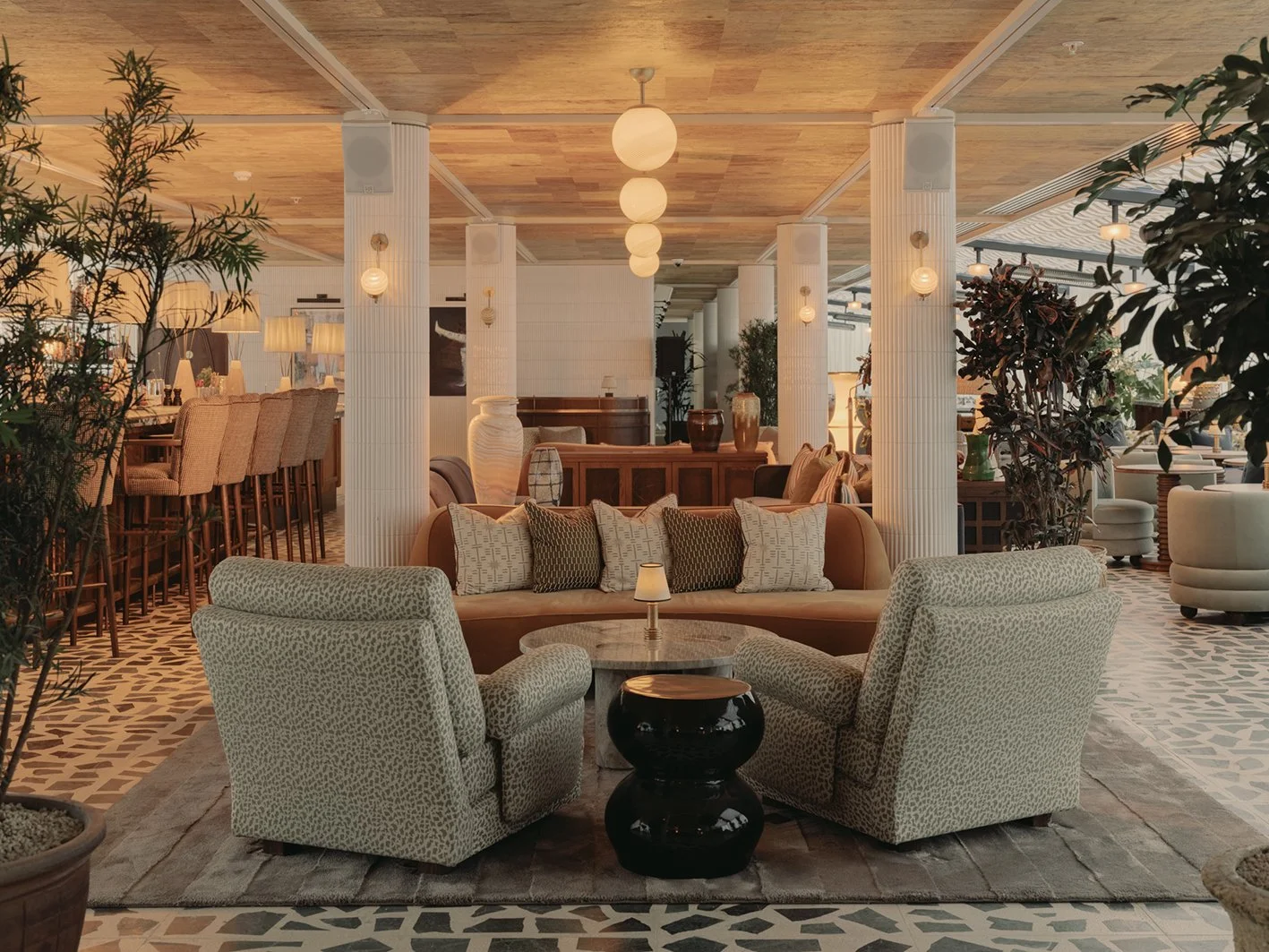
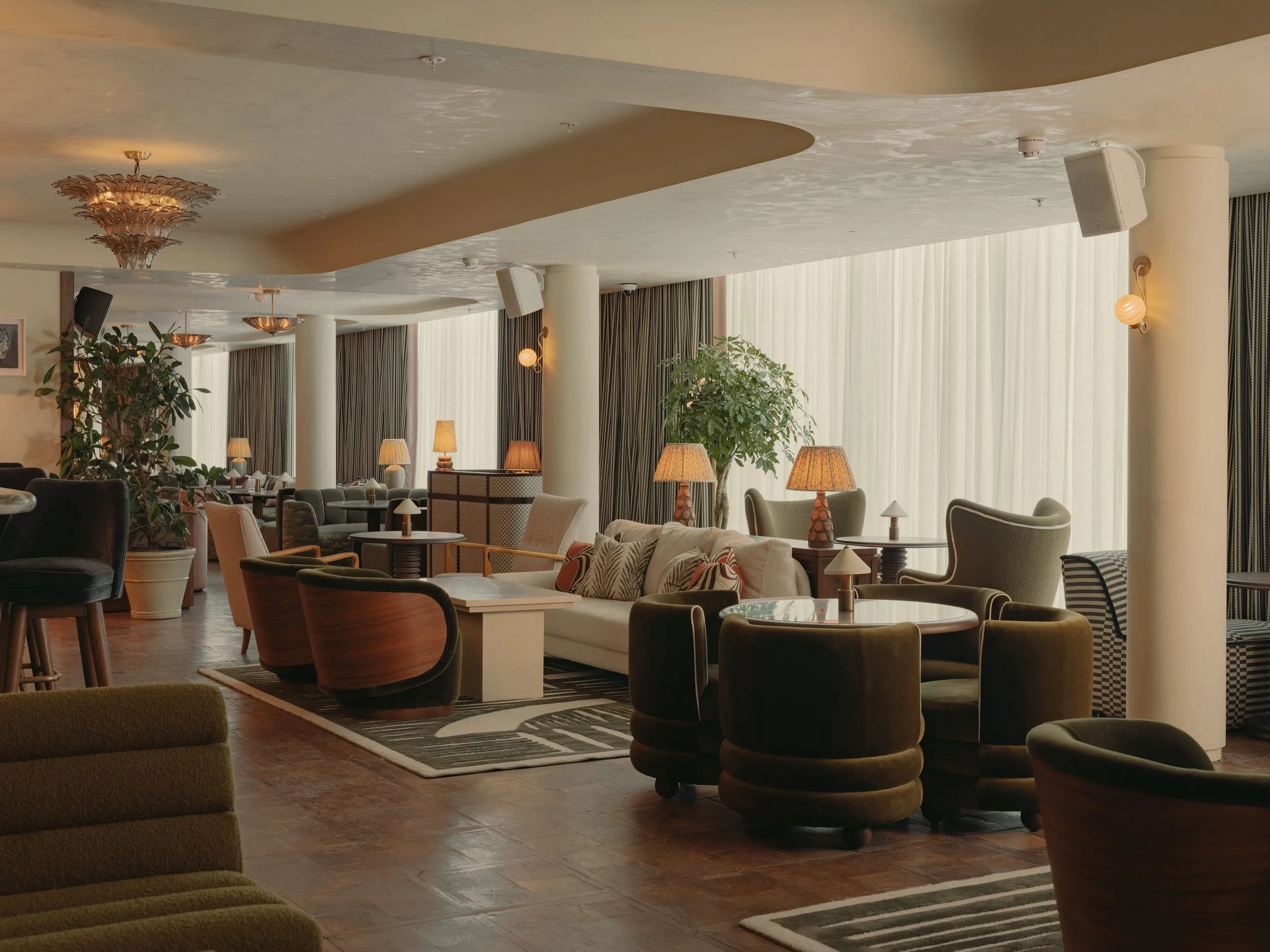
The Club Lounge itself is the social core, a space designed to flex between day and evening with composure. Polished plaster walls soften the architecture, while custom textiles introduce a tactile sense of comfort. One abstract leopard print, created in collaboration with Yorkshire mill Tibor, brings a subtle irreverence to the room, a small nod to Soho House’s enduring belief that seriousness and play should co‑exist. Vintage icons, including Vico Magistretti’s Maralunga sofa, sit confidently alongside contemporary silhouettes, allowing time periods to overlap rather than compete.
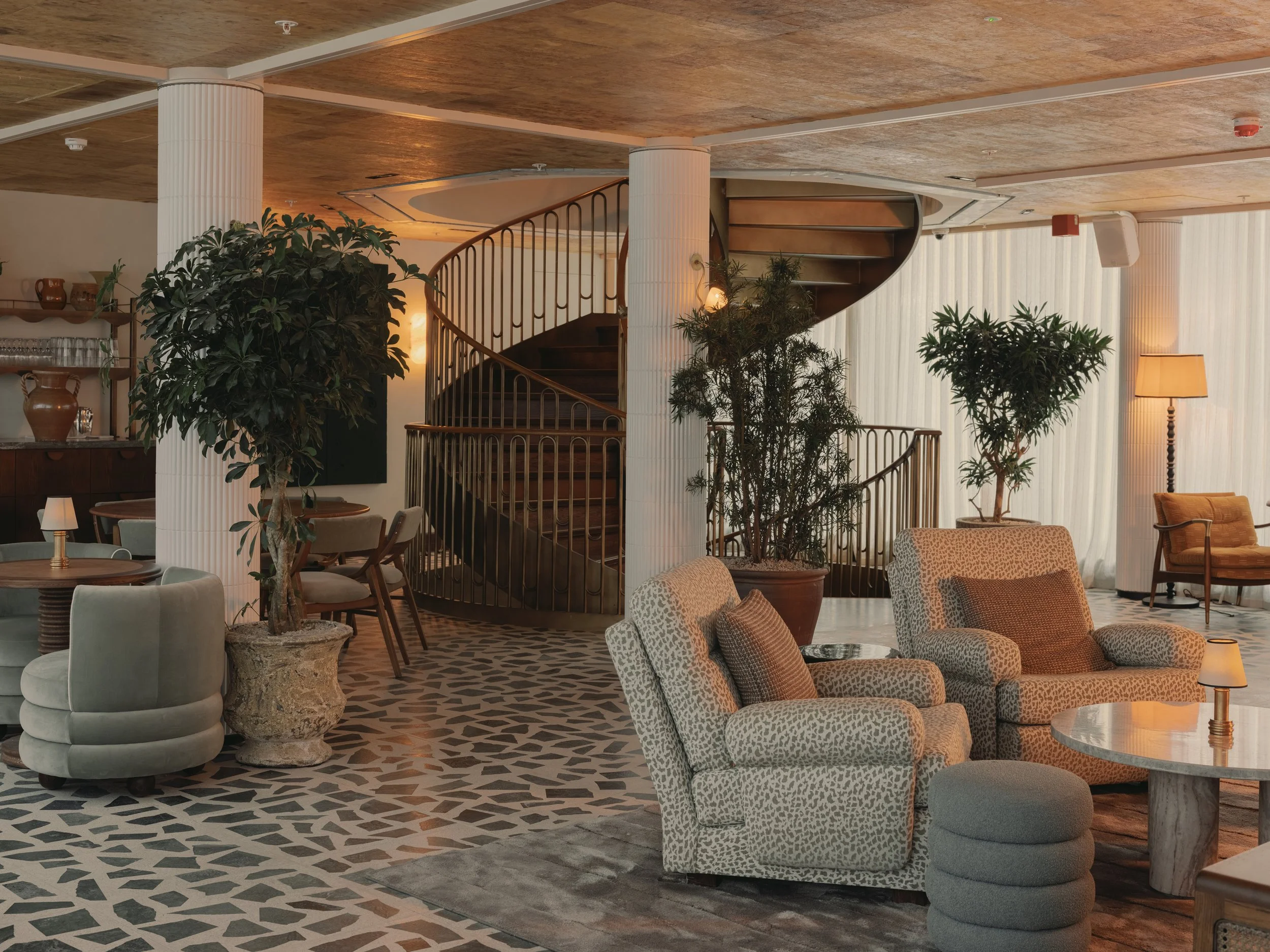
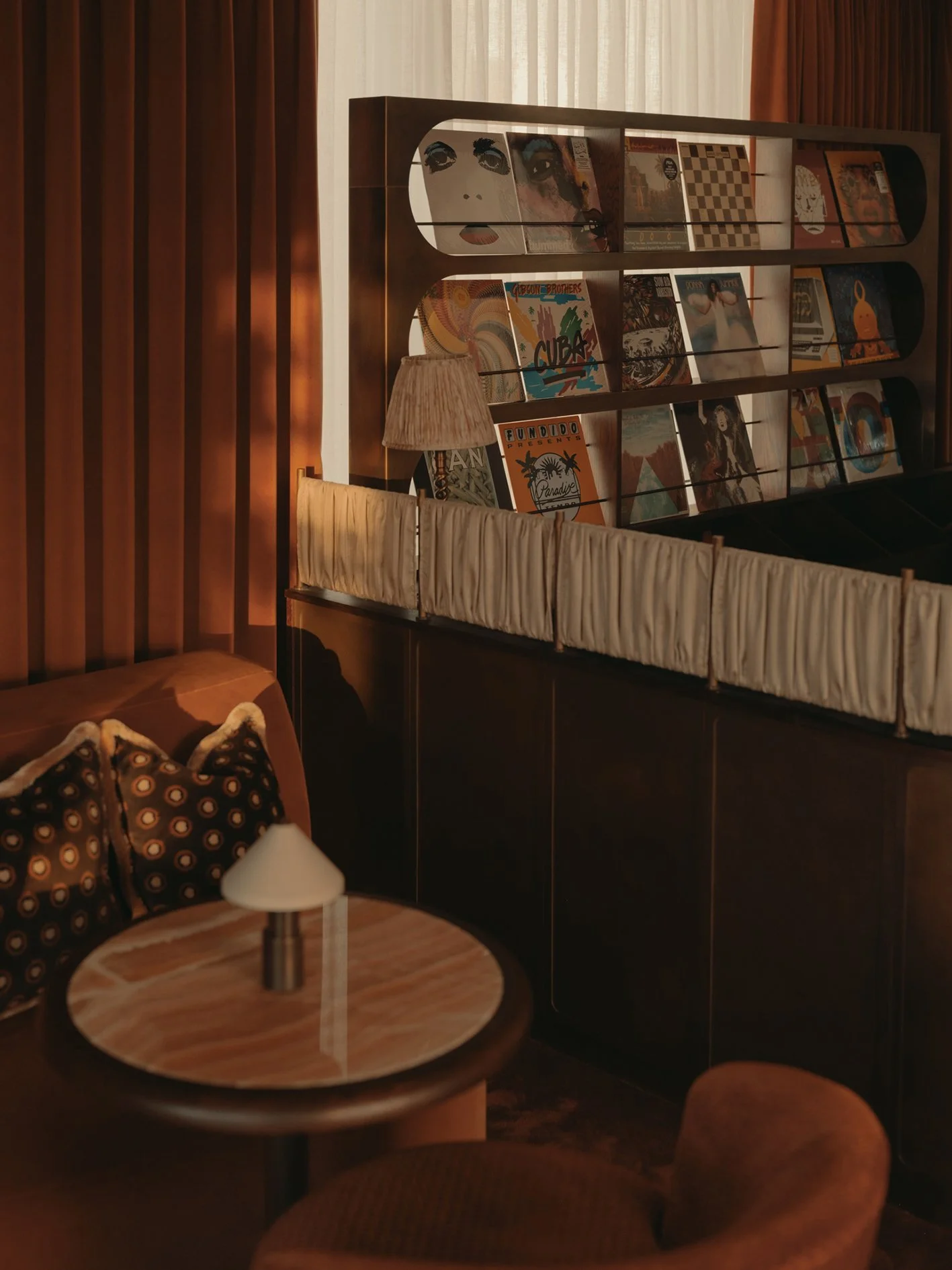
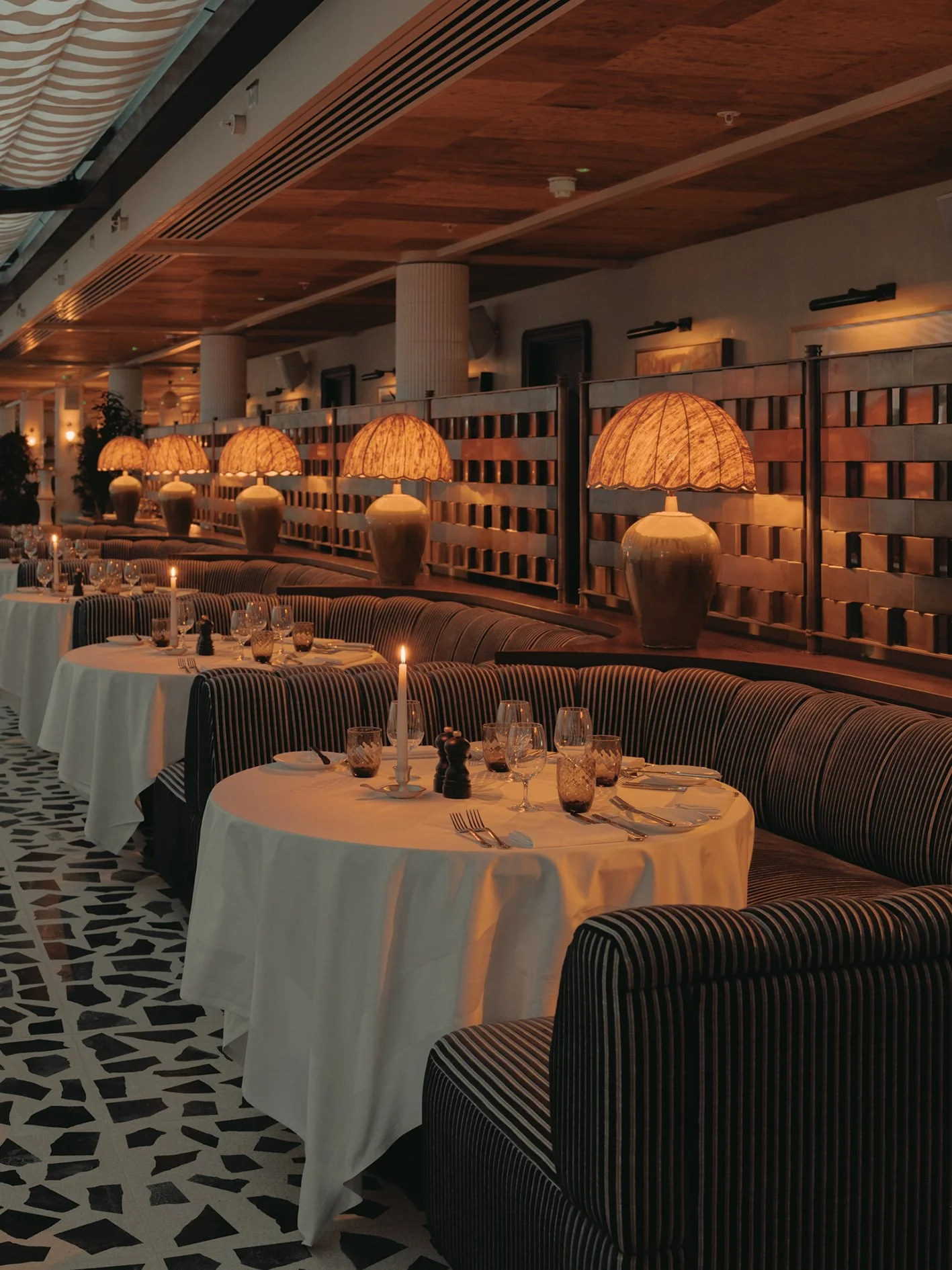
Photography: Edvinas Bruzas
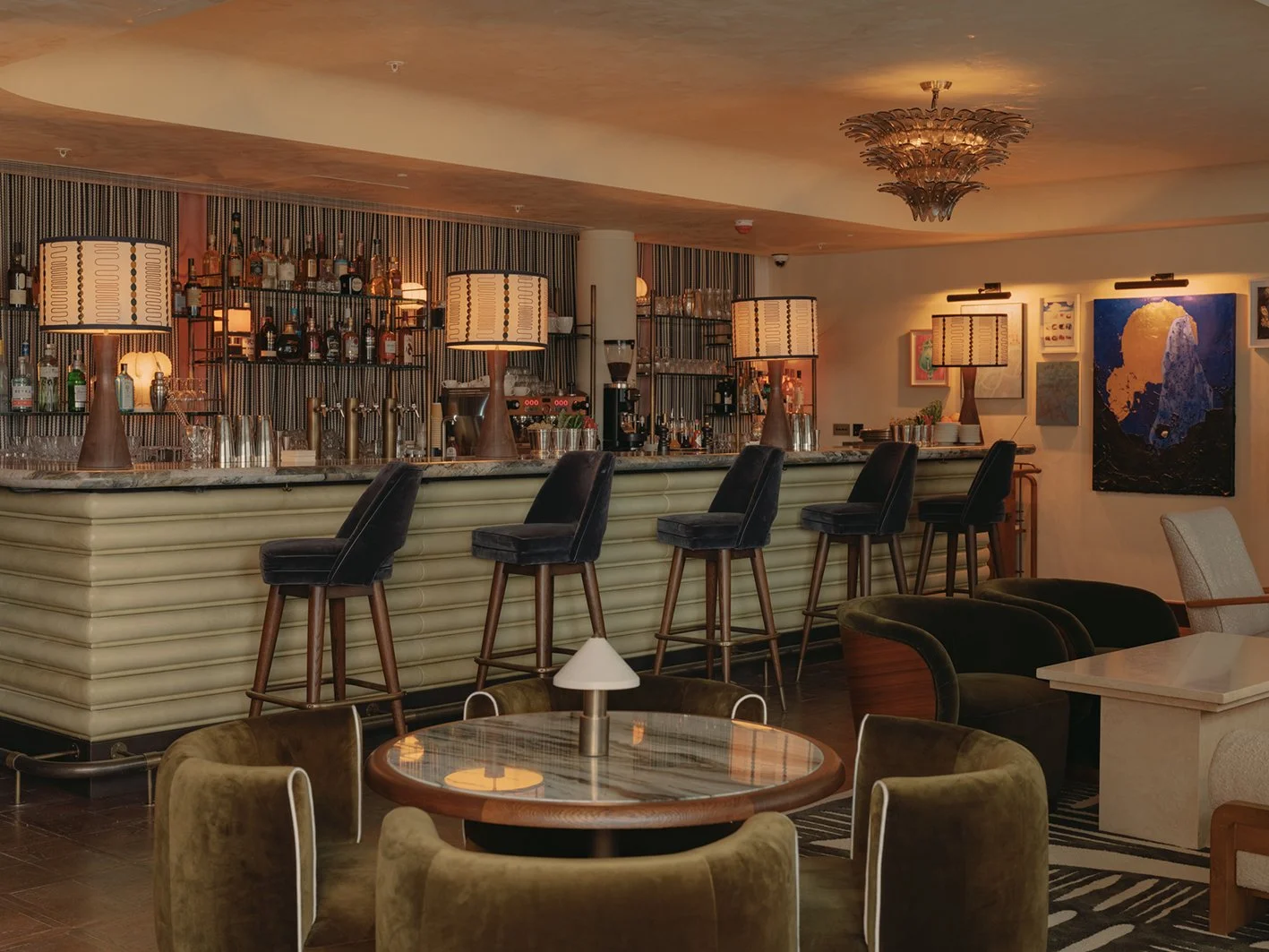
At the heart of the room, the main bar anchors the space with burl wood panelling, ribbed detailing and a bullnose marble top that catches light differently from every angle. It is confident but not demanding, a place designed as much for pause as for performance. Above, a retractable glass ceiling with a striped fabric awning allows the club to open fully to the Manchester sky, transforming the lounge into something closer to an outdoor living room when weather allows.
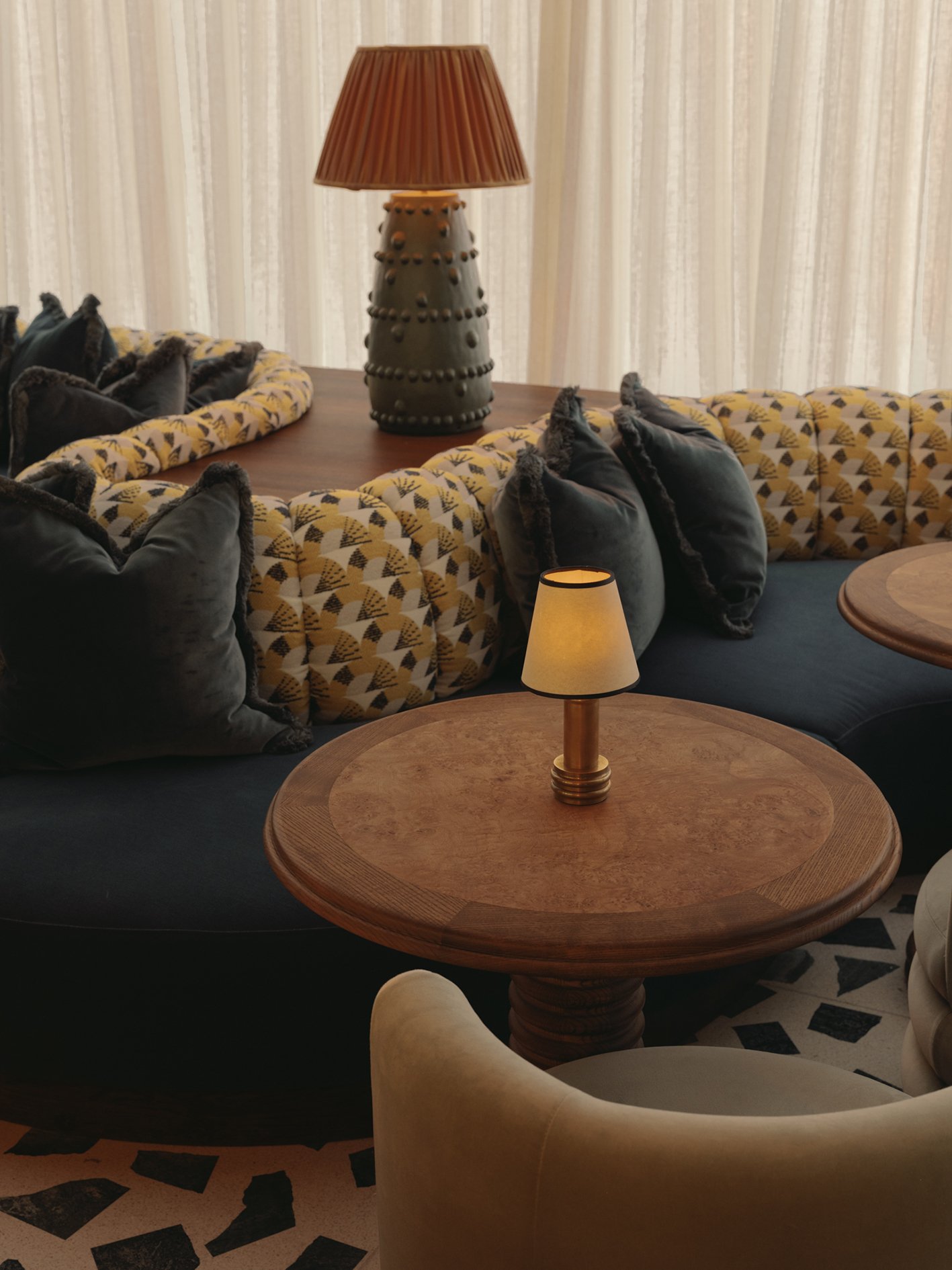
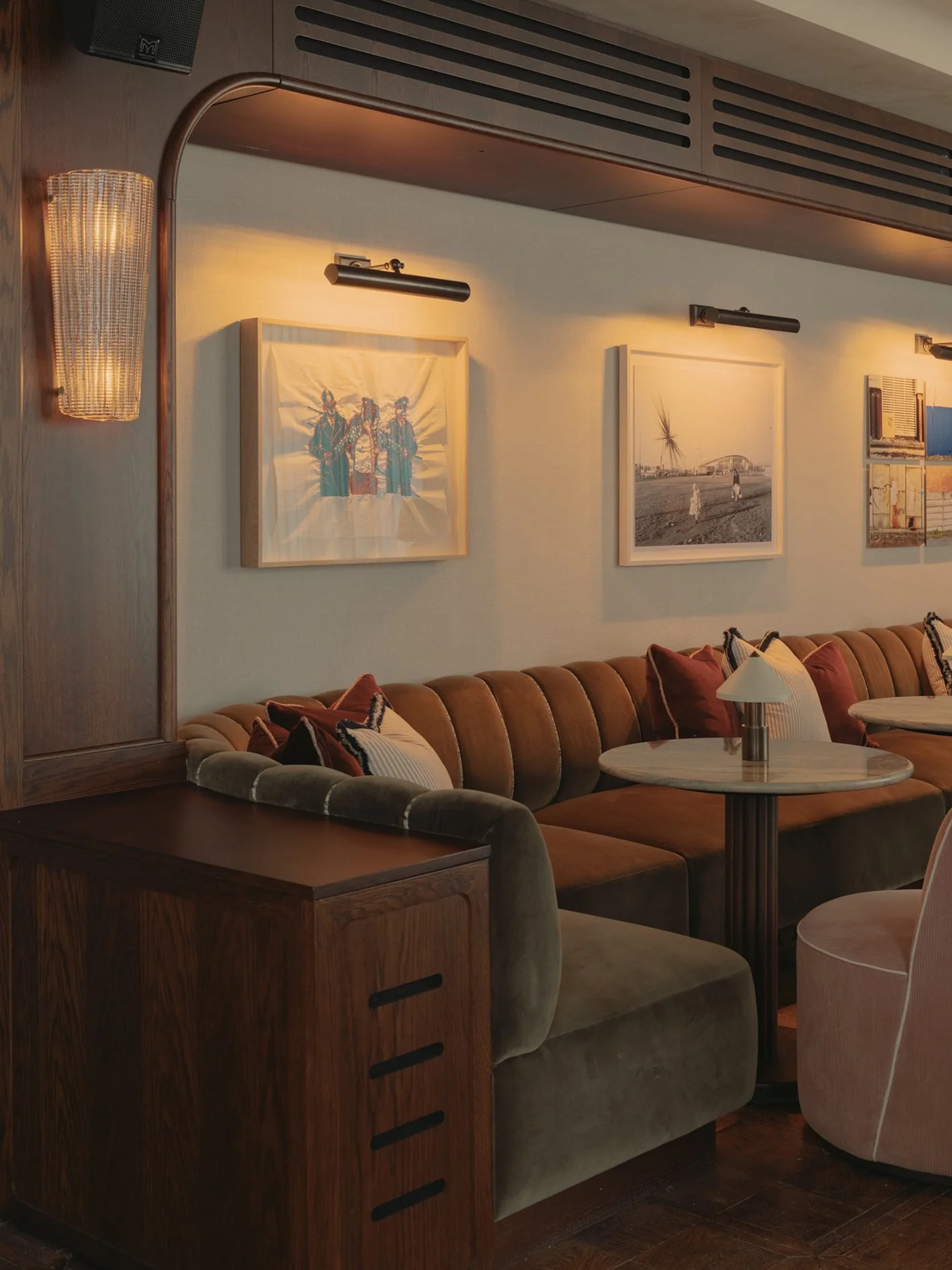
Dining at Soho House Manchester mirrors this same layered logic. The House Kitchen, positioned behind the Club Lounge, shifts mood through intimacy. Oak banquettes upholstered in navy and cream striped velvet create rhythm, while antique brass divider screens introduce privacy without isolation. Round tables, blue leather dining chairs, and scalloped silk lampshades evoke a sense of understated ceremony. It is candlelit, deliberate and unhurried. The food, drawing on global Soho House references alongside House‑specific dishes like the rotating House Pie, reinforces a feeling of thoughtful familiarity rather than spectacle.
Photography: Edvinas Bruzas
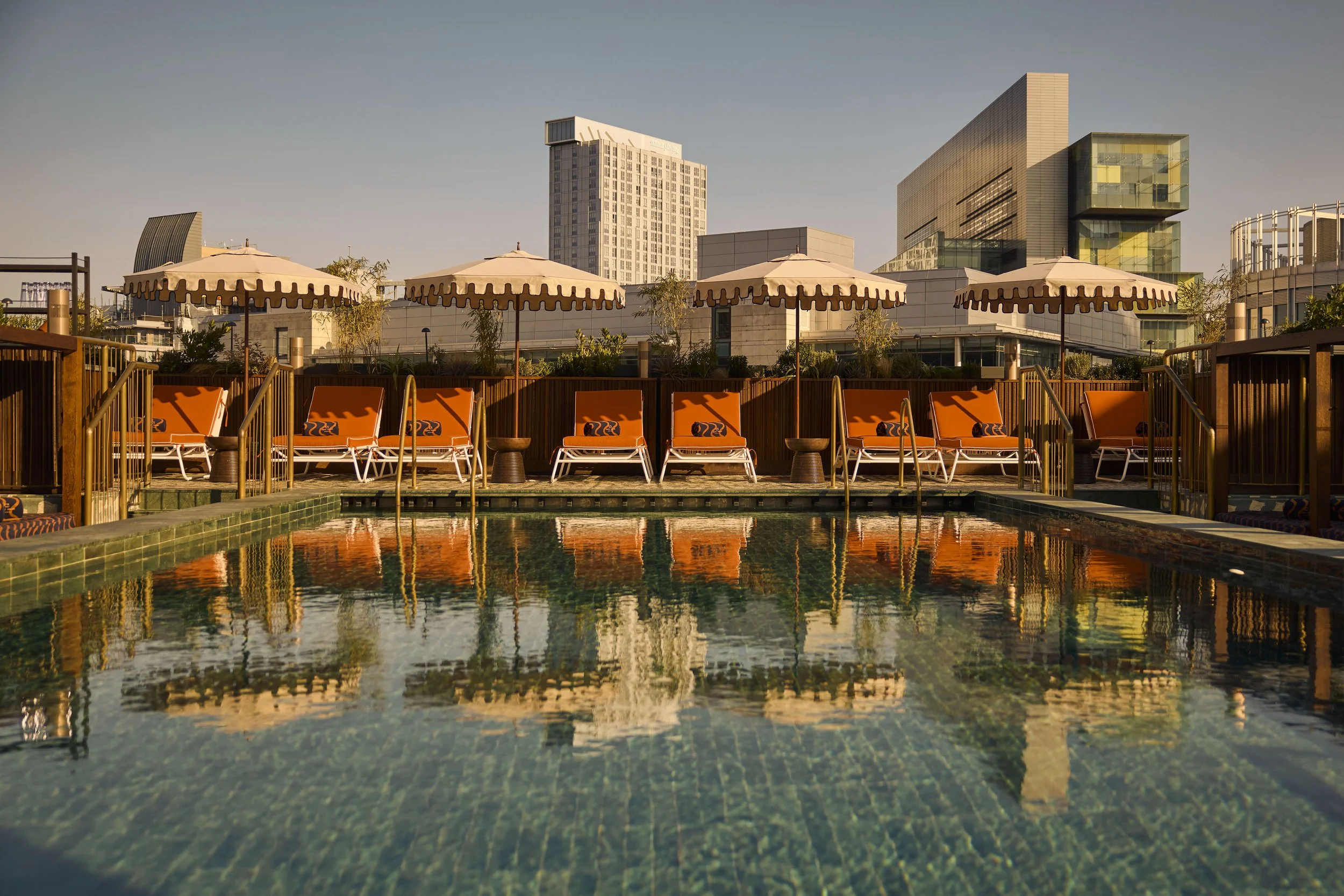
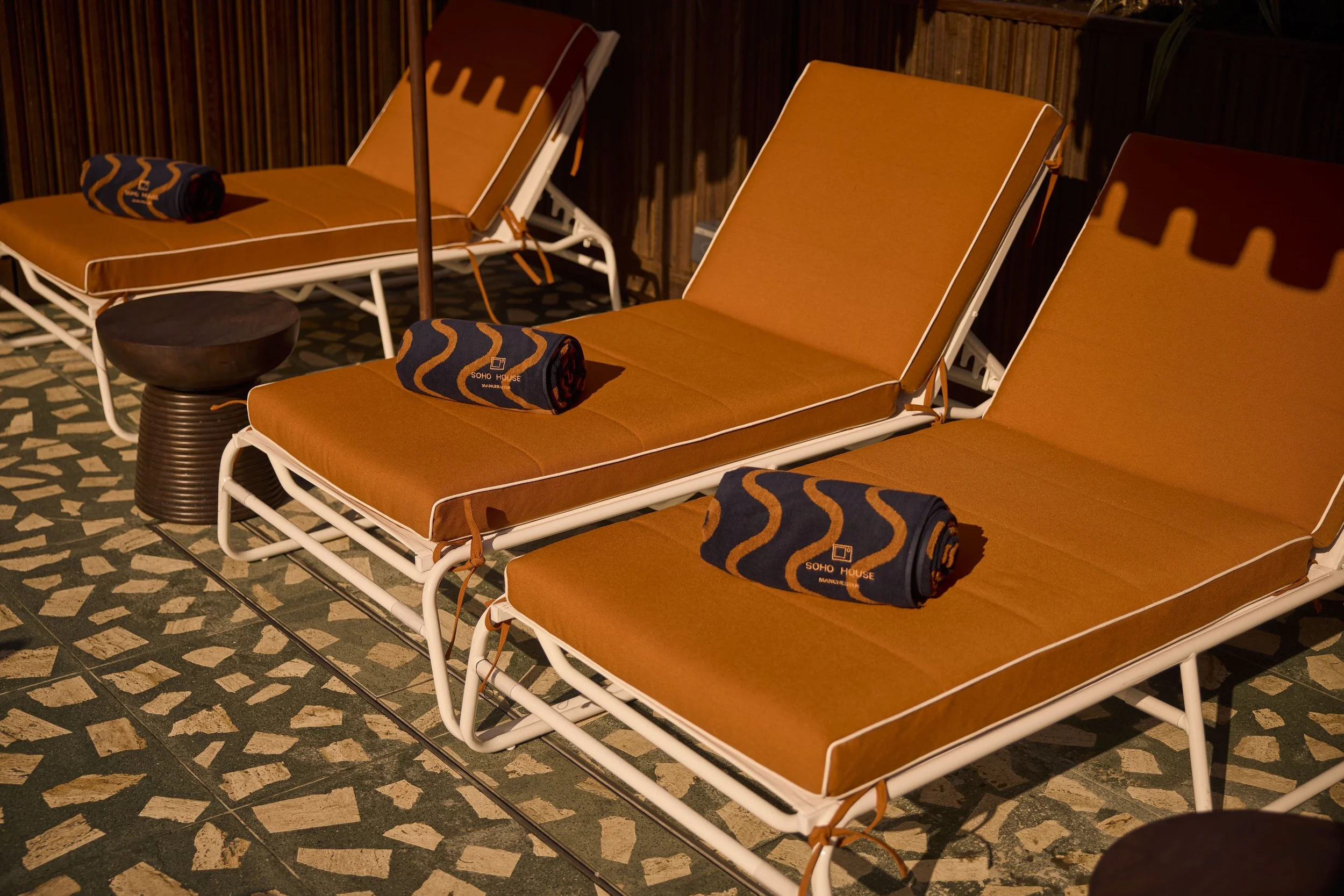
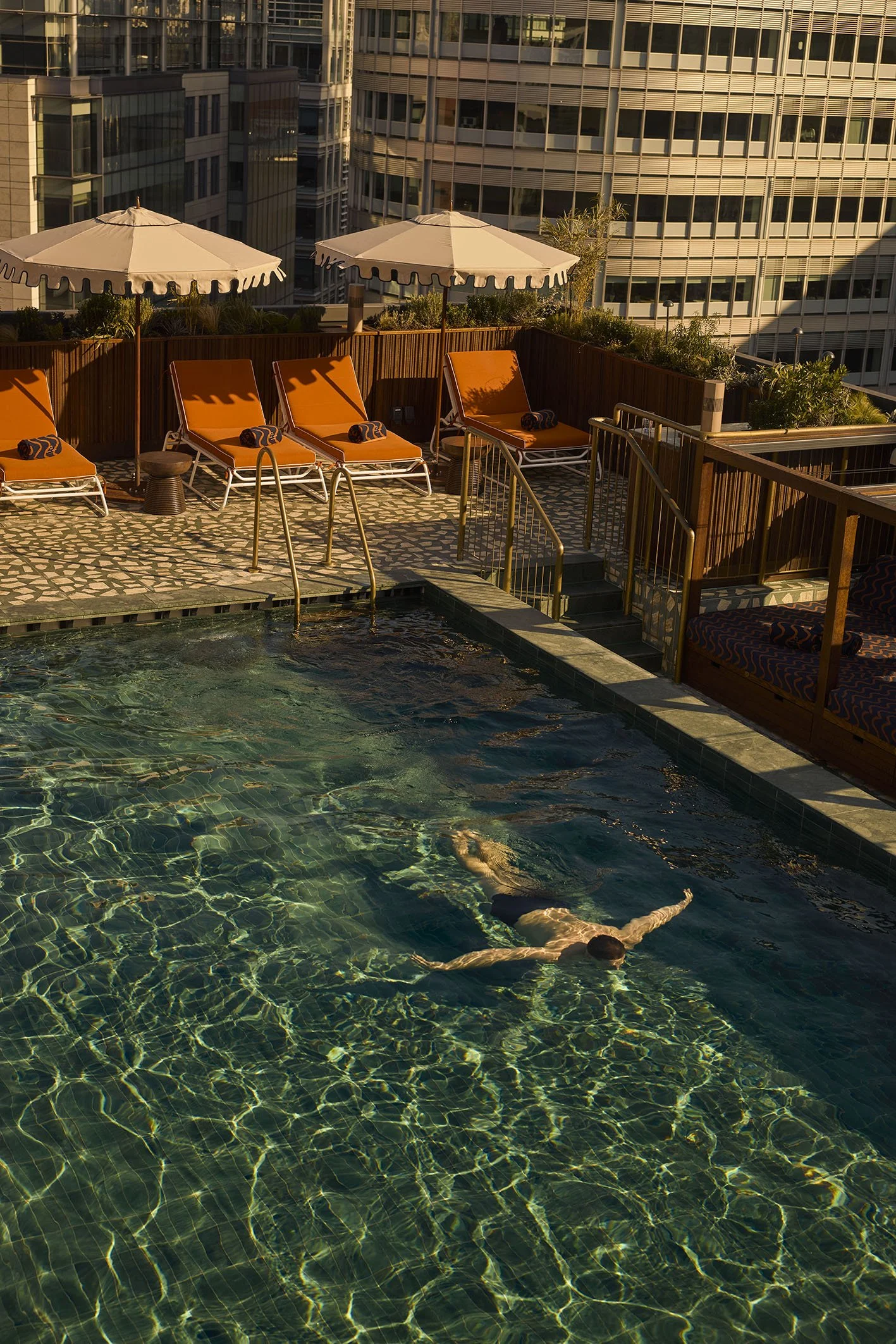
Outside, the Pool Lounge becomes an entirely different chapter. The heated rooftop pool stretches across the terrace, framed by glass that looks out toward Manchester’s creative district. Daybeds with fabric canopies echo the House’s bespoke orange and navy towel design, establishing a visual identity that feels both playful and controlled. An outdoor bar clad in tile and marble tucks neatly into the layout, bordered by planters that soften the skyline and create a sense of enclosure within openness.
Elsewhere within the House, design becomes deeply purposeful. On the first floor, Soho Health Club spans the entire level, with curated equipment, reformer Pilates studios, sauna and steam rooms, and a smoothie bar that feels considered rather than ancillary. Wellness here is not hidden, nor overly branded. It belongs naturally within the wider choreography of the building.
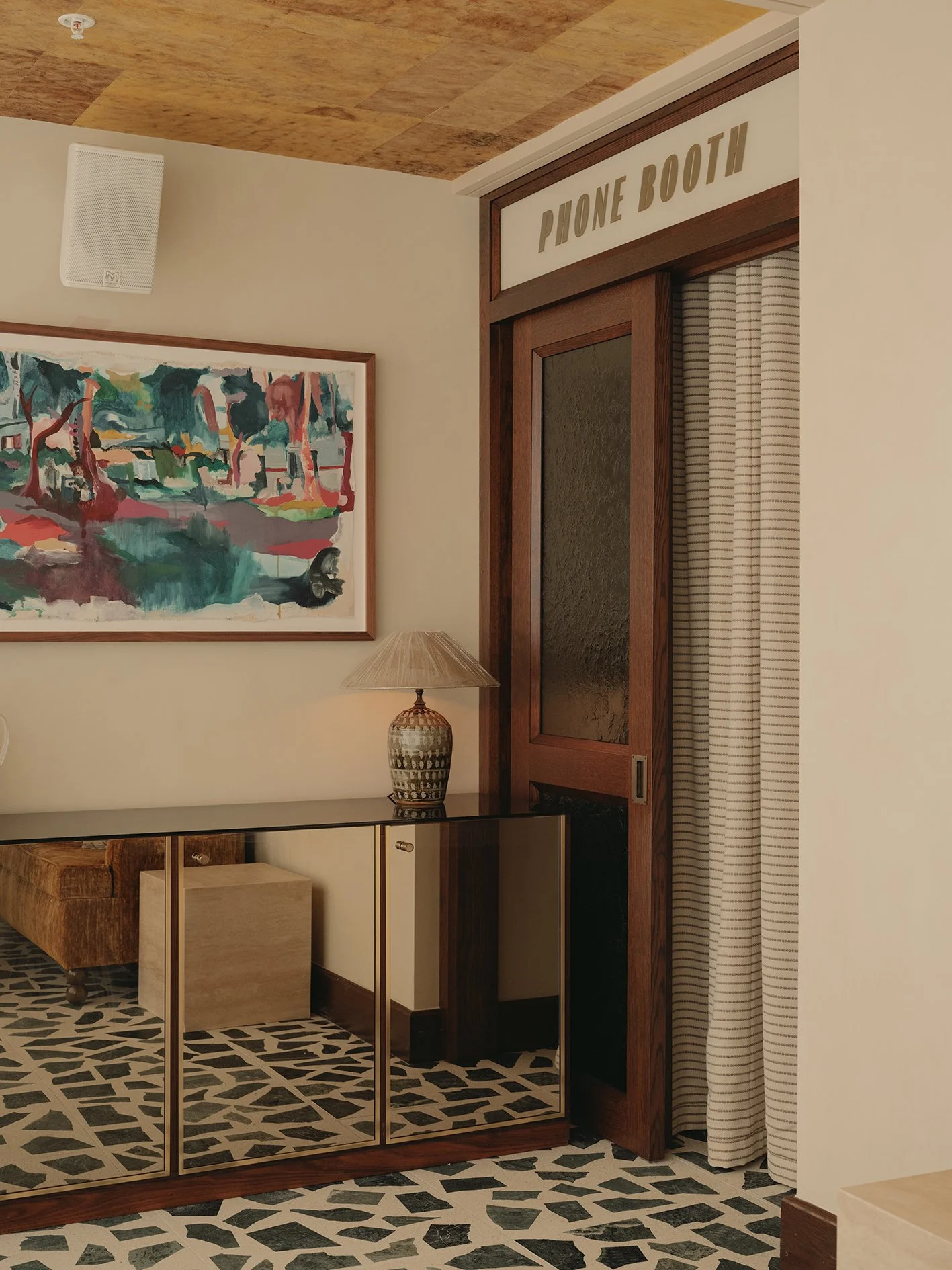
Yet perhaps the most defining layer of Soho House Manchester lies not in furniture or finishes, but on its walls. The permanent art collection features over 100 works by more than 50 artists, every one connected to the North West through birth, study or practice. This is not a symbolic gesture. It is a curatorial position that anchors the House firmly within its city.
Reception introduces works by artists such as Mary Ramsden, Louise Giovanelli and Sonia Boyce, allowing contemporary art to meet members before anything else does. Throughout corridors, lounges and dining spaces, the collection unfolds gradually rather than theatrically. There is humour in the text‑based works of Corbin Shaw, Jim Brooks and Chester Tenneson, reflecting a distinctly Northern sensibility. Other pieces sit more quietly, allowing discovery rather than declaration.
Photography: Edvinas Bruzas
The most powerful moment arrives on the ninth floor, in the Orange Room. Here, Ryan Gander’s site‑specific commission takes over an entire outward‑facing window. Hand‑painted to read as a mirrored Rorschach inkblot, the text, ‘Let the world take a turn Dad,’ is legible from inside and out. It equalises public and private, city and interior, day and night. As the skyline glows beyond the glass, the phrase becomes less an artwork and more a shared reflection.
The Orange Room itself leans fully into its colour story. Burnt‑orange walls, carpet, curtains and banquettes are punctuated by low‑level lighting, creating a cocoon for late‑night listening and intimate performances. A rounded timber DJ booth with vinyl shelving anchors one end of the room, reinforcing the idea that sound, culture and community are as vital here as design.
Photography: Edvinas Bruzas
Elsewhere, the Studio on the seventh floor offers flexibility through material intelligence rather than empty neutrality. Reclaimed timber floors, Murano glass lights and a concealed stainless‑steel and marble bar allow the space to shift between talks, celebrations and exhibitions without ever feeling unfinished.
What makes Soho House Manchester resonate is not that it is large, nor that it is polished. It is that restraint is used strategically. Colour is confident but never careless. Pattern is expressive but controlled. Art is integrated rather than imposed. The House understands that Manchester does not need exaggeration. It needs acknowledgement.
This is a building that honours its broadcast past while creating space for contemporary creativity to gather, work and exhale. Soho House Manchester is not attempting to redefine the city. It is listening to it, translating its rhythms into texture, light and experience. And in doing so, it writes a new chapter that feels distinctly, quietly Northern.
More Stories
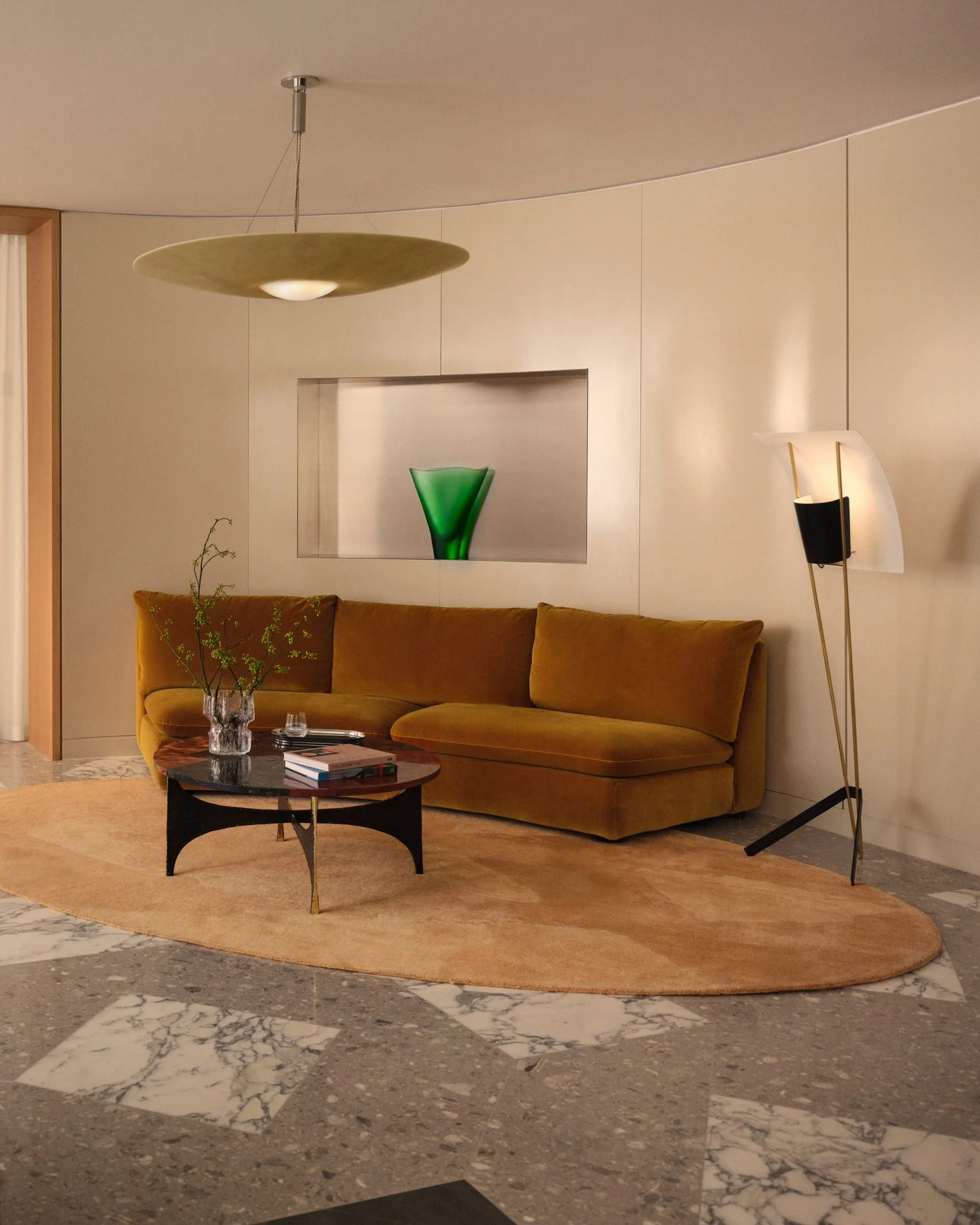
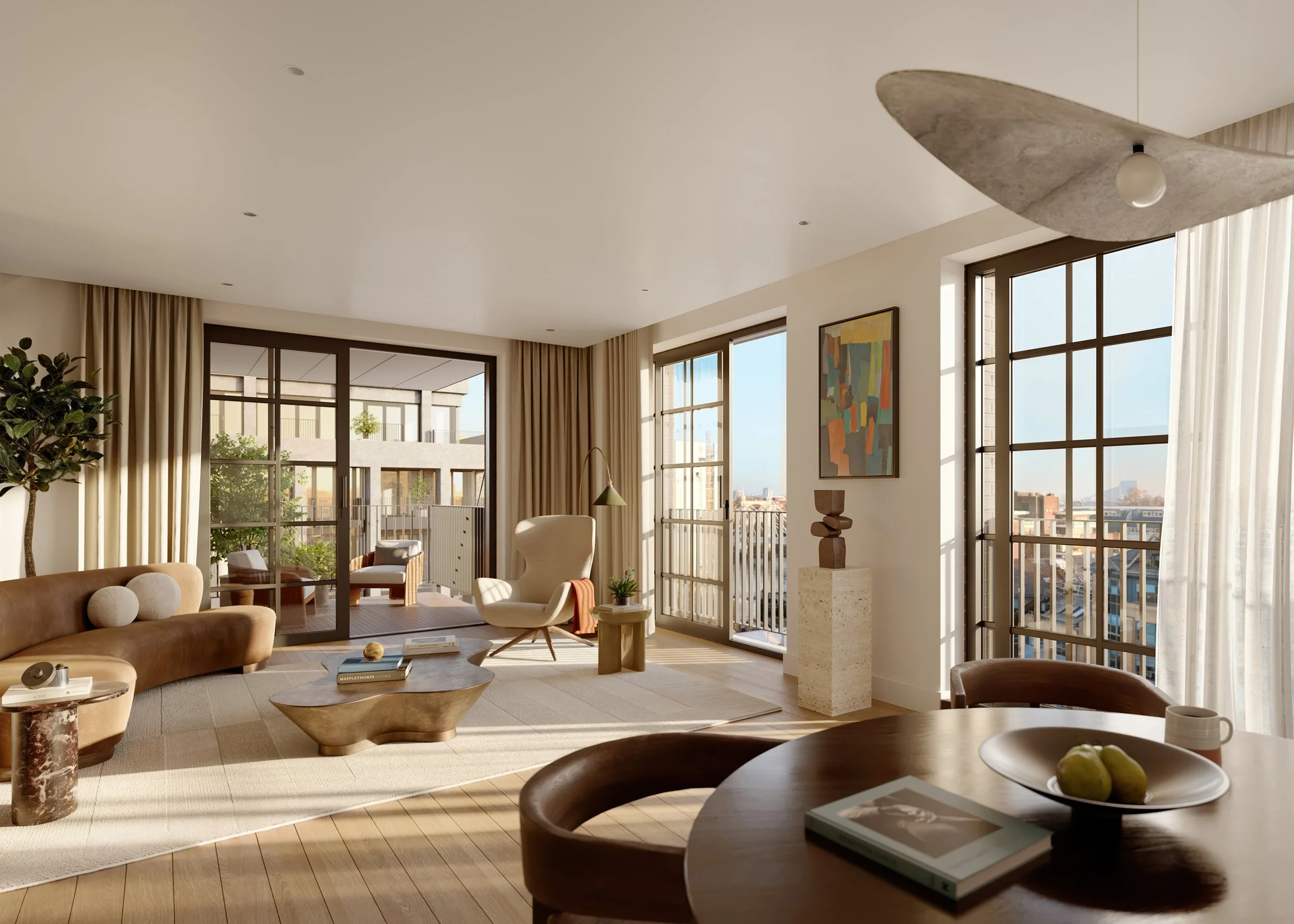
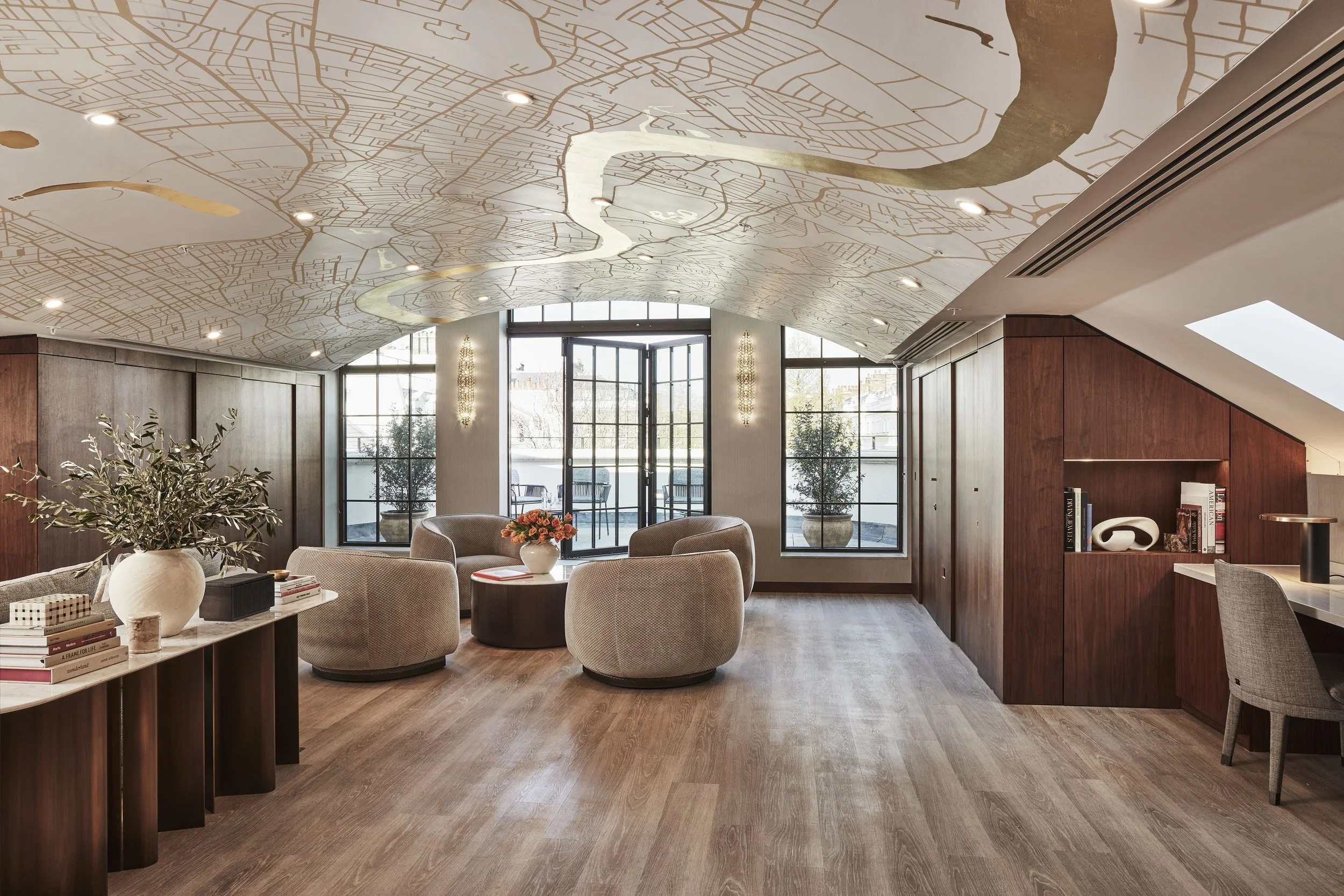


A considered, design-led residence at Centre Point, where bold colour, layered materials and architectural clarity come together to create an interior that is expressive, refined and quietly powerful.