
Pollini at Ladbroke Hall, Vincenzo De Cotiis Architects
A contemporary design narrative shaped by art, archiecture and atmosphere.
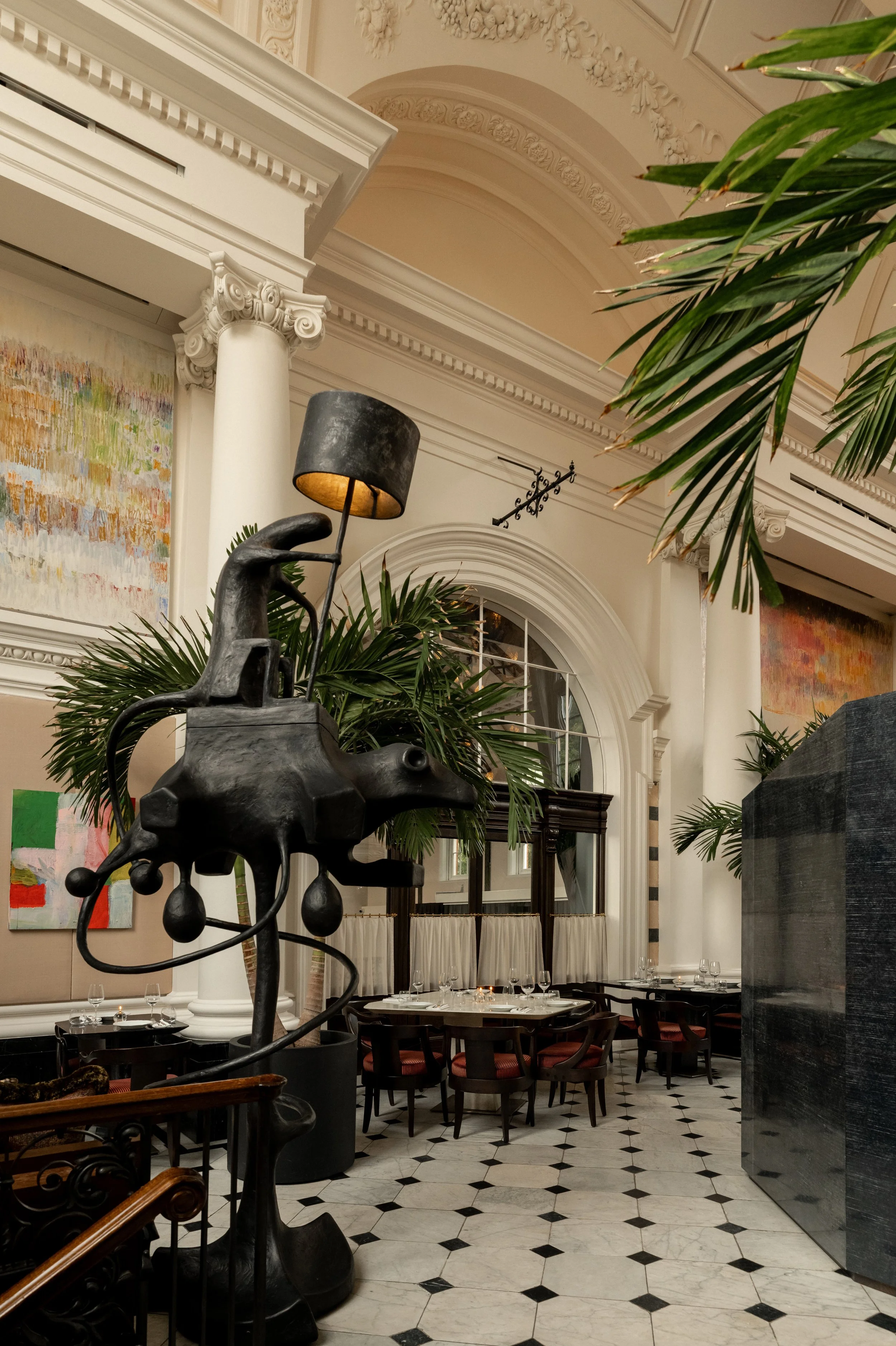
There are spaces in London that feel instantly transportive, and Pollini at Ladbroke Hall is one of them. Set within the Grade II–listed former Sunbeam Talbot headquarters, the restaurant occupies the building’s grand lobby, a space originally shaped by early twentieth‑century Beaux‑Arts architecture that still carries the weight and poetry of its past. Under the vision of Vincenzo De Cotiis Architects, this historic envelope has been reimagined with a quiet boldness, allowing its classical grandeur to exist in conversation with contemporary sculptural forms and refined material interventions.

From the moment you step inside, the vast arched ceilings, decorative columns and towering windows establish a sense of openness and ceremony. Rather than dilute the historic character, De Cotiis intentionally leans into it, using reflective surfaces, mirror panelling and glossy finishes to echo and elongate the architecture’s proportions. Reclaimed fibreglass, polished stone and panes of smoked antique glass introduce a palette of textures that feel tactile and beautifully disciplined. The monochrome colour story, deep blacks set against crisp whites, creates an atmosphere that is striking without overwhelming the building’s natural luminosity. Each surface appears considered, as though the space has been tuned rather than redesigned.

A Sculptural Light That Commands the Room
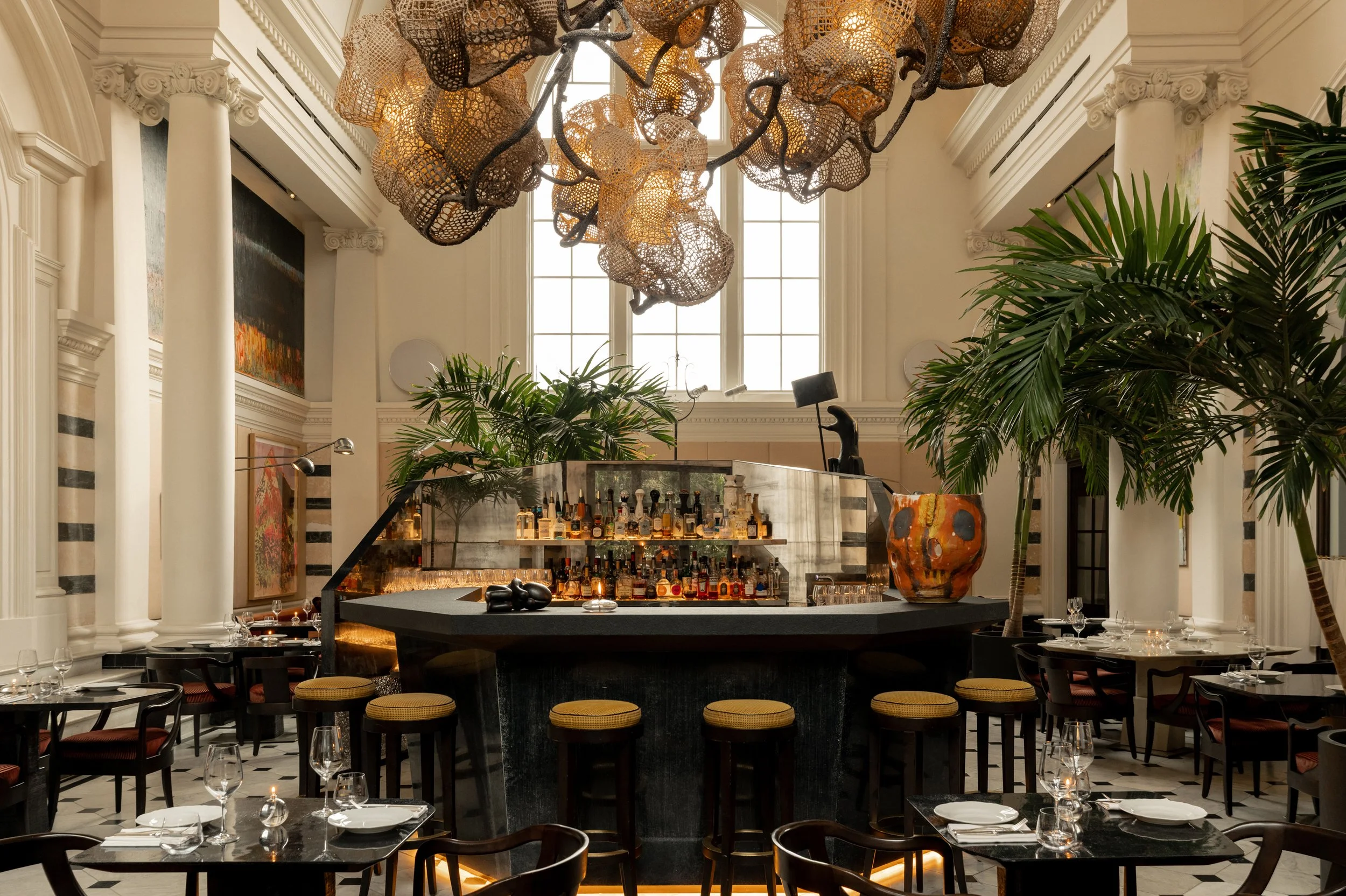
At the emotional centre of Pollini is the extraordinary chandelier by Nacho Carbonell, a sculptural light installation that has become the restaurant’s defining visual signature. Hanging like an illuminated organism suspended in slow motion, the chandelier’s mesh forms and branching limbs descend from above in a composition that feels both industrial and organic. Ladbroke Hall itself describes dining “under the giant cocoon chandelier,” a testament to the dramatic, almost theatrical role the piece plays in shaping the restaurant’s identity. As evening falls, the sculpture casts soft, cinematic shadows across the space, lending intimacy to the otherwise soaring volume. It is not merely a light but a living presence, one that anchors the room with expressive, sculptural intent.

Where Dining and the Gallery Become One
Pollini’s design identity is deeply intertwined with its home. Carpenters Workshop Gallery, founded by Loïc Le Gaillard and Julien Lombrail, is the creative force behind the transformation of Ladbroke Hall into a multidisciplinary cultural destination. The restaurant is not simply located within the gallery’s flagship building; it embodies the gallery’s curatorial ethos. Sculptural works by gallery artists, including pieces by Christopher Le Brun PPRA alongside Carbonell’s monumental installation, are integrated into the space with the same level of intention found in Carpenters Workshop’s exhibitions. This creates an environment where dining naturally blends with artistic immersion, reinforcing Pollini’s role as an extension of the gallery experience rather than a separate entity.
Ladbroke Hall, with its dynamic programme of exhibitions, performances and creative events, continually charges the restaurant with fresh energy. Guests may arrive from a viewing, a talk or a musical performance, and this cultural momentum carries into the dining space. The boundary between restaurant and gallery dissolves, allowing Pollini to feel like a living part of the building’s artistic pulse.


The Bar as a Sculptural Centrepiece
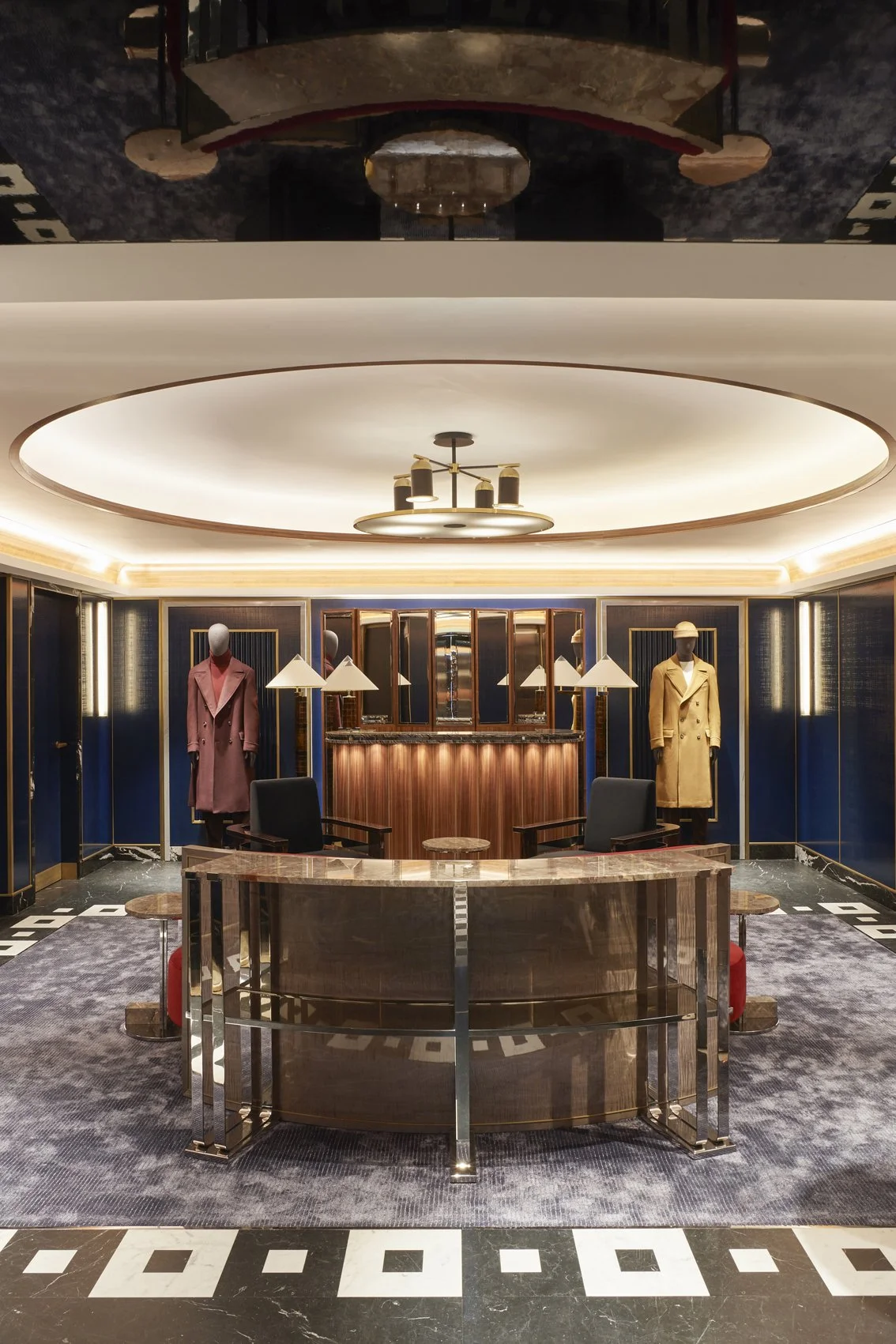
Within the vast openness of the room, the central bar becomes a grounding presence. Designed by De Cotiis as a dark and sculptural contrast to the building’s pale architectural envelope, it is formed from black granite and antique smoked glass and partially cocooned by a curved fibreglass wall. The bar’s density and shadowy palette provide a dramatic counterpoint to the expansive white walls and vaulted ceiling, reinforcing the idea that Pollini is a space built on contrasts, light and dark, history and modernity, softness and severity. The bar does not simply serve a functional purpose; it acts as a sculptural punctuation mark, anchoring the space with gravity and definition.
A Material Story of Texture, Light and Time
Materiality is at the heart of Pollini’s sensory experience. True to De Cotiis’ architectural language, surfaces feel beautifully imperfect: polished but expressive, refined yet textured. The hand‑patinated fibreglass tabletops shimmer gently beneath shifting light, while glossy panels reflect artworks, guests and architectural details back into the space. These reflective surfaces create a sense of movement, bringing the room to life as daylight transitions into evening ambience. The interplay between materials and light creates a space that feels deeply atmospheric and responsive; alive in a way that mirrors its place within an active cultural hub.


All Photography: Stevie Campbell
A Living Creative Environment
More than a heritage building, Ladbroke Hall is a cultural venue powered by continuous artistic activity. Its programme ranges from jazz evenings and exhibition previews to culinary collaborations and creative talks, and Pollini sits at the centre of this multilayered narrative. Dining here becomes a cultural experience of its own, shaped by the building’s changing exhibitions, the surrounding artworks, the architectural drama, and the space's emotional energy. Guests step into a world where creativity is not simply displayed but lived, and Pollini becomes the place where this creative language is fully felt.
A Space That Lives in the Memory
As a design destination, Pollini at Ladbroke Hall creates a space that is both visually arresting and emotionally resonant. It is a rare example of a restaurant where architectural heritage, contemporary design and curatorial intention exist in complete harmony. The atmosphere is immersive, the materials expressive, and the integration of art deeply considered. Pollini is not merely a restaurant; it is a living narrative of craft, culture and creativity; one that continues to evolve with each exhibition, each collaboration and each thoughtfully curated detail.
More Stories
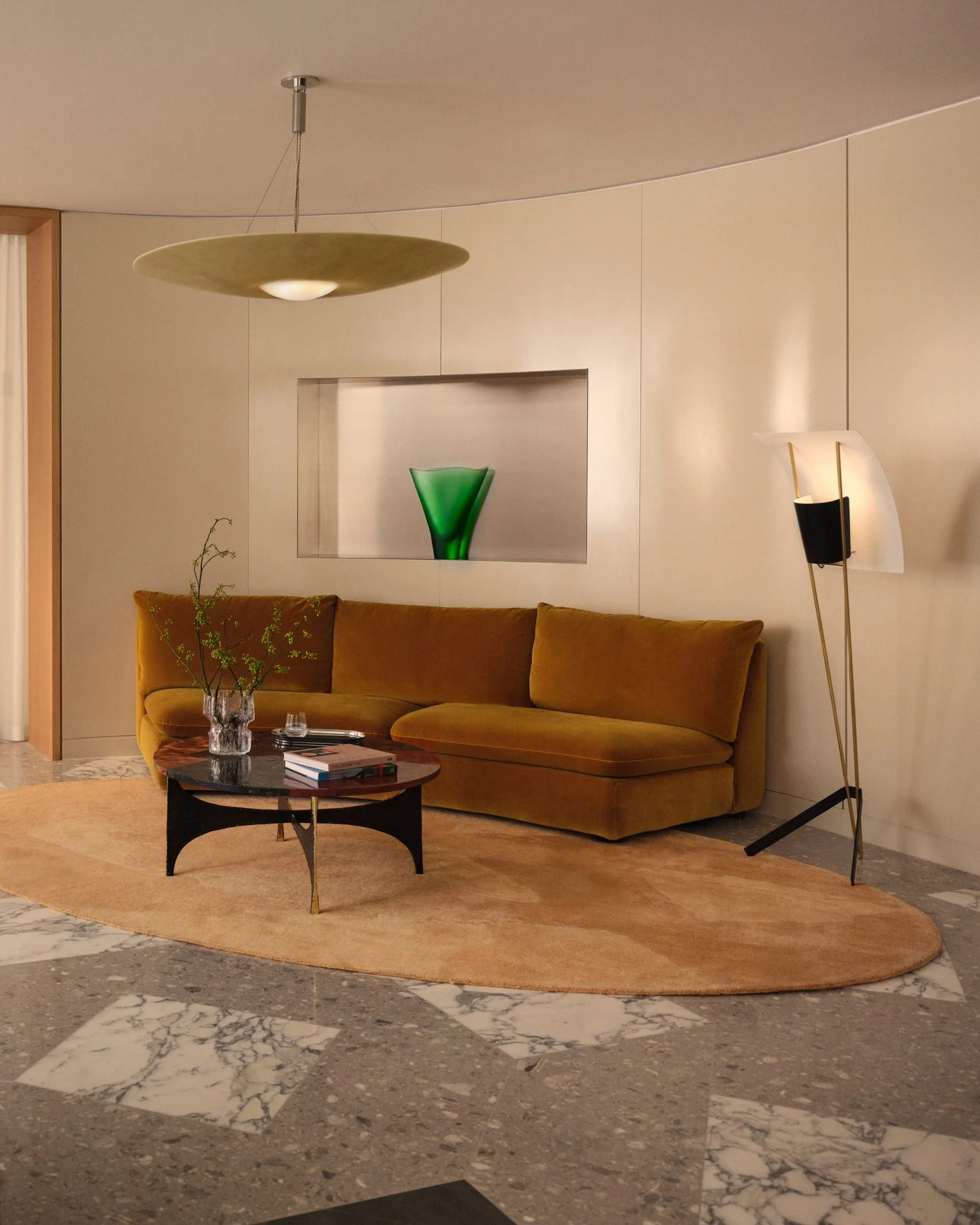


A considered, design-led residence at Centre Point, where bold colour, layered materials and architectural clarity come together to create an interior that is expressive, refined and quietly powerful.