
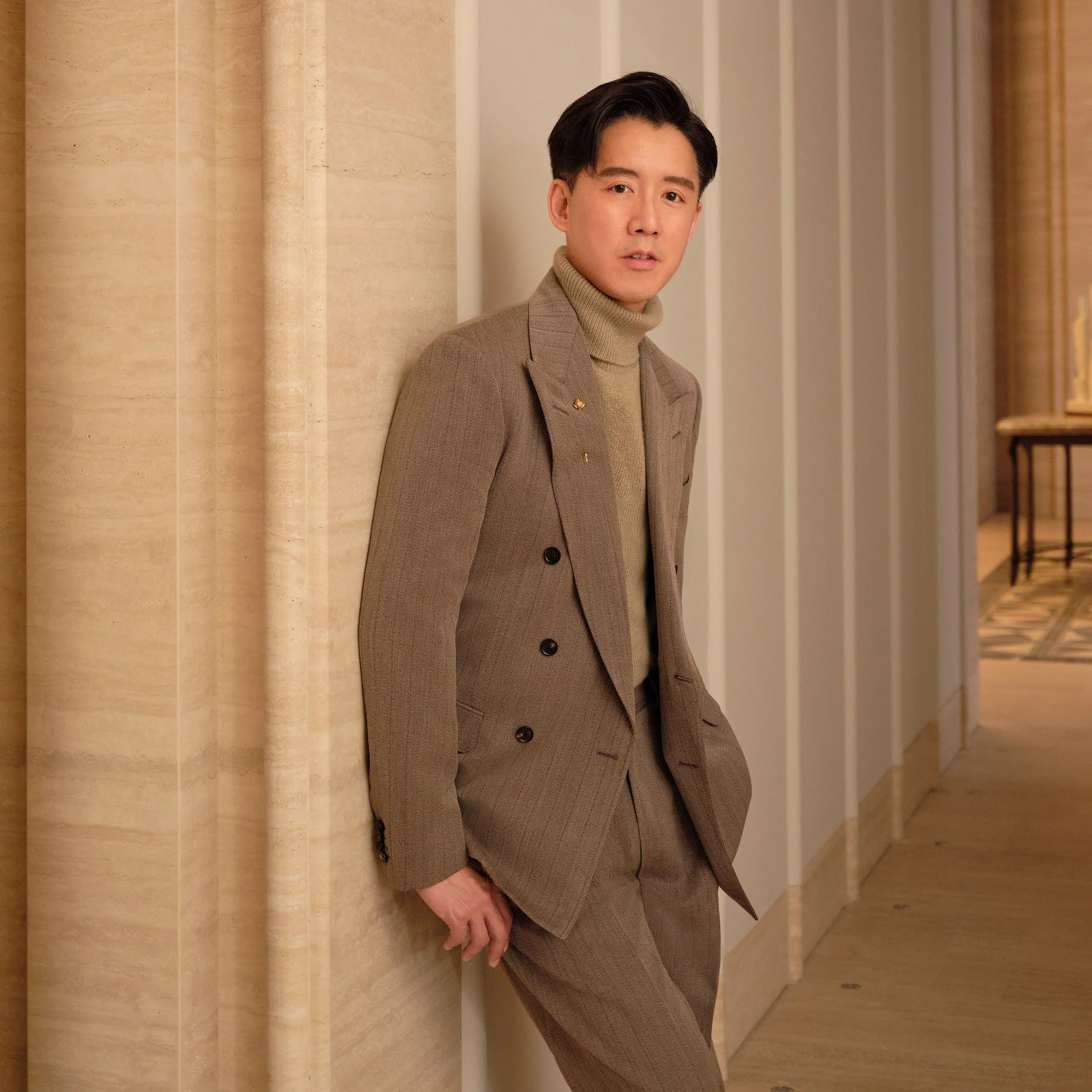
An Interview With… André Fu
Renowned for his quietly powerful approach to interiors, André Fu has built an international reputation for creating spaces that feel as emotionally resonant as they are visually refined. Often described as a master of “relaxed luxury,” Fu’s work bridges Eastern and Western sensibilities with a sensitivity rooted in atmosphere, materiality, and human experience rather than overt opulence.
Raised between Hong Kong and the UK and educated at the University of Cambridge, Fu’s cross-cultural upbringing continues to shape his narrative-led approach to design. From the seminal Upper House in Hong Kong to an expansive portfolio spanning hotels, restaurants, galleries, furniture, and even fragrance, his projects are unified by a deep respect for craftsmanship, restraint, and sensory engagement. Each space unfolds as a carefully considered journey, prioritising emotion, calm, and longevity over fleeting trends.
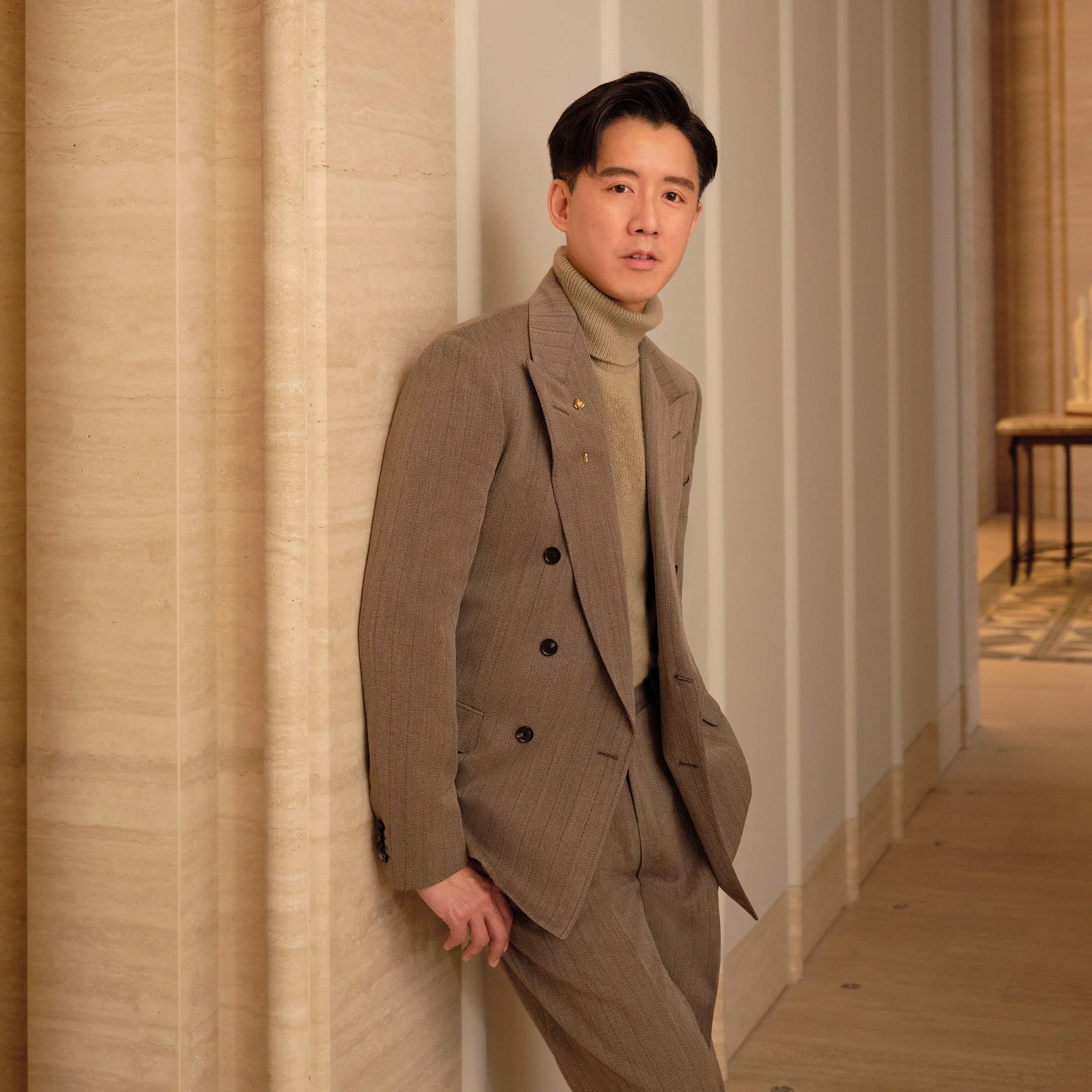
In this interview with Martyn White UK, André Fu reflects on his evolving definition of luxury, the formative projects that shaped his creative trajectory, and the rituals that ground his design process. He also shares insights into collaboration, timelessness, and why the future of interior design lies in spaces that nurture wellbeing, connection, and quiet intentionality.
Your design philosophy is often described as ‘relaxed luxury’ that bridges Eastern and Western sensibilities. How do you define luxury in a way that feels relevant to today’s global design landscape?
Luxury today is no longer defined by opulence, but by a sense of sanctuary. It’s about creating environments that feel personal, comfortable, and human-centred. For me, ‘relaxed luxury’ is rooted in atmosphere and emotion. In a global context, luxury now means cultural authenticity, sustainability, and spaces that speak to both the mind and the senses.
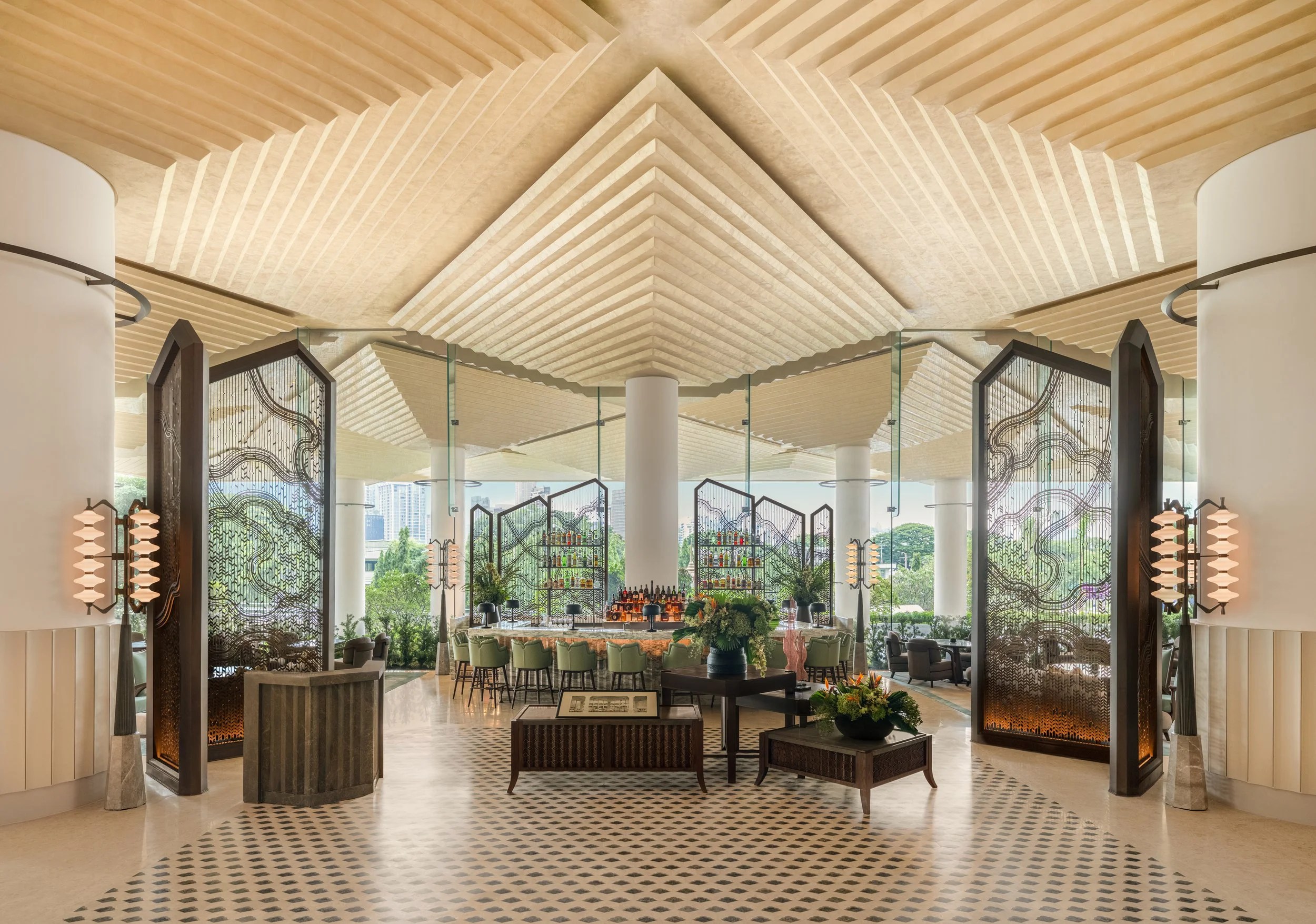
Dusit Thani Bangkok - André Fu Studio
Your early years were split between Hong Kong and the UK, and you studied architecture at Cambridge. How has this cross-cultural upbringing influenced the way you approach space and narrative in your designs?
Growing up between Hong Kong and the UK gave me an intuitive understanding of contrast; the dynamism of Asia and the layered history of Europe. It taught me to observe spaces as narratives, where East is not just an aesthetic but a philosophy of subtlety, restraint, and harmony. Cambridge instilled in me a respect for architectural rigour, but it was the emotional resonance of Hong Kong’s energy, its density and poetry, that taught me how to weave intimacy into structure.

The Emory, London - André Fu Studio
The Upper House in Hong Kong is frequently cited as one of your most formative projects. Looking back now, how did that experience shape your future creative trajectory?
The Upper House was less a project than a journey into what design could mean. It was where I first truly explored how a hotel could feel like a personal residence: intimate, tranquil, yet deeply engaging. That experience solidified my belief in designing from the inside out, focusing on how a guest moves through space, touches materials, and feels light. It set the tone for my pursuit of holistic environments that embrace both gravitas and quietude
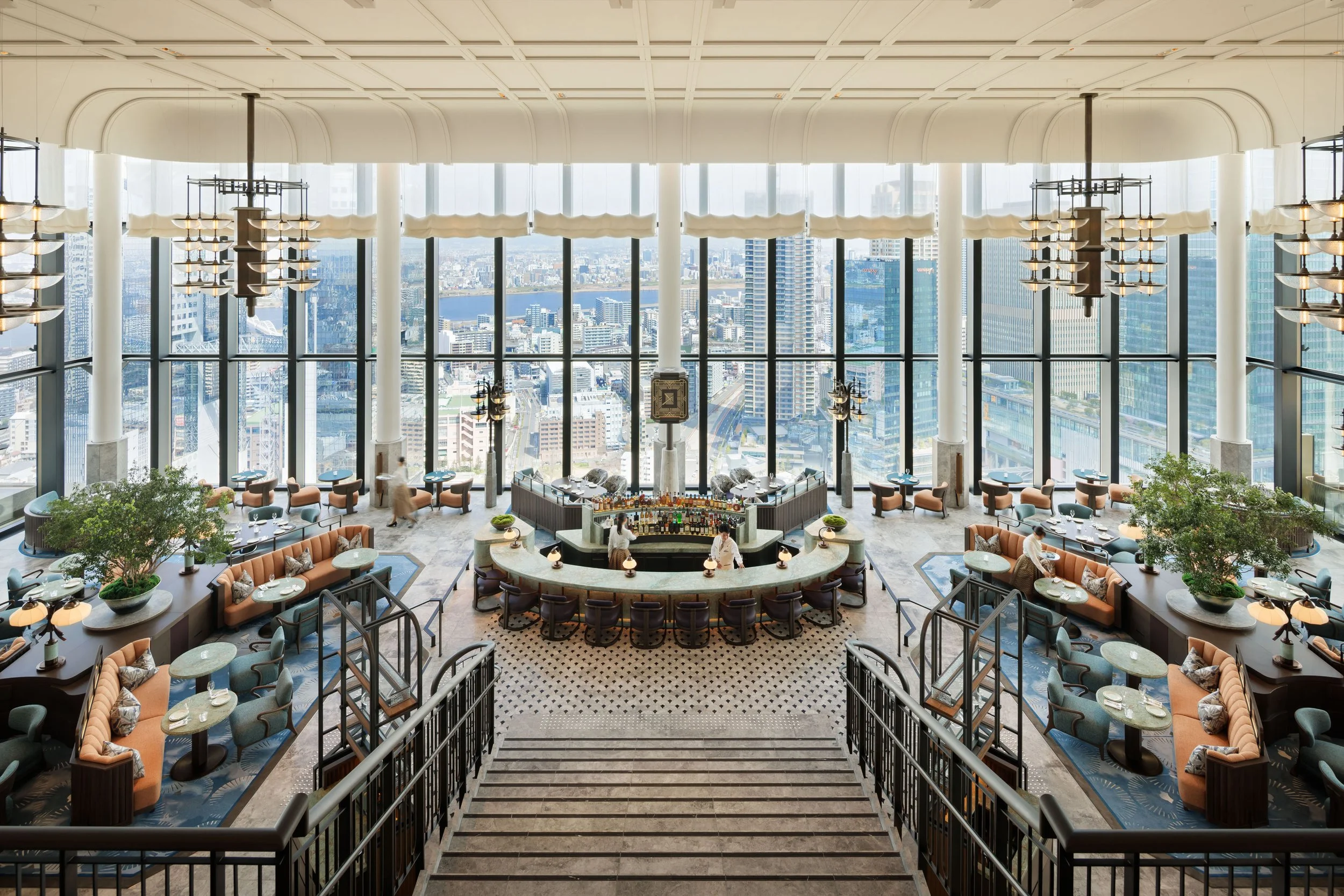
The Waldorf Astoria, Osaka - André Fu Studio
Can you walk us through your creative process from brief to final design? Are there rituals or moments, like sketching, that you always return to?
My creative process always begins with the senses: a mood, a scent, a fragment of memory. I still start by sketching by hand; there’s an honesty in the gesture that digital tools can’t replicate. From there, it’s about layering: materials, light, scale, and narrative. I often return to art and photography for visual language, and I enjoy spending time in the space itself, where possible, feeling its energy and context before any detailed design begins.
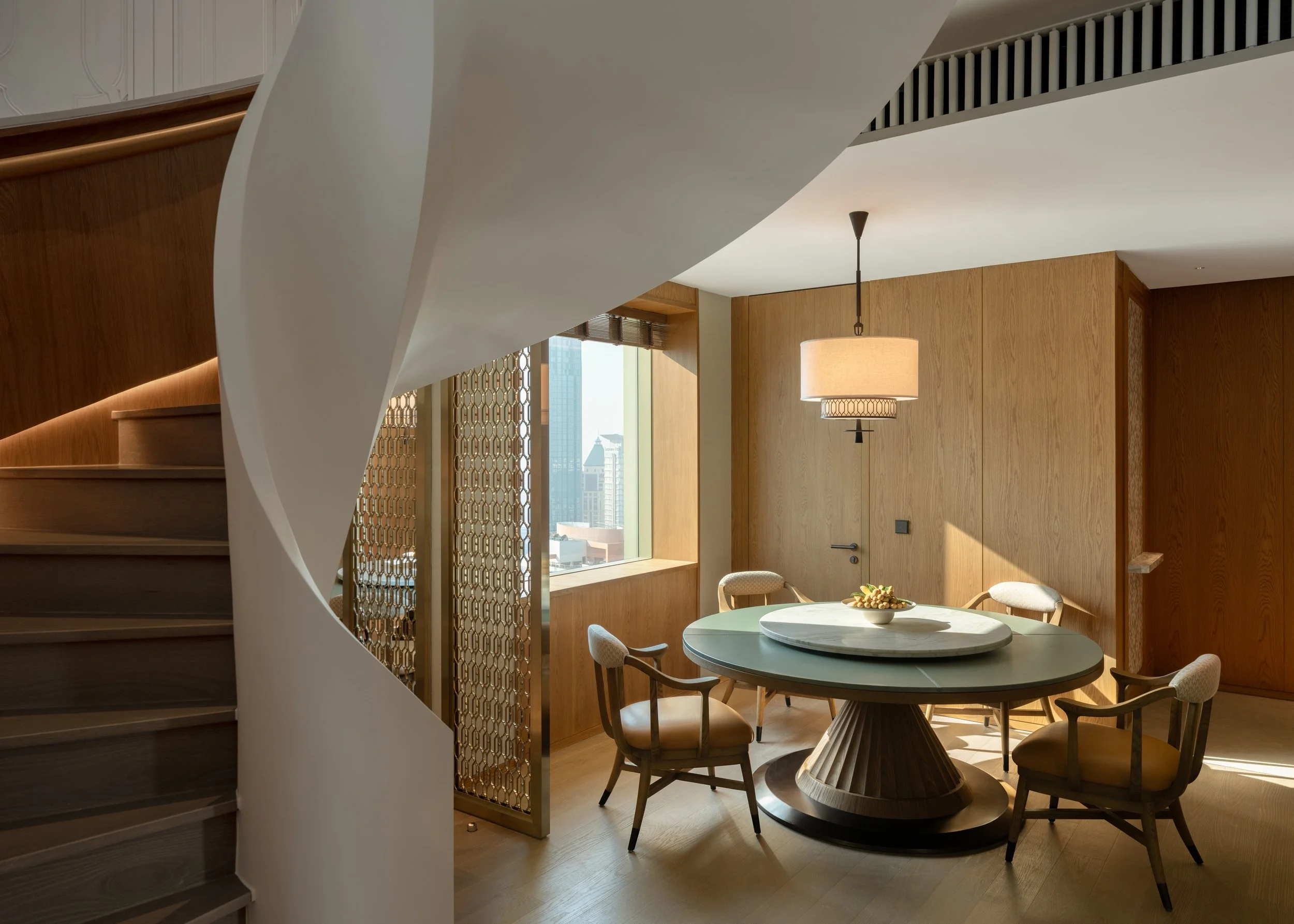
Dusit Thani Bangkok - André Fu Studio
In an era where social media often prioritises ‘instagrammable’ spaces, how do you balance visual allure with emotional depth and experiential design?
While visual impact has its place, I design for how a space feels, not just how it looks. An ‘instagrammable’ moment should emerge from genuine experience; the curve of a staircase, the fall of a drape, the warmth of wood under hand. If a space has emotional depth, it will resonate in images and, more importantly, stay with one’s memory.

The Emory, London - André Fu Studio
Your work spans hotels, restaurants, galleries, furniture and even fragrances. How do you adapt your design language across such diverse typologies while maintaining coherence?
Whether it’s a hotel lobby or a perfume bottle, my approach is always about essence: capturing a certain atmosphere or sensibility. The design language may adapt in form, but the core values remain: harmony, material honesty, and sensory engagement. It’s like telling a unique story in different dialects

Craftsmanship and materiality play a huge role in your projects. How do you collaborate with artisans or local makers to elevate a space beyond surface aesthetics?
Craftsmanship is where soul enters a space. I work closely with artisans, ceramicists, weavers, and woodworkers to embed a sense of human touch. In Kyoto, for example, I collaborated with local masters on woven kimono textiles and landscape design. It’s about honouring tradition while allowing for contemporary expression, as every component in the design quietly contributes to a holistic experience.
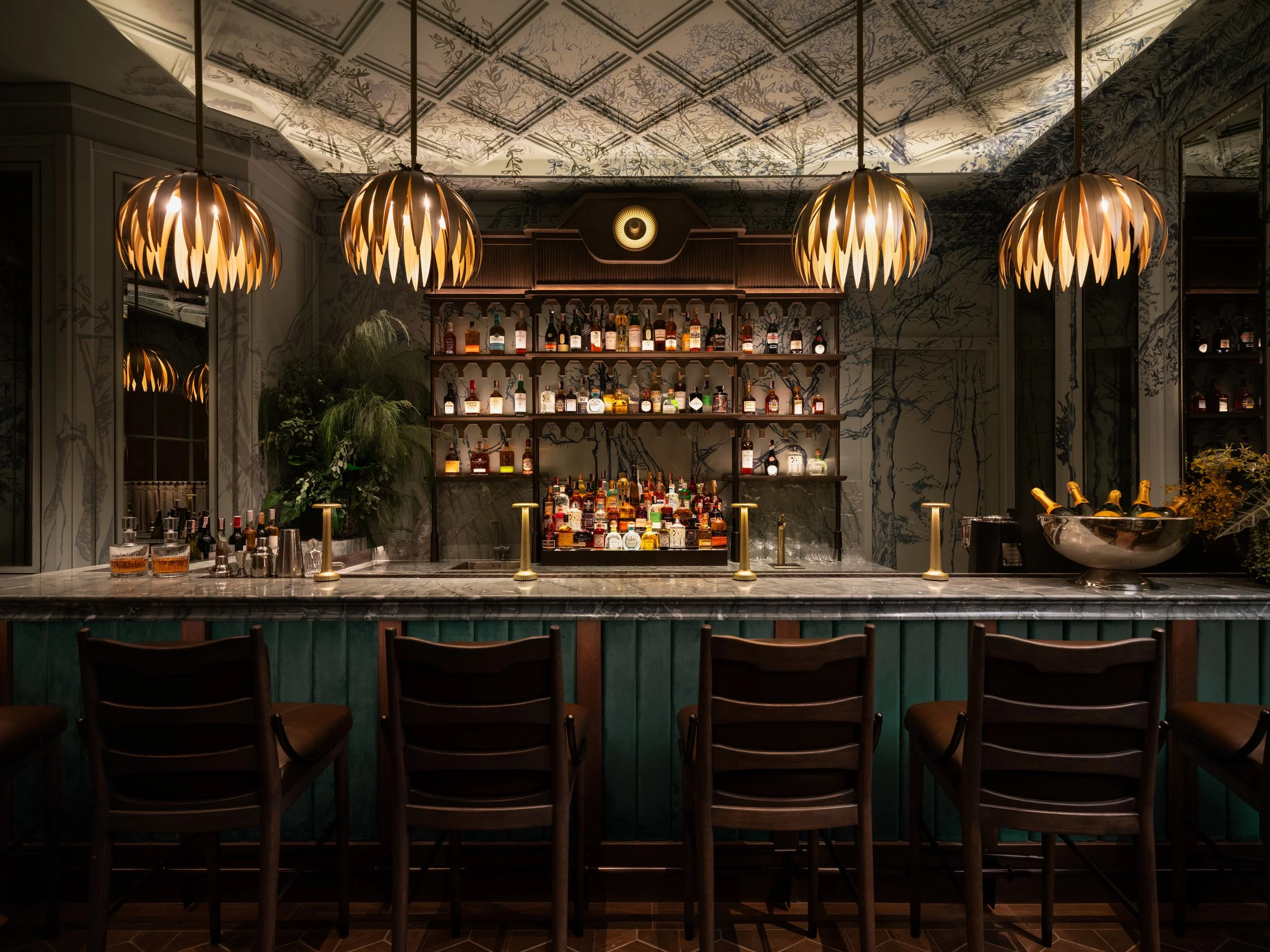
Dusit Thani Bangkok - André Fu Studio
Many of your projects take several years to realise; how do you stay curious and creatively inspired throughout such long design journeys?
Long projects are like living organisms: they evolve, and so must I. I stay inspired by keeping my eyes open: travel, exhibitions, literature, and even quiet moments in my countryside weekend home. I also revisit past sketches and concepts; sometimes an idea that did not fit one project becomes the seed for another. Curiosity is a practice, not a coincidence.
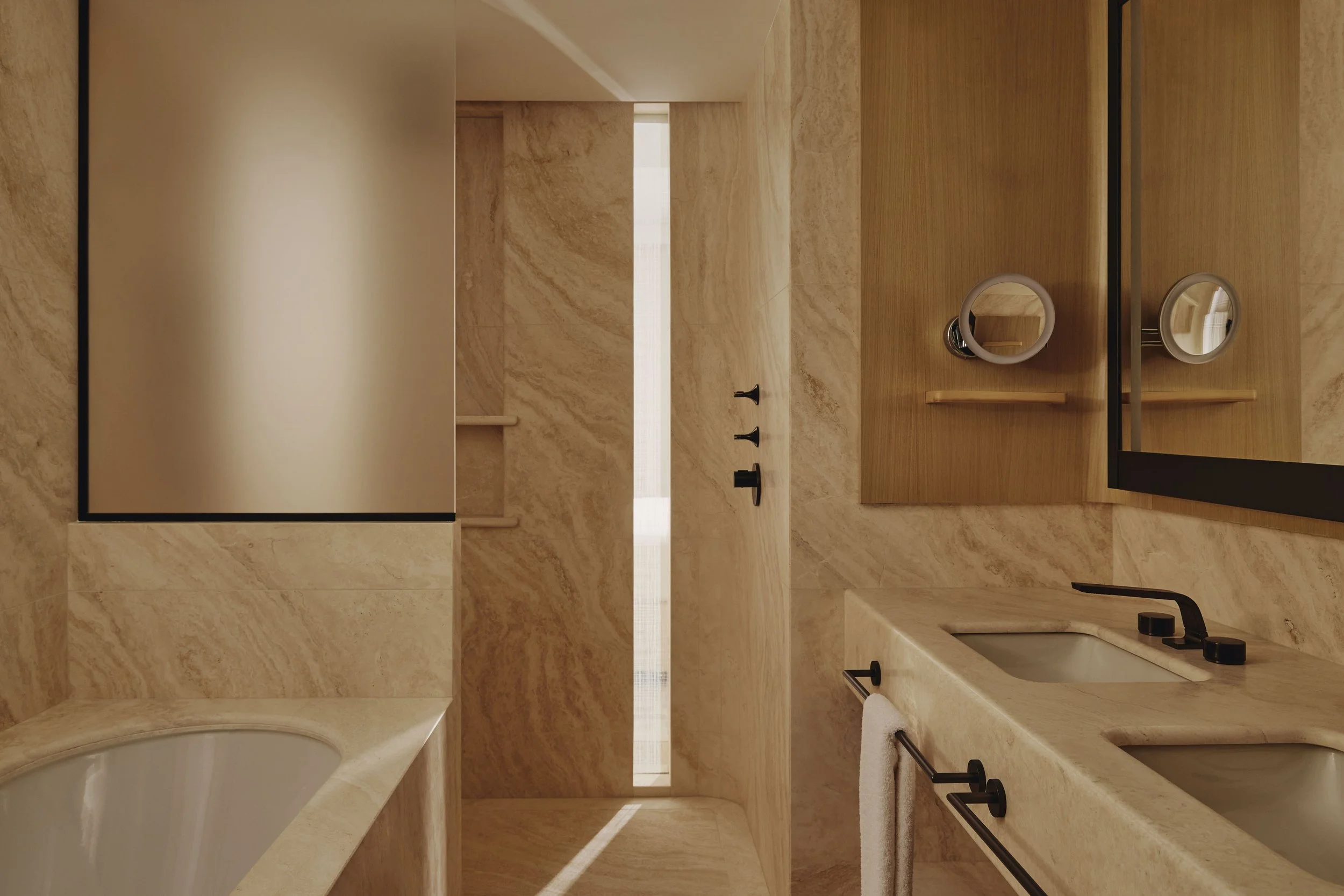
The Emory, London - André Fu Studio
As someone who balances architectural rigour with poetic storytelling, what are the key elements that make a space feel timeless rather than just contemporary?
Timelessness comes from balancing emotion with order. It’s about proportion, natural light, tactile materials, and a sense of ease. I avoid trends; instead, I tend to look to enduring principles: the way a room breathes, how surfaces age, how space can feel both grounded and uplifting. A timeless space is one that feels complete, somewhat imperfect, yet leaves room for life to unfold within it.
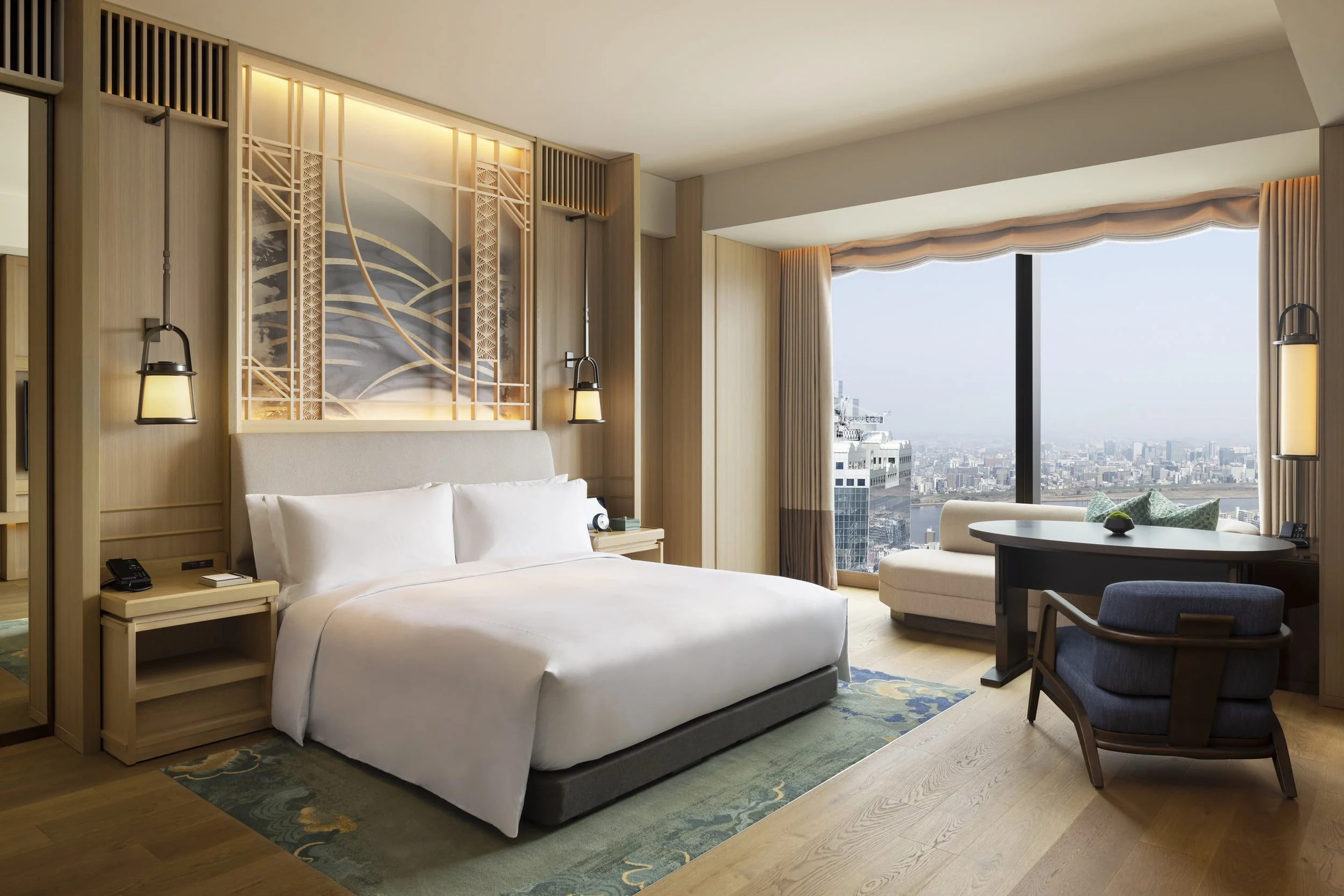
The Waldorf Astoria, Osaka - André Fu Studio
Looking ahead, what do you see as the next big opportunity or frontier in interior design, especially in how we live, work, and connect with our surroundings?
I see a growing desire for spaces that nurture wellbeing and connection, not just physically, but spiritually. The future lies in environments that are adaptable, sustainable, and meaningful. Technology will integrate seamlessly, but humanity will remain at the centre. We are moving toward a more conscious design language, where beauty and purpose, intimacy and community, coexist with quiet intentionality.
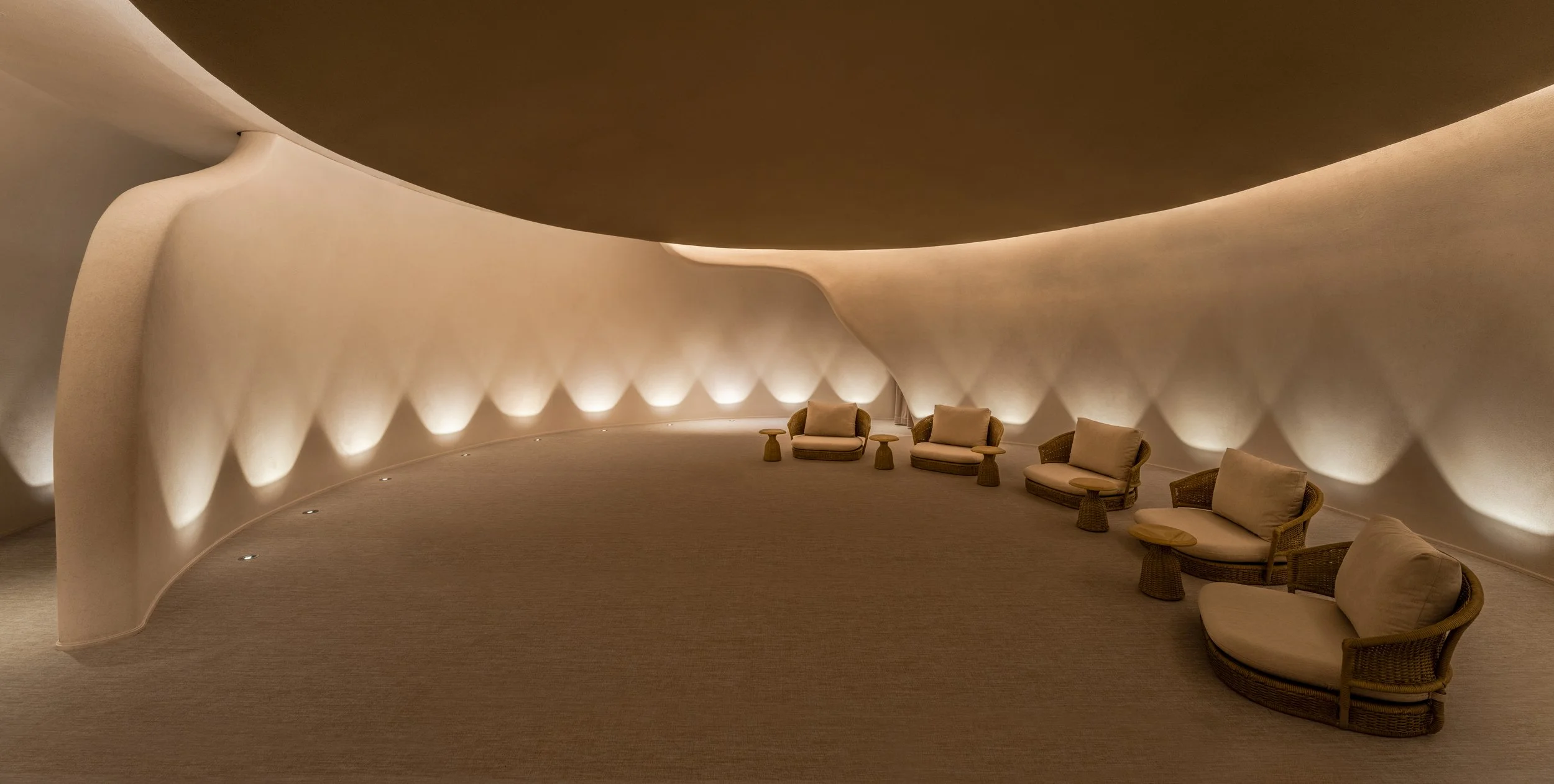
Dusit Thani Bangkok - André Fu Studio
It has been a genuine pleasure to sit down with André Fu, an interior designer whose work I have followed and admired throughout my entire career. Speaking with someone whose projects have so consistently shaped the global conversation around atmosphere, restraint, and emotional intelligence in design felt both inspiring and grounding. André Fu Studio’s work has long been a reference point for thoughtful, human-centred luxury, and it has been a privilege to explore the ideas behind it first-hand. Readers can also discover more of the studio’s work through two previously featured projects on Martyn White UK: the Kerry Hotel and The Cellar at Andaz Singapore, both of which can be explored further via the links.
More Interviews

We sit down with Giles Miller to explore his studio’s distinctive approach to design, materiality, and sculptural projects. From immersive installations to tactile surface designs, Giles shares the creative thinking that has made his work internationally influential.