
Mayfair, Curated: A Liveable Gallery of Contemporary Art and Collectable Design
Inside a poised apartment in London’s Mayfair, three women have staged a quietly radical idea of home. Nina Yashar of Nilufar Gallery, Shalini Misra of Genessia and Shalini Misra Ltd, and curator Mehves Ariburnu have transformed a once-neglected residence on South Audley Street into a liveable gallery, where architecture, art, and furniture converse with calm authority. This is Squat in London, the latest chapter in an evolving concept that presents design in situ and invites guests to experience how collectable pieces perform in daily life rather than on a plinth.
The apartment had not been lived in for decades. Today, it is a composed sequence of rooms that flow, entertain, and rest. Almost everything visitors see is available to acquire, from mid-century Italian seating to contemporary lighting and significant artworks. The result is a home that reads like an editorial: cultured, disciplined, and unexpectedly intimate.
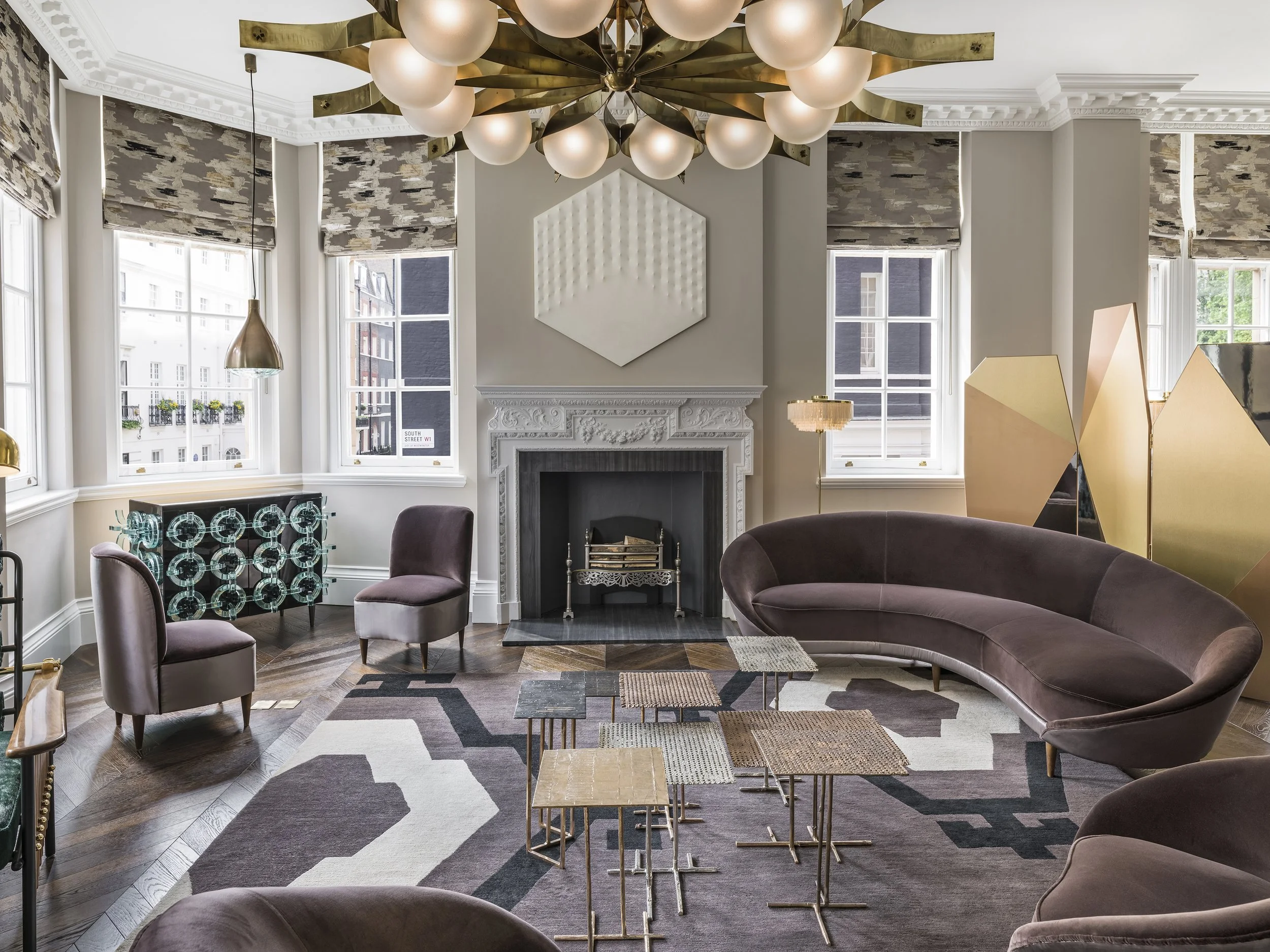

Architecture as Framework: Shalini Misra’s Quiet Interventions
Shalini Misra’s architectural reshaping began with proportion and rhythm. Entrances were widened, and door heights lifted to enhance a sense of volume. Rooms were delineated with chunky cornices and tall skirting boards that bring back gravitas, while a sophisticated palette of smoky greys and soft whites unifies the circulation and foregrounds the pieces.
Flooring becomes a leitmotif. A white marble floor with black banding nods to Gio Ponti and gives the entrance its ceremonial stride. Elsewhere, chevron and herringbone timber introduce movement and warmth. Throughout, systems are effortlessly integrated: air conditioning and audio are concealed behind finishes; bathroom technology is integrated with such finesse that function reads as craft.
Tactility is layered in the background: leather, linen, velvet, stone, and marble form a quiet material field, heightened by accents in bronze, gold, steel, and glass. The effect is less decorative and more architectural: a composed setting that gives the curated room room to breathe.
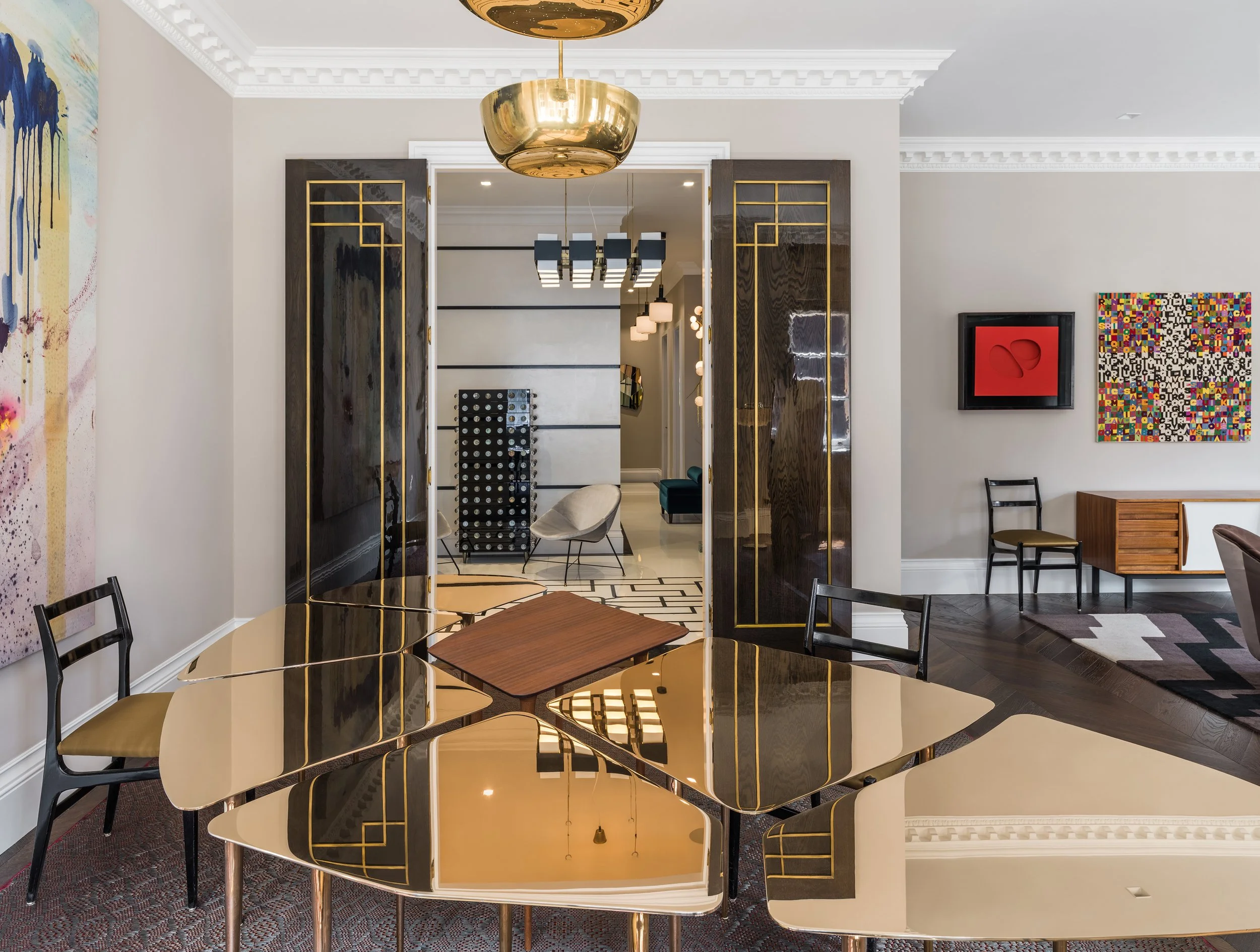

The Gallery at Home: Nilufar’s Language of Form
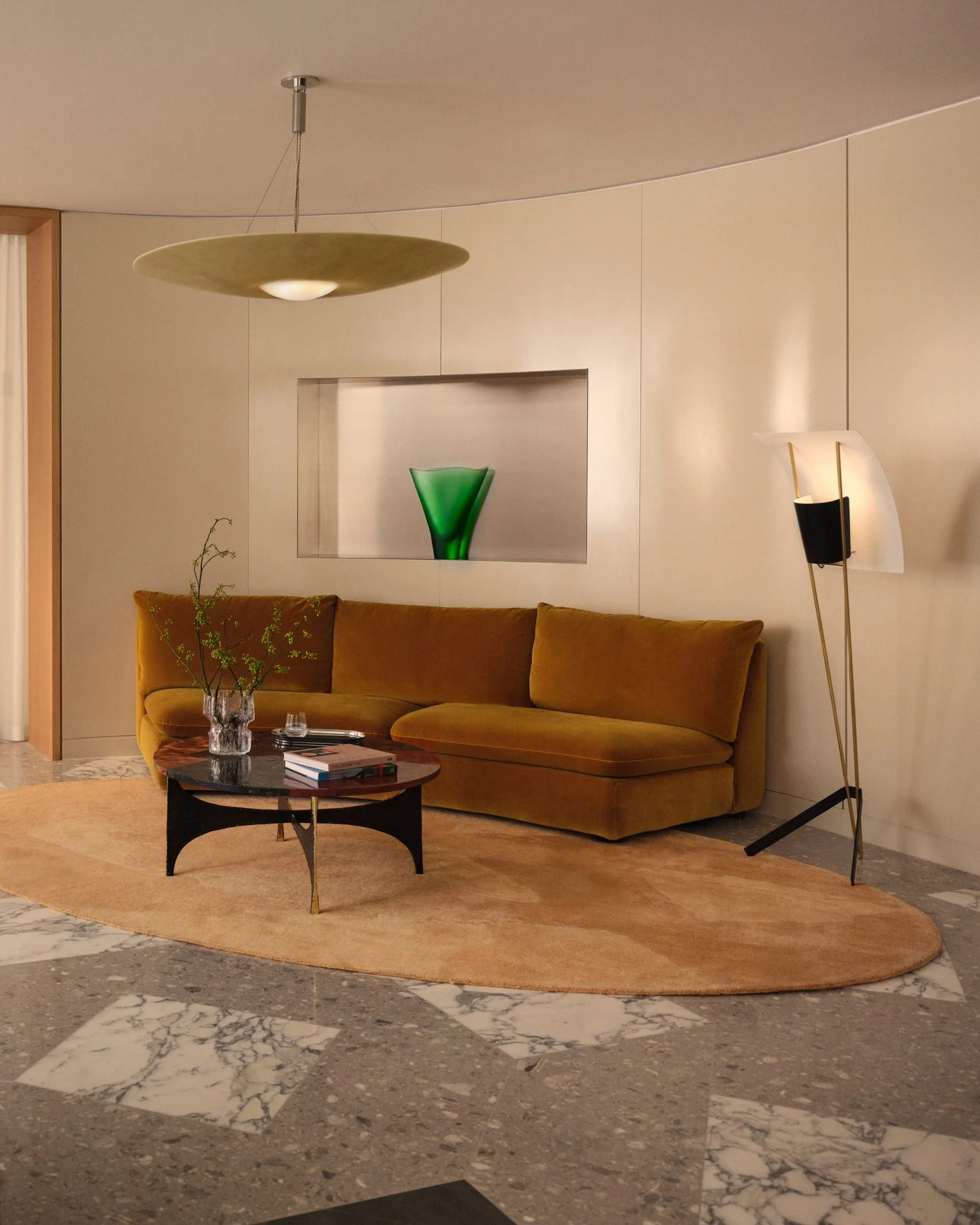
Nina Yashar’s curation for Nilufar Gallery balances the assured curves of mid-century Italian upholstery with crisp contemporary statements. In the living room, a curved sofa attributed to Federico Munari establishes a sweeping line that welcomes conversation. Nearby, 1950s chairs by Augusto Bozzi strike a sculptural pose on slender splayed legs, while Folke Jansson armchairs add northern clarity to the assembly. Tables by Osanna Visconti di Modrone introduce a tactile bronze, with their cast surfaces catching the light with jewellery-like precision.
The lighting is studied and layered. A ceiling light by Gio Ponti presents a historic counterpoint to contemporary pieces, while a statement lamp attributed to Hans-Agne Jakobsson sets a generous tone at the entrance. In the bedrooms and reception spaces, Lindsey Adelman’s brass work contributes luminous geometry, contrasted with quieter modernist notes, such as Alvar Aalto’s cube-like pendants.
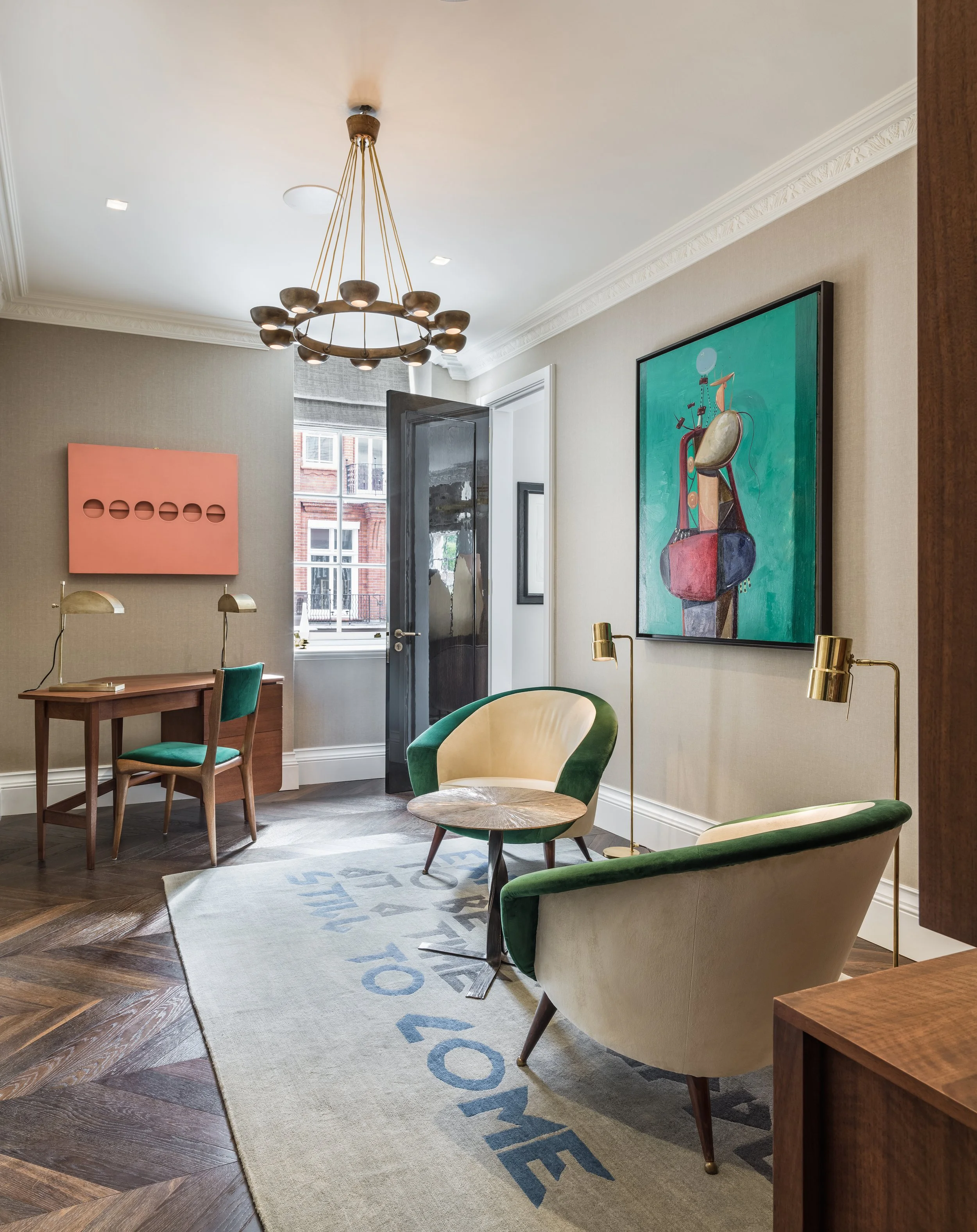
One of the most talked-about elements is the modular coffee table, which can be split and regrouped for entertaining. Its logic extends to the dining room, where Massimiliano Locatelli’s multi-part dining table transforms from intimate clusters to a single, sinuous gathering surface. The piece abstracts a landscape into furniture: a cast-bronze waterline set against a polished timber peninsula, and turns the act of dining into choreography.
The rug programme is equally considered. A graphic piece by Martino Gamper injects energy into one of the sitting rooms and reaffirms the home’s editorial character. In the master suite, Gamper’s Off-Cut screen is reimagined as a headboard, lending metallic cadence to the greens and brass that animate the space.


Curating the Emotional Arc: Contemporary Art Across Rooms
Mehves Ariburnu curates a sequence of artworks that set the emotional pitch for each room. Over the fireplace, an Enrico Castellanirelief from the Superficie series introduces a quiet, mathematical intensity, reading the room in light and shadow. In the dining room, Julian Schnabel’s painterly exuberance loosens the air, a fitting counterpoint to the discipline of the furniture.
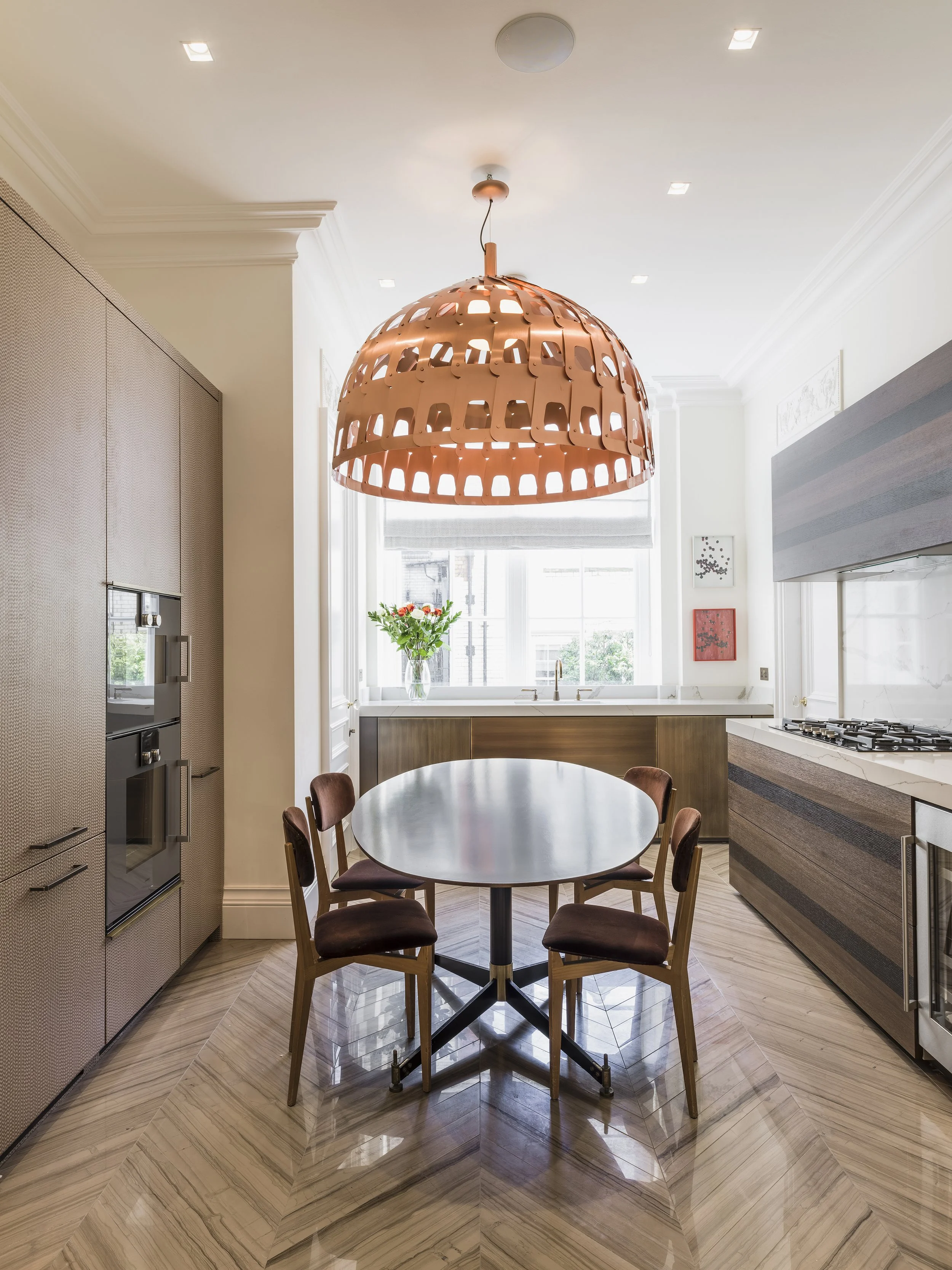
Elsewhere, Lucio Fontana’s gilded Concetto Spaziale in porcelain adds a precise, provocative gesture, while a hall piece by David LaChapelle brings a wink of theatre. The study, painted in terracotta tones, is anchored by a rare Henri Matisse drawing that turns the room into a salon of line and thought. This curation avoids the didactic and instead pursues rhythm, pacing, and relief, as if each work were chosen for the breath it gives the room.
Rooms with Purpose: Entertaining, Repose, and Ritual
The Living Room
Designed as a social arena, the living room absorbs a crowd yet keeps conversation close. The modular coffee tables can rove, cluster, and reconfigure as hosting dictates, ensuring the space remains versatile from cocktail hour to late-night listening.
The Dining Room
Locatelli’s seven-part composition acts as a sculpture between meals and a democratic table during them. Cast bronze modules echo water; a polished timber segment offers contrast and warmth. The table sets the tempo for the entire home: elegant, adaptable, and quietly surprising.
The Entrance
A strong geometric pattern in stone sets the intention at the threshold. The motif reappears across bespoke door detailing and later as a rug in a secondary bedroom, reinforcing the design’s internal coherence.
The Master Suite
A green rug grounds the geometry and heightens the brass accents. The Gamper screen, repurposed as a headboard, adds a sculptural backdrop. In the ensuite, mirrors are set with technical ingenuity so that a window behind them becomes an asset rather than a constraint, the light is softened, privacy is preserved, and the spatial reading is seamless.
The Study
Intimate and saturated, this room favours deliberation. Sculptural seating plays against art-led colour, creating a place for drafting, reading, or quietly hosting when the living room hums next door.


A Selling Exhibition with a Soul
Squat’s London edition preserves the thrill of discovery that galleries often keep behind the scenes. Almost every piece is available, from the Munari sofa and Bozzi chairs to Osanna Visconti centre tables and the collectable lighting. Significant artworks have been placed with sensitivity rather than spectacle, which makes their presence feel both rarified and liveable.
The apartment itself was also offered for sale after installation, a testament to the project’s complete vision of lifestyle. Yet the deeper success lies in how art, design, and architecture reach a coherent calm. The home feels styled for life rather than for a fair, proof that collecting can be as much about cadence and comfort as it is about connoisseurship.


Collaboration at the Core
This project thrives on synergy. Nina Yashar brings decades of instinct from Nilufar Gallery, assembling historical and contemporary design with an alert eye for dialogue. Shalini Misra recalibrates Victorian bones into a framework that supports living, entertaining, and displaying. Mehves Ariburnu sets a curatorial tempo that gives each room its own aura. The trio proves that when disciplines overlap with intent, the result is a home that persuasively and longingly lingers.
More Stories

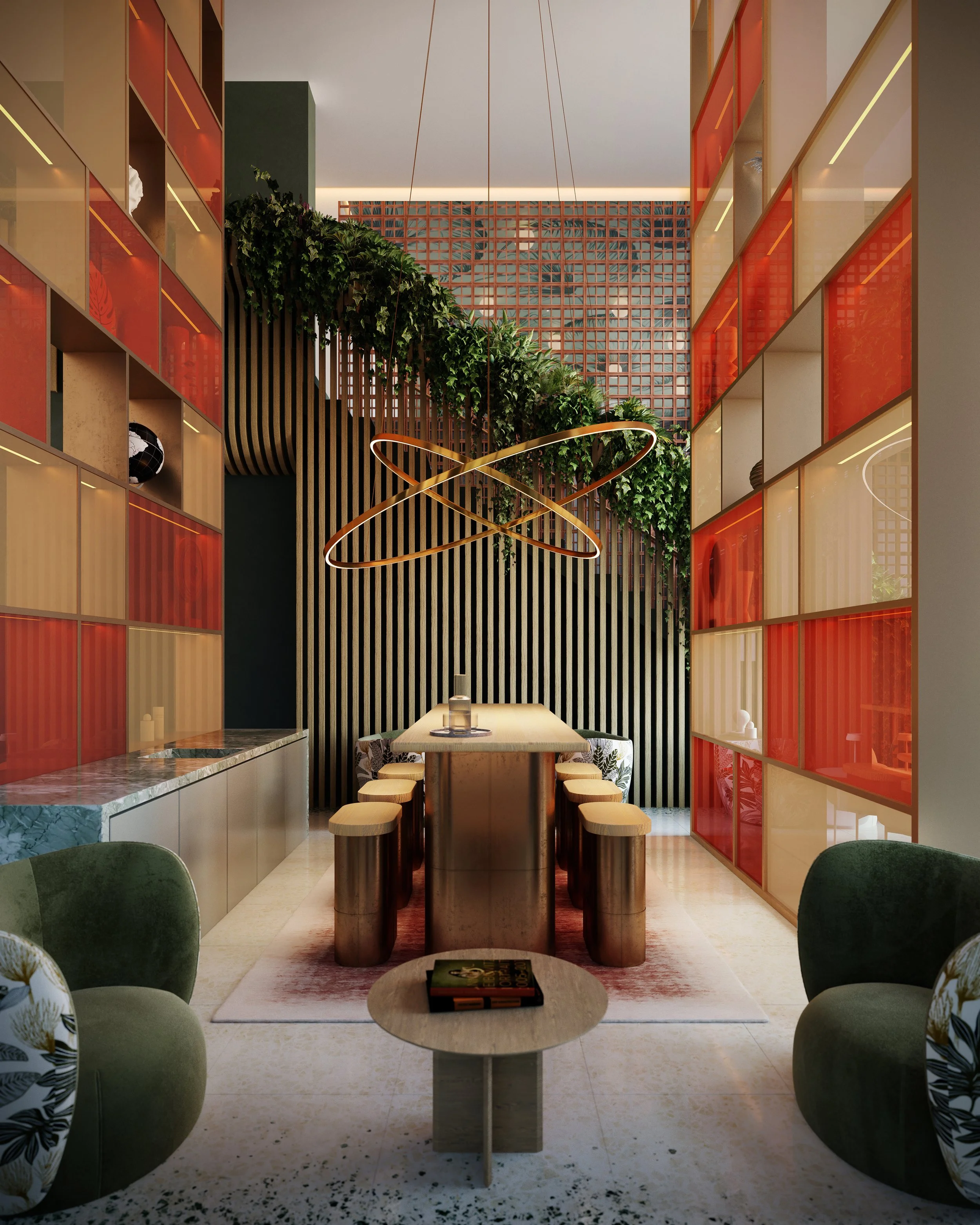


A considered, design-led residence at Centre Point, where bold colour, layered materials and architectural clarity come together to create an interior that is expressive, refined and quietly powerful.