
Stone That Softens: Inside Bill Amberg Studio’s Boulder Benches at 20 Gresham Street
There are moments in architecture when a building pauses. When movement slows, sound softens, and material begins to speak. At 20 Gresham Street in the City of London, that pause takes the form of stone.
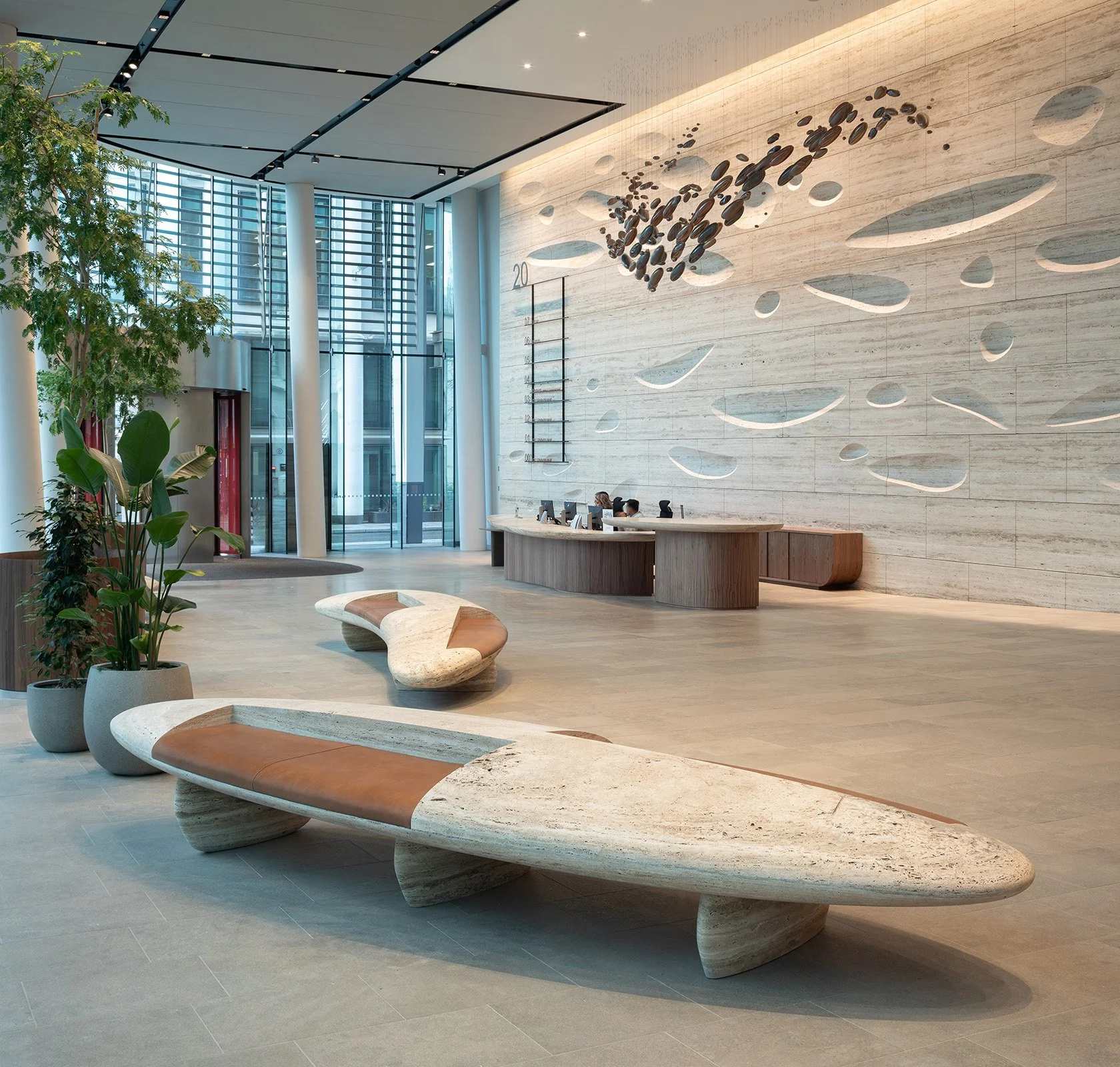
Within the reimagined double‑height entrance hall of the building, four monumental travertine benches sit quietly, anchoring the space with both weight and generosity. They do not announce themselves loudly. Instead, they occupy the room with a kind of geological certainty, as though they have always been there, waiting for the architecture to form around them.
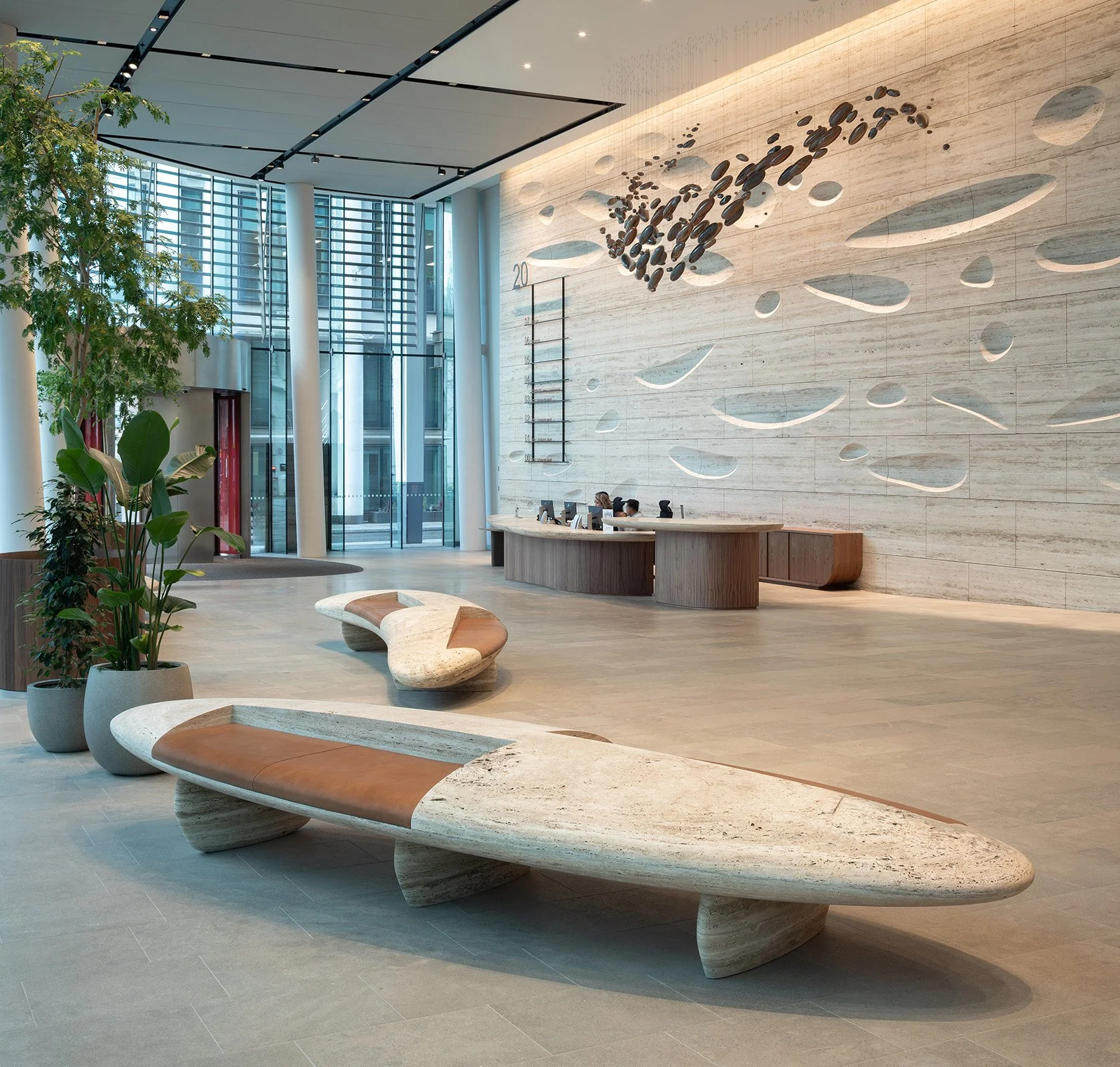
These are the Boulder Benches, the result of a deeply considered collaboration between sculptor David Worthington, John Robertson Architects, and Bill Amberg Studio. Together, they have created a sequence of objects that sit somewhere between sculpture, furniture and architecture, blurring boundaries in ways that feel both ancient and contemporary.
The project unfolded over two years, and its sense of patience is evident in every surface. Each bench was carved from a single block of Tuscan travertine, sculpted into long, organic forms measuring up to five metres in length and weighing roughly two and a half tonnes apiece. Worthington’s hand is unmistakable. Voids are carved deeply into the stone, creating generous recesses and interior spaces that echo the modernist lineage of Brancusi, Hepworth and Noguchi, while resisting pure objecthood.
Rather than reading as sculptural statements set apart from the building, the benches behave as inhabitable forms. They invite proximity. They ask to be used.
It was within this invitation that Bill Amberg Studio entered the conversation.
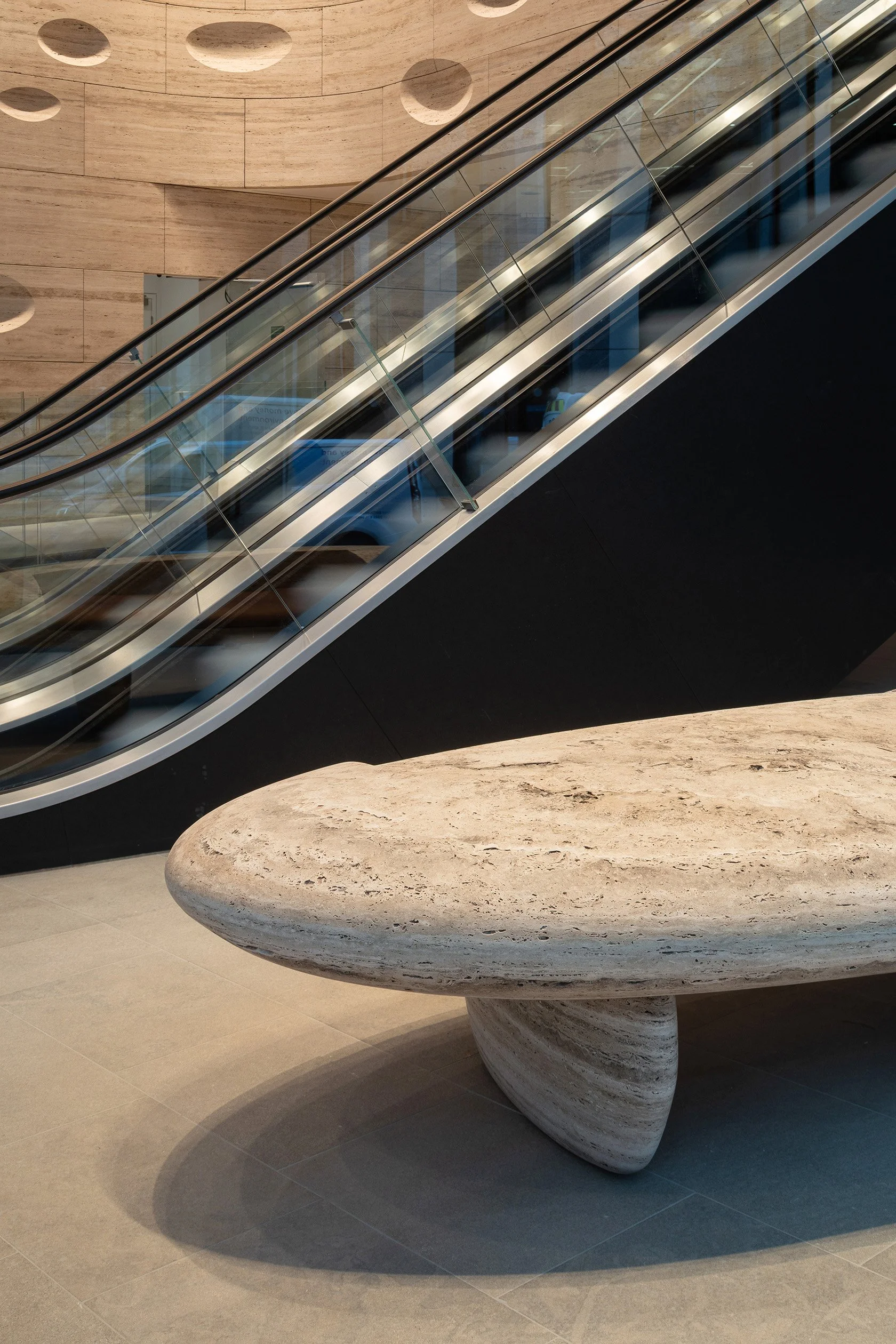
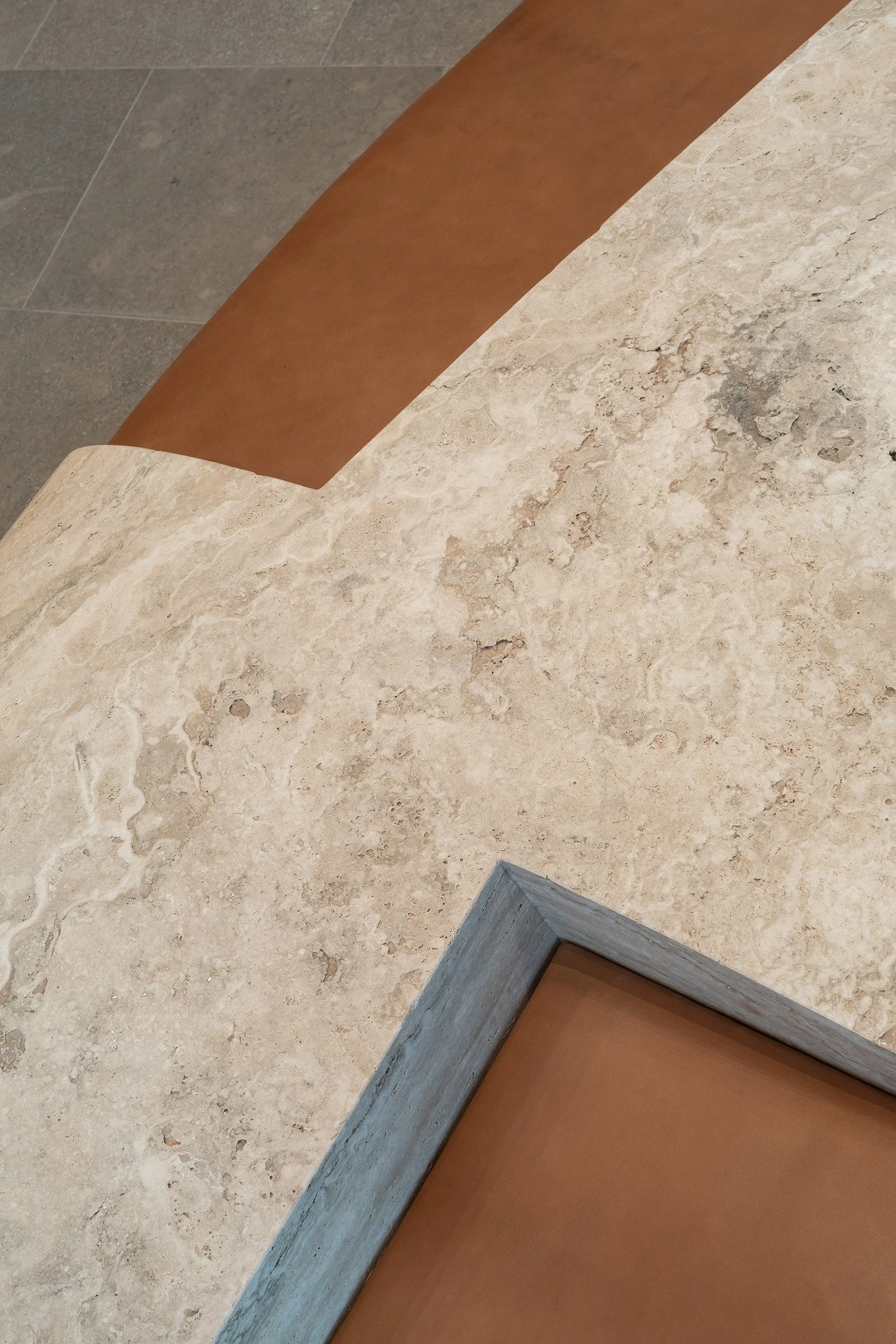
Known for four decades of leather innovation spanning furniture, objects, interiors, and fashion, the studio was commissioned to introduce comfort into the stone without compromising its integrity. This was not a question of softening the sculpture, but of finding a shared language between materials that, at first glance, appear oppositional.
Stone and leather.
Hard and soft. Cold and warm. Permanent and evolving.
The challenge lay not just in how the leather would sit within the travertine, but in how it would age alongside it.
Working in close dialogue with Worthington’s carved forms, Bill Amberg Studio developed bespoke leather seat pads and cushions that respond precisely to the curves, recesses and irregularities of each bench. No two are the same. Each leather element was individually scribed, shaped and refined to sit seamlessly within the stone, as though drawn from it rather than added on.
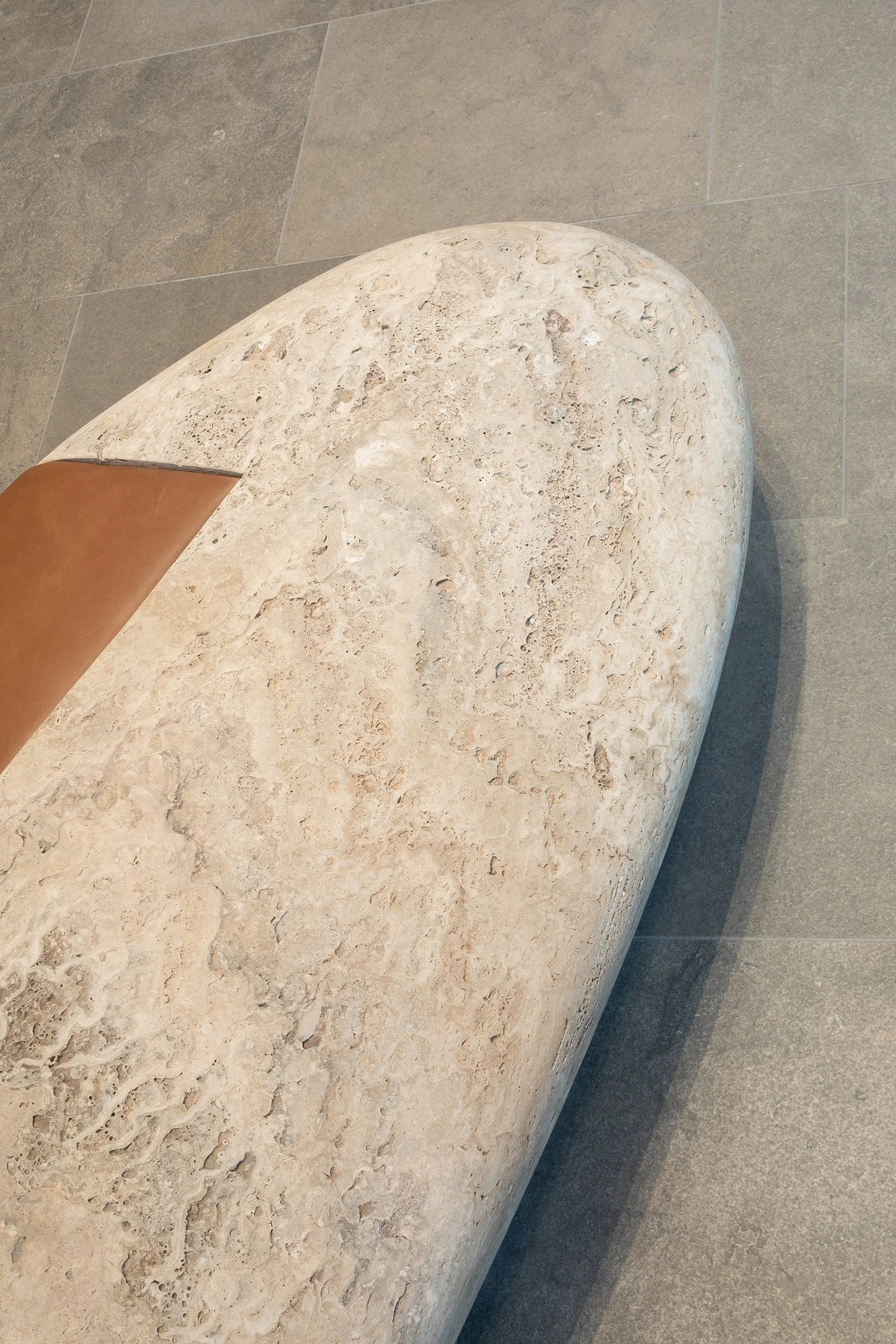
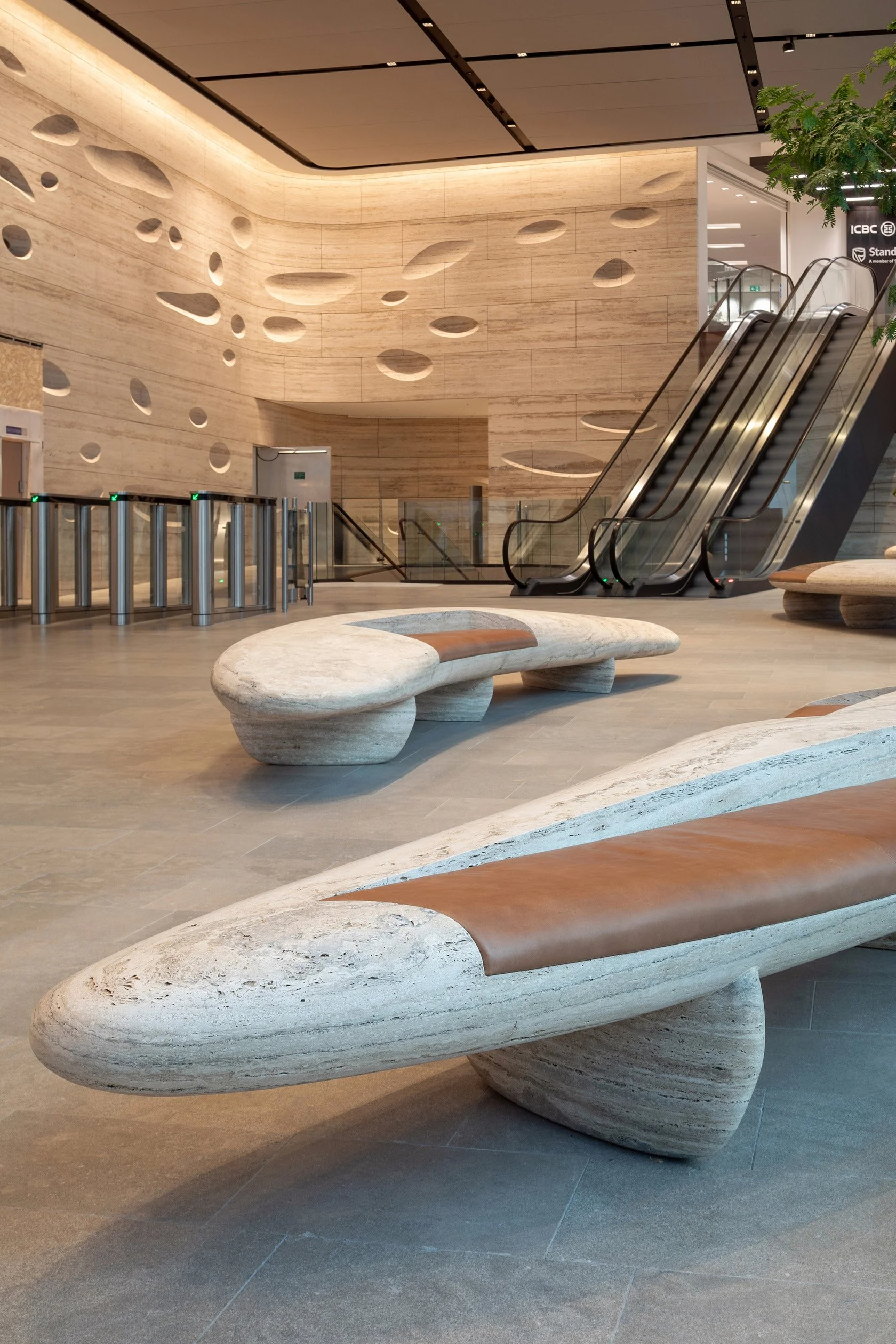
The material choice was critical. Vegetable‑tanned Tuscan leather was selected not for decoration, but for its philosophical alignment with the travertine itself. Both materials are honest. Both record time. Both develop patina rather than wear.
This was not about contrast, but continuity.
The leather sits gently within the carved stone, slung rather than fixed, padded just enough to offer comfort without asserting itself. Visually, its tone harmonises with the travertine, creating a quiet gradation rather than a sharp division. Tactile warmth replaces monumentality without diminishing it.
Over time, the relationship will deepen. The stone will carry its subtle marks of use; the leather will soften, darken, and respond to touch. The benches are not static objects, but futures in progress.
For Bill Amberg, the project became an exercise in restraint. Introducing comfort without disrupting sculptural intent requires a sensitivity that goes beyond craft alone. It demands listening to the material, to the form, and to the space it occupies.
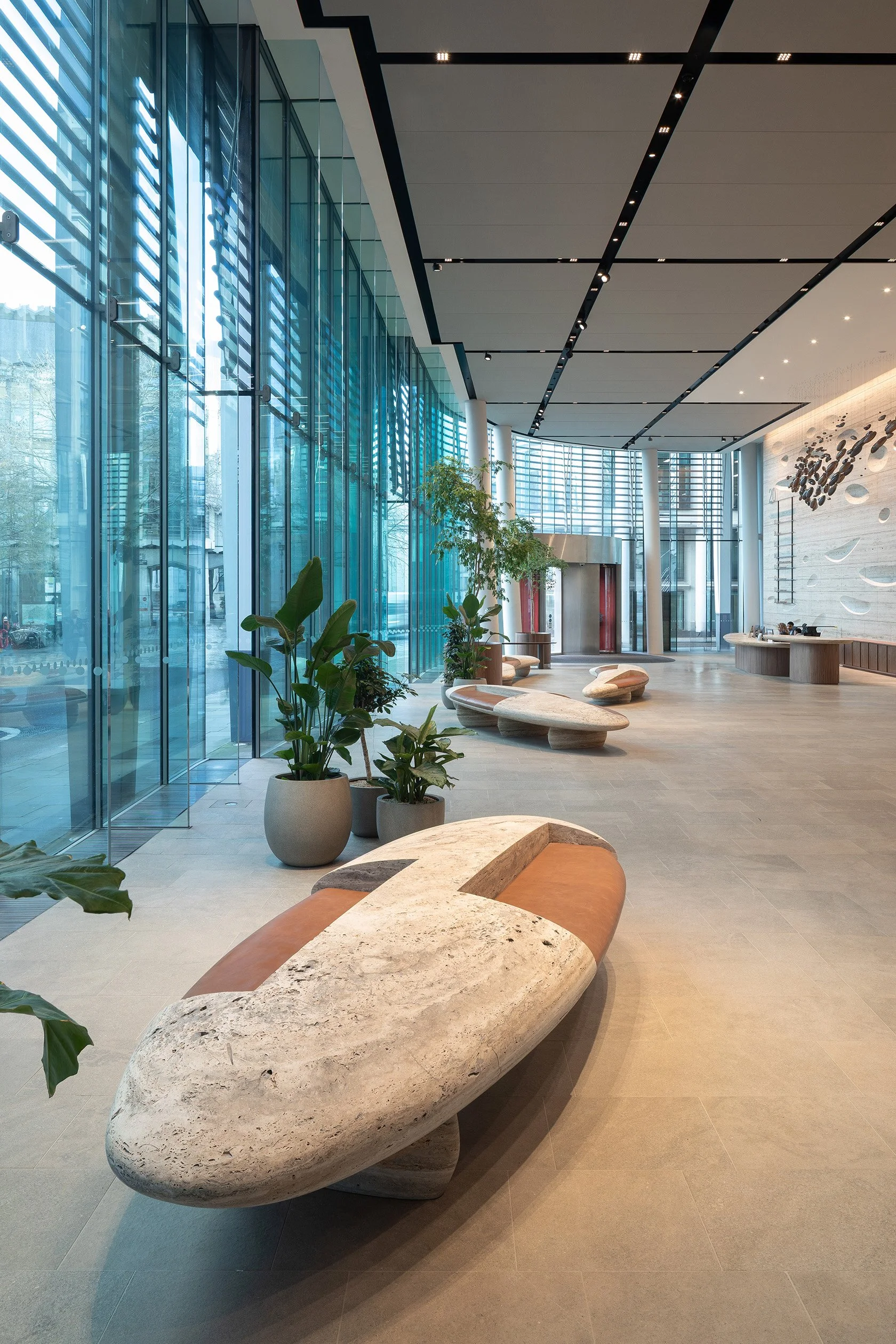
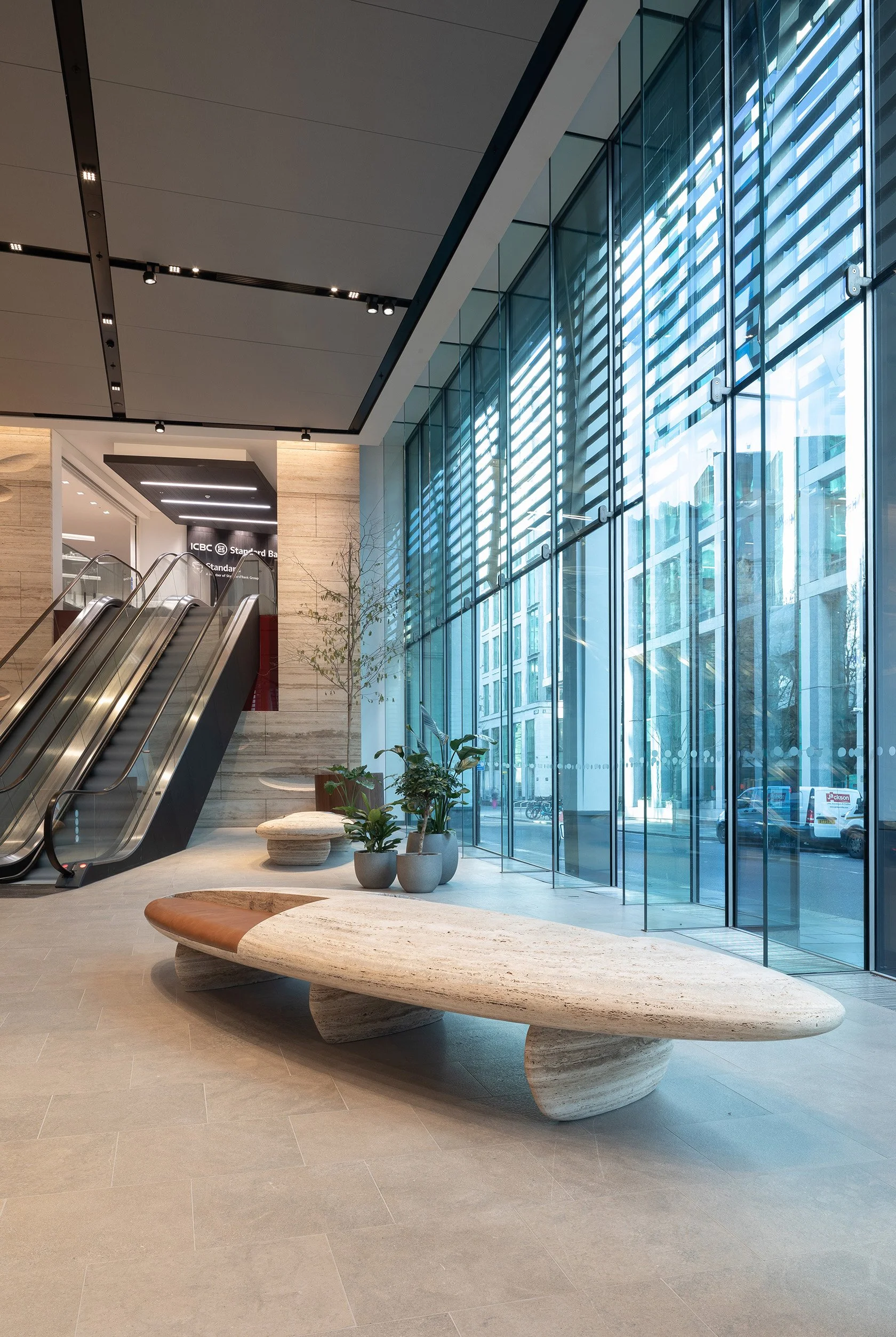
The entrance hall itself has been conceived by John Robertson Architects as a gallery‑like environment rather than a conventional reception. Light moves across the stone, pooling in the carved voids and catching the surface variations of the leather. People arrive, pause, sit. Meetings begin. Moments of transition become moments of rest.
In this context, the benches function as social infrastructure. They are places of gathering without ceremony, luxurious without excess. Their scale is monumental, but their use is human.
This sense of human engagement has long been central to Bill Amberg Studio’s work. Across projects for cultural institutions, commercial interiors and private residences, the studio has consistently explored leather not as embellishment, but as a performative material, one that mediates between body and structure.
Here, leather becomes the interface between the user and the sculpture. It allows the stone to remain stone, while offering the body a point of welcome.
David Worthington’s sculptural practice has always existed in dialogue with architectural space, and the Boulder Benches extend that dialogue into use. They disrupt the idea that sculpture must be looked at rather than lived with. Instead, they propose a more generous understanding of art as something that supports daily ritual.
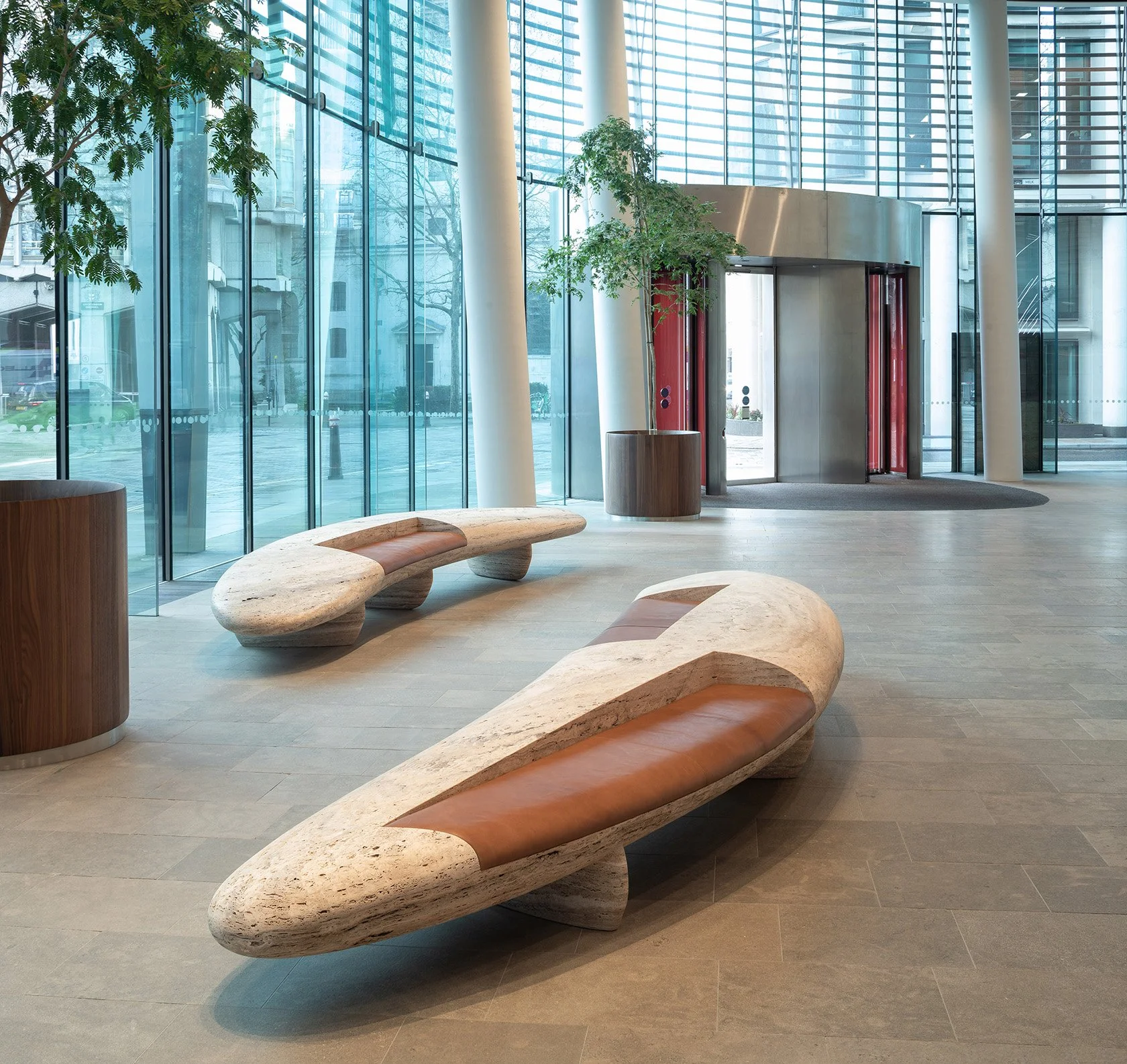
At 20 Gresham Street, the act of sitting becomes part of the work.
There is something quietly radical in this collaboration, not because of its scale or materials, but because of its refusal to overstate itself. In an era of visual noise, these benches operate through calm. Through weight. Through time.
They remind us that the most enduring design gestures often emerge from conversations between disciplines, from projects that allow materials to speak to one another rather than compete. Stone does not dominate leather here, nor does leather tame stone. Instead, they age together, meeting somewhere in the middle.
Long after the entrance hall empties at the end of the day, the benches remain. Holding light. Holding history. Waiting.
More Stories



Ozanne Princen’s bronze sculptures capture the memory of movement, where ballet, femininity and form converge. A study in stillness and strength, her work reframes the body as both structure and story.