
Le Pied-à-Terre Cosmopolite: Nilufar’s Quiet Masterclass at Milan Design Week
An intimate exploration of Nilufar’s Milan Design Week installation, where Nina Yashar reimagines the pied‑à‑terre through collectable design, material nuance, and cosmopolitan ease.
Milan reveals itself most clearly once you step away from the noise. Beyond the velocity of Design Week, the city’s true character settles into quieter interiors, where time seems recalibrated, and attention sharpens. It is in these moments, removed from spectacle, that Milan’s design intelligence feels most assured.
During Milan Design Week, this contrast is heightened. While official routes pulse with movement and conversation, the most compelling experiences are often discovered behind discreet doors, where ideas unfold slowly and with intent. It was precisely within this quieter register that Nilufar chose to speak this year, presenting Le Pied-à-Terre Cosmopolite at its Via della Spiga address.
Curated by Nina Yashar, the project occupied just 70 square metres. In a week often defined by scale, sensation, and visual saturation, Nilufar’s decision felt deliberate. Rather than expanding outward, the gallery folded inward, offering a domestic interior imagined for a particular way of living. This was a home conceived for a cosmopolitan aesthete: someone who lives between cities, stays briefly yet intensely, and experiences Milan not as a visitor but as a practised insider.
The space unfolded as an apartment rather than an installation. Rooms followed one another not theatrically but intuitively, with the atmosphere of a place already inhabited. There was no overt sense of staging or display. Instead, the project felt quietly lived in, as though the owner had stepped out momentarily and left their world behind.
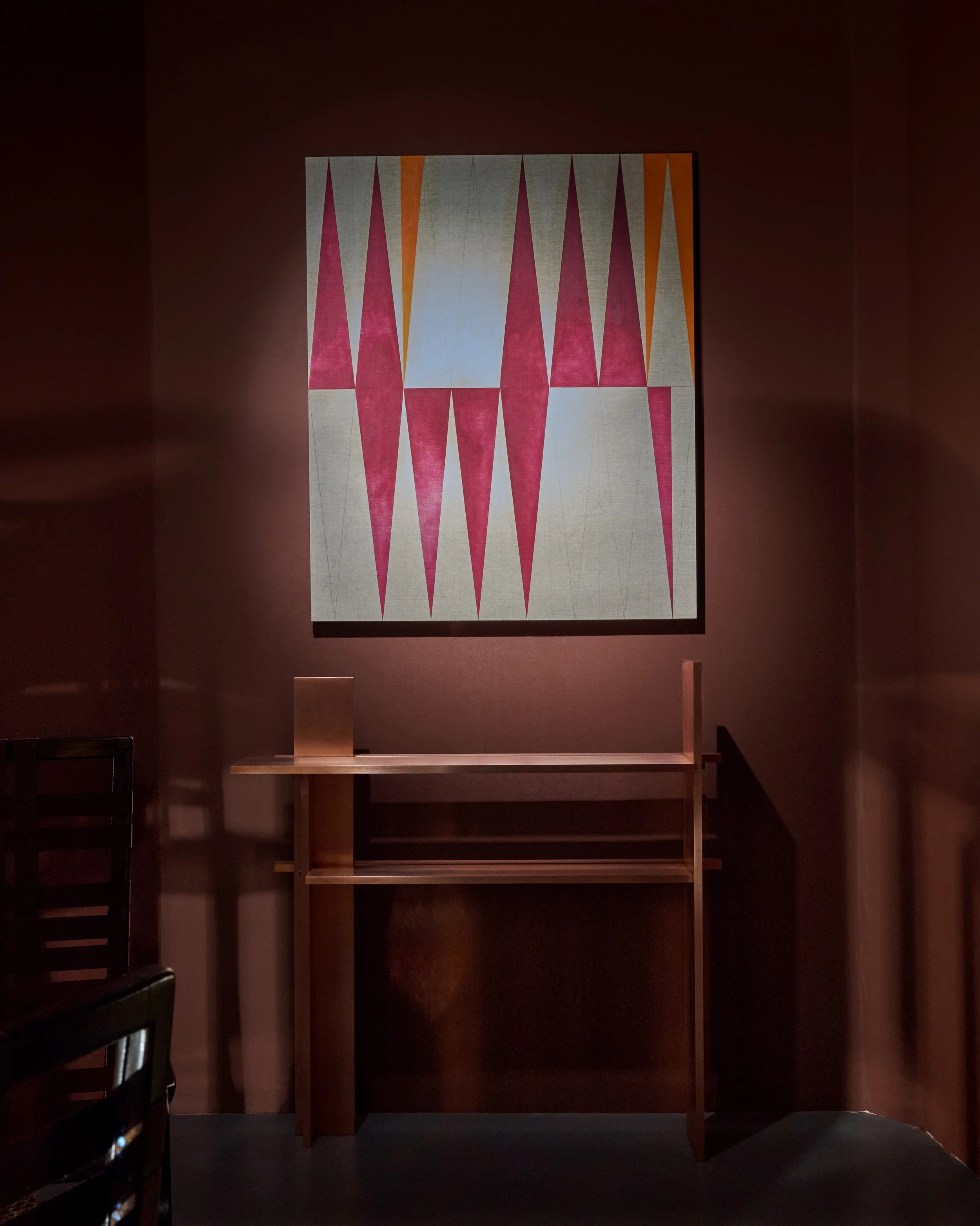
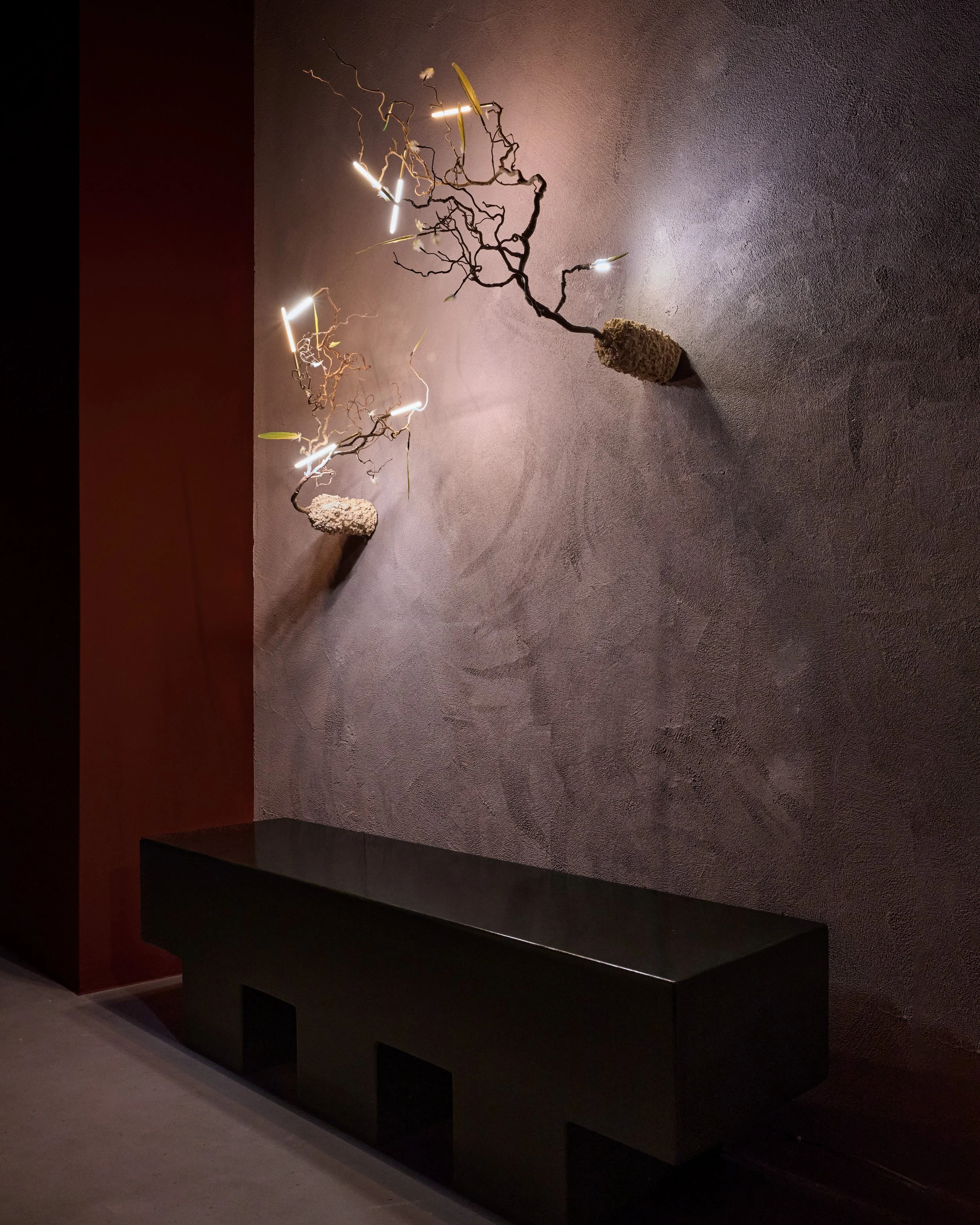
The entrance set this tone with restraint. Robison Ferreux Maeght’s Yoko bench anchored the threshold, its contemporary sculptural presence acting as both a welcome and a pause. It was a piece that required no explanation, establishing immediately that the language of the space would be one of clarity and confidence rather than excess.
At the heart of the apartment, the living area became a gathering point for eras, materials, and design attitudes. Willy Rizzo’s Super C sofa from the 1970s formed the room’s core. Composed of six curved modular elements, the sofa balanced comfort with composition, its strong formal identity softened by adaptability. Rizzo’s eye as a photographer was evident here: proportion, rhythm, and framing all quietly at work.
Around it, Roberto Sironi’s Aphanès low tables introduced a deeper, almost archetypal presence. Created in collaboration with marble expert Palmalisa Zantedeschi, the tables drew inspiration from megaliths and prehistoric dolmens. Their architectural forms allowed the richness of rare marble to take centre stage, surfaces alive with pattern and colour. The effect was grounding, lending the room a sense of permanence that contrasted with the imagined occupant's transient nature.
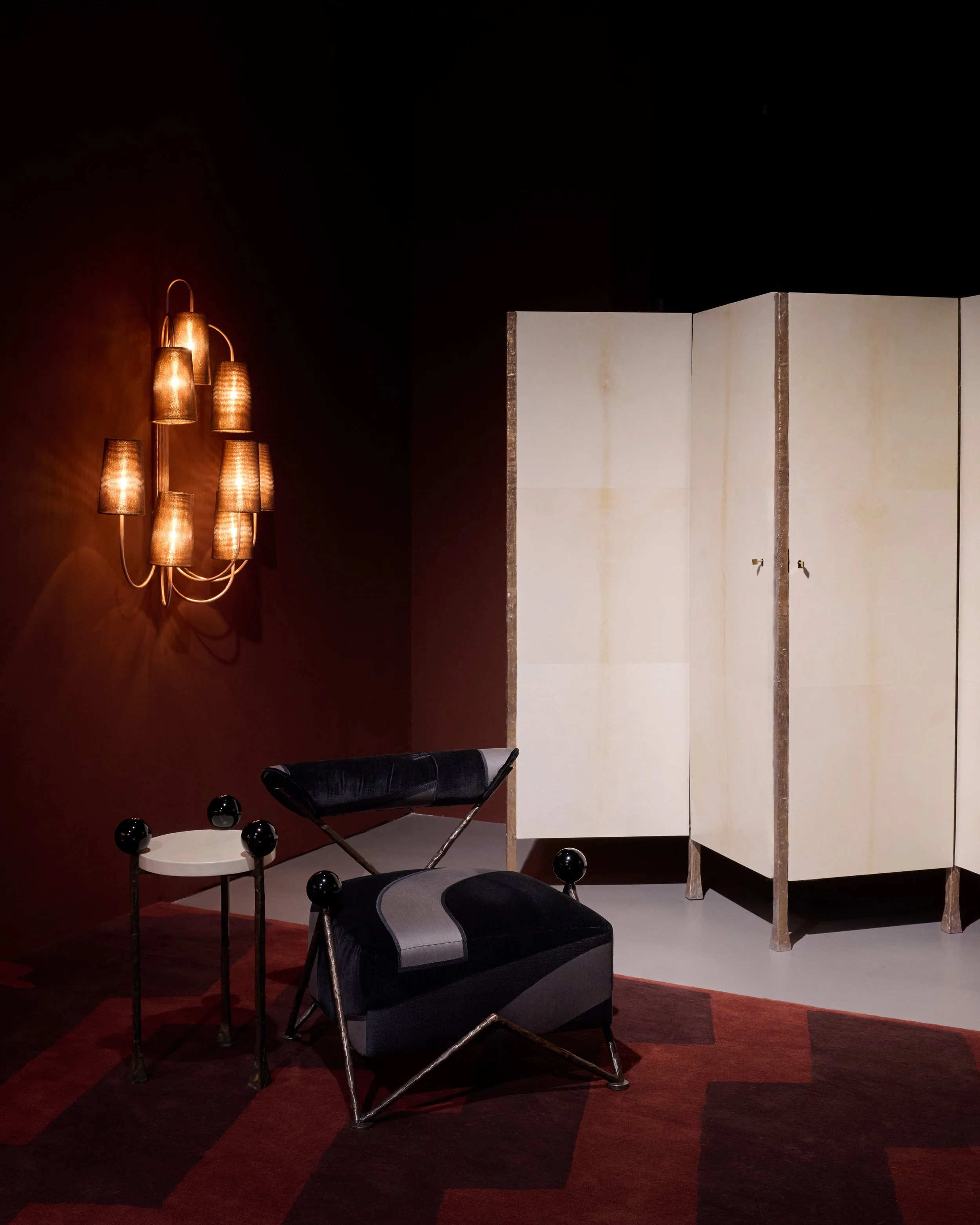
This dialogue continued with the inclusion of Jorge Zalszupin’s Capri low tables from the 1960s, in which a minimal painted metal frame supported warm jacaranda wood tops. Gabriella Crespi’s Fungo lamps from the Rising Sun series cast a gentle glow across reflective brass and bamboo surfaces, while Capriccio armchairs by George Bighinello completed the arrangement with casual elegance. Beneath it all, Beppe Caturegli’s Pneu Giga carpet traced the room with graphic subtlety, its tyre‑track motifs referencing movement, memory, and landscape.
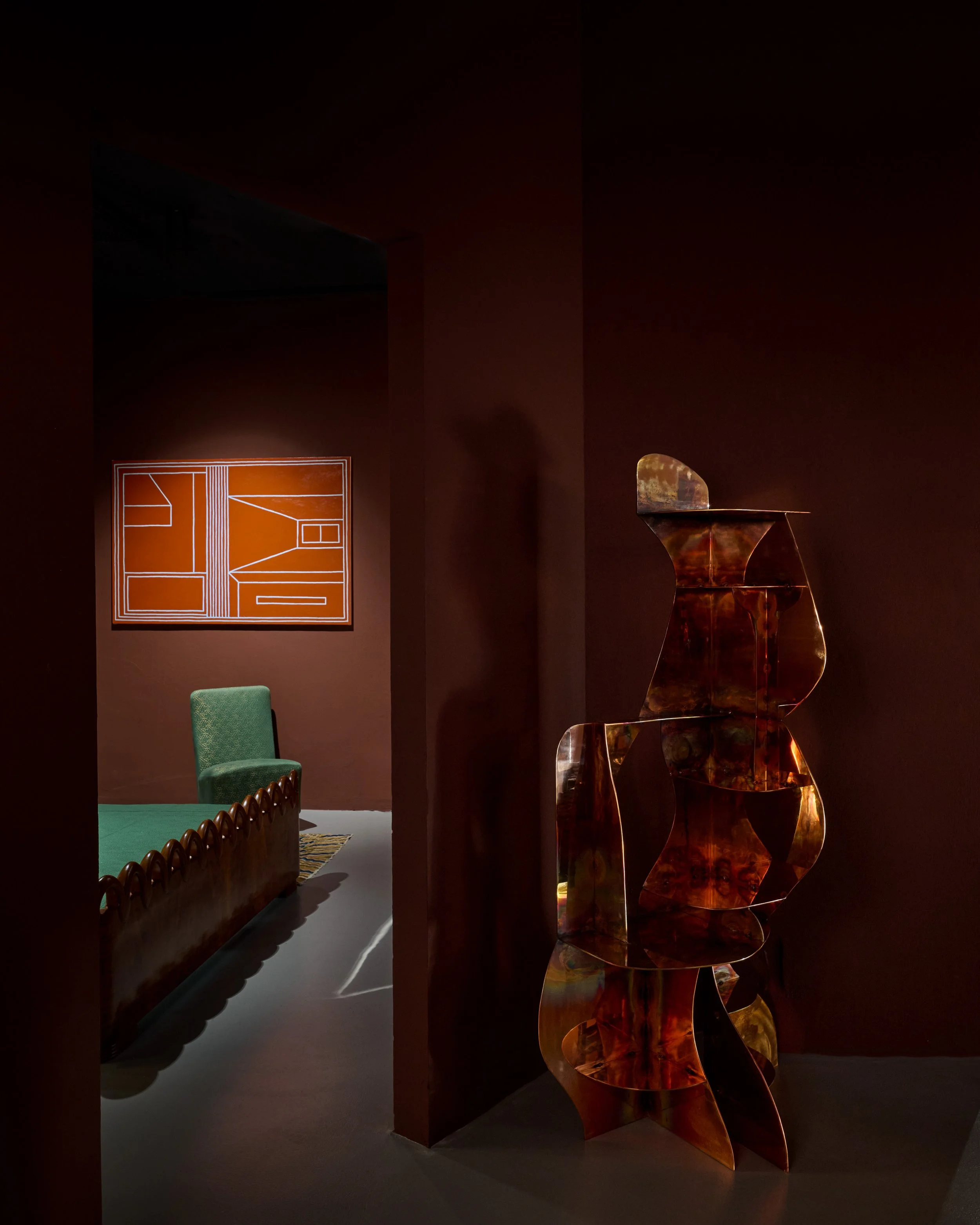
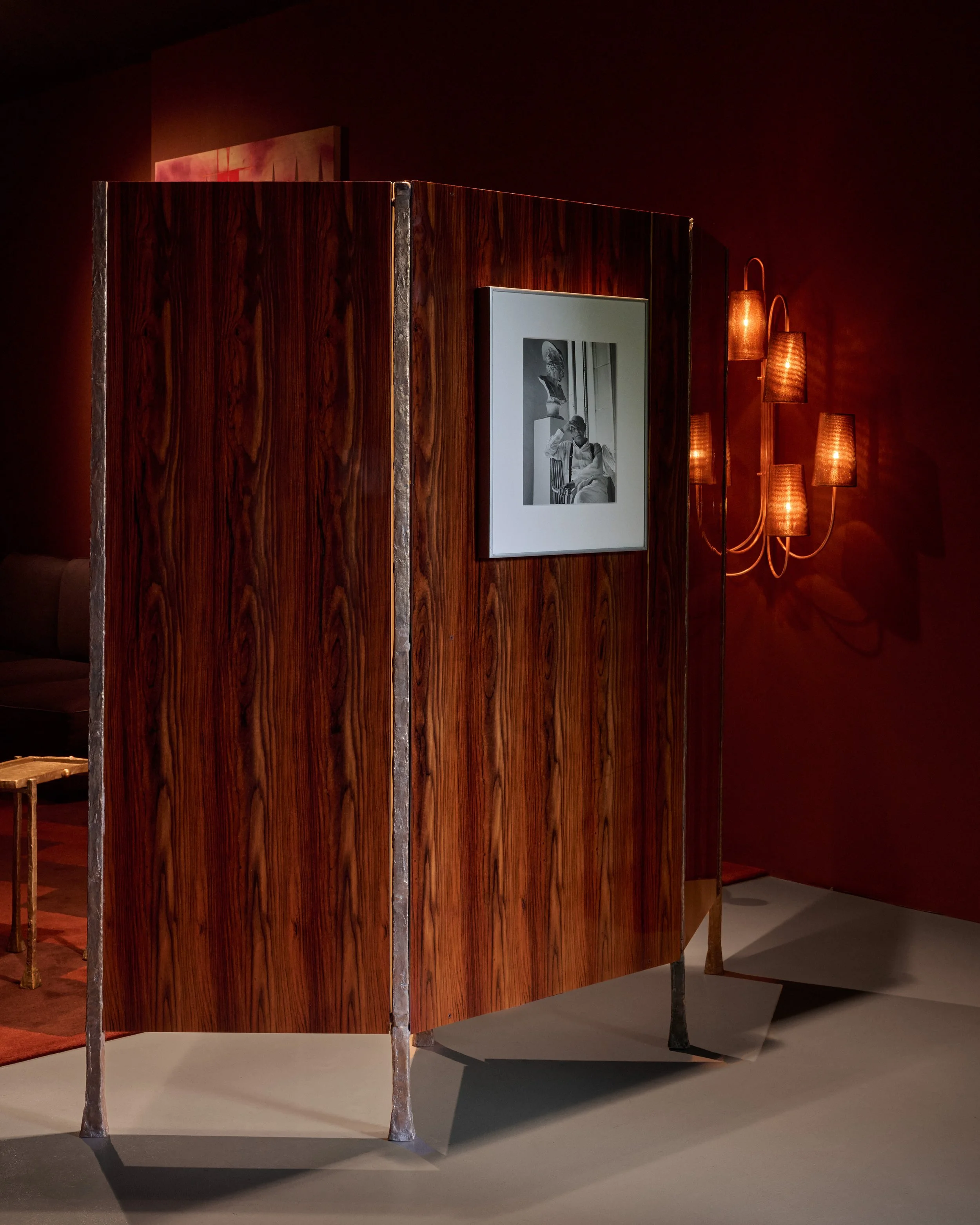
Within the living area, a bar corner unfolded as a more intimate episode. Studio Daniel K’s new creations: a bar cabinet, armchairs, tables, and wall lamps, reconsidered the choreography of domestic hospitality. Parchment appeared alongside mineral and metallic surfaces, recalling early twentieth‑century decorative arts while remaining distinctly contemporary. Ornament here was not applied, but structural, shaping the atmosphere of the space. NasonMoretti’s Murano glassware from the Borealis collection completed the scene, reinforcing the idea that everyday rituals can be elevated through craftsmanship and intention.
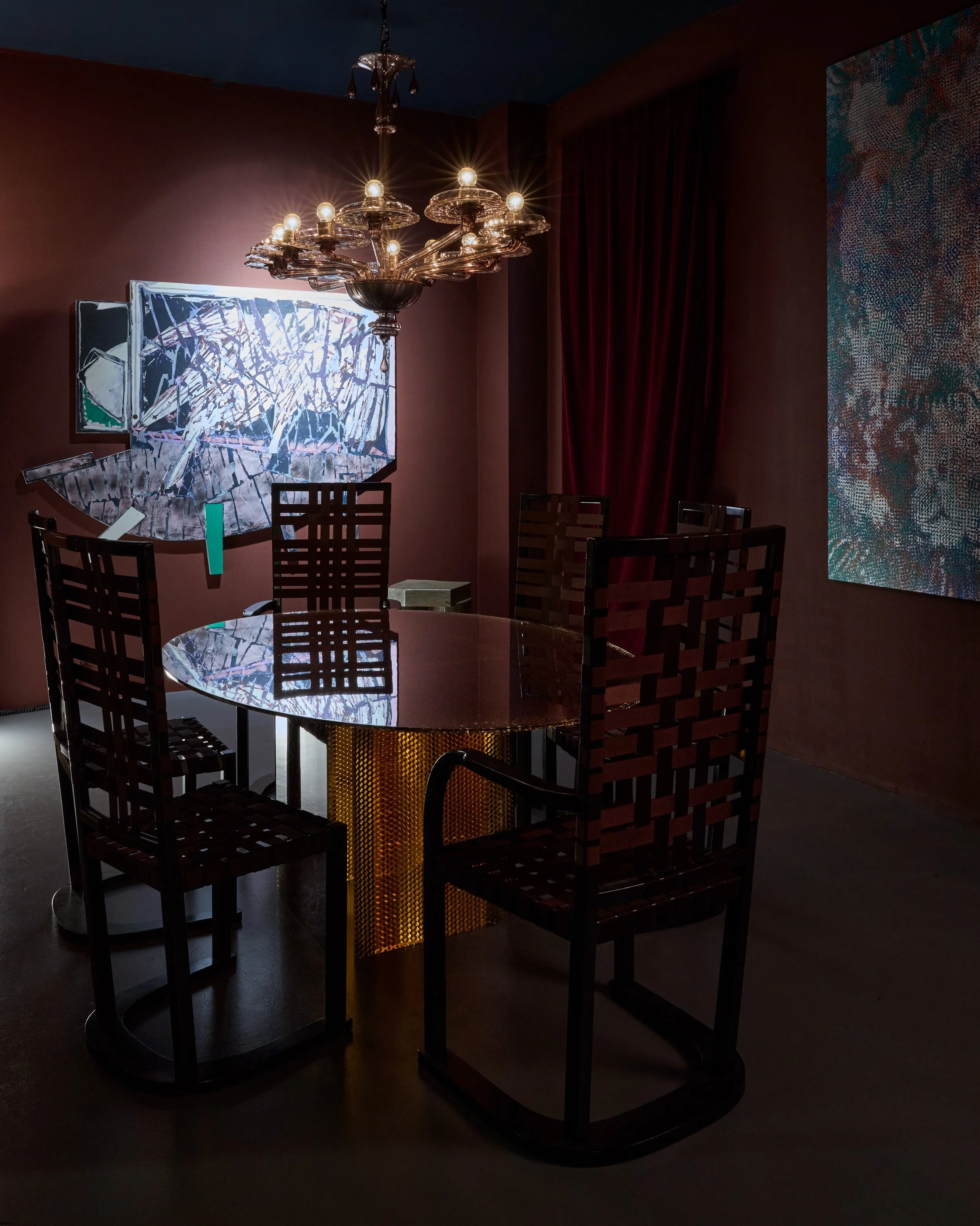
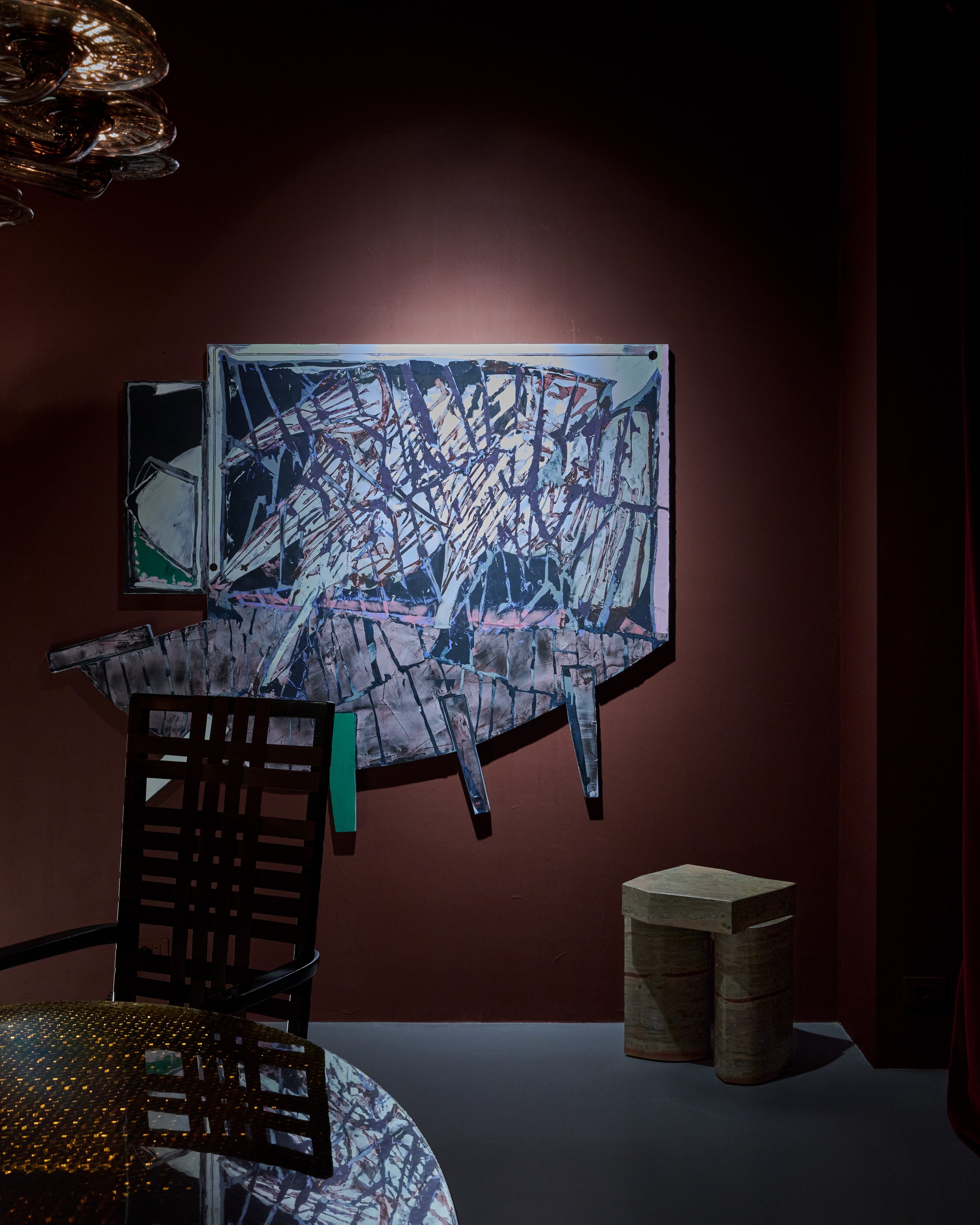
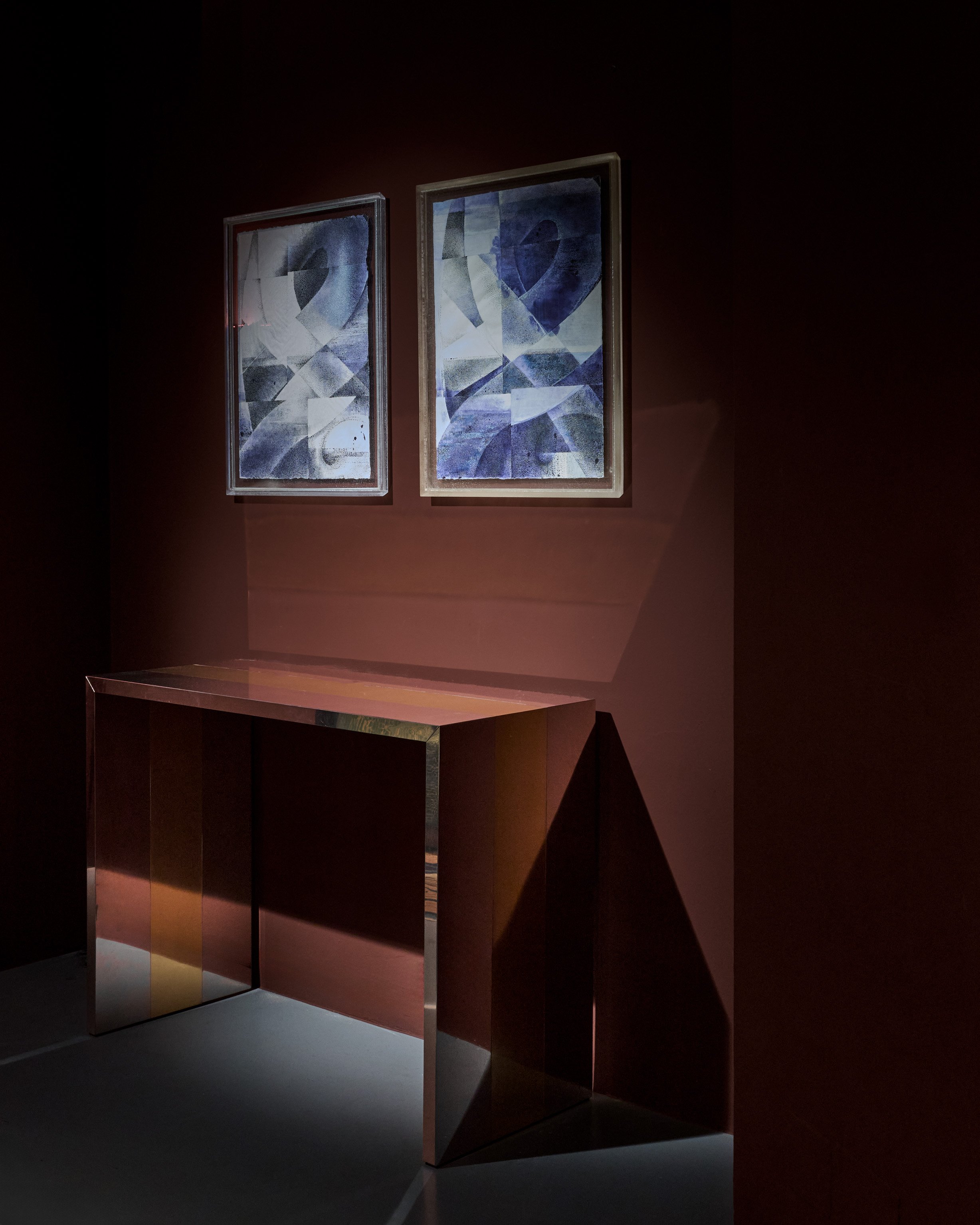
The dining area shifted the narrative toward experimentation and material innovation. Marco Lavit’s Hexa dining table, designed in collaboration with Azimut Design, explored a new composite language. Honeycomb aluminium embedded within amber‑toned epoxy resin produced a luminous surface that felt almost liquid, metallic reflections suspended within warmth. Paired with Axel Einar Hjorth’s Futurumchairs from 1928, the setting balanced Scandinavian rigour with Italian sensuality. Above, a Napoleone Martinuzzi chandelier softened the room through the diffused poetry of Murano glass.
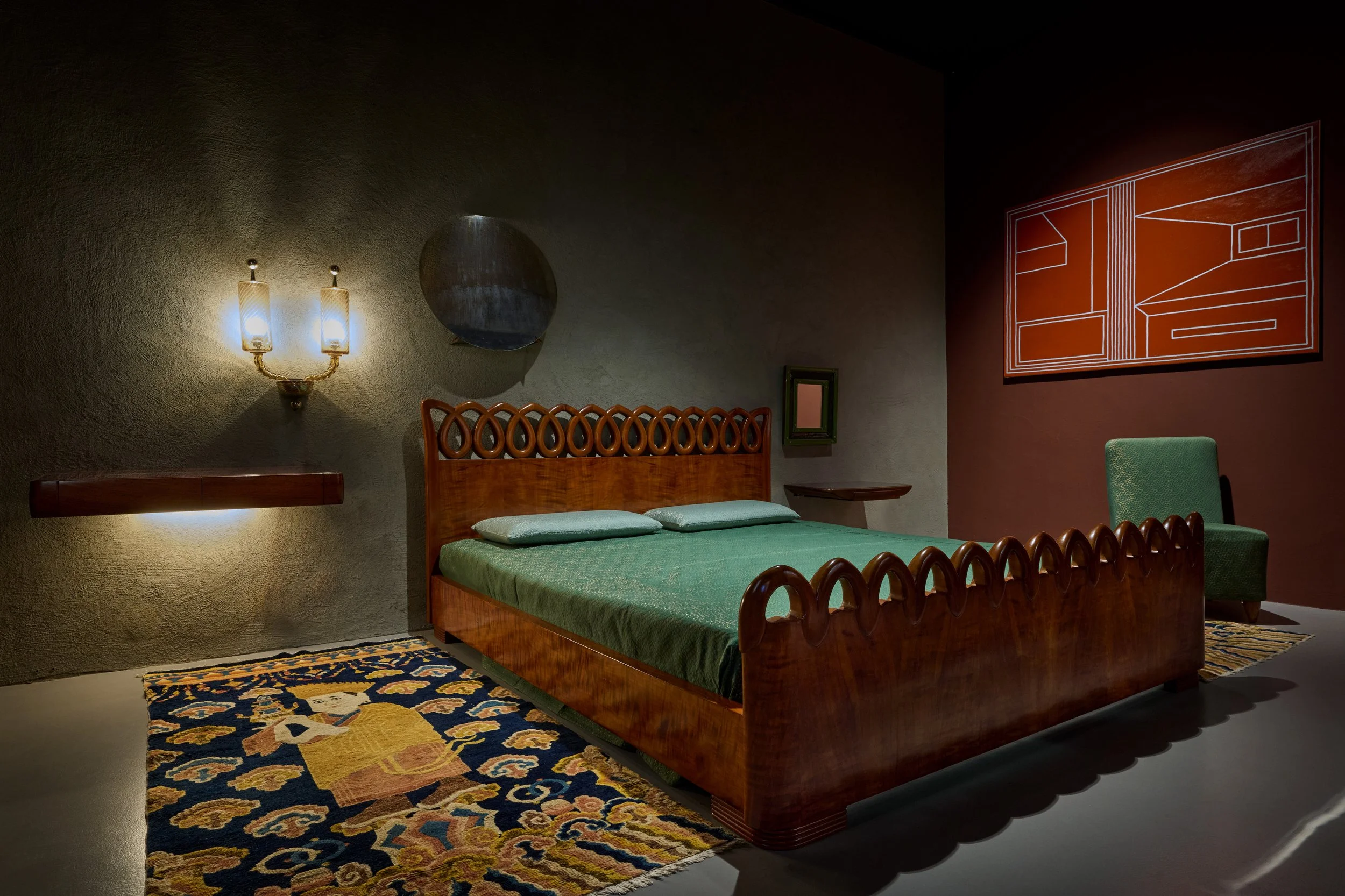
In the master bedroom, the tempo slowed further. This space became an intimate dialogue with the work of Osvaldo Borsani, highlighting the early years of one of Italy’s most influential designers. The 1939 bed, produced by Arredi Borsani Varedo, reflected a formative moment where modern aspirations met Italian decorative tradition. Complementary pieces: a wall‑mounted console from 1954, a suspended illuminated bedside table, and the L78 floor lamp designed for the X Triennale, formed a quietly cohesive landscape of restraint and refinement. A Venini mirror from 1969, its surface enriched with murrine decoration, added depth through colour and craft.
All photography: Filippo Pincolini, courtesy of Nilufar
Throughout Le Pied-à-Terre Cosmopolite, Nilufar demonstrated an uncanny ability to balance vintage and contemporary design without hierarchy or nostalgia. Each object felt chosen rather than collected, its presence justified not by name or era but by contribution to the whole. Materials were allowed their own voice, textures carefully calibrated, compositions thoughtfully resolved.
More than an installation, the project was a distilled expression of Nilufar’s curatorial philosophy. It illustrated how a compact footprint can hold remarkable narrative richness, and how design, when thoughtfully assembled, becomes part of daily life rather than a performance of taste. In imagining this Milanese retreat, Nina Yashar translated four decades of vision into a living environment that did more than impress. It invited. It narrated. And, quietly, it lingered.
Mpre Stories




Basic.Space arrives in London, transforming The Old Selfridges Hotel into a layered design experience where art, fashion, and sound converge. A moment of discovery shaped by the city’s enduring creative energy.