
Bodo Sperlein: MENU at Chiesa Anglicana
Curated by Bodo Sperlein, the exhibition united architecture, material, and collaboration within Milan’s historic Chiesa Anglicana.
Milan Design Week has always thrived on moments that feel both fleeting and unforgettable. In April 2026, MENU, the exhibition curated and designed by Bodo Sperlein, became one of those moments. Installed within the historic Chiesa Anglicana Tutti i Santi in the heart of Brera, the exhibition unfolded not as a conventional showcase, but as a carefully composed spatial narrative; one that lingered long after its doors closed.
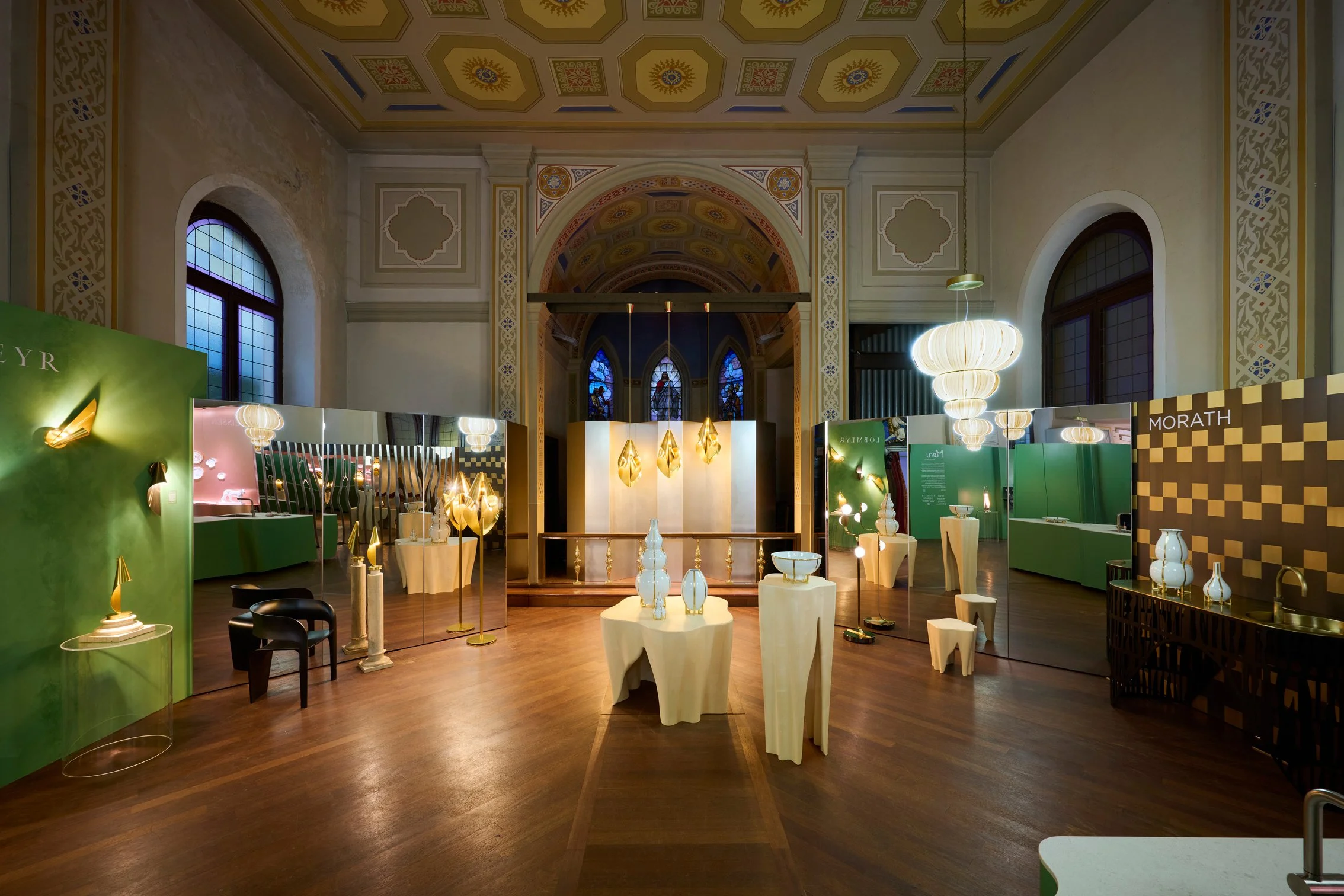
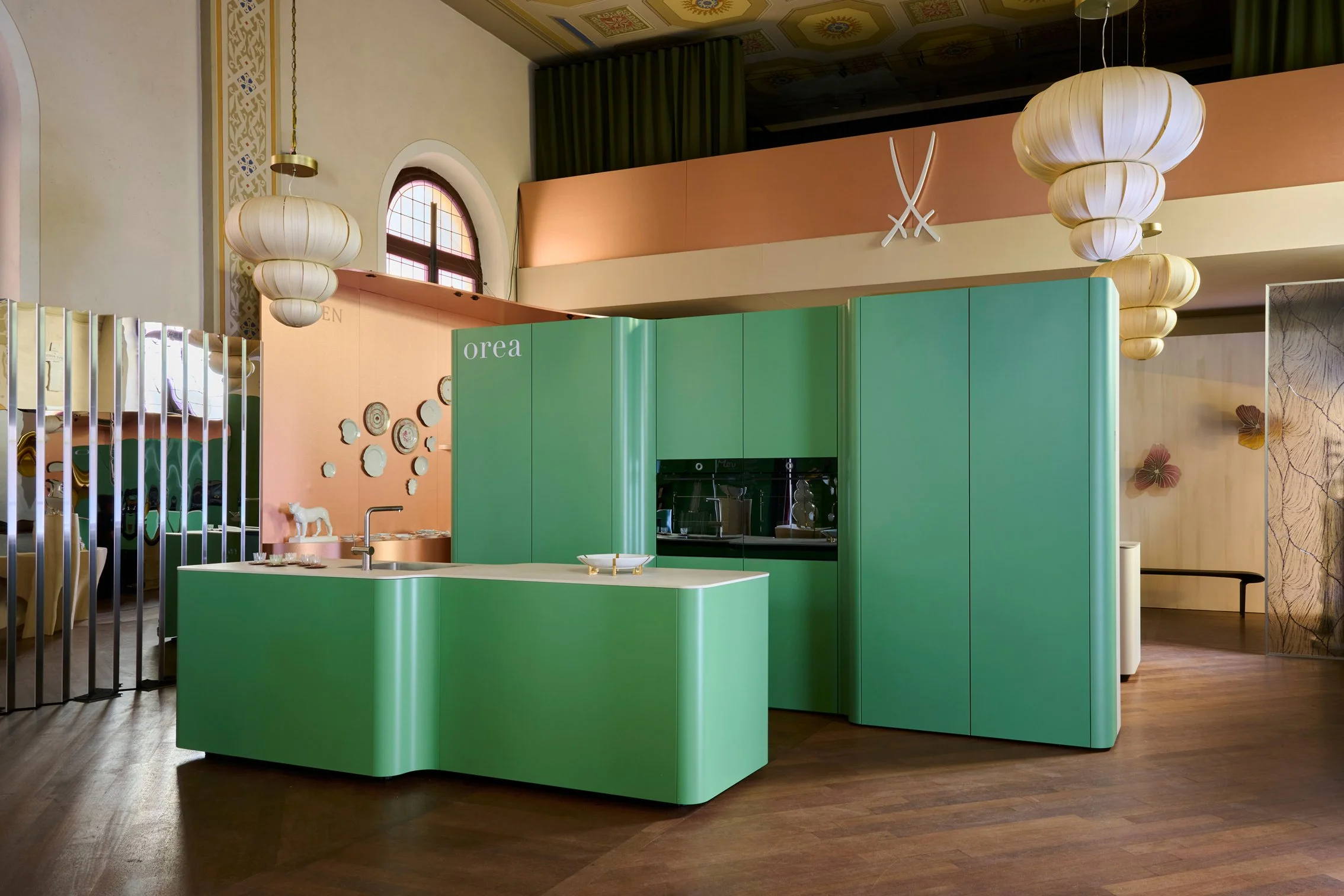
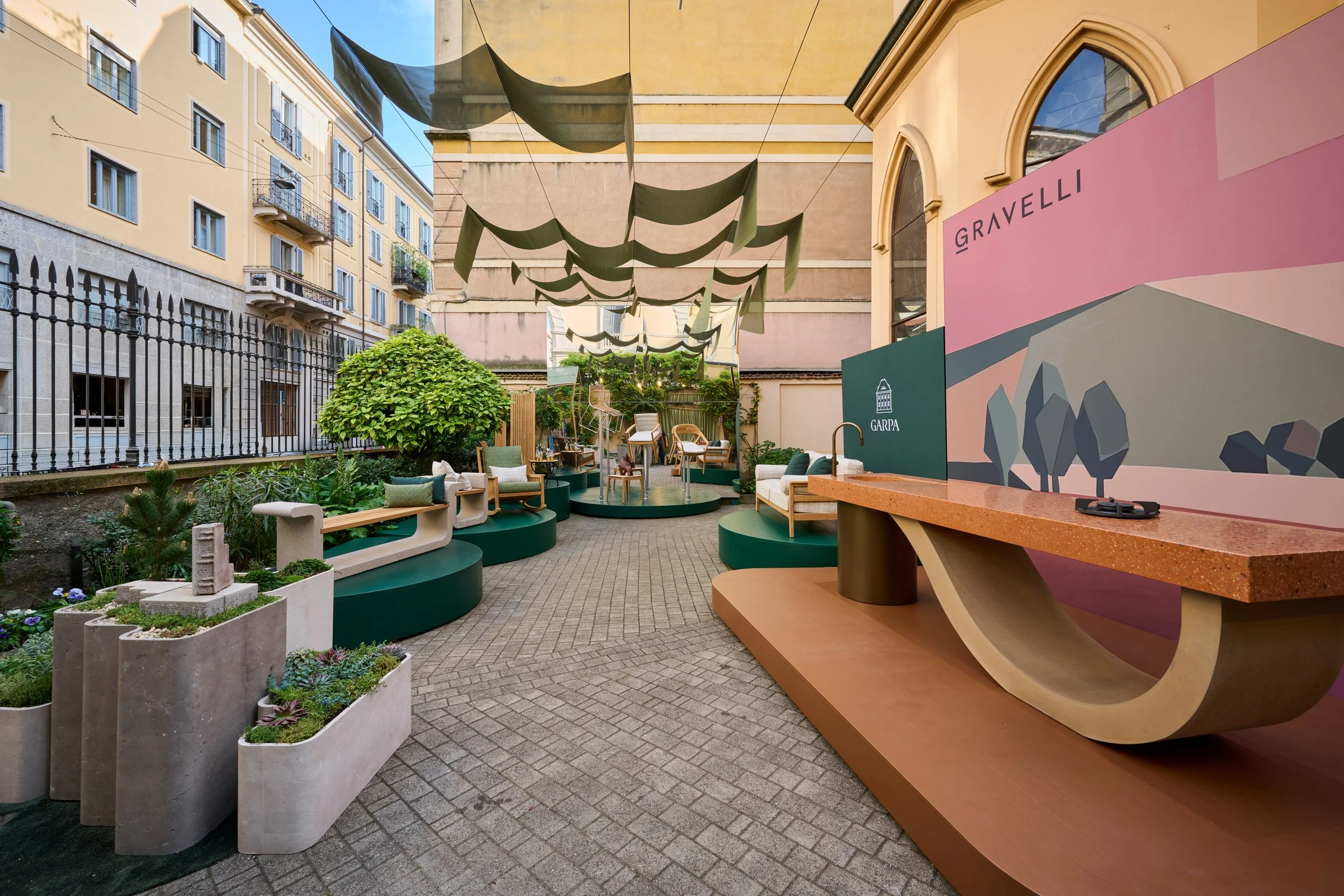
Set against the ecclesiastical rhythm of the Anglican church on Via Solferino, MENU transformed the site into a temporary architecture. From the street, the exhibition announced itself quietly yet confidently. The church’s unique terrace, the only one along this stretch of Brera that directly faces the street, became a threshold between Milan’s everyday pulse and a slower, more considered interior world. The openness of this frontage allowed the exhibition to breathe outward, building a dialogue between city life and inner contemplation.
Rather than presenting objects as isolated highlights, Sperlein approached MENU as a single, unified composition. The exhibition was curated, art‑directed, and architecturally designed by Sperlein himself, ensuring that every element spoke the same design language. This coherence was not imposed, but embedded, each collaboration absorbed into a shared spatial logic defined by proportion, materiality, and restraint.
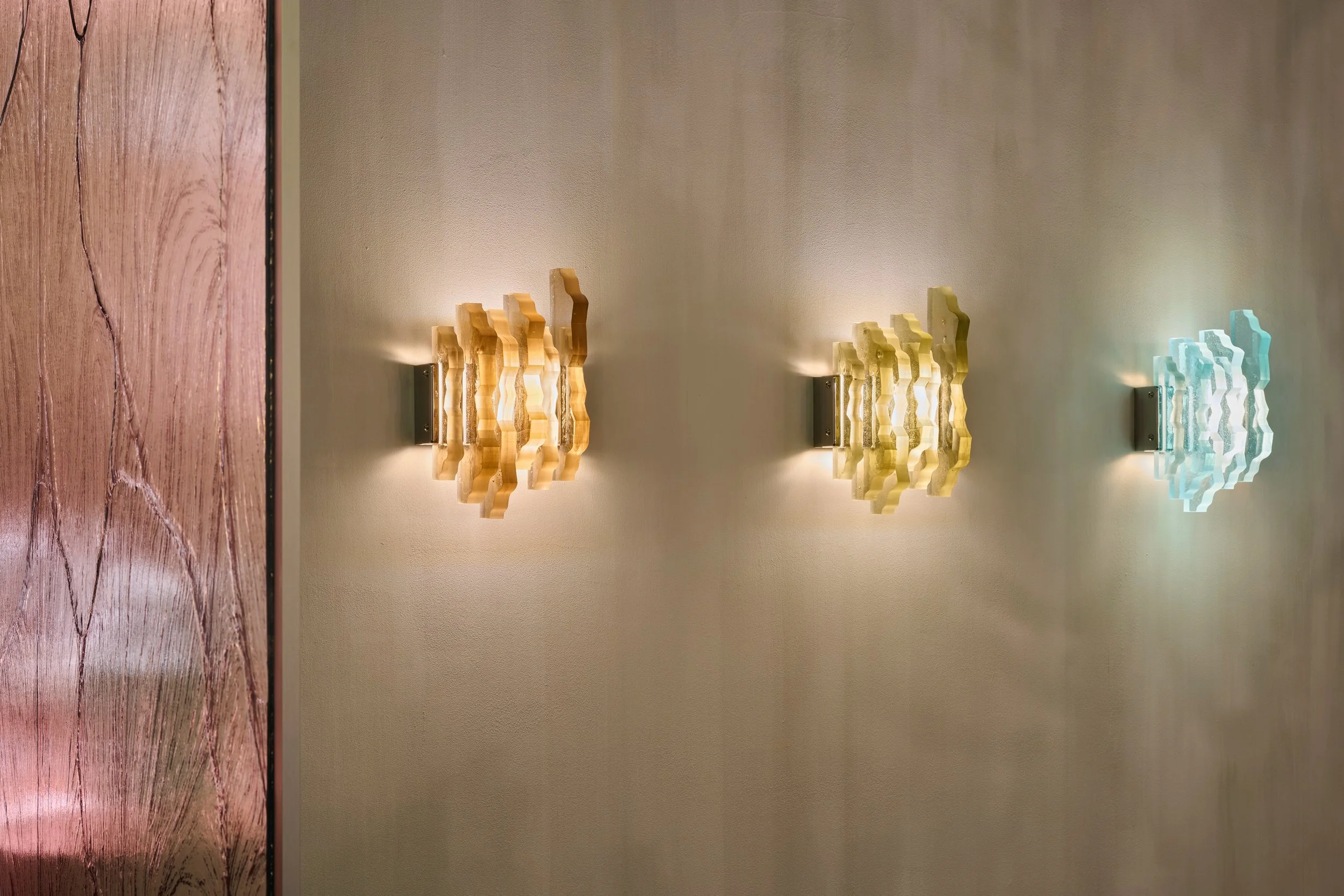
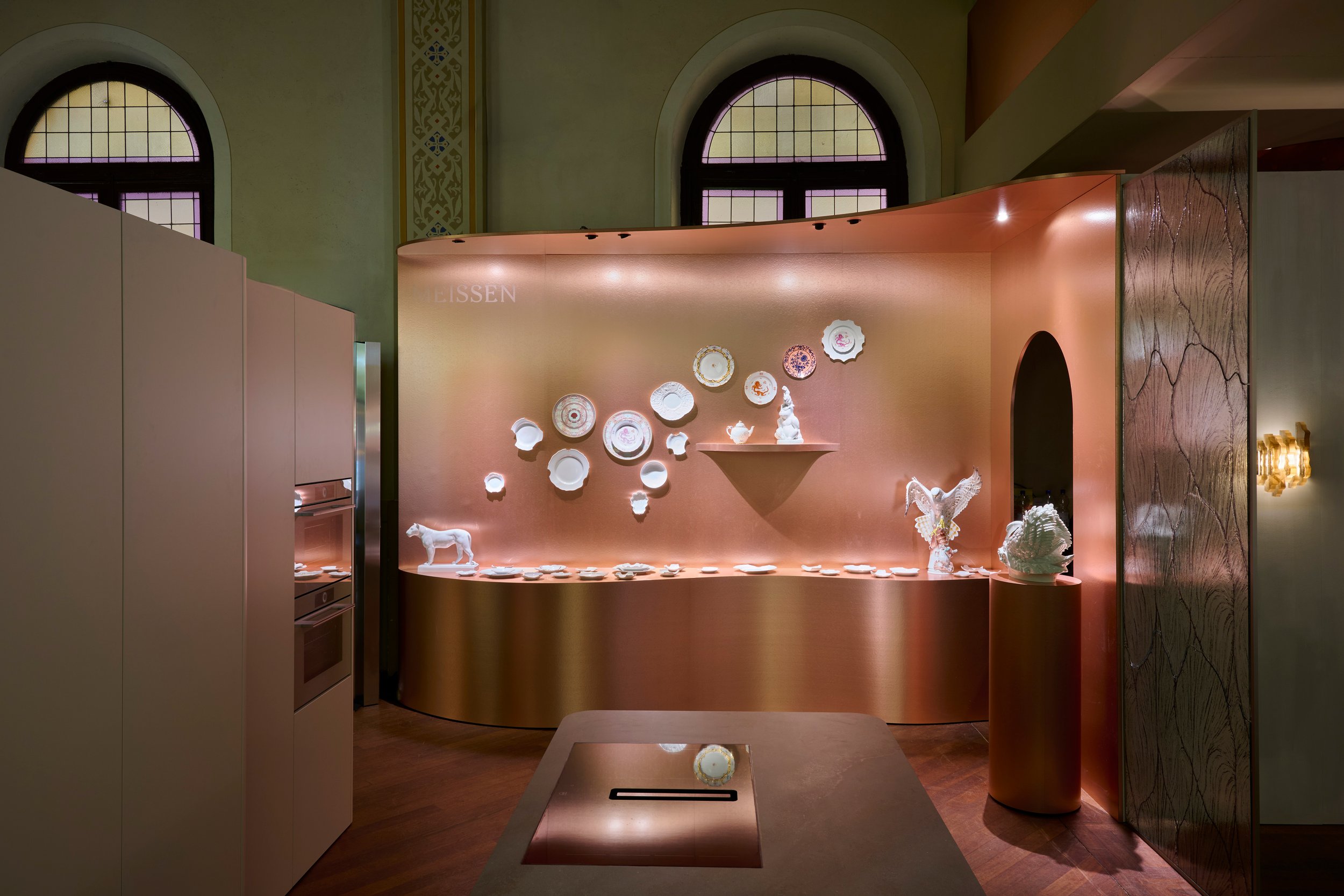
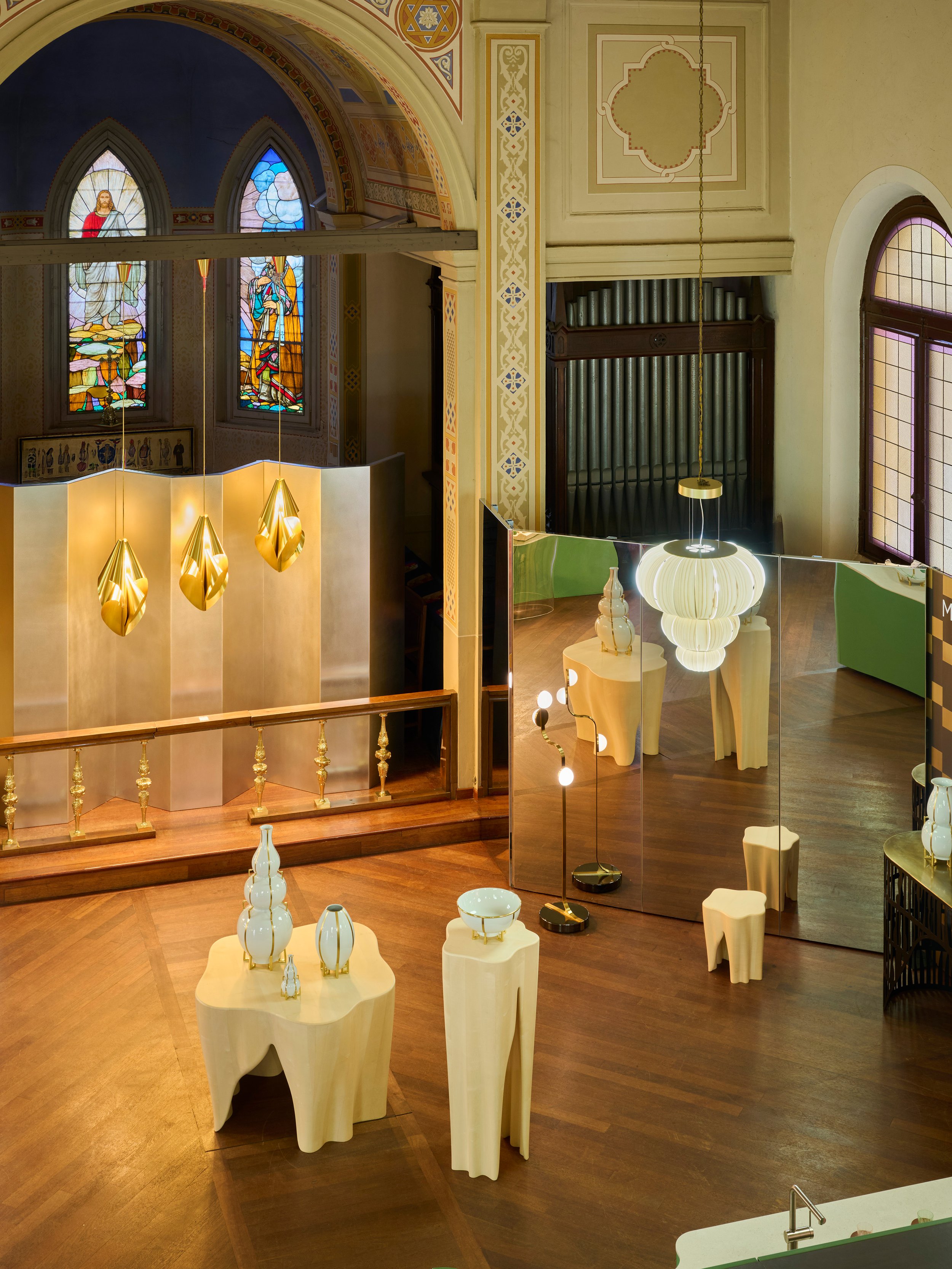
Inside the church, the installation respected the existing structure, working with its proportions rather than against them. Columns, sightlines, and volumes served as anchors, allowing the building's architecture to guide the visitor’s movement. What emerged was a sequence of spaces that felt neither temporary nor intrusive, but rather as though they had always belonged there, only briefly revealed.
Materiality played a central role in shaping this experience. Reflective metal, cast concrete, glass, porcelain, textile, and light were orchestrated into a layered environment where contrasts became the point of connection. Matte surfaces absorbed light, polished planes returned it, and translucent elements softened the edges between foreground and background. As daylight shifted throughout the day, so too did the perception of the space, lending MENU an ever‑changing tempo.
This sensitivity to material and atmosphere has become a defining strength of Bodo Sperlein Studio. Working internationally across product design, interiors, and spatial concepts, the studio has built a reputation for translating complex collaborations into coherent environments. MENU represented a culmination of this approach: an exhibition not as a backdrop but as an active participant in the storytelling of design.
Within this architectural framework, several international manufacturers presented premieres and new collaborations with Sperlein. Each contribution felt distinct, yet never disconnected.
For Meissen, the iconic German porcelain manufacturer, two new collections were unveiled: Phoenix and Edifice. Phoenix explored transformation through fragmented silhouettes, while Edifice translated architectural principles into porcelain, introducing structural elements as integral to the form. Displayed within the church, the collections resonated with the surrounding architecture, blurring the boundaries between object and environment.
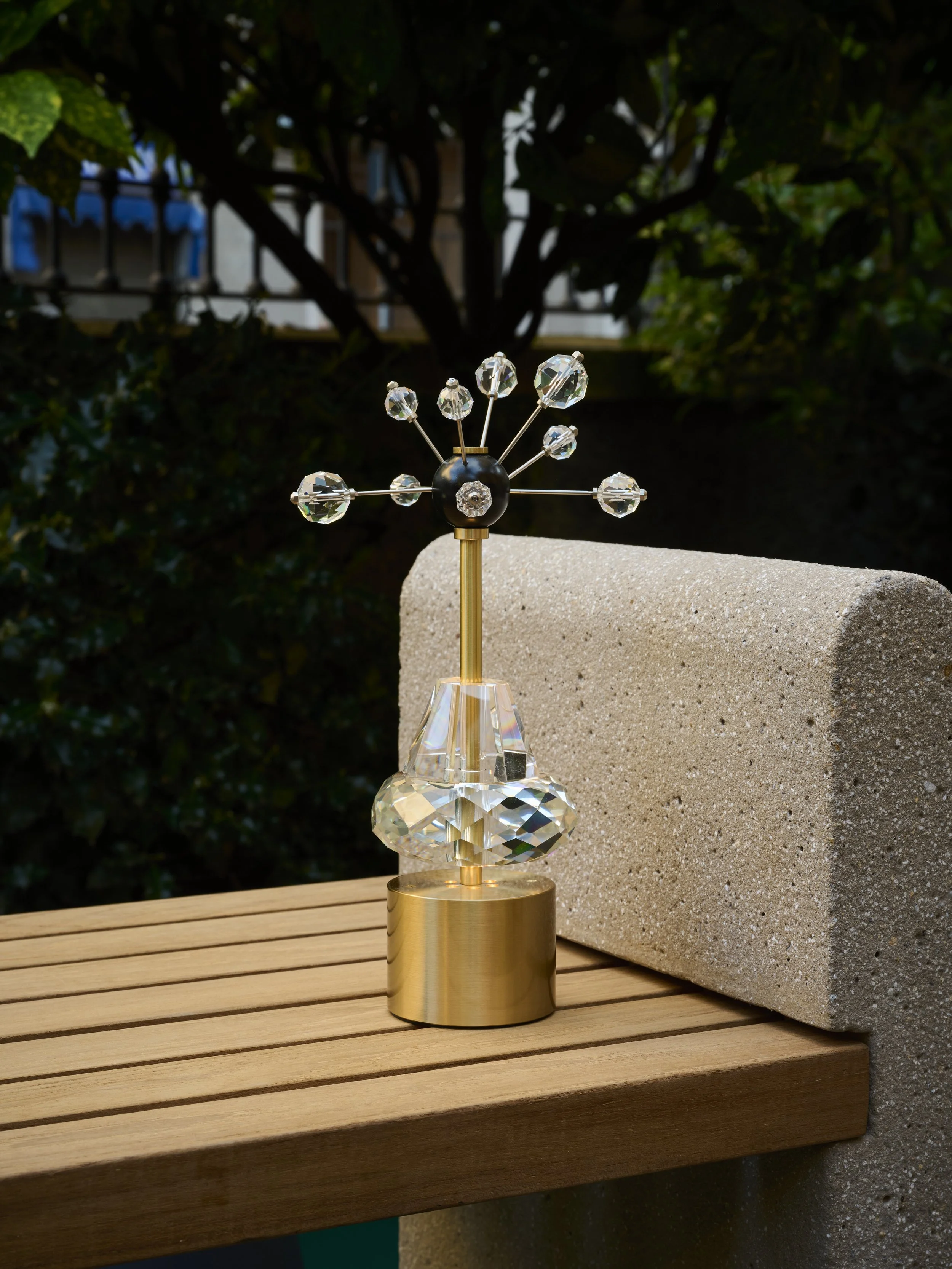
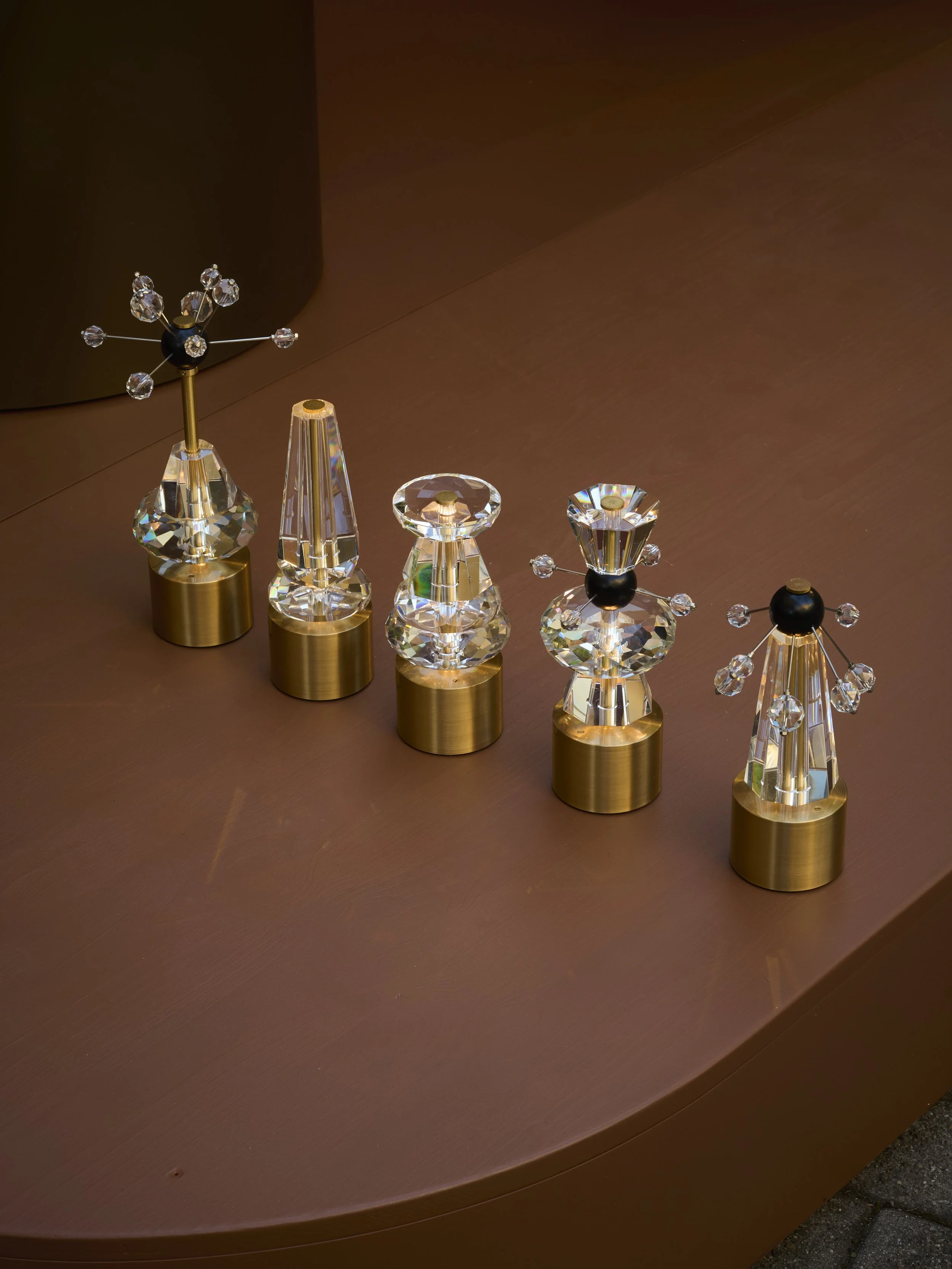
Lighting was woven delicately into the exhibition’s spatial rhythm. Viennese crystal and lighting house Lobmeyr presented the expanded Orchid family, introducing table lamps, floor lights, pendants, and wall‑mounted pieces. Crafted from hand‑formed brass, their abstract floral forms punctuated the space like moments of quiet illumination rather than focal spectacle.
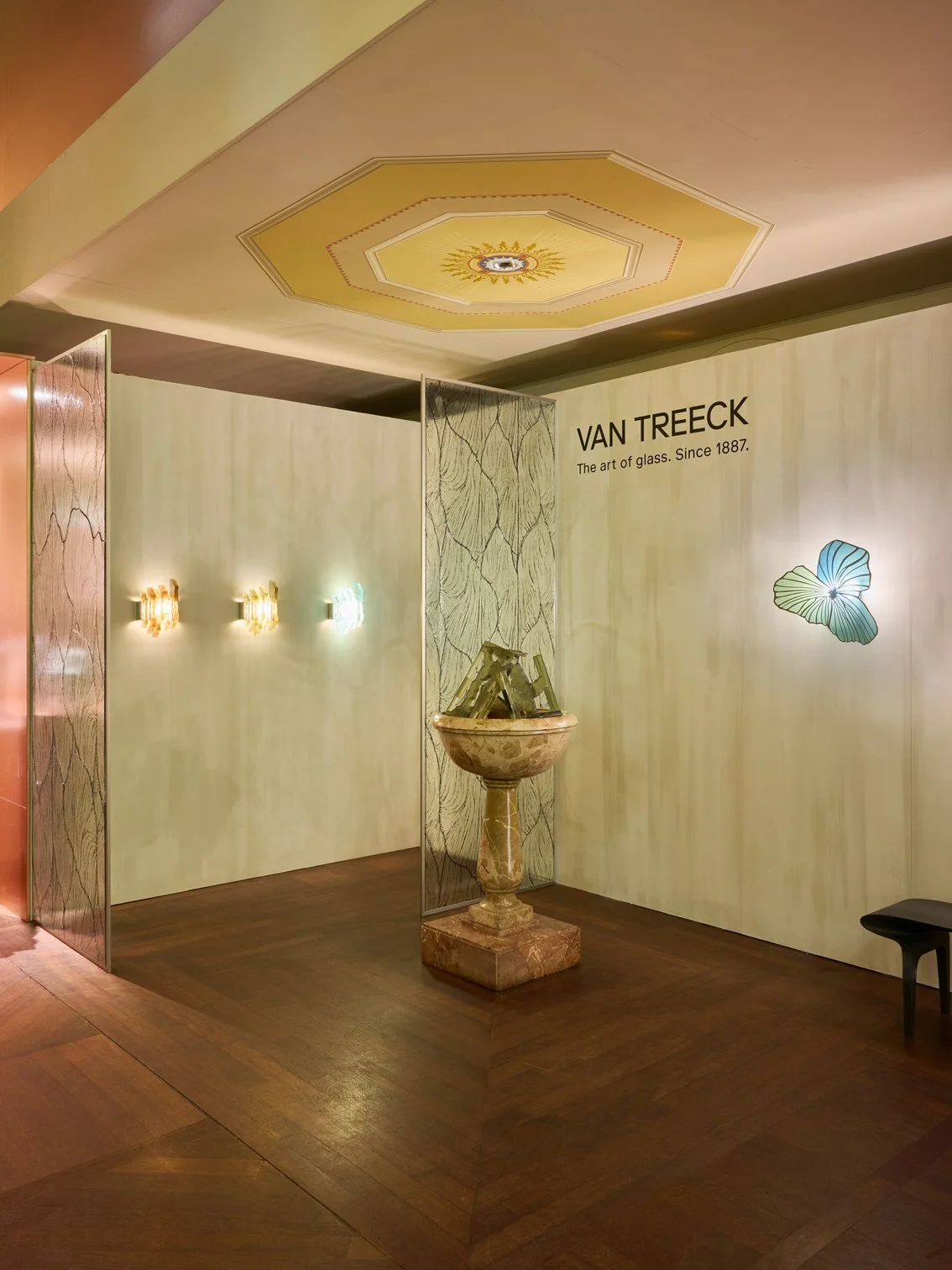
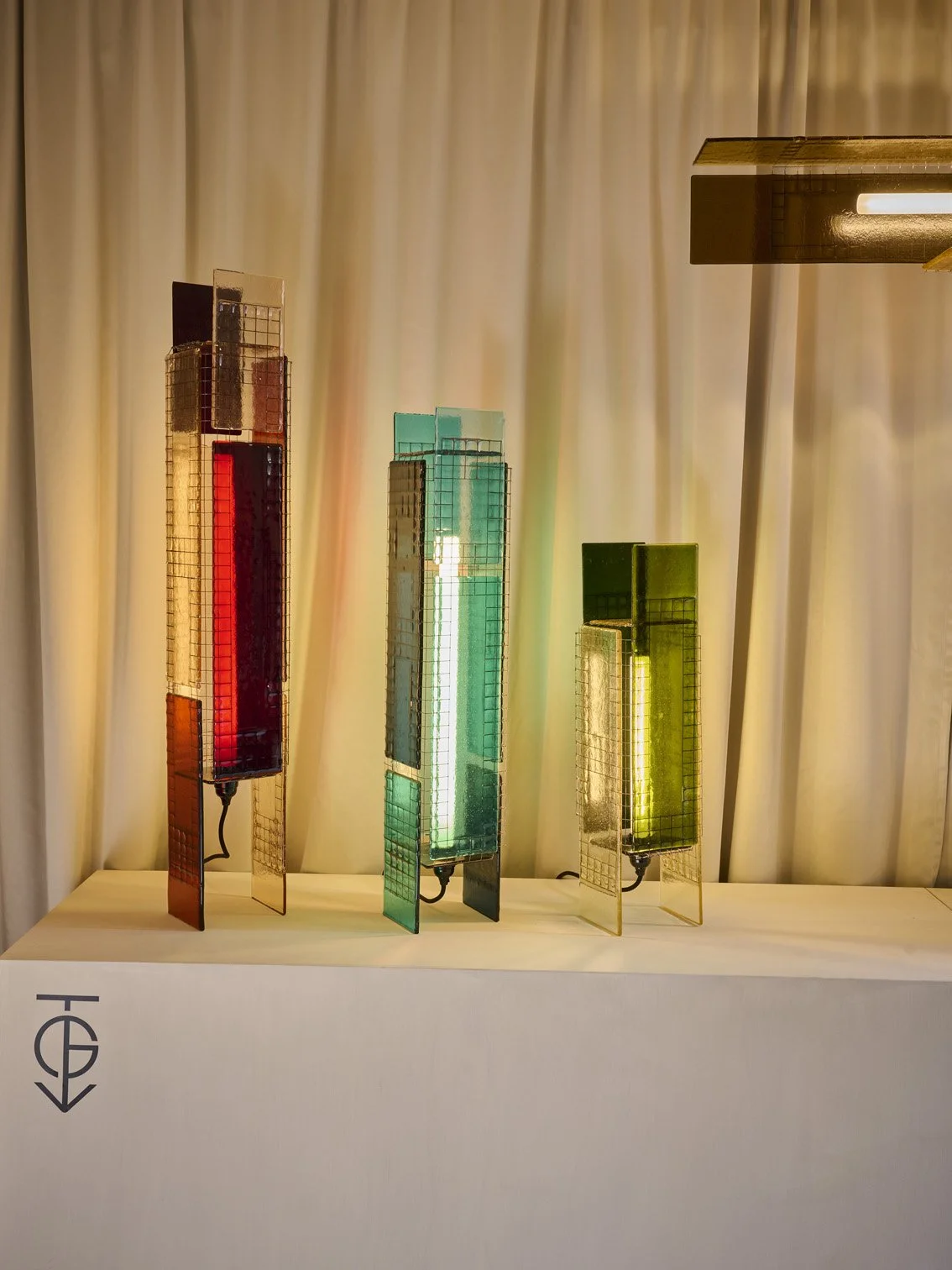
Glass took on a sculptural role through the work of Munich‑based VAN TREECK, who revealed their first comprehensive collaboration with Sperlein. The collections—Bloom, Arctic, and Veil—combined traditional glass techniques with contemporary expression, appearing as wall elements, light sculptures, and architectural panels that interacted with the church’s surfaces and shadows.
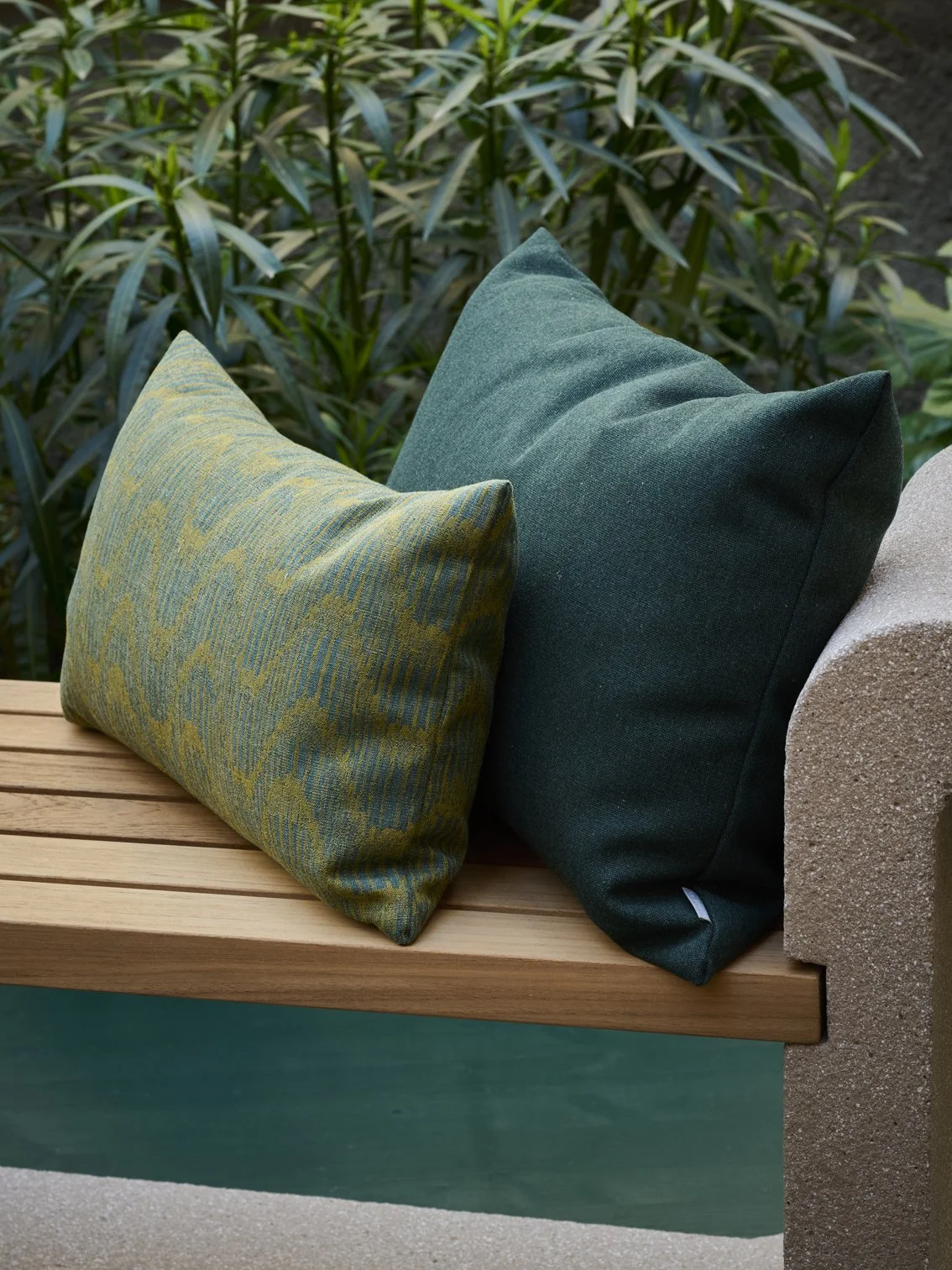

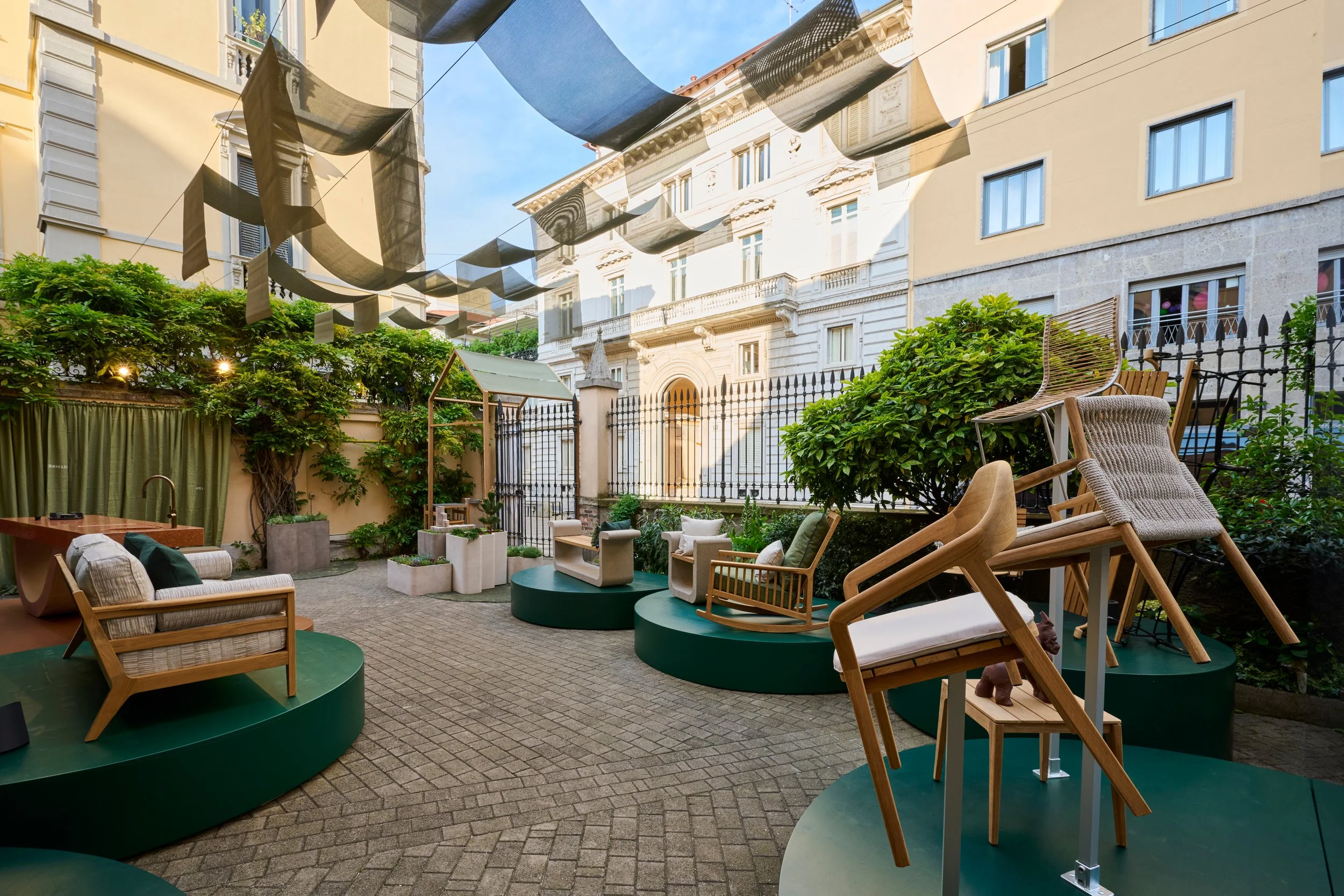
Beyond the interior, the terrace became an extension of MENU’s narrative. Here, German outdoor furniture brand Garpa introduced new textile and furniture developments, including the high‑performance exterior Jacquards Crest and Grove, as well as the Arcus seating series created with Gravelli. Combining cast concrete and certified teak, Arcus redefined outdoor furniture as a sculptural presence within landscaped contexts.
Gravelli further expanded this language through its CASCADE and COVE collections of concrete stone. CASCADE introduced a modular paving and planter system defined by flowing geometries and adaptable for public and private spaces, while COVE translated these principles into sculptural benches and outdoor kitchens. Both collections reflected Sperlein’s biomorphic design approach; soft, fluid forms realised in robust material.
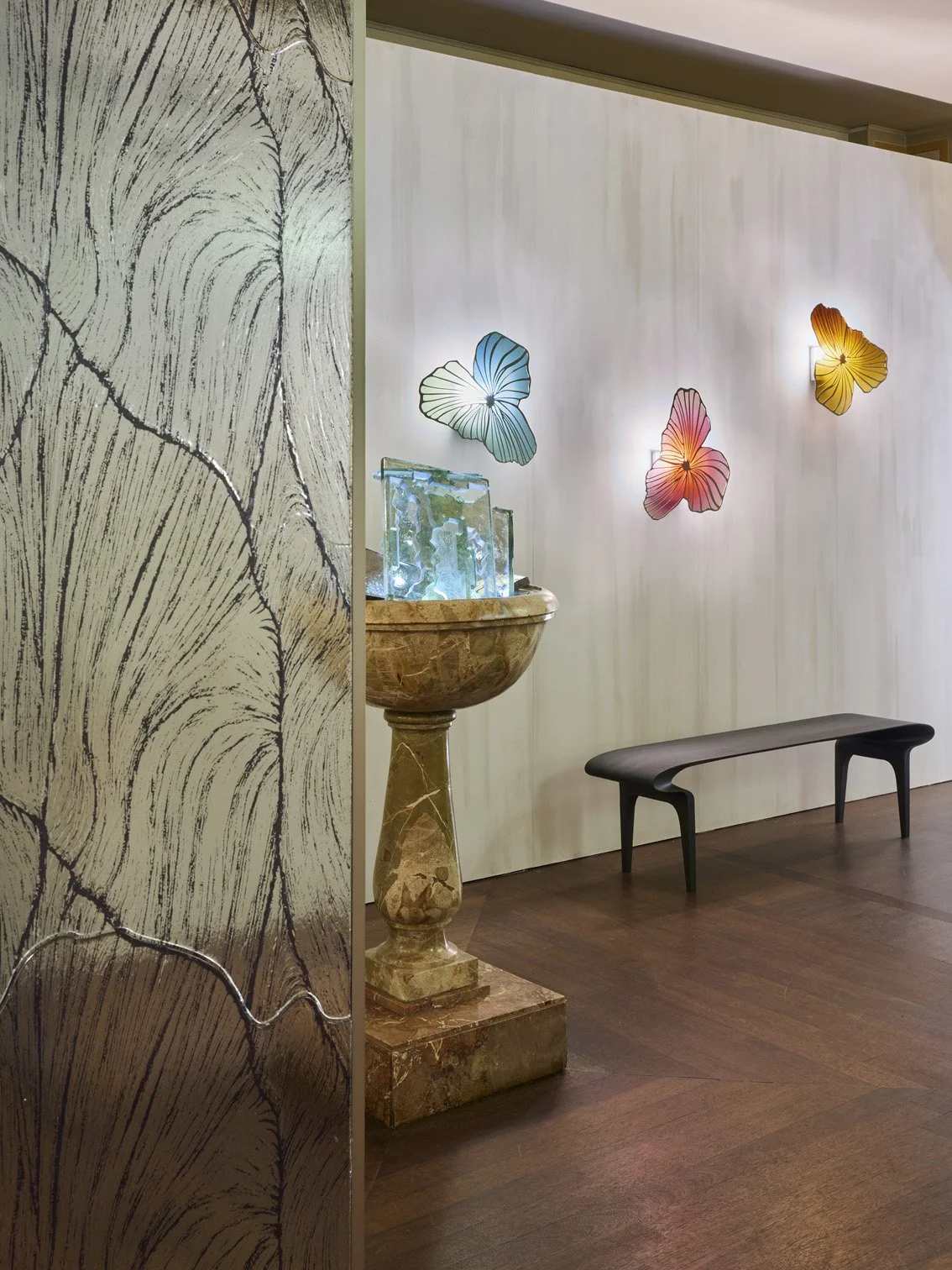
Metal, often hidden in architectural systems, was brought into focus through the collaboration with Morath Solutions. Custom stainless-steel wall claddings and structural components demonstrated the precision of Swiss metal fabrication, their refined surfaces quietly contributing to the overall spatial composition.
Spanish lighting brand LZF presented Arabesque, continuing its ongoing collaboration with Sperlein. Crafted from sustainable wood veneer, the pendant explored softness and movement, its flowing form echoing textile rather than timber.
Completing the exhibition, Swiss kitchen manufacturer Orea introduced the S2‑Line, the evolution of Sperlein’s original S‑Line concept. Presented as part of its official launch, the system combined lacquered finishes with ceramic stone and mineral worktops. At its heart sat the Divider Wall, a sculptural partition integrating storage and appliances, while the signature S‑shaped geometry reinforced a sense of lightness and continuity within the space.
Photography: Fabian Frinzel
During Milan Design Week 2026, MENU stood as more than an exhibition. It offered a pause, a moment of alignment between architecture, object, and intention. Set within the quiet dignity of Chiesa Anglicana Tutti i Santi, it demonstrated how design, when treated as a singular narrative, could transform not only space, but the way we move through it.
Though temporary, MENU left a lasting impression: a reminder that the most powerful design experiences often speak softly, and linger longest.
More Stories


Basic.Space arrives in London, transforming The Old Selfridges Hotel into a layered design experience where art, fashion, and sound converge. A moment of discovery shaped by the city’s enduring creative energy.