
Louis Vuitton Objets Nomades, Milan 2026
At Milan Design Week 2026, Louis Vuitton once again delivered one of the city’s most recognisable and widely discussed presentations, transforming the historic Palazzo Serbelloni into an immersive world of collectable design, decorative arts references, and scenographic storytelling. While the Objets Nomades collection remained the core attraction, the monumental courtyard installation outside immediately became one of the most photographed moments of the week, reinforcing Louis Vuitton’s enduring ability to merge cultural relevance with visual impact.
Year after year, the maison had proved that its presence during Milan Design Week extended far beyond furniture launches. Louis Vuitton understood how to create atmosphere, anticipation, and memory. In 2026, that instinct was fully realised through a presentation that balanced historic references with contemporary design, allowing visitors to move through a carefully choreographed narrative linking past craftsmanship to present innovation.
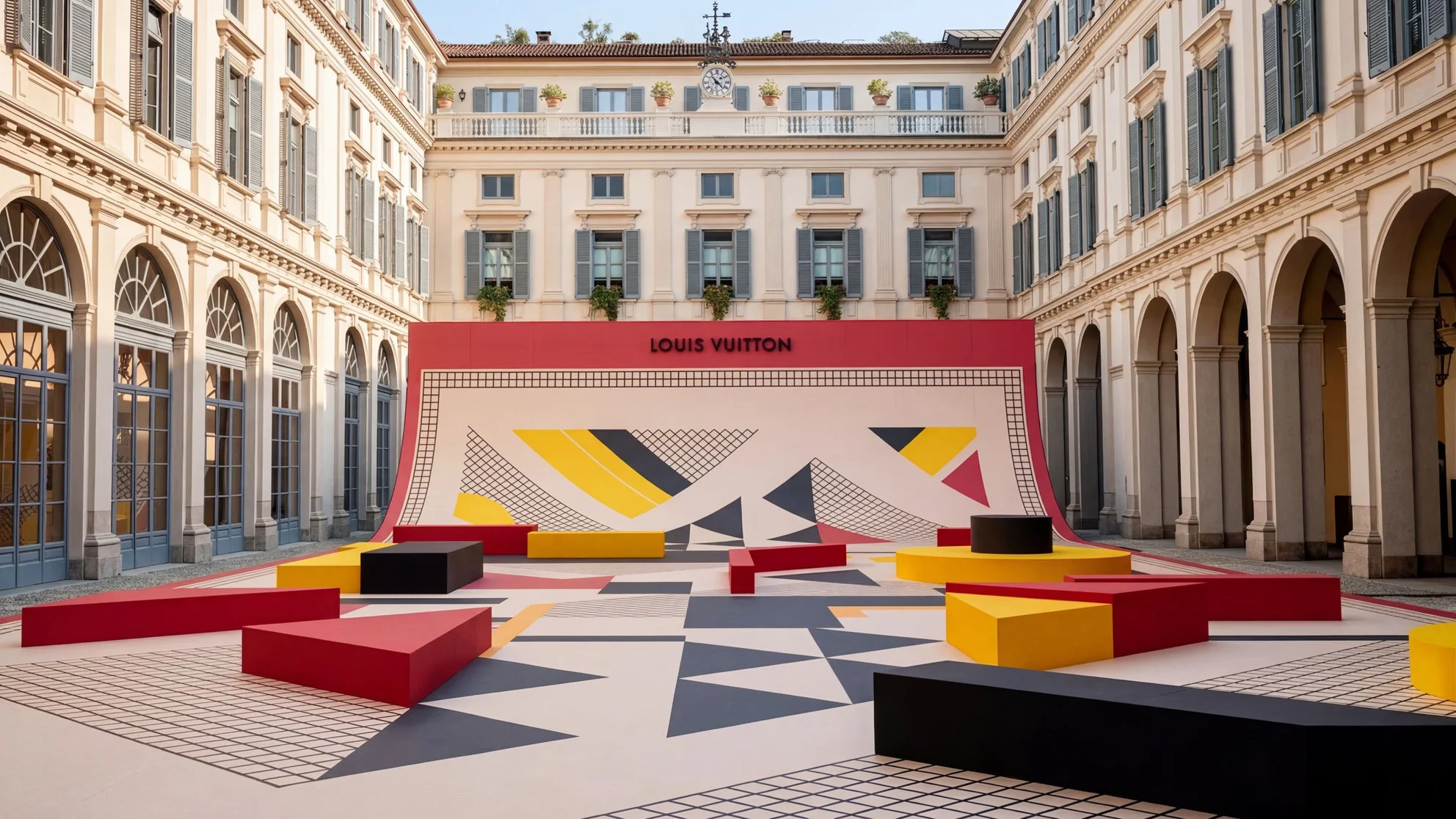
The Courtyard Installation That Defined the Showcase
Before many visitors even entered Palazzo Serbelloni, they encountered the large-scale courtyard installation that quickly became synonymous with Louis Vuitton’s 2026 presentation. Inspired by the work of pioneering French designer and bookbinder Pierre Legrain, the monumental rug composition transformed the palace courtyard into an architectural canvas of colour, geometry, and pattern.
Developed in collaboration with the Accademia di Belle Arti di Brera and produced in situ by students, the installation carried a deeper resonance than mere spectacle. It celebrated education, making, and the continuation of decorative craft traditions through a contemporary lens. By scaling bookbinding motifs into an immersive floor landscape, Louis Vuitton created a powerful dialogue between archive and future generation creativity.
It was visually striking, certainly, but it was also intelligent. In a design week often crowded with installations that offered little beyond photo opportunities, Louis Vuitton’s courtyard intervention possessed cultural substance as well as beauty.
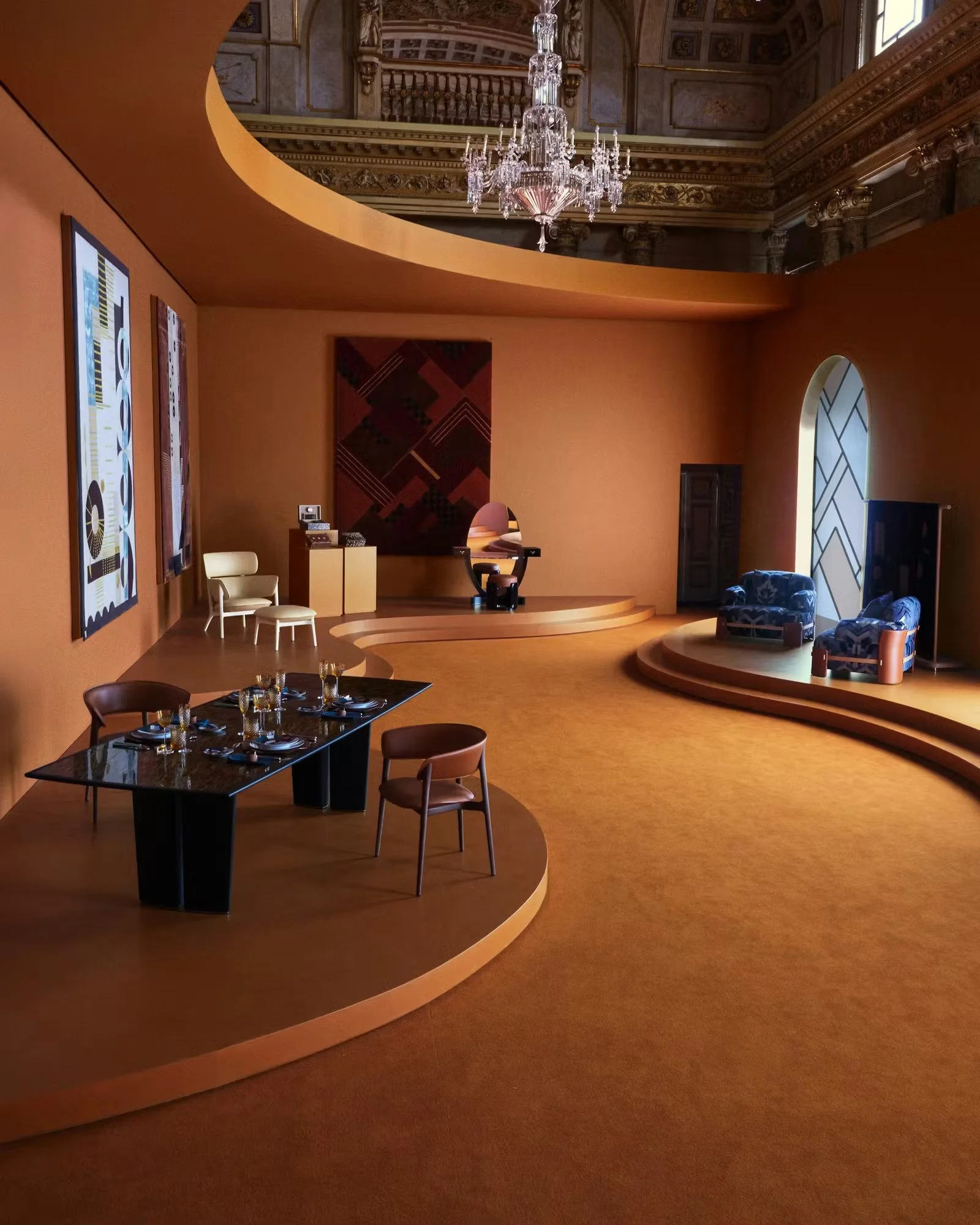
Palazzo Serbelloni as a Design Stage
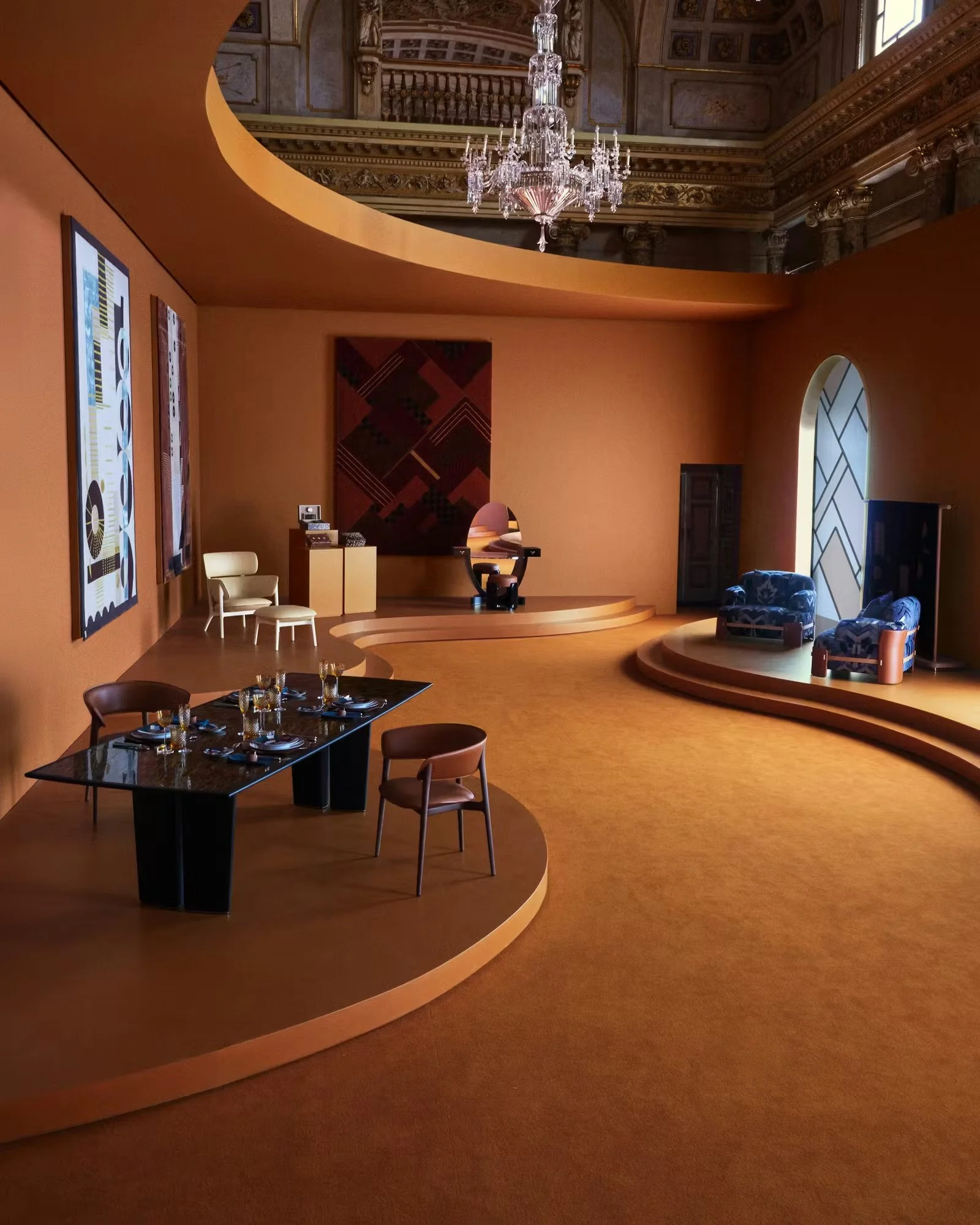
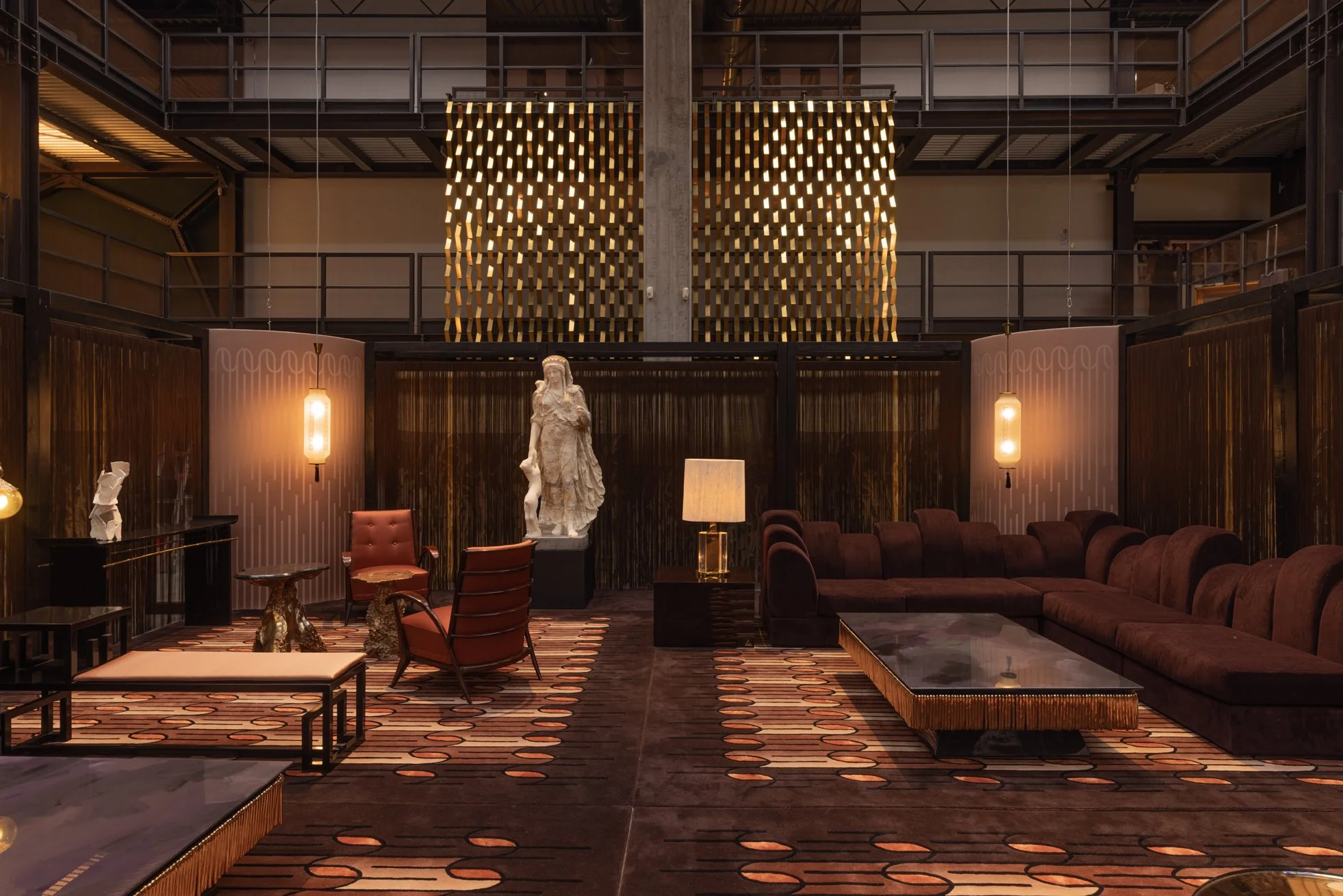
Inside, the grand interiors of Palazzo Serbelloni provided a fitting setting for a collection rooted in travel, movement, and decorative excellence. Louis Vuitton used the palace not simply as a backdrop, but as an active participant in the storytelling. Rooms unfolded as richly layered environments where colour, furniture, textiles, lighting, and historical references created a sequence of immersive worlds.
The scenography felt highly considered. Saturated palettes shifted from room to room, while each space maintained its own mood and rhythm. Rather than presenting isolated objects on plinths, Louis Vuitton embedded the collection within domestic narratives, allowing visitors to imagine how these pieces might live within sophisticated interiors.
This residential approach gave warmth to the presentation. It reminded audiences that collectable design should not feel remote or untouchable, but connected to everyday rituals of living, dining, reading, resting, and gathering.
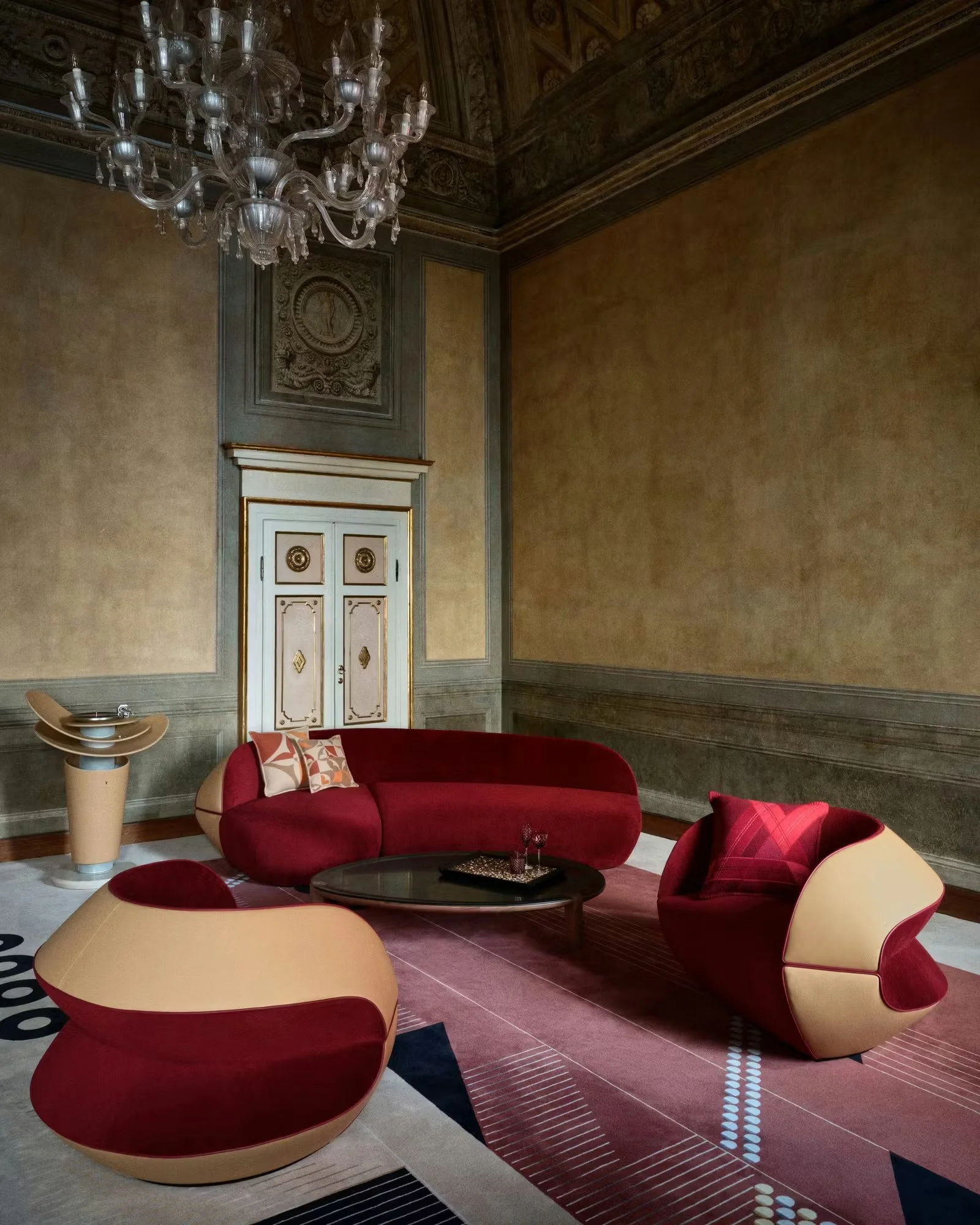
Pierre Legrain and the Power of Heritage
The exhibition opened with a tribute to Pierre Legrain, whose radical contributions to bookbinding, furniture, and Art Deco design helped define early twentieth-century modernity. Louis Vuitton drew on his graphic language and material sensibility to establish the presentation's tone, integrating archival trunks, illustrations, and heritage travel objects from the house collection.
The result was more than nostalgia. Instead, it positioned Legrain as a continuing influence whose ideas remain relevant today. Geometric forms, bold contrasts, and decorative confidence reappeared across contemporary furniture and accessories, proving how historical design movements could still inspire fresh interpretations.
This ability to use heritage dynamically rather than sentimentally remained one of Louis Vuitton’s greatest strengths.
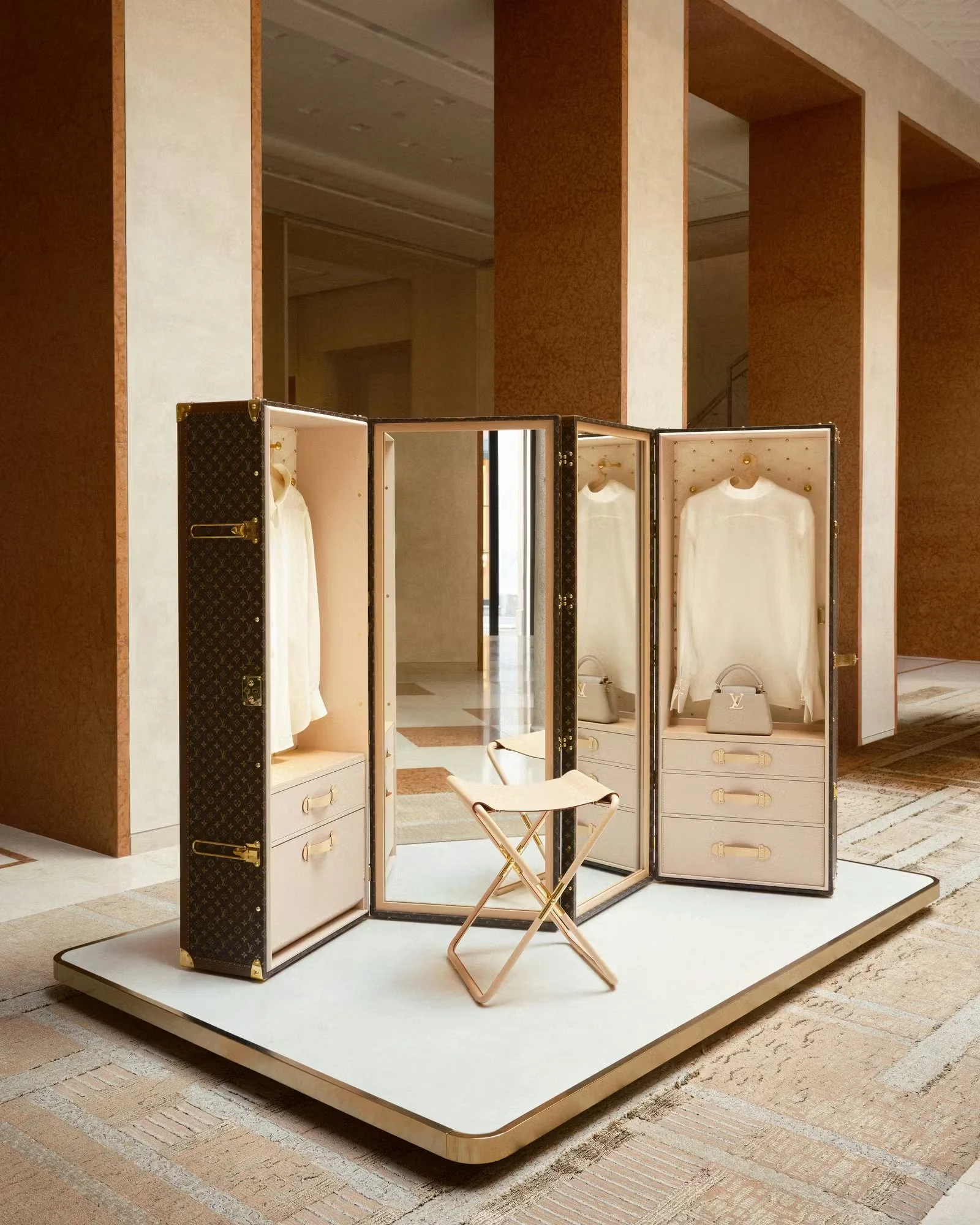
Objets Nomades in Dialogue with the Present
Alongside historical references, the latest Objets Nomades pieces showed why the collection remains relevant in today's design landscape. Collaborations with internationally respected creatives brought fresh energy while remaining connected to Louis Vuitton’s wider language of travel, craftsmanship, and innovation.
Throughout the palace, furniture and objects explored tactility, movement, comfort, and sculptural form. Seating pieces balanced softness with architectural presence. Tables acted as focal points. Textiles introduced depth and colour, while decorative objects added moments of surprise and personality.
The collection continued to avoid the trap of logo-driven luxury furniture. Instead, it focused on design integrity, material excellence, and emotional experience. This was furniture intended to be lived with, not merely admired from a distance.
Highlights Across the Rooms
Several spaces stood out for their clarity and confidence. Rich midnight-blue interiors framed layered living and dining spaces, where rugs, shelving, and statement seating coexisted with ease. Elsewhere, wall-mounted textiles transformed rooms into immersive art environments, demonstrating how Louis Vuitton increasingly blurred the boundaries between furniture, decoration, and gallery installation.
Cooler-toned rooms referencing Charlotte Perriand introduced moments of calm sophistication, while warmer red spaces embraced stronger graphic expression through table settings and geometric surfaces. Each room offered a different tempo, proving the exhibition had been carefully paced rather than simply filled.
This movement through changing atmospheres was central to the presentation's success. Visitors were not simply viewing objects; they were experiencing sequences of mood.
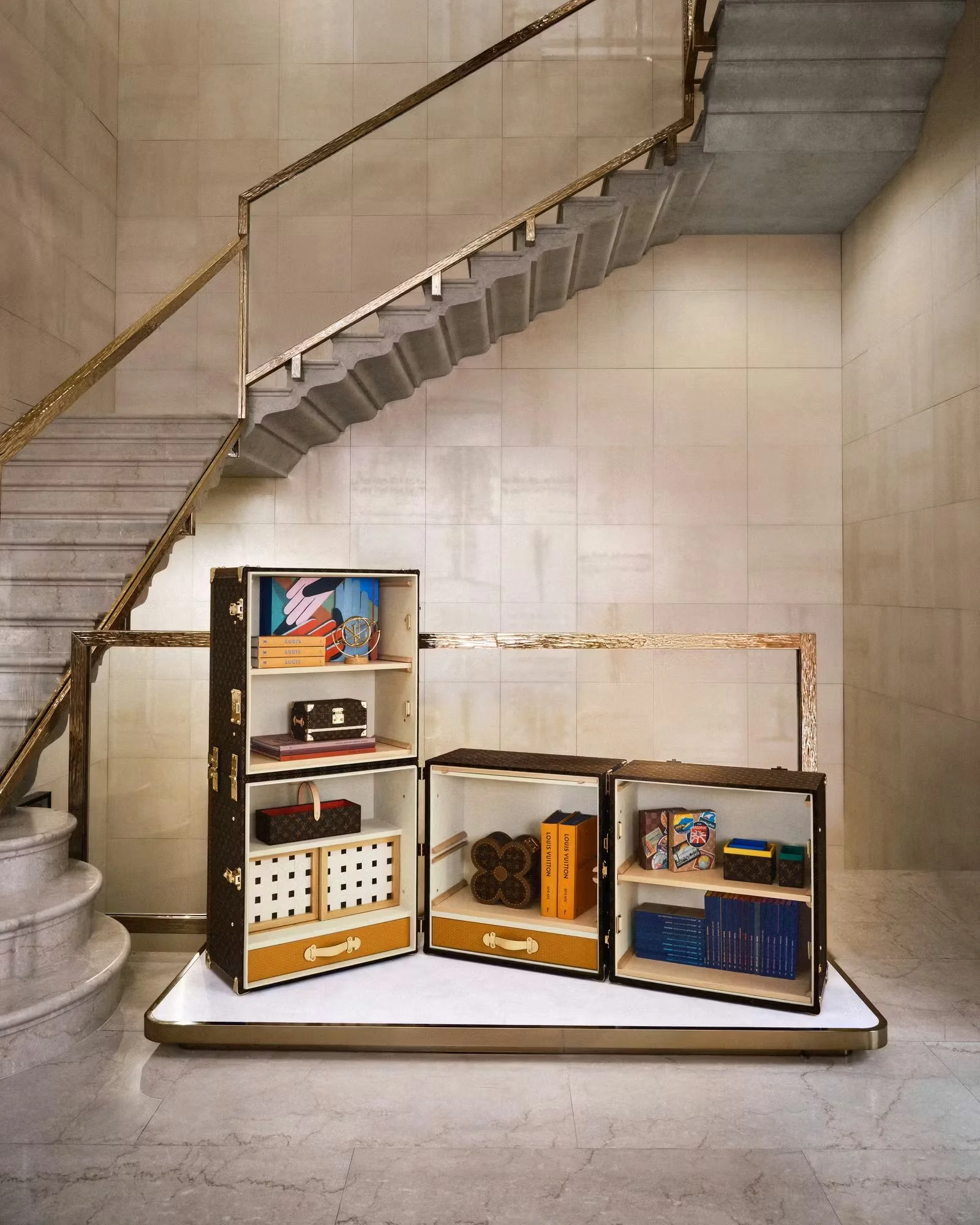
Collectable Design with Playfulness
Louis Vuitton also embraced moments of wit and experimentation. Works by Estudio Campana introduced surrealism, texture, and humour through collectable pieces that challenged traditional categories of furniture. Elsewhere, new seating and object designs played with optical effects, layered materials, and unexpected proportions.
These interventions ensured the exhibition never became overly formal. While grounded in craftsmanship and heritage, it retained curiosity and joy, qualities often missing from luxury presentations.
Why Louis Vuitton Remained a Milan Design Week Leader
By 2026, many fashion houses had entered the interiors market, yet few had achieved the sustained credibility of Louis Vuitton Objets Nomades. What distinguished the maison was consistency. Each year built on the last, deepening a serious relationship with design culture rather than treating furniture as a temporary brand extension.
The 2026 showcase exemplified that maturity. It united archive, education, collectable design, scenography, and architecture into one coherent narrative. It also understood that audiences now expected more than surface beauty. They wanted context, authorship, and genuine cultural engagement.
Louis Vuitton delivered all three.
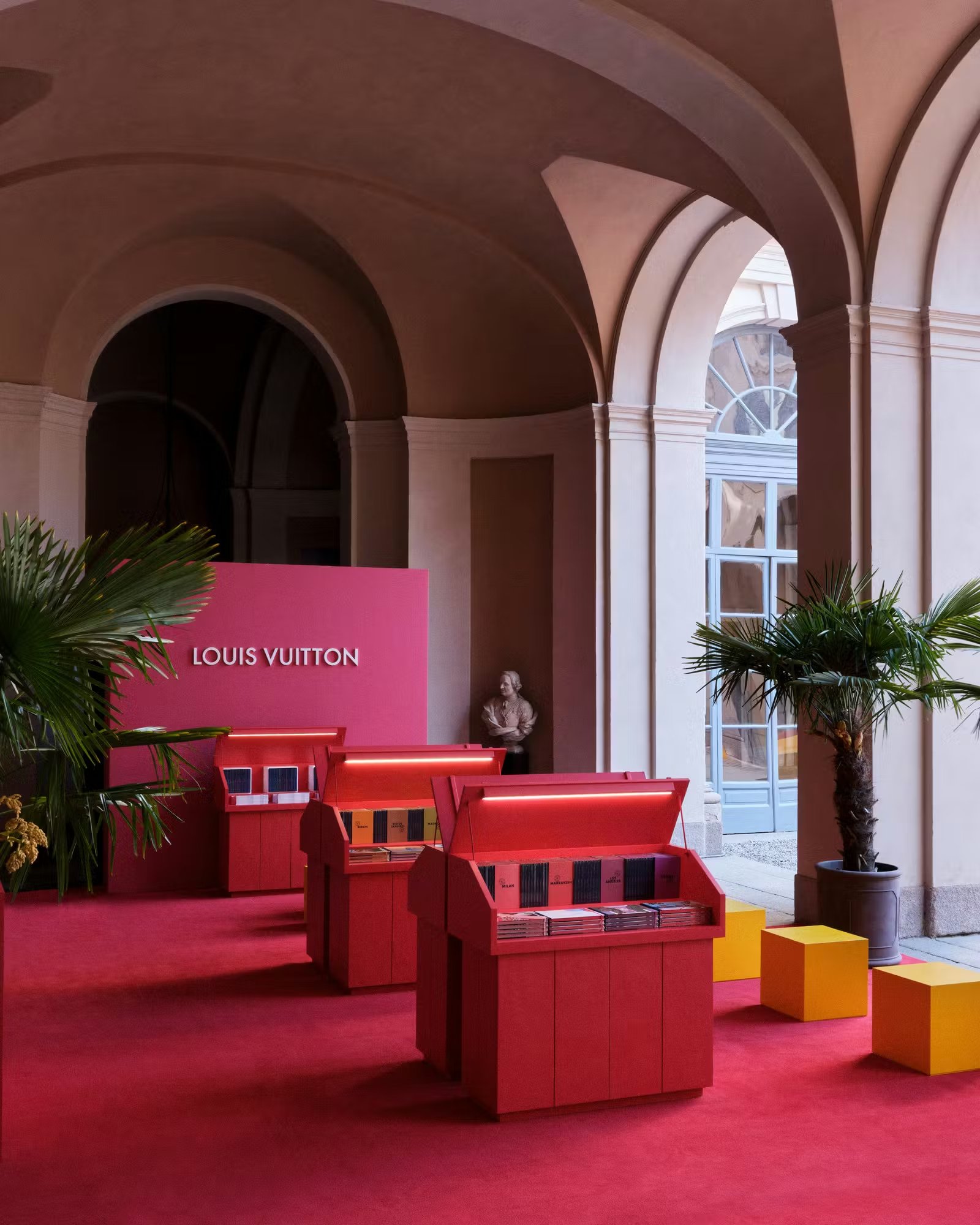
A Lasting Impression
As Milan Design Week 2026 concluded, Louis Vuitton’s Palazzo Serbelloni presentation remained one of the week’s defining experiences. The monumental courtyard installation drew visitors in, but it was the depth of the interiors and the intelligence of the curatorial narrative that ensured the showcase stayed with them.
Objets Nomades once again proved that collectable design could be elegant, relevant, and emotionally resonant when supported by craftsmanship and clear creative vision. In a city full of temporary noise, Louis Vuitton created something far more lasting: a complete world.
More Stories
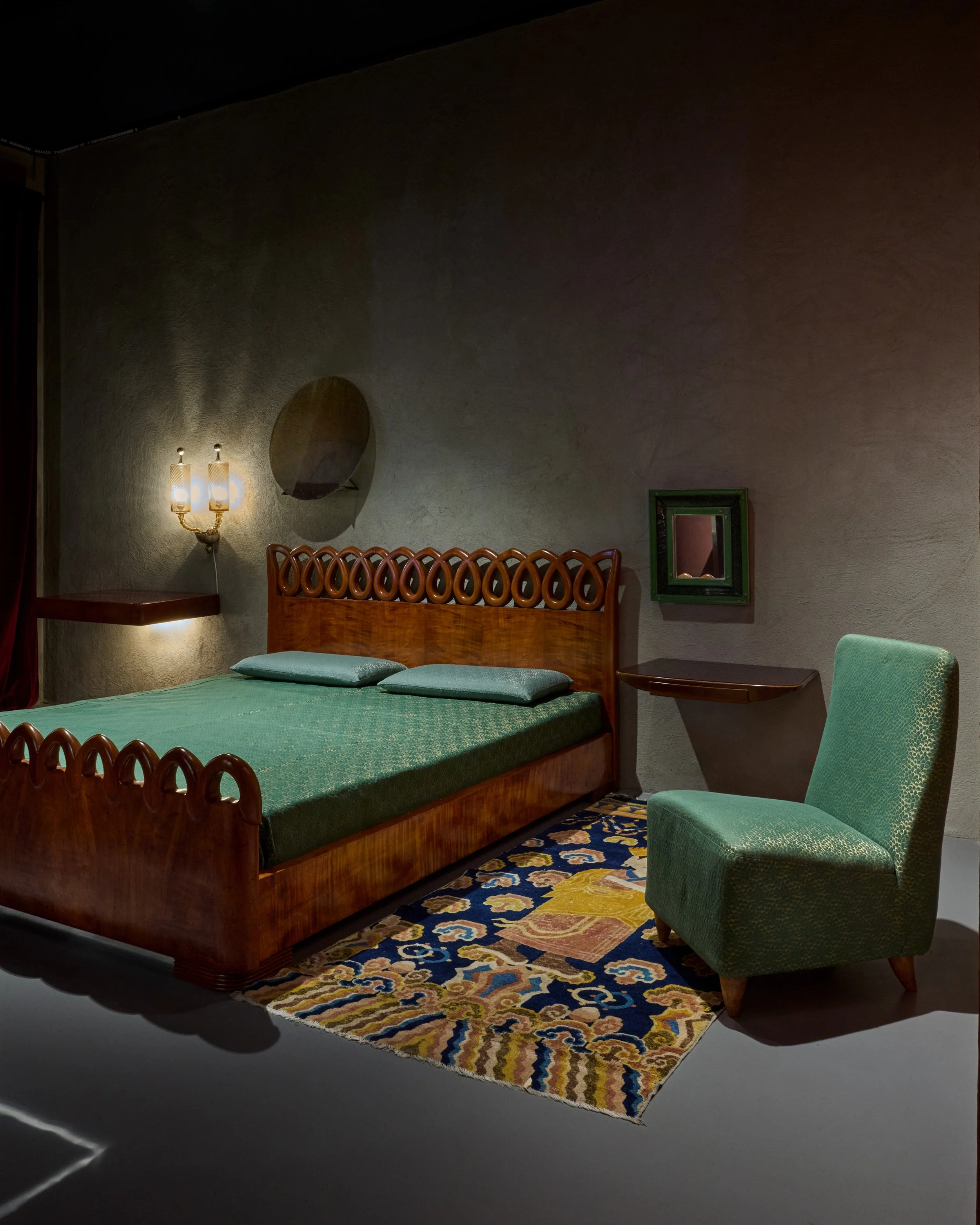
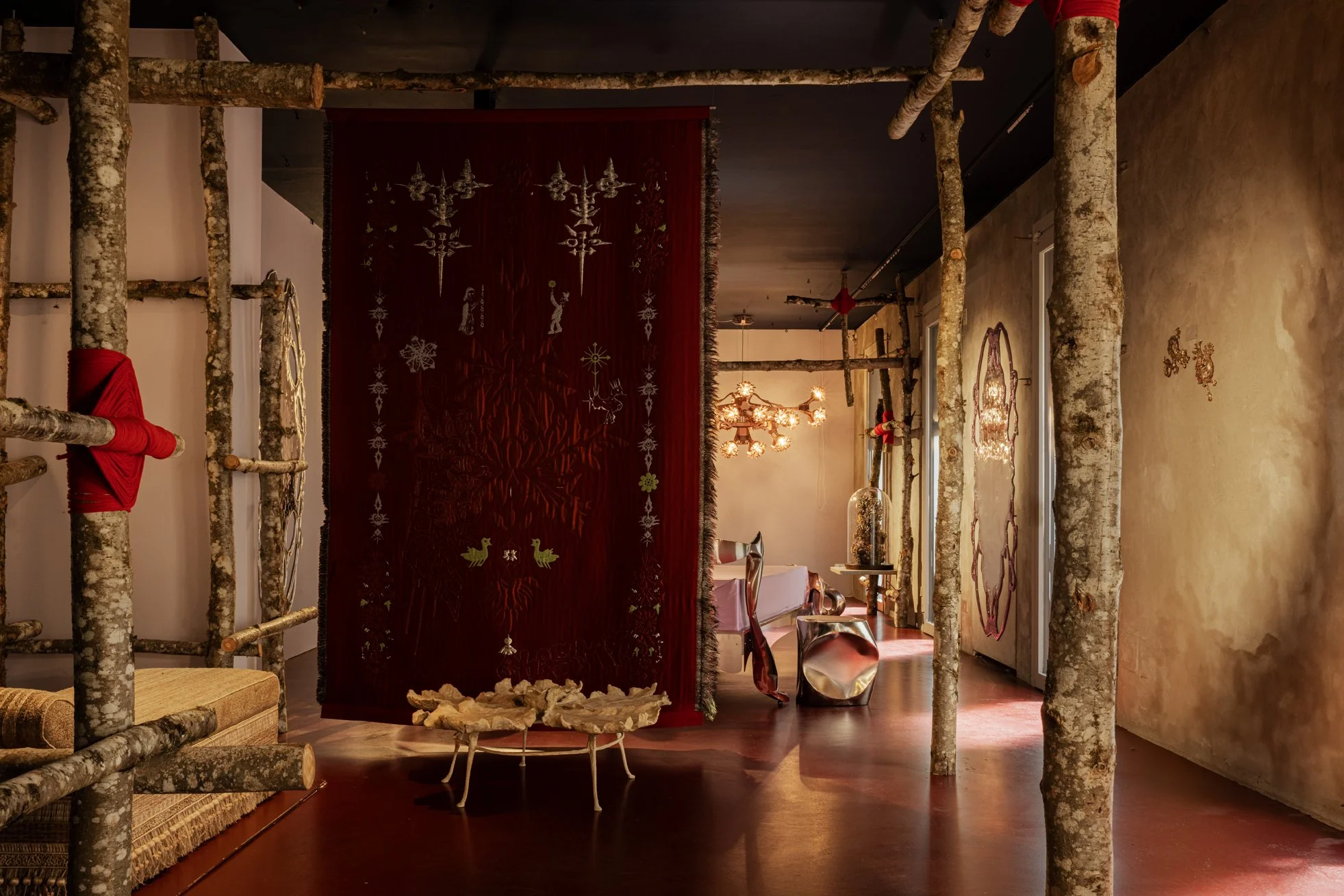
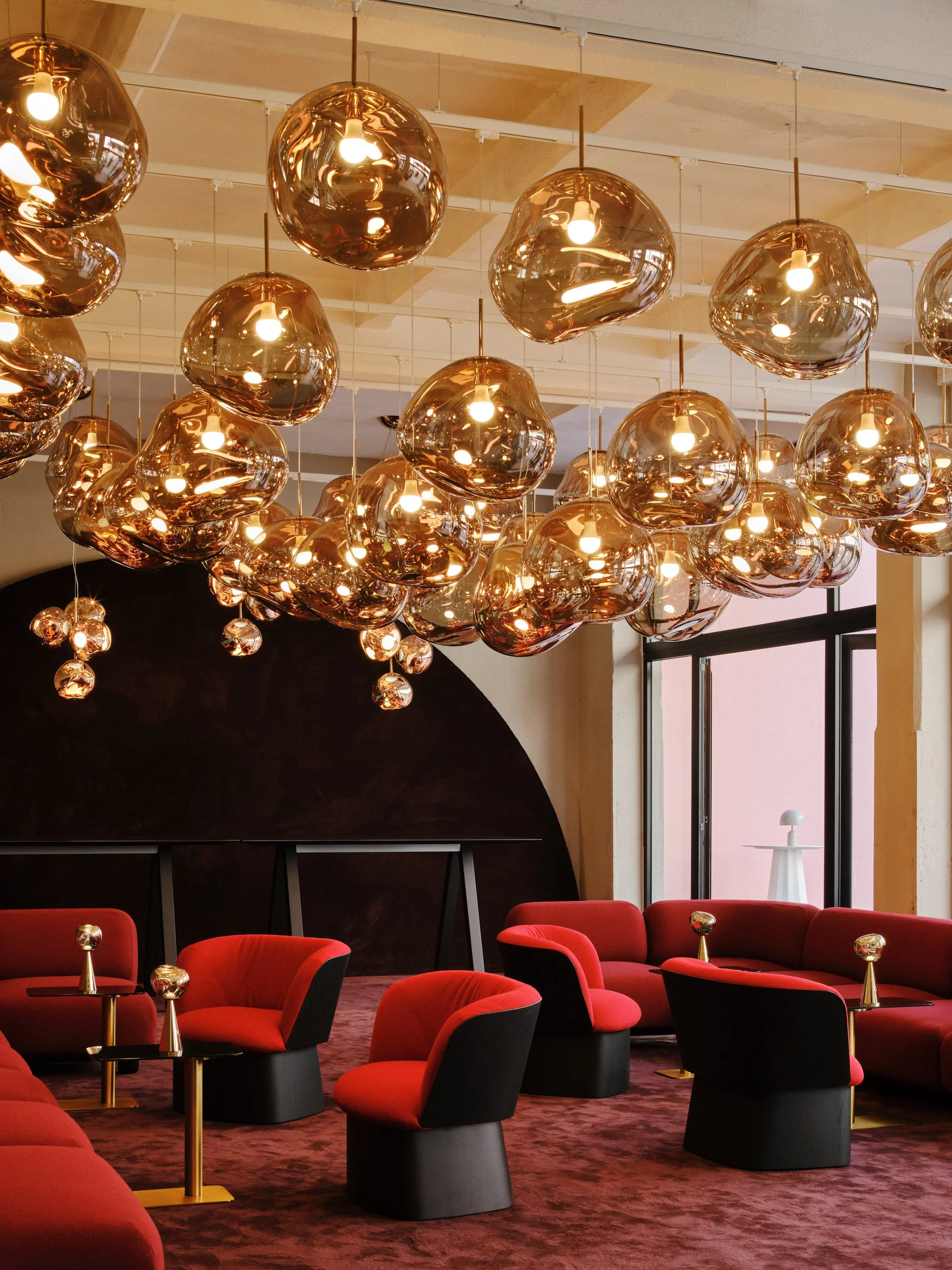

During Milan Design Week 2026, MENU transformed Chiesa Anglicana Tutti i Santi into a unified architectural narrative. Curated by Bodo Sperlein, the exhibition brought material, light, and collaboration into quiet alignment.