
Kohler x Flamingo Estate at Milan Design Week 2026
Kohler once again proves why it remains one of the city’s most dependable names for immersive design experiences, this year partnering with Flamingo Estate to create a sculptural bathhouse that transforms wellness into something poetic, sensory and deeply memorable.
There are certain brands that understand Milan Design Week not simply as a trade fair, but as theatre. Brands that know the city itself become part of the exhibition; its courtyards, palazzi, gardens and hidden passages are turned into stages for storytelling. Kohler has long been one of those names. Year after year, the American design house has used Milan as a canvas, creating showcases that feel considered, atmospheric and culturally relevant rather than merely commercial.
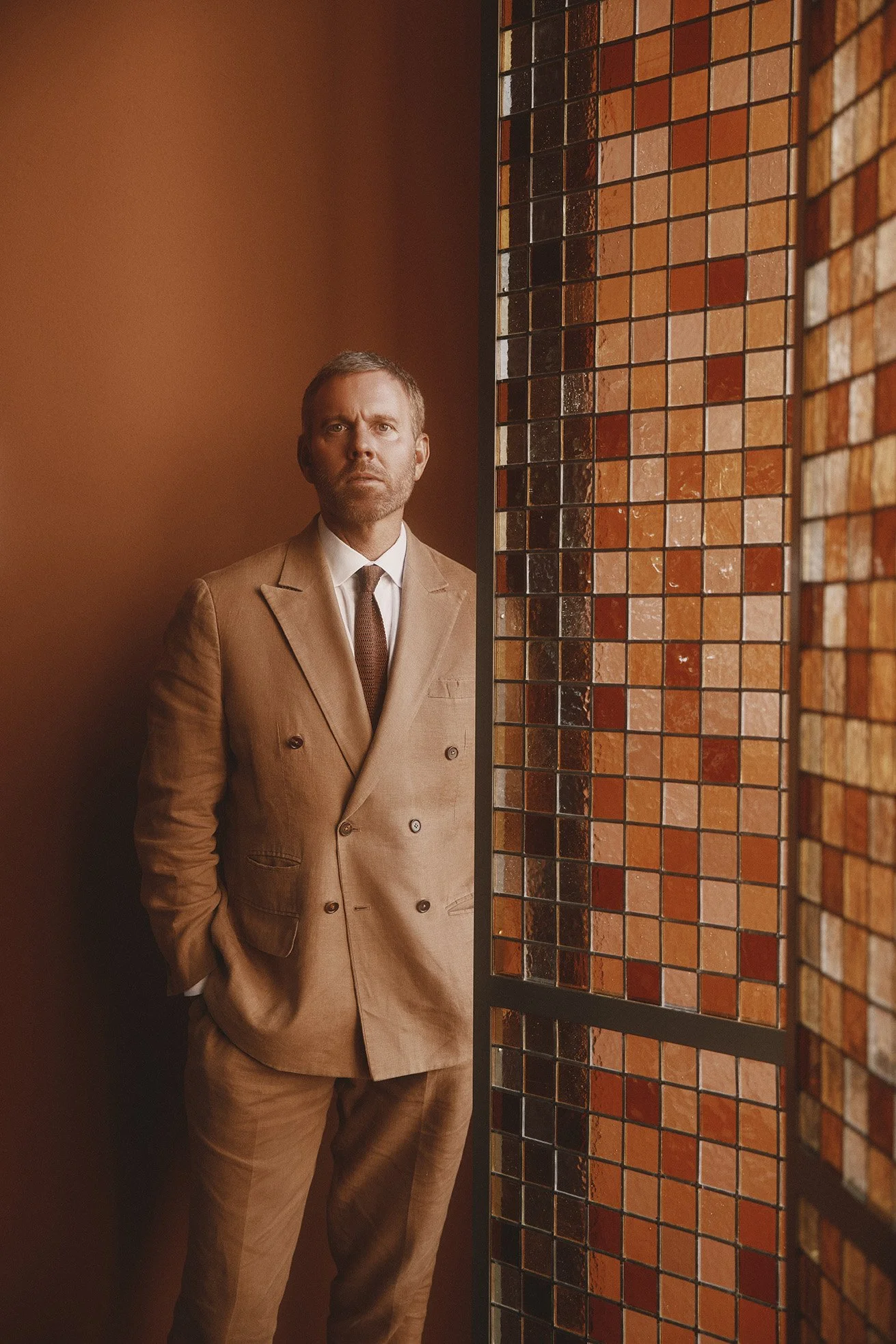
Having covered Kohler on many occasions over the years, I have always found it a staple of Milan Design Week. Their presentations consistently recognise the importance of place, using Milan not just as a location, but as an active ingredient in the experience. This year is no different. In partnering with Flamingo Estate, the cult California lifestyle brand founded by Richard Christiansen, Kohler has created something quietly powerful: a temporary sanctuary rooted in ritual, craftsmanship and the healing presence of nature.
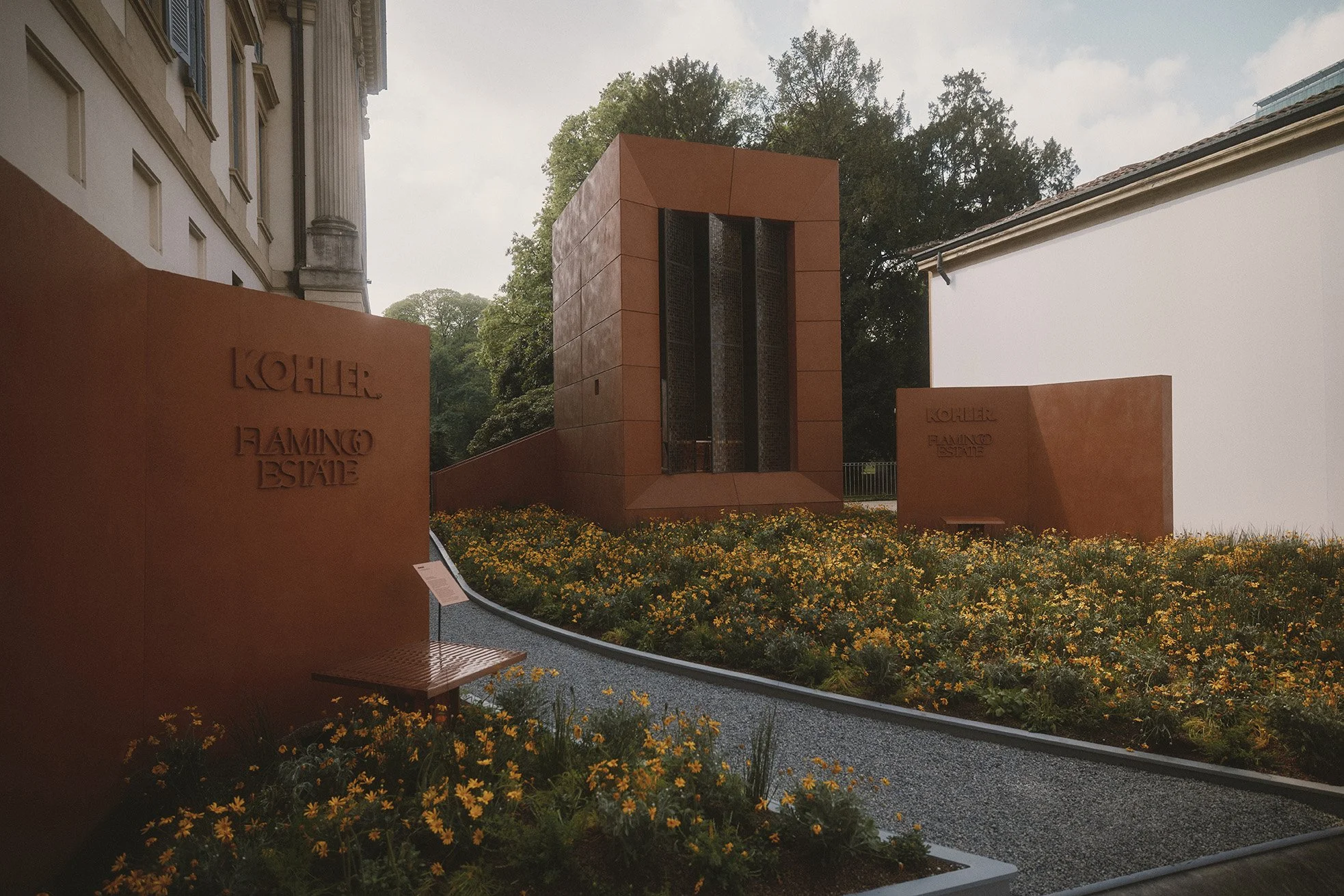
A Different Pace in the Middle of Milan
During Design Week, Milan moves quickly. Streets overflow with visitors, schedules become ambitious, and every courtyard seems to hold another launch, installation or party. Amid that energy, the most memorable spaces are often the ones that ask you to slow down.
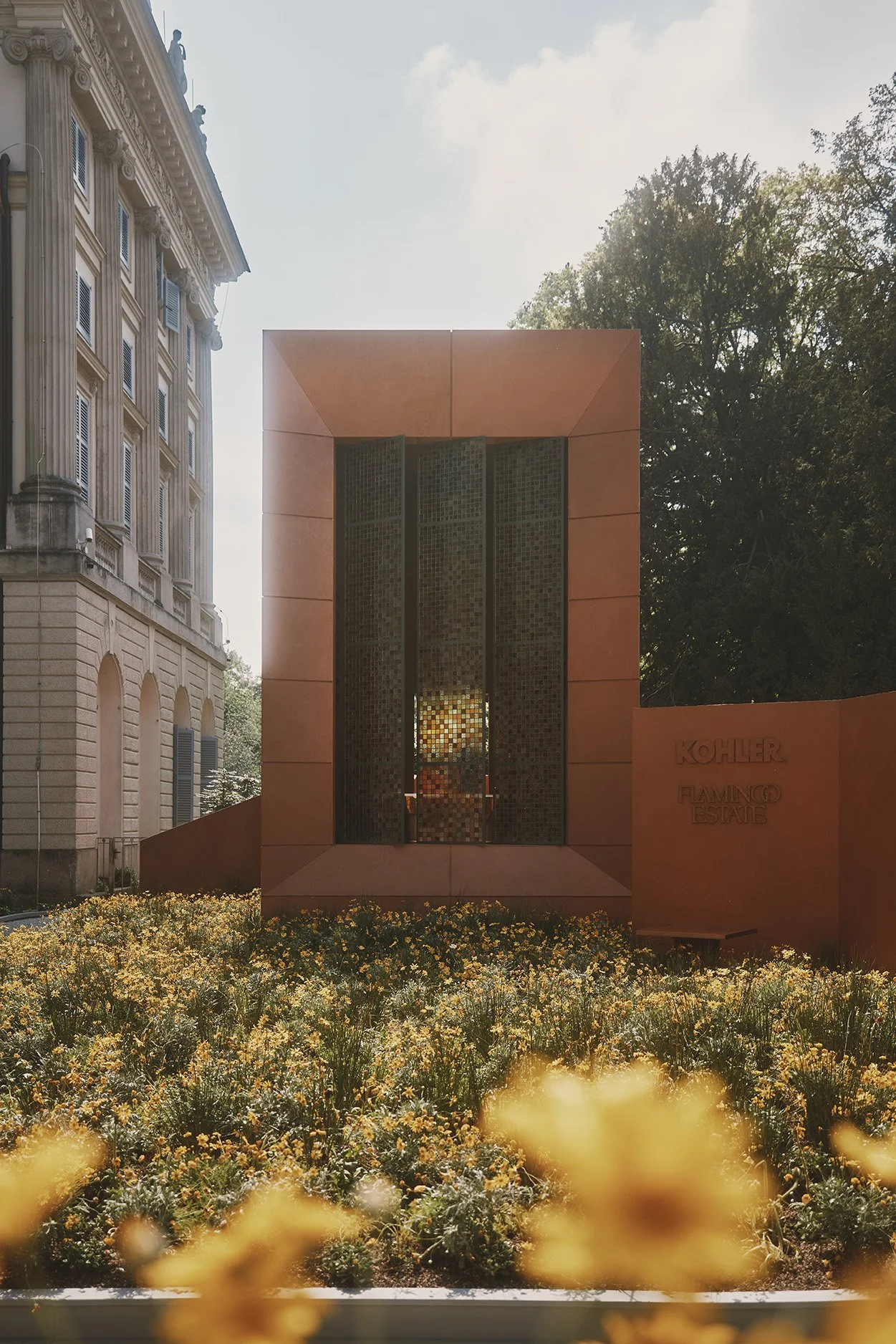
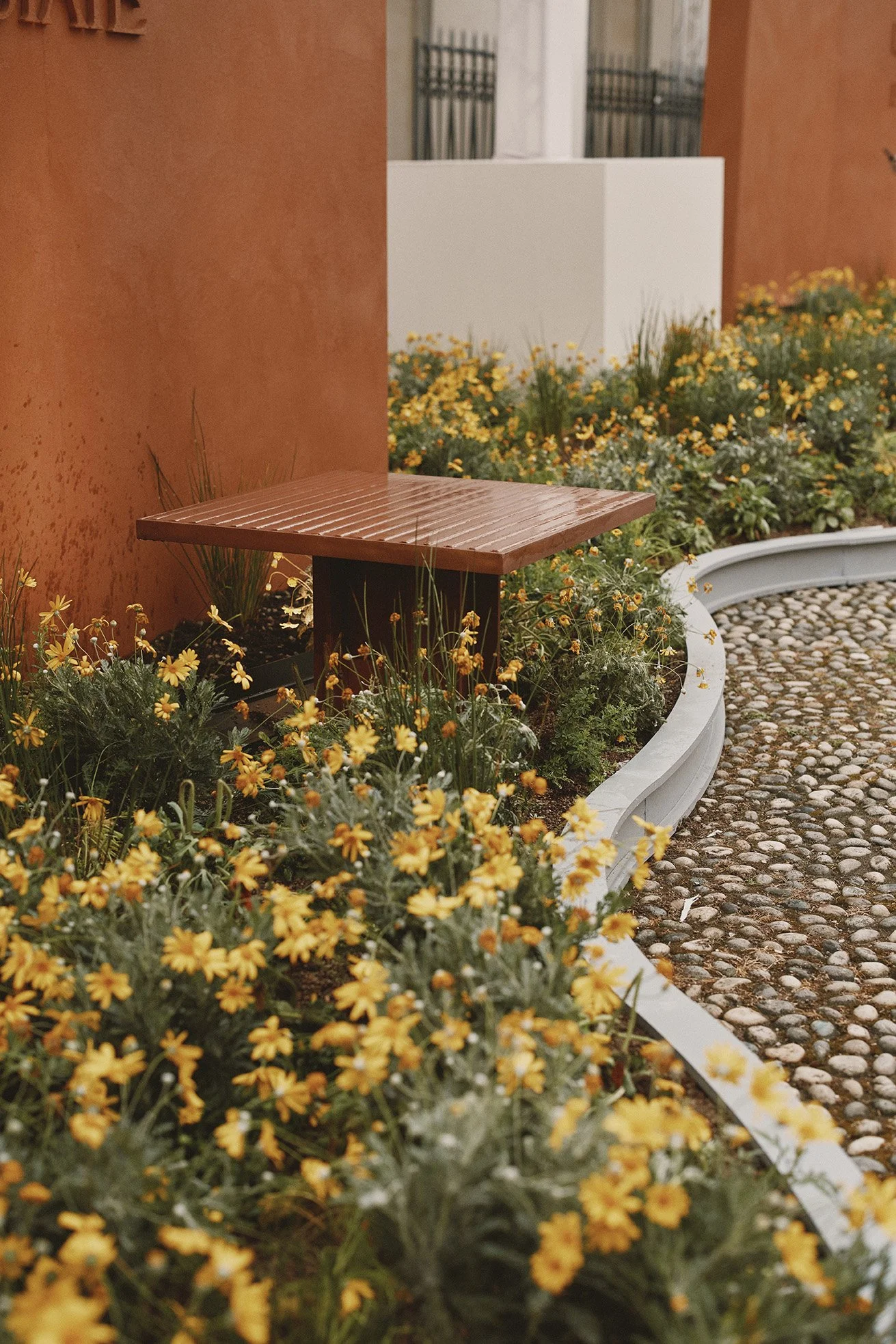
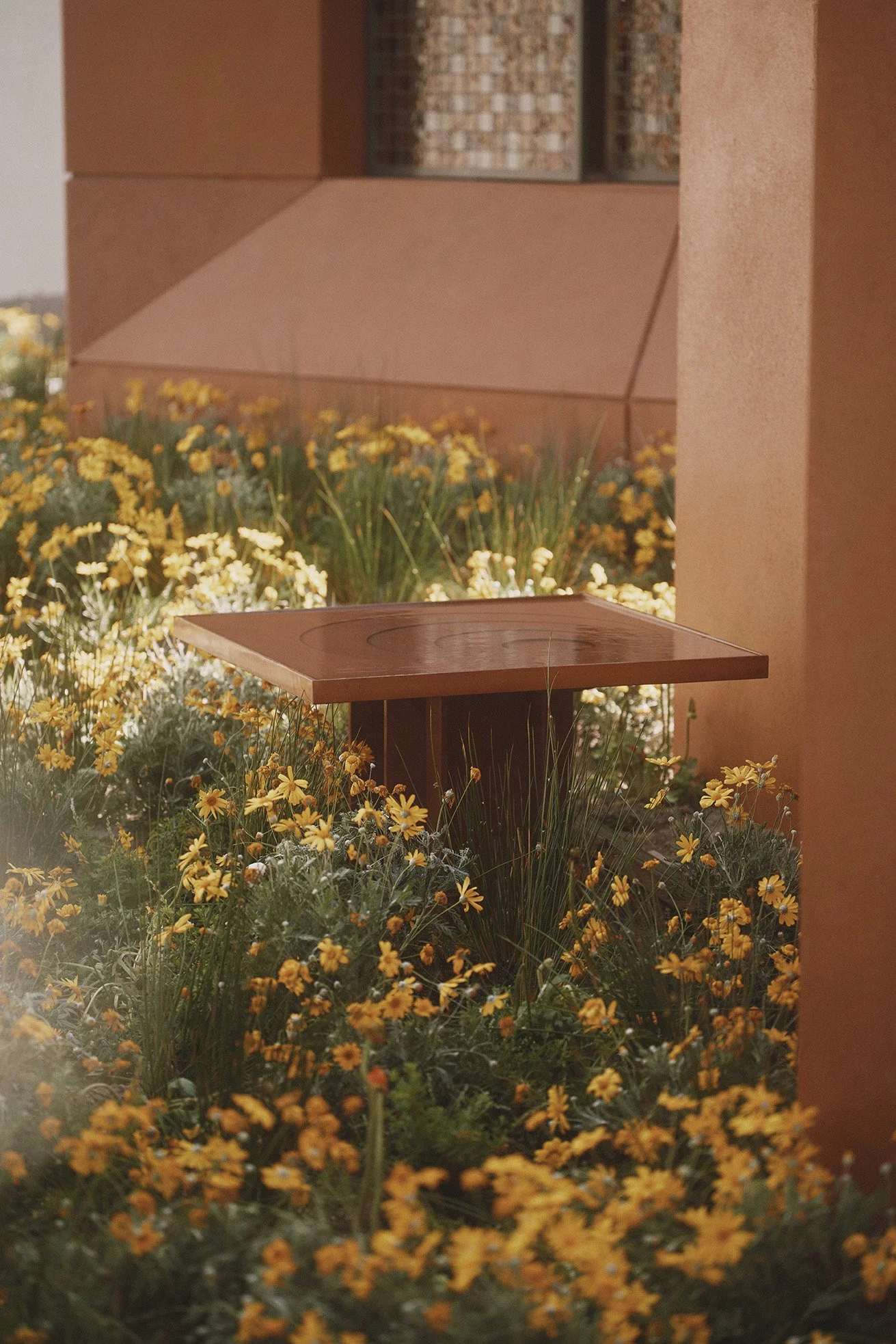
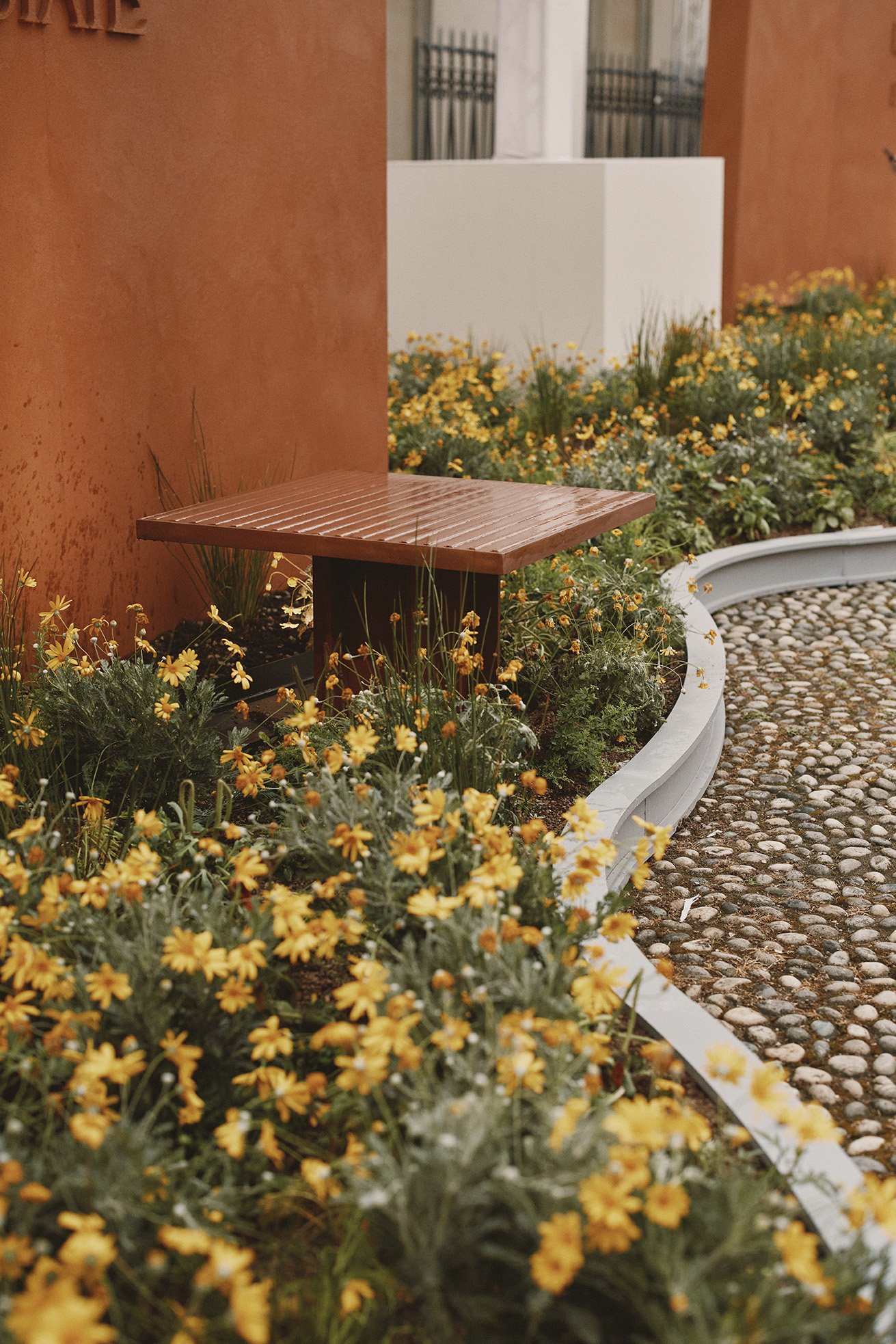
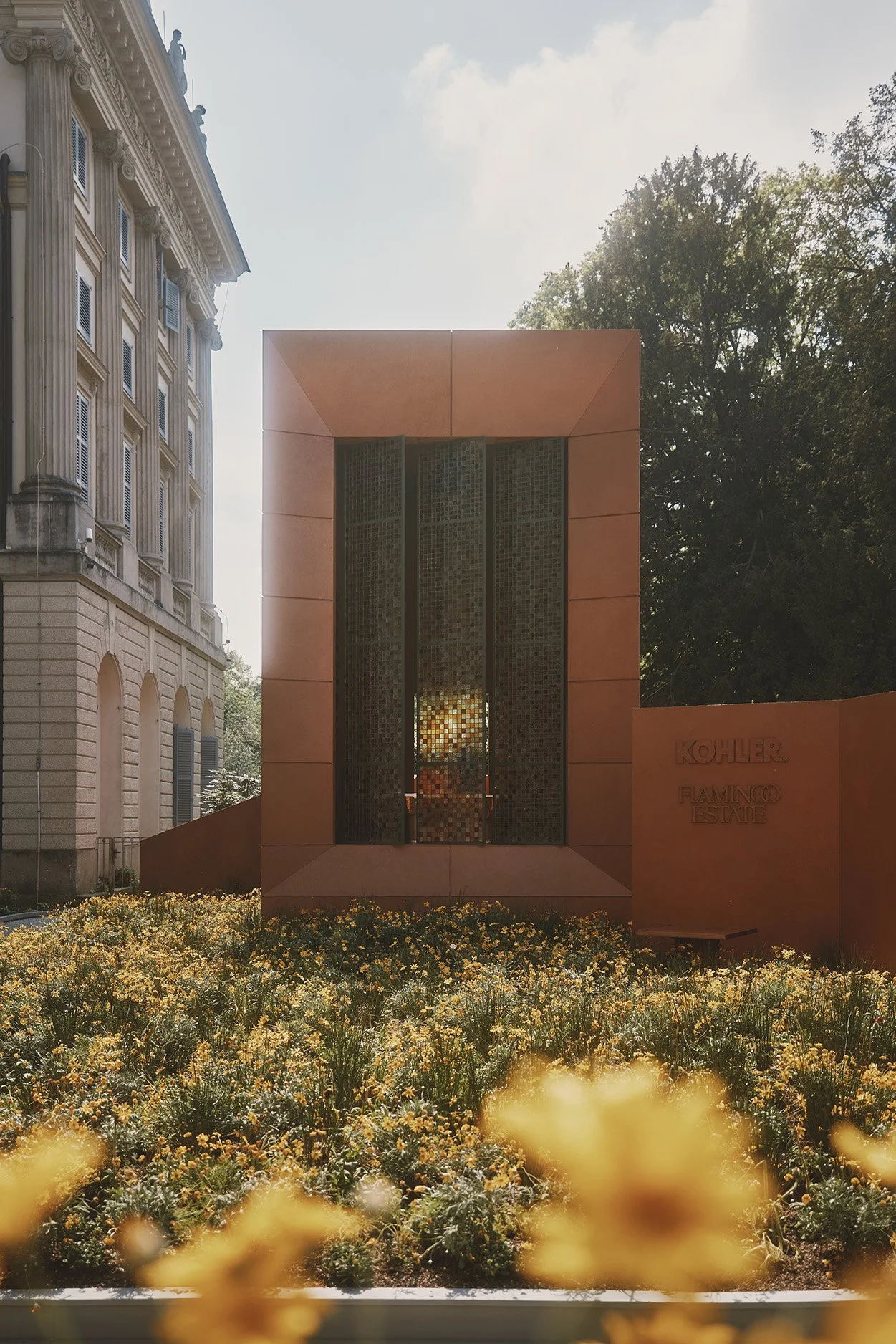
Set within the courtyard of the Padiglione d’Arte Contemporanea on Via Palestro, The Flamingo Estate Bathhouse by Kohler does exactly that. Visitors arrive not at a conventional product showcase but in a landscape of wildflowers and silence. Seven species of untamed blooms surround a monolithic structure that rises from the garden like an ancient ruin rediscovered. It is brutalist in silhouette, yet softened by planting, scent and light.
This contrast is what makes the installation compelling. It balances weight and delicacy, permanence and ephemerality, architecture and ecology. In a week often dominated by polished surfaces and overstimulation, Kohler and Flamingo Estate offer something more introspective.
The Language of Materials
The bathhouse itself draws inspiration from the real bathhouse at Flamingo Estate in California, translating that spirit into a distinctly Milanese setting. Its exterior is clad in intonachino plaster, chosen for its mineral texture and concrete-like presence. It feels elemental, as though shaped from earth rather than manufactured.
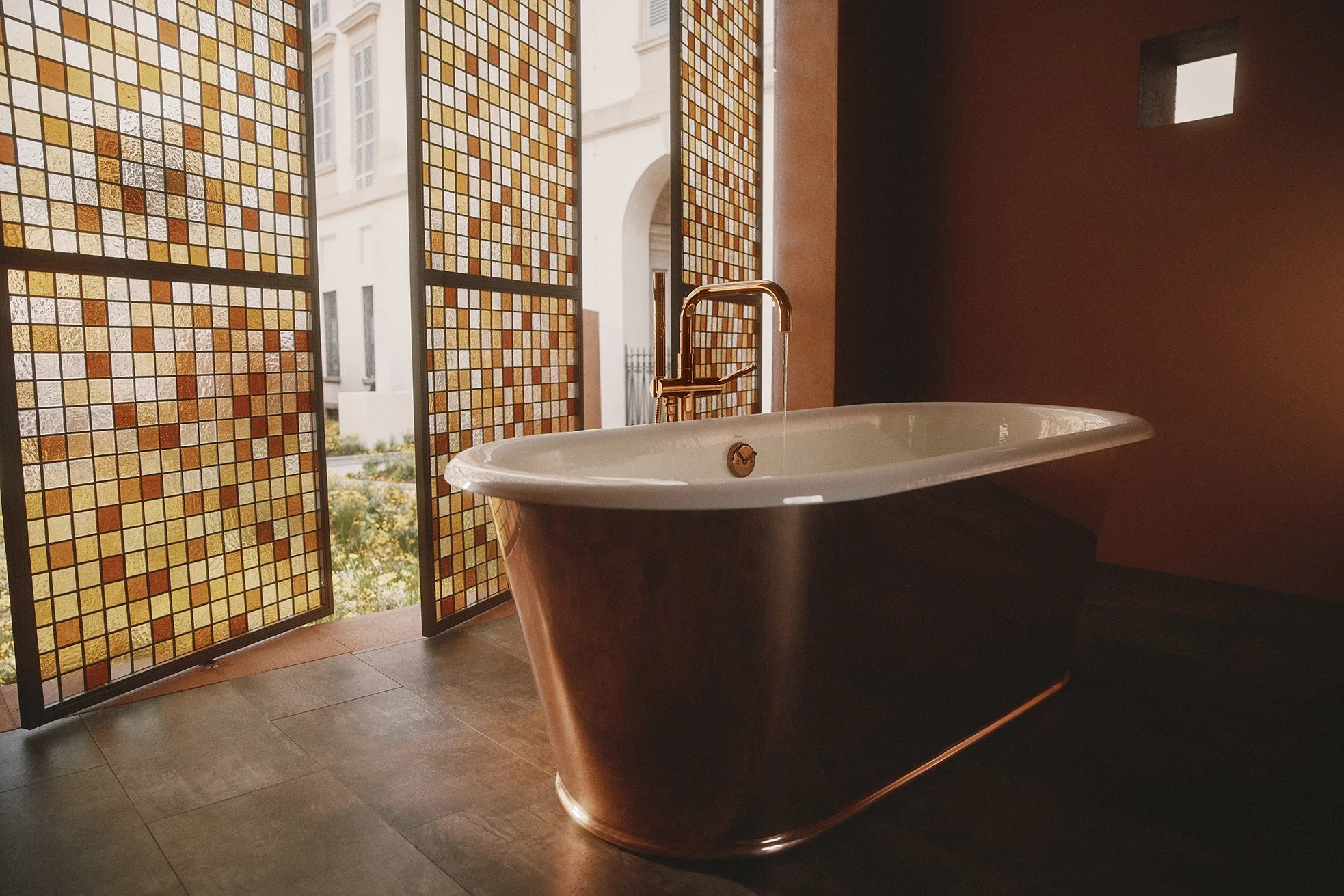
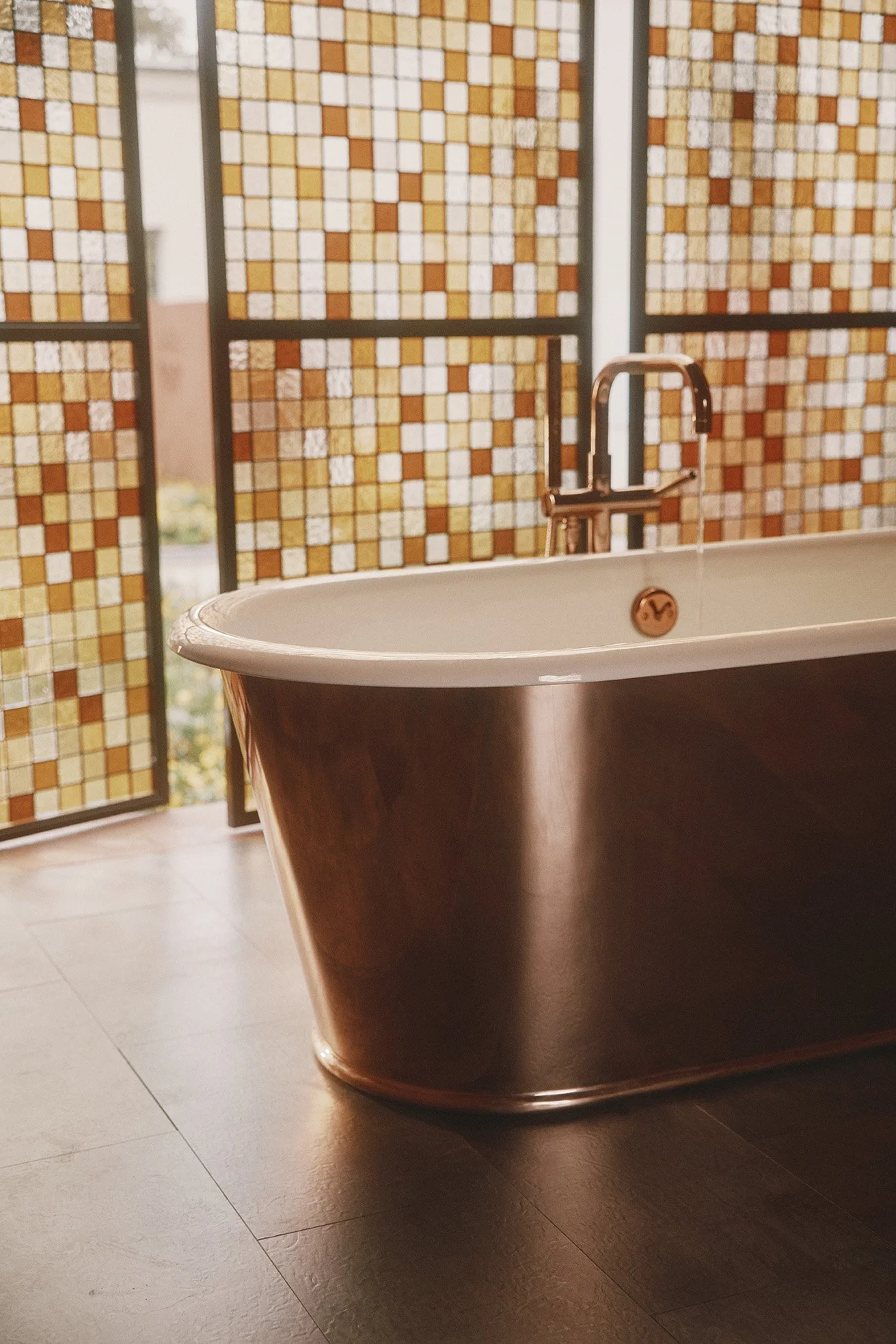
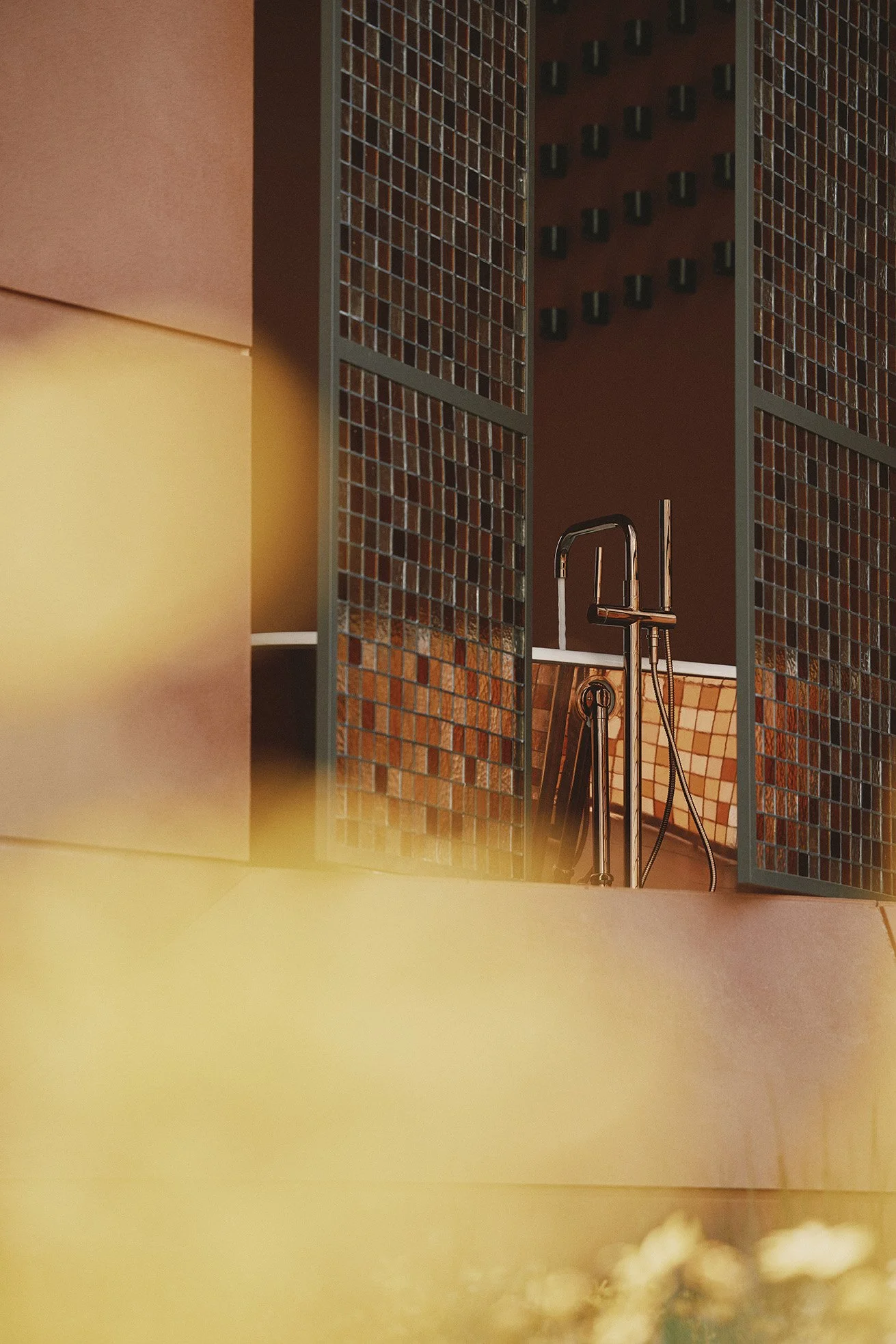
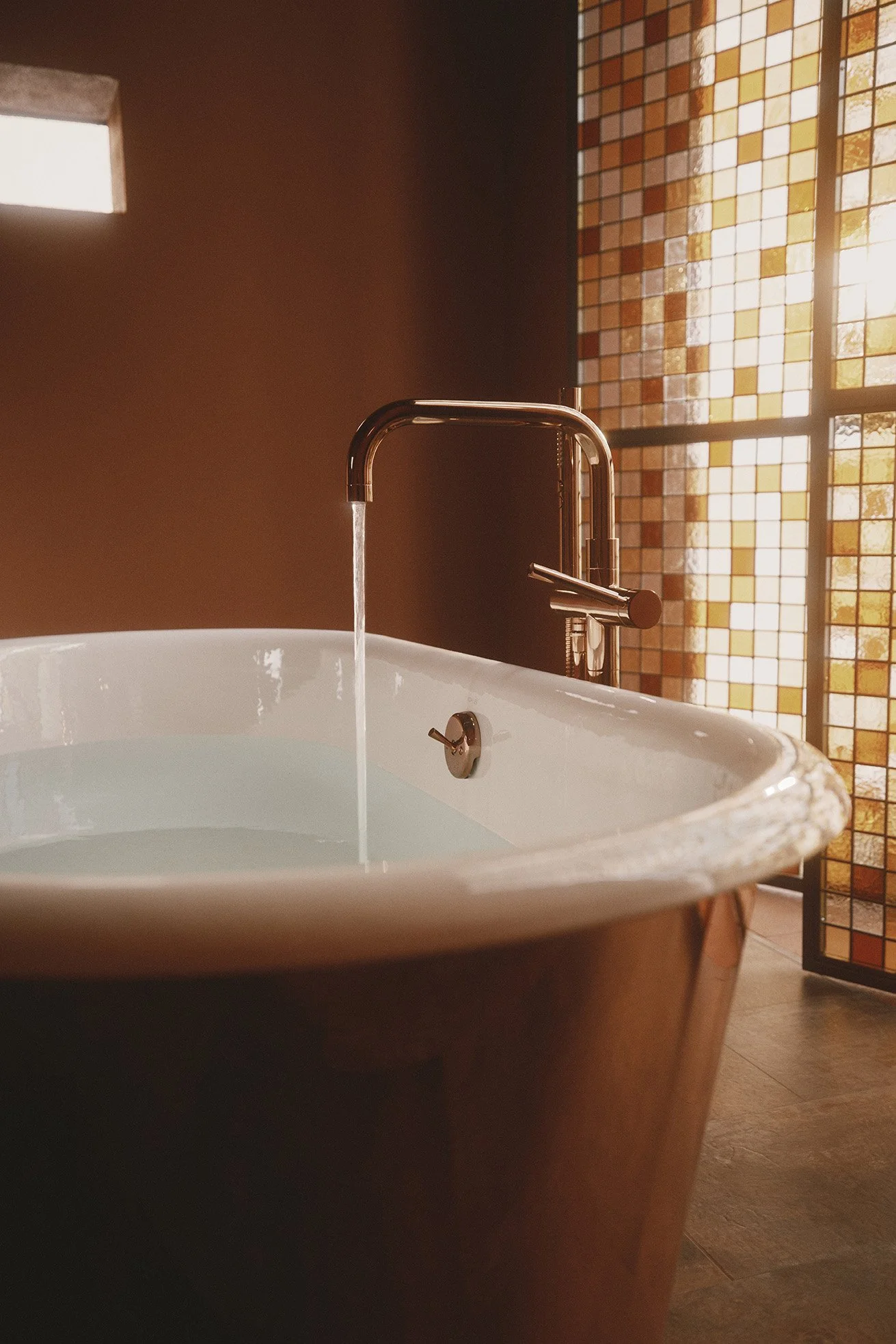
Inside, monumental stained-glass windows by Milan-based artisan Samuele Dossena cast shifting washes of coloured light across terracotta-toned interiors. As the day changes, so too does the room. Morning light feels crisp and contemplative; by late afternoon, the space glows with warmth. Candles line the walls, adding fragrance and flicker to the atmosphere.
It is a reminder that luxury today is often less about excess and more about sensation. Texture under hand. Light on walls. Scent in the air. Time to pause.
A Bath as Sculpture
At the centre of the room sits one of Kohler’s most recognisable forms, reimagined for this moment. The company’s iconic freestanding enamelled cast-iron bath returns here as Reverie, wrapped in a copper shroud that transforms it from a product into a sculpture.
Copper is a surprising and intelligent choice. Warm, tactile and alive with patina, it brings emotion to the bath while referencing old-world craft traditions. It also marks the first time Kohler has used copper as a defining material in bath design, opening a new chapter for the category.
There is symbolism here, too. Beneath the copper sits cast iron made with at least 80% recycled materials; a familiar Kohler foundation dressed in something new. Heritage meets experimentation. Endurance meets beauty.
This has always been one of Kohler’s strengths: understanding that bathroom design can be as expressive as furniture, lighting or architecture when given the same level of imagination.
Ritual Over Routine
What makes this collaboration resonate is that it is not simply about objects. It is about behaviours.
Bathing, in many homes, has become functional and rushed. Here, it is reframed as a ritual. A deliberate act of restoration. The installation asks visitors to reconsider water, solitude and sensory experience not as indulgences, but as necessities.
That thinking aligns naturally with Flamingo Estate, a brand built around the idea that nature offers the richest forms of daily pleasure. Known for botanical products, candles and ingredients sourced with integrity, Flamingo Estate brings an emotional and ecological layer to the project. Kohler brings engineering, heritage and product mastery. Together, they create a narrative larger than either brand could alone.
The result is not branded synergy for its own sake. It feels authentic because both companies understand wellness through material experience.
Design for More Than Humans
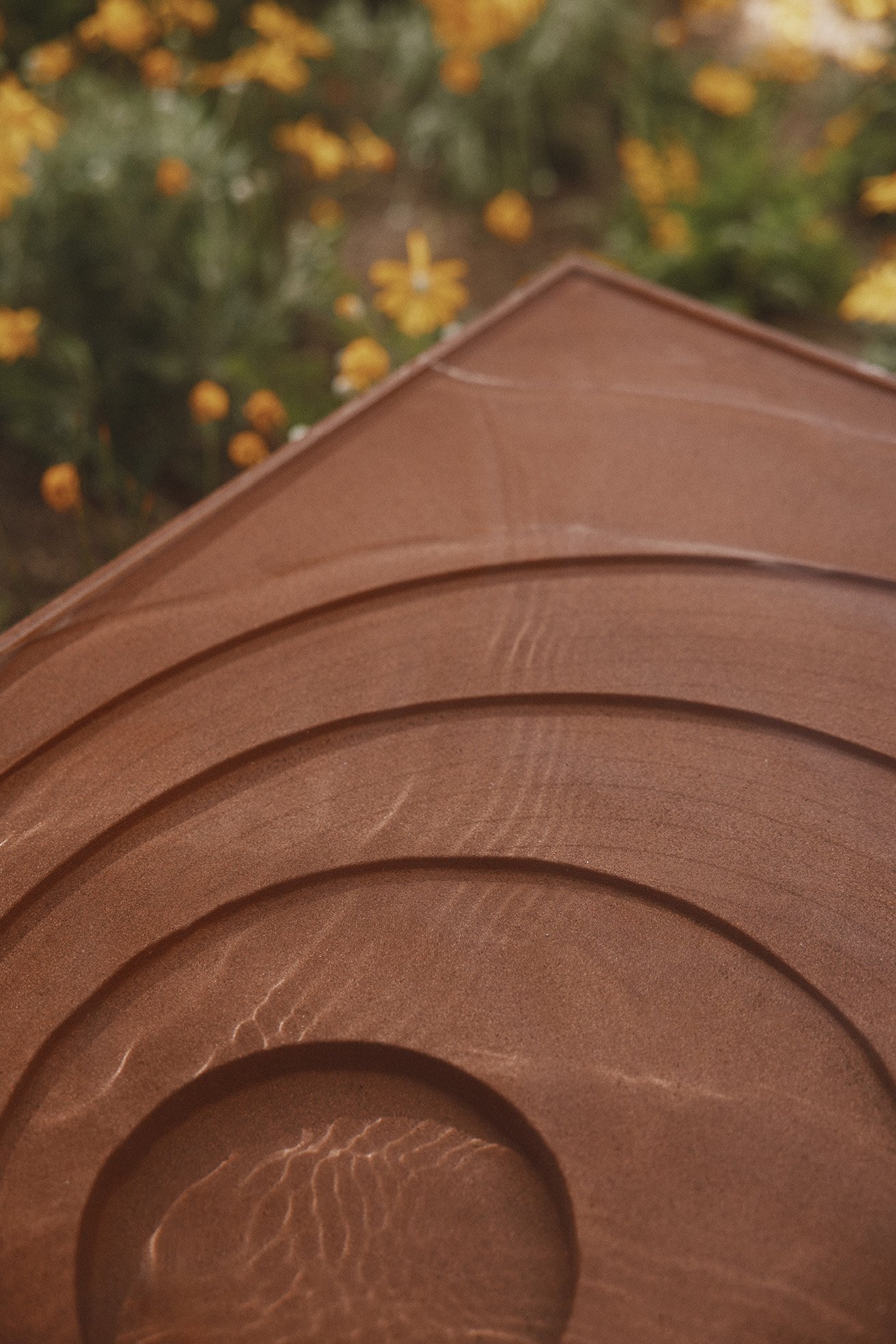
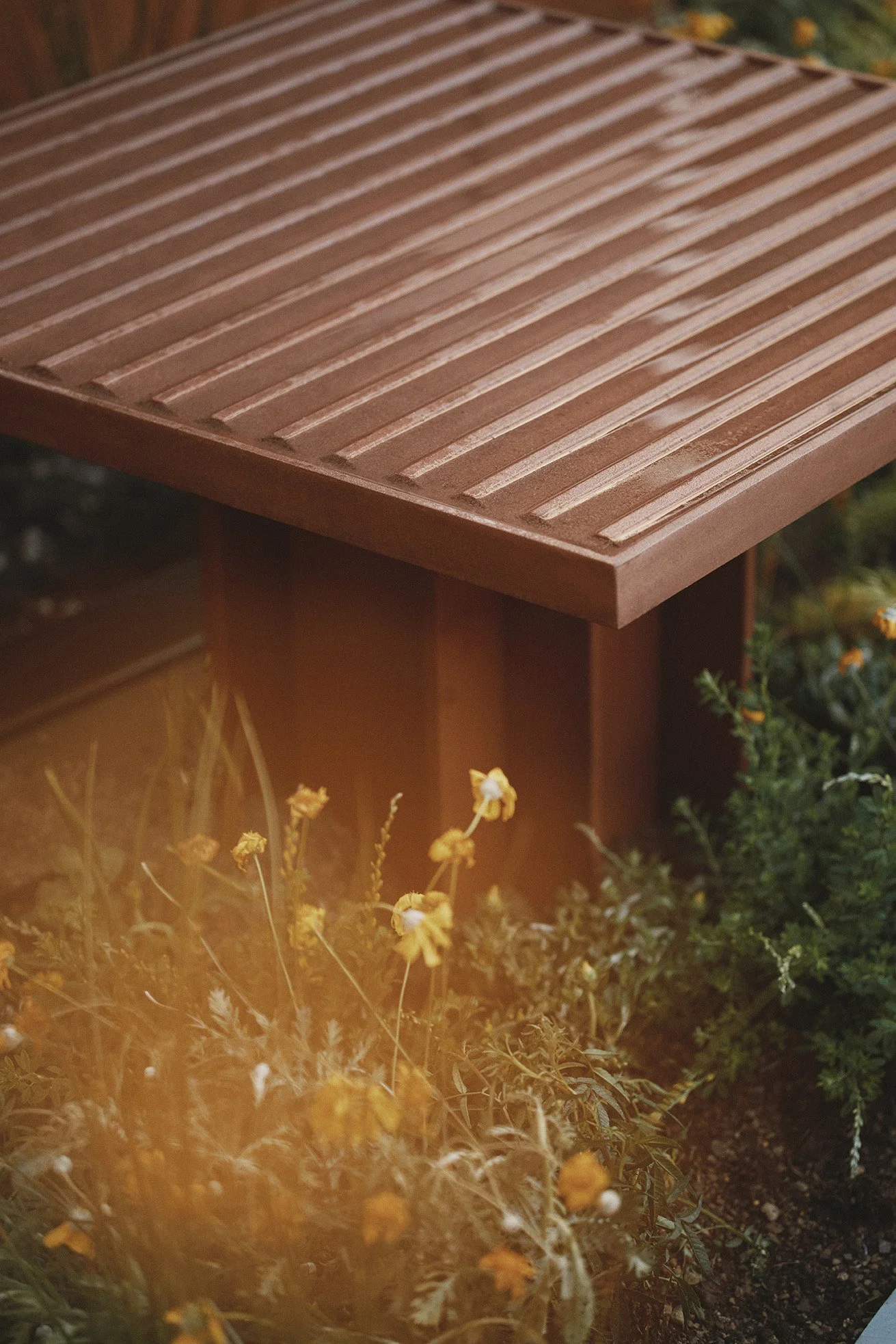
Scattered throughout the meadow are four one-of-a-kind pollinator baths conceived by Christiansen, designed by Kohler and cast in Kohler’s historic Wisconsin foundry. These sculptural vessels provide water sanctuaries for birds, bees and other pollinating species.
It is a thoughtful gesture, but more than that, it extends the installation's philosophy. If the central bathhouse is about caring for ourselves, the pollinator baths are about caring for the ecosystems around us.
Too often, design speaks only to human comfort. Here, design acknowledges interdependence. Gardens need pollinators. Cities need biodiversity. Beauty can also be useful.
That is where this project becomes contemporary in the truest sense. It recognises that future-facing luxury must include stewardship.
The Scent of Milan
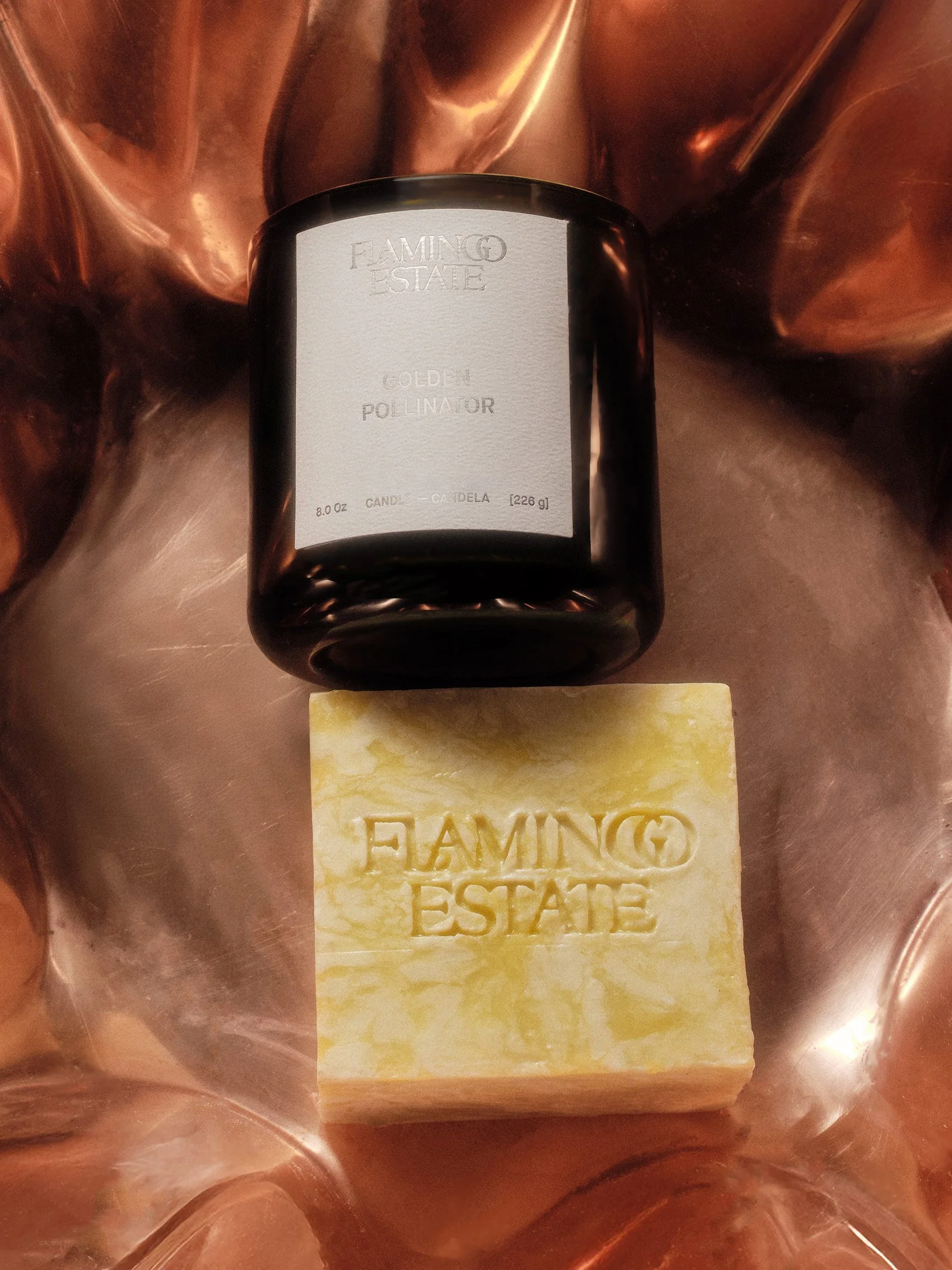
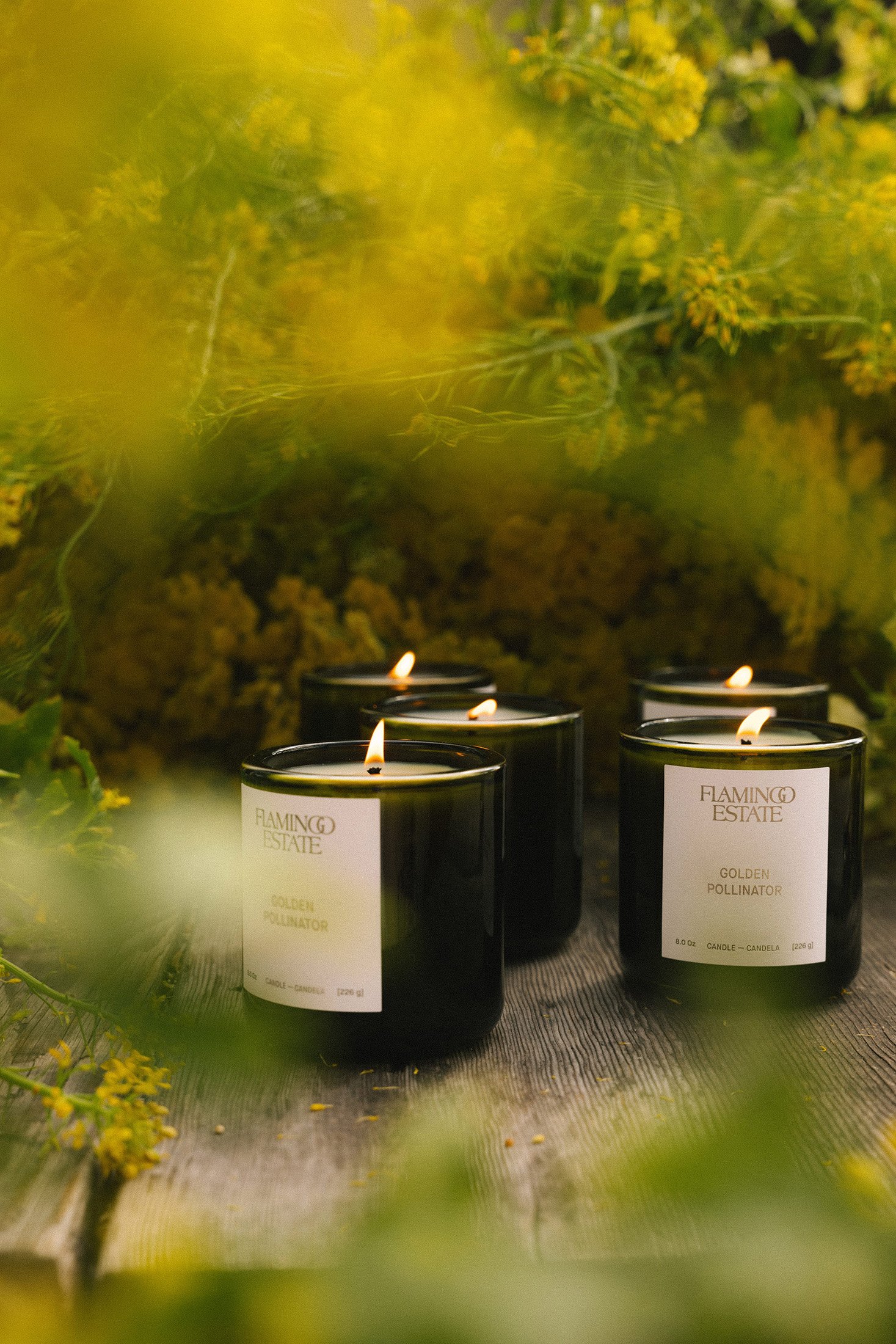
No immersive installation is complete without scent, and Flamingo Estate has developed a fragrance specifically for the project. The Pollinator Candle and accompanying Soap Brick are inspired by a walk through Milan as summer approaches.
Wild Linden Blossom references the Tiglio trees that perfume Milan’s boulevards in bloom, while bergamot introduces a bright citrus clarity. It is a scentscape that captures the city in a fleeting seasonal moment.
This attention to atmosphere matters. Great design experiences are rarely visual alone. They are remembered through mood, temperature, sound and smell; the intangible layers that stay with you long after photographs are forgotten.
Why Kohler Continues to Matter in Milan
Some brands arrive at Milan Design Week to participate. Others arrive to contribute. Kohler continues to do the latter.
What makes its presence dependable is not scale, but consistency of thought. The brand repeatedly uses design week as an opportunity to explore broader conversations: craft, sustainability, wellness, technology, culture, through installations that feel genuinely designed rather than simply marketed.
This year’s partnership with Flamingo Estate continues that legacy beautifully. It understands that audiences are craving meaning as much as novelty. They want spaces that restore rather than overwhelm. Objects with stories rather than slogans.
In many ways, The Flamingo Estate Bathhouse by Kohler feels like a response to the current moment: slower, softer, more grounded.
A Quiet Highlight of Milan Design Week 2026
Milan Design Week will always have spectacle. There will always be bold launches, crowded openings and dramatic statements. But often the projects that linger in memory are the quiet ones.
The ones that offer atmosphere instead of noise.
The ones that remind us that design can shape how we feel, not just what we see.
Kohler and Flamingo Estate have achieved exactly that with this collaboration. A temporary bathhouse in a Milan courtyard becomes, for a few days, a meditation on how we might live better, with more care, more beauty and a deeper connection to the natural world.
And once again, Kohler proves why it remains one of Milan Design Week’s enduring essentials.
More Stories
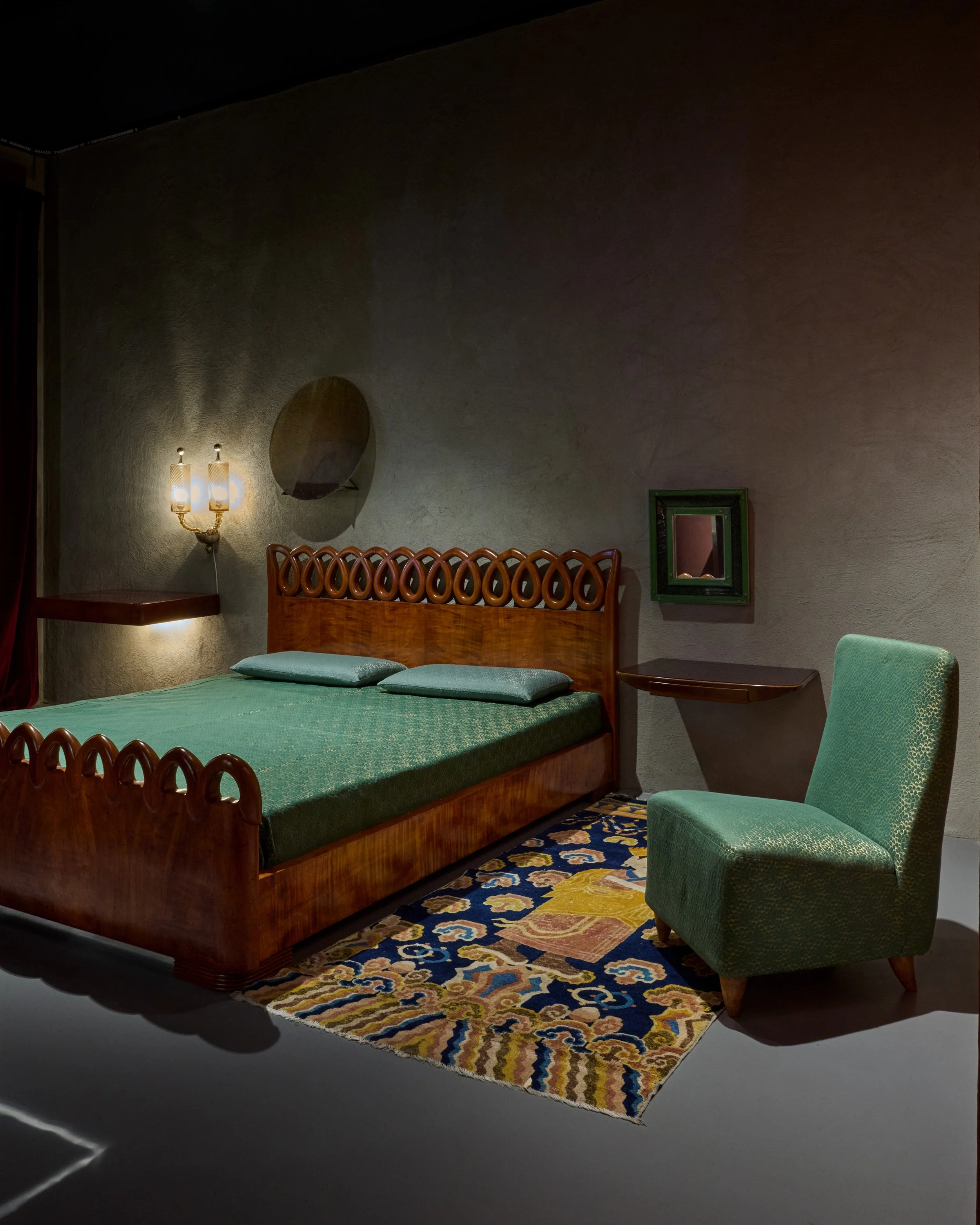
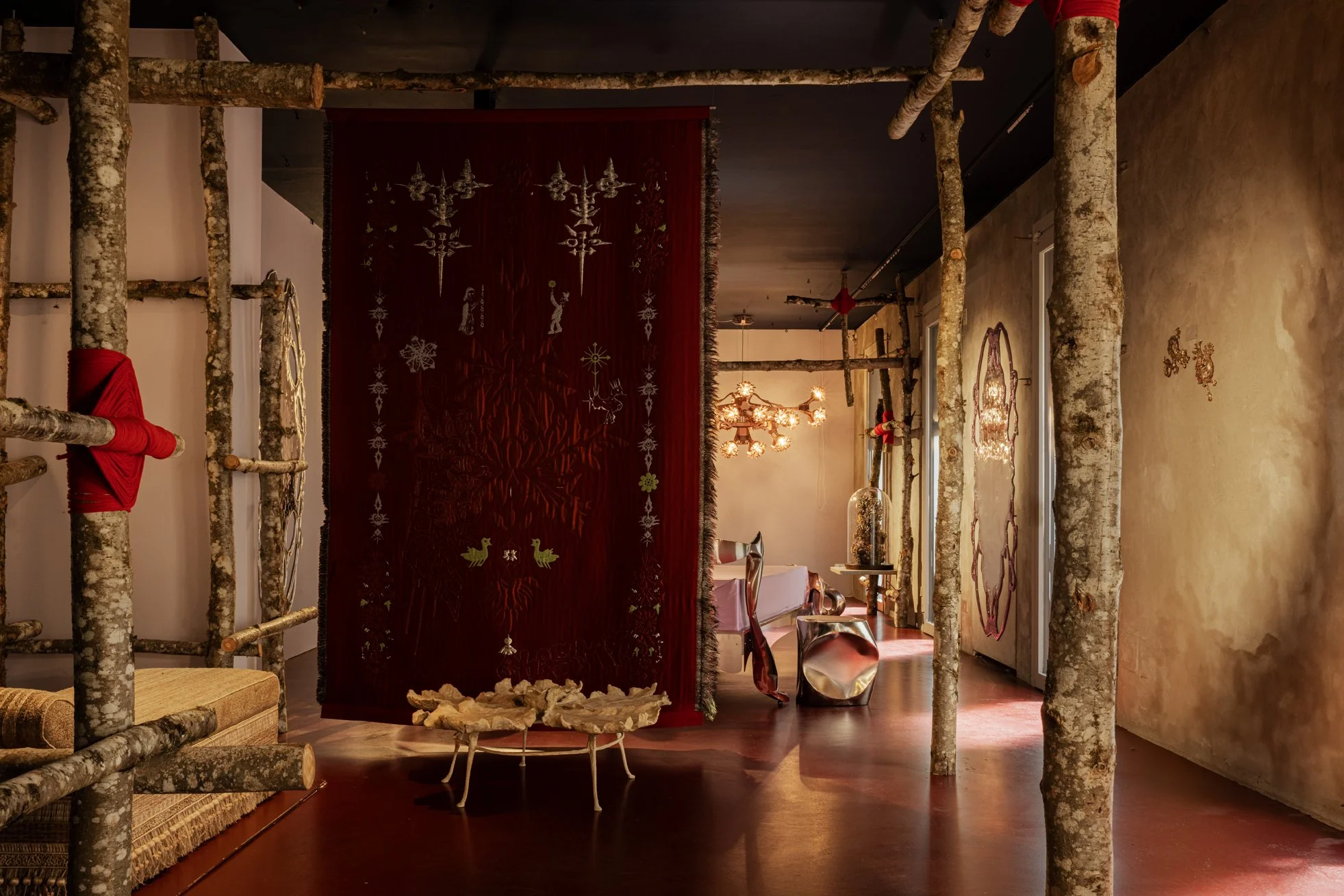

During Milan Design Week 2026, MENU transformed Chiesa Anglicana Tutti i Santi into a unified architectural narrative. Curated by Bodo Sperlein, the exhibition brought material, light, and collaboration into quiet alignment.