
Lee Broom’sBeacon Illuminates Milan Design Week 2026
A monumental public artwork in Piazza San Babila transforms light, glass and architecture into one of this year’s defining Milan moments
At every edition of Milan Design Week, certain installations rise above the noise to become part of the city itself. They move beyond showroom launches and collectable objects, entering the public imagination through scale, atmosphere and emotional impact. In 2026, Lee Broom’s Beacon does exactly that.
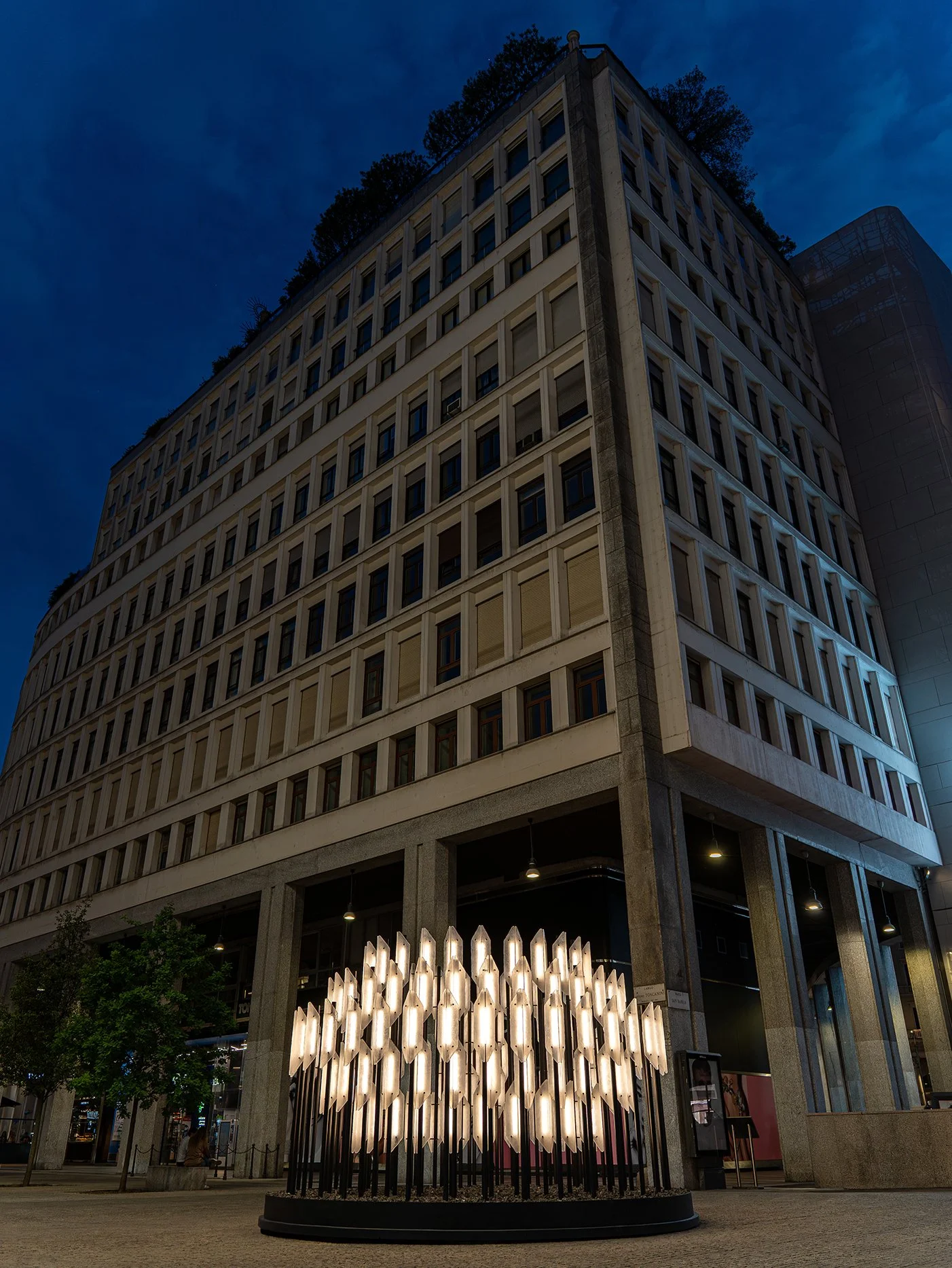
Unveiled in Piazza San Babila for the duration of Milan Design Week, Beacon marks a significant evolution in the career of one of Britain’s most internationally recognised designers. Known for theatrical presentations, sculptural lighting and an instinctive understanding of how objects create mood, Broom has long blurred the lines between product design and experience. With Beacon, however, he steps decisively into the realm of public art.
Installed in one of Milan’s most prominent urban settings, the work is both unexpected and entirely at home. Piazza San Babila sits at the intersection of heritage architecture, contemporary retail culture and the daily flow of Milanese life, linking the city’s major districts to the Duomo. It is a place of movement and transition, and therefore the perfect stage for an installation built around rhythm, light and encounter.
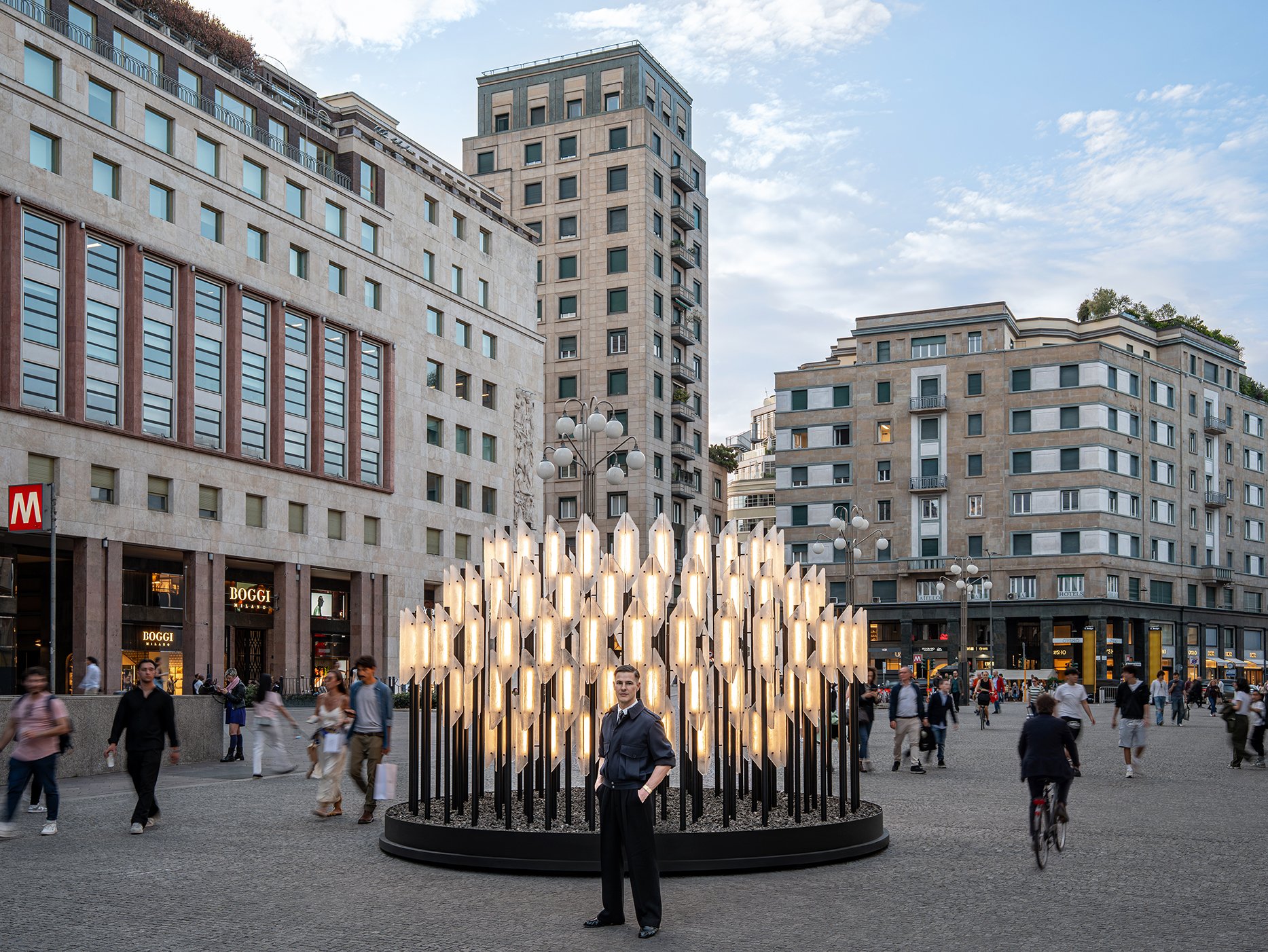
A Chandelier for the City
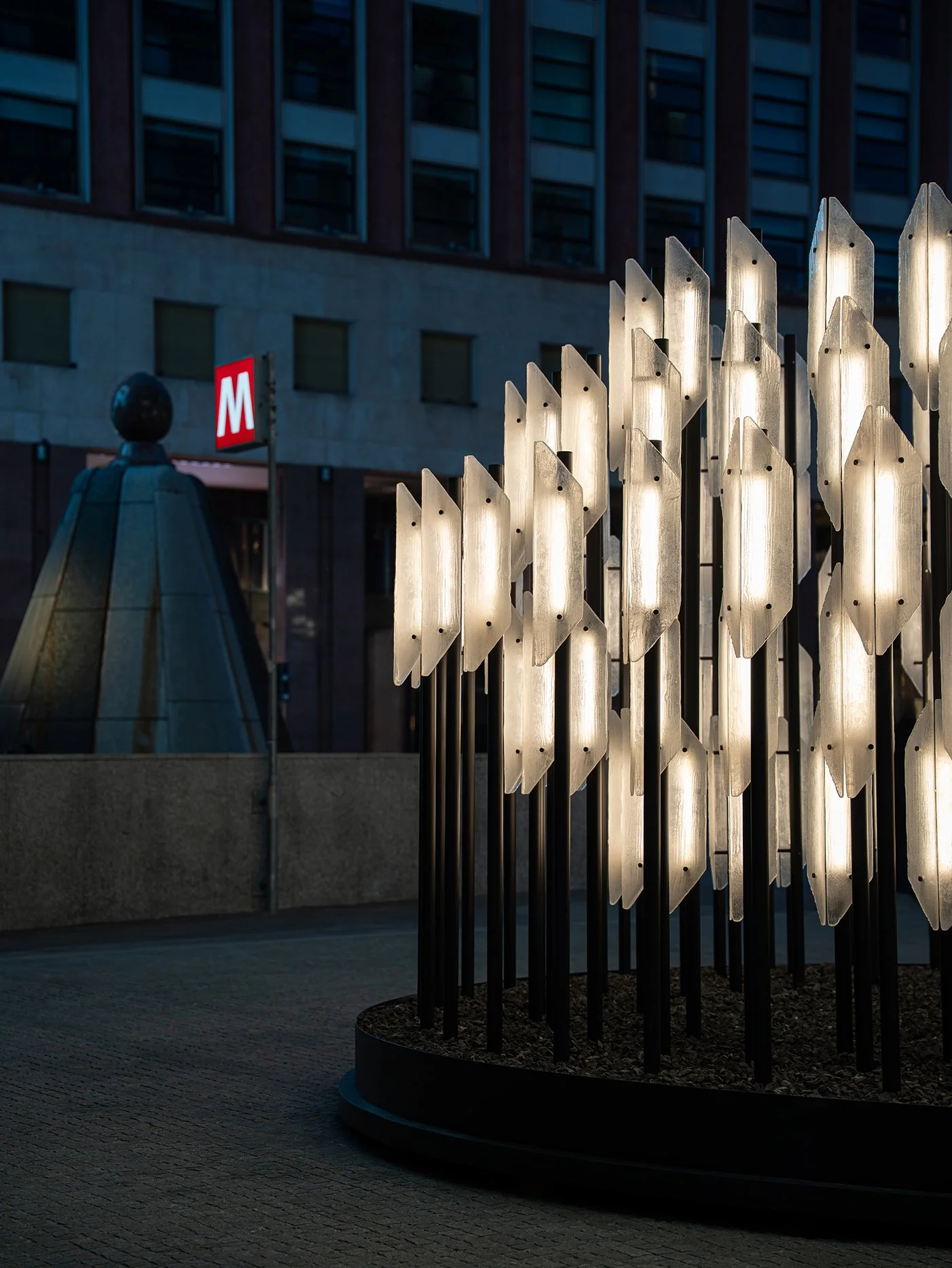
At first glance, Beacon reads as an enormous chandelier reimagined for the open air. Constructed from a series of illuminated glass lampposts, the sculpture rises vertically with a commanding presence, while maintaining a surprising elegance. It is monumental without becoming heavy, dramatic without excess.
This balance has always been central to Lee Broom’s work. Across furniture and lighting, he frequently draws on familiar typologies: chandeliers, lamps, mirrors, and architectural detailing, then reinterprets them with sharper lines, unexpected proportions, or contemporary materials. Here, that language is scaled to the city.
The repeated vertical forms and precise geometry of Beacon reference the language of mid-century modernism, a movement whose confidence in structure, proportion and civic ambition still resonates today. Those references feel particularly relevant in Milan, where architecture from different eras exists in constant dialogue. In Piazza San Babila, the installation becomes another voice within that conversation.
Designed to Be Experienced
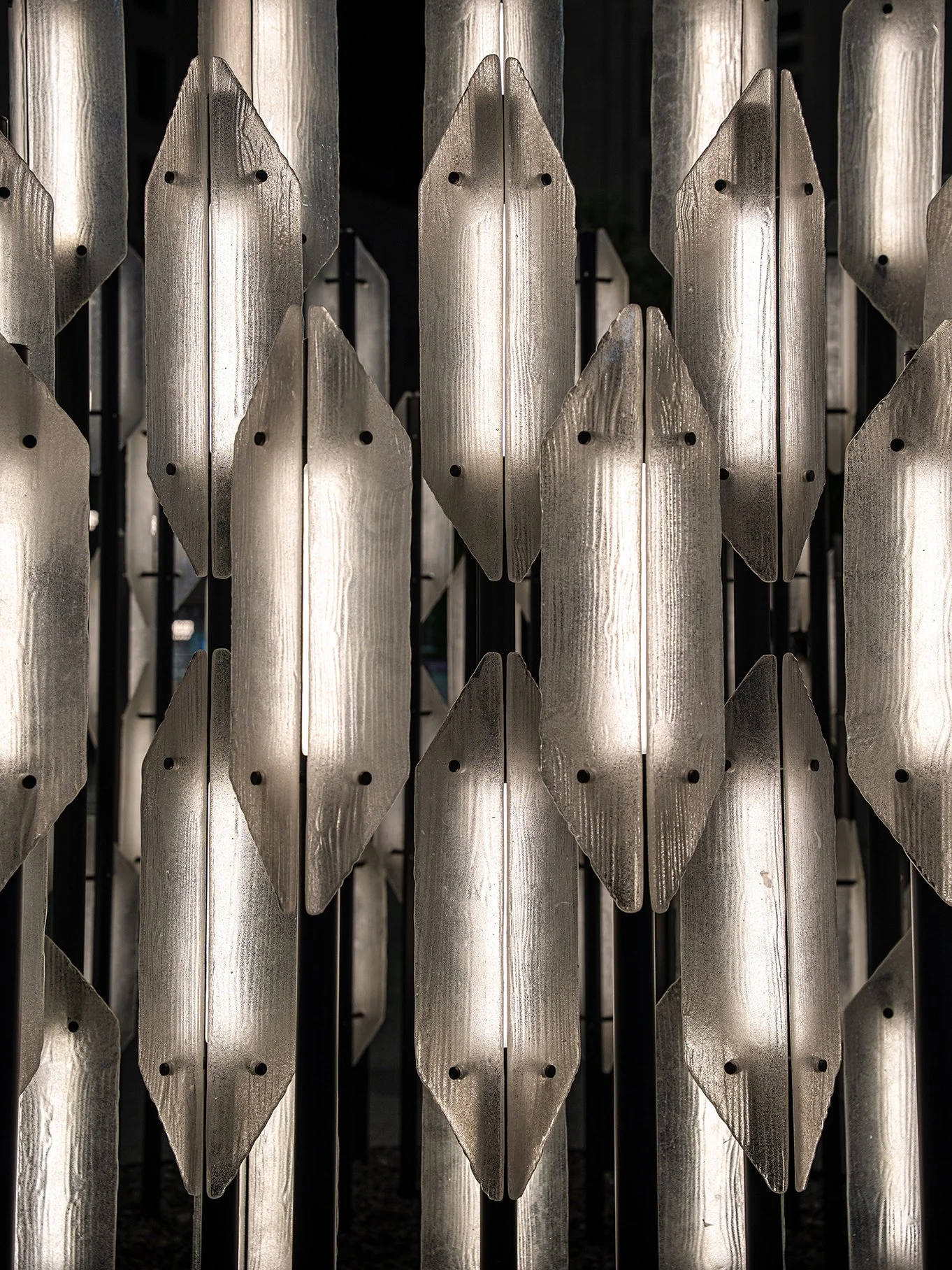
What makes Beacon especially compelling is that it is not static. Every fifteen minutes, the illuminated shades pulse softly, creating subtle shifts in atmosphere. On the hour, the choreography intensifies into a crescendo of light, transforming the sculpture into a living performance.
This programmed rhythm changes how the public engages with the piece. Rather than simply passing by, visitors are invited to pause, anticipate and share a moment. It introduces theatre into the everyday cityscape, a hallmark of Broom’s creative approach.
Milan Design Week often rewards spectacle, but spectacle alone can feel disposable. Beacon succeeds because it couples drama with contemplation. The changing light is not merely decorative; it draws attention to time, presence and collective experience. In a city defined by movement during design week, it offers a rare invitation to stand still.
Sustainability With Substance
Perhaps the most important aspect of Beacon is that its environmental credentials are embedded in the project itself rather than added as marketing language.
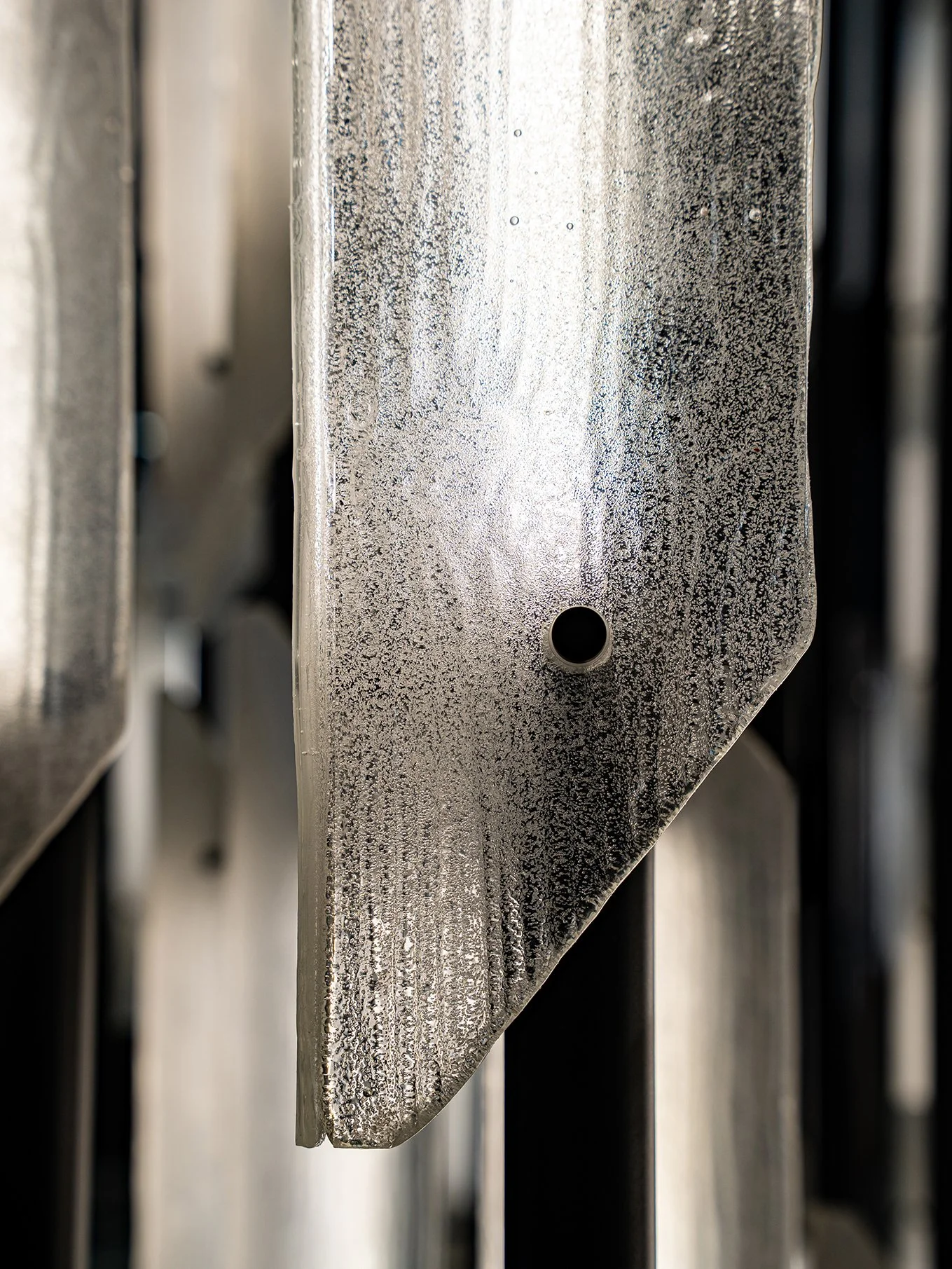
Produced by Czech lighting and glass manufacturer Brokis in collaboration with Materials Assemble, the installation uses recycled glass created through a specialist fusing technology that upcycles discarded glass fragments. Waste becomes material. Fragments become architecture.
This matters because design audiences are increasingly alert to superficial sustainability claims. Beacon proposes something more meaningful: longevity, reuse and transformation.
The installation first debuted on London’s Southbank during London Design Festival 2025, where it received strong public and critical attention. Its presentation in Milan is the next chapter in an ongoing international journey, with a further stop planned in the Czech Republic later this year. Rather than existing for a single week before disappearing, the project has been conceived as a travelling work that adapts to different cultural contexts.
Even more interesting is what happens after the tour concludes. Beacon will be dismantled and reimagined as a series of individual table lamps, available for public purchase, with a portion of proceeds donated to charity. It is a rare example of circular thinking realised elegantly: public installation becomes a collectable design object, while retaining the narrative of its previous life.
Lee Broom and the Power of Presentation
For followers of Lee Broom, Beacon feels like a natural progression. Since founding his studio in 2007, Broom has built a globally respected brand rooted in British manufacturing, craftsmanship and bold storytelling. His exhibitions have consistently stood apart because he understands that design is not only about objects but also about how people emotionally connect with them.
That instinct is amplified here. Instead of creating a temporary showroom environment, he has brought his world into the public square. Anyone can encounter Beacon; not only industry insiders with invitations or appointments.
This democratisation of design is one reason the project resonates so strongly. Milan Design Week can sometimes feel inward-looking, centred on professionals moving between districts and private events. Beacon interrupts that pattern by offering something generous, visible and open to all.
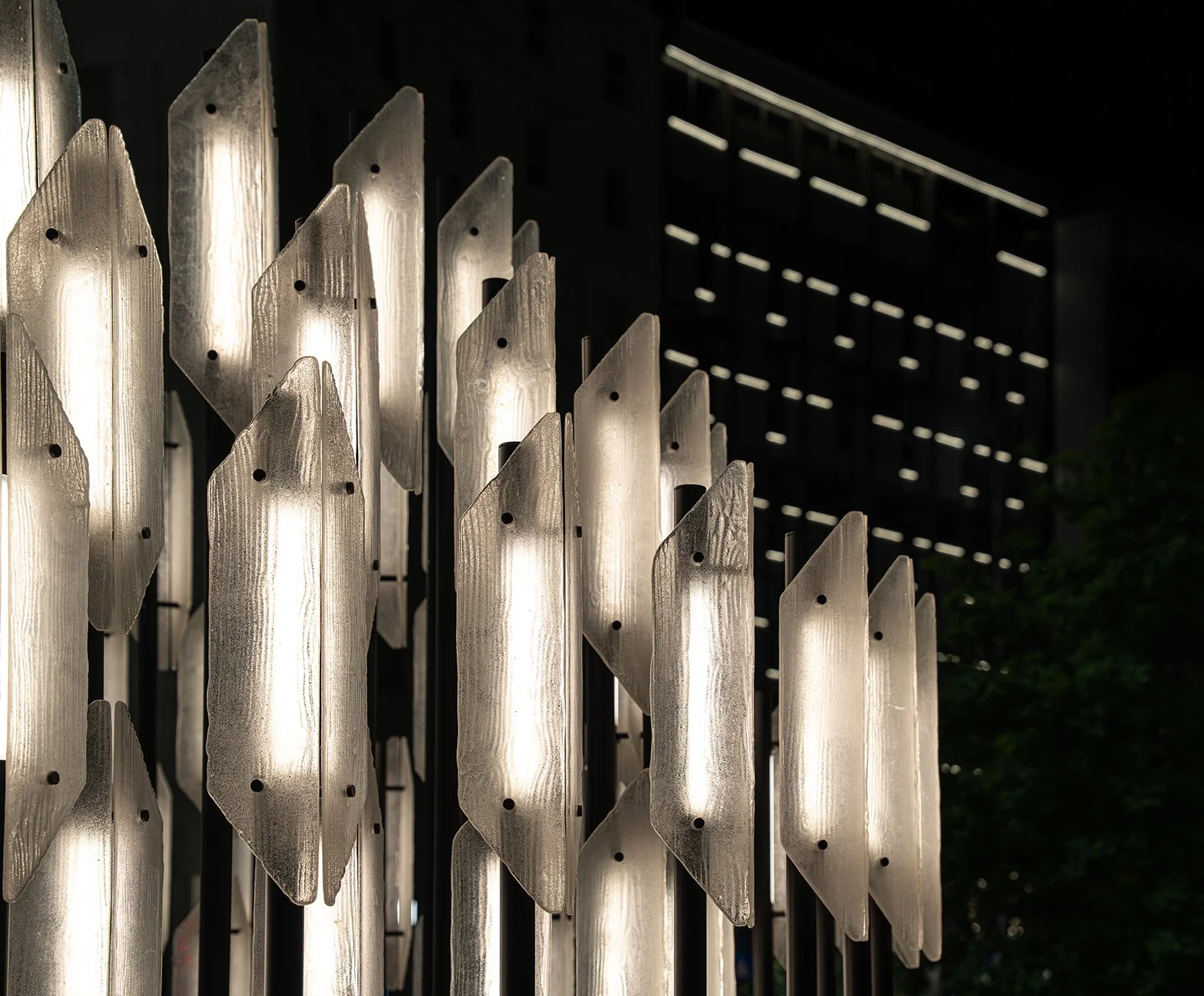
Photography: Vladimír Běhoun
One of Milan Design Week 2026’s Must-See Installations
Each year, Milan hosts thousands of launches, installations and collaborations, yet only a handful remain memorable by the end of the week. Beacon has the qualities that endure: clarity of concept, beauty of execution and emotional relevance.
It acknowledges the grandeur of decorative lighting while stripping it back to something architectural and contemporary. It embraces technology without feeling cold. It addresses sustainability without sacrificing elegance. Most importantly, it engages directly with the city that hosts it.
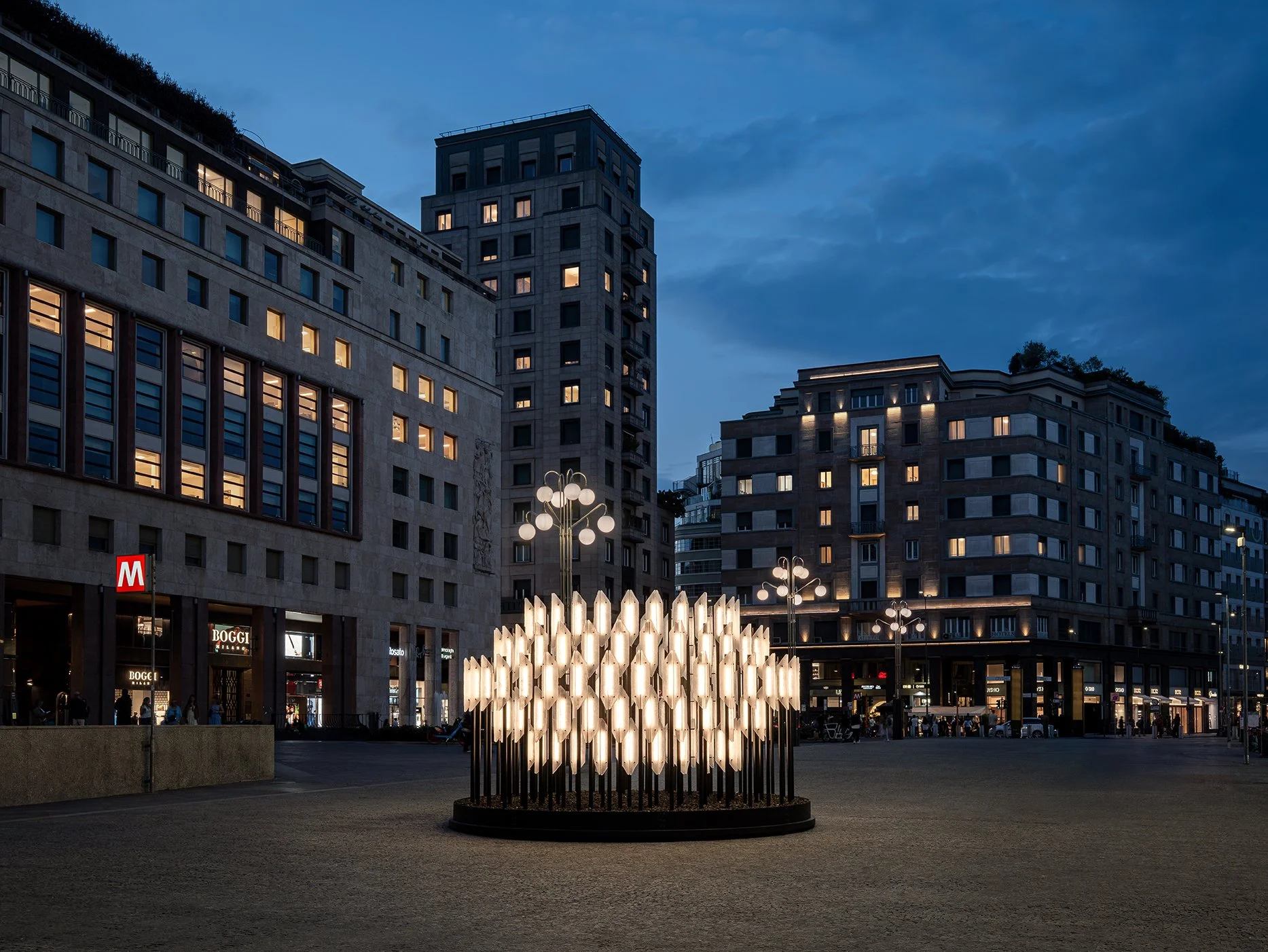
For visitors navigating Milan Design Week 2026, Piazza San Babila should be firmly on the itinerary. By day, Beaconstands as a striking sculptural landmark. By evening, it becomes something more atmospheric; a luminous civic presence drawing people together through light.
In a week filled with interiors, launches and temporary experiences, Lee Broom has created something rare: a public artwork that feels both timely and timeless. Milan is brighter for it.
More Stories




Basic.Space arrives in London, transforming The Old Selfridges Hotel into a layered design experience where art, fashion, and sound converge. A moment of discovery shaped by the city’s enduring creative energy.