
Forever Fornasetti: Inside the Reimagined Milan Flagship at Design Week 2026
Fornasetti unveils a new three-floor spatial manifesto on Corso Venezia, created with Tutto Bene, transforming retail into an immersive world of craft, imagination and Italian design heritage during Milan Design Week 2026.
There are certain names in design that exist beyond trend, beyond season and beyond the shifting vocabulary of style. Fornasetti is one of them. For more than eight decades, the Milanese house has occupied a singular space between art, decoration and domestic theatre, creating objects that turn the everyday into something surreal, witty and deeply collectable.
Now, during Milan Design Week 2026, Fornasetti opens a new chapter.
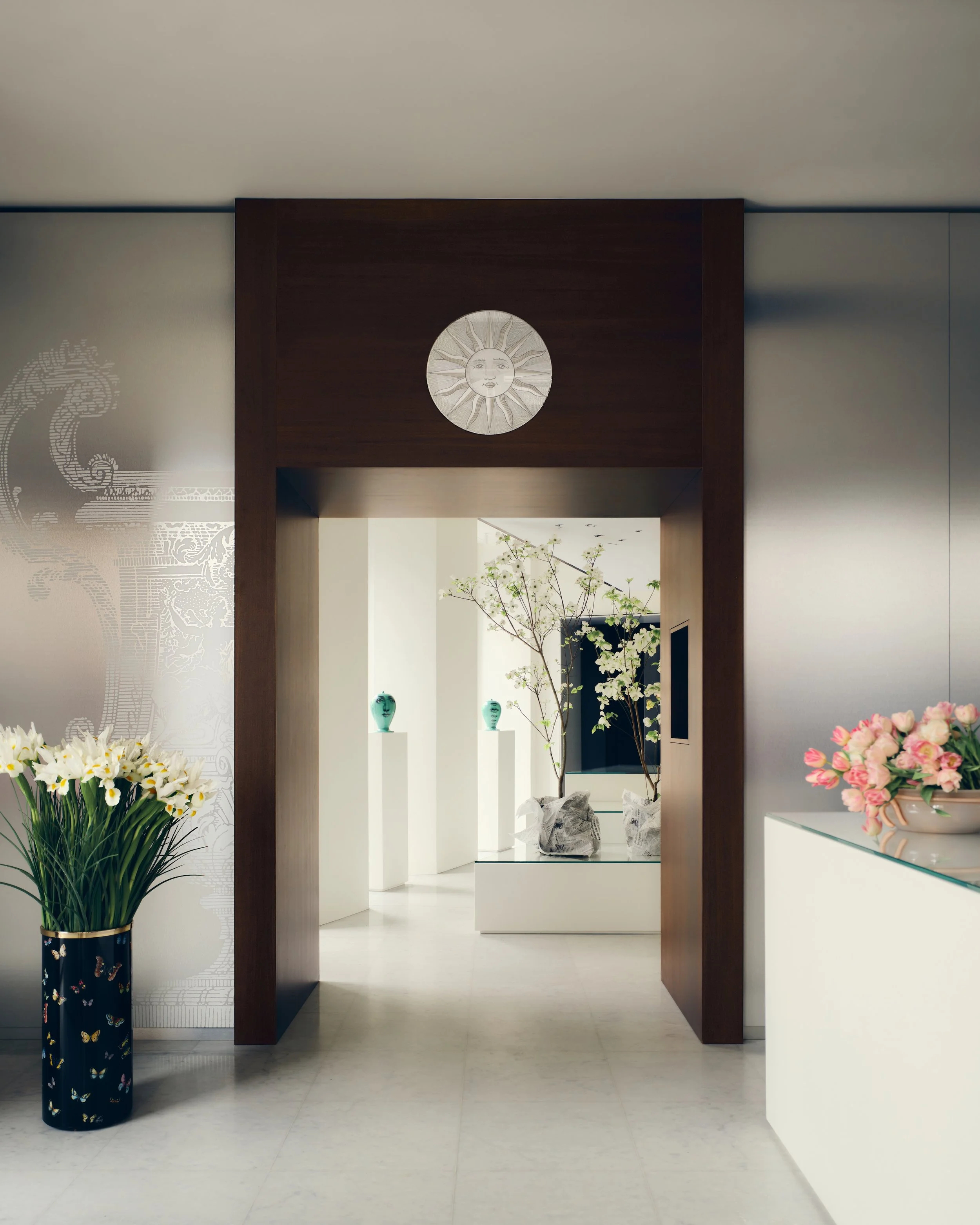
Unveiled on Corso Venezia with a fresh entrance on Via Senato, the newly transformed flagship store has been reimagined in collaboration with London and Milan-based studio Tutto Bene. Yet to describe the project as a retail redesign would be to miss its real ambition. This is not simply a shop. It is a spatial manifesto for the Fornasetti universe.
The new flagship invites visitors into a layered world where architecture, ornament, and storytelling merge into a single continuous experience. It is a place where legacy is not preserved behind glass, but reactivated for a new generation.
A House Built on Imagination
Founded in 1940 by visionary artist Piero Fornasetti, the brand became known for its extraordinary visual language: classical references, celestial motifs, enigmatic faces, theatrical illusions and hand-crafted surfaces that transformed furniture and objects into conversation pieces.
Today, under the artistic direction of Barnaba Fornasetti, that legacy continues with intelligence and restraint. Rather than freezing the archive in time, Barnaba has gradually allowed the brand to evolve, balancing reverence with relevance.
That philosophy is embedded in this new Milan flagship.
Instead of creating a polished luxury boutique detached from the atelier's spirit, Tutto Bene approached the commission as a living archive. The result feels intimate, cerebral and distinctly Milanese; rooted in craft while open to contemporary culture.
Three Floors, Three Encounters
The redesigned store unfolds across three floors, each offering a different way to experience the Fornasetti world:
Fornasetti Space: A Threshold Between City and Atelier
Visitors now enter via Via Senato, arriving first at a concierge desk and a ground-floor environment titled Fornasetti Space.
This level acts as a threshold between Milan’s urban energy and the more introspective world above. During Design Week, it hosts Fornasetti Fiori by Fjura, a floral residency led by Australian creative Simone Gooch.
Here, flowers become part of the narrative. Sculptural arrangements sit within a pared-back gallery setting, framed by steel panelling printed with enlarged Fornasetti vase motifs. The ordinary act of buying flowers is elevated into a living still life, a moment of theatre and ritual.
Even the staircase is treated as an experience. Wrapped in the whimsical Nuvolette wallpaper by Cole & Son, it creates a transitional pause between worlds: calm, graphic and faintly surreal.
The Living Archive
Ascending to the first floor, the mood becomes quieter and more considered.
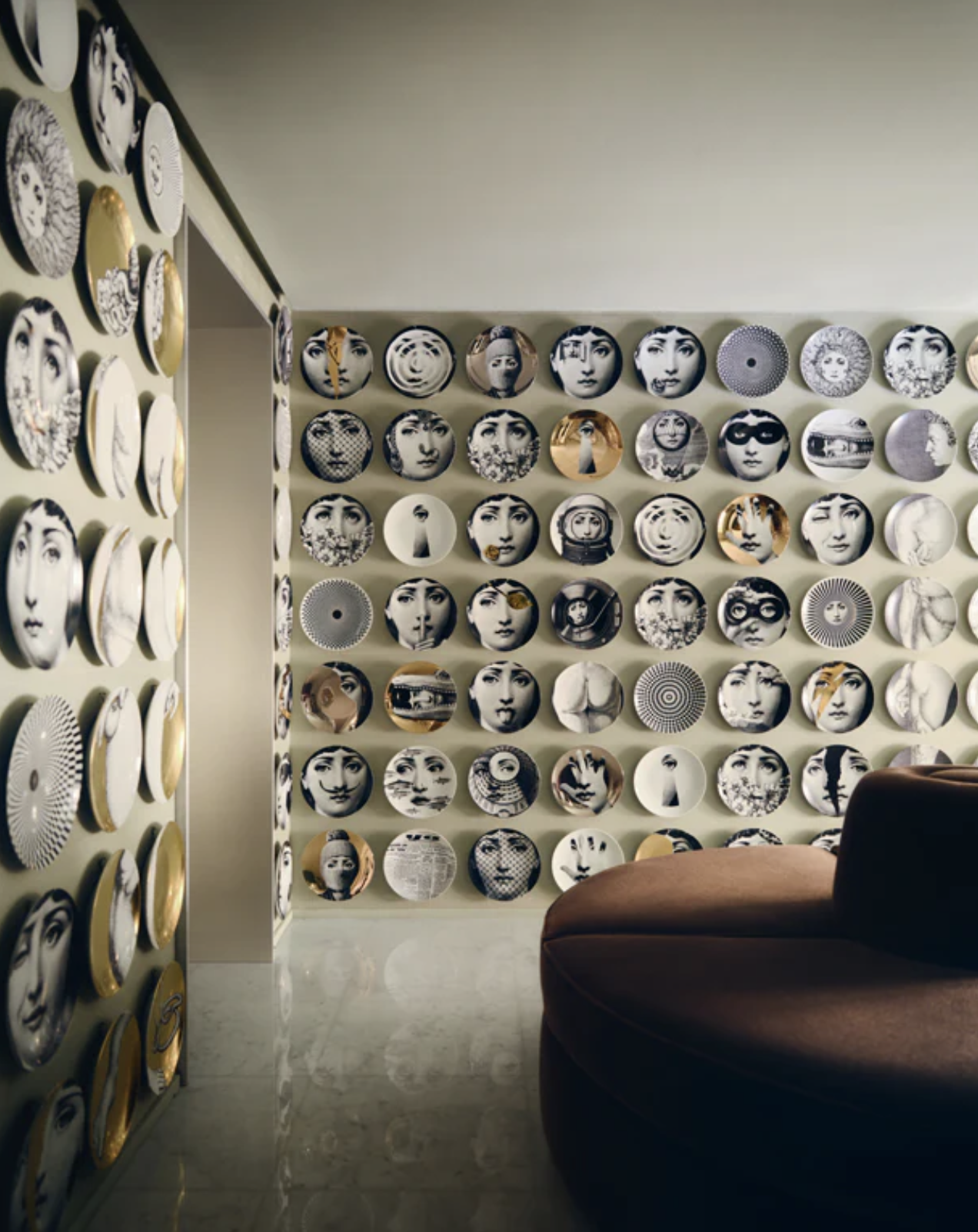
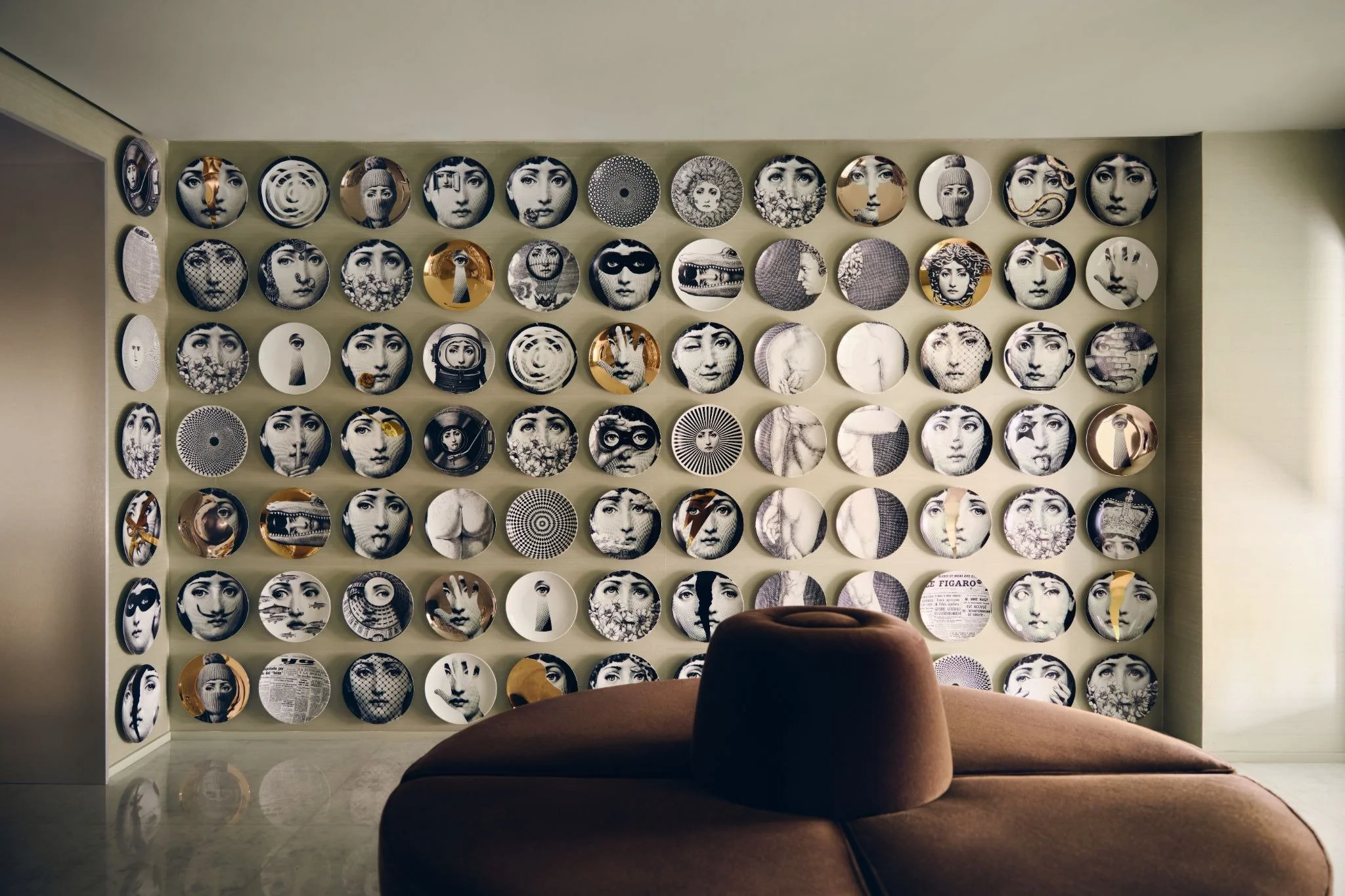
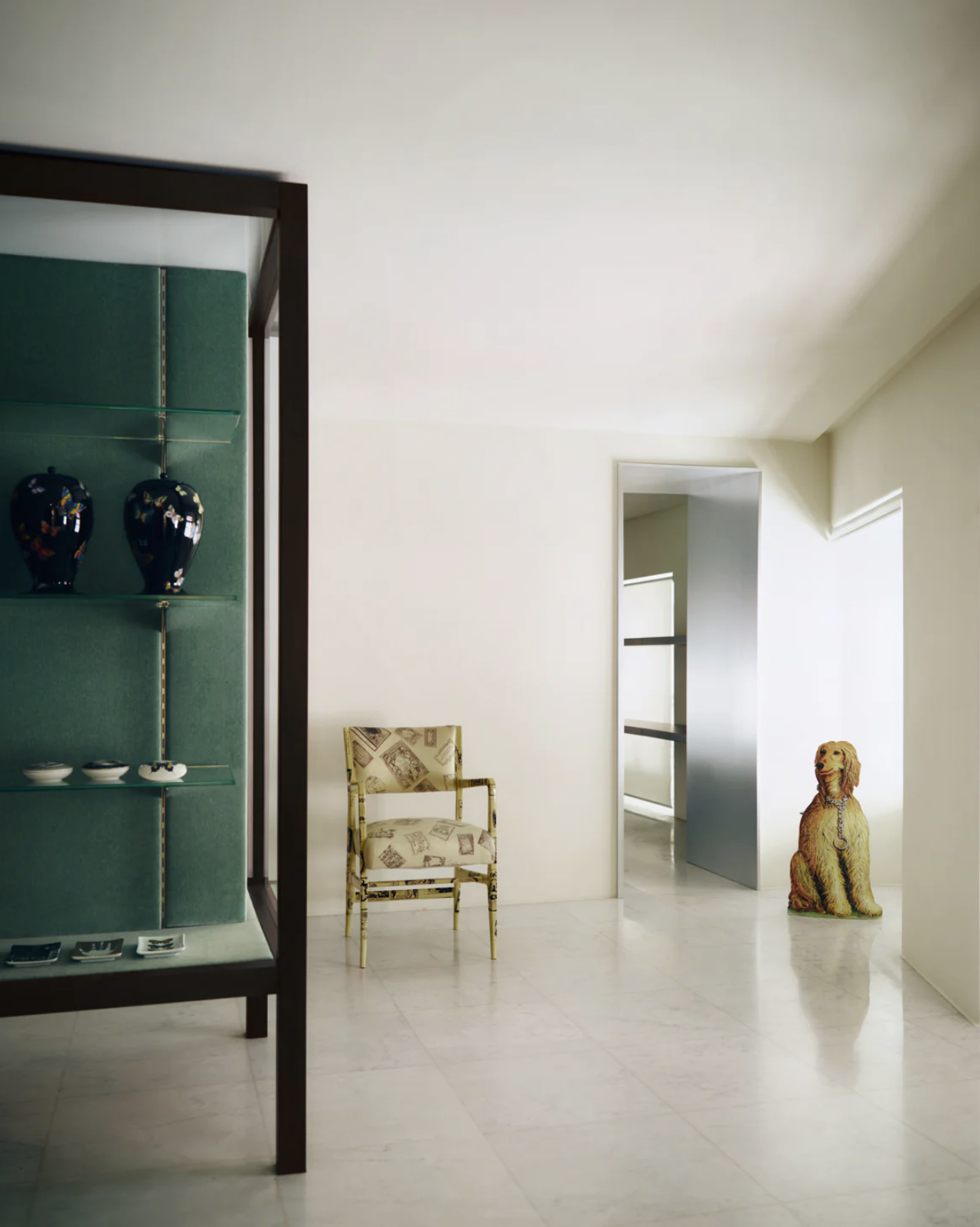
This level presents the Fornasetti catalogue through the lens of a museum or collector’s cabinet. Ceramics, trays and decorative objects are arranged in vitrines and custom cabinetry, allowing visitors to appreciate repetition, variation and the extraordinary breadth of the atelier’s output.
Rather than styling objects as lifestyle accessories, the design treats them as part of a larger body of work. It is a clever curatorial move. Visitors are invited not just to shop, but to understand the internal language of Fornasetti — the recurring symbols, the humour, the precision and the obsessive beauty of iteration.
The Apartment
On the second floor, the experience becomes immersive.
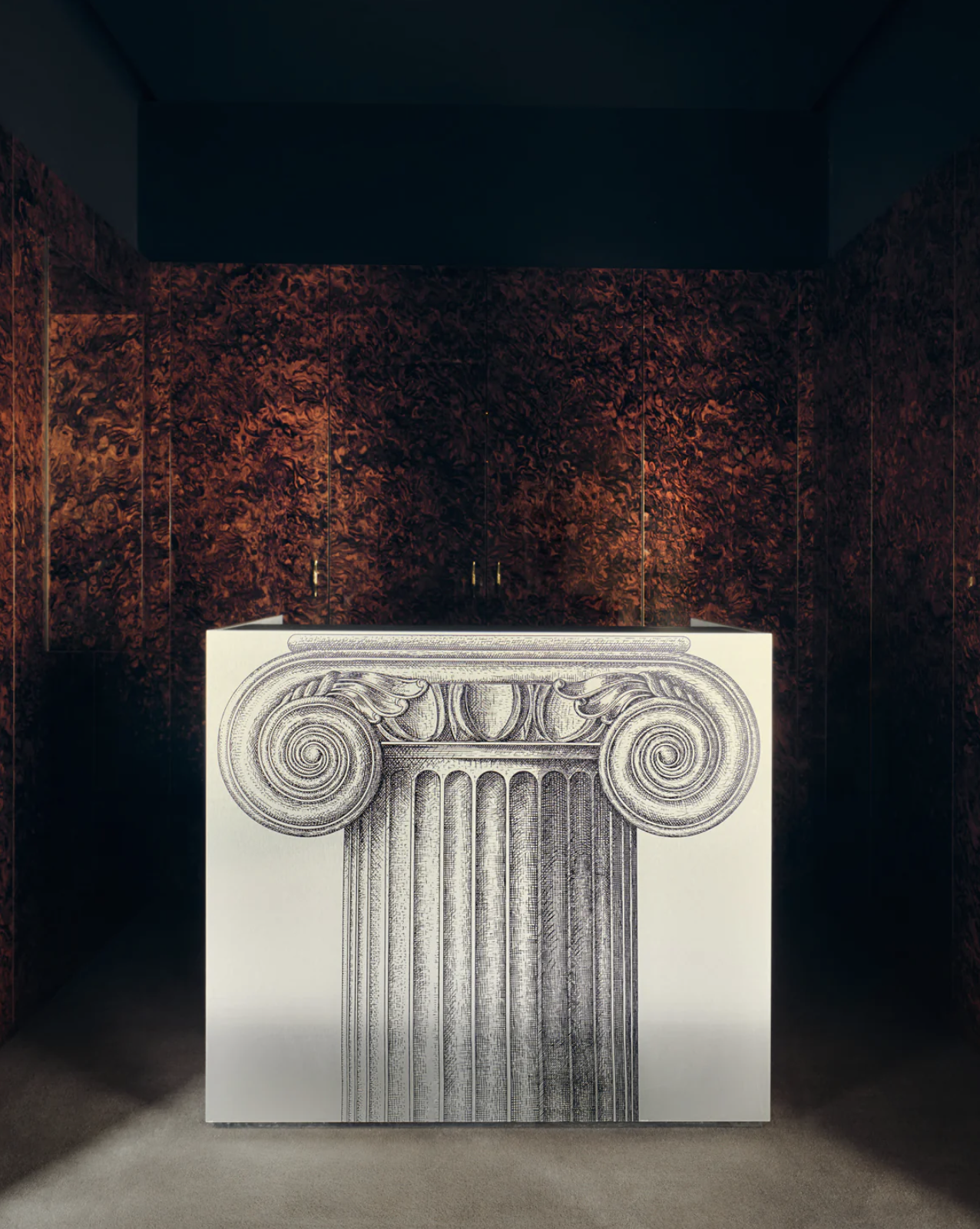
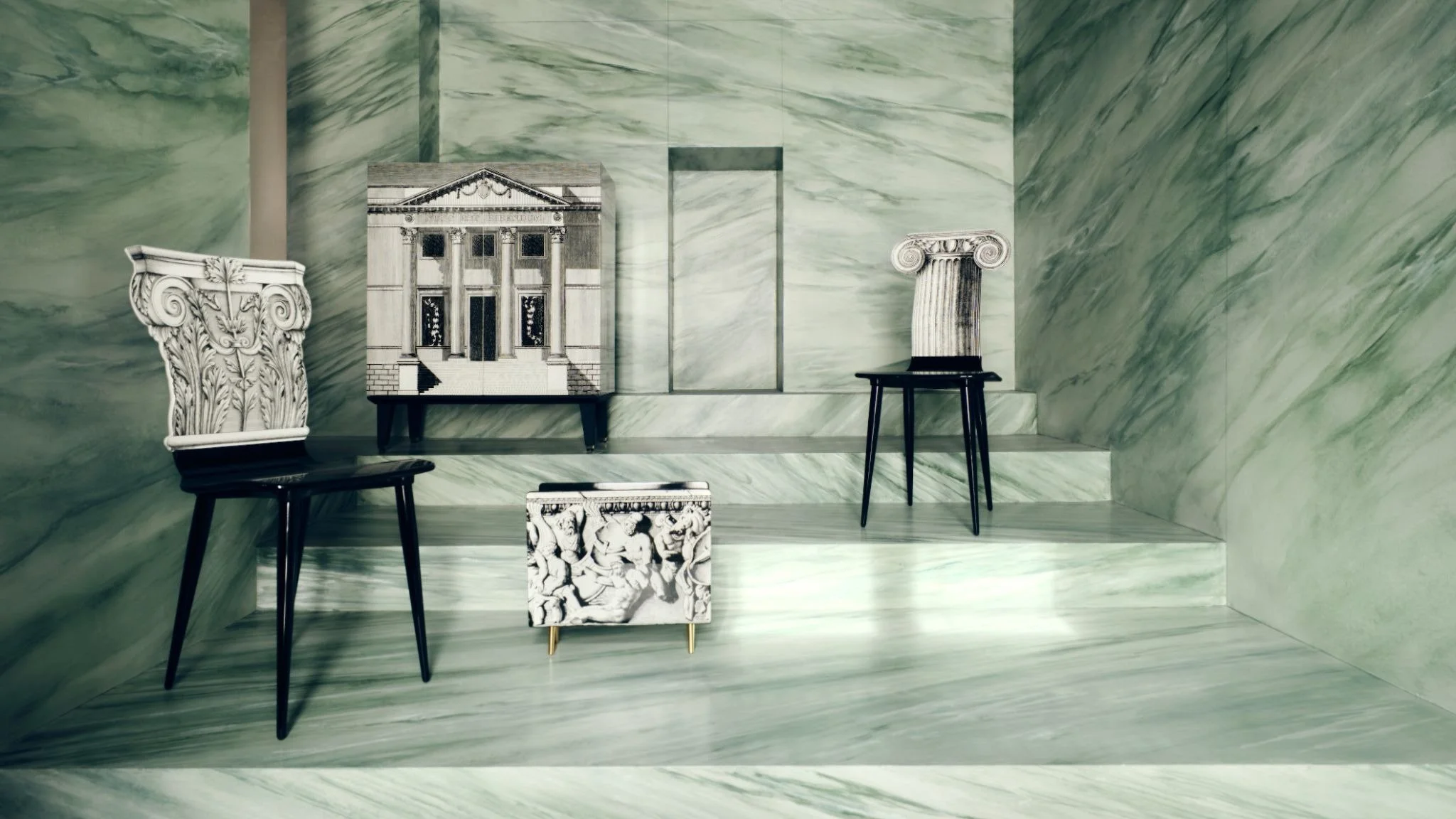
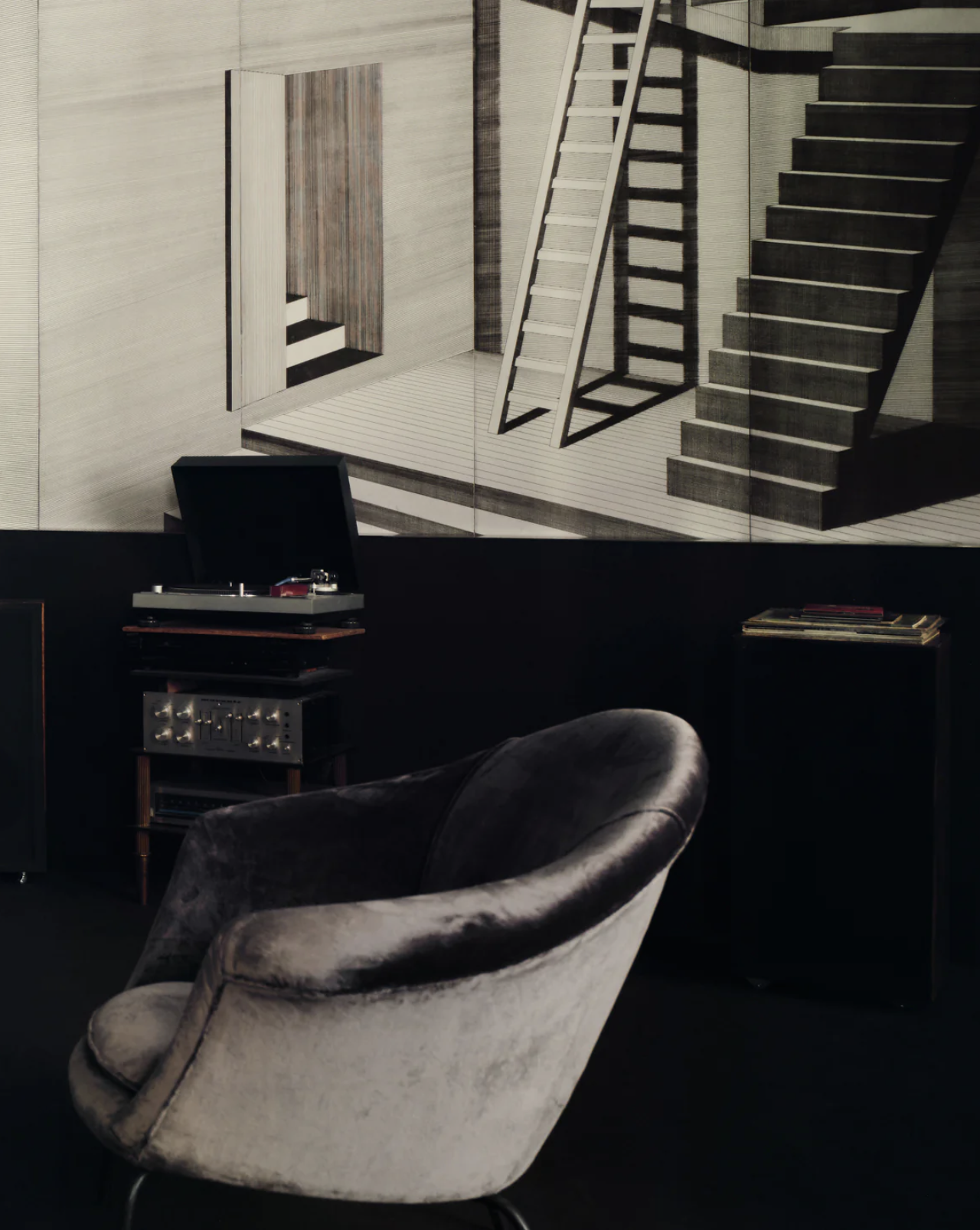
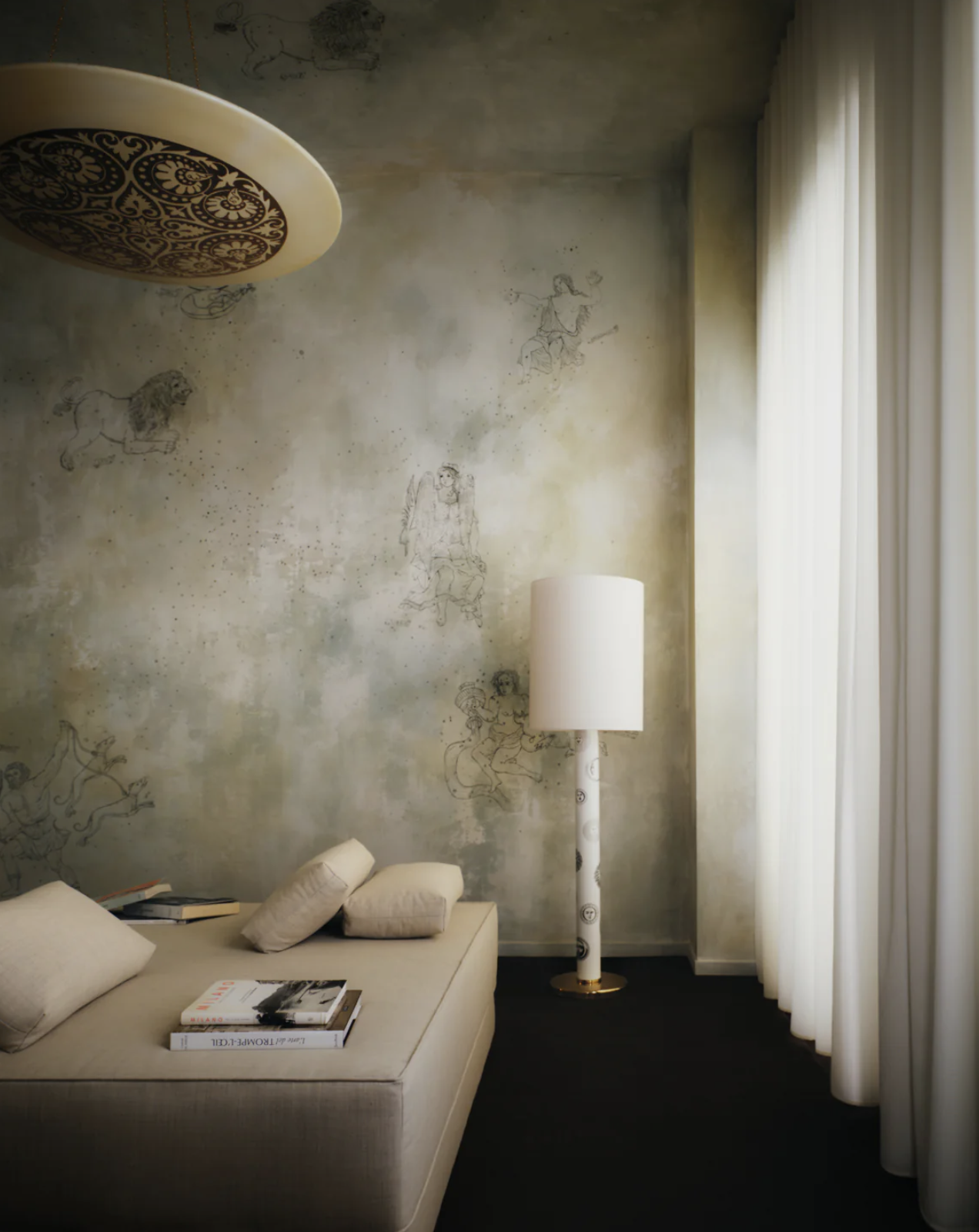
Known as The Apartment, this level comprises four domestic environments, each inspired by themes central to the Fornasetti imagination: architecture, metaphysics, identity, and astronomy.
Objects are no longer presented on plinths or shelves. They are lived with.
Furniture, lighting and decorative pieces inhabit rooms that feel layered, intimate and atmospheric, showing how Fornasetti's world can animate contemporary interiors. It is perhaps the most compelling gesture in the entire project: the transition from archive to life.
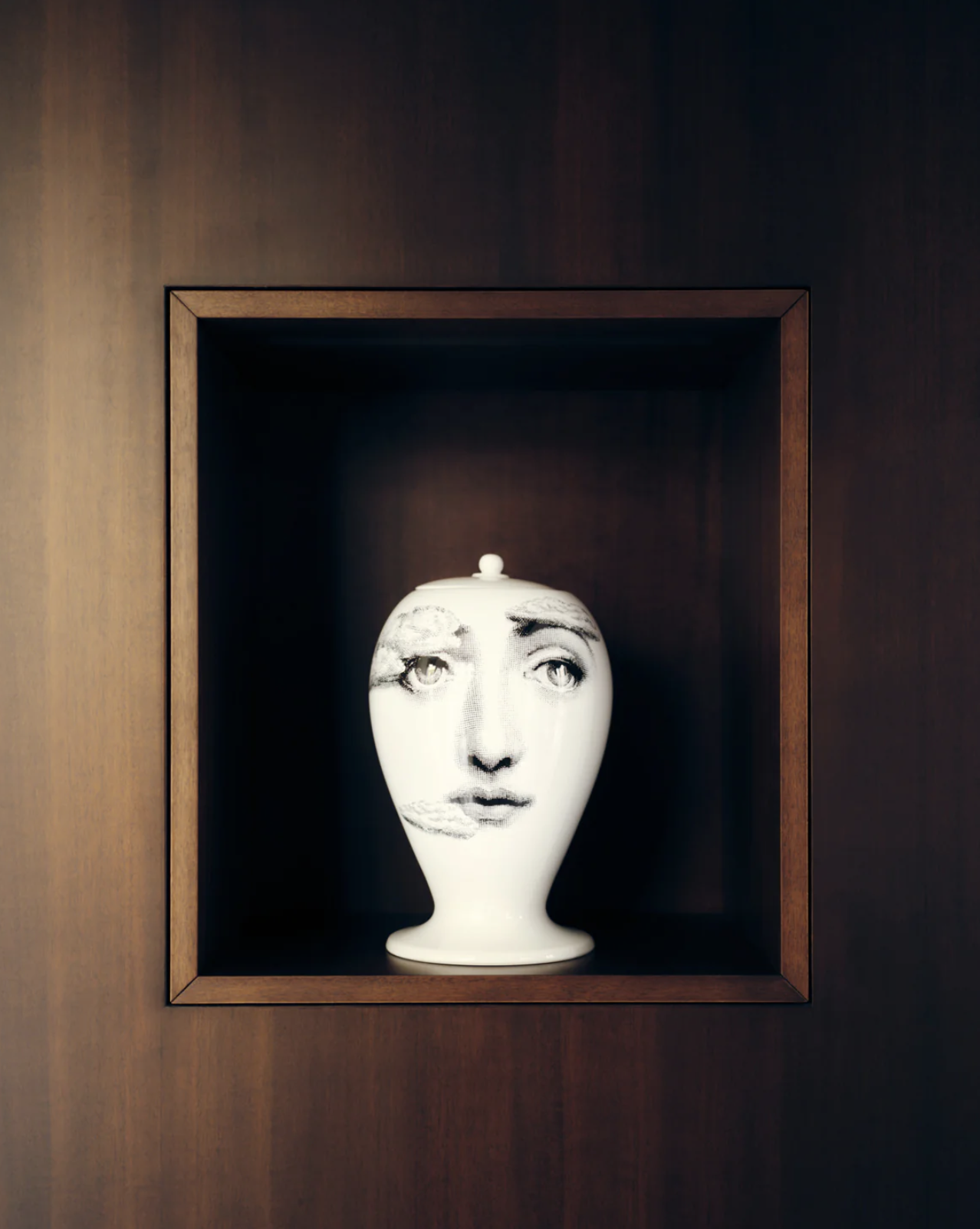
Ornament as Architecture
One of the strongest ideas within the redesign is the notion that ornament itself can become structure.
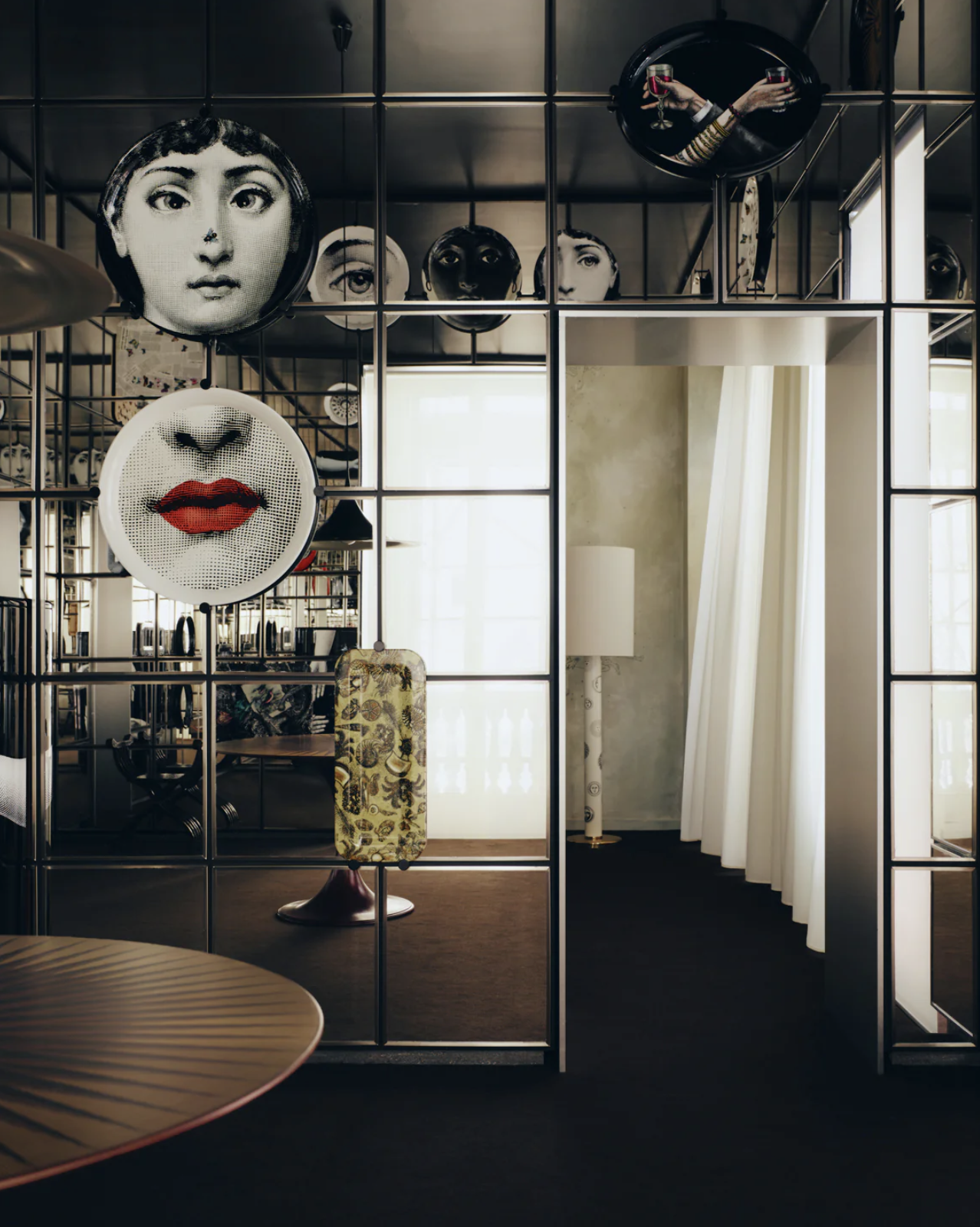
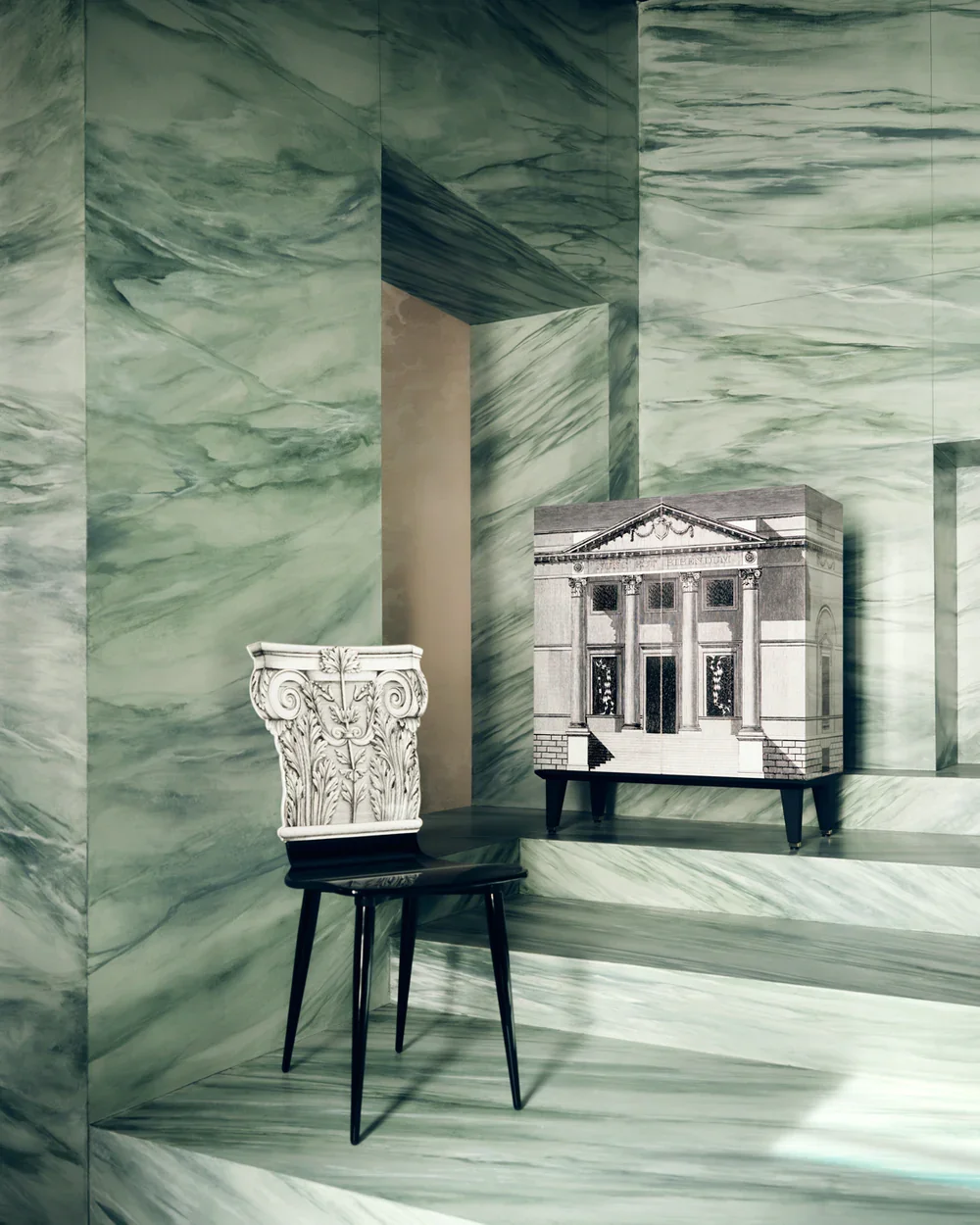
Rather than applying a pattern as decoration, Tutto Bene uses the Fornasetti visual vocabulary to shape the atmosphere of the rooms. Surfaces become narrative devices. Motifs become spatial cues. Movement through the building feels choreographed through graphic rhythm and material contrast.
The palette remains unmistakably Fornasetti: black and white, shades of green, metallic notes of gold and silver. Materials are kept raw and honest so the objects themselves hold visual primacy.
This balance is important. It prevents the space from becoming overwhelming. Instead, it feels intelligent, edited and quietly confident.
Why It Matters Now
The reopening arrives at a moment when design audiences are increasingly drawn to craftsmanship, authorship and individuality.
In a culture saturated by digital sameness, spaces like this remind us of the emotional value of objects made with wit, skill and imagination. They also demonstrate that retail, when approached creatively, can still offer something the internet cannot: atmosphere, tactility and surprise.
For Milan Design Week visitors, the new Fornasetti flagship is likely to become one of the city’s most compelling destinations, not simply for what it sells, but for what it represents.
This is heritage without nostalgia. Commerce without compromise. A store that behaves more like an exhibition, and a brand that continues to prove imagination can be timeless.
Visiting
Fornasetti Store
Via Senato 2
20121 Milan
Open during Milan Design Week:
20–26 April | 10:00 – 19:30
More Stories




JR’s La Caverne du Pont Neuf transforms Paris’ oldest bridge into an immersive cavern, blending art, architecture and perception in a powerful exploration of material, memory and the way we experience the familiar.