
Reimagining the Familiar: Inside JR’s “La Caverne du Pont Neuf”
Paris has always understood the quiet power of reinvention. Its streets hold centuries of memory, yet remain open to reinterpretation; a city that invites artists not simply to add, but to transform. It is within this tradition that JR returns, not with a gesture of permanence, but with something far more compelling: a temporary intervention that reshapes perception itself.
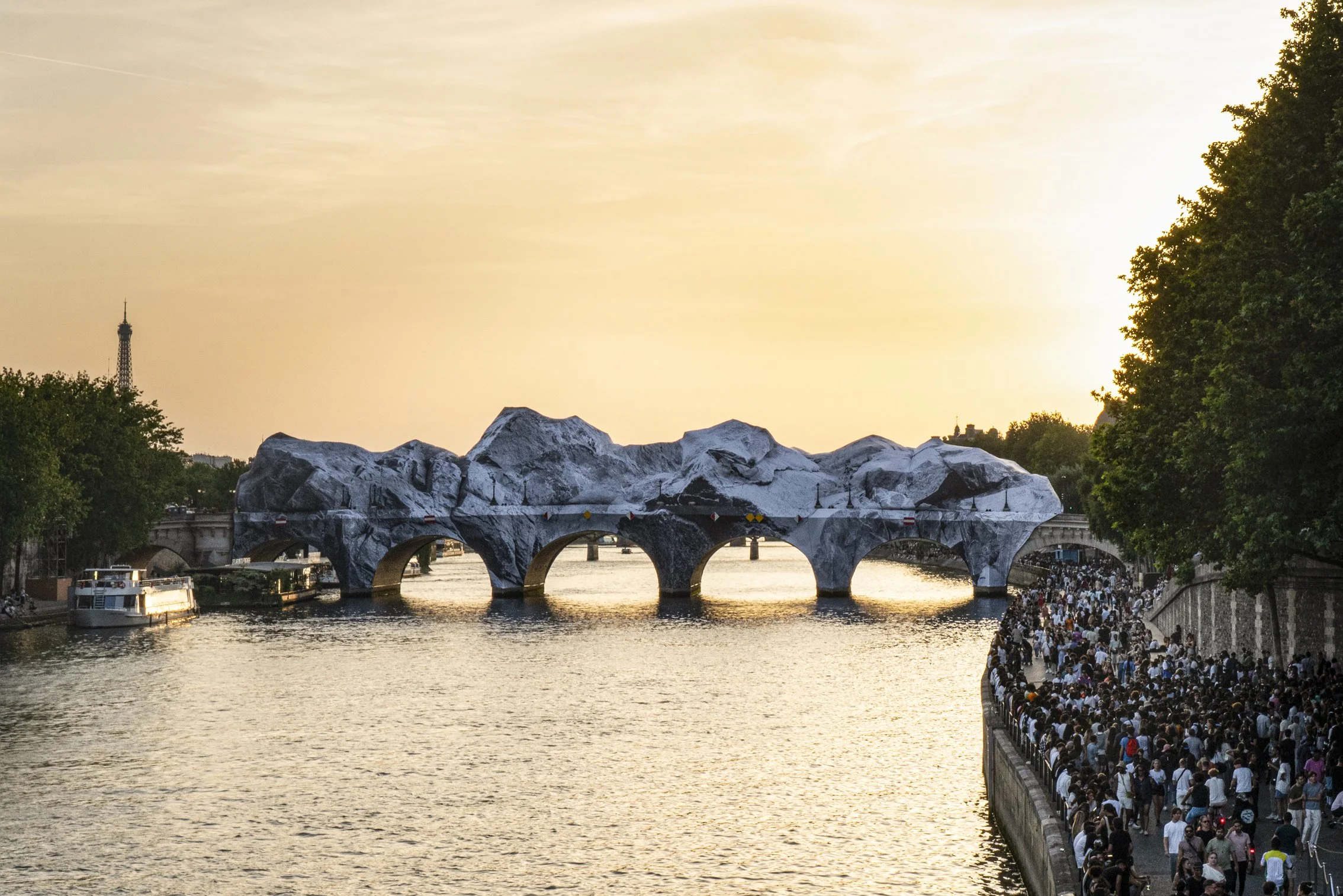
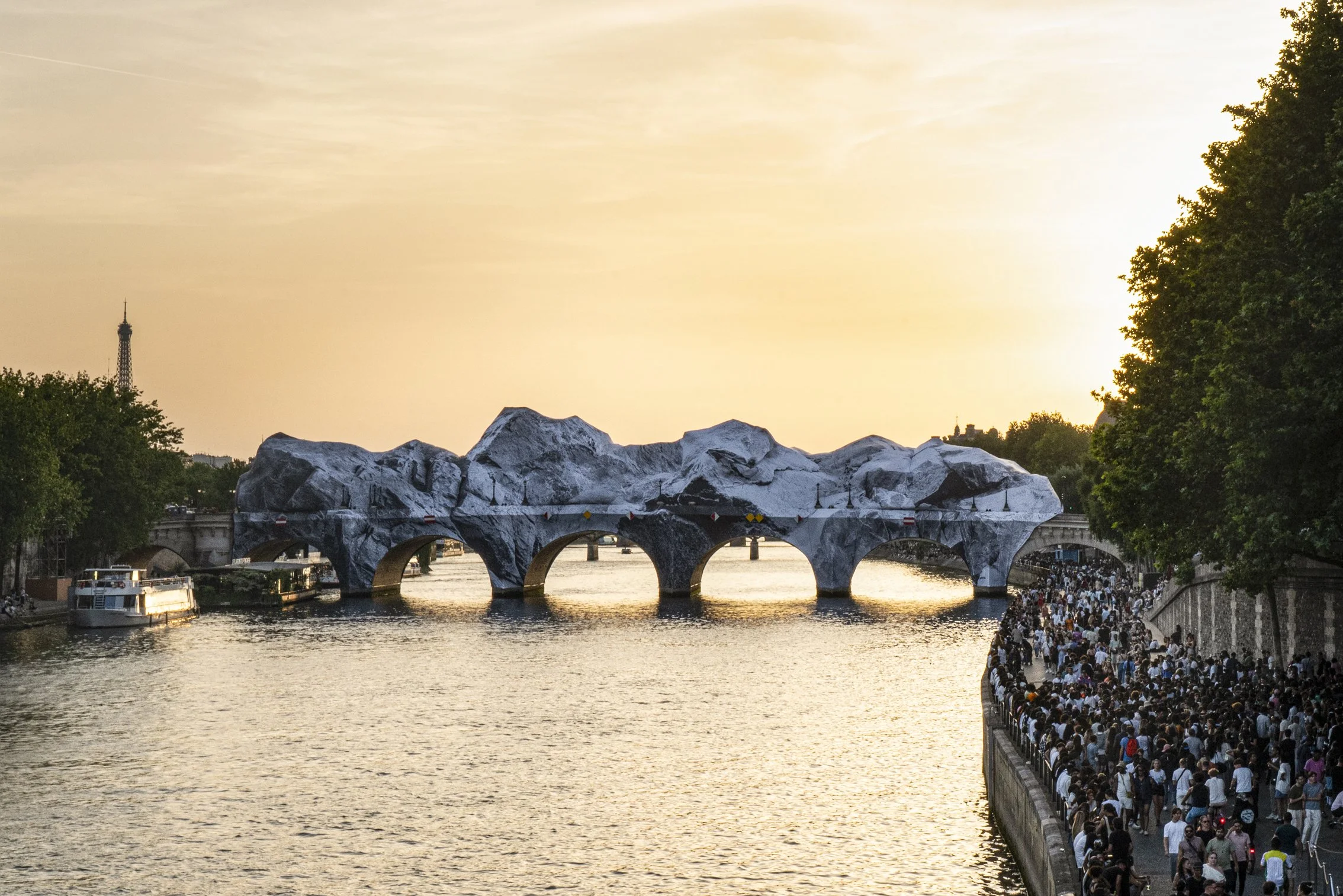
JR - La Caverne du Pont Neuf - Paris, 2026 Photo: Éléa Jeanne Schmitter© 2026 Atelier JR
At the centre of this story stands the Pont Neuf. Despite its name, it is the oldest bridge in Paris, completed in 1607, carved from Lutetian limestone; stone drawn from the quarries beneath the city and used to build much of what we now recognise as Parisian architecture.
It is not just infrastructure; it is material memory. A connector of banks, of people, of time.
JR’s La Caverne du Pont Neuf does not attempt to compete with this legacy. Instead, it reaches backwards, into the origins of that stone, into the quarries themselves, and brings something primal to the surface. His vision is deceptively simple yet profoundly layered: to transform the cultivated elegance of Paris into something raw, mineral, almost mythic.
What emerges is a dialogue. Not between artist and object, but between epochs. The refined geometry of the city meets the irregular language of nature. Order meets erosion. Permanence meets something deliberately fleeting.
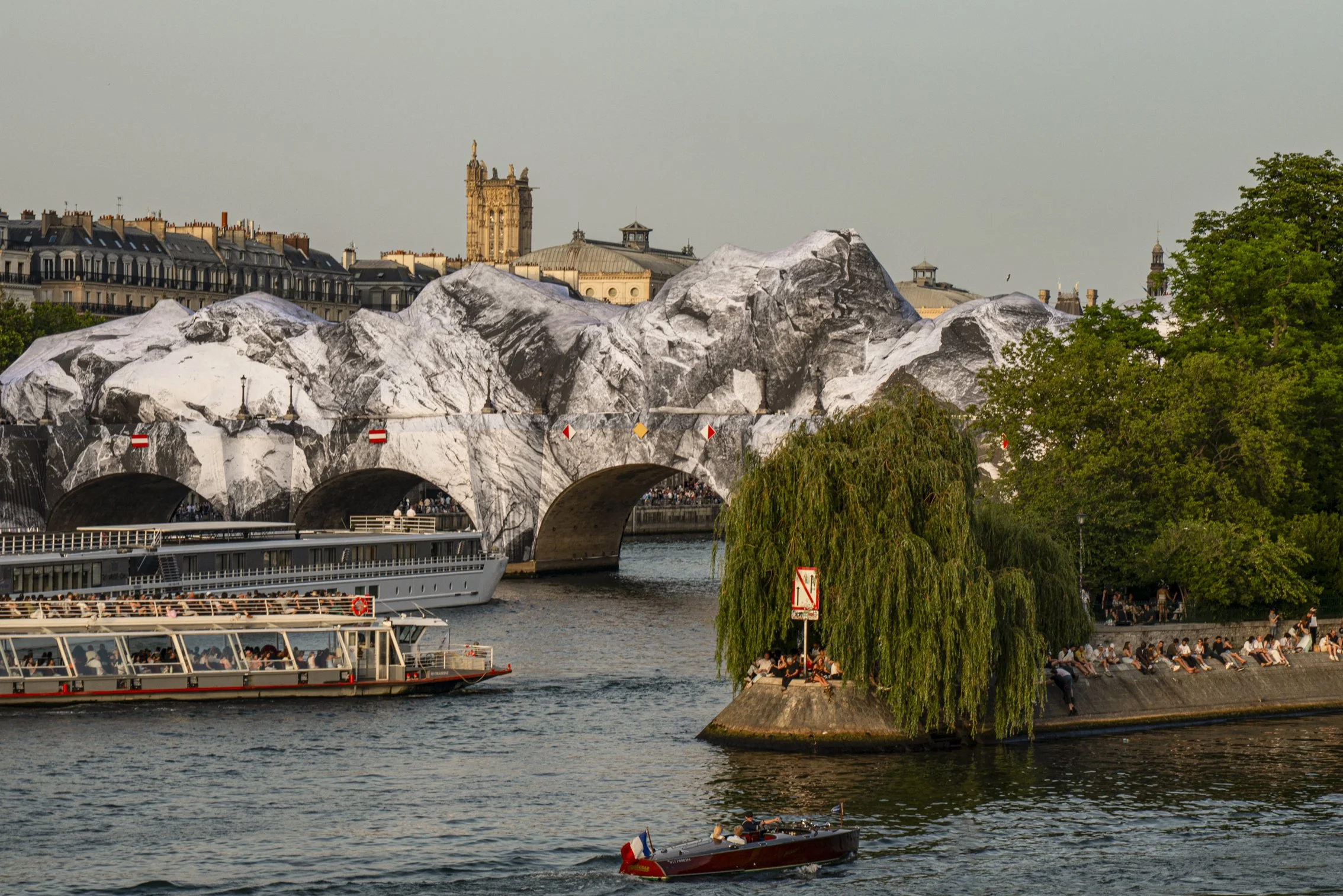
JR - La Caverne du Pont Neuf - Paris, 2026 Photo: Éléa Jeanne Schmitter© 2026 Atelier JR
A bridge that becomes a threshold
To cross the Pont Neuf has always meant movement: across the Seine, across districts, across histories. JR takes this act and reframes it entirely. The crossing becomes internal as much as physical.
Within the installation, visitors enter what is described as a “cavern,” but the word feels insufficient. It is conceived as a symbolic passage; a journey into the unknown, where fullness and emptiness are held in balance.
Here, space is not simply occupied; it is experienced.
Light shifts. Sound resonates. The familiar horizon of the bridge dissolves into something more immersive, almost meditative. The intention is not spectacle for its own sake, but transformation, encouraging each visitor to reconsider what they thought they knew.
JR has long been preoccupied with perception. His works, from facades that appear to fracture open, to vast photographic interventions, consistently challenge the relationship between surface and meaning. With La Caverne du Pont Neuf, that approach is expanded into something fully spatial. The illusion is no longer something you look at. It is something you inhabit.
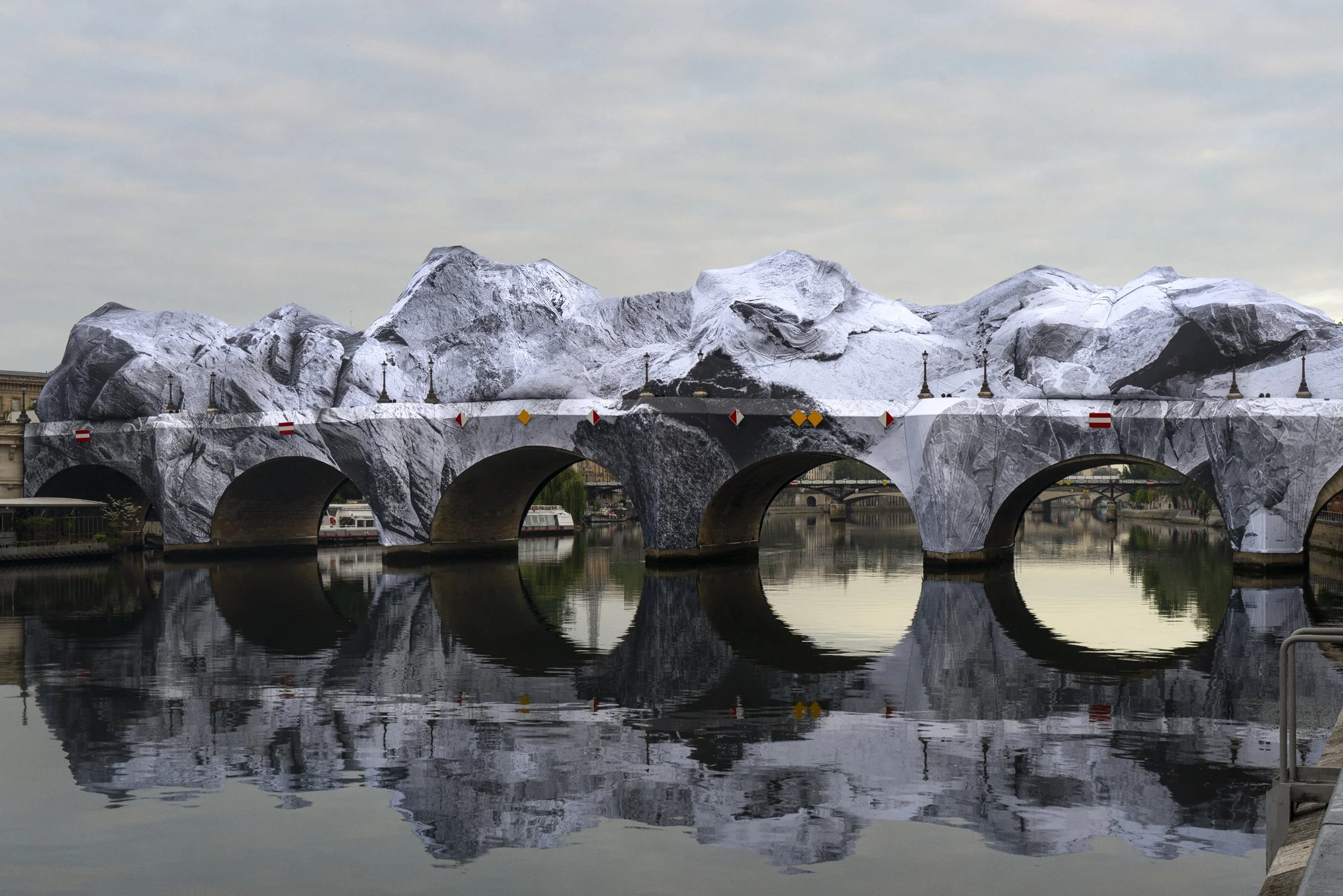
JR - La Caverne du Pont Neuf - Paris, 2026 Photo: Éléa Jeanne Schmitter© 2026 Atelier JR
Echoes of Christo and Jeanne-Claude
It would be impossible to encounter this work without acknowledging its lineage. More than forty years ago, Christo and Jeanne-Claude wrapped the Pont Neuf, softening its form beneath fabric and inviting the world to see it anew.
That gesture was radical not only for its scale, but for its ephemerality. It existed, it transformed perception, and then it disappeared.
JR’s project stands as both tribute and continuation. Where Christo and Jeanne-Claude concealed, JR reveals, or perhaps more accurately, uncovers something imagined beneath. If their work invited us to reconsider the surface, his invites us to consider what lies beyond it.
There is also a shared philosophy. The belief that public art is not merely decorative, but interrogative. That it should provoke dialogue as much as admiration.
In this sense, La Caverne du Pont Neuf is less an object than an invitation: to question, to debate, to see differently.
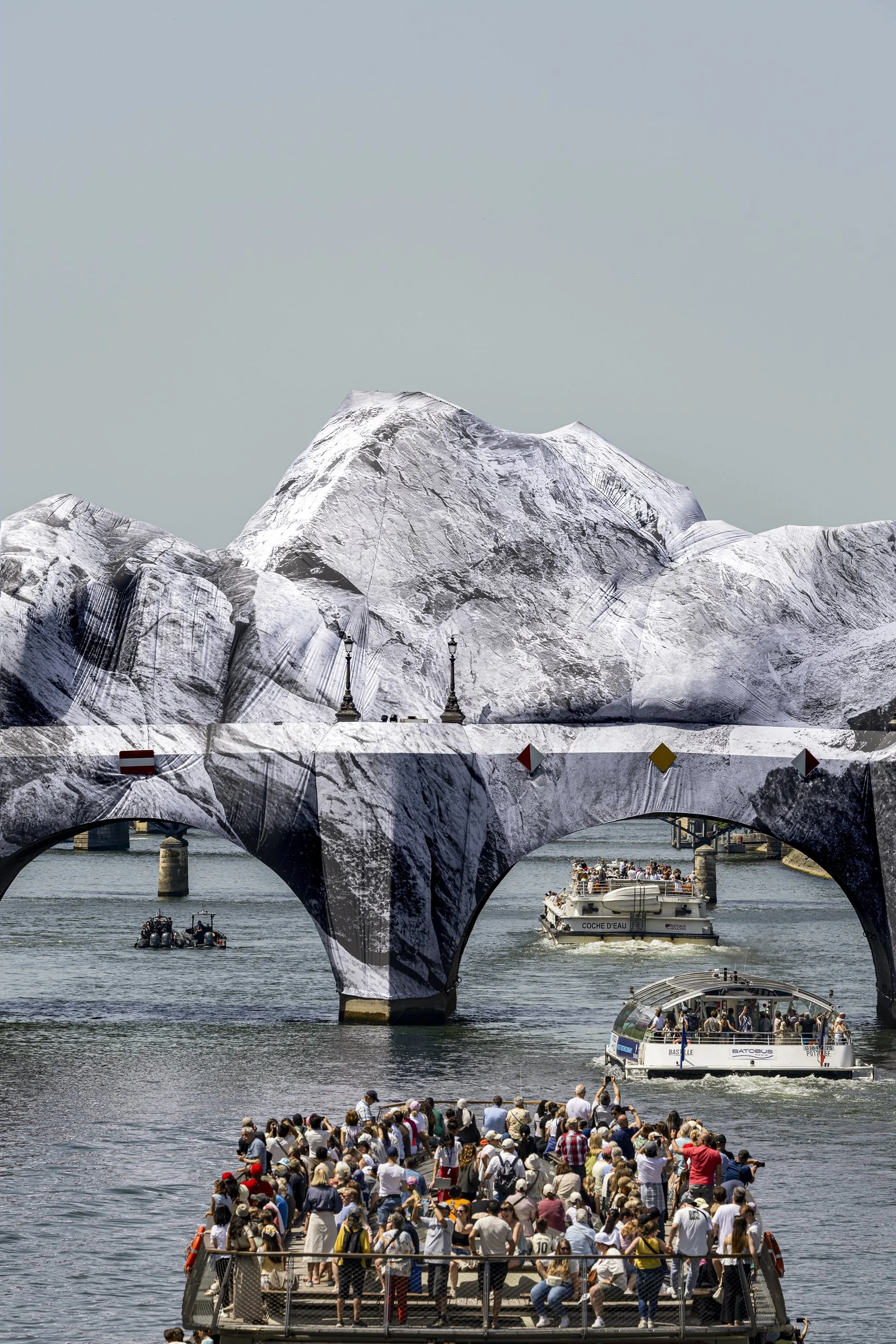
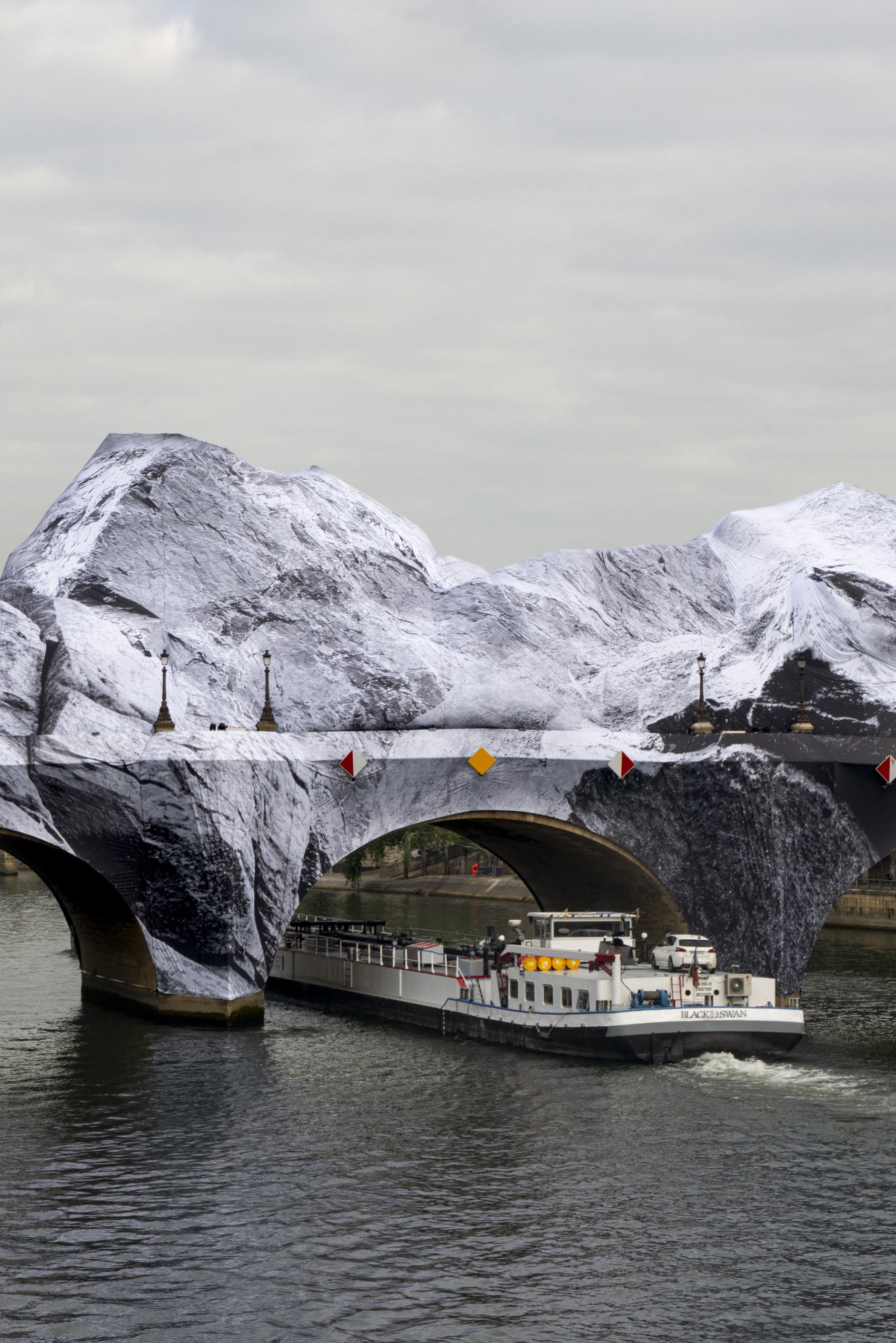
JR - La Caverne du Pont Neuf - Paris, 2026 Photo: Éléa Jeanne Schmitter© 2026 Atelier JR
Material as metaphor
One of the most compelling aspects of the installation lies in its material logic. Air is its primary substance. The structure is formed by a monumental inflatable system: lightweight, transient, almost immaterial.
This choice is both technical and poetic.
Technically, it allows for a vast architectural intervention without imposing heavily on the historic fabric of the bridge. Poetically, it reinforces the idea of impermanence. The cavern appears solid, rock-like, yet is ultimately composed of air and fabric; a constructed illusion that mirrors the fragility of perception itself.
The exterior uses printed surfaces to create a trompe-l’oeil effect, giving the structure a rugged, mineral appearance.
From a distance, it reads as something ancient and geological. Up close, it reveals itself as something entirely contemporary.
This duality is key. The work exists in tension between what is seen and what is understood.
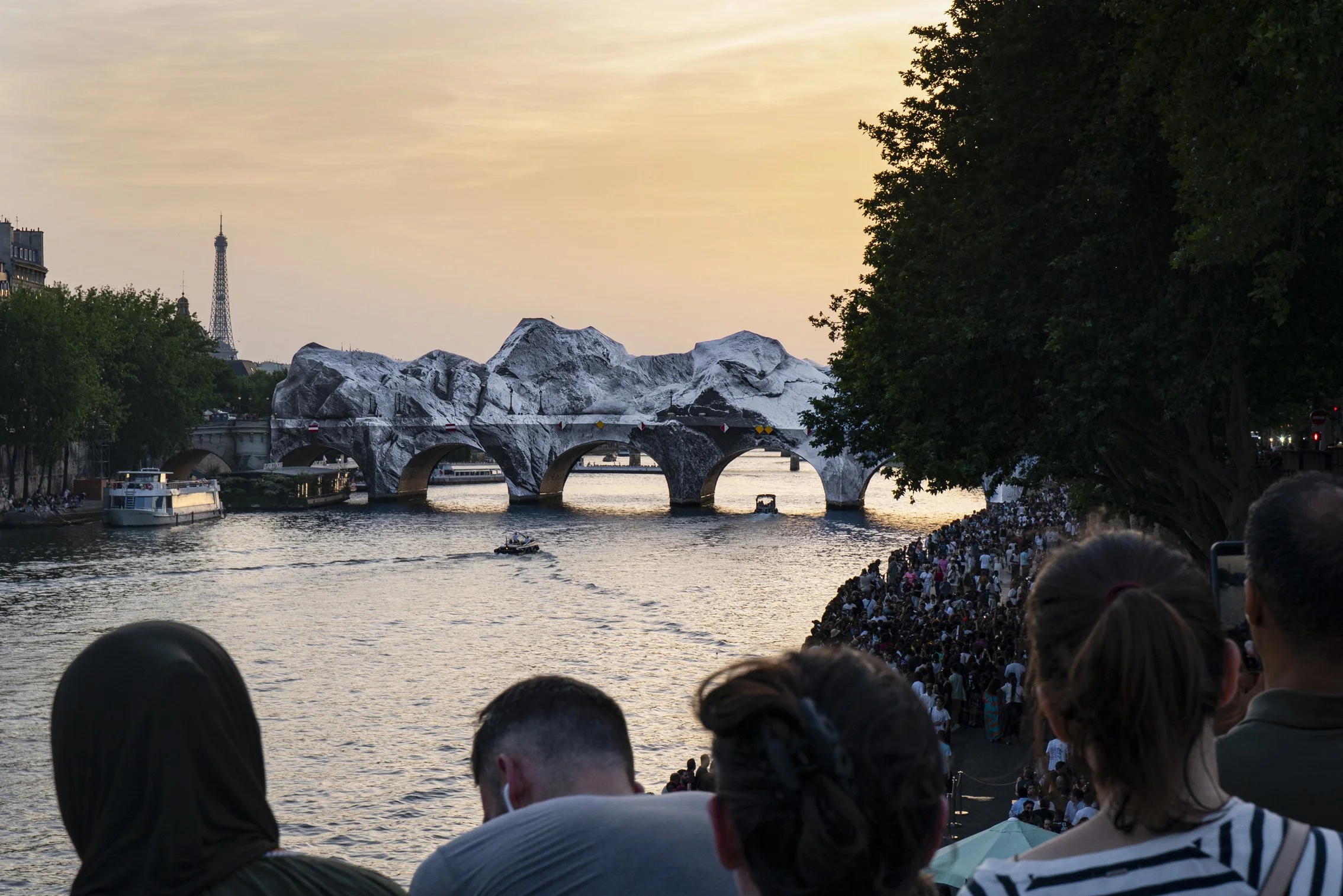
JR - La Caverne du Pont Neuf - Paris, 2026 Photo: Éléa Jeanne Schmitter© 2026 Atelier JR
A choreography of senses
The experience of La Caverne extends beyond the visual. Sound plays a central, almost sculptural role. Developed in collaboration with Thomas Bangalter, the sonic layer avoids traditional musical structure, instead creating a textured environment that resonates through the space.
It is described as something that “mineralises” the structure, reinforcing its monolithic presence.
Rather than guiding the experience, the sound deepens it. It becomes part of the architecture, something felt rather than consciously heard.
Layered on top of this is an optional augmented-reality dimension. Through digital technology, visitors can uncover additional visual traces: movements, forms, echoes that extend the installation into something dynamic and evolving.
What is particularly striking is how these elements are not imposed. They are optional, participatory, allowing each individual to construct their own journey through the work.
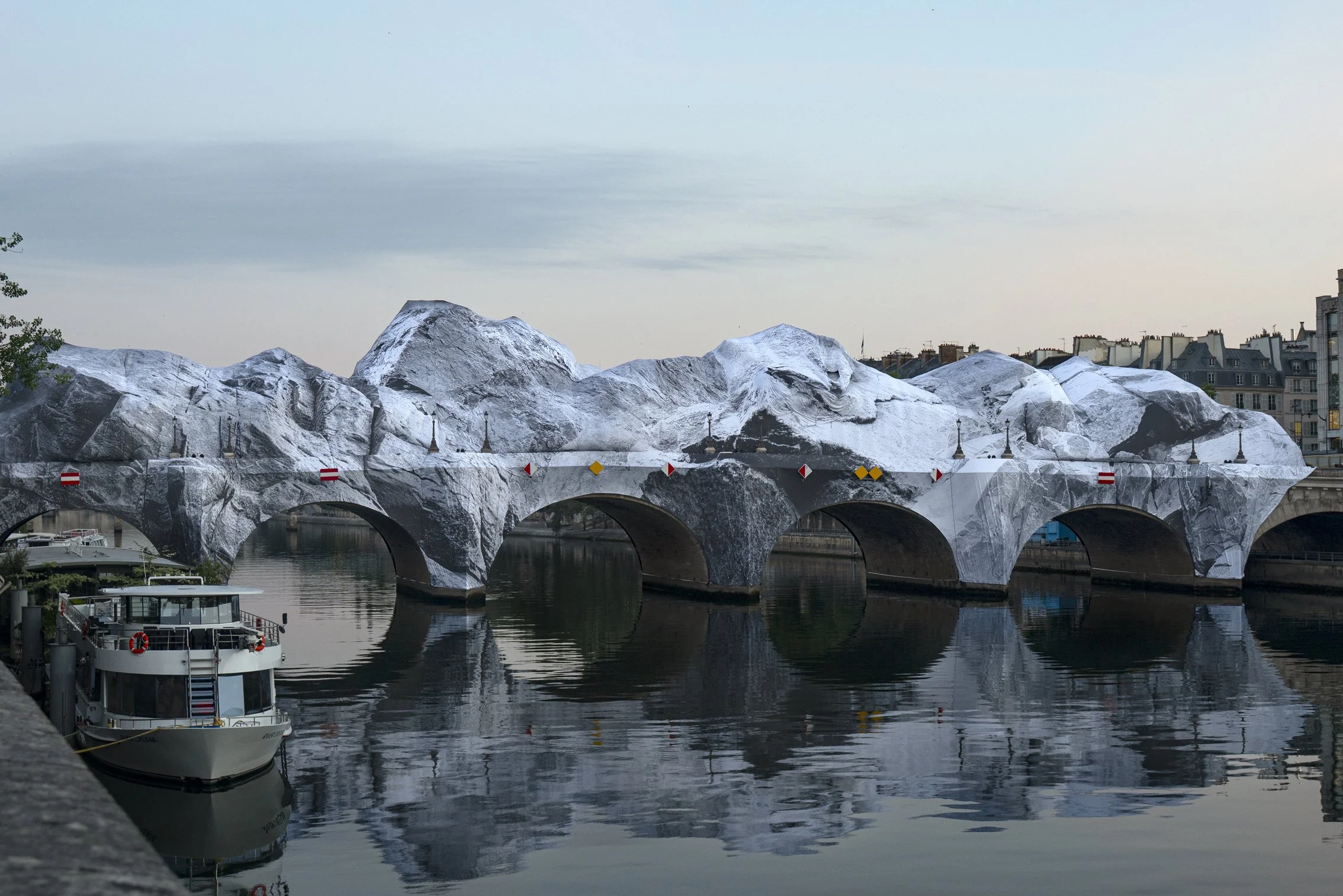
JR - La Caverne du Pont Neuf - Paris, 2026 Photo: Éléa Jeanne Schmitter© 2026 Atelier JR
A wider narrative of connection
At its core, La Caverne du Pont Neuf is not just about aesthetics. It sits within a broader trajectory in JR’s practice, one that seeks to respond to a growing sense of disconnection within contemporary society.
His recent works have repeatedly explored themes of isolation and perception, often drawing on philosophical references such as Plato’s cave, the idea that we mistake shadows for reality until we choose to step into the light.
Here, the metaphor becomes literal. The cave is not something to escape, but something to pass through. A space of reflection, of reorientation, of shared experience.
The installation invites a collective encounter. Strangers move through the same space, guided not by instruction but by curiosity. It becomes, in a quiet way, social.
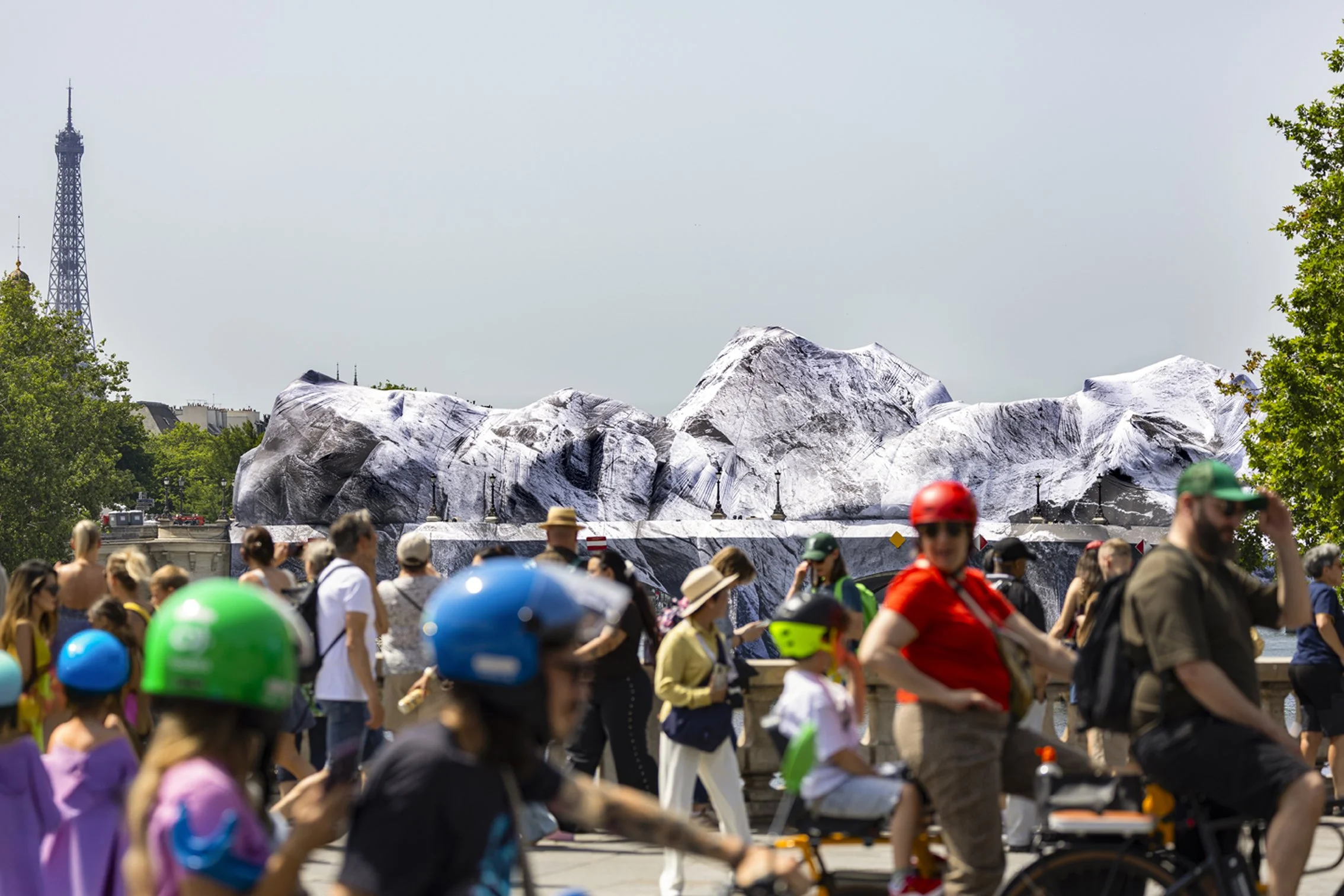
JR - La Caverne du Pont Neuf - Paris, 2026 Photo: Éléa Jeanne Schmitter© 2026 Atelier JR
Paris, re-seen
Perhaps the most enduring impact of La Caverne du Pont Neuf lies in what happens after the experience ends. The structure will eventually disappear. The bridge will return to its familiar form. The city will continue.
But something shifts.
The act of transformation, however temporary, alters perception. It reminds us that even the most established environments are not fixed. They are open, interpretable, alive.
JR’s intervention does not aim to redefine Paris. It simply asks us to look again.
And in doing so, it reinforces an essential truth: that great design and meaningful art do not just change what we see; they change how we see.
More Stories


Basic.Space arrives in London, transforming The Old Selfridges Hotel into a layered design experience where art, fashion, and sound converge. A moment of discovery shaped by the city’s enduring creative energy.