
Îles du Vent by Lelièvre Paris: Reimagining Outdoor Living as Interior Design
There was a time when outdoor spaces were treated as an afterthought. A terrace furnished quickly, a garden arranged for practicality rather than atmosphere. But increasingly, these spaces are becoming something far more considered. They are evolving into extensions of the home itself, shaped with the same level of detail, comfort and intention as any interior room.
Lelièvre Paris’ Îles du Vent collection captures this shift with clarity and confidence. As the house’s first dedicated indoor and outdoor fabric line, it represents not just a technical advancement, but a change in how we think about living.
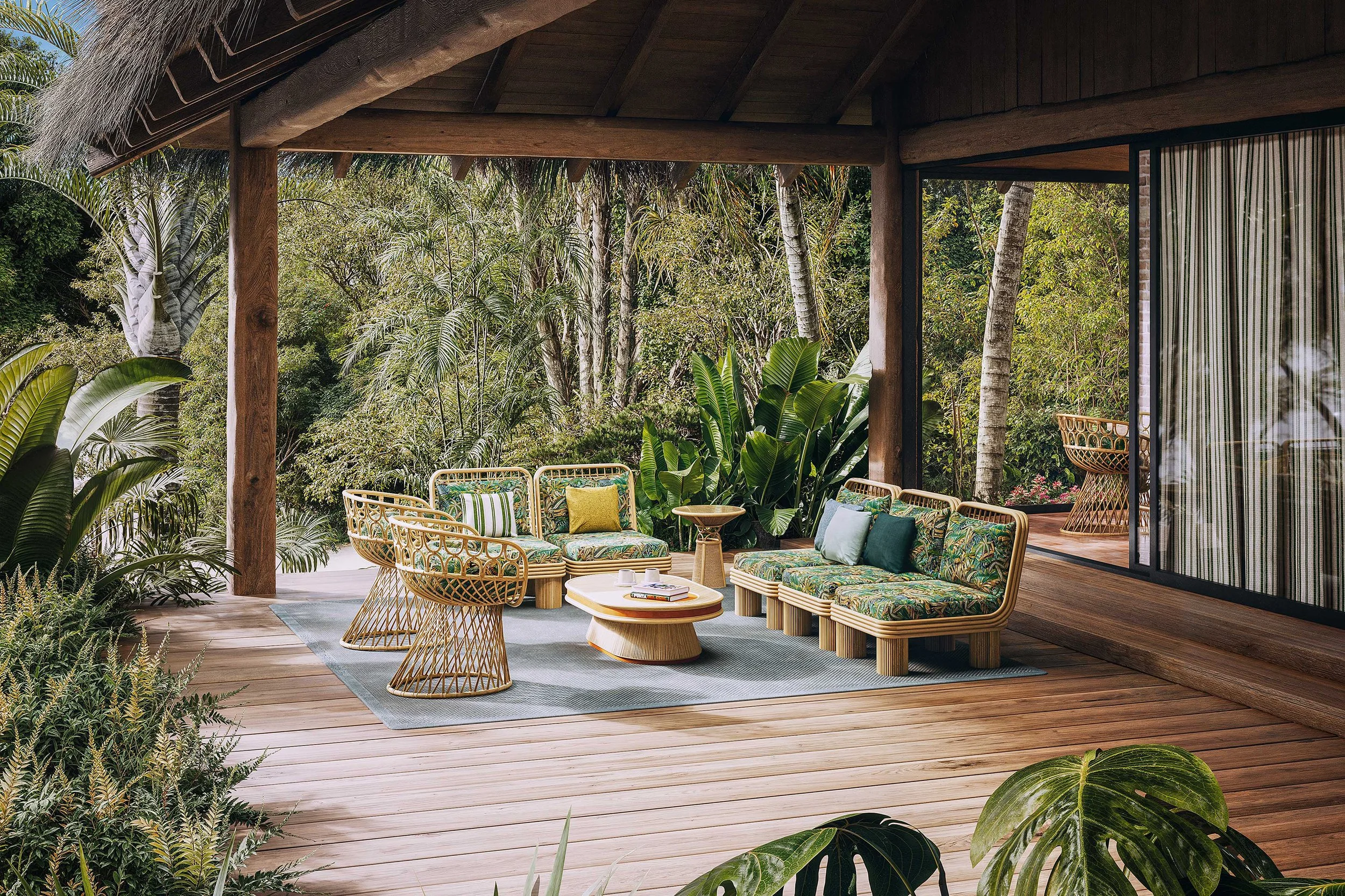
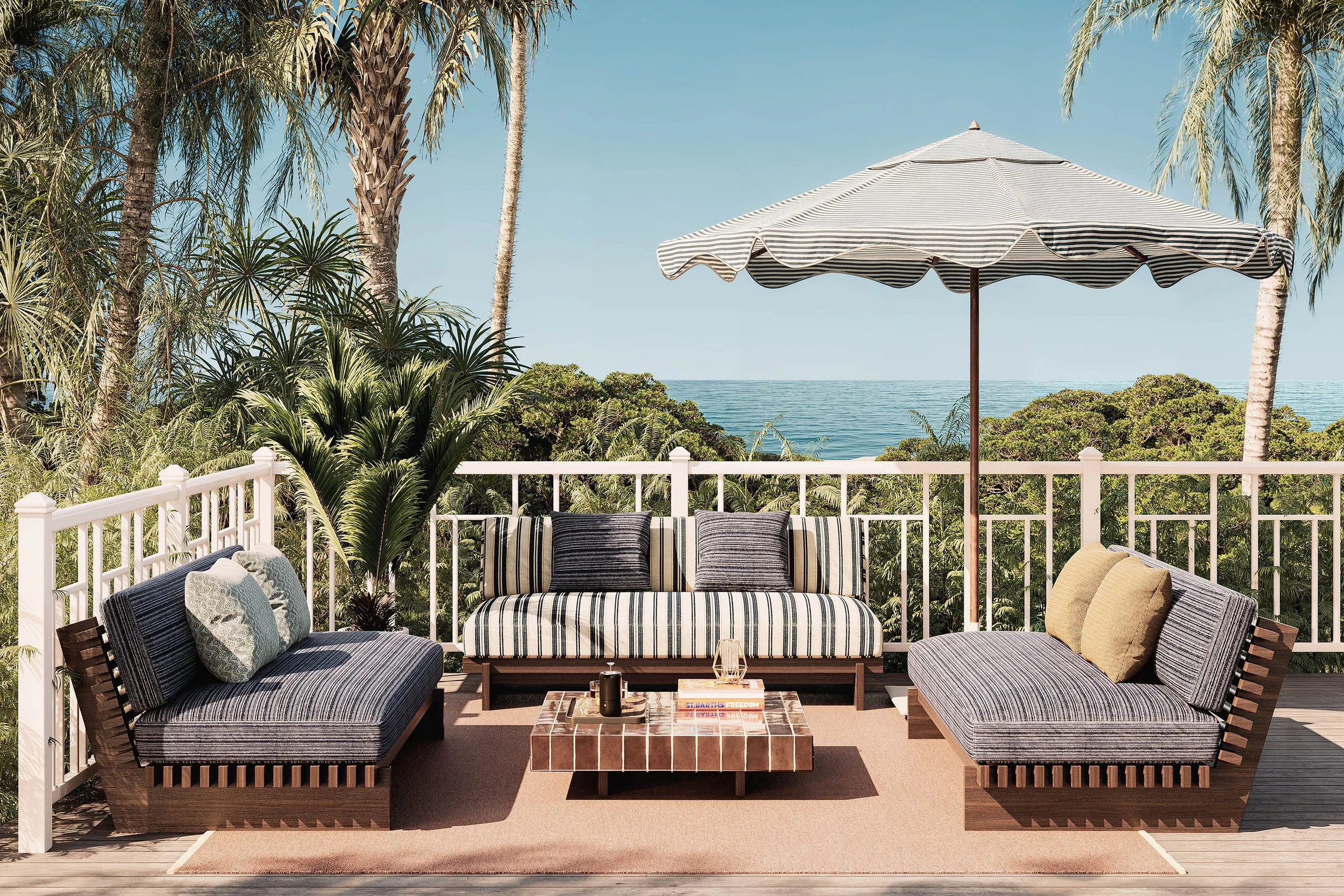
Inspired by the Caribbean, the collection evokes a landscape defined by contrast. Sunlit openness meets dense tropical foliage. Soft breezes move through bold vegetation. There is a sensuality to the environment, but also a deliberate structure. It is this balance that Lelièvre translates into fabric, creating a range that is as visually expressive as it is technically robust.
What strikes me most is how naturally these fabrics allow us to approach outdoor spaces in the same way we would an interior. This is something we are seeing more and more, as terraces, balconies and gardens become integral parts of the home rather than separate entities. And it’s refreshing to see companies truly respond to this shift, not just in performance, but in design language.
The collection itself is rich in variation, offering a layered approach to pattern, texture and tone. Aruba, for instance, reinterprets bouclé for outdoor use, introducing a softness that is traditionally associated with indoor use. Its tactile quality invites a relaxed informality, encouraging spaces meant to be lived in rather than simply looked at.
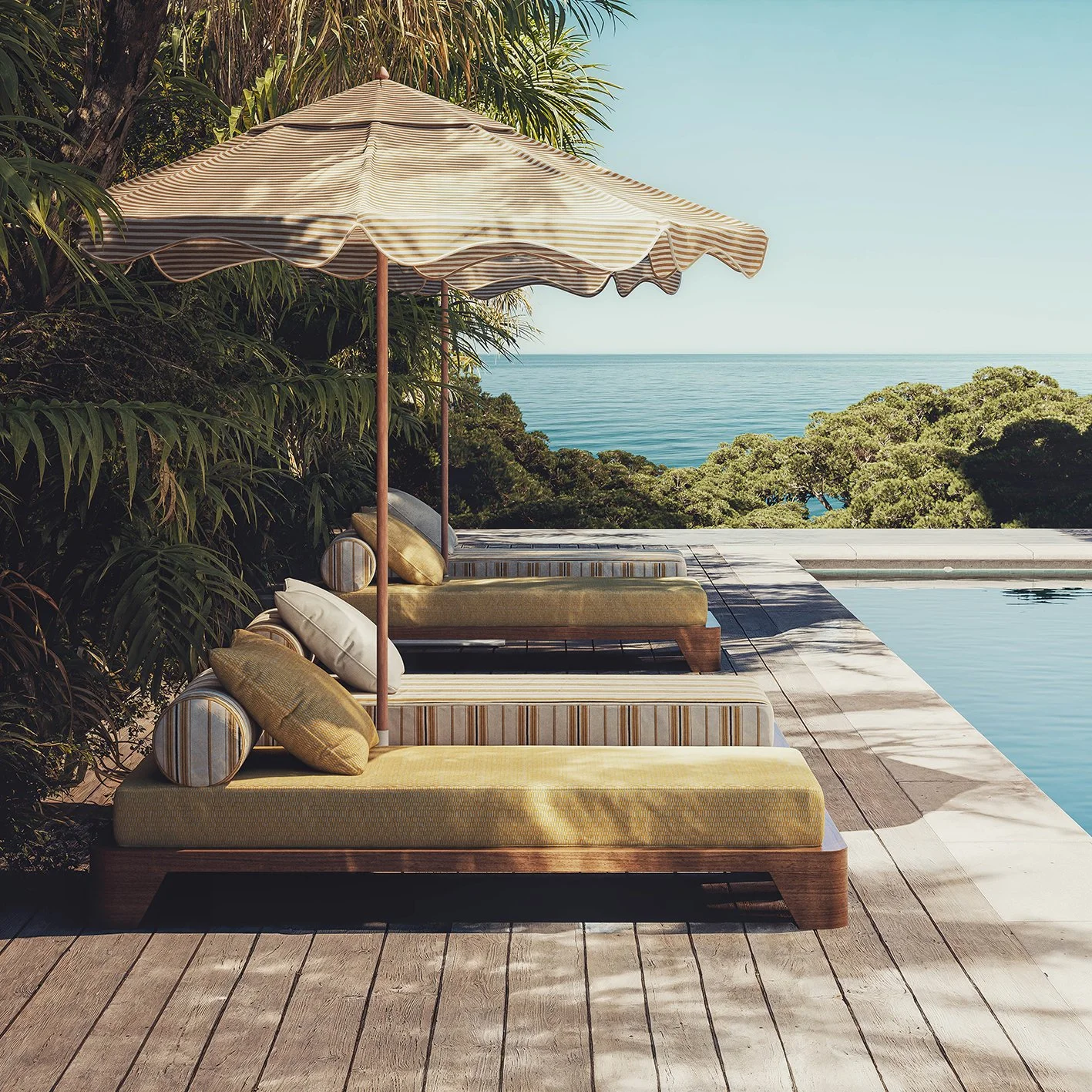
Elsewhere, Trinidad offers a quieter presence. Its linen-like appearance and expansive palette provide a foundation upon which other elements can sit. With over twenty colours ranging from neutral to more expressive tones, it becomes a grounding fabric, one that can unify a scheme without limiting its direction.
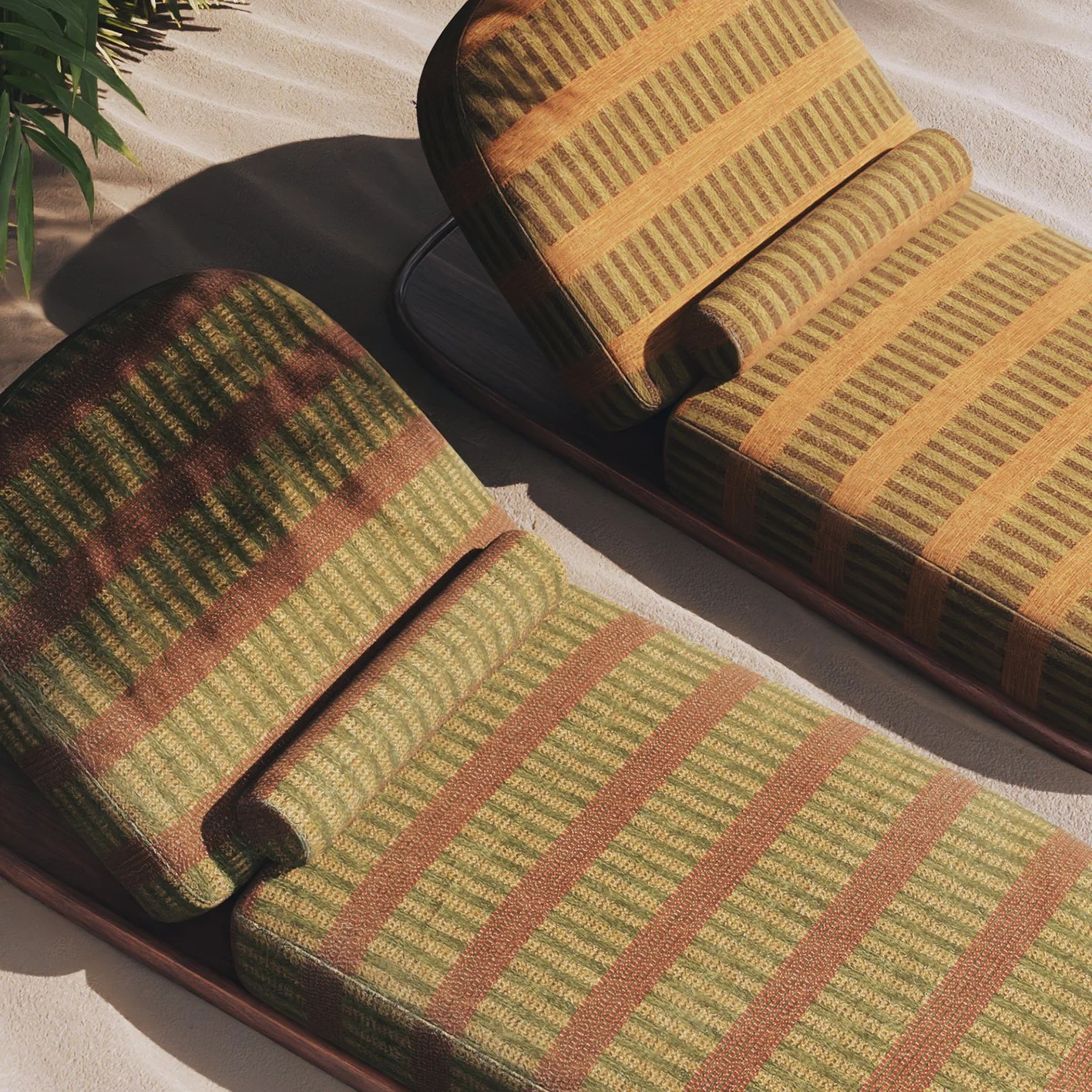
But it is within the patterned textiles that the collection truly begins to define its identity. Tobago’s striped bouclé introduces movement, drawing inspiration from the shifting reflections of water. There is an energy to it, yet it remains controlled, allowing it to structure a space without overwhelming it.
Antigua, by contrast, feels bolder, more graphic. Its geometric motifs, informed by Caribbean craft traditions, introduce a sculptural quality to upholstery. Thick threads create relief and depth, offering a visual weight that grounds outdoor seating arrangements in a way that feels intentional and architectural.
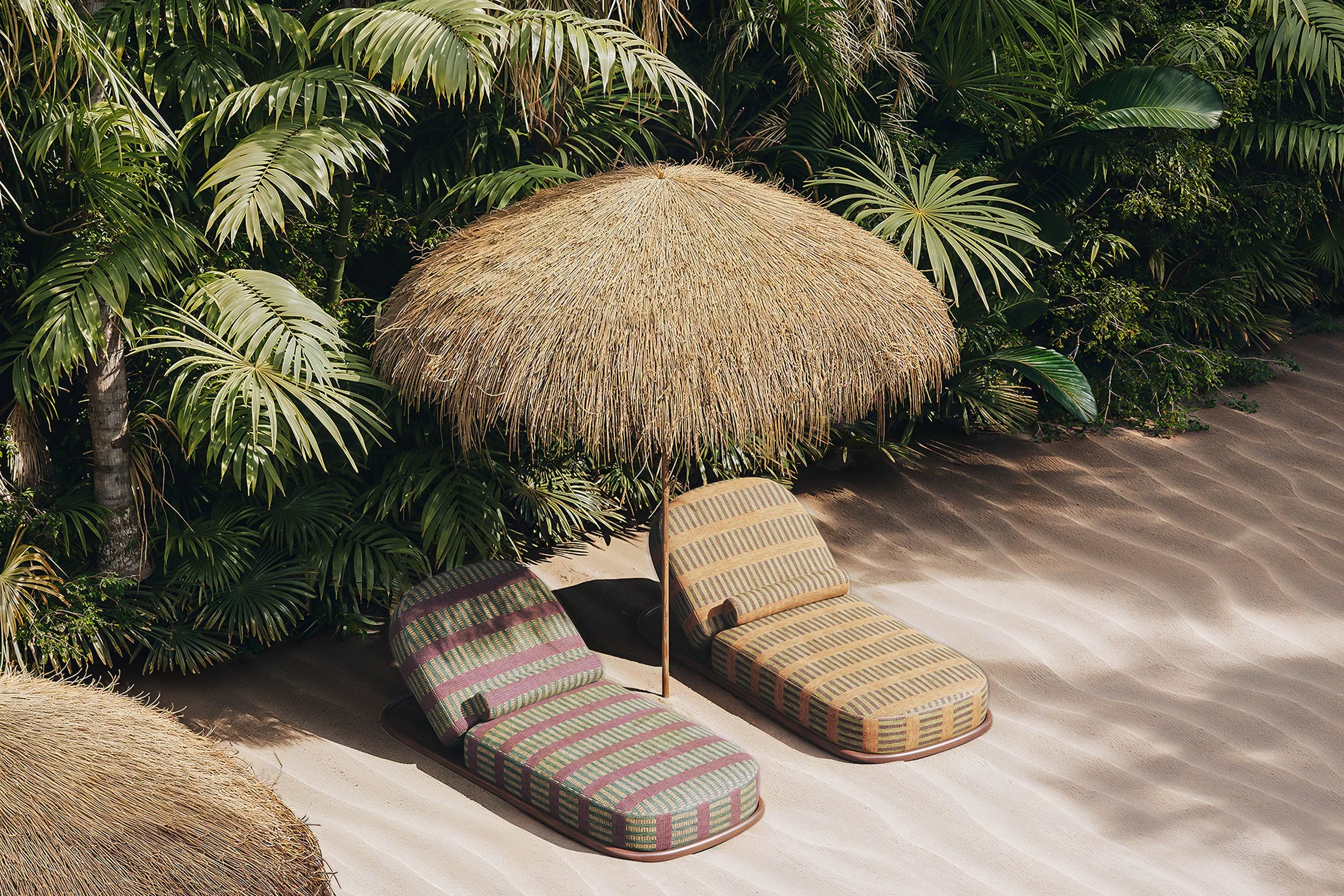
This interplay continues across the collection. From the subtle, balanced stripes of Antilla to the more expressive ikat-inspired forms of Orchila, there is a clear sense that each design has been considered not in isolation, but as part of a broader narrative.
And that narrative is one of layering.
This collection encourages mixing patterns and palettes. It removes the hesitation that often surrounds outdoor design, where simplicity can sometimes override creativity. Instead, it invites a more confident approach. One where stripes sit alongside botanicals, where textured solids support bolder prints, and where colour is used not sparingly, but thoughtfully.
For me, this is where the collection feels most relevant today. The mix of patterns and palettes allows us to treat outdoor spaces as we would any room in the home. A terrace can have the same rhythm as a living room. A garden seating area can carry the same depth as a drawing room. It becomes less about durability alone and more about atmosphere.
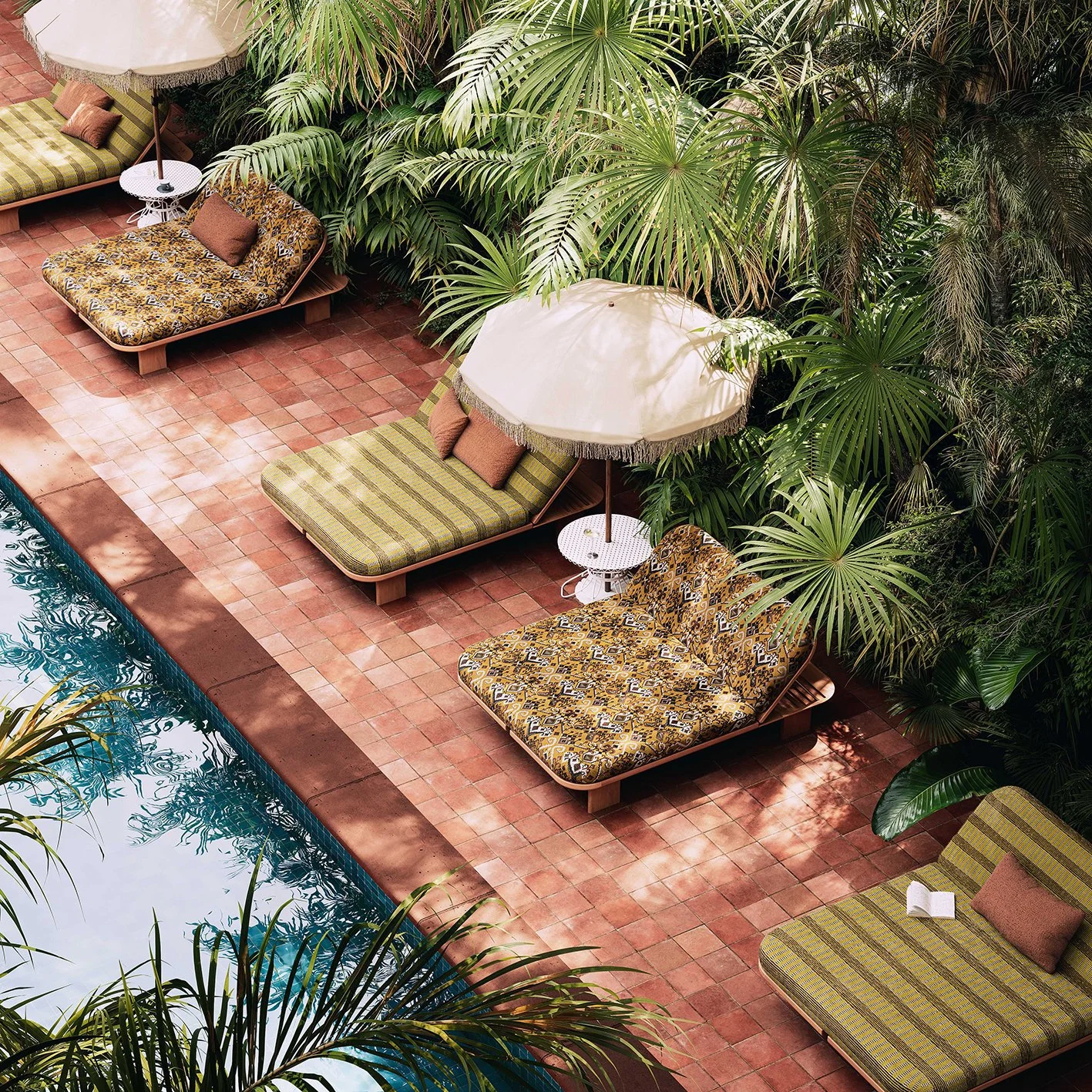
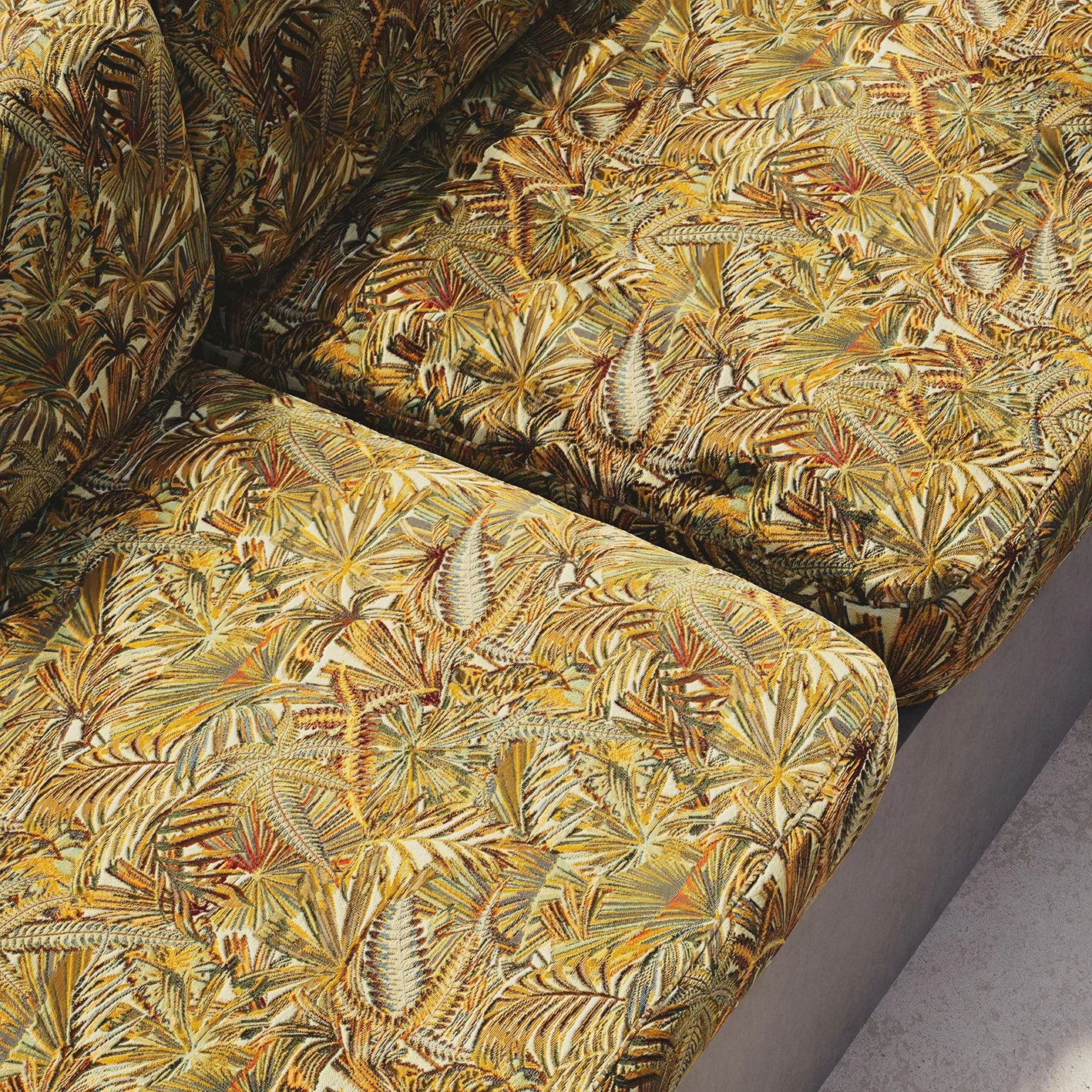
After all, these spaces are no longer transitional. They are lived in. They host conversations, quiet mornings, and long evenings. They deserve the same level of attention.
From a technical perspective, the fabrics are engineered to withstand these demands. High Martindale ratings, solution-dyed fibres and outdoor certifications ensure resilience against sunlight, moisture and wear. But importantly, this durability does not come at the expense of design. If anything, it enhances it, allowing for a freedom of application that feels unrestricted.
There is also a strong sense of cohesion throughout the collection. While each fabric has its own identity, they share a common language informed by light, texture and environment. The botanical richness of Caraïbe, for example, introduces a moment of visual intensity, a tapestry-like composition that feels almost immersive. It brings a sense of place, evoking dense, vibrant landscapes where nature is both controlled and wild.
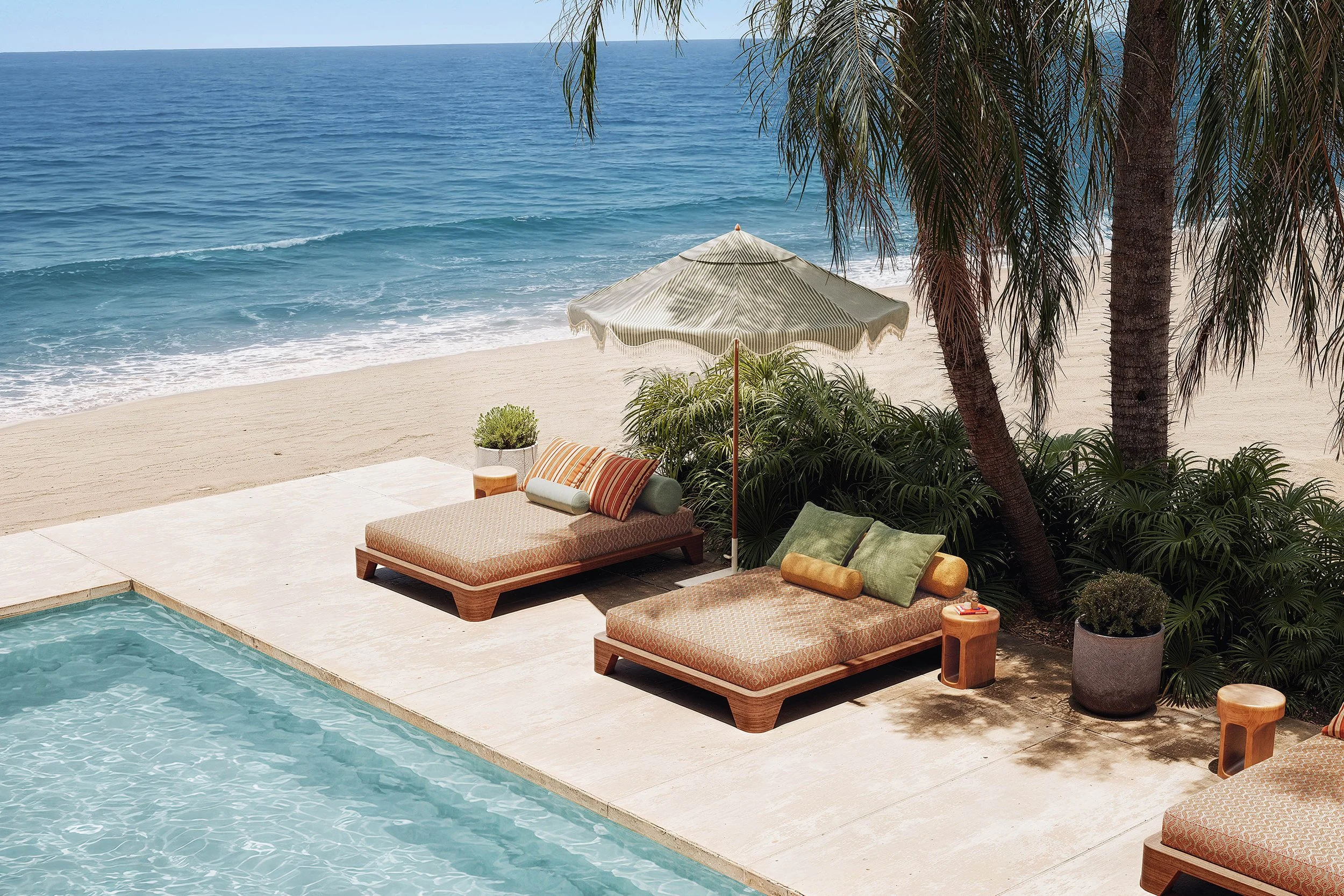
Set against this are quieter pieces like Saba or Sainte-Lucie, which offer subtlety through texture rather than pattern. These are the fabrics that allow a scheme to breathe, to find balance within a more layered composition.
In many ways, Îles du Vent is less about individual fabrics and more about how they come together. It is a collection that encourages composition, inviting designers and homeowners alike to think more holistically about their outdoor environments.
And perhaps that is its greatest contribution.

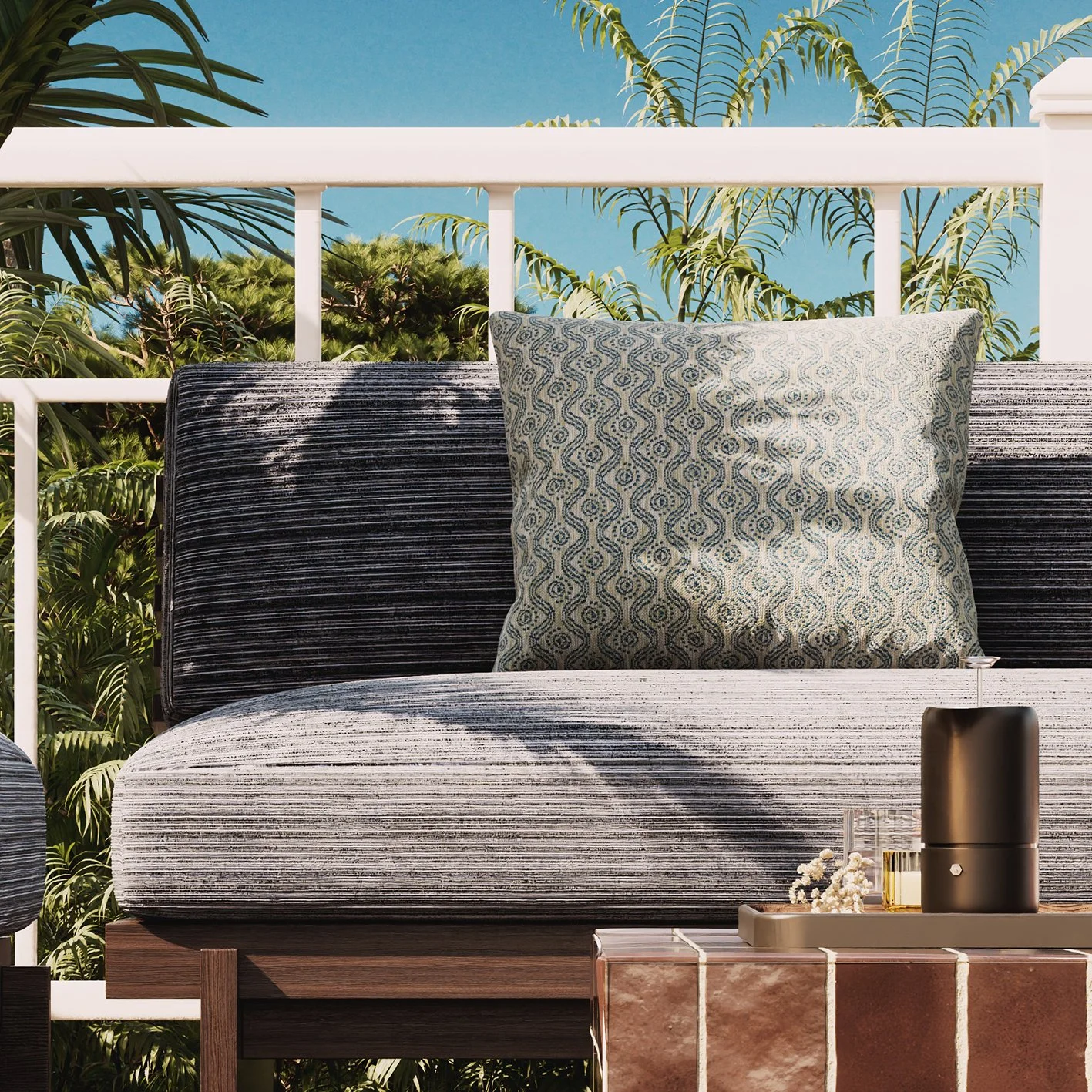
Because as our relationship with outdoor space continues to evolve, so too must the way we design for it. The boundaries between inside and out are becoming increasingly blurred. Materials need to respond accordingly, not just in terms of performance, but in how they contribute to a larger design story.
Îles du Vent understands this. It brings a sense of interior thinking to the outdoors, without losing sight of the environment it is designed for.
For me, it is a welcome and necessary progression. One that reflects how we are choosing to live today. And one that reinforces a simple idea that feels more relevant than ever:
Outdoor spaces are not separate from the home.
They are part of it.
More Stories




Basic.Space arrives in London, transforming The Old Selfridges Hotel into a layered design experience where art, fashion, and sound converge. A moment of discovery shaped by the city’s enduring creative energy.