
ARKET x Laila Gohar at Milan Design Week
There are moments during Milan Design Week when the city seems to shift into a different rhythm entirely. Streets that usually pulse with purpose soften into something more poetic; courtyards become stages, and everyday spaces are transformed into temporary worlds built from imagination. This year, one of the most quietly enchanting of these transformations can be found tucked within Giardino delle Arti, where a reimagined carousel invites visitors not just to look, but to step inside a story.
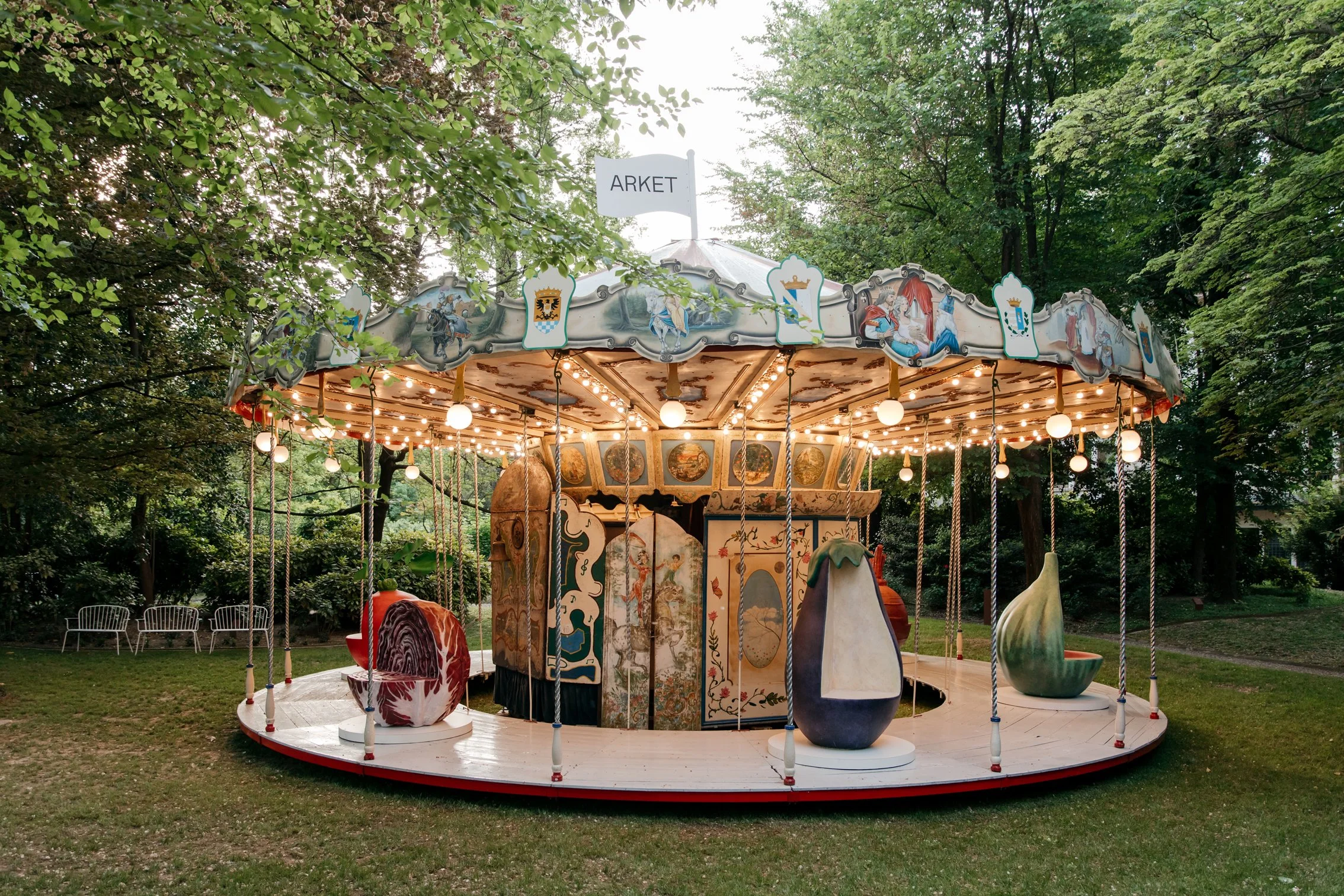
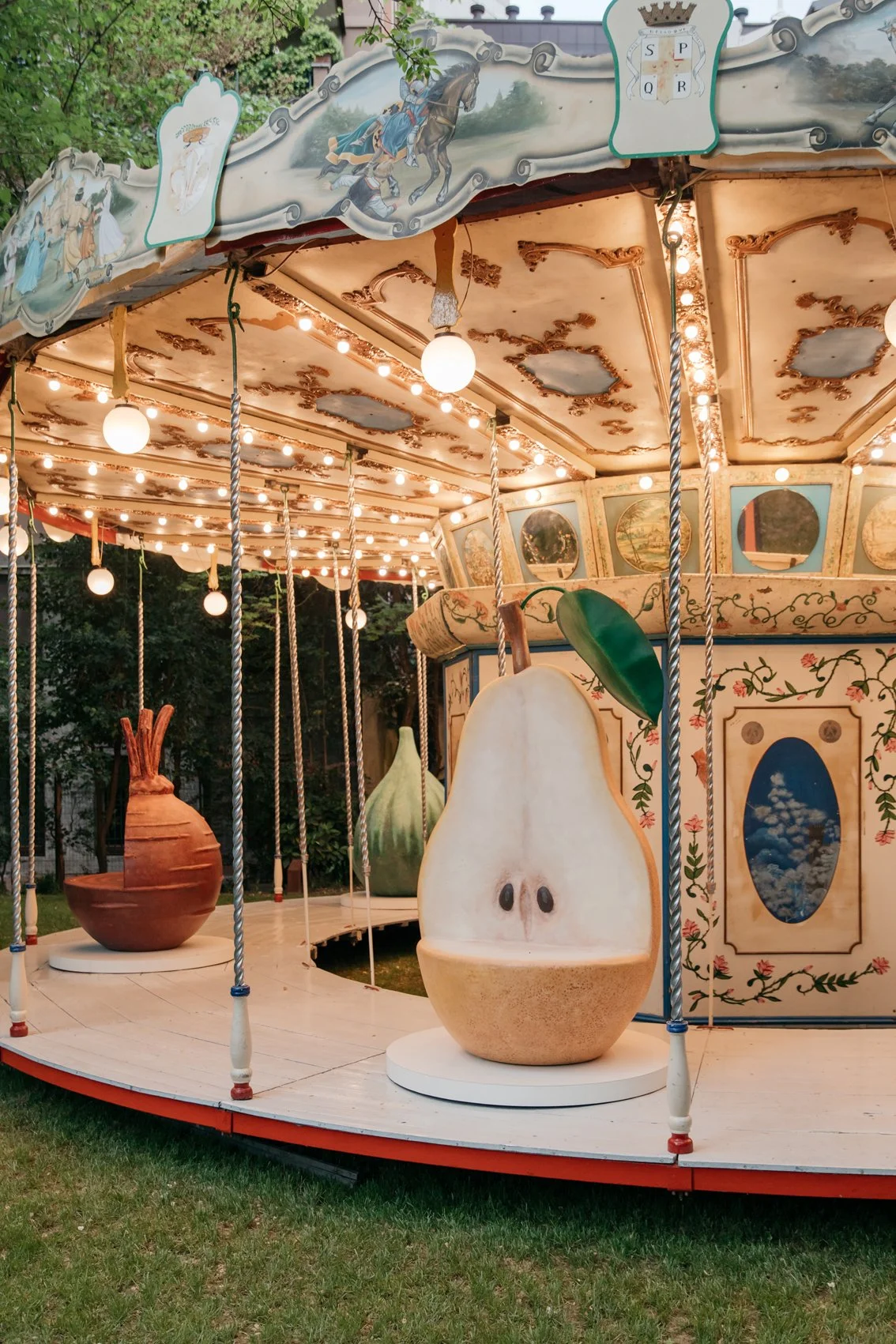
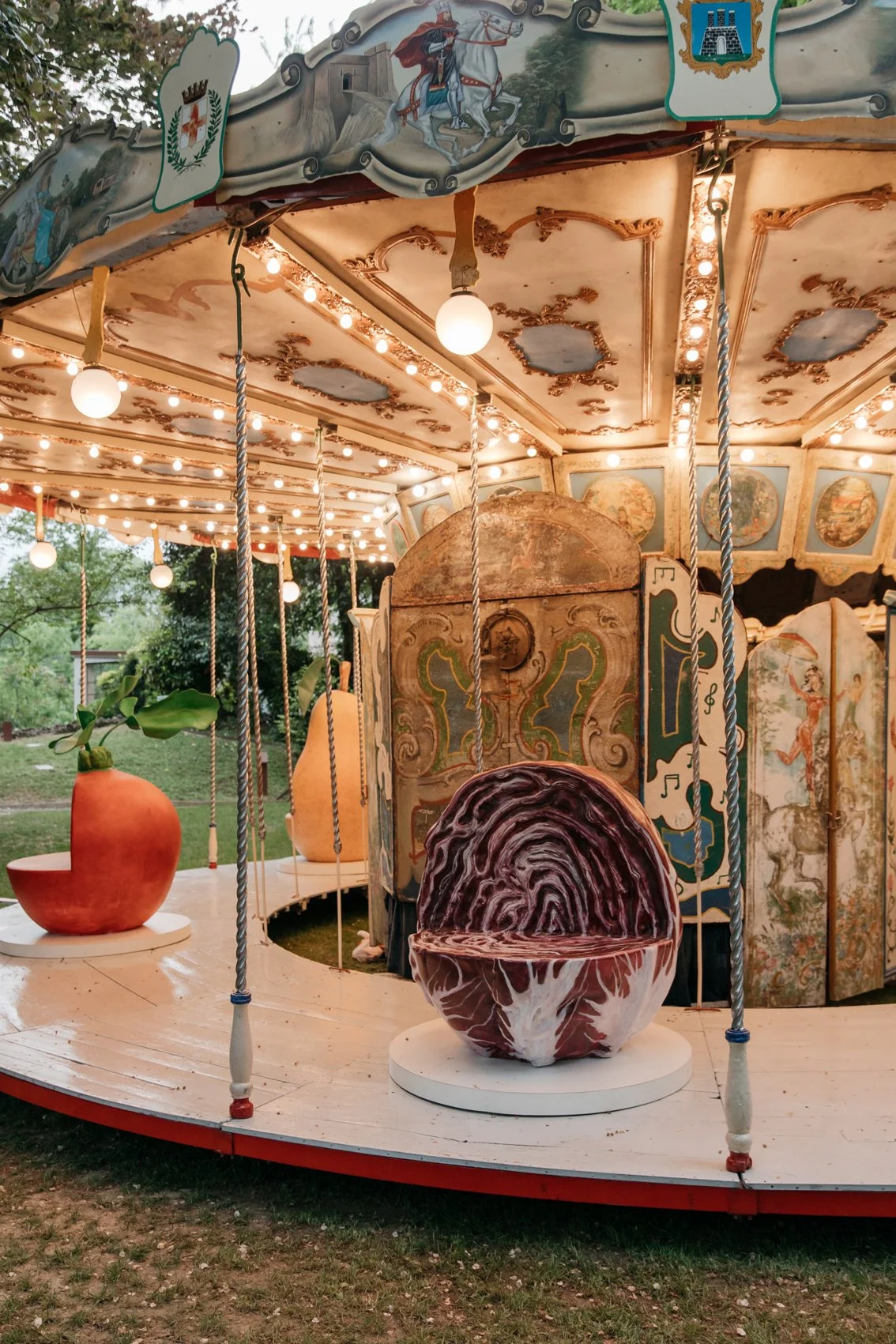
At first glance, it feels like a memory you can’t quite place. A carousel, familiar in silhouette yet subtly wrong in the most intriguing way. Instead of painted horses or gilded carriages, oversized fruit and vegetables take their place; sculptural, grounded, and almost absurdly beautiful in their simplicity. Apples, carrots, pears and cabbages become the riders of this circular stage, their forms enlarged to human scale, their surfaces catching Milan’s spring light as they rotate slowly against the backdrop of the garden.
This is the world created by Nordic lifestyle brand ARKET and New York-based artist Laila Gohar, a collaboration that resists spectacle for spectacle’s sake and instead leans into something more intimate: the poetry of everyday life.
Gohar’s creative language has long been defined by a sense of theatricality rooted in food, hospitality, and shared experience. Her work often blurs the line between art and ritual, transforming simple acts: eating, gathering, observing, into moments of quiet performance. Here, that sensibility finds its most architectural expression yet.
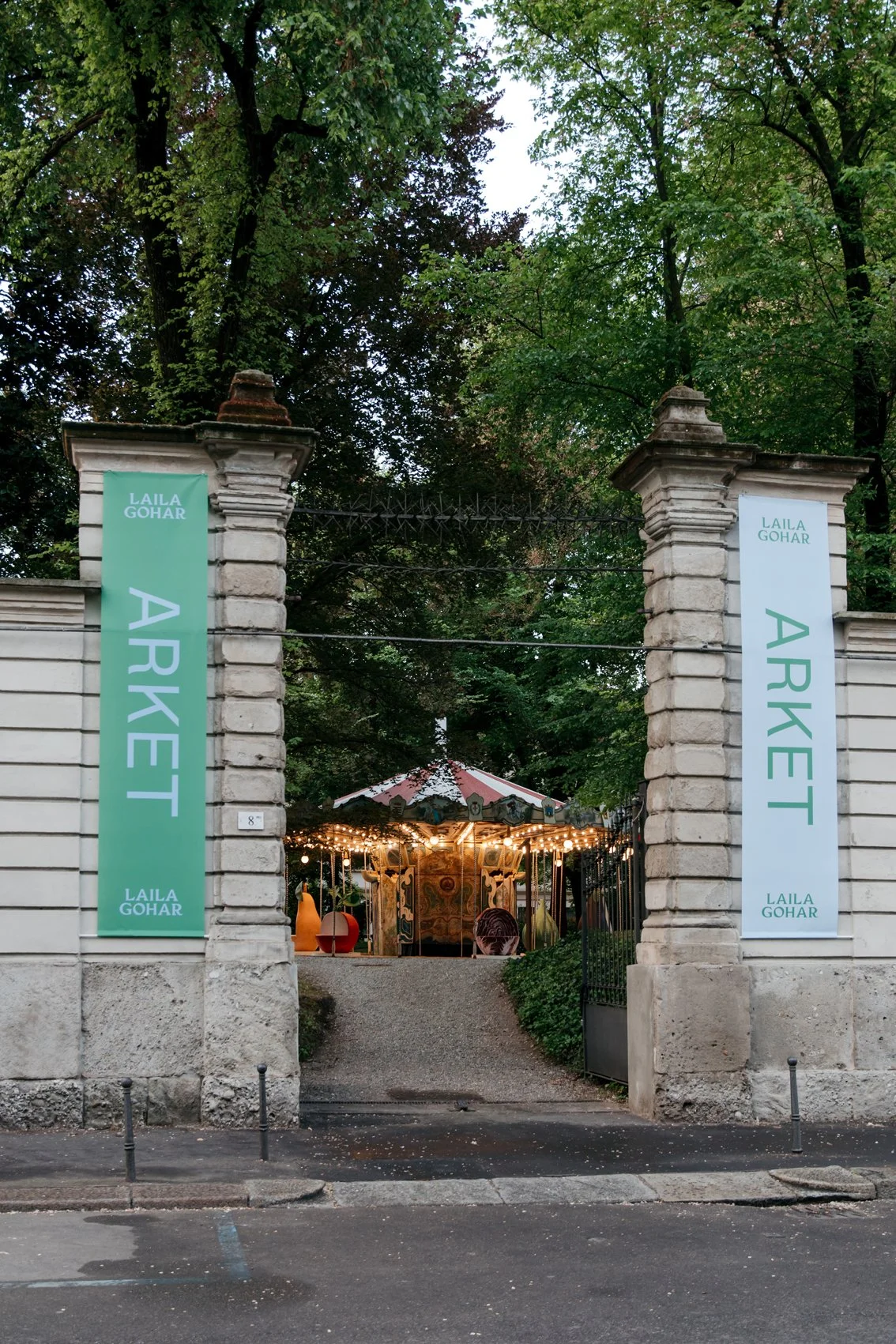
“We wanted to create something open and inclusive — something that invites people in, rather than asks them to observe from a distance,” Gohar explains. “A carousel felt like a natural way to do that. It’s familiar, physical, and meant to be shared. I’ve always been drawn to the idea of beauty as something accessible in the everyday, often shaped by surprise and excitement, which made this collaboration feel very natural.”
That sense of accessibility is central to the installation. Rather than constructing an entirely new object, the project begins with something already rich in history: an antique carousel originating from Wiesbaden, Germany, believed to date back to the late 1700s. Once part of a travelling fairground tradition, the carousel is a rare surviving example of early fairground engineering; a craft passed down through generations of the Degli Innocenti family, and now among the last of its kind.
Its wooden framework carries the weight of time, heritage, and movement. Yet here, instead of nostalgia alone, it becomes a foundation for reinvention.
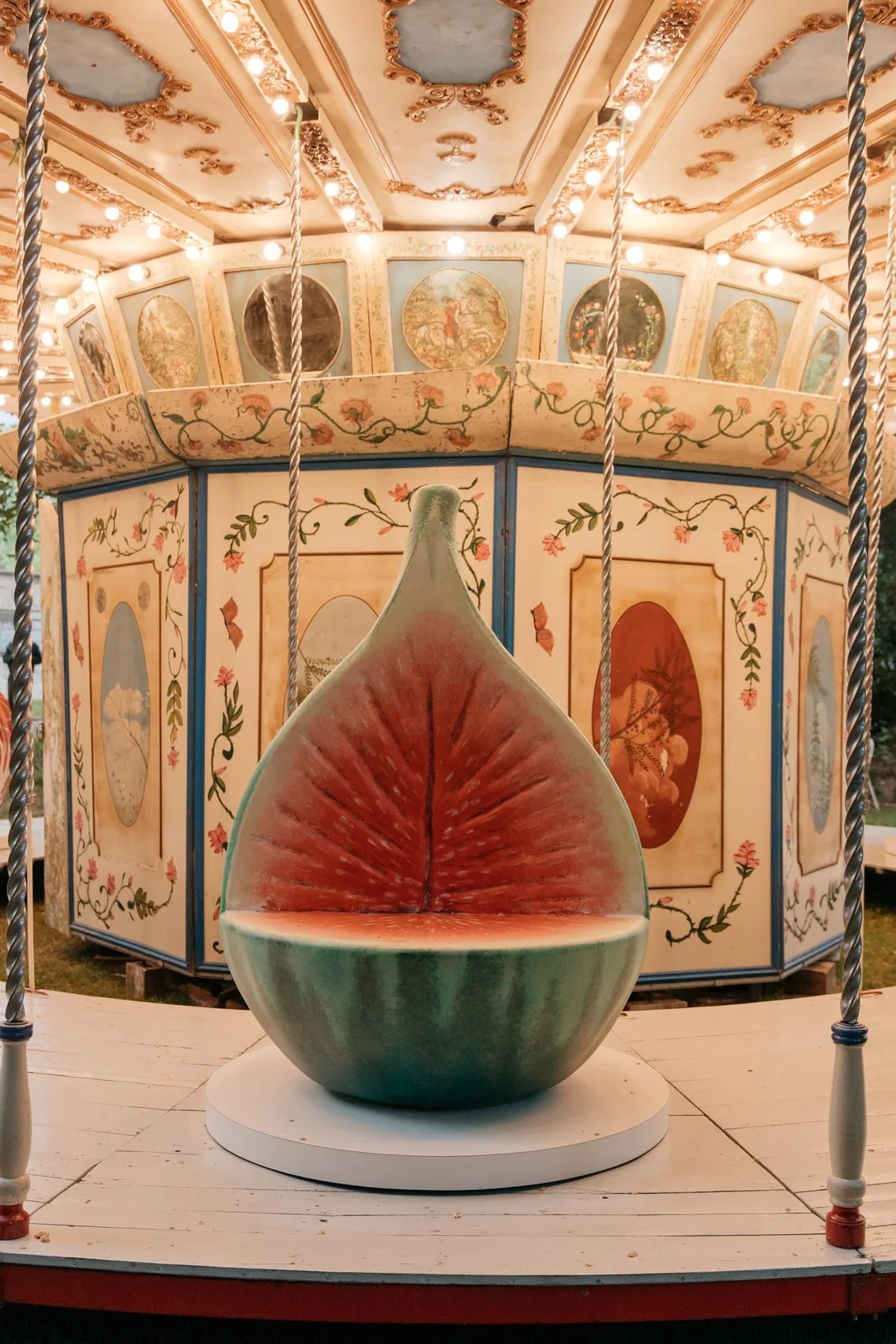
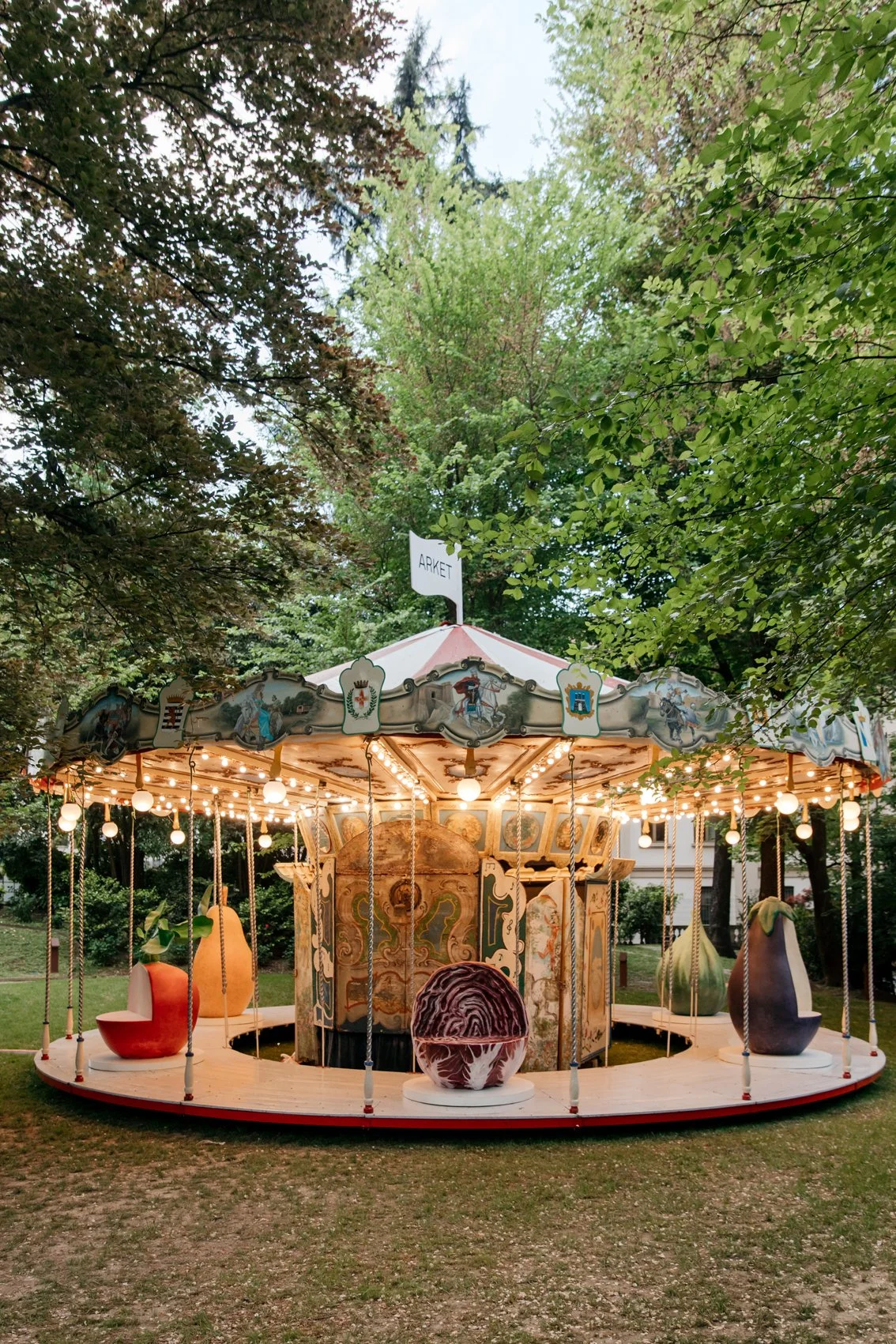
ARKET and Gohar’s intervention is striking in its restraint. The original figures are removed and replaced with oversized fruit and vegetables, each form carefully shaped through minimal alteration. There is no attempt to disguise or overly stylise the objects. Instead, their familiarity is amplified: a carrot becomes monumental, a pear becomes architectural. A single clean cut allows each form to be seated upon, transforming produce into passengers of a slowly turning narrative.
The effect is disarming. Visitors do not immediately know whether to laugh, pause, or step closer. And perhaps that uncertainty is the point. The carousel does not demand interpretation; it invites participation.
As it begins its public run from 20–24 April, between 12–8 PM daily, the installation becomes less an object and more a living environment. The sound of movement blends with the chatter of visitors in the garden. Light filters through the trees and lands on polished surfaces of fruit-like forms that seem both surreal and strangely natural within the setting.
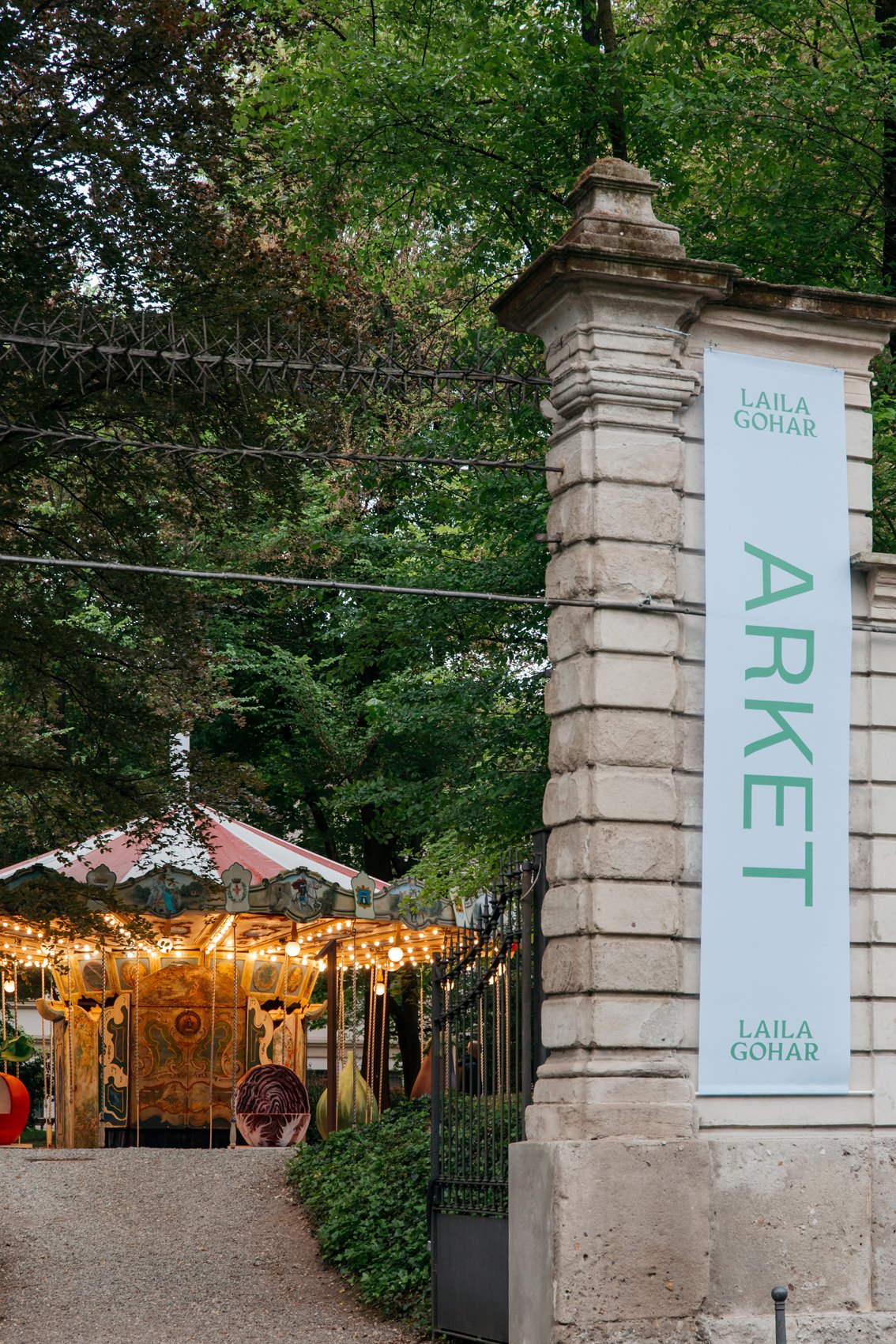
Alongside the installation, ARKET CAFÉ serves small treats throughout the day, adding another layer of sensory familiarity to the experience. Food, always a quiet thread in Gohar’s work, becomes part of the atmosphere rather than a separate gesture. Visitors are not only spectators but participants in a shared moment of hospitality.
And in keeping with ARKET’s understated approach to design, every visitor to the park receives a ticket redeemable at the ARKET Milan store; a small gesture that extends the experience beyond the garden and into the city itself.
The collaboration also marks the launch of Gohar’s debut ready-to-wear collection with ARKET on 21 April, a 27-piece offering that translates her visual language into clothing. The collection moves between the practical and the poetic, echoing the installation’s own tension between function and imagination. Garments become vessels for everyday ritual — designed not for performance, but for presence.
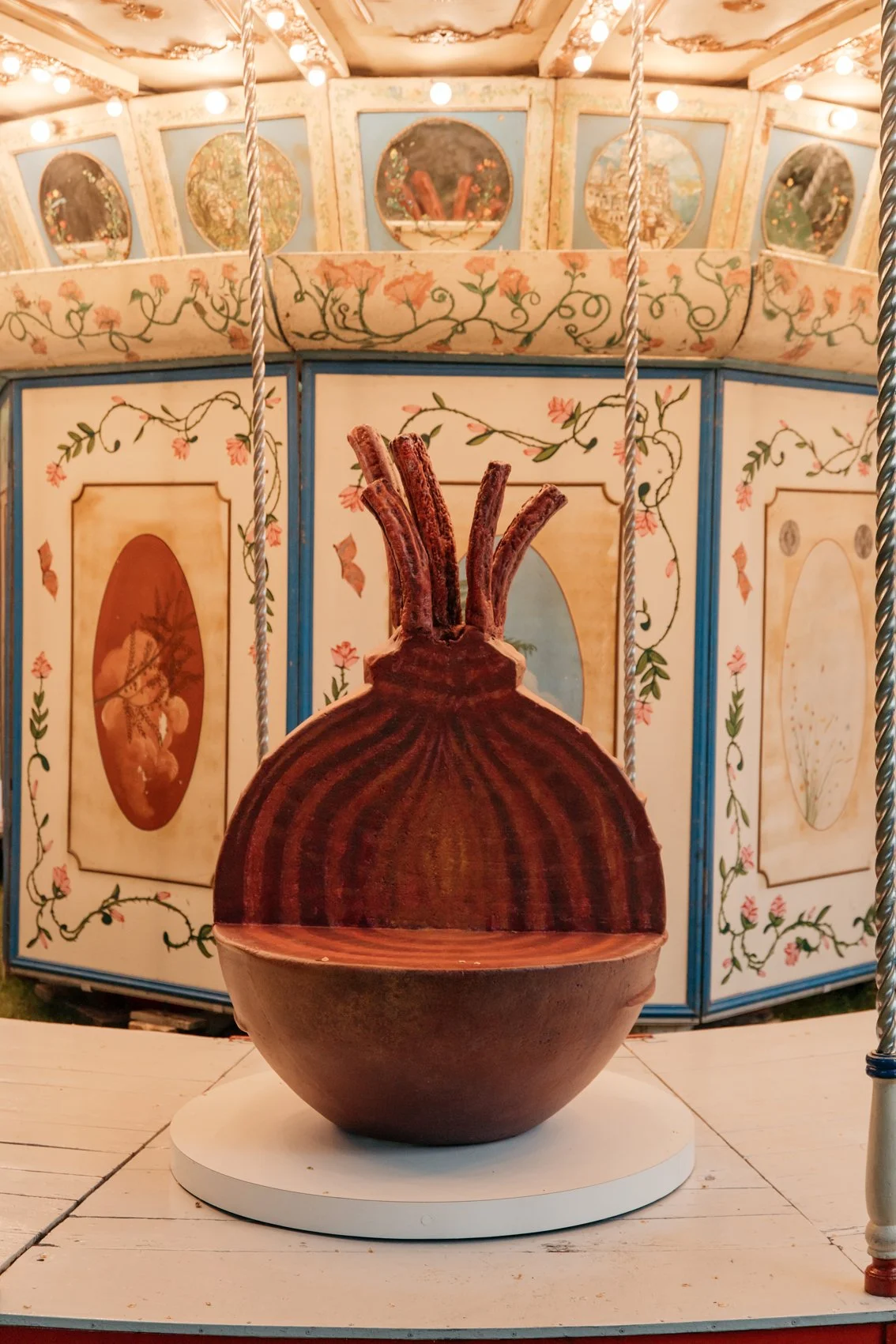
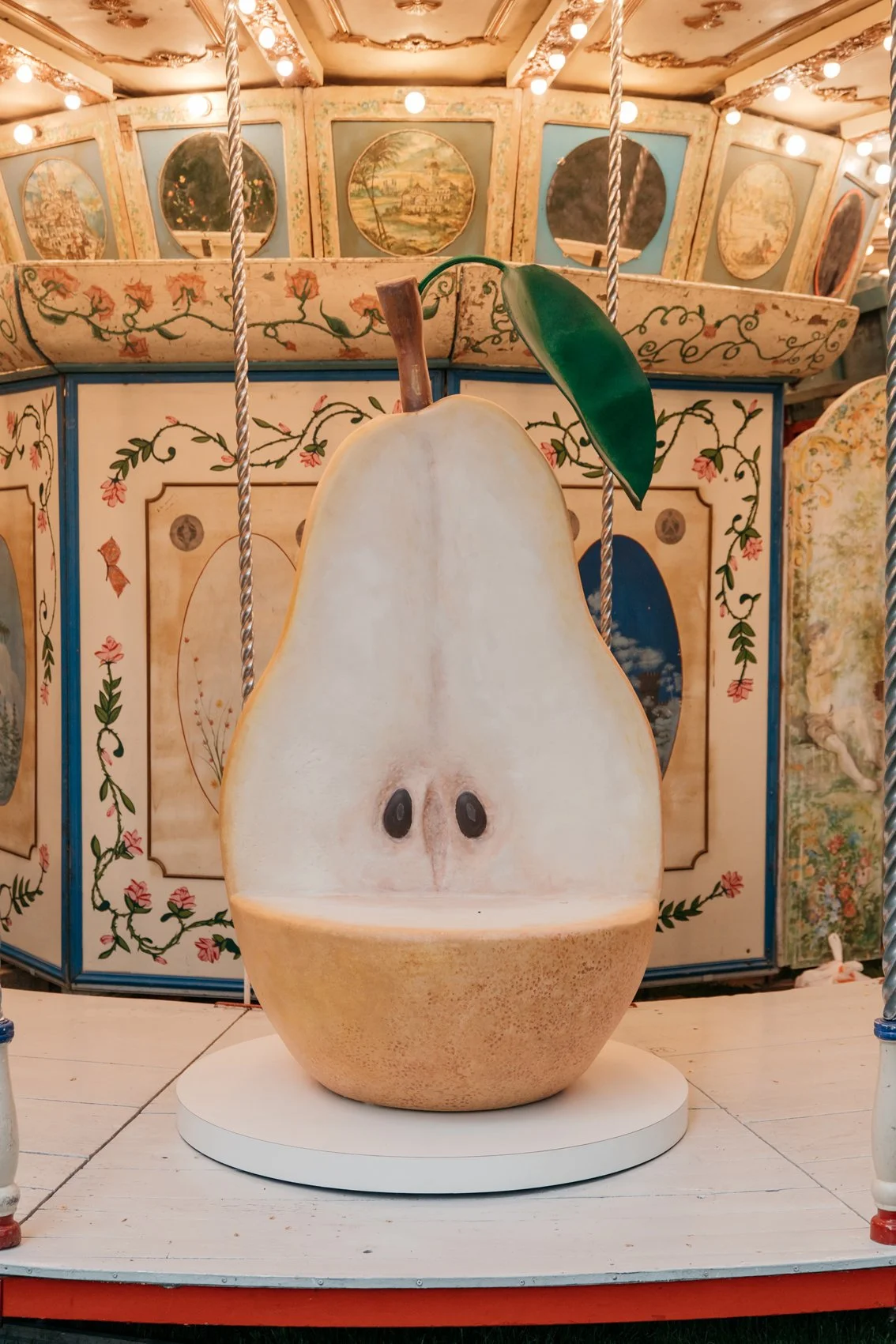
What makes this project linger in the memory is not its scale or spectacle, but its quiet insistence on re-seeing the familiar. A carousel is, after all, an object built on repetition; circular motion, predictable rhythm, childhood association. Yet here, that familiarity is gently disrupted. The ride does not carry passengers from one place to another; instead, it invites them to reconsider where beauty might already exist.
In a week defined by design innovation and architectural provocation, ARKET and Laila Gohar offer something softer, slower, and more reflective. A reminder that transformation does not always require invention; sometimes it simply asks for attention.
As the carousel turns in Giardino delle Arti, fruit and vegetables orbiting in quiet procession, Milan itself seems to pause for a moment. Not to look at something new, but to recognise something old in a different light.
And perhaps that is where its magic truly lies.
More Stories
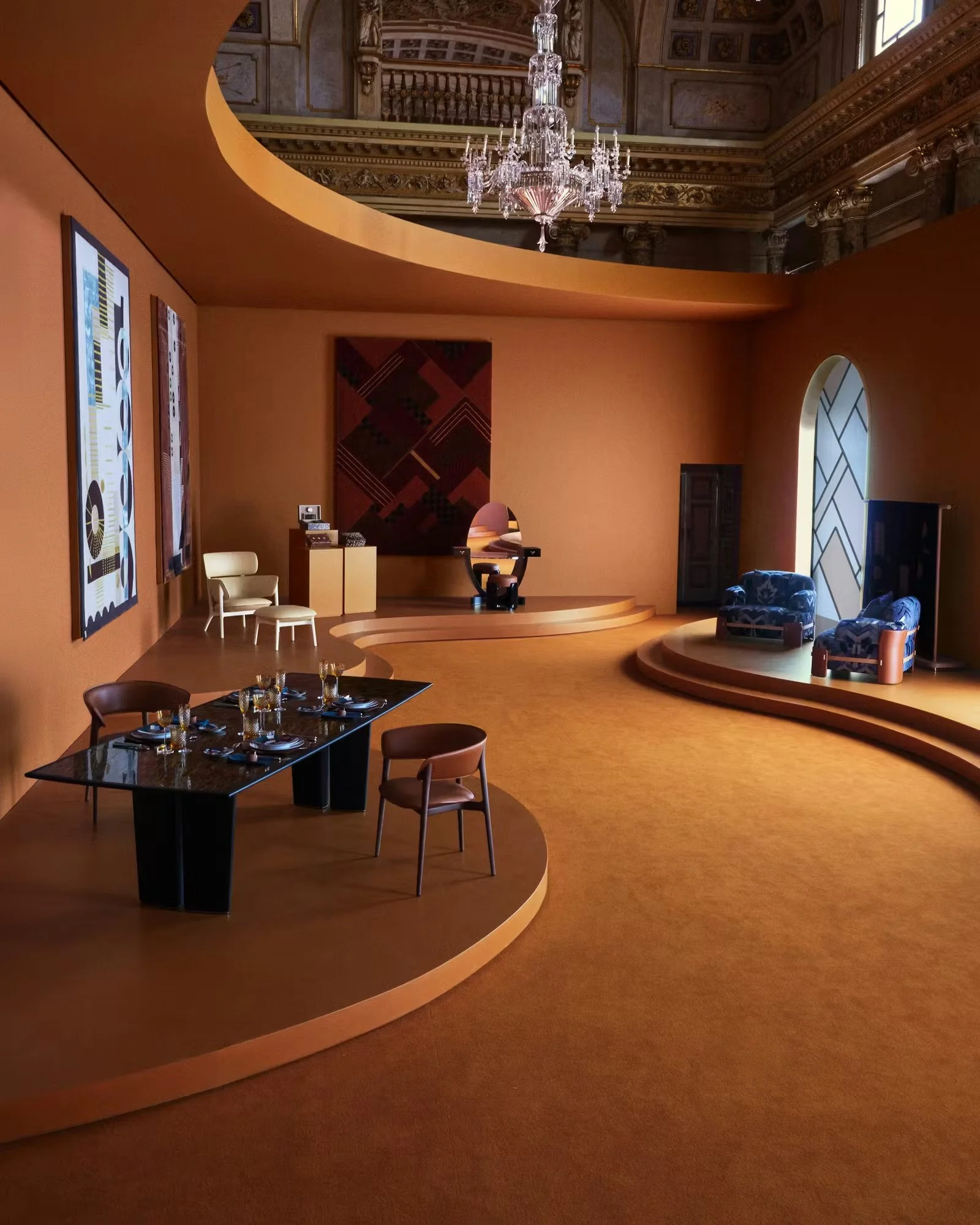

During Milan Design Week 2026, MENU transformed Chiesa Anglicana Tutti i Santi into a unified architectural narrative. Curated by Bodo Sperlein, the exhibition brought material, light, and collaboration into quiet alignment.