
Marcin Rusak at Milan Design Week: Forum Florum and the Art of Preserving the Present
Forum Florum: Herbarium of the Present, presented by Marcin Rusak Studio at SIAM during Milan Design Week 2026, unfolded as a quiet but deeply considered meditation on time, nature, and material memory. Conceived as both an exhibition and an open forum, the installation brought together sculpture, furniture, sound, and research-driven experimentation to explore how botanical matter can be preserved, transformed, and re-understood in the present moment.
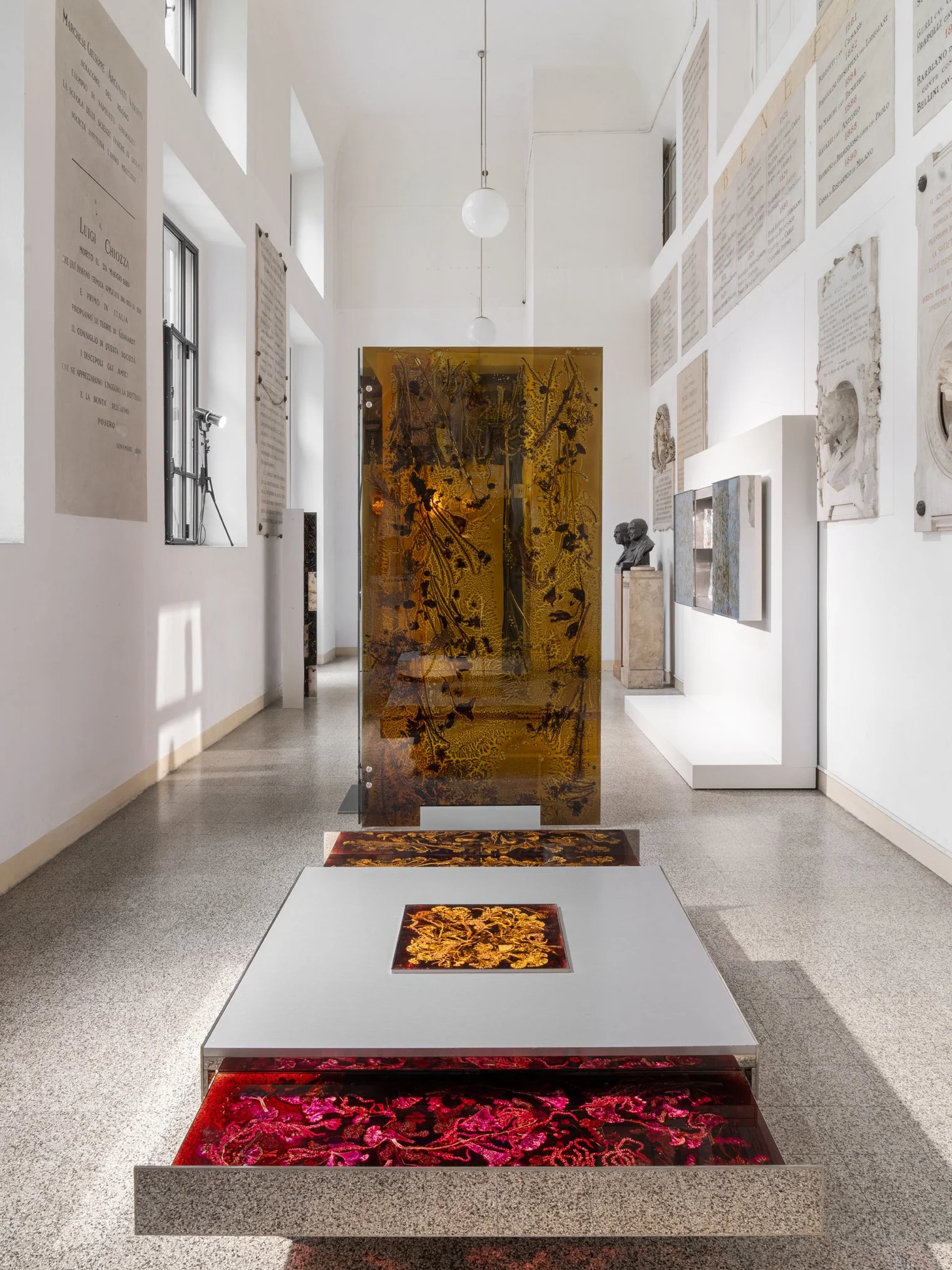
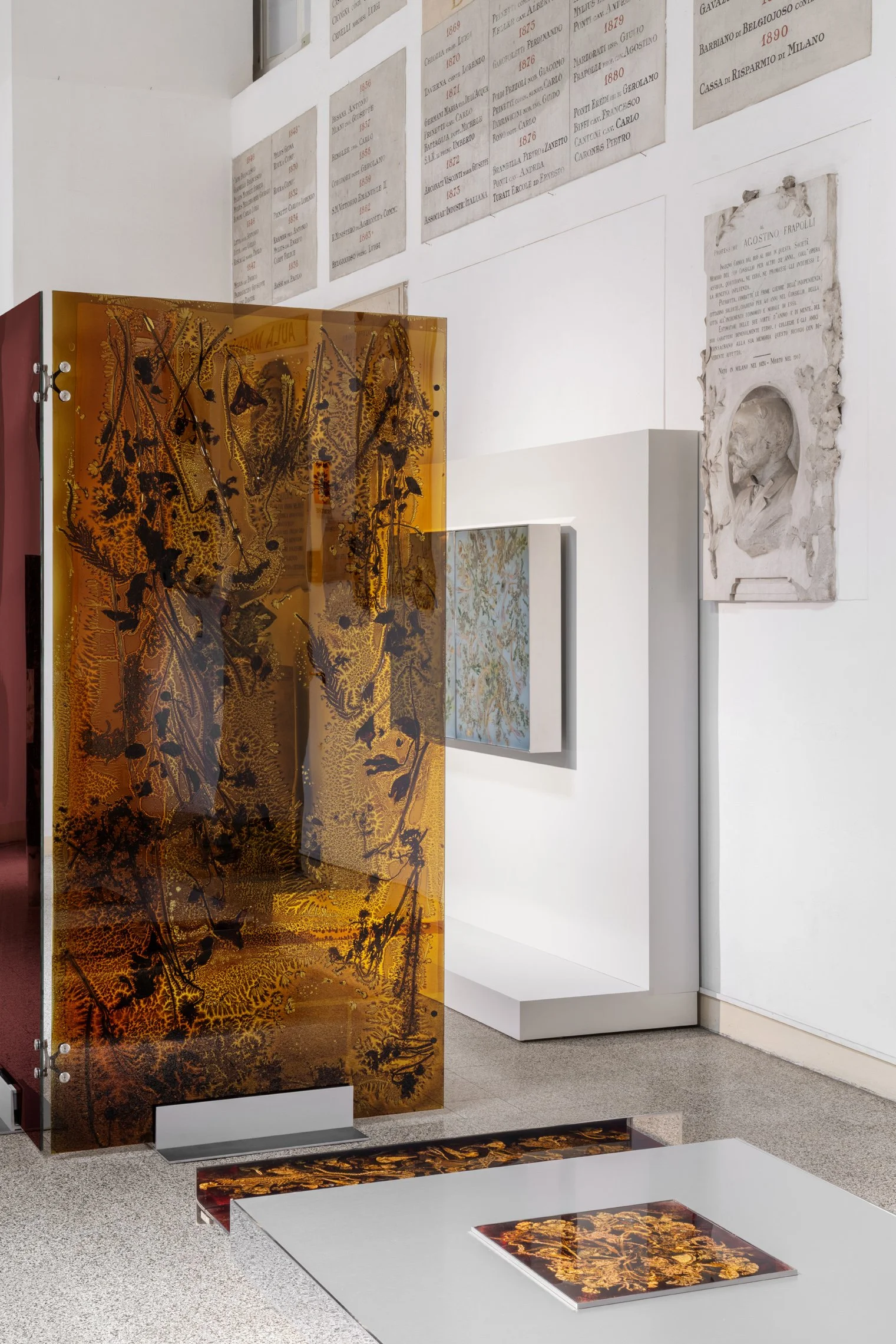
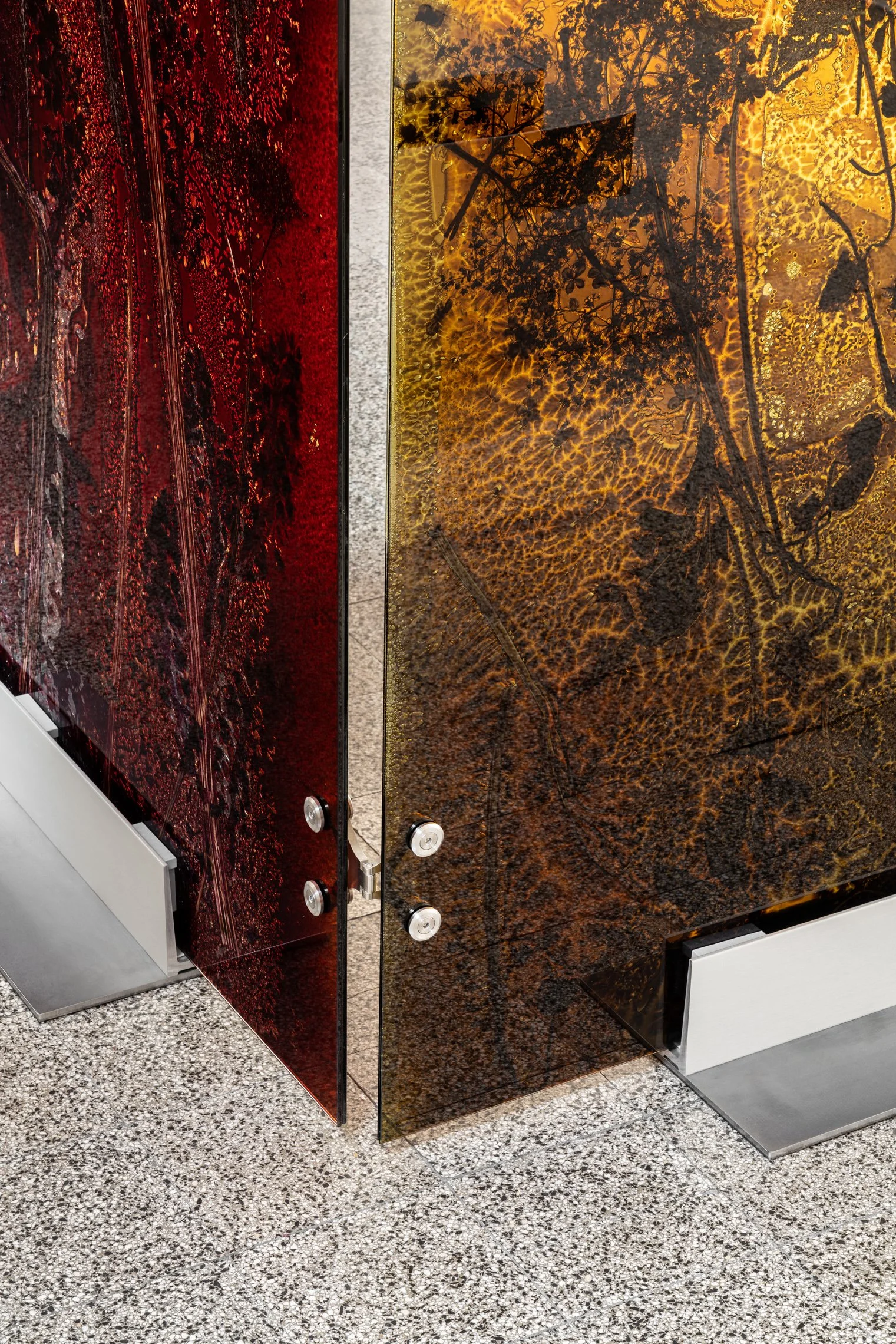
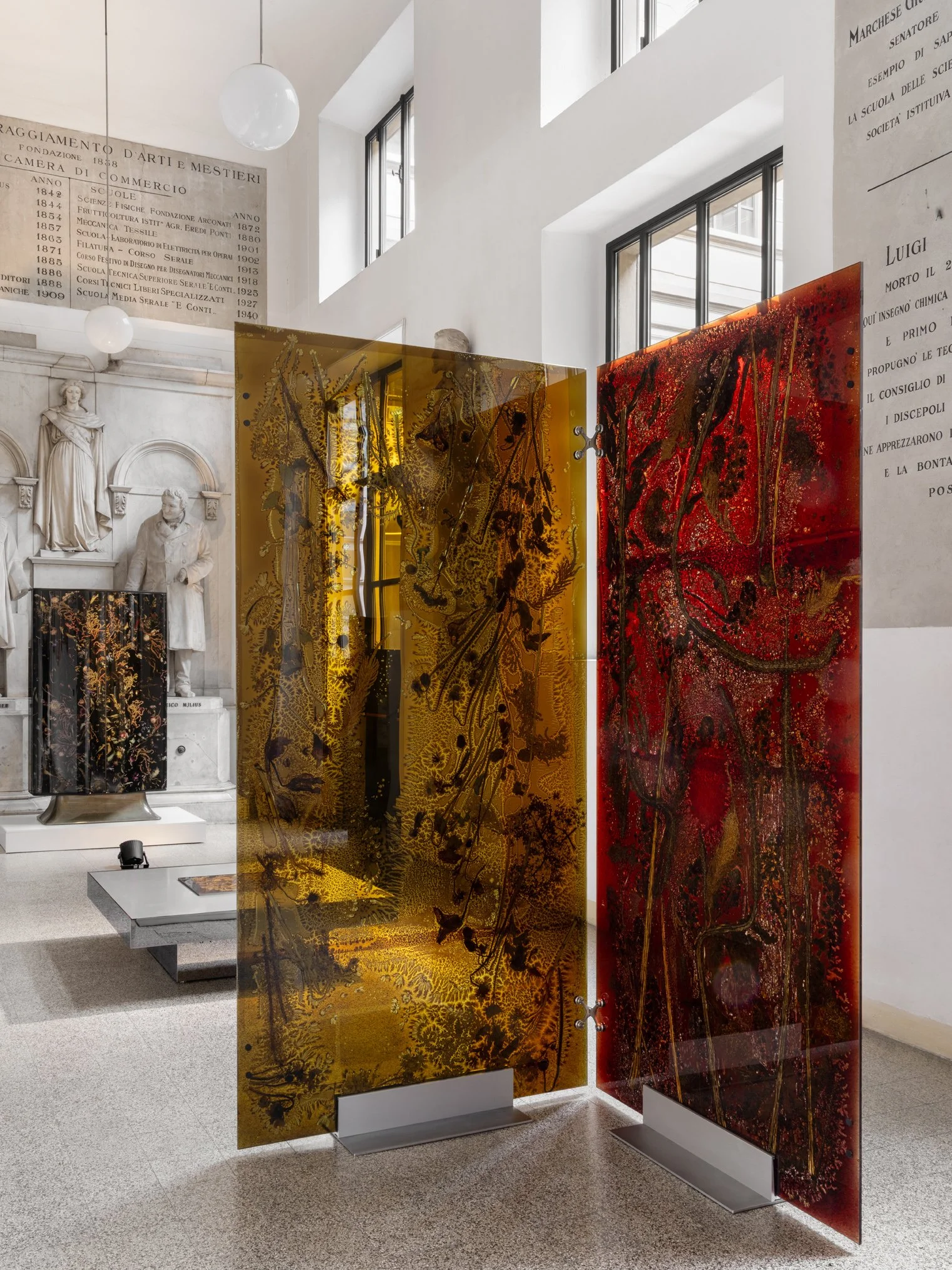
Now concluded, Forum Florum remains one of Rusak’s most eloquent spatial works to date. Rooted in the idea of the herbarium as an archive, the exhibition reframed traditional acts of preservation through a contemporary lens. Flowers were not pressed flat or reduced to symbols, but held within resin, glass, and custom-developed materials, becoming active records of ecological conditions, human intervention, and cultural values. Rather than suspending time, the works acknowledged its passage, allowing ageing, fragility, and permanence to coexist.
I have been a massive admirer of Marcin Rusak’s work since first discovering it at Milan Design Week many years ago. From those early encounters, his practice stood apart for its sensitivity and restraint, and for a beauty that felt both deliberate and unforced. There has always been a timeless quality to his work, one that resists trends and instead focuses on long-term reflection. Forum Florum felt like a natural evolution of that approach, bringing together years of research into botany, material science, and cultural history within an exhibition that was both intimate and expansive.
An Herbarium for the Contemporary World
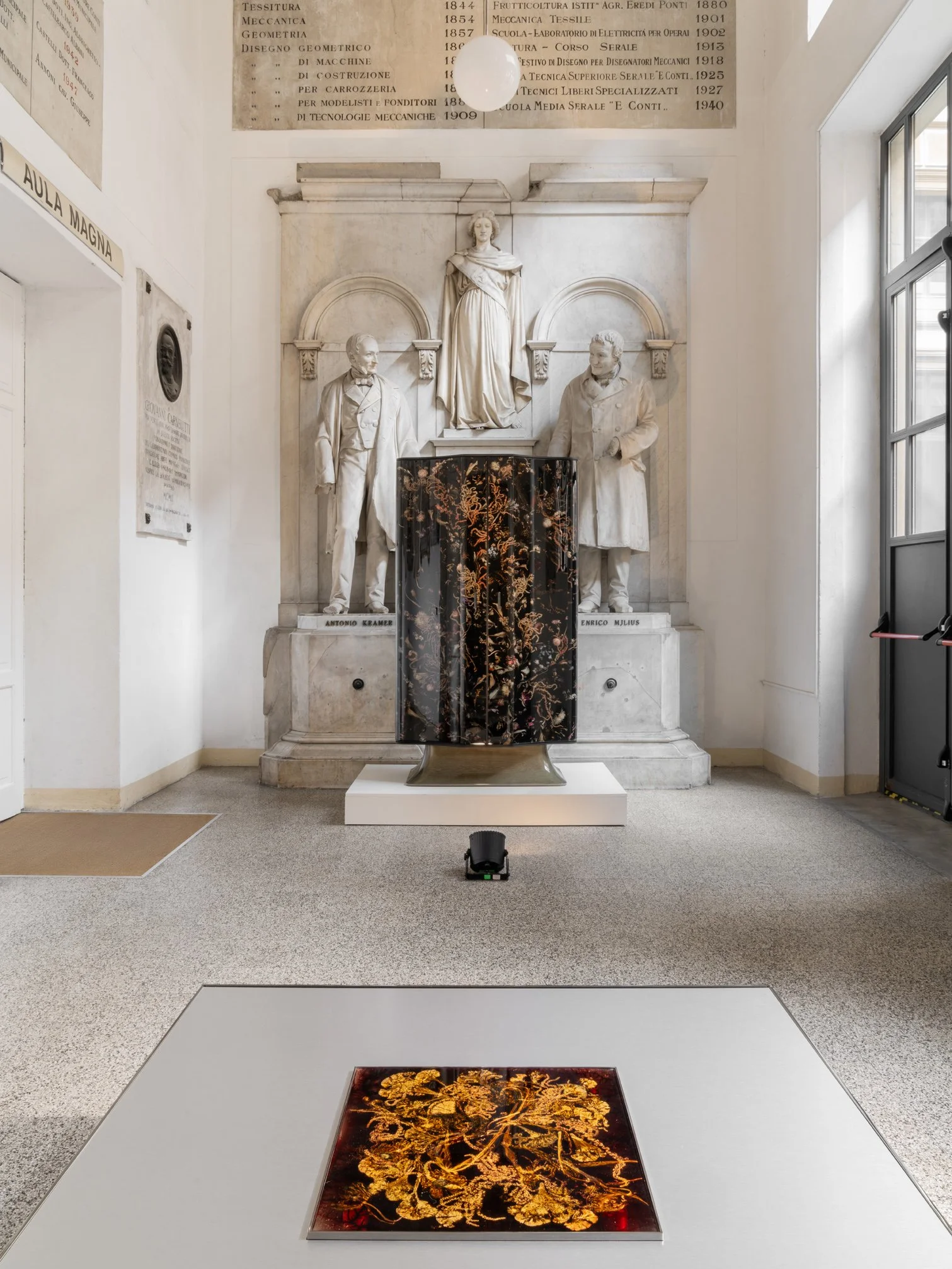
Staged at the historic Società d’Incoraggiamento d’Arti e Mestieri (SIAM) in central Milan, Forum Florum unfolded across a courtyard and adjoining interiors, using the institution’s civic and educational character as a quiet counterpoint to the commercial intensity of Design Week. The title itself, drawn from Latin and translating loosely to “flower market,” framed the exhibition as both a place of exchange and a place of contemplation.
At the heart of the project was the concept of the herbarium: traditionally, an archive of pressed plants, preserved as scientific records. Rusak reinterpreted this idea not as an exercise in nostalgia, but as a living, conceptual framework. His functional objects and sculptural works became memory capsules, preserving botanical matter in resin, glass, and other custom-developed materials, not to halt time, but to document its passage.
In Rusak’s hands, flowers were never decorative motifs. They were carriers of knowledge: evidence of our desire to control, categorise, commercialise, and preserve nature, even as it resists us.
Flower Journey: A Threshold Between Nature and Culture
Visitors entered the exhibition through Flower Journey, a monumental portal that traced the global history of the cut-flower industry. Partially 3D-printed and partially cast in bronze, the structure felt both ancient and unfinished, echoing medieval cathedrals and Art Nouveau thresholds. It was a striking gesture, but never a bombastic one.
On one side, the portal suggested human ambition, progress, and architectural permanence. On the other hand, botanical pods encapsulated commercialised plants; elegant yet unsettling reminders of humanity’s urge to dominate natural systems. This moment of transition set the tone for everything that followed: beauty held in balance with discomfort, craftsmanship entwined with critique.
Listening to Plants: Plant Pulses
One of the most immersive elements of Forum Florum was Plant Pulses, developed in collaboration with Perrier-Jouët and a multidisciplinary team of scientists, composers, and digital artists. Using ultrasound recordings of plant activity, the installation translated invisible biological signals into sound and image, allowing visitors to experience plant intelligence as something active, communicative, and strangely intimate.
Rather than presenting technology as a solution or spectacle, Rusak used it as a translator. The installation suggested that nature is already speaking; the challenge lies in whether we are willing to listen.
Domestic Scale, Monumental Meaning
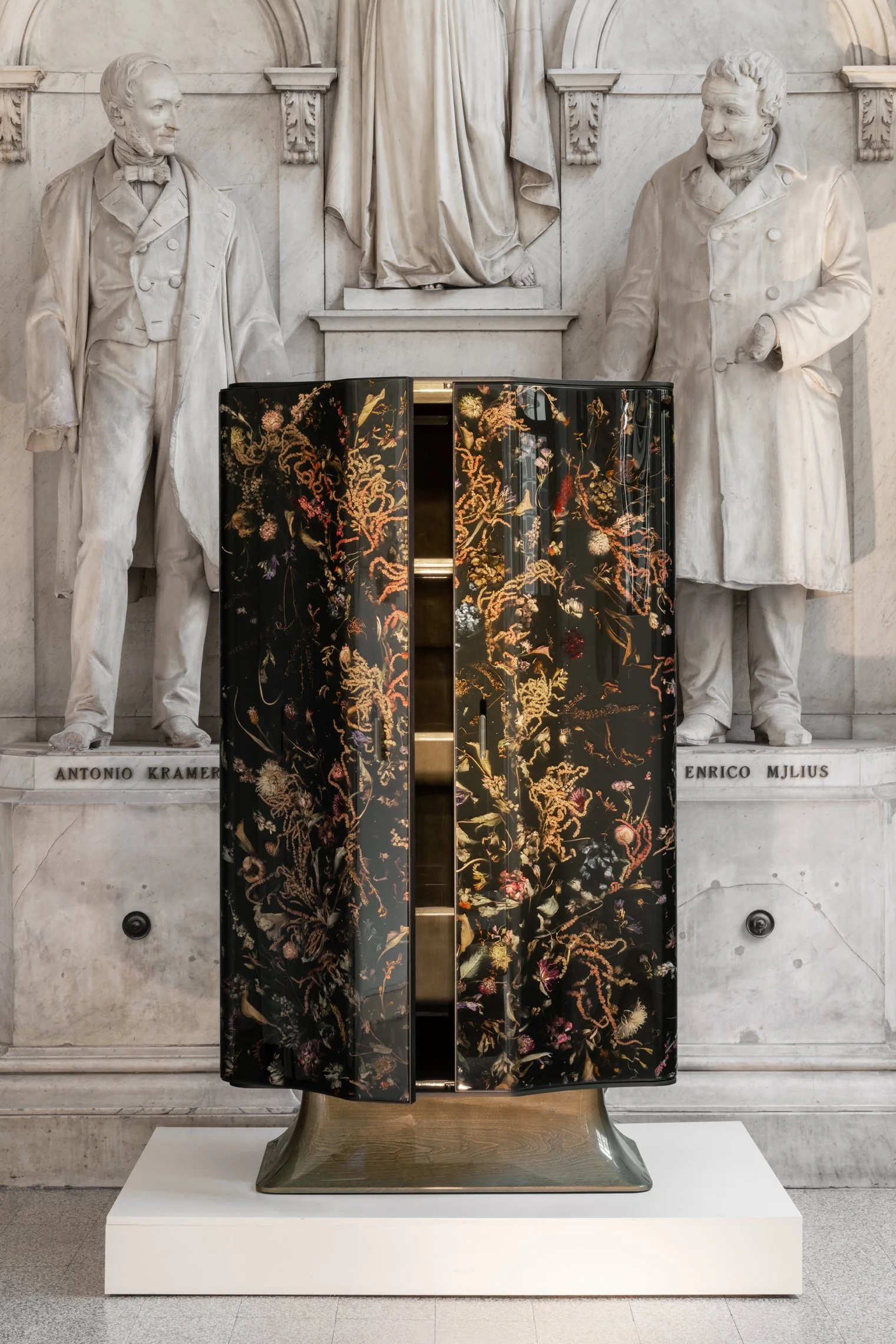
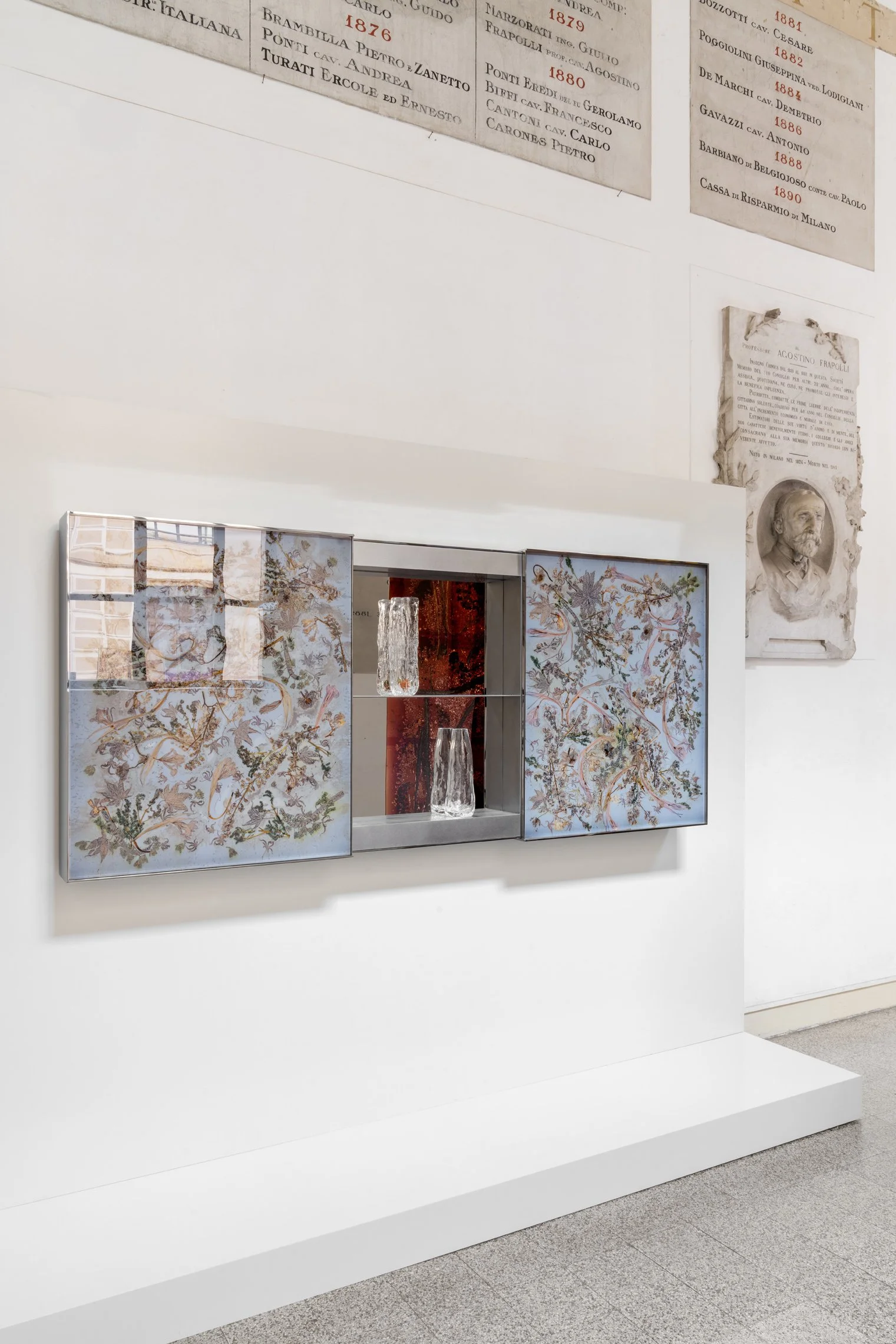
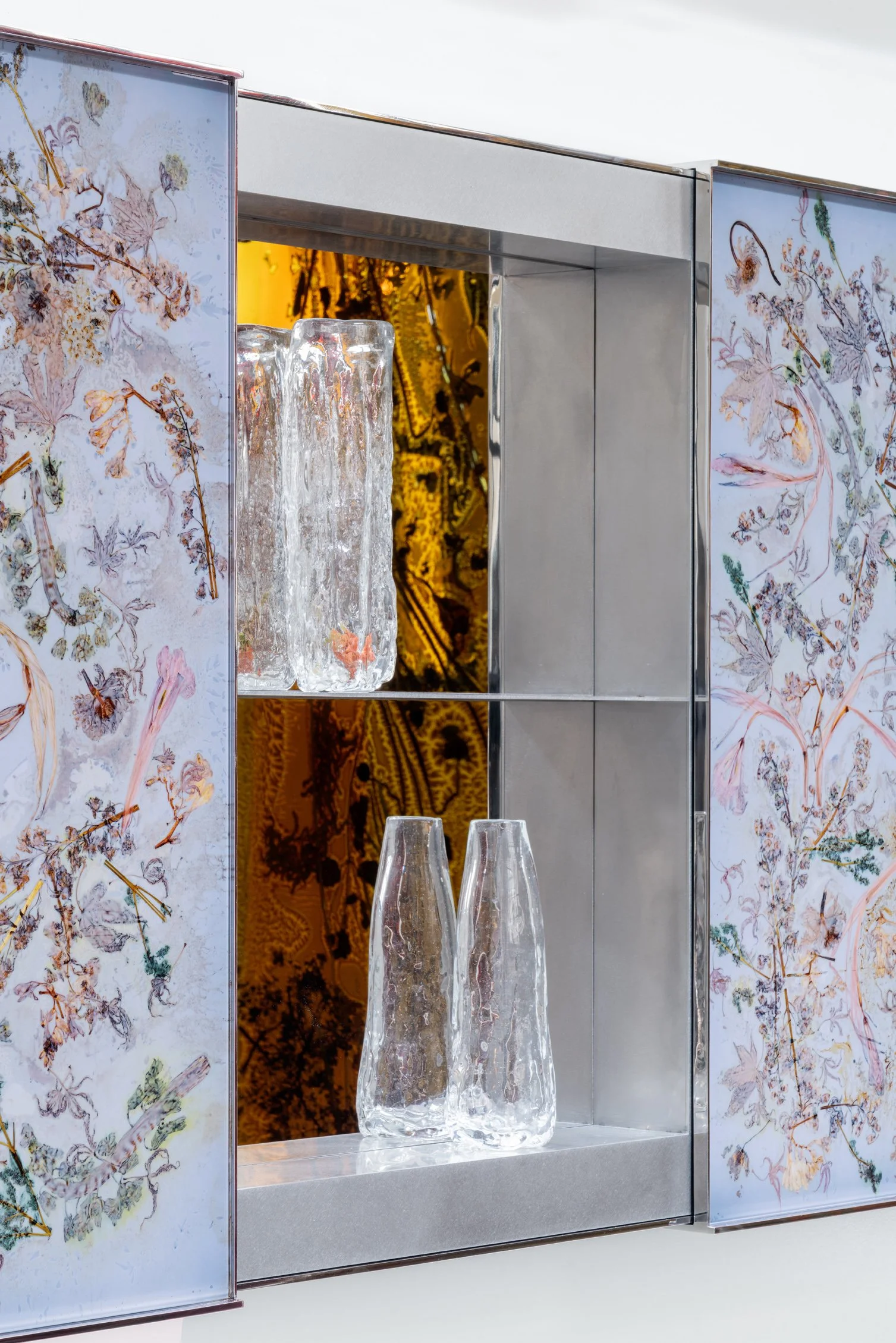
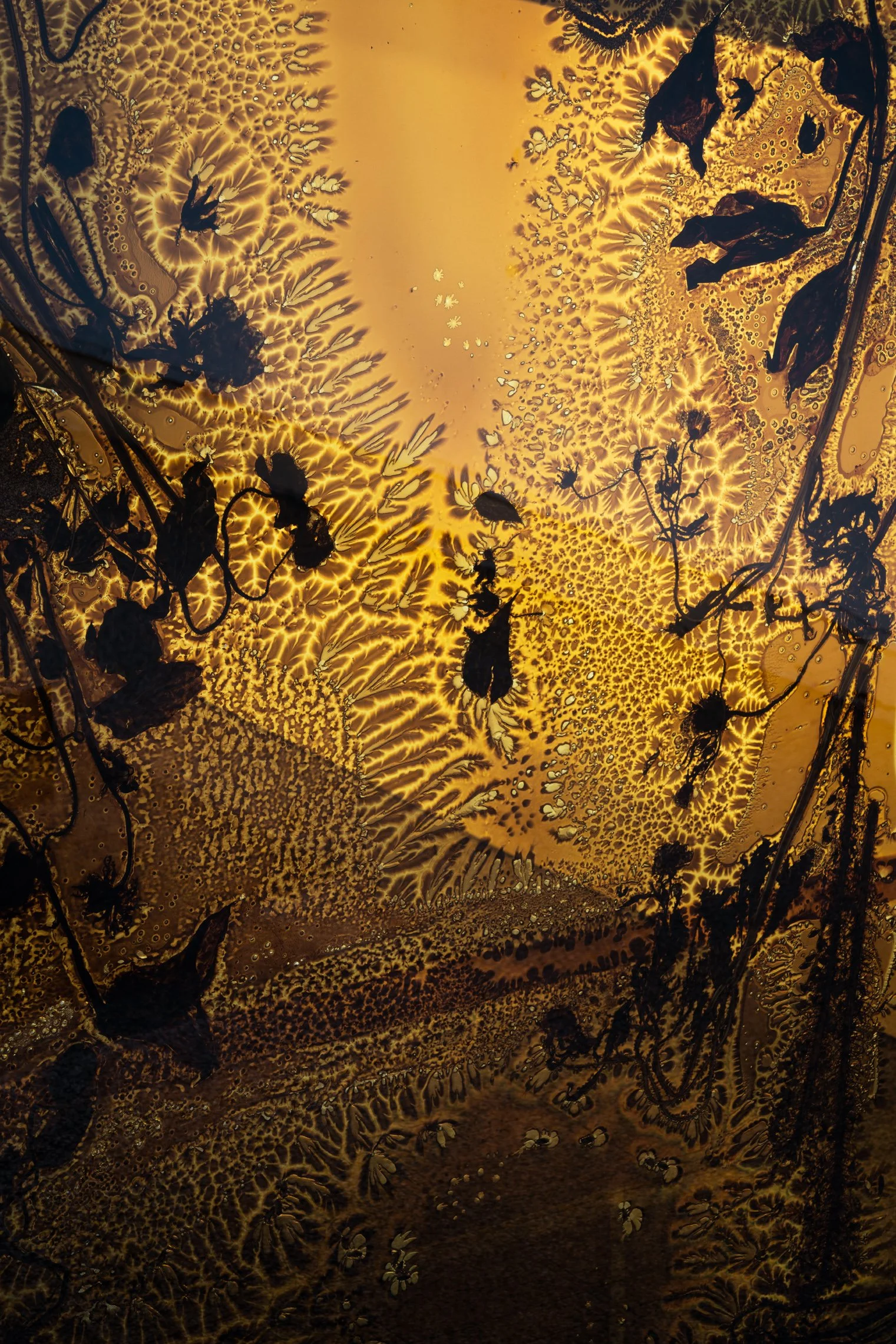
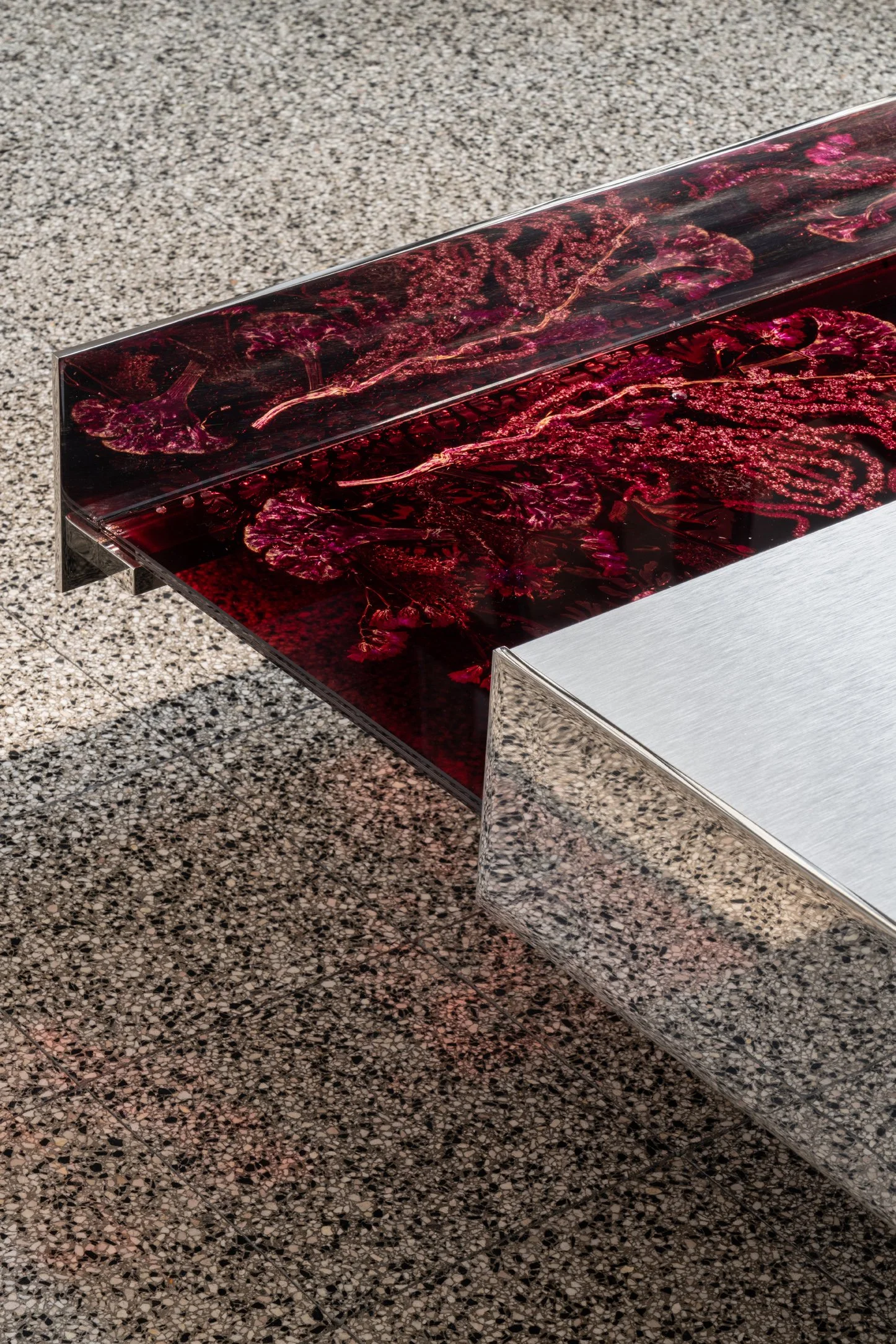
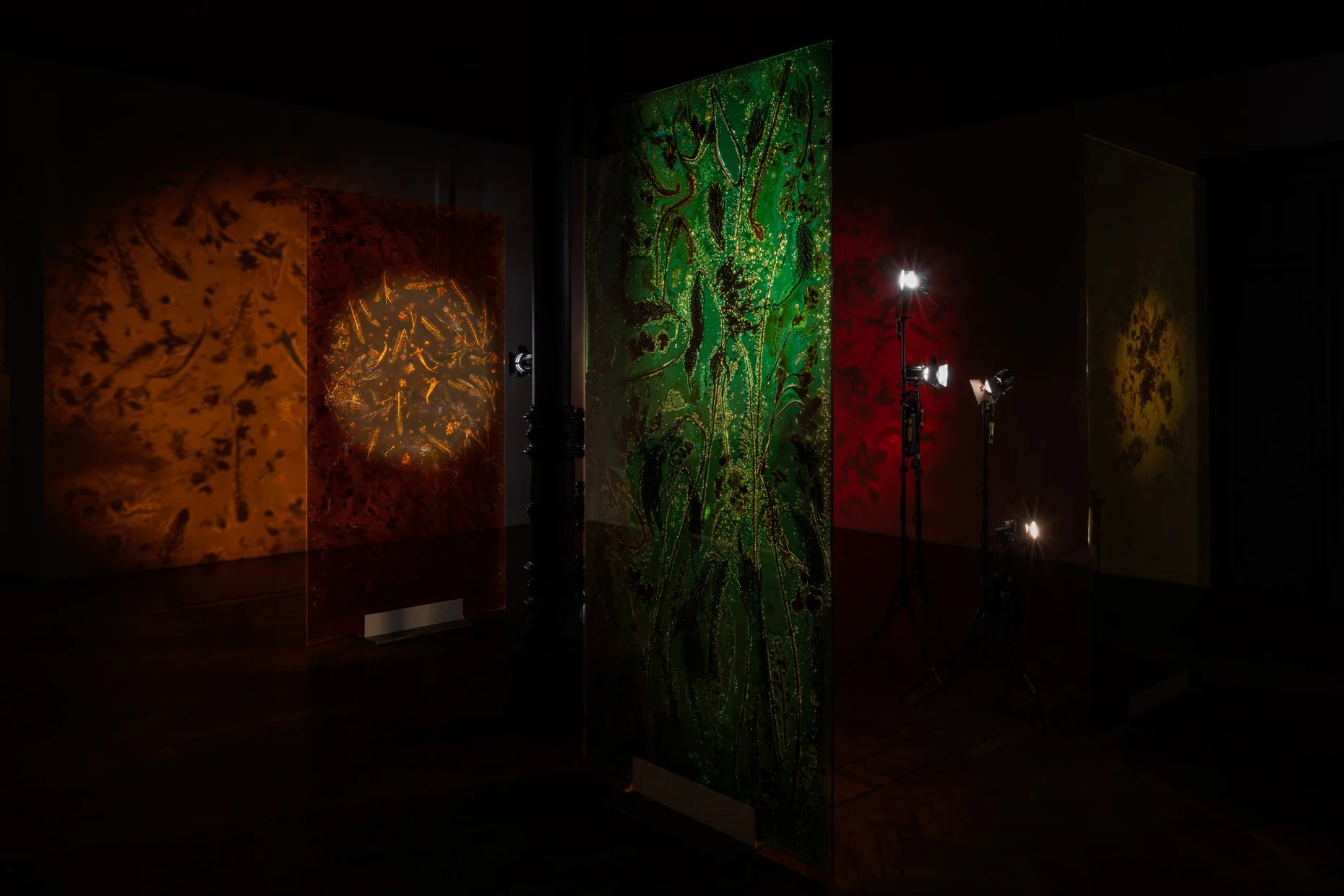
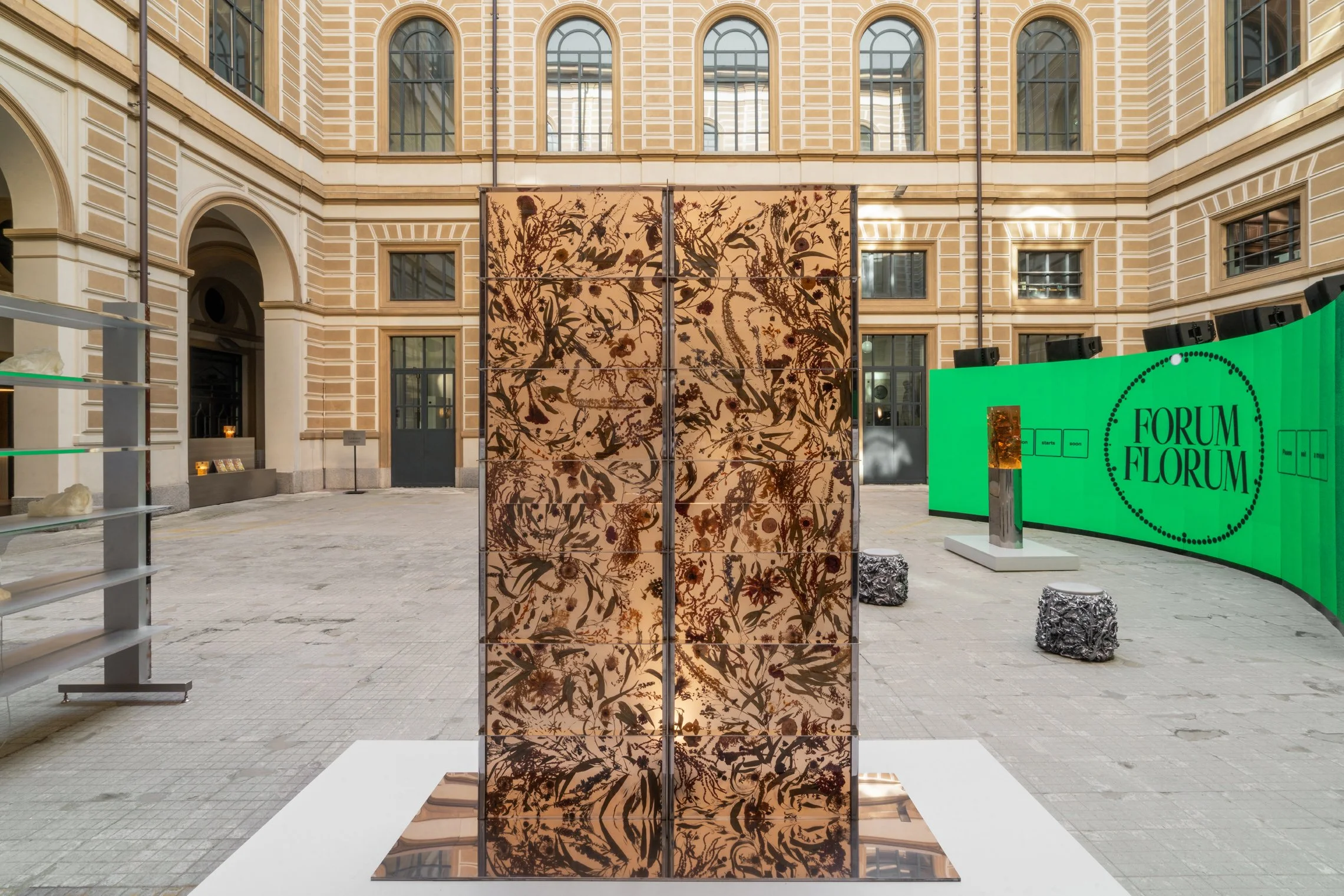
Beyond the installations, Forum Florum debuted a significant new body of work from Marcin Rusak Studio. Large-scale herbarium panels, some reaching 2.5 metres in height, are embedded with flowers within sheets of laminated glass, transforming fragile organic matter into architectural presence. Alongside these were new furniture pieces: shelving systems, a coffee table, and a mirror that expanded Rusak’s ongoing Flora series.
These works were staged within the exhibition as if in a contemporary apartment. Visitors were encouraged to sit, recline, and spend time with the pieces; a subtle but deliberate rejection of the usual exhibition choreography. It was here that the timeless quality I have always associated with Rusak’s work became most apparent. The objects felt domestic yet ceremonial, functional yet poetic, contemporary yet entirely unbound by trend.
Beauty at the Edge of Decay
The exhibition concluded in SIAM’s Galleria dei Benefattori, where the Protoplasting Nature Chair was presented in quiet isolation. Recently acquired by the Centre Pompidou, the piece encapsulated Rusak’s long-standing fascination with beauty at the edge of decomposition. Delicate, experimental, and unapologetically temporal, it underscored the central tension of the exhibition: that preservation is never neutral, and that decay is not failure, but transformation.
A Lasting Impression
As Milan Design Week continues to accelerate, exhibitions like Forum Florum serve as rare anchors. They remind us that design can still be philosophical, that material innovation can coexist with emotional depth, and that beauty need not shout to endure.
Marcin Rusak’s work has always carried a quiet confidence; a refusal to chase immediacy in favour of lasting resonance. Forum Florum may now be dismantled, its flowers sealed in glass and resin, its sounds dispersed into memory, but its questions remain. How do we value nature? What do we choose to preserve? And what does it truly mean for design to stand the test of time?
For me, Forum Florum reaffirmed why I have followed Rusak’s practice for so many years. In a world obsessed with the new, his work continues to offer something far more rare: a sense of continuity, care, and lasting beauty.
More Stories


Basic.Space arrives in London, transforming The Old Selfridges Hotel into a layered design experience where art, fashion, and sound converge. A moment of discovery shaped by the city’s enduring creative energy.